
Griseofulvin — MCQs

You are taking care of a patient with renal failure secondary to anti-fungal therapy. The patient is a 66-year-old male being treated for cryptococcal meningitis. This drug has a variety of known side effects including acute febrile reactions to infusions, anemia, hypokalemia and hypomagnesemia. What is the mechanism of action of this drug?
A 58-year-old man with a 10-year history of type 2 diabetes mellitus and hypertension comes to the physician for a routine examination. Current medications include metformin and captopril. His pulse is 84/min and blood pressure is 120/75 mm Hg. His hemoglobin A1c concentration is 9.5%. The physician adds repaglinide to his treatment regimen. The mechanism of action of this agent is most similar to that of which of the following drugs?
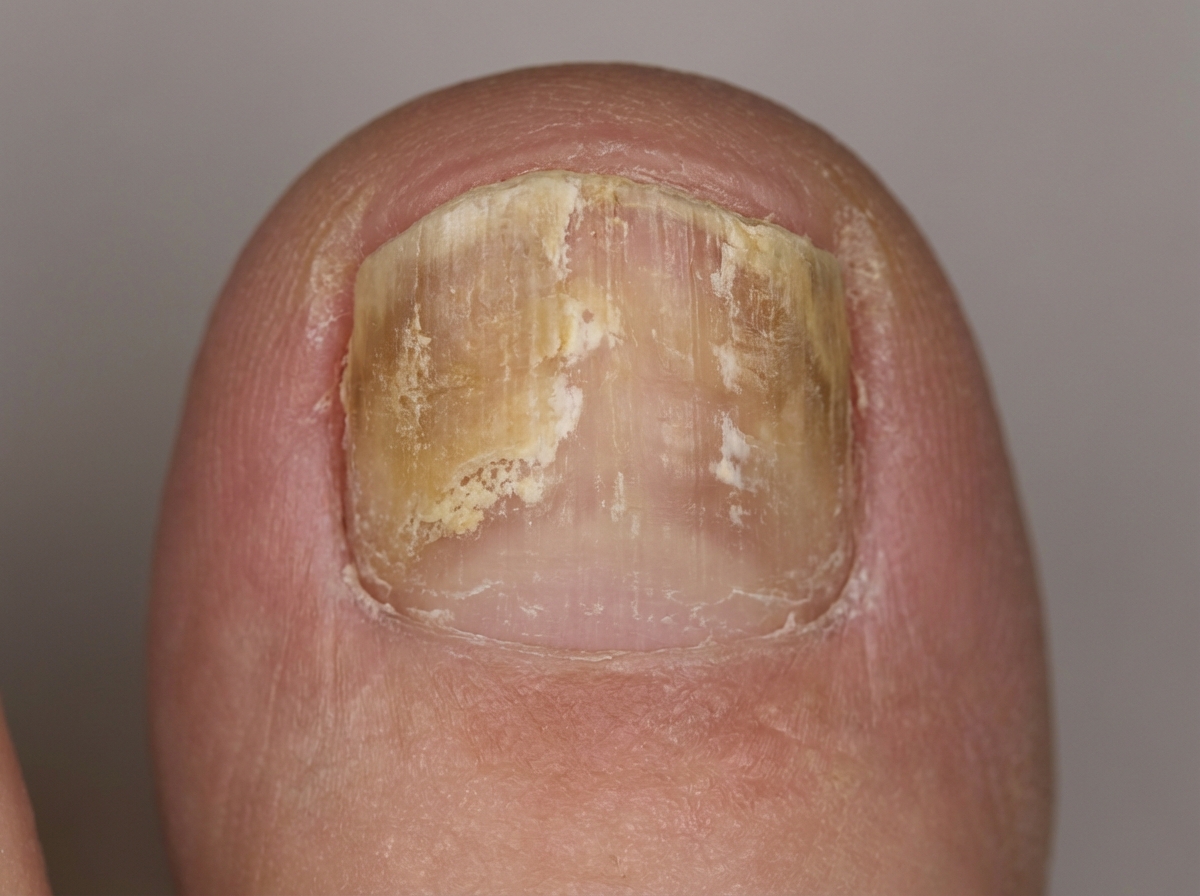
A 67-year-old man presents to his family physician’s office for a routine visit and to discuss a growth on his toenail that has been gradually enlarging for a month. He has a history of diabetes mellitus, hyperlipidemia, and hypertension and is on metformin, atorvastatin, and lisinopril. He admits to smoking 2 packs of cigarettes daily for the past 45 years. His blood pressure reading today is 132/88 mm Hg, heart rate is 78/min, respiration rate is 12/min and his temperature is 37.1°C (98.8°F). On exam, the patient appears alert and in no apparent distress. Capillary refill is 3 seconds. Diminished dull and sharp sensations are present bilaterally in the lower extremities distal to the mid-tibial region. An image of the patient’s toenail is provided. A potassium hydroxide (KOH) preparation of a nail clipping sample confirms the presence of hyphae. Which of the following treatment options will be most effective for this condition?
A 52-year-old woman presents to the emergency room complaining of chest pain. She reports a 4-hour history of dull substernal pain radiating to her jaw. Her history is notable for hypertension, diabetes mellitus, and alcohol abuse. She has a 30 pack-year smoking history and takes lisinopril and metformin but has an allergy to aspirin. Her temperature is 99.1°F (37.3°C), blood pressure is 150/90 mmHg, pulse is 120/min, and respirations are 22/min. Physical examination reveals a diaphoretic and distressed woman. An electrocardiogram reveals ST elevations in leads I, aVL, and V5-6. She is admitted with plans for immediate transport to the catheterization lab for stent placement. What is the mechanism of the next medication that should be given to this patient?
A 72-year-old woman with type 2 diabetes mellitus comes to the physician because she is concerned about the appearance of her toenails. Examination shows yellowish discoloration of all toenails on both feet. The edges of the toenails are lifted, and there is subungual debris. Potassium hydroxide preparation of scrapings from the nails shows multiple branching septate hyphae. Treatment with oral terbinafine is begun. Which of the following is the primary mechanism of action of this drug?
A potassium hydroxide preparation is conducted on a skin scraping of the hypopigmented area. Microscopy of the preparation shows long hyphae among clusters of yeast cells. Based on these findings, which of the following is the most appropriate pharmacotherapy?
A 64-year-old woman comes to the emergency room because of a sudden weakness in her right arm and leg. She has atrial fibrillation, tinea unguium, gastroesophageal reflux disease, hypertension, and hypercholesterolemia. Current medications include warfarin, enalapril, simvastatin, lansoprazole, hydrochlorothiazide, griseofulvin, and ginkgo biloba. Two weeks ago, she had an appointment with her podiatrist. Physical examination shows sagging of her right lower face and decreased muscle strength in her right upper and lower extremity. Babinski sign is positive on the right. Her prothrombin time is 14 seconds (INR = 1.5). Which of the following drugs is the most likely underlying cause of this patient's current condition?
A 63-year-old man comes to the physician for a routine health maintenance examination. He feels well. He has a history of hypertension, atrial fibrillation, bipolar disorder, and osteoarthritis of the knees. Current medications include lisinopril, amiodarone, lamotrigine, and acetaminophen. He started amiodarone 6 months ago and switched from lithium to lamotrigine 4 months ago. The patient does not smoke. He drinks 1–4 beers per week. He does not use illicit drugs. Vital signs are within normal limits. Examination shows no abnormalities. Laboratory studies show: Serum Na+ 137 mEq/L K+ 4.2 mEq/L Cl- 105 mEq/L HCO3- 24 mEq/L Urea nitrogen 14 mg/dL Creatinine 0.9 mg/dL Alkaline phosphatase 82 U/L Aspartate aminotransferase (AST) 110 U/L Alanine aminotransferase (ALT) 115 U/L Which of the following is the most appropriate next step in management?
A 19-year-old South Asian male presents to the family physician concerned that he is beginning to go bald. He is especially troubled because his father and grandfather "went completely bald by the age of 25," and he is willing to try anything to prevent his hair loss. The family physician prescribes a medication that prevents the conversion of testosterone to dihydrotestosterone. Which of the following enzymes is inhibited by this medication?
A 59-year-old man comes to the physician because of a painful, burning red rash on his face and hands, which developed 30 minutes after going outside to do garden work. He wore a long-sleeved shirt and was exposed to direct sunlight for about 10 minutes. The patient is light-skinned and has a history of occasional sunburns when he does not apply sunscreen. The patient was diagnosed with small cell lung carcinoma 2 months ago and is currently undergoing chemotherapy. He is currently taking demeclocycline for malignancy-associated hyponatremia and amoxicillin for sinusitis. He has also had occasional back pain. He takes zolpidem and drinks 1–2 glasses of brandy before going to sleep every night. He has smoked a pack of cigarettes daily for 20 years. His pulse is 72/min and his blood pressure is 120/75 mm Hg. Physical examination shows prominent erythema on his forehead, cheeks, and neck. Erythema and papular eruptions are seen on the dorsum of both hands. Which of the following is the most likely cause of this patient's symptoms?
Want unlimited practice?
Get full access to all questions, explanations, and performance tracking.
Scan to download app