
Antifungal spectrum of activity — MCQs

A 45-year-old HIV-positive male presents to his primary care physician complaining of decreased libido. He reports that he has been unable to maintain an erection for the past two weeks. He has never encountered this problem before. He was hospitalized four weeks ago for cryptococcal meningitis and has been on long-term antifungal therapy since then. His CD4 count is 400 cells/mm^3 and viral load is 5,000 copies/ml. He was previously non-compliant with HAART but since his recent infection, he has been more consistent with its use. His past medical history is also notable for hypertension, major depressive disorder, and alcohol abuse. He takes lisinopril and sertraline. His temperature is 98.6°F (37°C), blood pressure is 120/85 mmHg, pulse is 80/min, and respirations are 18/min. The physician advises the patient that side effects like decreased libido may manifest due to a drug with which of the following mechanisms of action?
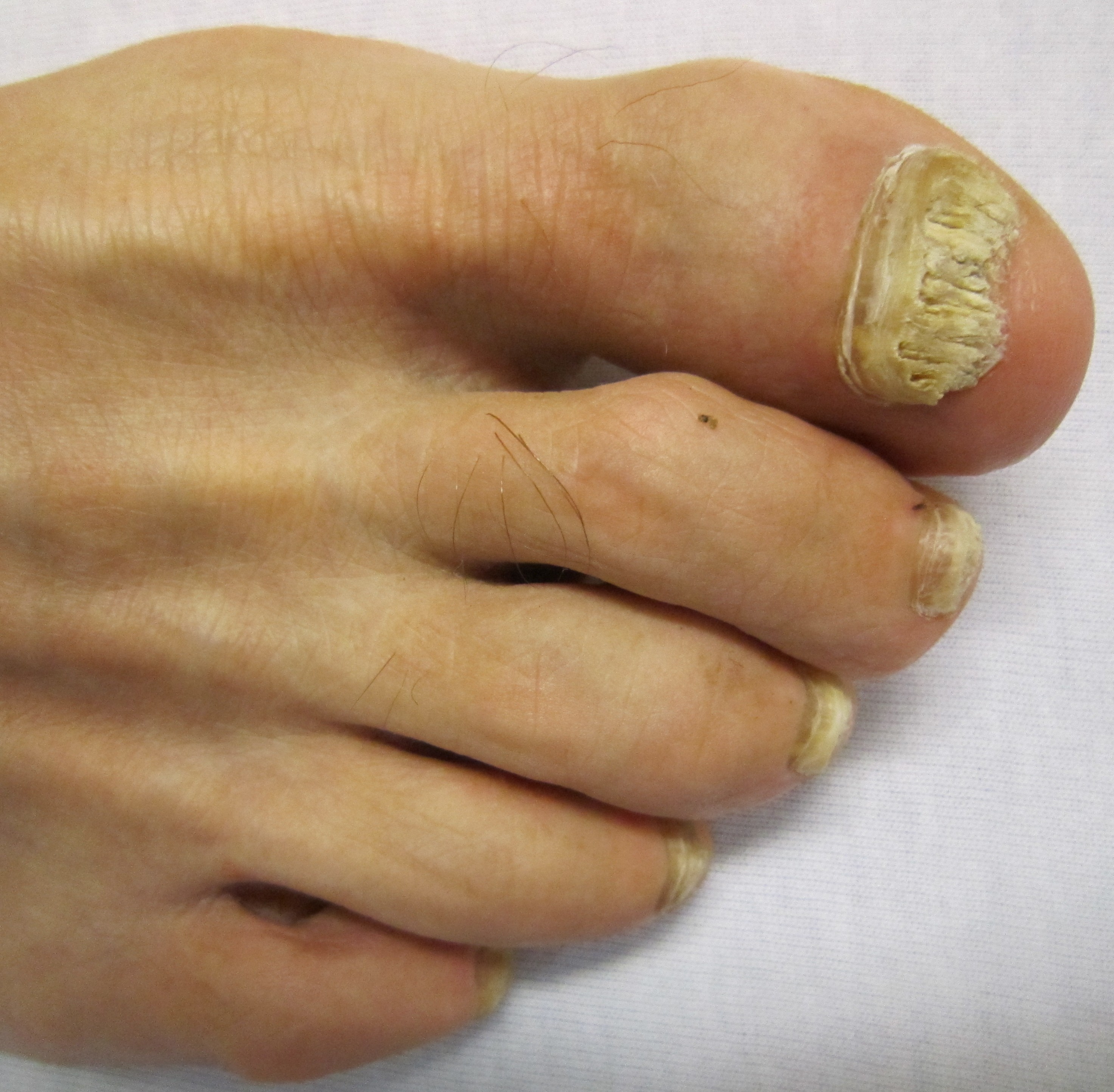
A 62-year-old man presents with dry and brittle toenails. On physical examination, his toenails are shown in the image. Which of the following is an adverse effect of the recommended treatment for this patient’s most likely condition?
A 45-year-old man comes to the physician because of a 3-day history of pain in his mouth and throat and difficulty swallowing. He has a history of COPD, for which he takes theophylline and inhaled budesonide-formoterol. Physical examination shows white patches on the tongue and buccal mucosa that can be scraped off easily. Appropriate pharmacotherapy is initiated. One week later, he returns because of nausea, palpitations, and anxiety. His pulse is 110/min and regular. Physical examination shows a tremor in both hands. Which of the following drugs was most likely prescribed?
A 57-year-old florist presents to his family physician with nodular lesions on his right hand and forearm. He explains that he got pricked by a rose thorn on his right "pointer finger" where the first lesions appeared, and the other lesions then began to appear in an ascending manner. The physician prescribed a medication and warned him of gynecomastia as a side effect if taken for long periods of time. Which of the following is the mechanism of action of the medication?
A 26-year-old female with AIDS (CD4 count: 47) presents to the emergency department in severe pain. She states that over the past week she has been fatigued and has had a progressively worse headache and fever. These symptoms have failed to remit leading her to seek care in the ED. A lumbar puncture is performed which demonstrates an opening pressure of 285 mm H2O, increased lymphocytes, elevated protein, and decreased glucose. The emergency physician subsequently initiates treatment with IV amphotericin B and PO flucytosine. What additional treatment in the acute setting may be warranted in this patient?
A 25-year-old man visits a local clinic while volunteering abroad to rebuild homes after a natural disaster. He reports that he has been experiencing an intermittent rash on his feet for several weeks that is associated with occasional itching and burning. He states that he has been working in wet conditions in work boots and often does not get a chance to remove them until just before going to bed. On physical exam, there is diffuse erythema and maceration of the webspaces between his toes. He starts taking a medication. Two days later, he experiences severe nausea and vomiting after drinking alcohol. Which of the following is the mechanism of action of the drug most likely prescribed in this case?
A 32-year-old woman presents with three-days of vaginal burning, itching, and pain with intercourse. She is in a monogamous relationship with her husband and has an intrauterine device for contraception. Her past medical history is unremarkable, except for recently being treated with antibiotics for sinusitis. Pelvic exam is remarkable for vulvar excoriations, vaginal wall edema, and thick, white discharge in the vault. Wet mount with KOH staining reveals budding filaments with pseudohyphae and hyphae. Which of the following is the most appropriate treatment?
A 45-year-old man presents to the emergency department with difficulties swallowing food. He states that he experiences pain when he attempts to swallow his medications or when he drinks water. He reveals that he was diagnosed with HIV infection five years ago. He asserts that he has been taking his antiretroviral regimen, including emtricitabine, rilpivirine, and tenofovir. His temperature is 98°F (37°C), blood pressure is 100/60 mmHg, pulse is 90/min, respirations are 22/min, and oxygen saturation is 99% on room air. His physical exam is notable for a clear oropharynx, no lymphadenopathy, and a normal cardiac and pulmonary exam. No rashes are noted throughout his body. His laboratory results are displayed below: Hemoglobin: 12 g/dL Hematocrit: 37 % Leukocyte count: 8,000/mm^3 with normal differential Platelet count: 160,000/mm^3 Serum: Na+: 138 mEq/L Cl-: 108 mEq/L K+: 3.5 mEq/L HCO3-: 26 mEq/L BUN: 35 mg/dL Glucose: 108 mg/dL Creatinine: 1.1 mg/dL CD4+ count: 90/mm^3 HIV viral load: 59,000 copies/mL What is the best next step in management?
A 41-year-old man comes to the physician because of a 3-week history of fatigue, cough, and a 4.5-kg (10-lb) weight loss. He does not smoke or drink alcohol. He appears emaciated. A chest x-ray shows a calcified nodule in the left lower lobe and left hilar lymphadenopathy. The physician initiates therapy for the condition and informs him that he will have to return for monthly ophthalmologic examination for the next 2 months. These examinations are most likely to evaluate the patient for an adverse effect of a drug with which of the following mechanisms of action?
A 72-year-old woman with type 2 diabetes mellitus comes to the physician because she is concerned about the appearance of her toenails. Examination shows yellowish discoloration of all toenails on both feet. The edges of the toenails are lifted, and there is subungual debris. Potassium hydroxide preparation of scrapings from the nails shows multiple branching septate hyphae. Treatment with oral terbinafine is begun. Which of the following is the primary mechanism of action of this drug?
Want unlimited practice?
Get full access to all questions, explanations, and performance tracking.
Scan to download app