
Vaccine storage and handling — MCQs

A 29-year-old man comes to the physician for a routine health maintenance examination. He feels well. He works as a nurse at a local hospital in the city. Three days ago, he had a needlestick injury from a patient whose serology is positive for hepatitis B. He completed the 3-dose regimen of the hepatitis B vaccine 2 years ago. His other immunizations are up-to-date. He appears healthy. Physical examination shows no abnormalities. He is concerned about his risk of being infected with hepatitis B following his needlestick injury. Serum studies show negative results for hepatitis B surface antigen, hepatitis B surface antibody, and hepatitis C antibody. Which of the following is the most appropriate next step in management?
A scientist in Chicago is studying a new blood test to detect Ab to EBV with increased sensitivity and specificity. So far, her best attempt at creating such an exam reached 82% sensitivity and 88% specificity. She is hoping to increase these numbers by at least 2 percent for each value. After several years of work, she believes that she has actually managed to reach a sensitivity and specificity much greater than what she had originally hoped for. She travels to China to begin testing her newest blood test. She finds 2,000 patients who are willing to participate in her study. Of the 2,000 patients, 1,200 of them are known to be infected with EBV. The scientist tests these 1,200 patients' blood and finds that only 120 of them tested negative with her new exam. Of the patients who are known to be EBV-free, only 20 of them tested positive. Given these results, which of the following correlates with the exam's specificity?
A 12-month-old girl is brought to her pediatrician for a checkup and vaccines. The patient’s mother wants to send her to daycare but is worried about exposure to unvaccinated children and other potential sources of infection. The toddler was born at 39 weeks gestation via spontaneous vaginal delivery. She is up to date on all vaccines. She does not walk yet but stands in place and can say a few words. The toddler drinks formula and eats a mixture of soft vegetables and pureed meals. She has no current medications. On physical exam, the vital signs include: temperature 37.0°C (98.6°F), blood pressure 95/50 mm Hg, pulse 130/min, and respiratory rate 28/min. The patient is alert and responsive. The remainder of the exam is unremarkable. Which of the following is most appropriate for this patient at this visit?
A 2-year-old boy presents for a routine checkup. The patient’s mother says that he has been ‘under the weather’ for the past few days. She did not measure his temperature at home but states that he has felt warm. She denies any episodes of diarrhea or vomiting. No significant past medical history or current medications. The patient attends daycare. He is due for a hepatitis A vaccine. The patient was born at term with no prenatal or perinatal complications. The vital signs include: temperature 37.8°C (100.1°F), blood pressure 112/62 mm Hg, pulse 80/min, respiratory rate 18/min, and oxygen saturation 99% on room air. The patient is alert and responsive. The physical exam is unremarkable. Which of the following is the most appropriate next step in the management of this patient?
The occupational health department at a hospital implements new safety precautions to prevent laboratory-acquired infections. One of the new precautions includes disinfecting the microbiology laboratory benches with 70% ethanol before and after use. This measure is most likely to be effective in preventing the transmission of which of the following viruses?
A young man about to leave for his freshman year of college visits his physician in order to ensure that his immunizations are up-to-date. Because he is living in a college dormitory, his physician gives him a vaccine that prevents meningococcal disease. What type of vaccine did this patient likely receive?
A 35-year-old man is brought to the emergency department by his wife because of a 1-week history of progressive confusion, myalgia, and nausea. His wife says that he first reported headaches and fatigue 10 days ago, and since then “he has not been himself”. He has refused to drink any liquids for the last day. Two months ago, he helped his neighbor remove a raccoon's den from her backyard. He appears agitated. His temperature is 100.8°F (38.2°C). Examination shows excessive drooling. Muscle tone and deep tendon reflexes are increased bilaterally. Administration of which of the following is most likely to have prevented this patient's condition?
A 28-year-old woman comes to the emergency department for a 1-week history of jaundice and nausea. She recalls eating some seafood last weekend at a cookout. She lives at home with her 2-year-old son who attends a daycare center. The child's immunizations are up-to-date, and his last hepatitis A vaccine was administered 6 weeks ago. The woman's temperature is 37.5°C (99.5°F), pulse is 82/min, and blood pressure is 134/84 mm Hg. Examination shows scleral icterus. The liver is palpated 2-cm below the right costal margin and is tender. Her serum studies show: Total bilirubin 3.4 mg/dL Alkaline phosphatase 89 U/L AST 185 U/L ALT 723 U/L Hepatitis A IgM antibody positive Hepatitis B surface antibody positive Hepatitis B surface antigen negative Hepatitis B core IgM antibody negative Hepatitis C antibody negative Which of the following health maintenance recommendations is most appropriate for the child at this time?
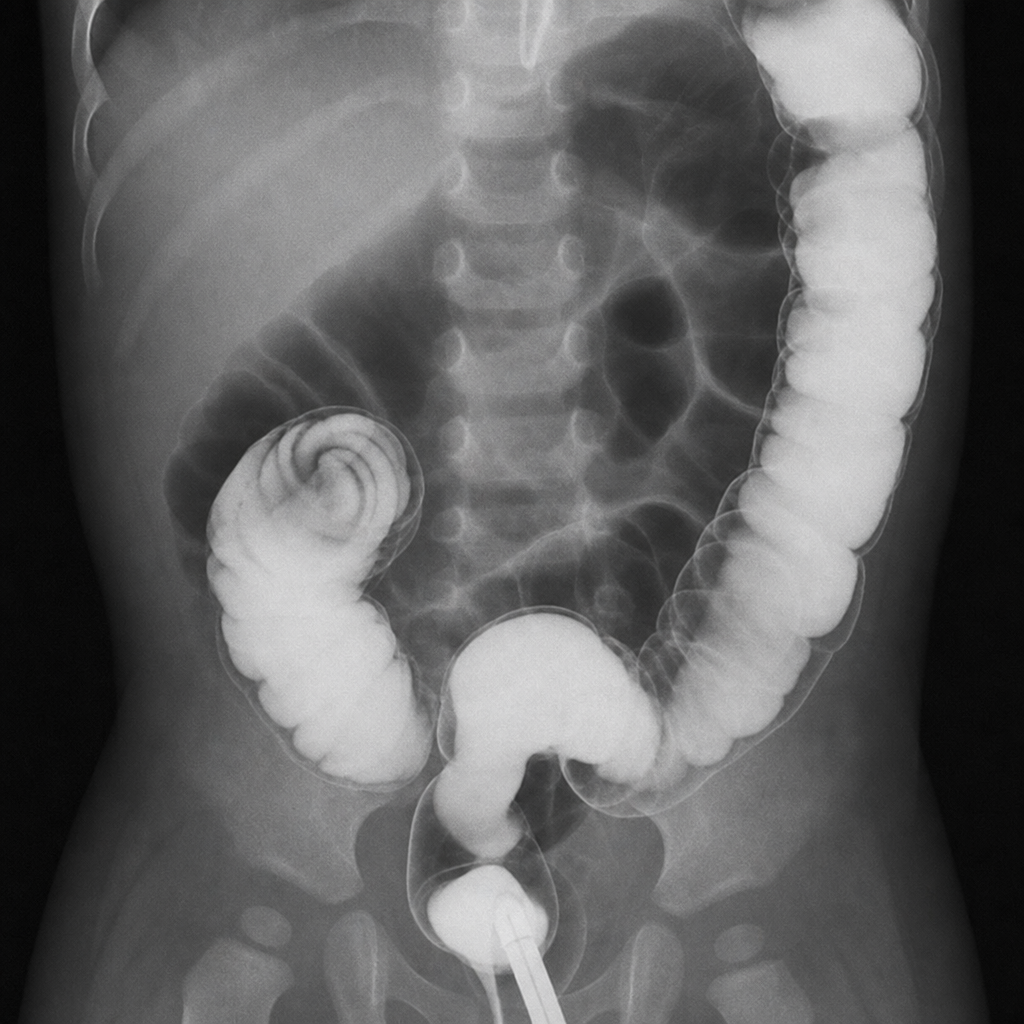
A 9-month-old male infant is brought to the emergency department with a 6-hour history of intermittent, severe, colicky crying episodes lasting 2–3 minutes each, separated by periods of normal behavior. He has vomited twice and passed one stool described as 'currant jelly.' On examination, he is afebrile, with a soft abdomen but a palpable sausage-shaped mass in the right upper quadrant. An abdominal ultrasound confirms the clinical suspicion. The infant is hemodynamically stable with no peritoneal signs. Which of the following is the most appropriate next step in management?
An unimmunized 5 -year-old child presents to the OPD with a white membranous layer on inspection, suggesting diphtheria. What is the appropriate prophylaxis for a 2 -year-old contact who has completed their vaccination?
Want unlimited practice?
Get full access to all questions, explanations, and performance tracking.
Scan to download app