
Nutritional requirements and disorders — MCQs

On this page
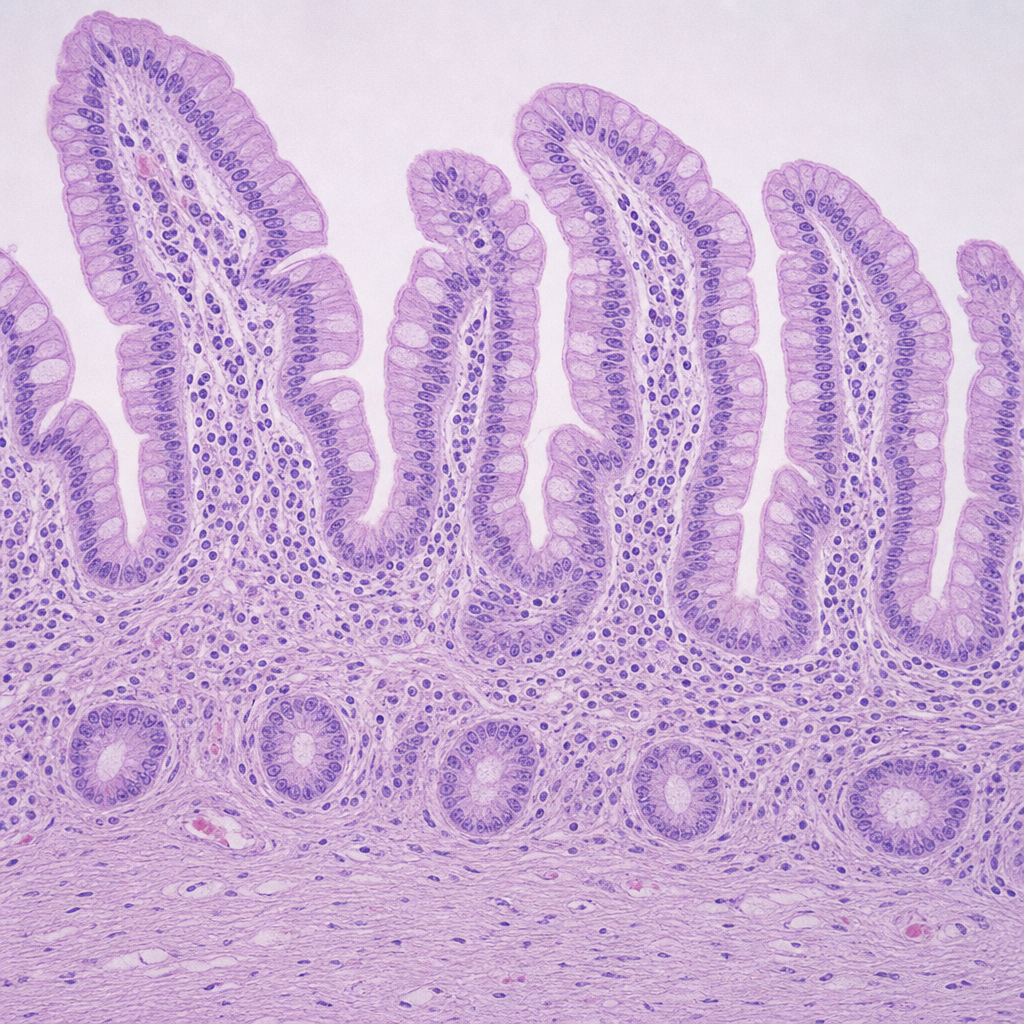
A 3-year-old boy is brought to the clinic for a well-child visit. He was born at 39 weeks with no perinatal complications, and his newborn screening was normal. His weight has crossed from the 50th percentile at 12 months to the 10th percentile at 18 months and now plots below the 3rd percentile at 36 months. His length plots at the 25th percentile and head circumference at the 40th percentile. His mother notes that his weight loss and loose stools began around 14 months of age, shortly after he started eating bread, pasta, and cereals. He eats a variety of table foods including bread, pasta, and cereals, but his mother describes meals as 'a struggle.' He has no history of recurrent respiratory infections, chronic cough, or wheezing. Stool is described as bulky and foul-smelling. Physical examination reveals a thin child with decreased subcutaneous fat in the buttocks and thighs; the remainder of the examination is unremarkable. Which of the following is the most appropriate next step in evaluation?
A 6-year-old with short bowel syndrome (40 cm remaining small bowel) on home parenteral nutrition for 4 years presents with progressive visual impairment and ataxia. Ophthalmologic exam shows retinopathy and ophthalmoplegia. Laboratory studies show vitamin E 2.1 mg/L (normal 5-18), normal vitamin A and D levels, PT/INR normal, and lipid profile shows total cholesterol 85 mg/dL. The family reports excellent compliance with prescribed fat-soluble vitamin supplementation in the parenteral formula. Synthesize the most likely explanation for isolated vitamin E deficiency.
A 15-month-old presents with severe protein-energy malnutrition, hepatomegaly, edema, and skin changes (hypopigmentation with desquamation). Total protein 3.8 g/dL, albumin 1.9 g/dL, prealbumin 8 mg/dL. The parents want rapid nutritional rehabilitation, but the physician is concerned about complications. The child also has watery diarrhea and suspected concurrent infection. Evaluate the optimal initial refeeding strategy considering all risk factors.
A 14-year-old girl with anorexia nervosa is admitted for refeeding. Her BMI is 13.5 kg/m². Initial laboratory studies show sodium 136 mEq/L, potassium 3.3 mEq/L, phosphorus 3.8 mg/dL, magnesium 1.9 mg/dL. On day 3 of refeeding (advancing from 800 to 1400 kcal/day), she develops confusion, weakness, and respiratory distress. Repeat labs show phosphorus 1.1 mg/dL, potassium 2.8 mEq/L, and magnesium 1.2 mg/dL. ECG shows QTc prolongation. Evaluate the pathophysiology and priority management.
A 7-month-old infant presents with developmental regression, irritability, and poor feeding. He was born to consanguineous parents and has been on a special metabolic formula since birth due to an inborn error of metabolism. Examination shows hypotonia, megaloblastic anemia (MCV 115 fL), and homocystinuria without methylmalonic aciduria. Plasma homocysteine is markedly elevated while methionine is low. Analyze the most likely enzymatic defect.
Practice by Chapter
Infant feeding recommendations
Practice Questions
Breastfeeding support and counseling
Practice Questions
Formula selection and preparation
Practice Questions
Introduction of complementary foods
Practice Questions
Childhood nutrition requirements by age
Practice Questions
Nutritional assessment methods
Practice Questions
Micronutrient deficiencies
Practice Questions
Vitamin D deficiency and rickets
Practice Questions
Iron deficiency and anemia
Practice Questions
Feeding disorders in children
Practice Questions
Malnutrition management
Practice Questions
Food allergies and intolerances
Practice Questions
Special diets in pediatric conditions
Practice Questions
Want unlimited practice?
Get full access to all questions, explanations, and performance tracking.
Scan to download app