
Necrotizing enterocolitis — MCQs

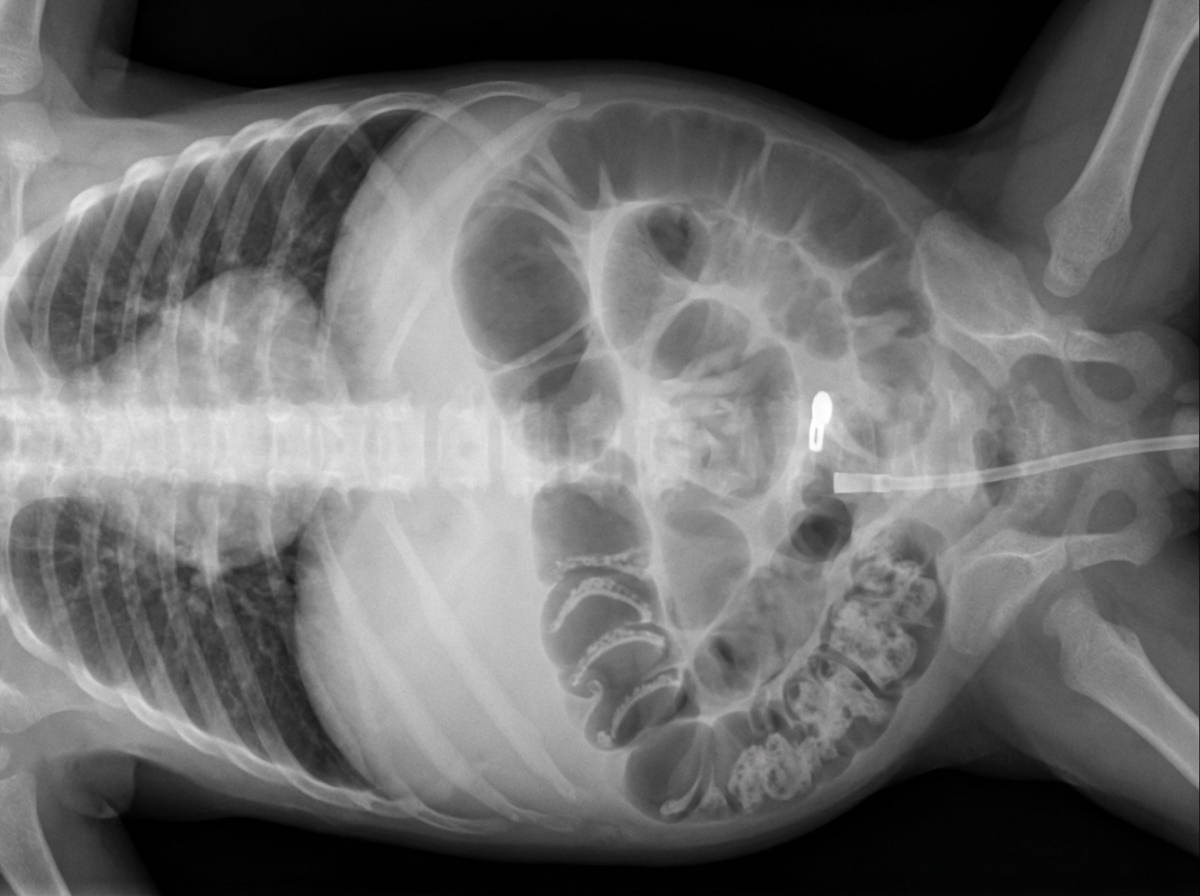
A four-week-old female is evaluated in the neonatal intensive care unit for feeding intolerance with gastric retention of formula. She was born at 25 weeks gestation to a 32-year-old gravida 1 due to preterm premature rupture of membranes at 24 weeks gestation. The patient’s birth weight was 750 g (1 lb 10 oz). She required resuscitation with mechanical ventilation at the time of delivery, but she was subsequently extubated to continuous positive airway pressure (CPAP) and then weaned to nasal cannula. The patient was initially receiving both parenteral nutrition and enteral feeds through a nasogastric tube, but she is now receiving only continuous nasogastric formula feeds. Her feeds are being advanced to a target weight gain of 20-30 g per day. Her current weight is 1,350 g (2 lb 16 oz). The patient’s temperature is 97.2°F (36.2°C), blood pressure is 72/54 mmHg, pulse is 138/min, respirations are 26/min, and SpO2 is 96% on 4L nasal cannula. On physical exam, the patient appears lethargic. Her abdomen is soft and markedly distended. Digital rectal exam reveals stool streaked with blood in the rectal vault. Which of the following abdominal radiographs would most likely be seen in this patient?
A 47-year-old woman presents to the emergency department with abdominal pain. The patient states that she felt this pain come on during dinner last night. Since then, she has felt bloated, constipated, and has been vomiting. Her current medications include metformin, insulin, levothyroxine, and ibuprofen. Her temperature is 99.0°F (37.2°C), blood pressure is 139/79 mmHg, pulse is 95/min, respirations are 12/min, and oxygen saturation is 98% on room air. On physical exam, the patient appears uncomfortable. Abdominal exam is notable for hypoactive bowel sounds, abdominal distension, and diffuse tenderness in all four quadrants. Cardiac and pulmonary exams are within normal limits. Which of the following is the best next step in management?
A 32-year-old man is brought to the emergency department after a skiing accident. The patient had been skiing down the mountain when he collided with another skier who had stopped suddenly in front of him. He is alert but complaining of pain in his chest and abdomen. He has a past medical history of intravenous drug use and peptic ulcer disease. He is a current smoker. His temperature is 97.4°F (36.3°C), blood pressure is 77/53 mmHg, pulse is 127/min, and respirations are 13/min. He has a GCS of 15 and bilateral shallow breath sounds. His abdomen is soft and distended with bruising over the epigastrium. He is moving all four extremities and has scattered lacerations on his face. His skin is cool and delayed capillary refill is present. Two large-bore IVs are placed in his antecubital fossa, and he is given 2L of normal saline. His FAST exam reveals fluid in Morison's pouch. Following the 2L normal saline, his temperature is 97.5°F (36.4°C), blood pressure is 97/62 mmHg, pulse is 115/min, and respirations are 12/min. Which of the following is the best next step in management?
A 28-year-old male presents to his primary care physician with complaints of intermittent abdominal pain and alternating bouts of constipation and diarrhea. His medical chart is not significant for any past medical problems or prior surgeries. He is not prescribed any current medications. Which of the following questions would be the most useful next question in eliciting further history from this patient?
A 16-month-old male patient, with no significant past medical history, is brought into the emergency department for the second time in 5 days with tachypnea, expiratory wheezes and hypoxia. The patient presented to the emergency department initially due to rhinorrhea, fever and cough. He was treated with nasal suctioning and discharged home. The mother states that, over the past 5 days, the patient has started breathing faster with chest retractions. His vital signs are significant for a temperature of 100.7 F, respiratory rate of 45 and oxygen saturation of 90%. What is the most appropriate treatment for this patient?
A 3500-g (7.7-lbs) girl is delivered at 39 weeks' gestation to a 27-year-old woman, gravida 2, para 1. Apgar scores are 8 and 9 at 1 and 5 minutes, respectively. The mother had regular prenatal visits throughout the pregnancy. She did not smoke or drink alcohol. She took multivitamins as prescribed by her physician. The newborn appears active. The girl's temperature is 37°C (98.6°F), pulse is 120/min, and blood pressure is 55/35 mm Hg. Examination in the delivery room shows clitoromegaly. One day later, laboratory studies show: Hemoglobin 12.8 g/dL Leukocyte count 6,000/mm3 Platelet count 240,000/mm3 Serum Na+ 133 mEq/L K+ 5.2 mEq/L Cl− 101 mEq/L HCO3− 21 mEq/L Urea nitrogen 15 mg/dL Creatinine 0.8 mg/dL Ultrasound of the abdomen and pelvis shows normal uterus and normal ovaries. Which of the following is the most appropriate next step in the management of this newborn patient?
A 4-week-old male presents with his parents to the pediatrician for a well-child visit. The patient’s mother reports that the patient was eating well until about one week ago, when he began vomiting after breastfeeding. His mother has tried increasing the frequency of feeds and decreasing the amount of each feed, but the vomiting seems to be getting worse. The patient now vomits after every feed. His mother states the vomitus looks like breastmilk. The patient’s mother is exclusively breastfeeding and would prefer not to switch to formula but worries that the patient is not getting the nutrition he needs. Two weeks ago, the patient was in the 75th percentile for weight and 70th for height. He is now in the 60th percentile for weight and 68th percentile for height. On physical exam, the patient has dry mucous membranes. His abdomen is soft and non-distended. Which of the following is the best next step in management?
A 6-month-old boy is brought to the emergency department by his mother, who informs the doctor that her alcoholic husband hit the boy hard on his back. The blow was followed by excessive crying for several minutes and the development of redness in the area. On physical examination, the boy is dehydrated, dirty, and irritable and when the vital signs are checked, they reveal tachycardia. He cries immediately upon the physician touching the area around his left scapula. The doctor strongly suspects a fracture of the 6th, 7th, or 8th retroscapular posterior ribs. Evaluation of his skeletal survey is normal. The clinician is concerned about child abuse in this case. Which of the following is the most preferred imaging technique as the next step in the diagnostic evaluation of the infant?
An 18-month-old boy is brought to the physician by his parents for the evaluation of passing large amounts of dark red blood from his rectum for 2 days. His parents noticed that he has also had several episodes of dark stools over the past 3 weeks. The parents report that their child has been sleeping more and has been more pale than usual over the past 24 hours. The boy's appetite has been normal and he has not vomited. He is at the 50th percentile for height and 50th percentile for weight. His temperature is 37°C (98.6°F), pulse is 135/min, respirations are 38/min, and blood pressure is 90/50 mm Hg. Examination shows pale conjunctivae. The abdomen is soft and nontender. There is a small amount of dark red blood in the diaper. Laboratory studies show: Hemoglobin 9.5 g/dL Hematocrit 30% Mean corpuscular volume 68 μm3 Leukocyte count 7,200/mm3 Platelet count 300,000/mm3 Which of the following is most likely to confirm the diagnosis?
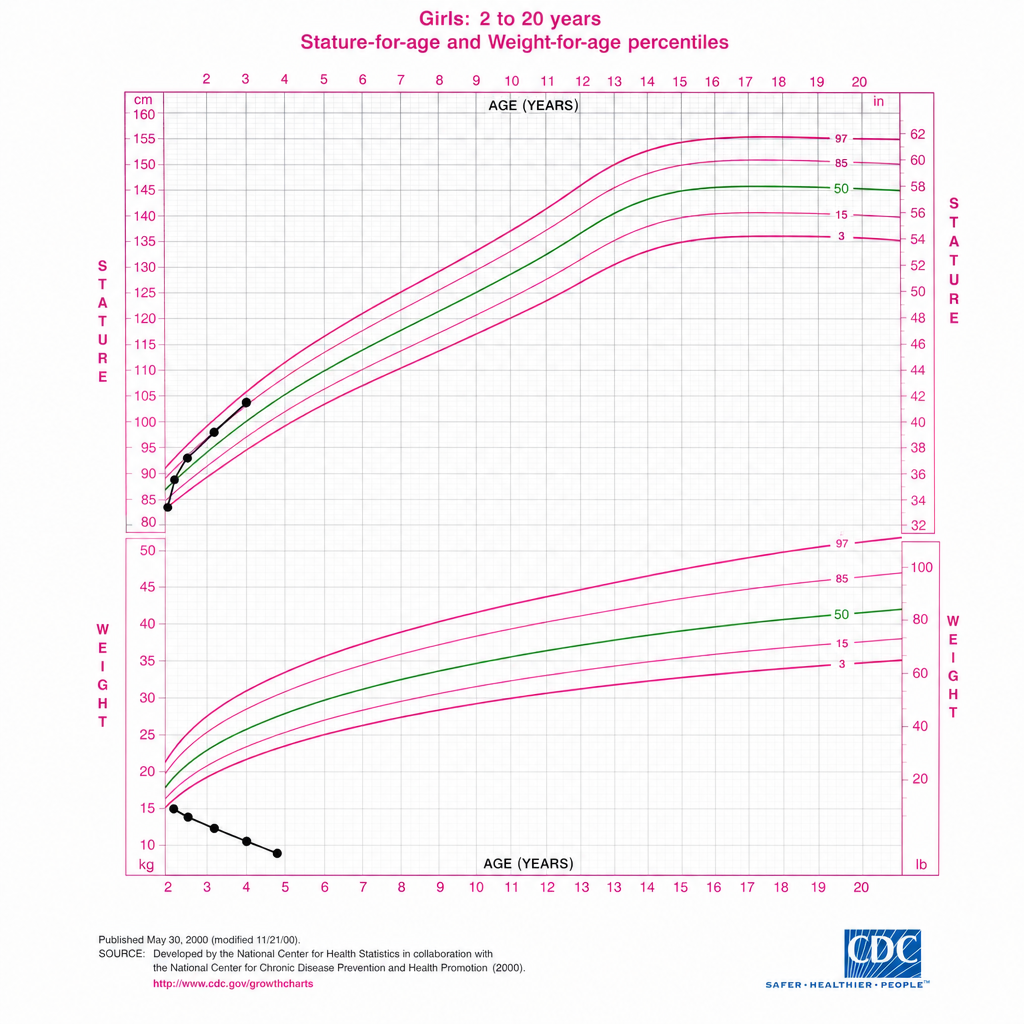
A 4-year-old girl is brought to the clinic for a well-child visit. Her growth chart is shown. She was born at term with a birth weight of 3.4 kg. Her weight at 12 months was at the 50th percentile, at 24 months at the 25th percentile, and today her weight plots below the 3rd percentile. Her length has followed the 25th percentile consistently. Her parents report she has had three to four loose, foul-smelling, greasy stools per day since she began eating gluten-containing foods at 12 months. Laboratory studies show hemoglobin 9.8 g/dL with microcytic anemia, albumin 2.8 g/dL, and zinc level below normal. Anti-tissue transglutaminase IgA antibodies are elevated. Which of the following is the most likely primary etiology of her growth pattern?
Want unlimited practice?
Get full access to all questions, explanations, and performance tracking.
Scan to download app