
Congenital TORCH infections — MCQs

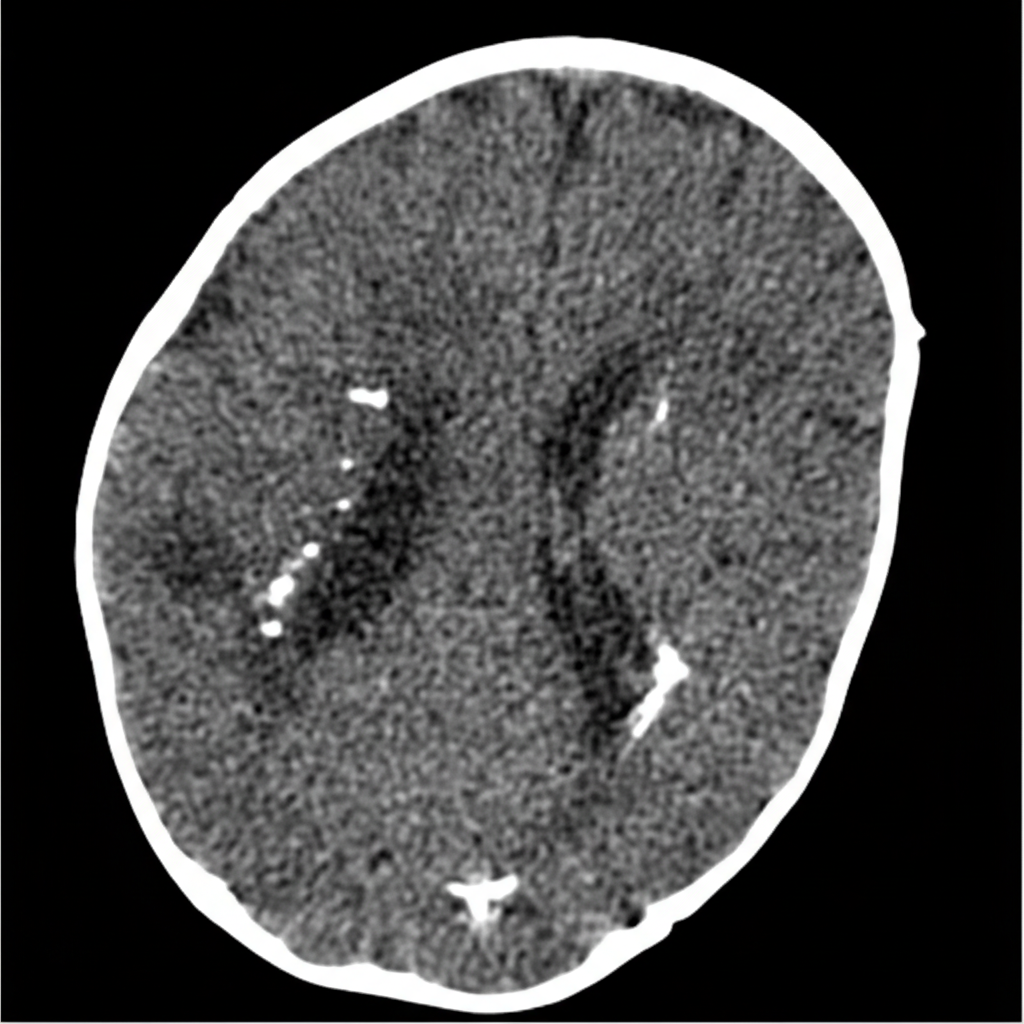
A 2-day-old boy, born at 38-weeks gestation, presents with jaundice and microcephaly. Social history reveals his mother is an animal caretaker. The vital signs include: temperature 37.0°C (98.6°F), blood pressure 75/40 mm Hg, pulse 150/min, respiratory rate 40/min, and oxygen saturation 99% on room air. Physical examination reveals hepatosplenomegaly. A CT and MRI of the head are significant for the following findings (see picture). Which of the following diseases contracted during pregnancy is the most likely cause of this patient's condition?
A 32-year-old G1P0 woman presents to her obstetrician for a prenatal visit. She is 30 weeks pregnant. She reports some fatigue and complains of urinary urgency. Prior to this pregnancy, she had no significant medical history. She takes a prenatal vitamin and folate supplements daily. Her mother has diabetes, and her brother has coronary artery disease. On physical examination, the fundal height is 25 centimeters. A fetal ultrasound shows a proportional reduction in head circumference, trunk size, and limb length. Which of the following is the most likely cause of the patient’s presentation?
A 24-year-old woman, gravida 1, para 0, at 39 weeks' gestation, is admitted to the hospital in active labor. She currently has contractions occurring every 3–5 minutes. For the past 3 days, she has had burning pain in the vulvar area associated with intense itching. Her pregnancy has been uneventful. She has a history of genital herpes at the age of 16, which was treated with acyclovir. Her vital signs are within normal limits. Genital examination shows grouped vesicles on an erythematous base over the vulvar region. Pelvic examination shows rupture of membranes and that the cervix is 3 cm dilated. Which of the following is the most appropriate next step in management?
An investigator studying patients with symptoms of arthritis detects a nonenveloped virus with a single-stranded DNA genome in the serum of a pregnant patient. Fetal infection with this pathogen is most likely to cause which of the following manifestations?
A 3175-g (7-lb) female newborn is delivered at 37 weeks to a 26-year-old primigravid woman. Apgar scores are 8 and 9 at 1 and 5 minutes, respectively. The pregnancy had been uncomplicated. The mother had no prenatal care. She immigrated to the US from Brazil 2 years ago. Immunization records are not available. One day after delivery, the newborn's temperature is 37.5°C (99.5°F), pulse is 182/min, respirations are 60/min, and blood pressure is 82/60 mm Hg. The lungs are clear to auscultation. Cardiac examination shows a continuous heart murmur. The abdomen is soft and nontender. There are several discolored areas on the skin that are non-blanchable upon pressure application. Slit lamp examination shows cloudy lenses in both eyes. The newborn does not pass her auditory screening tests. Which of the following is the most likely diagnosis?
A 3-day-old female newborn delivered vaginally at 36 weeks to a 27-year-old woman has generalized convulsions lasting 3 minutes. Prior to the event, she was lethargic and had difficulty feeding. The infant has two healthy older siblings and the mother's immunizations are up-to-date. The infant appears icteric. The infant's weight and length are at the 5th percentile, and her head circumference is at the 99th percentile for gestational age. There are several purpura of the skin. Ocular examination shows posterior uveitis. Cranial ultrasonography shows ventricular dilatation, as well as hyperechoic foci within the cortex, basal ganglia, and periventricular region. Which of the following is the most likely diagnosis?
A 23-year-old man comes to the physician for frequent and painful urination. He has also had progressive painful swelling of his right knee over the past week. He is sexually active with two female partners and uses condoms inconsistently. His mother has an autoimmune disease that involves a malar rash. Examination shows conjunctivitis bilaterally. The right knee is warm, erythematous, and tender to touch; range of motion is limited. Laboratory studies show an erythrocyte sedimentation rate of 62 mm/h. Urinalysis shows WBCs. Further evaluation of this patient is most likely to reveal which of the following?
A 28-year-old man presents to the office complaining of a sore throat, difficulty swallowing, and difficulty opening his mouth for the past 5 days. He states that he had symptoms like this before and "was given some antibiotics that made him feel better". He is up to date on his immunizations. On examination, his temperature is 39.5°C (103.2°F) and he has bilateral cervical lymphadenopathy. An oropharyngeal exam is difficult, because the patient finds it painful to fully open his mouth. However, you are able to view an erythematous pharynx as well as a large, unilateral lesion superior to the left tonsil. A rapid antigen detection test is negative. Based on this clinical presentation, what is a serious complication of the most likely diagnosis?
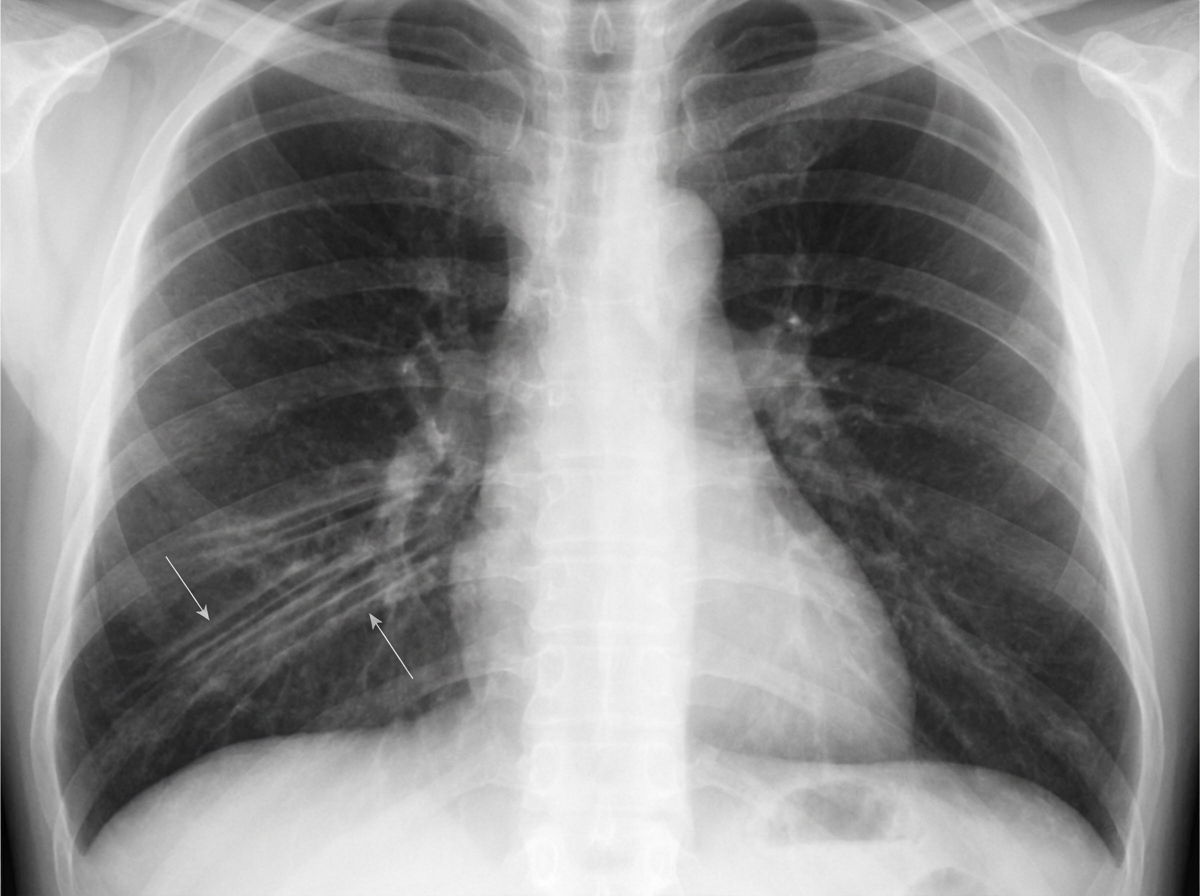
A 65-year-old man is brought to the emergency department after coughing up copious amounts of blood-tinged sputum at his nursing home. He recently had an upper respiratory tract infection that was treated with antibiotics. He has a long-standing history of productive cough that has worsened since he had a stroke 3 years ago. He smoked a pack of cigarettes daily for 40 years until the stroke, after which he quit. The patient appears distressed and short of breath. His temperature is 38°C (100.4°F), pulse is 92/min, and blood pressure is 145/85 mm Hg. Pulse oximetry on room air shows an oxygen saturation of 92%. Physical examination shows digital clubbing and cyanosis of the lips. Coarse crackles are heard in the thorax. An x-ray of the chest shows increased translucency and tram-track opacities in the right lower lung field. Which of the following is the most likely diagnosis?
A 9-month-old boy is brought to the physician because of abnormal crawling and inability to sit without support. A 2nd-trimester urinary tract infection that required antibiotic use and a spontaneous preterm birth via vaginal delivery at 36 weeks’ gestation both complicated the mother’s pregnancy. Physical examination shows a scissoring posture of the legs when the child is suspended by the axillae. Examination of the lower extremities shows brisk tendon reflexes, ankle clonus, and upward plantar reflexes bilaterally. When encouraged by his mother, the infant crawls forward by using normal reciprocal movements of his arms, while his legs drag behind. A brain MRI shows scarring and atrophy in the white matter around the ventricles with ventricular enlargement. Which of the following is most likely associated with the findings in this child?
Want unlimited practice?
Get full access to all questions, explanations, and performance tracking.
Scan to download app