
Antibiotic stewardship in NICU — MCQs

A newborn infant is born at 40 weeks gestation to a G1P1 mother. The pregnancy was uncomplicated and was followed by the patient's primary care physician. The mother has no past medical history and is currently taking a multi-vitamin, folate, B12, and iron. The infant is moving its limbs spontaneously and is crying. His temperature is 98.7°F (37.1°C), blood pressure is 60/38 mmHg, pulse is 150/min, respirations are 33/min, and oxygen saturation is 99% on room air. Which of the following is the best next step in management?
A neonate born at 33 weeks is transferred to the NICU after a complicated pregnancy and C-section. A week after being admitted, he developed a fever and became lethargic and minimally responsive to stimuli. A lumbar puncture is performed that reveals the following: Appearance Cloudy Protein 64 mg/dL Glucose 22 mg/dL Pressure 330 mm H20 Cells 295 cells/mm³ (> 90% PMN) A specimen is sent to microbiology and reveals gram-negative rods. Which of the following is the next appropriate step in management?
Five days after being admitted to the hospital for a scald wound, a 2-year-old boy is found to have a temperature of 40.2°C (104.4°F). He does not have difficulty breathing, cough, or painful urination. He initially presented one hour after spilling a pot of boiling water on his torso while his mother was cooking dinner. He was admitted for fluid resuscitation, nutritional support, pain management, and wound care, and he was progressing well until today. He has no other medical conditions. Other than analgesia during this hospital stay, he does not take any medications. He appears uncomfortable but not in acute distress. His pulse is 150/min, respirations are 41/min, and blood pressure is 90/50 mm Hg. Pulse oximetry on room air shows an oxygen saturation of 99%. Examination shows uneven, asymmetrical scalding covering his anterior torso in arrow-like patterns with surrounding erythema and purulent discharge. The remainder of the examination shows no abnormalities. His hemoglobin is 13.4 g/dL, platelet count is 200,000/mm3, and leukocyte count is 13,900/mm3. Which of the following is the most appropriate initial pharmacological treatment for this patient?
A 3-year-old child is brought to the pediatrician by his mother who states that he has been fussy for the past two days. She says that he has had a runny nose, a cough, a sore throat, and decreased appetite. Vital signs are within normal limits. Physical exam reveals a slightly erythematous oropharynx and clear nasal discharge. The mother states that she is a single mother working at a busy law firm. The mother demands that the child receive antibiotics, as her babysitter refuses to care for the child unless he is treated with antibiotics. You diagnose the child with the common cold and inform the mother that antibiotics are not indicated. She is infuriated and accuses you of refusing to treat her child appropriately. How should you respond?
You are treating a neonate with meningitis using ampicillin and a second antibiotic, X, that is known to cause ototoxicity. What is the mechanism of antibiotic X?
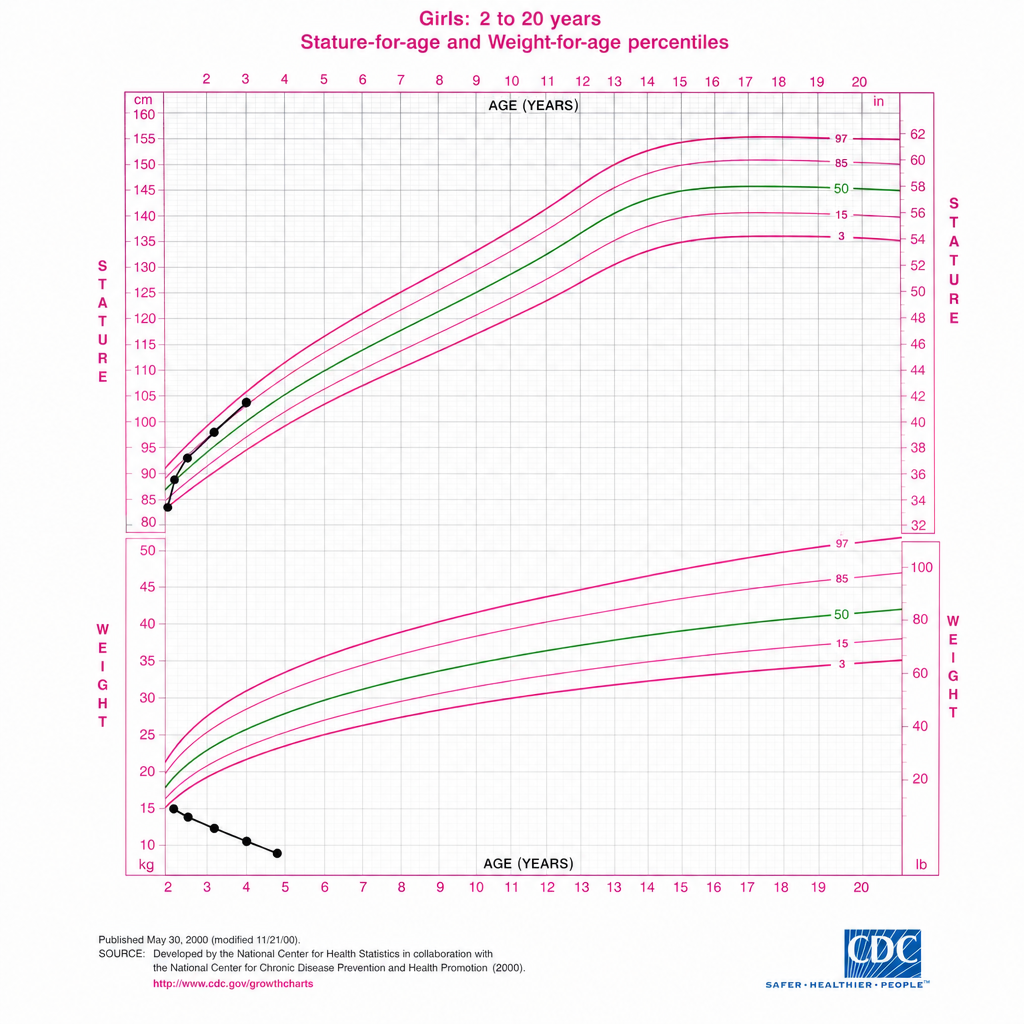
A 4-year-old girl is brought to the clinic for a well-child visit. Her growth chart is shown. She was born at term with a birth weight of 3.4 kg. Her weight at 12 months was at the 50th percentile, at 24 months at the 25th percentile, and today her weight plots below the 3rd percentile. Her length has followed the 25th percentile consistently. Her parents report she has had three to four loose, foul-smelling, greasy stools per day since she began eating gluten-containing foods at 12 months. Laboratory studies show hemoglobin 9.8 g/dL with microcytic anemia, albumin 2.8 g/dL, and zinc level below normal. Anti-tissue transglutaminase IgA antibodies are elevated. Which of the following is the most likely primary etiology of her growth pattern?
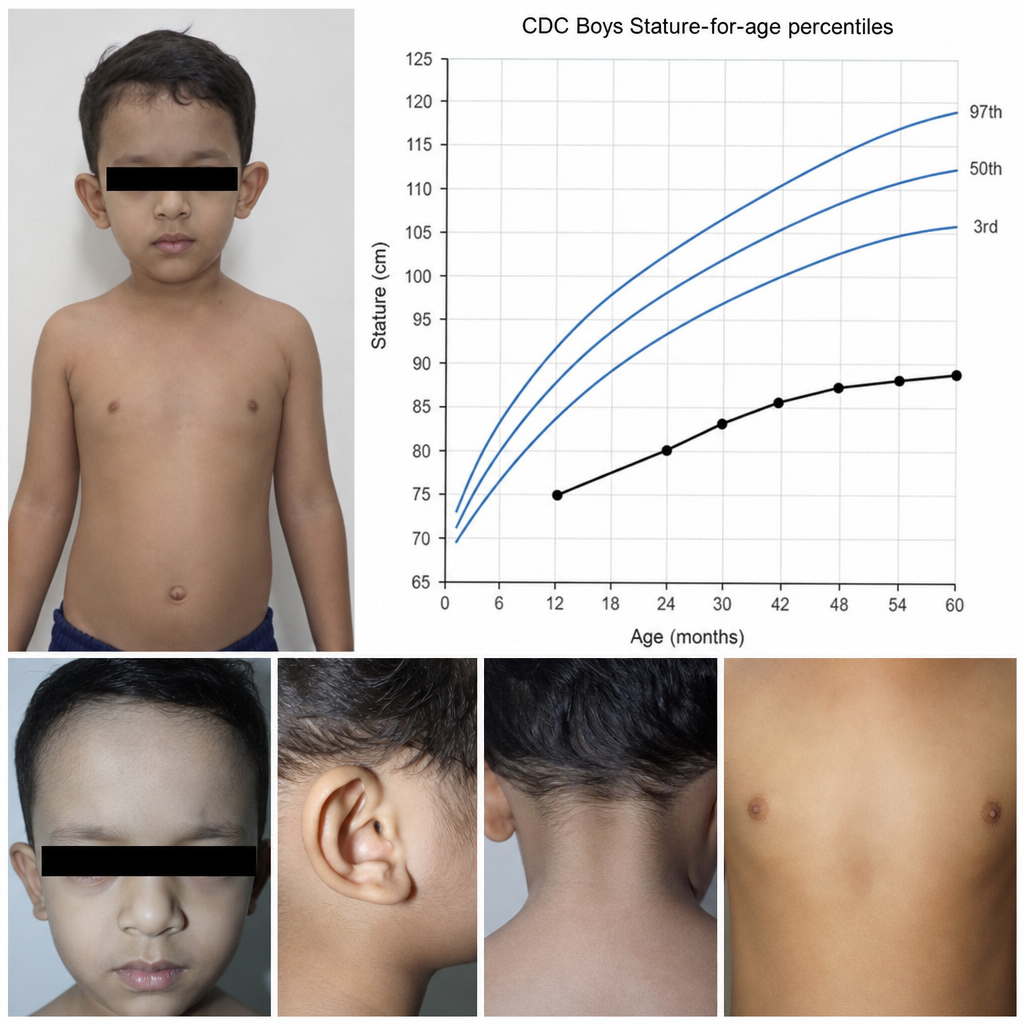
A 3-year-old boy is referred for evaluation of short stature and dysmorphic features. The growth chart image provided shows his height consistently tracking below the 3rd percentile since 12 months of age with normal head circumference. On examination he has a broad forehead, hypertelorism, low-set posteriorly rotated ears, a webbed neck, widely spaced nipples, and a harsh systolic murmur loudest at the left upper sternal border. Karyotype returns as 46,XY. Which of the following additional findings would most strongly support the unifying diagnosis in this child?
Vitamin K supplementation is given to neonates to prevent _____ .
A mother delivers in a rural area under the guidance of a skilled care attendant. Which of the following statements is incorrect regarding the care provided by the skilled care attendant at birth?
A baby presents with hydrocephalus, intracranial calcifications, and chorioretinitis. What is the most probable diagnosis?
Want unlimited practice?
Get full access to all questions, explanations, and performance tracking.
Scan to download app