
Diagnostic criteria and clinical features — MCQs

A 46-year-old woman presents to your medical office complaining of ‘feeling tired’. The patient states that she has been having some trouble eating because her ‘tongue hurts’, but she has no other complaints. On examination, the patient has pale conjunctiva and skin and also appears tired. She has a smooth, red tongue that is tender to touch with a tongue depressor. The patient’s hands and feet feel cold. Fluoroscopic evaluation of the swallowing mechanism and esophagus is normal. Which of the following diagnoses is most likely?
A 4-year-old boy is brought to the emergency department by his mother with a rash on his trunk, malaise, and fever with spikes up to 38.5°C (101.3°F) for the past 2 weeks. The patient's mother says she tried giving him Tylenol with little improvement. Past medical history includes a spontaneous vaginal delivery at full term. The patient's vaccines are up-to-date and he has met all developmental milestones. On physical examination, his lips are cracking, and he has painful cervical lymphadenopathy. The rash is morbilliform and involves his trunk, palms, and the soles of his feet. There is fine desquamation of the skin of the perianal region. Which of the following anatomical structures is most important to screen for possible complications in this patient?
A 5-year-old boy is brought to the emergency department for evaluation of a progressive rash that started 2 days ago. The rash began on the face and progressed to the trunk and extremities. Over the past week, he has had a runny nose, a cough, and red, crusty eyes. He immigrated with his family from Turkey 3 months ago. His father and his older brother have Behcet disease. Immunization records are unavailable. The patient appears irritable and cries during the examination. His temperature is 40.0°C (104°F). Examination shows general lymphadenopathy and dry mucous membranes. Skin turgor is decreased. There is a blanching, partially confluent erythematous maculopapular exanthema. Examination of the oral cavity shows small white spots with erythematous halos on the buccal mucosa. His hemoglobin concentration is 11.5 g/dL, leukocyte count is 6,000/mm3, and platelet count is 215,000/mm3. Serology confirms the diagnosis. Which of the following is the most appropriate next step in management?
A 6-year-old girl is brought to the physician because of a generalized pruritic rash for 3 days. Her mother has noticed fluid oozing from some of the lesions. She was born at term and has been healthy except for an episode of bronchitis 4 months ago that was treated with azithromycin. There is no family history of serious illness. Her immunization records are unavailable. She attends elementary school but has missed the last 5 days. She appears healthy. Her temperature is 38°C (100.4°F). Examination shows a maculopapular rash with crusted lesions and vesicles over the entire integument, including the scalp. Her hemoglobin concentration is 13.1 g/dL, leukocyte count is 9800/mm3, and platelet count is 319,000/mm3. Which of the following is the most appropriate next best step?
A 13-month-old girl is brought to the physician because of a pruritic rash for 2 days. The girl's mother says she noticed a few isolated skin lesions on her trunk two days ago that appear to be itching. The girl received her routine immunizations 18 days ago. Her mother has been giving her ibuprofen for her symptoms. The patient has no known sick contacts. She is at the 71st percentile for height and the 64th percentile for weight. She is in no acute distress. Her temperature is 38.1°C (100.6°F), pulse is 120/min, and respirations are 26/min. Examination shows a few maculopapular and pustular lesions distributed over the face and trunk. There are some excoriation marks and crusted lesions as well. Which of the following is the most likely explanation for these findings?
A 2-year-old girl presents with a rash on her body. Patient’s mother says she noticed the rash onset about 5 hours ago. For the previous 3 days, she says the patient has had a high fever of 39.0°C (102.2°F). Today the fever abruptly subsided but the rash appeared. Vitals are temperature 37.0°C (98.6°F), blood pressure 95/55 mm Hg, pulse 110/min, respiratory rate 30/min, and oxygen saturation 99% on room air. Physical examination reveals a maculopapular, non-confluent, blanchable rash on her back, abdomen, and chest extending superiorly towards the nape of the patient’s neck. Which of the following is this patient’s most likely diagnosis?
A 4-year-old boy is brought to the pediatrician with fever, diarrhea and bilateral red eye for 7 days. His parents noted that he has never had an episode of diarrhea this prolonged, but several other children at daycare had been ill. His immunization history is up to date. His vitals are normal except for a temperature of 37.5°C (99°F). A physical exam is significant for mild dehydration, preauricular adenopathy, and bilateral conjunctival injection with watery discharge. What is the most likely diagnosis?
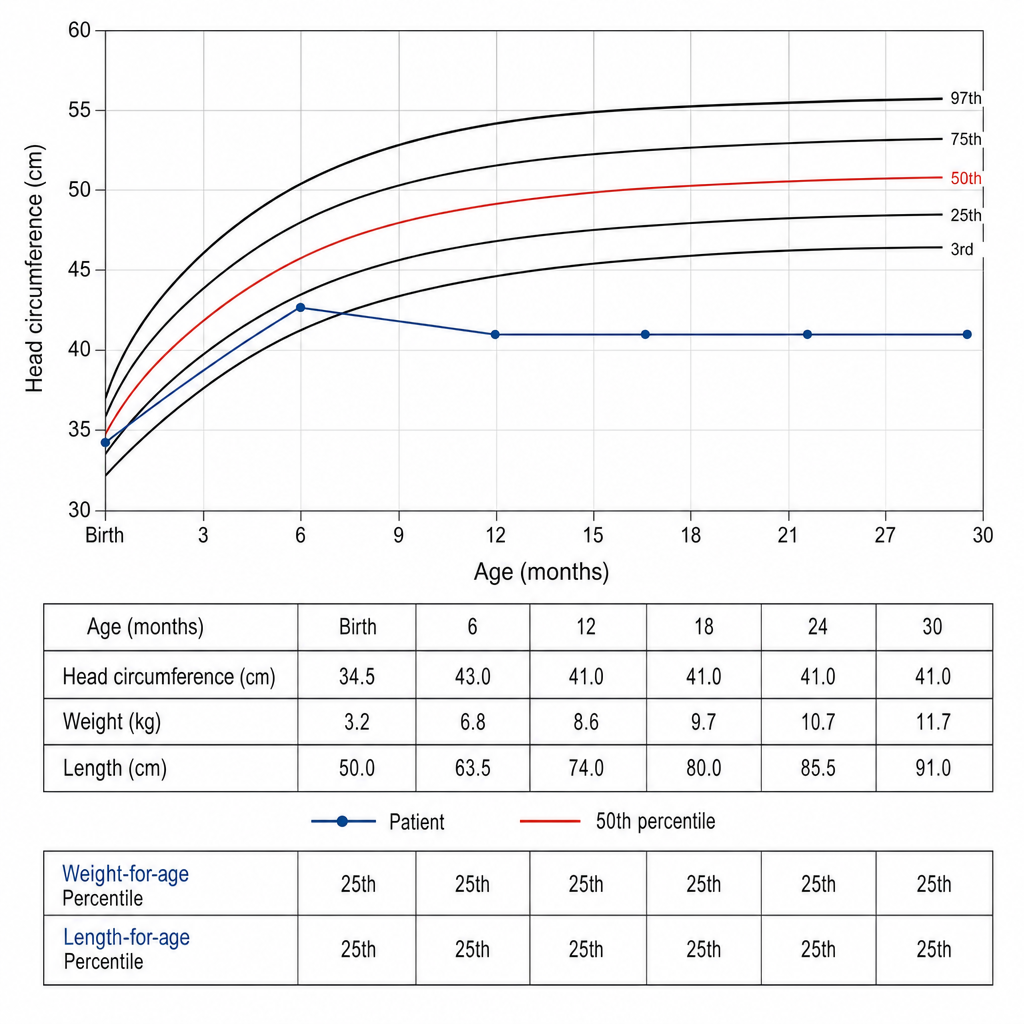
A girl is evaluated at 30 months of age. Her head circumference has crossed from the 50th percentile at birth to below the 3rd percentile at 12 months and has remained there. Her weight and length are tracking along the 25th percentile. She was born at term without perinatal complications. She was noted to have normal social smiling and babbling at 6 months, but her mother reports a period of apparent developmental regression between 12 and 18 months during which she lost purposeful hand use and began repetitive hand-wringing movements. Which genetic mechanism most likely accounts for this clinical picture?
A 4-year-old boy is brought to the physician by his parents because of fever and mild abdominal pain for 7 days. His parents report that he developed a rash 2 days ago. He has had no diarrhea or vomiting. Four weeks ago, he returned from a camping trip to Colorado with his family. His immunization records are unavailable. His temperature is 39.4°C (102.9°F), pulse is 111/min, respirations are 27/min, and blood pressure is 96/65 mm Hg. Examination shows bilateral conjunctival injections and fissures on his lower lips. The pharynx is erythematous. There is tender cervical lymphadenopathy. The hands and feet appear edematous. A macular morbilliform rash is present over the trunk. Bilateral knee joints are swollen and tender; range of motion is limited by pain. Which of the following is the most appropriate treatment for this patient's condition?
A 4-year-old boy is brought to a pediatrician by his parents with a history of fever for the last 5 days and irritability, decreased appetite, vomiting, and swelling of the hands and feet for the last 3 days. The patient’s mother mentions that he has been taking antibiotics and antipyretics prescribed by another physician for the last 3 days, but there has been no improvement His temperature is 39.4°C (103.0°F), pulse is 128/min, respiratory rate is 24/min, and blood pressure is 96/64 mm Hg. On physical examination, there is significant edema of the hands and feet bilaterally. There is a 2.5 cm diameter freely moveable, nontender cervical lymph node is palpable on the right side. A strawberry tongue and perianal erythema are noted. Conjunctival injection is present bilaterally. Laboratory findings reveal mild anemia and a leukocytosis with a left-shift. Erythrocyte sedimentation rate (ESR) and serum C-reactive protein (CRP) are increased. If not treated appropriately, this patient is at increased risk of developing which of the following complications?
Want unlimited practice?
Get full access to all questions, explanations, and performance tracking.
Scan to download app