
Pediatric respiratory infections — MCQs

A 6-year-old boy and his parents present to the emergency department with high-grade fever, headache, and projectile vomiting. The boy was born at 39 weeks gestation via spontaneous vaginal delivery. He is up to date on all vaccines and is meeting all developmental milestones. Past medical history is noncontributory. He has had no sick contacts at school or at home. The family has not traveled out of the area recently. He likes school and playing videogames with his younger brother. Today, his blood pressure is 115/76 mm Hg, heart rate is 110/min, respiratory rate is 22/min, and temperature is 38.4°C (101.2°F). On physical exam, the child is disoriented. Kernig’s sign is positive. A head CT was performed followed by a lumbar puncture. Several aliquots of CSF were distributed throughout the lab. Cytology showed high counts of polymorphs, biochemistry showed low glucose and elevated protein levels, and a gram smear shows gram-positive lanceolate-shaped cocci alone and in pairs. A smear is prepared on blood agar in an aerobic environment and grows mucoid colonies with clearly defined edges and alpha hemolysis. On later evaluation they develop a ‘draughtsman’ appearance. Which one of the following is the most likely pathogen?
A 3-year-old girl is brought to the physician by her parents because of a barking cough, a raspy voice, and noisy breathing for the last 3 days. Five days ago, she had a low-grade fever and runny nose. She attends daycare. Her immunizations are up-to-date. Her temperature is 37.8°C (100°F) and respirations are 33/min. Physical examination shows supraclavicular retractions. There is a high-pitched sound present on inspiration. Examination of the throat shows erythema without exudates. Which of the following is the most likely location of the anatomic narrowing causing this patient's symptoms?
A 2-year-old boy is brought to the physician by his parents for the evaluation of an unusual cough, a raspy voice, and noisy breathing for the last 2 days. During this time, the symptoms have always occurred in the late evening. The parents also report that prior to the onset of these symptoms, their son had a low-grade fever and a runny nose for 2 days. He attends daycare. His immunizations are up-to-date. His temperature is 37.8°C (100°F) and respirations are 33/min. Physical examination shows supraclavicular retractions. There is a high-pitched breath sound on inspiration. Which of the following is the most likely location of the abnormality?
A 6-month-old male presents for a routine visit to his pediatrician. Two months ago, the patient was seen for tachypnea and wheezing, and diagnosed with severe respiratory syncytial virus (RSV) bronchiolitis. After admission to the hospital and supportive care, the patient recovered and currently is not experiencing any trouble breathing. Regarding the possibility of future reactive airway disease, which of the following statements is most accurate?
A patient is hospitalized for pneumonia. Gram-positive cocci in clusters are seen on sputum gram stain. Which of the following clinical scenarios is most commonly associated with this form of pneumonia?
A 9-year-old girl presents with a 3-week history of cough. Her mother reports that initially, she had a runny nose and was tired, with a slight cough, but as the runny nose resolved, the cough seemed to get worse. She further states that the cough is dry sounding and occurs during the day and night. She describes having coughing spasms that occasionally end in vomiting, but between episodes of coughing she is fine. She reports that during a coughing spasm, her daughter will gasp for air and sometimes make a “whooping” noise. A nasopharyngeal swab confirms a diagnosis of Bordetella pertussis. Which of the following statements apply to this patient?
A 3-month-old boy is brought to the emergency room by his mother for 2 days of difficulty breathing. He was born at 35 weeks gestation but has otherwise been healthy. She noticed a cough and some trouble breathing in the setting of a runny nose. His temperature is 100°F (37.8°C), blood pressure is 64/34 mmHg, pulse is 140/min, respirations are 39/min, and oxygen saturation is 93% on room air. Pulmonary exam is notable for expiratory wheezing and crackles throughout and intercostal retractions. Oral mucosa is noted to be dry. Which of the following is the most appropriate diagnostic test?
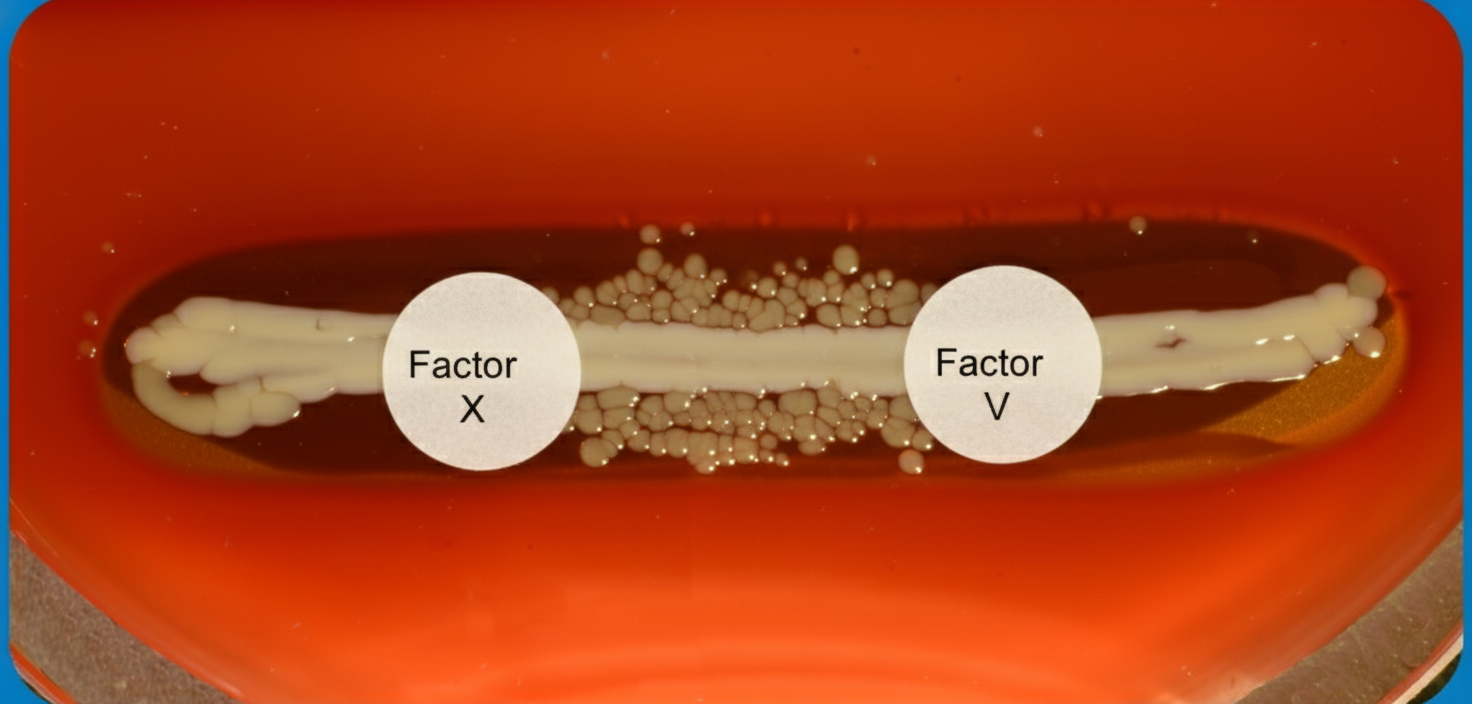
A 6-month old child is brought to the ER by parents for one day of fever, decreased feeding, and lethargy. They report that neither she nor her siblings are immunized due to their concerns about vaccinations. On exam, the infant is toxic-appearing. Antibiotics are started and lumbar puncture reveals bacterial meningitis caused by a gram-negative, encapsulated organism that requires chocolate agar and the two factors shown in Image A for growth. Which organism does this best describe?
An 8-year-old boy presents to his pediatrician accompanied by his father with a complaint of chronic cough. For the past 2 months he has been coughing up yellow, foul-smelling sputum. He has been treated at a local urgent care center for multiple episodes of otitis media, sinusitis, and bronchitis since 2 years of age. His family history is unremarkable. At the pediatrician's office, his temperature is 99.2°F (37.3°C), blood pressure is 110/84 mmHg, pulse is 95/min, and respirations are 20/min. Inspection shows a young boy who coughs occasionally during examination. Pulmonary exam demonstrates diffuse wheezing and crackles bilaterally. Mild clubbing is present on the fingers. The father has brought an electrocardiogram (ECG) from the patient’s last urgent care visit that shows pronounced right axis deviation. Which of the following is the most likely etiology of this patient’s condition?
A 10-year-old girl is admitted to the medical floor for a respiratory infection. The patient lives in a foster home and has been admitted many times. Since birth, the patient has had repeated episodes of pain/pressure over her frontal sinuses and a chronic cough that produces mucus. She was recently treated with amoxicillin for an infection. The patient is in the 25th percentile for height and weight which has been constant since birth. Her guardians state that the patient has normal bowel movements and has been gaining weight appropriately. The patient has a history of tricuspid stenosis. She also recently had magnetic resonance imaging (MRI) of her chest which demonstrated dilation of her airways. Her temperature is 99.5°F (37.5°C), blood pressure is 90/58 mmHg, pulse is 120/min, respirations are 18/min, and oxygen saturation is 94% on room air. Physical exam is notable for bruises along the patient's shins which the guardians state are from playing soccer. The rest of the exam is deferred because the patient starts crying. Which of the following findings is associated with this patient's most likely underlying diagnosis?
Want unlimited practice?
Get full access to all questions, explanations, and performance tracking.
Scan to download app