An 8-year-old boy presents to his pediatrician accompanied by his father with a complaint of chronic cough. For the past 2 months he has been coughing up yellow, foul-smelling sputum. He has been treated at a local urgent care center for multiple episodes of otitis media, sinusitis, and bronchitis since 2 years of age. His family history is unremarkable. At the pediatrician's office, his temperature is 99.2°F (37.3°C), blood pressure is 110/84 mmHg, pulse is 95/min, and respirations are 20/min. Inspection shows a young boy who coughs occasionally during examination. Pulmonary exam demonstrates diffuse wheezing and crackles bilaterally. Mild clubbing is present on the fingers. The father has brought an electrocardiogram (ECG) from the patient’s last urgent care visit that shows pronounced right axis deviation. Which of the following is the most likely etiology of this patient’s condition?
Q72
A 3-year-old patient is brought to the emergency department by her mother due to inability to walk. The child has been limping recently and as of this morning, has refused to walk. Any attempts to make the child walk or bear weight result in crying. She was recently treated for impetigo and currently takes a vitamin D supplement. Physical exam is remarkable for an anxious appearing toddler with knee swelling, erythema, and limited range of motion due to pain. Her mother denies any recent trauma to the child's affected knee. Temperature is 103°F (39.4°C), pulse is 132/min, blood pressure is 90/50 mmHg, respirations are 18/min, and oxygen saturation is 99% on room air. Which of the following is the best initial step in management?
Q73
A 4-year-old boy is brought to the physician because of a 5-day history of sore throat and a painful swelling on the left side of his neck that has become progressively larger. He has had pain during swallowing and has refused to eat solid foods for the past 3 days. He immigrated to the United States one year ago from India. His immunization records are unavailable. His family keeps 2 cats as pets. He appears well. He is at the 60th percentile for height and 50th percentile for weight. His temperature is 37.7°C (99.9°F), pulse is 103/min, and blood pressure is 92/60 mm Hg. The oropharynx is erythematous; the tonsils are enlarged with exudates. There is a 3-cm warm, tender, nonfluctuant cervical lymph node on the left side of the neck. His hemoglobin is 12.6 g/dL, leukocyte count is 11,100/mm3, and platelet count is 180,000/mm3. In addition to obtaining a throat swab and culture, which of the following is the most appropriate next step in management?
Q74
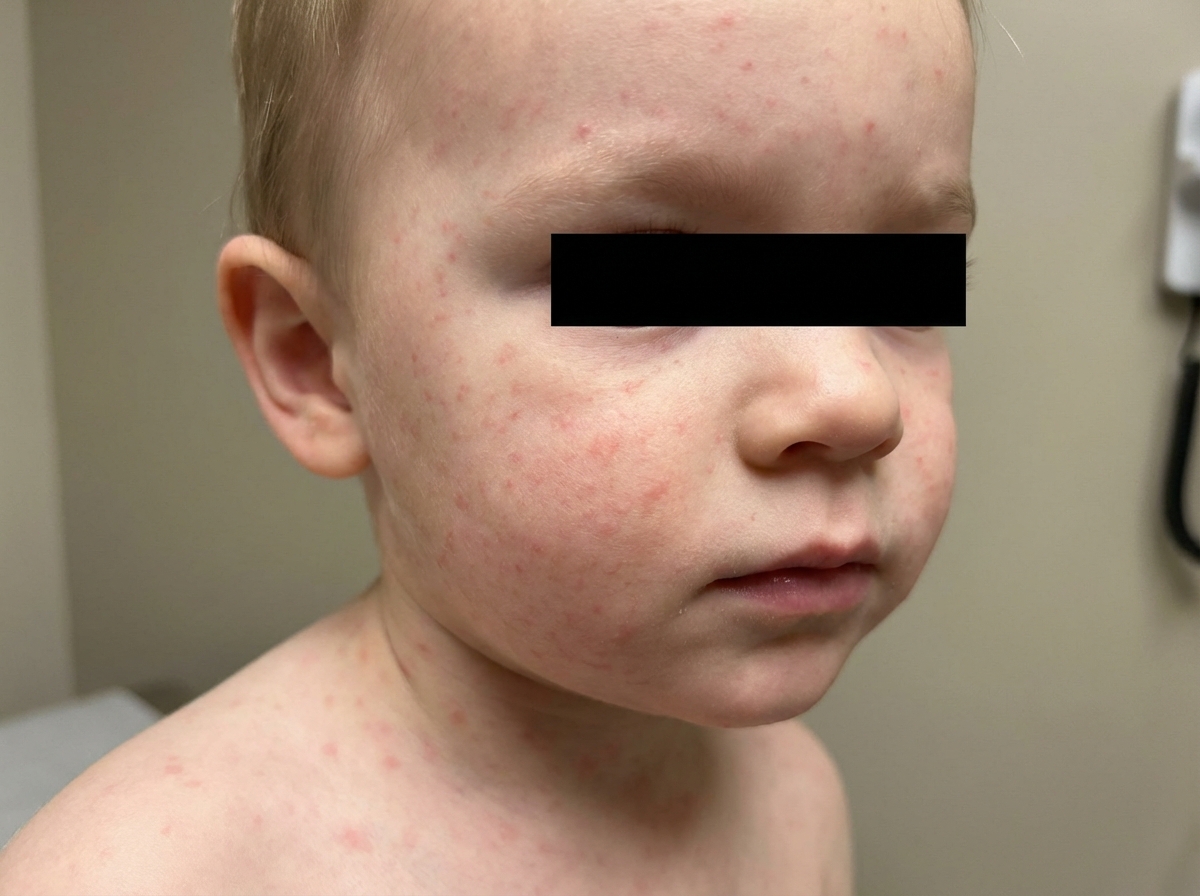
A 2-year-old boy is brought to the physician because of the rash shown in the picture for 2 days. His mother says that the rash initially appeared on his face and neck. He has had fever, cough, and poor appetite for 5 days. The boy's family recently immigrated from Asia and is unable to provide his vaccination records. His temperature is 38.8°C (102.0°F), pulse is 105/min, and respiratory rate is 21/min. Physical examination shows fading of the rash over the face and neck without any desquamation. Examination of the oropharynx shows tiny rose-colored lesions on the soft palate. Enlarged tender lymph nodes are palpated in the suboccipital, postauricular and anterior cervical regions. The clinical presentation in this patient is most compatible with which of the following diseases?
Q75
A 4-year-old girl is brought to the emergency department by her parents with a sudden onset of breathlessness. She has been having similar episodes over the past few months with a progressive increase in frequency over the past week. They have noticed that the difficulty in breathing is more prominent during the day when she plays in the garden with her siblings. She gets better once she comes indoors. During the episodes, she complains of an inability to breathe and her parents say that she is gasping for breath. Sometimes they hear a noisy wheeze while she breathes. The breathlessness does not disrupt her sleep. On examination, she seems to be in distress with noticeable intercostal retractions. Auscultation reveals a slight expiratory wheeze. According to her history and physical findings, which of the following mechanisms is most likely responsible for this child’s difficulty in breathing?
Q76
A 3-year-old boy is brought to the physician because of a 3-day history of a pruritic skin rash on his chest. His mother says that he has no history of dermatological problems. He was born at term and has been healthy except for recurrent episodes of otitis media. His immunizations are up-to-date. He appears pale. His temperature is 37°C (98.6°F), pulse is 110/min, respirations are 26/min, and blood pressure is 102/62 mm Hg. Examination shows vesicles and flaccid bullae with thin brown crusts on the chest. Lateral traction of the surrounding skin leads to sloughing. Examination of the oral mucosa shows no abnormalities. Complete blood count is within the reference range. Which of the following is the most likely diagnosis?
Q77
An 8-year-old boy is brought to the emergency department 3 hours after having a 2-minute episode of violent, jerky movements of his right arm at school. He was sweating profusely during the episode and did not lose consciousness. He remembers having felt a chill down his spine before the episode. Following the episode, he experienced weakness in the right arm and was not able to lift it above his head for 2 hours. Three weeks ago, he had a sore throat that resolved with over-the-counter medication. He was born at term and his mother remembers him having an episode of jerky movements when he had a high-grade fever as a toddler. There is no family history of serious illness, although his father passed away in a motor vehicle accident approximately 1 year ago. His temperature is 37°C (98.6°F), pulse is 98/min, and blood pressure is 94/54 mm Hg. Physical and neurologic examinations show no abnormalities. A complete blood count and serum concentrations of glucose, electrolytes, calcium, and creatinine are within the reference range. Which of the following is the most likely diagnosis?
Q78
A 10-year-old boy is brought in by his mother with increasing abdominal pain for the past week. The patient’s mother says he has been almost constantly nauseous over that time. She denies any change in his bowel habits, fever, chills, sick contacts or recent travel. The patient has no significant past medical history and takes no medications. The patient is at the 90th percentile for height and weight and has been meeting all developmental milestones. The temperature is 36.8℃ (98.2℉). On physical examination, the patient’s abdomen is asymmetrically distended. Bowel sounds are normoactive. No lymphadenopathy is noted. A cardiopulmonary examination is unremarkable. Palpation of the right flank and right iliac fossa reveals a 10 × 10 cm firm mass which is immobile and tender. The laboratory findings are significant for the following:
Hemoglobin 10 g/dL
Mean corpuscular volume 88 μm3
Leukocyte count 8,000/mm3
Platelet count 150,000/mm3
Serum creatinine 1.1 mg/dL
Serum lactate dehydrogenase (LDH) 1,000 U/L
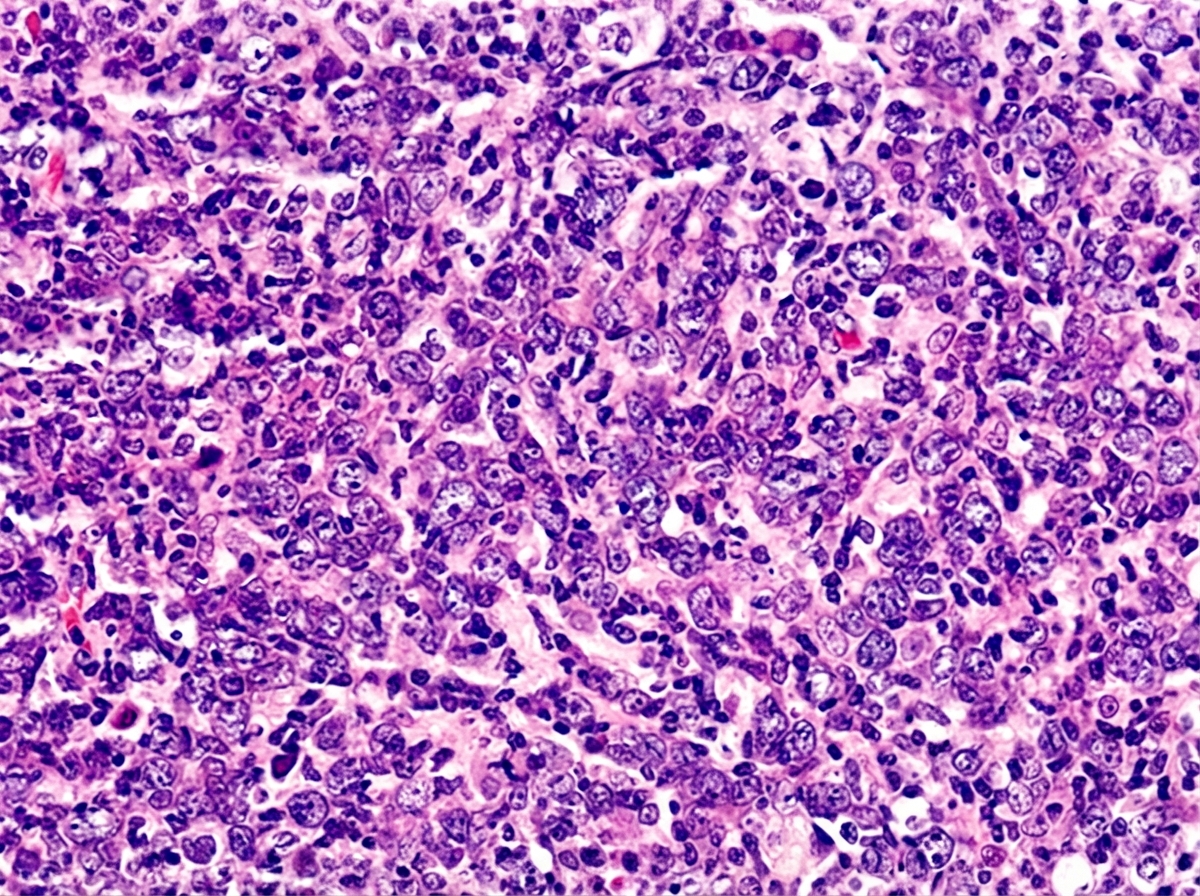
An ultrasound-guided needle biopsy of the flank mass was performed, and the histopathologic findings are shown in the exhibit (see image). Which of the following is the most likely diagnosis in this patient?
Q79
A 7-year-old girl is brought to the pediatrician by her parents for red papules over her left thigh and swelling in the right axilla for the past few days. Her parents say that she had a cat bite on her left thigh 2 weeks ago. Her temperature is 38.6°C (101.4°F), pulse is 90/min, and respirations are 22/min. On her physical examination, hepatosplenomegaly is present with a healing area of erythema on her left thigh. Her laboratory studies show:
Hemoglobin 12.9 gm/dL
Leukocyte count 9,300/mm3
Platelet count 167,000/mm3
ESR 12 mm/hr
Which of the following is the most appropriate next step in management?
Q80
A 7-year-old boy is brought into the emergency department after he was found at home by his mother possibly drinking a drain cleaning solution from under the sink. The child consumed an unknown amount and appears generally well. The child has an unremarkable past medical history and is not currently taking any medications. Physical exam reveals a normal cardiopulmonary and abdominal exam. Neurological exam is within normal limits and the patient is cooperative and scared. The parents state that the ingestion happened less than an hour ago. Which of the following is the best next step in management?
Infectious Disease US Medical PG Practice Questions and MCQs
Question 71: An 8-year-old boy presents to his pediatrician accompanied by his father with a complaint of chronic cough. For the past 2 months he has been coughing up yellow, foul-smelling sputum. He has been treated at a local urgent care center for multiple episodes of otitis media, sinusitis, and bronchitis since 2 years of age. His family history is unremarkable. At the pediatrician's office, his temperature is 99.2°F (37.3°C), blood pressure is 110/84 mmHg, pulse is 95/min, and respirations are 20/min. Inspection shows a young boy who coughs occasionally during examination. Pulmonary exam demonstrates diffuse wheezing and crackles bilaterally. Mild clubbing is present on the fingers. The father has brought an electrocardiogram (ECG) from the patient’s last urgent care visit that shows pronounced right axis deviation. Which of the following is the most likely etiology of this patient’s condition?
A. Failure of neural crest cell migration
B. Maldevelopment of pharyngeal pouches
C. Transient bronchoconstriction
D. Defective maturation of B-lymphocytes
E. Decreased motility of cilia (Correct Answer)
Explanation: ***Decreased motility of cilia***
- The recurrent respiratory infections (**otitis media, sinusitis, bronchitis**), chronic productive cough with **foul-smelling sputum**, and **bronchiectasis** (implied by chronic cough, wheezing, crackles) are highly suggestive of **primary ciliary dyskinesia (PCD)**.
- **Clubbing** and **right axis deviation** (suggesting right ventricular hypertrophy from pulmonary hypertension) are complications of chronic lung disease such as severe bronchiectasis, which is characteristic of PCD.
*Failure of neural crest cell migration*
- This is associated with conditions like **DiGeorge syndrome** or **Hirschsprung disease**, which present with different clinical features (e.g., cardiac defects, hypocalcemia, intestinal obstruction).
- It does not directly explain the recurrent respiratory tract infections and bronchiectasis seen in this patient.
*Maldevelopment of pharyngeal pouches*
- Similar to neural crest cell defects, issues with pharyngeal pouch development (e.g., **DiGeorge syndrome**) affect the immune system and cardiac structures.
- While it can lead to recurrent infections, it typically involves **T-cell deficiencies** and specific cardiac anomalies, rather than chronic suppurative respiratory disease and bronchiectasis as the primary presentation.
*Transient bronchoconstriction*
- This describes conditions like **asthma**, which causes reversible airway narrowing and wheezing.
- However, asthma does not explain the chronic **foul-smelling sputum**, **clubbing**, persistent recurrent infections like otitis media and sinusitis, or the development of bronchiectasis.
*Defective maturation of B-lymphocytes*
- This leads to **immunodeficiencies** primarily affecting **antibody production**, such as **X-linked agammaglobulinemia**.
- While patients would experience recurrent bacterial infections, the specific pattern of chronic sinusitis, otitis, and bronchiectasis with **foul-smelling sputum** (suggesting chronic bacterial colonization and impaired clearance) points more towards a structural or ciliary defect than a purely humoral immune deficiency.
Question 72: A 3-year-old patient is brought to the emergency department by her mother due to inability to walk. The child has been limping recently and as of this morning, has refused to walk. Any attempts to make the child walk or bear weight result in crying. She was recently treated for impetigo and currently takes a vitamin D supplement. Physical exam is remarkable for an anxious appearing toddler with knee swelling, erythema, and limited range of motion due to pain. Her mother denies any recent trauma to the child's affected knee. Temperature is 103°F (39.4°C), pulse is 132/min, blood pressure is 90/50 mmHg, respirations are 18/min, and oxygen saturation is 99% on room air. Which of the following is the best initial step in management?
A. MRI
B. Ultrasound
C. Synovial fluid analysis (Correct Answer)
D. Broad spectrum antibiotics
E. Radiograph
Explanation: ***Synovial fluid analysis***
- The patient's presentation with **fever**, **joint pain**, inability to bear weight, and **swelling/erythema** of the knee is highly suggestive of **septic arthritis**.
- **Arthrocentesis** and subsequent **synovial fluid analysis** (cell count with differential, Gram stain, culture) is the definitive diagnostic test to confirm septic arthritis and identify the causative organism.
*MRI*
- While MRI can visualize soft tissue and bone, it is generally reserved for cases where the diagnosis is unclear or to evaluate for complications such as **osteomyelitis** or abscess formation, after initial diagnostic steps.
- It is not the **initial diagnostic step** for suspected septic arthritis, which requires prompt identification of the pathogen to guide antibiotic therapy.
*Ultrasound*
- **Ultrasound** can identify joint effusion, but it cannot differentiate between septic arthritis and other causes of joint effusion.
- It may be used to guide arthrocentesis if the effusion is difficult to aspirate.
*Broad spectrum antibiotics*
- Although **broad-spectrum antibiotics** are indicated for **presumed septic arthritis**, they should be administered *after* obtaining fluid for culture.
- Starting antibiotics before collecting cultures can lead to **false-negative culture results**, hindering identification of the causative organism and appropriate antibiotic selection.
*Radiograph*
- **Radiographs** can rule out fracture or dislocation and may show signs of soft tissue swelling or effusion, but they are not sensitive enough to diagnose early septic arthritis.
- They also cannot differentiate septic arthritis from other inflammatory arthropathies or sterile effusions.
Question 73: A 4-year-old boy is brought to the physician because of a 5-day history of sore throat and a painful swelling on the left side of his neck that has become progressively larger. He has had pain during swallowing and has refused to eat solid foods for the past 3 days. He immigrated to the United States one year ago from India. His immunization records are unavailable. His family keeps 2 cats as pets. He appears well. He is at the 60th percentile for height and 50th percentile for weight. His temperature is 37.7°C (99.9°F), pulse is 103/min, and blood pressure is 92/60 mm Hg. The oropharynx is erythematous; the tonsils are enlarged with exudates. There is a 3-cm warm, tender, nonfluctuant cervical lymph node on the left side of the neck. His hemoglobin is 12.6 g/dL, leukocyte count is 11,100/mm3, and platelet count is 180,000/mm3. In addition to obtaining a throat swab and culture, which of the following is the most appropriate next step in management?
A. Incision and drainage
B. Sulfadiazine and pyrimethamine therapy
C. Clindamycin therapy (Correct Answer)
D. Immunoglobulin therapy
E. Fine-needle aspiration biopsy
Explanation: ***Clindamycin therapy***
- The patient's symptoms (sore throat, dysphagia, warm, tender cervical lymphadenopathy, tonsillar exudates) are highly suggestive of **bacterial tonsillitis** with associated **cervical lymphadenitis**, which often involves anaerobic bacteria.
- **Clindamycin** is an appropriate empiric antibiotic choice as it targets both Group A Streptococcus (a common cause of tonsillitis) and many anaerobic bacteria commonly found in head and neck infections, making it effective for peritonsillar cellulitis or early abscess formation.
*Incision and drainage*
- This procedure is indicated for a **fluctuant abscess**, which is a collection of pus that can be felt as a soft, compressible mass.
- The patient's lymph node is described as **nonfluctuant**, indicating that a mature, drainable abscess has not yet formed.
*Sulfadiazine and pyrimethamine therapy*
- This combination is the primary treatment for **toxoplasmosis**, a parasitic infection.
- The clinical picture of acute tonsillitis, cervical lymphadenitis, and exudates is not typical for uncomplicated toxoplasmosis.
*Immunoglobulin therapy*
- **Intravenous immunoglobulin (IVIG)** is typically used for conditions like Kawasaki disease, certain immunodeficiencies, or severe autoimmune disorders.
- There is no indication for IVIG in this patient's clinical presentation, which points towards an acute bacterial infection.
*Fine-needle aspiration biopsy*
- This is primarily a **diagnostic procedure** to obtain tissue for cytologic examination, often used to evaluate suspicious masses for malignancy or specific infections like tuberculosis.
- Given the acute inflammatory signs and symptoms, empiric antibiotic therapy is more appropriate as an initial step, rather than an immediate biopsy.
Question 74: A 2-year-old boy is brought to the physician because of the rash shown in the picture for 2 days. His mother says that the rash initially appeared on his face and neck. He has had fever, cough, and poor appetite for 5 days. The boy's family recently immigrated from Asia and is unable to provide his vaccination records. His temperature is 38.8°C (102.0°F), pulse is 105/min, and respiratory rate is 21/min. Physical examination shows fading of the rash over the face and neck without any desquamation. Examination of the oropharynx shows tiny rose-colored lesions on the soft palate. Enlarged tender lymph nodes are palpated in the suboccipital, postauricular and anterior cervical regions. The clinical presentation in this patient is most compatible with which of the following diseases?
A. Mumps
B. Rubella (Correct Answer)
C. Roseola
D. Parvovirus B19 infection
E. Measles
Explanation: ***Rubella***
- The description of a **maculopapular rash** that started on the face and neck, then faded without desquamation, along with **postauricular and suboccipital lymphadenopathy**, is highly characteristic of rubella (German measles).
- The presence of **tiny rose-colored lesions on the soft palate (Forchheimer spots)** further supports the diagnosis of rubella.
*Mumps*
- Mumps is primarily characterized by **parotitis (swelling of the salivary glands)**, which is not described in this patient.
- While mumps can cause fever and malaise, it typically does not present with a widespread rash or the specific lymphadenopathy described.
*Roseola*
- Roseola (human herpesvirus 6 and 7) typically presents with a **high fever for several days** followed by the abrupt appearance of a **rash as the fever breaks**.
- The rash of roseola is usually less pronounced on the face and is not associated with the prominent postauricular and suboccipital lymphadenopathy seen here.
*Parvovirus B19 infection*
- Parvovirus B19 infection (fifth disease) characteristically presents with a **"slapped cheek" rash** on the face, followed by a **lacy, reticular rash** on the trunk and extremities.
- It does not typically cause the prominent lymphadenopathy described, nor does it commonly produce palatal lesions.
*Measles*
- Measles (rubeola) typically presents with a prodrome of high fever, **cough, coryza, and conjunctivitis**, followed by the appearance of a **maculopapular rash** that spreads from the face downward.
- A key differentiating feature is the presence of **Koplik spots** on the buccal mucosa, which are not described here, and the rash of measles is usually more confluent and lasts longer, often with desquamation.
Question 75: A 4-year-old girl is brought to the emergency department by her parents with a sudden onset of breathlessness. She has been having similar episodes over the past few months with a progressive increase in frequency over the past week. They have noticed that the difficulty in breathing is more prominent during the day when she plays in the garden with her siblings. She gets better once she comes indoors. During the episodes, she complains of an inability to breathe and her parents say that she is gasping for breath. Sometimes they hear a noisy wheeze while she breathes. The breathlessness does not disrupt her sleep. On examination, she seems to be in distress with noticeable intercostal retractions. Auscultation reveals a slight expiratory wheeze. According to her history and physical findings, which of the following mechanisms is most likely responsible for this child’s difficulty in breathing?
A. Defective chloride channel function leading to mucus plugging
B. Chronic mucus plugging and inflammation leading to impaired mucociliary clearance
C. Airway hyperreactivity to external allergens causing intermittent airway obstruction (Correct Answer)
D. Inflammation leading to permanent dilation and destruction of alveoli
E. Destruction of the elastic layers of bronchial walls leading to abnormal dilation
Explanation: **Airway hyperreactivity to external allergens causing intermittent airway obstruction**
- The child's symptoms of **recurrent breathlessness** and **wheezing**, especially while playing in the garden (suggesting **allergen exposure**), and subsequent improvement indoors, are highly indicative of **allergen-induced bronchoconstriction**.
- The history points to **intermittent airway obstruction** triggered by environmental factors, characteristic of conditions like **asthma** where airways are hyperresponsive to triggers.
*Defective chloride channel function leading to mucus plugging*
- This mechanism is characteristic of **cystic fibrosis**, which typically presents with chronic respiratory issues, recurrent infections, and growth failure, not the acute, intermittent, and allergen-triggered episodes described.
- While mucus plugging can occur, it's a chronic process in cystic fibrosis and doesn't align with the acute, reversible nature and specific triggers mentioned in the case.
*Chronic mucus plugging and inflammation leading to impaired mucociliary clearance*
- This describes conditions like **bronchiectasis** or chronic bronchitis, which involve persistent cough, sputum production, and recurrent infections, rather than acute episodic wheezing based on allergen exposure.
- Impaired mucociliary clearance would lead to more continuous respiratory issues, not the relief experienced upon coming indoors.
*Inflammation leading to permanent dilation and destruction of alveoli*
- This mechanism is characteristic of **emphysema**, a condition primarily seen in adults, typically due to smoking, and presenting with chronic shortness of breath and airflow limitation, rather than episodic, allergen-triggered wheezing in a child.
- Emphysema involves alveolar damage, not primarily bronchial obstruction or hyperreactivity.
*Destruction of the elastic layers of bronchial walls leading to abnormal dilation*
- This describes **bronchiectasis**, which is characterized by permanent dilation of the bronchi, leading to chronic cough with sputum production and recurrent respiratory infections.
- The symptoms presented by the child are acute, reversible episodes of breathlessness and wheezing, not indicative of permanent structural damage to the bronchial walls.
Question 76: A 3-year-old boy is brought to the physician because of a 3-day history of a pruritic skin rash on his chest. His mother says that he has no history of dermatological problems. He was born at term and has been healthy except for recurrent episodes of otitis media. His immunizations are up-to-date. He appears pale. His temperature is 37°C (98.6°F), pulse is 110/min, respirations are 26/min, and blood pressure is 102/62 mm Hg. Examination shows vesicles and flaccid bullae with thin brown crusts on the chest. Lateral traction of the surrounding skin leads to sloughing. Examination of the oral mucosa shows no abnormalities. Complete blood count is within the reference range. Which of the following is the most likely diagnosis?
A. Bullous pemphigoid
B. Dermatitis herpetiformis
C. Bullous impetigo (Correct Answer)
D. Pemphigus vulgaris
E. Stevens-Johnson syndrome
Explanation: ***Bullous impetigo***
- The presence of **flaccid bullae with thin brown crusts** and the positive **Nikolsky's sign** (sloughing with lateral traction), in the absence of mucosal involvement, are classic signs of bullous impetigo, a **Staphylococcus aureus** infection.
- This condition is common in children and can present with localized lesions, as seen on the chest.
*Bullous pemphigoid*
- Typically presents with **tense bullae** in older adults, often with **urticarial plaques**, unlike the flaccid bullae and crusts seen here.
- **Nikolsky's sign is negative** in bullous pemphigoid, which helps distinguish it from bullous impetigo and pemphigus conditions.
*Dermatitis herpetiformis*
- Characterized by intensely **pruritic papules and vesicles** found symmetrically on extensor surfaces, often associated with **celiac disease**.
- The lesions are usually small and grouped, not flaccid bullae with positive Nikolsky's sign.
*Pemphigus vulgaris*
- Presents with **flaccid bullae** and a positive Nikolsky's sign, but characteristically also involves the **oral mucosa**, which is normal in this patient.
- It usually affects older individuals and can be more widespread than the localized rash described.
*Stevens-Johnson syndrome*
- A severe mucocutaneous reaction typically characterized by **widespread epidermal necrosis**, **target lesions**, and often involves **mucous membranes** (oral, ocular, genital) extensively.
- This patient's localized rash without mucosal involvement, target lesions, or systemic toxicity does not fit the criteria for SJS.
Question 77: An 8-year-old boy is brought to the emergency department 3 hours after having a 2-minute episode of violent, jerky movements of his right arm at school. He was sweating profusely during the episode and did not lose consciousness. He remembers having felt a chill down his spine before the episode. Following the episode, he experienced weakness in the right arm and was not able to lift it above his head for 2 hours. Three weeks ago, he had a sore throat that resolved with over-the-counter medication. He was born at term and his mother remembers him having an episode of jerky movements when he had a high-grade fever as a toddler. There is no family history of serious illness, although his father passed away in a motor vehicle accident approximately 1 year ago. His temperature is 37°C (98.6°F), pulse is 98/min, and blood pressure is 94/54 mm Hg. Physical and neurologic examinations show no abnormalities. A complete blood count and serum concentrations of glucose, electrolytes, calcium, and creatinine are within the reference range. Which of the following is the most likely diagnosis?
A. Conversion disorder
B. Sporadic transient tic disorder
C. Focal seizure (Correct Answer)
D. Sydenham chorea
E. Hemiplegic migraine
Explanation: ***Focal seizure***
- The episode of **unilateral jerky movements** (right arm) lasting 2 minutes, accompanied by **sweating** and a pre-episode **sensation (chill down his spine)** without loss of consciousness, is highly suggestive of a **focal seizure**. The subsequent **Todd's paralysis (weakness in the right arm)** further supports this diagnosis.
- The history of a febrile seizure as a toddler indicates a **lower seizure threshold**, making the patient more prone to future seizure activity.
*Conversion disorder*
- Conversion disorder involves neurological symptoms that are **incompatible with recognized neurological or medical conditions**, often triggered by psychological stress.
- While the patient experienced significant stress (father's death), the detailed description of a **stereotyped seizure with post-ictal weakness** is highly consistent with a neurological event.
*Sporadic transient tic disorder*
- Tics are **sudden, rapid, recurrent, nonrhythmic motor movements or vocalizations**, not typically preceded by a premonitory sensation like a chill, nor followed by post-episode weakness (Todd's paralysis).
- Tics are also often **suppressible for a short period**, which is not characteristic of the reported jerky movements.
*Sydenham chorea*
- Sydenham chorea is characterized by **involuntary, purposeless, jerky movements** (chorea), often affecting the face and limbs, following a streptococcal infection. However, the movements are typically **less violent and more continuous** rather than a discreet, 2-minute seizure-like episode with post-ictal weakness.
- Acute rheumatic fever can cause Sydenham chorea, but the described motor activity is more consistent with a seizure, and there are **no other signs of rheumatic fever**.
*Hemiplegic migraine*
- Hemiplegic migraine involves **transient unilateral motor weakness** as part of an aura, followed by a headache.
- This patient's symptoms started with **violent, jerky movements** rather than weakness, and there was **no mention of a headache**.
Question 78: A 10-year-old boy is brought in by his mother with increasing abdominal pain for the past week. The patient’s mother says he has been almost constantly nauseous over that time. She denies any change in his bowel habits, fever, chills, sick contacts or recent travel. The patient has no significant past medical history and takes no medications. The patient is at the 90th percentile for height and weight and has been meeting all developmental milestones. The temperature is 36.8℃ (98.2℉). On physical examination, the patient’s abdomen is asymmetrically distended. Bowel sounds are normoactive. No lymphadenopathy is noted. A cardiopulmonary examination is unremarkable. Palpation of the right flank and right iliac fossa reveals a 10 × 10 cm firm mass which is immobile and tender. The laboratory findings are significant for the following:
Hemoglobin 10 g/dL
Mean corpuscular volume 88 μm3
Leukocyte count 8,000/mm3
Platelet count 150,000/mm3
Serum creatinine 1.1 mg/dL
Serum lactate dehydrogenase (LDH) 1,000 U/L
An ultrasound-guided needle biopsy of the flank mass was performed, and the histopathologic findings are shown in the exhibit (see image). Which of the following is the most likely diagnosis in this patient?
A. Burkitt lymphoma (Correct Answer)
B. Neuroblastoma
C. Hepatoblastoma
D. Wilms tumor
E. Renal corticomedullary abscess
Explanation: ***Burkitt lymphoma***
- The combination of rapid onset abdominal pain, an **abdominal mass**, and elevated **LDH** in a child strongly suggests a rapidly growing tumor like Burkitt lymphoma. The histopathology showing **starry sky appearance** with uniform, medium-sized lymphoid cells and scattered macrophages is classic for Burkitt lymphoma.
- This tumor is aggressive and often presents with an abdominal mass (especially in the **ileocecal region**) in endemic areas, but also with involvement of the jaw or other extranodal sites in sporadic cases.
*Neuroblastoma*
- Neuroblastoma typically presents with a **suprarenal mass** or other locations along the sympathetic chain and is associated with elevated **catecholamines** and their metabolites (e.g., VMA, HVA) in urine, which are not mentioned.
- Histopathology reveals small, round blue cells with **neurofibrillary differentiation** (rosettes), differing from the starry sky pattern.
*Hepatoblastoma*
- This is a primary liver tumor, typically presenting as an **hepatic mass** and often associated with elevated **alpha-fetoprotein (AFP)**, neither of which is indicated here.
- The mass described is in the right flank and iliac fossa, not primarily hepatic, and AFP levels are not provided.
*Wilms tumor*
- Wilms tumor (nephroblastoma) is a **renal tumor** that usually presents as a **firm, smooth, unilateral abdominal mass** in the kidney region, but it is typically painless.
- Histologically, it shows a triphasic pattern of blastemal, stromal, and epithelial elements, which is distinct from the lymphoid cells seen in the image.
*Renal corticomedullary abscess*
- A renal abscess would present with symptoms of infection such as **fever, chills, and localized pain**, often with leukocytosis and potentially pyuria.
- While there's a mass and tenderness, the absence of fever, normal WBC count, and the specific histopathology contradict an infectious process like an abscess.
Question 79: A 7-year-old girl is brought to the pediatrician by her parents for red papules over her left thigh and swelling in the right axilla for the past few days. Her parents say that she had a cat bite on her left thigh 2 weeks ago. Her temperature is 38.6°C (101.4°F), pulse is 90/min, and respirations are 22/min. On her physical examination, hepatosplenomegaly is present with a healing area of erythema on her left thigh. Her laboratory studies show:
Hemoglobin 12.9 gm/dL
Leukocyte count 9,300/mm3
Platelet count 167,000/mm3
ESR 12 mm/hr
Which of the following is the most appropriate next step in management?
A. Azithromycin as a single agent (Correct Answer)
B. No treatment is required
C. Doxycycline + rifampin
D. Surgical excision of the lymph node
E. Rifampin + azithromycin
Explanation: ***Azithromycin as a single agent***
- This patient presents with symptoms consistent with **cat-scratch disease (CSD)**, including a history of cat bite, regional lymphadenopathy (swelling in the right axilla), and fever. Azithromycin is the **recommended first-line treatment** for CSD, especially in children, due to its efficacy and favorable safety profile.
- While CSD is often self-limiting, antibiotic treatment with azithromycin can **shorten the duration** and **reduce the severity** of symptoms, including painful lymphadenopathy, and help prevent disseminated disease.
*No treatment is required*
- While CSD can be self-limiting, the patient presents with **significant symptoms** including fever, tender lymphadenopathy, and hepatosplenomegaly, suggesting a more severe course that warrants intervention.
- Administering antibiotics like azithromycin can **alleviate symptoms** and **prevent complications**, such as disseminated infection, particularly in immunocompromised patients, though this child's immune status is not specified.
*Doxycycline + rifampin*
- **Doxycycline** is generally avoided in children under 8 years due to the risk of **permanent tooth discoloration** and inhibition of bone growth, making it an inappropriate first-line choice for this 7-year-old.
- While **rifampin** can be used for CSD, particularly in refractory cases or disseminated disease, it is not typically given as a primary agent, and the combination with doxycycline is not the preferred initial therapy due to the age contraindication.
*Surgical excision of the lymph node*
- **Surgical excision** of lymph nodes is generally **not recommended** for uncomplicated CSD due to the risk of scarring and potential complications.
- It is typically reserved for cases with **suppurative or fluctuant lymph nodes** that fail to respond to antibiotic therapy, or to rule out other diagnoses if malignancy is suspected.
*Rifampin + azithromycin*
- While **rifampin** is an alternative for CSD, especially in severe or disseminated cases, **azithromycin alone** is usually sufficient as the first-line treatment.
- There is no clinical evidence to suggest a significant benefit of combination therapy with rifampin and azithromycin over azithromycin monotherapy for initial management of typical CSD in immunocompetent children.
Question 80: A 7-year-old boy is brought into the emergency department after he was found at home by his mother possibly drinking a drain cleaning solution from under the sink. The child consumed an unknown amount and appears generally well. The child has an unremarkable past medical history and is not currently taking any medications. Physical exam reveals a normal cardiopulmonary and abdominal exam. Neurological exam is within normal limits and the patient is cooperative and scared. The parents state that the ingestion happened less than an hour ago. Which of the following is the best next step in management?
A. Nasogastric tube
B. Urgent endoscopy
C. Titrate the alkali ingestion with a weak acid
D. Induce emesis
E. Close observation and outpatient endoscopy in 2 to 3 weeks (Correct Answer)
Explanation: ***Close observation and outpatient endoscopy in 2 to 3 weeks***
- In **asymptomatic caustic ingestion**, immediate management focuses on **close observation** for development of symptoms (drooling, dysphagia, chest pain, hematemesis).
- **Early endoscopy (within 12-24 hours)** can be performed safely to grade injury severity, but **urgent endoscopy is NOT indicated** in asymptomatic patients.
- **Delayed endoscopy at 2-3 weeks** is performed to assess for **esophageal stricture formation**, which is a common complication of alkali ingestion and typically develops in this timeframe.
- This allows time for acute inflammation to resolve while still enabling early detection and treatment of strictures.
*Nasogastric tube*
- Blind insertion of a nasogastric tube is **contraindicated** in caustic ingestion as it can **traumatize an already damaged esophagus** and increase the risk of **perforation**.
- The esophageal mucosa may be friable and prone to injury from instrumentation.
*Urgent endoscopy*
- While endoscopy within 12-24 hours is acceptable for grading injury, **urgent emergent endoscopy** (within first few hours) is **NOT indicated** in an asymptomatic patient.
- The optimal timing for initial endoscopy is **12-24 hours post-ingestion** when it can be performed safely before significant edema develops.
- However, the question asks for the best next step, and in an asymptomatic patient, observation with planned delayed endoscopy for stricture assessment is most appropriate.
*Titrate the alkali ingestion with a weak acid*
- Attempting to neutralize alkali with acid is **absolutely contraindicated** as the neutralization reaction is **exothermic** and generates heat, causing **additional thermal injury** to already damaged tissues.
- This can worsen tissue damage and increase complications.
*Induce emesis*
- Inducing emesis is **contraindicated** in caustic ingestion as it causes **re-exposure** of the esophagus and oropharynx to the caustic substance during vomiting.
- It also significantly increases the risk of **aspiration**, which can lead to severe chemical pneumonitis.