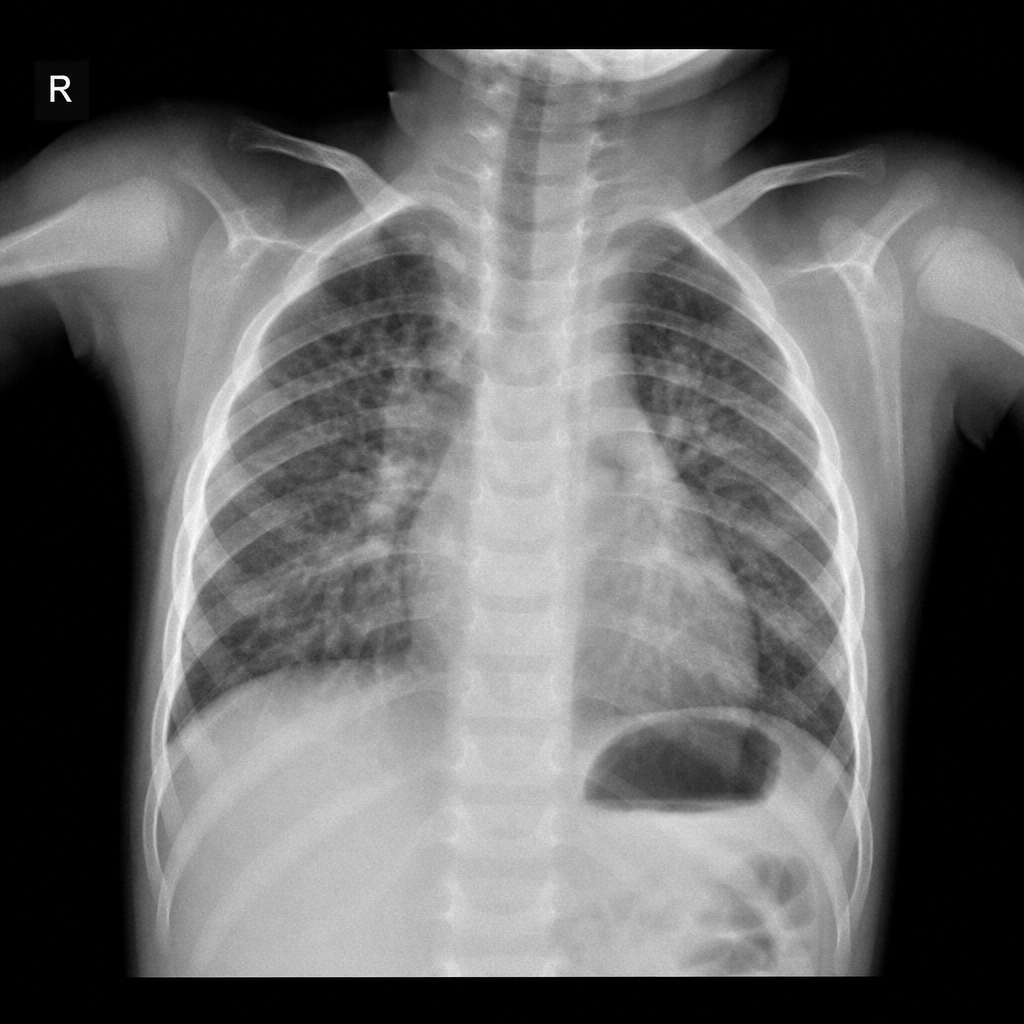
A mother brings her 6-month-old boy to the emergency department. She reports that her son has been breathing faster than usual for the past 2 days, and she has noted occasional wheezing. She states that prior to the difficulty breathing, she noticed some clear nasal discharge for several days. The infant was born full-term, with no complications, and no significant medical history. His temperature is 100°F (37.8°C), blood pressure is 60/30 mmHg, pulse is 120/min, respirations are 40/min, and oxygen saturation is 95% on room air. Physical exam reveals expiratory wheezing, crackles diffusely, and intercostal retractions. The child is currently playing with toys. Which of the following is the most appropriate next step in management?
Q102
An 8-year-old boy with asthma is brought to the physician because of a 2-week history of facial pain and congestion. His mother states that the nasal discharge was initially clear, but it has become thicker and more purulent over the last week. He has tried multiple over-the-counter oral decongestants and antihistamines, with minimal relief. Current medications include cetirizine, intranasal oxymetazoline, and albuterol. His temperature is 37.7°C (99.8°F), pulse is 100/min, respirations are 14/min, and blood pressure is 110/70 mm Hg. Examination shows congested nasal mucosa with purulent discharge from the nares bilaterally. There is tenderness to palpation over the cheeks, with no transillumination over the maxillary sinuses. Which of the following is the most likely predisposing factor for this patient's current condition?
Q103
A 9-month-old girl is brought to the emergency department because of a 3-day history of fever, irritability, and discharge from her right ear. She had an episode of ear pain and fever three weeks ago. Her parents did not seek medical advice and the symptoms improved with symptomatic treatment. There is no family history of frequent infections. She appears ill. Her temperature is 39.3°C (102.7°F). Physical examination shows erythema and tenderness in the right postauricular region, and lateral and inferior displacement of the auricle. Otoscopy shows a bulging and cloudy tympanic membrane, with pus oozing out. The remainder of the examination shows no abnormalities. Laboratory studies show:
Hemoglobin 11.5 g/dL
Leukocyte count 15,800/mm3
Segmented neutrophils 80%
Eosinophils 1%
Lymphocytes 17%
Monocytes 2%
Platelet count 258,000/mm3
Which of the following is the most appropriate next step in management?
Q104
A 3-year-old boy is brought to the emergency department after the sudden onset of a rash that started on the head and progressed to the trunk and extremities. Over the past week, he has had a runny nose, a cough, and red, crusty eyes. He recently immigrated with his family from Yemen and immunization records are unavailable. The patient appears malnourished. His temperature is 40.0°C (104°F). Examination shows generalized lymphadenopathy and a blanching, partially confluent maculopapular exanthema. Administration of which of the following is most likely to improve this patient's condition?
Q105
A 9-year-old girl presents with dyspnea, palpitations, joint pain, and fever for the past week. She says that her symptoms started 2 weeks ago with bilateral knee pain which has shifted to both ankles over the past week. She says she noticed bilateral leg swelling since yesterday. Past medical history is significant for a severe sore throat, fever, chills, and myalgia 1 month ago which resolved after a week. Her vital signs include: respiratory rate 22/min, temperature 37.7°C (100.0°F), blood pressure 90/60 mm Hg, pulse 90/min, and SpO2 88% on room air. On physical examination, the patient is ill-appearing with pallor and bilateral pitting edema of legs. The apex beat is prominently located in the 5th intercostal space in the mid-axillary line. Crepitus is noted over both lung bases bilaterally. A loud 3/6 pansystolic murmur is heard at the apex radiating towards the axilla. S3 and S4 sounds are noted at the left sternal border and cardiac apex. Which of the following is the most likely diagnosis in this patient?
Q106
A 5-year-old boy is brought to the emergency department by his mother because of a 2-hour history of word-finding difficulty, speech slurring, and weakness and sensory loss of his right arm and leg. He has not had fever, nausea, headache, or diarrhea. His mother reports an episode of severe pain and soft tissue swelling of the dorsum of his hands and feet when he was 12 months old, which self-resolved after 2 weeks. His temperature is 37.7°C (99.8°F), pulse is 90/min, and blood pressure is 110/80 mm Hg. Pulse oximetry on room air shows an oxygen saturation of 91%. He follows commands but has nonfluent aphasia. Examination shows marked weakness and decreased sensation of the right upper and lower extremities. Deep tendon reflexes are 2+ bilaterally. Babinski sign is present on the right. An MRI scan of the brain shows signs of an evolving cerebral infarction on the patient's left side. Which of the following is the most appropriate initial step in management?
Q107
A 3-year-old girl presents to the emergency department with skin desquamation over her hips and buttocks and right arm; she also has conjunctivitis and fever. The patient was previously seen by her pediatrician for symptoms of impetigo around the nasal folds, and she was treated with topical fusidic acid. She was born at 39 weeks’ gestation via spontaneous vaginal delivery, is up to date on all vaccines, and is meeting all developmental milestones. Medical history and family history are unremarkable. She is admitted to the hospital and started on IV antibiotics. Today, her blood pressure is 100/60 mm Hg, heart rate is 100 beats per minute, respiratory rate is 22 breaths per minute, and temperature is 39.4°C (102.9°F). The total area of desquamation exceeds 20%, sparing the mucous membranes. She is transferred to the pediatric intensive care unit. What is the most likely cause of the disease?
Q108
A 7-year-old boy is brought to the emergency department because of high-grade fever and lethargy for 4 days. He has had a severe headache for 3 days and 2 episodes of non-bilious vomiting. He has sickle cell disease. His only medication is hydroxyurea. His mother has refused vaccinations and antibiotics in the past because of their possible side effects. He appears ill. His temperature is 40.1°C (104.2°F), pulse is 131/min, and blood pressure is 92/50 mm Hg. Examination shows nuchal rigidity. Kernig and Brudzinski signs are present. A lumbar puncture is performed. Analysis of the cerebrospinal fluid (CSF) shows a decreased glucose concentration, increased protein concentration, and numerous segmented neutrophils. A Gram stain of the CSF shows gram-negative coccobacilli. This patient is at greatest risk for which of the following complications?
Q109
A 5-year-old girl is brought to her pediatrician by her mother. The mother is concerned about a fine, red rash on her daughter’s limbs and easy bruising. The rash started about 1 week ago and has progressed. Past medical history is significant for a minor cold two weeks ago. The girl was born at 39 weeks gestation via spontaneous vaginal delivery. She is up to date on all vaccines and is meeting all developmental milestones. Today, she has a heart rate of 90/min, respiratory rate of 22/min, blood pressure of 110/65 mm Hg, and temperature of 37.0°C (98.6°F). On physical exam, the girl has a petechial rash on her arms and legs. Additionally, there are several bruises on her shins and thighs. A CBC shows thrombocytopenia (20,000/mm3). Other parameters of the CBC are within expected range for her age. Prothrombin time (PT), partial thromboplastin time (PTT), and metabolic panels are all within reference range. What is the most likely blood disorder?
Q110
A 7-year-old boy is brought to his pediatrician's office by his mother with a new onset rash. His mother says that the rash appeared suddenly yesterday. He is otherwise well. His medical history is unremarkable except for a recent upper respiratory infection that resolved without intervention two weeks ago. His temperature is 98.2°F (36.8°C), blood pressure is 110/74 mmHg, pulse is 84/min, and respirations are 18/min. Physical exam shows a well appearing child with a diffuse petechial rash. Complete blood count shows the following:
Hemoglobin: 12.6 g/dL
Hematocrit: 37%
Leukocyte count: 5,100/mm^3
Platelet count: 65,000/mm^3
Which of the following is the best choice in management?
Infectious Disease US Medical PG Practice Questions and MCQs
Question 101: A mother brings her 6-month-old boy to the emergency department. She reports that her son has been breathing faster than usual for the past 2 days, and she has noted occasional wheezing. She states that prior to the difficulty breathing, she noticed some clear nasal discharge for several days. The infant was born full-term, with no complications, and no significant medical history. His temperature is 100°F (37.8°C), blood pressure is 60/30 mmHg, pulse is 120/min, respirations are 40/min, and oxygen saturation is 95% on room air. Physical exam reveals expiratory wheezing, crackles diffusely, and intercostal retractions. The child is currently playing with toys. Which of the following is the most appropriate next step in management?
A. Monitoring (Correct Answer)
B. Intubation
C. Albuterol
D. Chest radiograph
E. Azithromycin and ceftriaxone
Explanation: ***Monitoring (Supportive Care)***
- This infant presents with classic **viral bronchiolitis** (tachypnea, wheezing, crackles, retractions following upper respiratory symptoms)
- The child is **clinically stable**: O2 saturation 95% on room air, alert and playing with toys
- **Current AAP guidelines** recommend **supportive care only** for bronchiolitis, which includes monitoring vital signs, assessing work of breathing, ensuring adequate hydration, and oxygen supplementation if saturation drops below 90%
- This patient requires close observation but no immediate intervention given stable vital signs and reassuring clinical appearance
*Albuterol*
- **Bronchodilators are NOT recommended** for routine use in bronchiolitis per current AAP clinical practice guidelines
- Multiple randomized controlled trials have shown **no significant benefit** from albuterol in bronchiolitis
- While a trial may be considered in select cases with strong family history of asthma, routine use is discouraged
- Bronchiolitis is caused by **small airway inflammation and mucus plugging**, not bronchospasm
*Intubation*
- **Intubation** is reserved for severe respiratory failure with impending respiratory arrest, persistent hypoxemia despite high-flow oxygen, apnea, or altered mental status
- This child has adequate oxygenation (95%), is alert, and playing—**no indication for intubation**
- Signs that would warrant intubation include lethargy, severe retractions with fatigue, O2 sat <90% despite supplementation
*Chest radiograph*
- **Not routinely indicated** in typical bronchiolitis
- Consider only if there's diagnostic uncertainty, concern for complications (pneumothorax, lobar consolidation suggesting bacterial pneumonia), or failure to improve with supportive care
- The clinical presentation is clearly consistent with bronchiolitis, and imaging would not change initial management
*Azithromycin and ceftriaxone*
- Bronchiolitis is a **viral infection** (most commonly RSV), and **antibiotics provide no benefit**
- Antibiotics should only be used if there is clear evidence of **bacterial superinfection** (high fever, focal consolidation, elevated inflammatory markers)
- Routine antibiotic use contributes to antimicrobial resistance and adverse effects
Question 102: An 8-year-old boy with asthma is brought to the physician because of a 2-week history of facial pain and congestion. His mother states that the nasal discharge was initially clear, but it has become thicker and more purulent over the last week. He has tried multiple over-the-counter oral decongestants and antihistamines, with minimal relief. Current medications include cetirizine, intranasal oxymetazoline, and albuterol. His temperature is 37.7°C (99.8°F), pulse is 100/min, respirations are 14/min, and blood pressure is 110/70 mm Hg. Examination shows congested nasal mucosa with purulent discharge from the nares bilaterally. There is tenderness to palpation over the cheeks, with no transillumination over the maxillary sinuses. Which of the following is the most likely predisposing factor for this patient's current condition?
A. Nasal polyps
B. Viral upper respiratory tract infection (Correct Answer)
C. Recent use of antihistamines
D. Foreign body
E. Asthma
Explanation: ***Viral upper respiratory tract infection***
- **Acute bacterial rhinosinusitis** often develops as a complication of a **viral upper respiratory tract infection (URI)**, which causes inflammation and edema of the nasal mucosa, obstructing sinus drainage.
- The initial clear nasal discharge followed by purulent discharge and persistent symptoms for over 10 days (or worsening after 5-7 days) is highly suggestive of a progression from viral rhinitis to a bacterial infection.
*Nasal polyps*
- While nasal polyps can contribute to chronic sinusitis, they are less likely to be the initial predisposing factor for an acute bacterial infection in a child unless associated with conditions like **cystic fibrosis**.
- Polyps typically cause **nasal obstruction** and **anosmia**, but the scenario here points to an acute infectious process.
*Recent use of antihistamines*
- **Antihistamines** like cetirizine can dry out nasal secretions, but they are not a direct predisposing factor for developing bacterial sinusitis.
- Their effect on thickening mucus is not the primary cause of bacterial overgrowth in the sinuses.
*Foreign body*
- A **nasal foreign body** primarily causes unilateral symptoms, including foul-smelling unilateral nasal discharge.
- This patient presents with bilateral symptoms, making a foreign body less likely.
*Asthma*
- While asthma and allergic rhinitis are related conditions that can affect the respiratory tract, **asthma itself does not directly predispose** to acute bacterial rhinosinusitis.
- However, uncontrolled allergic inflammation could indirectly make a patient more susceptible to viral infections, which then could progress to sinusitis.
Question 103: A 9-month-old girl is brought to the emergency department because of a 3-day history of fever, irritability, and discharge from her right ear. She had an episode of ear pain and fever three weeks ago. Her parents did not seek medical advice and the symptoms improved with symptomatic treatment. There is no family history of frequent infections. She appears ill. Her temperature is 39.3°C (102.7°F). Physical examination shows erythema and tenderness in the right postauricular region, and lateral and inferior displacement of the auricle. Otoscopy shows a bulging and cloudy tympanic membrane, with pus oozing out. The remainder of the examination shows no abnormalities. Laboratory studies show:
Hemoglobin 11.5 g/dL
Leukocyte count 15,800/mm3
Segmented neutrophils 80%
Eosinophils 1%
Lymphocytes 17%
Monocytes 2%
Platelet count 258,000/mm3
Which of the following is the most appropriate next step in management?
A. CT scan of the temporal bone (Correct Answer)
B. Oral aspirin therapy
C. Topical 0.3% ciprofloxacin therapy
D. Oral amoxicillin therapy
E. Phenylephrine nasal drops therapy
Explanation: **CT scan of the temporal bone**
- The presence of **postauricular erythema and tenderness**, along with **auricle displacement**, strongly suggests **mastoiditis**, which is a serious complication of otitis media.
- A **CT scan of the temporal bone** is essential to confirm the diagnosis, determine the extent of disease, and detect any intracranial complications such as epidural abscess.
*Oral aspirin therapy*
- **Aspirin** is **contraindicated in children** with viral infections due to the risk of **Reye's syndrome**.
- It is not an appropriate treatment for bacterial infections like mastoiditis and would not address the underlying pathology.
*Topical 0.3% ciprofloxacine therapy*
- **Topical antibiotics** like **ciprofloxacin** are used for **otitis externa** or very localized infections, not for deep-seated infections like mastoiditis.
- Mastoiditis requires systemic antibiotics and often surgical intervention to resolve the infection.
*Oral amoxicillin therapy*
- While **oral amoxicillin** is a common treatment for uncomplicated **acute otitis media**, this patient presents with signs of **mastoiditis**, which is a more severe infection requiring intravenous antibiotics and often surgical drainage.
- The extensive inflammatory process indicated by the physical exam suggests amoxicillin alone would be insufficient.
*Phenylephrine nasal drops therapy*
- **Phenylephrine nasal drops** are **decongestants** used to relieve nasal congestion, often associated with colds or allergies.
- They have no role in treating or managing a bacterial infection like mastoiditis and would not alleviate the child's symptoms or address the underlying disease.
Question 104: A 3-year-old boy is brought to the emergency department after the sudden onset of a rash that started on the head and progressed to the trunk and extremities. Over the past week, he has had a runny nose, a cough, and red, crusty eyes. He recently immigrated with his family from Yemen and immunization records are unavailable. The patient appears malnourished. His temperature is 40.0°C (104°F). Examination shows generalized lymphadenopathy and a blanching, partially confluent maculopapular exanthema. Administration of which of the following is most likely to improve this patient's condition?
A. Live-attenuated vaccine
B. Retinol (Correct Answer)
C. Valacyclovir
D. Penicillin V
E. Intravenous immunoglobulin
Explanation: ***Retinol***
- This patient presents with classic symptoms of **measles** (rubeola), including **prodromal cough, coryza, conjunctivitis**, followed by a **maculopapular rash** spreading from head to trunk. Given his young age, malnourishment, and recent immigration from a region with likely lower vaccination rates, **vitamin A (retinol) supplementation** is crucial as it reduces morbidity and mortality in measles, especially in malnourished children.
- **Vitamin A deficiency** is common in malnourished children and exacerbates the severity of measles, leading to a higher risk of complications like pneumonia, diarrhea, and blindness.
*Live-attenuated vaccine*
- A **live-attenuated vaccine** (e.g., MMR) is used for **prevention** of measles and is typically given to healthy individuals for immunization, not as a treatment for active infection.
- Administering a live vaccine to an acutely ill, febrile child with an ongoing viral infection is **contraindicated** and would not improve his current condition.
*Valacyclovir*
- **Valacyclovir** is an antiviral medication specifically used to treat **herpesvirus infections** (e.g., herpes simplex, varicella-zoster).
- Measles is caused by the **measles virus (a paramyxovirus)**, and valacyclovir has no efficacy against this pathogen.
*Penicillin V*
- **Penicillin V** is an antibiotic used to treat **bacterial infections**, particularly those caused by gram-positive bacteria.
- Measles is a **viral infection**, and antibiotics are not effective against viruses. They would only be considered if a **secondary bacterial infection** (e.g., otitis media, pneumonia) is suspected, which is not the primary issue here.
*Intravenous immunoglobulin*
- **Intravenous immunoglobulin (IVIG)** can be used for **post-exposure prophylaxis** in susceptible individuals exposed to measles or in immunocompromised patients, but it is not a primary treatment for active, symptomatic measles in an otherwise immunocompetent (though malnourished) child.
- While it modulates the immune response, **vitamin A supplementation** has proven efficacy in reducing the severity and complications of measles in children, especially in resource-limited settings.
Question 105: A 9-year-old girl presents with dyspnea, palpitations, joint pain, and fever for the past week. She says that her symptoms started 2 weeks ago with bilateral knee pain which has shifted to both ankles over the past week. She says she noticed bilateral leg swelling since yesterday. Past medical history is significant for a severe sore throat, fever, chills, and myalgia 1 month ago which resolved after a week. Her vital signs include: respiratory rate 22/min, temperature 37.7°C (100.0°F), blood pressure 90/60 mm Hg, pulse 90/min, and SpO2 88% on room air. On physical examination, the patient is ill-appearing with pallor and bilateral pitting edema of legs. The apex beat is prominently located in the 5th intercostal space in the mid-axillary line. Crepitus is noted over both lung bases bilaterally. A loud 3/6 pansystolic murmur is heard at the apex radiating towards the axilla. S3 and S4 sounds are noted at the left sternal border and cardiac apex. Which of the following is the most likely diagnosis in this patient?
A. Tricuspid regurgitation
B. Mitral stenosis
C. Aortic regurgitation
D. Acute rheumatic fever (Correct Answer)
E. Aortic stenosis
Explanation: ***Acute rheumatic fever***
- This patient's presentation with a migratory polyarthritis, recent sore throat, and signs of carditis (pansystolic murmur, S3/S4, cardiomegaly with displaced apex beat, dyspnea, pallor, and edema suggesting heart failure) are classic symptoms fulfilling the **Jones criteria** for **acute rheumatic fever (ARF)**.
- The history of a preceding **streptococcal pharyngitis** 1 month prior strongly supports the diagnosis, as ARF is a delayed immune-mediated complication of group A *Streptococcus* infection.
*Tricuspid regurgitation*
- While tricuspid regurgitation can cause a pansystolic murmur and signs of right-sided heart failure (edema), the murmur is typically best heard at the **left sternal border** and increases with inspiration.
- It does not explain the **migratory polyarthritis** or the clear history of a preceding streptococcal infection, which are key features in this case.
*Mitral stenosis*
- Mitral stenosis typically presents with a **diastolic murmur** (mid-diastolic rumble) and often causes dyspnea due to pulmonary congestion, but it is not associated with migratory polyarthritis.
- The patient has a pansystolic murmur at the apex radiating to the axilla, which is characteristic of **mitral regurgitation**, a common manifestation of rheumatic carditis, not mitral stenosis.
*Aortic regurgitation*
- Aortic regurgitation (AR) produces a **diastolic murmur** (decrescendo early diastolic) and specific peripheral signs like a wide pulse pressure or water-hammer pulse.
- While AR can lead to heart failure and dyspnea, it does not account for the **migratory polyarthritis** or the pansystolic apical murmur described in the patient.
*Aortic stenosis*
- Aortic stenosis (AS) is characterized by a **systolic ejection murmur** best heard at the right upper sternal border, often radiating to the carotid arteries.
- AS does not explain the migratory polyarthritis, the pansystolic apical murmur, or the acute onset of symptoms following a sore throat, which are hallmarks of acute rheumatic fever.
Question 106: A 5-year-old boy is brought to the emergency department by his mother because of a 2-hour history of word-finding difficulty, speech slurring, and weakness and sensory loss of his right arm and leg. He has not had fever, nausea, headache, or diarrhea. His mother reports an episode of severe pain and soft tissue swelling of the dorsum of his hands and feet when he was 12 months old, which self-resolved after 2 weeks. His temperature is 37.7°C (99.8°F), pulse is 90/min, and blood pressure is 110/80 mm Hg. Pulse oximetry on room air shows an oxygen saturation of 91%. He follows commands but has nonfluent aphasia. Examination shows marked weakness and decreased sensation of the right upper and lower extremities. Deep tendon reflexes are 2+ bilaterally. Babinski sign is present on the right. An MRI scan of the brain shows signs of an evolving cerebral infarction on the patient's left side. Which of the following is the most appropriate initial step in management?
A. Hydroxyurea therapy
B. Exchange transfusion therapy (Correct Answer)
C. Heparin therapy
D. Intravenous tissue plasminogen activator therapy
E. Aspirin therapy
Explanation: ***Exchange transfusion therapy***
- The patient's presentation with **acute neurological deficits** (word-finding difficulty, speech slurring, right-sided weakness/sensory loss) and imaging showing an **evolving cerebral infarction** in a 5-year-old child with a history concerning for **sickle cell disease** (dactylitis at 12 months) indicates an acute ischemic stroke.
- **Exchange transfusion therapy** is the **most appropriate initial management** for an acute ischemic stroke in a patient with sickle cell disease as it rapidly reduces the percentage of sickled cells and increases oxygen-carrying capacity, improving cerebral perfusion and preventing further infarction.
*Hydroxyurea therapy*
- **Hydroxyurea** is a long-term preventative therapy for sickle cell disease, increasing fetal hemoglobin (HbF) and reducing the frequency of vaso-occlusive crises and acute chest syndrome.
- It is **not an acute treatment** for an evolving stroke, which requires immediate intervention to reduce sickled cells and improve blood flow.
*Heparin therapy*
- **Heparin therapy** (anticoagulation) is typically used for specific types of stroke (e.g., cardioembolic stroke, cerebral venous sinus thrombosis) but is generally **not indicated for acute ischemic stroke** in sickle cell disease.
- The primary pathophysiology of stroke in sickle cell disease involves sickled cells causing vaso-occlusion, rather than a thrombotic event usually responsive to heparin.
*Intravenous tissue plasminogen activator therapy*
- **Intravenous tissue plasminogen activator (tPA)** is a fibrinolytic agent used to break down clots in acute ischemic stroke, but its use is **contraindicated in pediatric patients** and in patients with known sickle cell disease due to an increased risk of hemorrhage and lack of demonstrated benefit.
- The underlying mechanism of stroke in sickle cell disease (vaso-occlusion by sickled cells) is not directly addressed by tPA.
*Aspirin therapy*
- **Aspirin therapy** (antiplatelet agent) is used for secondary stroke prevention in some cases of ischemic stroke but is **not the primary acute treatment** for an evolving stroke in sickle cell disease.
- It does not rapidly reduce the burden of sickled cells or improve oxygen delivery, which are critical for acute management in this patient population.
Question 107: A 3-year-old girl presents to the emergency department with skin desquamation over her hips and buttocks and right arm; she also has conjunctivitis and fever. The patient was previously seen by her pediatrician for symptoms of impetigo around the nasal folds, and she was treated with topical fusidic acid. She was born at 39 weeks’ gestation via spontaneous vaginal delivery, is up to date on all vaccines, and is meeting all developmental milestones. Medical history and family history are unremarkable. She is admitted to the hospital and started on IV antibiotics. Today, her blood pressure is 100/60 mm Hg, heart rate is 100 beats per minute, respiratory rate is 22 breaths per minute, and temperature is 39.4°C (102.9°F). The total area of desquamation exceeds 20%, sparing the mucous membranes. She is transferred to the pediatric intensive care unit. What is the most likely cause of the disease?
A. Herpes simplex virus infection
B. Psoriasis
C. Stevens-Johnson syndrome
D. Bullous pemphigoid
E. Staphylococcus aureus infection (Correct Answer)
Explanation: ***Staphylococcus aureus infection***
- The patient's presentation with **skin desquamation in a young child**, fever, conjunctivitis, and a history of impetigo **strongly suggests staphylococcal scalded skin syndrome (SSSS)**, which is caused by exotoxins produced by *Staphylococcus aureus.*
- The disease involves **epidermolytic toxins (ETA and ETB)** that cleave desmoglein-1, leading to widespread superficial blistering and desquamation, often sparing mucous membranes.
*Herpes simplex virus infection*
- **Herpes simplex virus (HSV) infection** typically presents with **grouped vesicles on an erythematous base** that can rupture and crust, but it does not cause widespread desquamation, especially sparing mucous membranes.
- While HSV can cause fever and conjunctivitis, the **rapid and extensive skin peeling** seen in this patient is not characteristic of HSV.
*Psoriasis*
- **Psoriasis** is a **chronic inflammatory skin condition** characterized by well-demarcated erythematous plaques with silvery scales, not acute blistering and desquamation.
- It would not explain the **acute onset, fever, and conjunctivitis** in a 3-year-old in this manner.
*Stevens-Johnson syndrome*
- **Stevens-Johnson syndrome (SJS)** is a severe mucocutaneous reaction, often drug-induced, characterized by **erythematous macules, bullae, and significant mucosal involvement (oral, ocular, genital)**.
- While it involves skin peeling and systemic symptoms, the **sparing of mucous membranes** in this patient distinguishes it from SJS, and the preceding impetigo points away from a drug reaction cause.
*Bullous pemphigoid*
- **Bullous pemphigoid** is an **autoimmune blistering disease** typically affecting older adults, characterized by **large, tense bullae** on an erythematous or urticarial base.
- It is **rare in children** and does not involve the widespread, superficial skin desquamation that is indicative of SSSS.
Question 108: A 7-year-old boy is brought to the emergency department because of high-grade fever and lethargy for 4 days. He has had a severe headache for 3 days and 2 episodes of non-bilious vomiting. He has sickle cell disease. His only medication is hydroxyurea. His mother has refused vaccinations and antibiotics in the past because of their possible side effects. He appears ill. His temperature is 40.1°C (104.2°F), pulse is 131/min, and blood pressure is 92/50 mm Hg. Examination shows nuchal rigidity. Kernig and Brudzinski signs are present. A lumbar puncture is performed. Analysis of the cerebrospinal fluid (CSF) shows a decreased glucose concentration, increased protein concentration, and numerous segmented neutrophils. A Gram stain of the CSF shows gram-negative coccobacilli. This patient is at greatest risk for which of the following complications?
A. Adrenal insufficiency
B. Cerebral palsy
C. Hearing loss (Correct Answer)
D. Communicating hydrocephalus
E. Brain abscess
Explanation: ***Hearing loss***
- The patient has bacterial meningitis, likely caused by *Haemophilus influenzae* type b given the **gram-negative coccobacilli** and his unvaccinated status.
- **Sensorineural hearing loss is the MOST COMMON long-term neurological sequela of bacterial meningitis**, occurring in 10-30% of survivors, making this the greatest risk for this patient.
- It results from inflammation of the **cochlea and eighth cranial nerve**, which can occur even with appropriate treatment.
- Children with *H. influenzae* meningitis are at particularly high risk for this complication.
*Adrenal insufficiency*
- While adrenal hemorrhage and crisis can occur with overwhelming sepsis (Waterhouse-Friderichsen syndrome), this is **classically associated with meningococcemia**, not *H. influenzae*.
- It is an acute complication of septic shock rather than a common sequela of meningitis itself.
*Cerebral palsy*
- Cerebral palsy requires significant hypoxic-ischemic injury or extensive brain damage during the acute illness.
- While possible with severe meningitis, it is a **much less common** complication compared to hearing loss.
*Communicating hydrocephalus*
- Can occur due to impaired CSF reabsorption at the arachnoid granulations following meningeal inflammation.
- This is a recognized complication but occurs in **fewer than 5-10%** of cases, making it less common than hearing loss.
*Brain abscess*
- Brain abscess represents a focal parenchymal infection and is a **rare complication** of bacterial meningitis.
- It typically occurs when infection spreads from contiguous sites or when meningitis is inadequately treated.
Question 109: A 5-year-old girl is brought to her pediatrician by her mother. The mother is concerned about a fine, red rash on her daughter’s limbs and easy bruising. The rash started about 1 week ago and has progressed. Past medical history is significant for a minor cold two weeks ago. The girl was born at 39 weeks gestation via spontaneous vaginal delivery. She is up to date on all vaccines and is meeting all developmental milestones. Today, she has a heart rate of 90/min, respiratory rate of 22/min, blood pressure of 110/65 mm Hg, and temperature of 37.0°C (98.6°F). On physical exam, the girl has a petechial rash on her arms and legs. Additionally, there are several bruises on her shins and thighs. A CBC shows thrombocytopenia (20,000/mm3). Other parameters of the CBC are within expected range for her age. Prothrombin time (PT), partial thromboplastin time (PTT), and metabolic panels are all within reference range. What is the most likely blood disorder?
A. Von Willebrand disease
B. Hemophilia A
C. Immune thrombocytopenic purpura (ITP) (Correct Answer)
D. Hemophilia B
E. Acute lymphoblastic leukemia (ALL)
Explanation: ***Immune thrombocytopenic purpura (ITP)***
- This patient presents with **petechiae**, **bruising**, and **isolated thrombocytopenia** following a recent viral illness, which is characteristic of ITP.
- **Normal PT, PTT, and other CBC parameters** rule out other clotting disorders and bone marrow pathology.
*Von Willebrand disease*
- Characterized by a defect in **platelet adhesion** and a prolonged PTT in severe cases, but typically has **normal platelet counts**.
- Presents with mucocutaneous bleeding and menorrhagia, not isolated severe thrombocytopenia.
*Hemophilia A*
- This is an **X-linked recessive disorder** affecting **Factor VIII**, leading to a prolonged PTT and deep tissue bleeding, but with **normal platelet counts**.
- It does not cause petechiae or the severe thrombocytopenia seen in this patient.
*Hemophilia B*
- This is an **X-linked recessive disorder** affecting **Factor IX**, also leading to a prolonged PTT and deep tissue bleeding, but with **normal platelet counts**.
- It does not present with petechiae or significantly reduced platelet counts.
*Acute lymphoblastic leukemia (ALL)*
- While ALL can cause thrombocytopenia, it is typically accompanied by **other cytopenias** (anemia, neutropenia) and often an abundance of **blast cells** in the peripheral blood or bone marrow.
- The CBC in this patient is remarkable only for thrombocytopenia, making ALL less likely.
Question 110: A 7-year-old boy is brought to his pediatrician's office by his mother with a new onset rash. His mother says that the rash appeared suddenly yesterday. He is otherwise well. His medical history is unremarkable except for a recent upper respiratory infection that resolved without intervention two weeks ago. His temperature is 98.2°F (36.8°C), blood pressure is 110/74 mmHg, pulse is 84/min, and respirations are 18/min. Physical exam shows a well appearing child with a diffuse petechial rash. Complete blood count shows the following:
Hemoglobin: 12.6 g/dL
Hematocrit: 37%
Leukocyte count: 5,100/mm^3
Platelet count: 65,000/mm^3
Which of the following is the best choice in management?
A. Dexamethasone
B. Intravenous immunoglobulin (IVIg)
C. Observation (Correct Answer)
D. Splenectomy
E. Rituximab
Explanation: ***Observation***
- The patient's presentation of a **petechial rash** with **isolated thrombocytopenia** after a recent viral infection is highly suggestive of **immune thrombocytopenic purpura (ITP)**. Given the child is otherwise well, has a platelet count >30,000/mm^3, and no signs of significant bleeding, observation is the **recommended initial management**.
- Most cases of acute childhood ITP are **self-limiting**, with spontaneous resolution of thrombocytopenia occurring within weeks to months without intervention.
*Dexamethasone*
- While corticosteroids like dexamethasone can be used in ITP to increase platelet counts, they are typically reserved for patients with more severe bleeding symptoms, very low platelet counts (<30,000/mm^3), or when rapid platelet increase is desired.
- The potential side effects of corticosteroids, even short-term, make observation preferable in an asymptomatic child with a moderate platelet count.
*Intravenous immunoglobulin (IVIg)*
- IVIg is another effective treatment for ITP, often used in cases of significant bleeding, very low platelet counts, or when steroids are contraindicated or ineffective.
- Similar to corticosteroids, it is not the first-line management for an asymptomatic child with moderate thrombocytopenia due to its cost, potential side effects, and the self-limiting nature of most childhood ITP cases.
*Splenectomy*
- Splenectomy is a treatment option for **chronic ITP** (thrombocytopenia lasting >12 months) that is refractory to medical therapy or where there is severe, persistent bleeding.
- It is rarely considered in acute childhood ITP and certainly not as an initial management strategy.
*Rituximab*
- Rituximab, a monoclonal antibody against CD20 on B-cells, is used in refractory or chronic ITP in adults and sometimes in children, but it carries risks of side effects including immunosuppression.
- It is considered a second or third-line agent for chronic ITP and is not indicated for acute, mild, or newly diagnosed ITP, especially in a child who is otherwise well.