
Emerging infectious diseases in children — MCQs

A previously healthy 6-year-old boy is brought to the physician because of a 3-day history of progressive rash. The rash started on his face and now involves the entire body. For the past week, he has had a cough and a runny nose. He is visiting from the Philippines with his family. He is in first grade and spends his afternoons at an after-school child care program. Immunization records are not available. His temperature is 39.5°C (103°F), pulse is 115/min, and blood pressure is 105/66 mm Hg. Examination shows generalized lymphadenopathy. There is an erythematous maculopapular, blanching, and partially confluent exanthem on his entire body. The remainder of the examination shows no abnormalities. Which of the following is most likely to confirm the diagnosis?
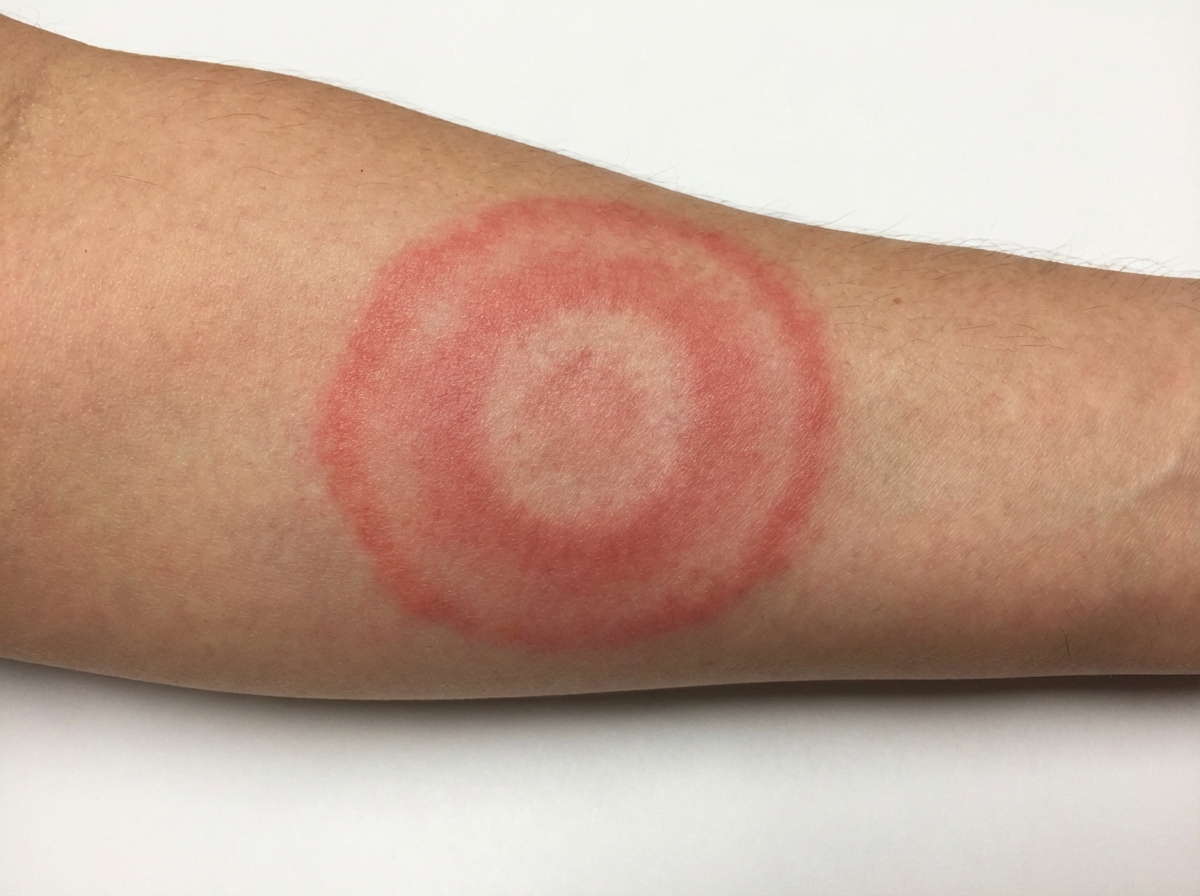
A 45-year-old woman presents to the emergency department with a headache, fevers with chills, rigors, and generalized joint pain for the past week. She also complains of a progressive rash on her left arm. She says that a few days ago she noticed a small, slightly raised lesion resembling an insect bite mark, which had a burning sensation. The medical and surgical histories are unremarkable. She recalls walking in the woods 2 weeks prior to the onset of symptoms, but does not recall finding a tick on her body. On examination, the temperature is 40.2°C (104.4°F). A circular red rash measuring 10 cm x 5 cm in diameter is noted on the left arm, as shown in the accompanying image. The remainder of her physical examination is unremarkable. The tick causing her disease is also responsible for the transmission of which of the following pathogens?
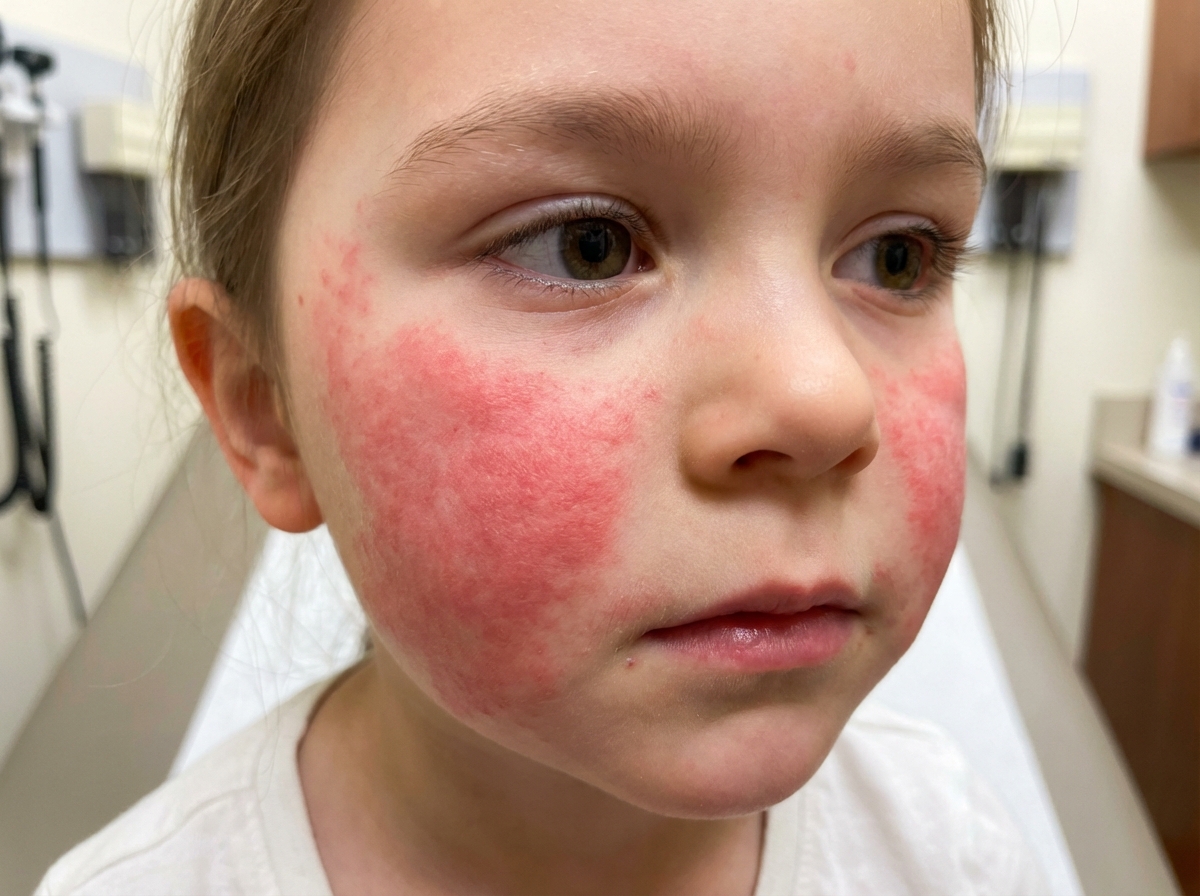
A 4-year-old boy is brought to the clinic by his mother with fever and a rash. The patient’s mother says his symptoms started 1 week ago with the acute onset of fever and a runny nose, which resolved over the next 3 days. Then, 4 days later, she noted a rash on his face, which, after a day, spread to his neck, torso, and extremities. The patient denies any pruritus or pain associated with the rash. No recent history of sore throat, chills, or upper respiratory infection. The patient has no significant past medical history and takes no medications. The vital signs include: temperature 37.2°C (99.9°F) and pulse 88/min. On physical examination, there is a maculopapular rash on his face, torso, and extremities, which spares the palms and soles. The appearance of the rash is shown in the exhibit (see image below). Which of the following would most likely confirm the diagnosis in this patient?
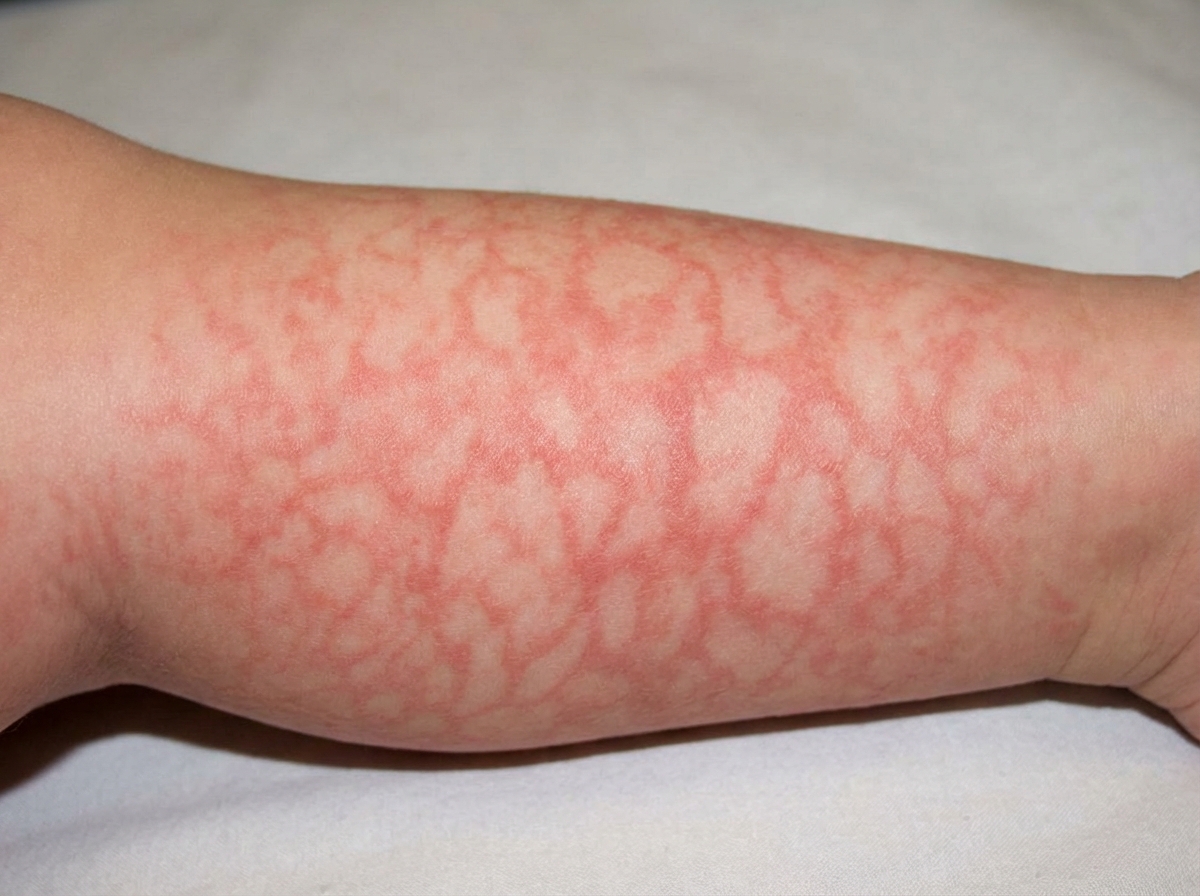
A 3-year-old boy presents with his mother to the family medicine clinic for an itchy rash on the face that started 3 days ago. The mother states that her son had a fever with a runny nose a little more than a week ago. There has been no sore throat or cough according to the mother. No significant medical conditions are noted. No medications are on record. The boy is up-to-date on all immunizations. His heart rate is 102/min, respiratory rate is 24/min, temperature is 36.5°C (97.7°F), and blood pressure is 92/65 mm Hg. The boy appears well-nourished and alert. Auscultation of the heart is without murmurs. Lungs are clear to auscultation bilaterally. An erythematous malar rash extending from the left lateral nasal region to the left medial zygomatic region is present. There is no lymphadenopathy present. A full skin examination reveals an erythematous, reticulated rash on the lower extremities (see image). Which of the following etiologic agents is responsible for the patient's signs and symptoms?
A 45-year-old male presents to the emergency room complaining of severe nausea and vomiting. He returned from a business trip to Nigeria five days ago. Since then, he has developed progressively worsening fevers, headache, nausea, and vomiting. He has lost his appetite and cannot hold down food or water. He did not receive any vaccinations before traveling. His medical history is notable for alcohol abuse and peptic ulcer disease for which he takes omeprazole regularly. His temperature is 103.0°F (39.4°C), blood pressure is 100/70 mmHg, pulse is 128/min, and respirations are 22/min. Physical examination reveals scleral icterus, hepatomegaly, and tenderness to palpation in the right and left upper quadrants. While in the examination room, he vomits up dark vomitus. The patient is admitted and started on multiple anti-protozoal and anti-bacterial medications. Serology studies are pending; however, the patient dies soon after admission. The virus that likely gave rise to this patient’s condition is part of which of the following families?
A 7-year-old boy is brought to his pediatrician by his parents because of a new rash. The family immigrated from Laos one year ago and recently obtained health insurance. A week ago, the boy stated that he was “not feeling well” and asked to stay home from school. At the time, he starting having cough, nasal congestion, and irritated eyes – symptoms that persisted and intensified. His parents recall that at the time they noticed small whitish-blue papules over the red buccal mucosa opposite his molars. Five days ago, his parents noticed a red rash around his face that quickly spread downward to cover most of his arms, trunk, and then legs. His temperature is 102.5°F (39.2°C), blood pressure is 110/85 mmHg, pulse is 102/min, and respirations 25/min. On physical exam, he has intermittent cough, cervical lymphadenopathy, and nonpurulent conjunctivitis accompanied by a confluent, dark red rash over his body. This patient is at risk for which of the following complications later in life?
A 24-year-old man presents to the emergency department with sudden onset of fever for the past few hours as well as pain and swelling in his right knee and left ankle. He denies any recent history of trauma or injury. The patient is otherwise a healthy, active young man. He recently recovered from a case of gastroenteritis which caused significant abdominal pain and bloody stool 4 weeks ago. He believes the infection was related to eating undercooked chicken while camping. His blood pressure is 124/76 mm Hg, his heart rate is 76/min, and his temperature is 36.9 ℃ (98.4 ℉). Physical examination reveals tenderness to palpation of his right knee and left ankle as well as erythematous conjunctiva. Which of the following features would be least likely to develop in patients with this condition?
A 15-year-old Caucasian male is brought to his pediatrician by his parents, who note the development of a tremor in their child. Urine and serum analysis reveal elevated levels of copper. Which of the following clinical manifestations would the physician most expect to see in this patient?
A 72-year-old man is brought to your office by his daughter due to concern over recent behavioral changes. Over the last several months he has had increasing difficulty with remembering recent events. She mentions that he is embarrassed due to a new inability to control urination. His medical history is significant for hypertension and insomnia. His medications include alprazolam and hydrochlorothiazide. On physical exam, he is oriented to time and place and thinks his daughter is exaggerating; however, when asked to recall 3 items, the patient refuses to continue the mental status exam. He has 5/5 strength bilaterally. He walks in short strides by sliding his feet across the floor. Which of the following would you expect to see in this patient?
A 62-year-old woman comes to the physician because of worsening mental status over the past month. Her husband reports that she was initially experiencing lapses in memory but has recently started having difficulties performing activities of daily living. She appears withdrawn and avoids eye contact. Examination shows diffuse involuntary muscle jerking that can be provoked by loud noises. A cerebrospinal fluid analysis shows elevated concentration of 14-3-3 protein. Four months later, the patient dies. Pathologic examination of the brain on autopsy is most likely to show which of the following findings?
Want unlimited practice?
Get full access to all questions, explanations, and performance tracking.
Scan to download app