
Common childhood exanthems — MCQs

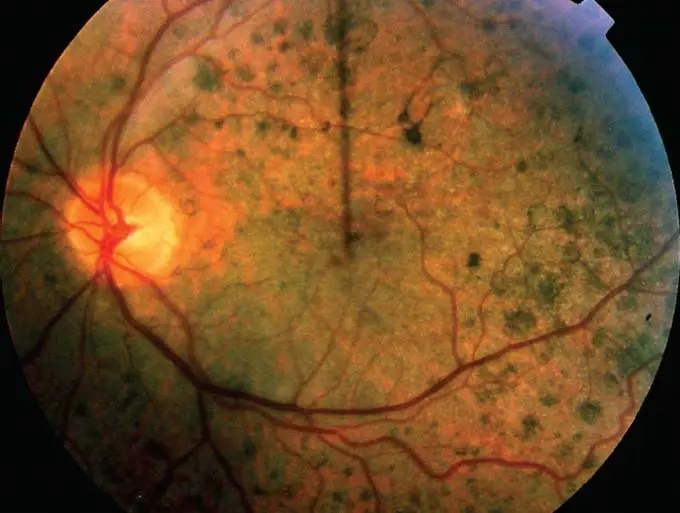
A male neonate is being examined by a pediatrician. His mother informs the doctor that she had a mild fever with rash, muscle pain, and swollen and tender lymph nodes during the second month of gestation. The boy was born at 39 weeks gestation via spontaneous vaginal delivery with no prenatal care. On physical examination, the neonate has normal vital signs. Retinal examination reveals the findings shown in the image. Which of the following congenital heart defects is most likely to be present in this neonate?
A 32-year-old G1P0 woman presents to her obstetrician for a prenatal visit. She is 30 weeks pregnant. She reports some fatigue and complains of urinary urgency. Prior to this pregnancy, she had no significant medical history. She takes a prenatal vitamin and folate supplements daily. Her mother has diabetes, and her brother has coronary artery disease. On physical examination, the fundal height is 25 centimeters. A fetal ultrasound shows a proportional reduction in head circumference, trunk size, and limb length. Which of the following is the most likely cause of the patient’s presentation?
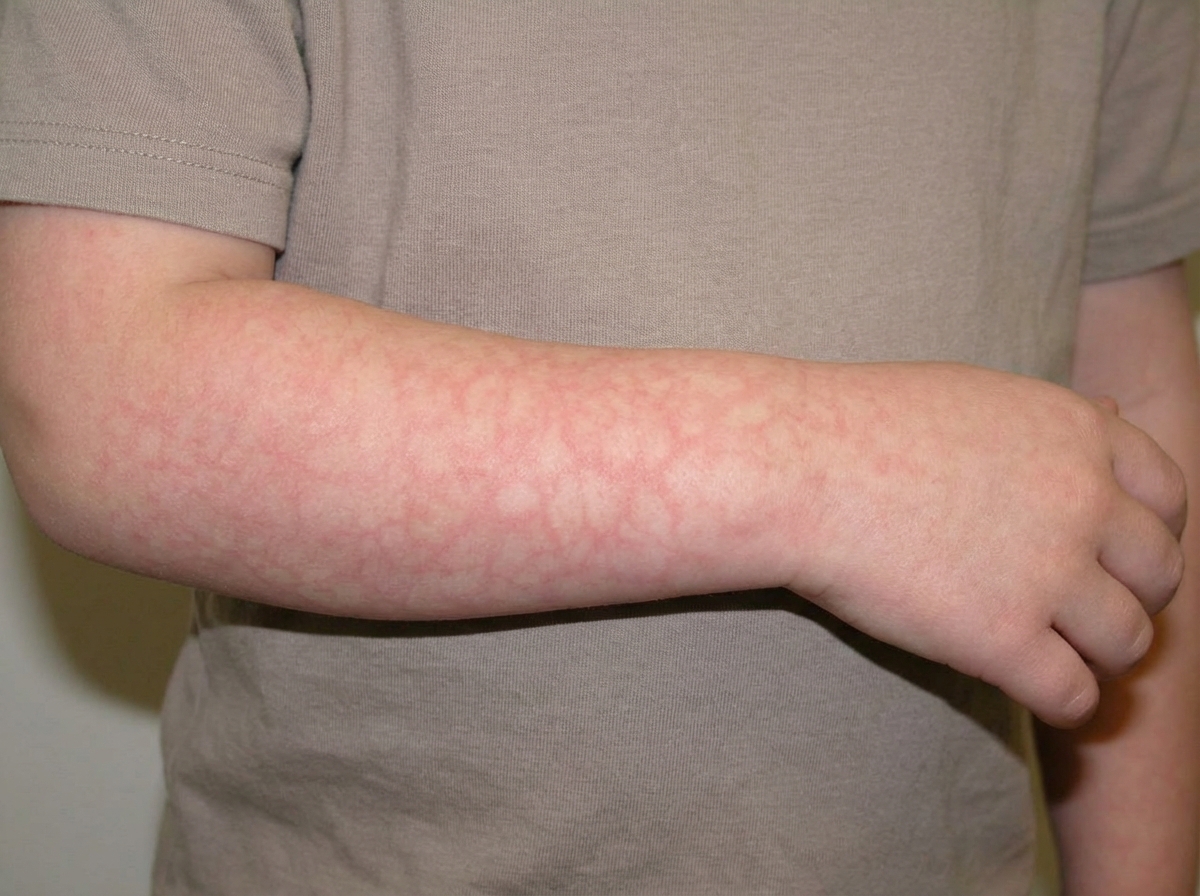
An 11-year-old girl is brought to the physician by her parents because of a mildly pruritic rash on her trunk and extremities for 2 days. One week ago, she developed a low-grade fever, rhinorrhea, and headache, followed by a facial rash 4 days later. The facial rash did not involve the perioral skin. Her temperature is 37.4°C (99.3°F). A photograph of the rash on her lower arms is shown. Which of the following is the most likely diagnosis?
A 15-month-old girl is brought to the physician because of the sudden appearance of a rash on her trunk that started 6 hours ago and subsequently spread to her extremities. Four days ago, she was taken to the emergency department because of a high fever and vomiting. She was treated with acetaminophen and discharged the next day. The fever persisted for several days and abated just prior to appearance of the rash. Physical examination shows a rose-colored, blanching, maculopapular rash, and postauricular lymphadenopathy. Which of the following is the most likely diagnosis?
A 9-month-old infant is brought to the physician because of a generalized nonpruritic rash for 2 days. The rash began on her trunk and spread to her extremities. Five days ago, she was taken to the emergency department for fever of 40.5°C (104.9°F) and a 1-minute generalized tonic-clonic seizure. She was born at term and has no history of serious illness. Her immunizations are up-to-date. Current medications include acetaminophen. Her temperature is 37.2°C (99.0°F) and pulse is 120/min. Examination shows a maculopapular rash that blanches on pressure. A photograph of the rash is shown. Posterior auricular lymphadenopathy is present. Which of the following is the most likely diagnosis?
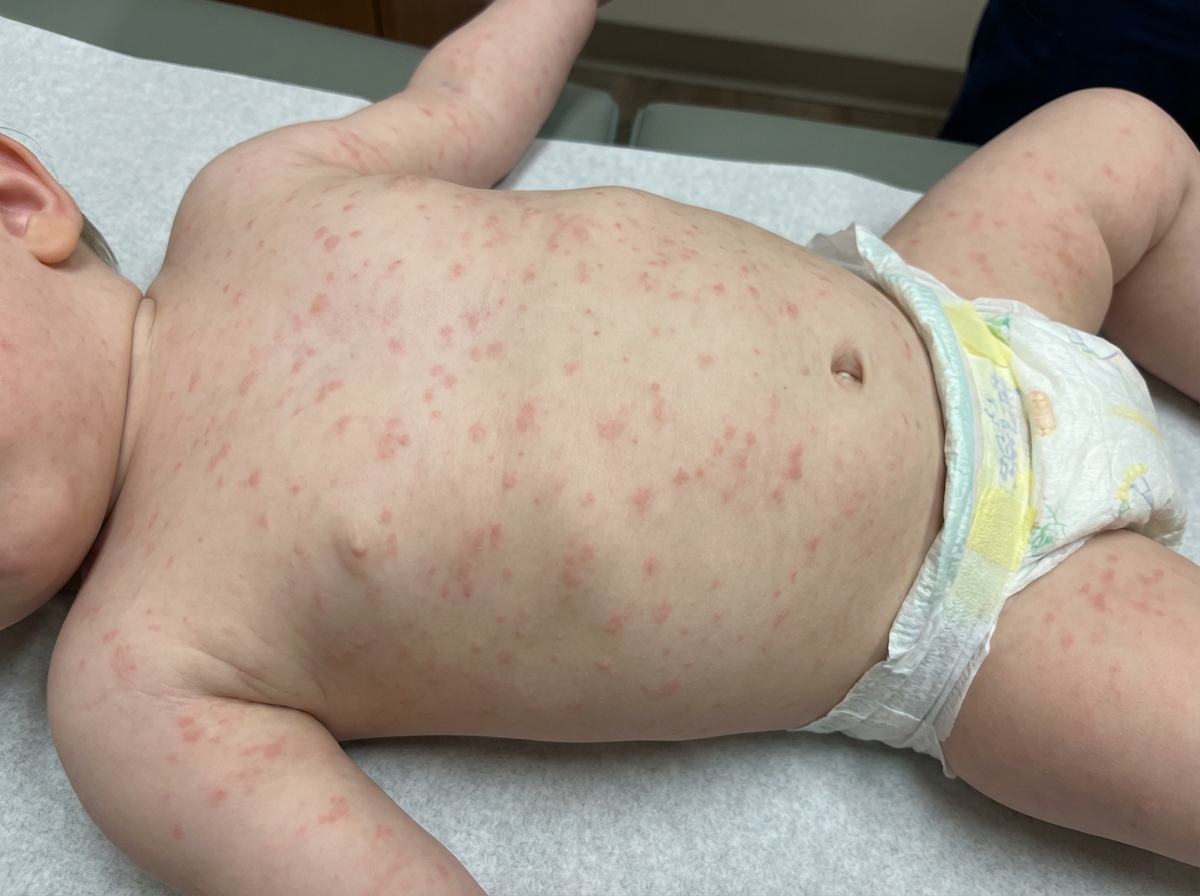
A 4-year-old boy is brought to the clinic by his mother with fever and a rash. The patient’s mother says his symptoms started 1 week ago with the acute onset of fever and a runny nose, which resolved over the next 3 days. Then, 4 days later, she noted a rash on his face, which, after a day, spread to his neck, torso, and extremities. The patient denies any pruritus or pain associated with the rash. No recent history of sore throat, chills, or upper respiratory infection. The patient has no significant past medical history and takes no medications. The vital signs include: temperature 37.2°C (99.9°F) and pulse 88/min. On physical examination, there is a maculopapular rash on his face, torso, and extremities, which spares the palms and soles. The appearance of the rash is shown in the exhibit (see image below). Which of the following would most likely confirm the diagnosis in this patient?
An 8-year-old boy presents with recurrent infections including multiple episodes of pneumonia and diarrhea. He reports difficulty seeing in the dark. Physical examination reveals white patches on the sclera and conjunctival dryness. What is the most likely cause of these findings?
A previously healthy 5-year-old boy is brought to the physician because of increasing weakness and a retroauricular rash that started 2 days ago. The rash spread rapidly and involves the trunk and extremities. Last week, he had a mild sore throat, pink eyes, and a headache. His family recently immigrated from Ethiopia. His immunization status is unknown. The patient appears severely ill. His temperature is 38.5°C (101.3°F). Examination shows tender postauricular and suboccipital lymphadenopathy. There is a nonconfluent, maculopapular rash over the torso and extremities. Infection with which of the following is the most likely cause of this patient's symptoms?
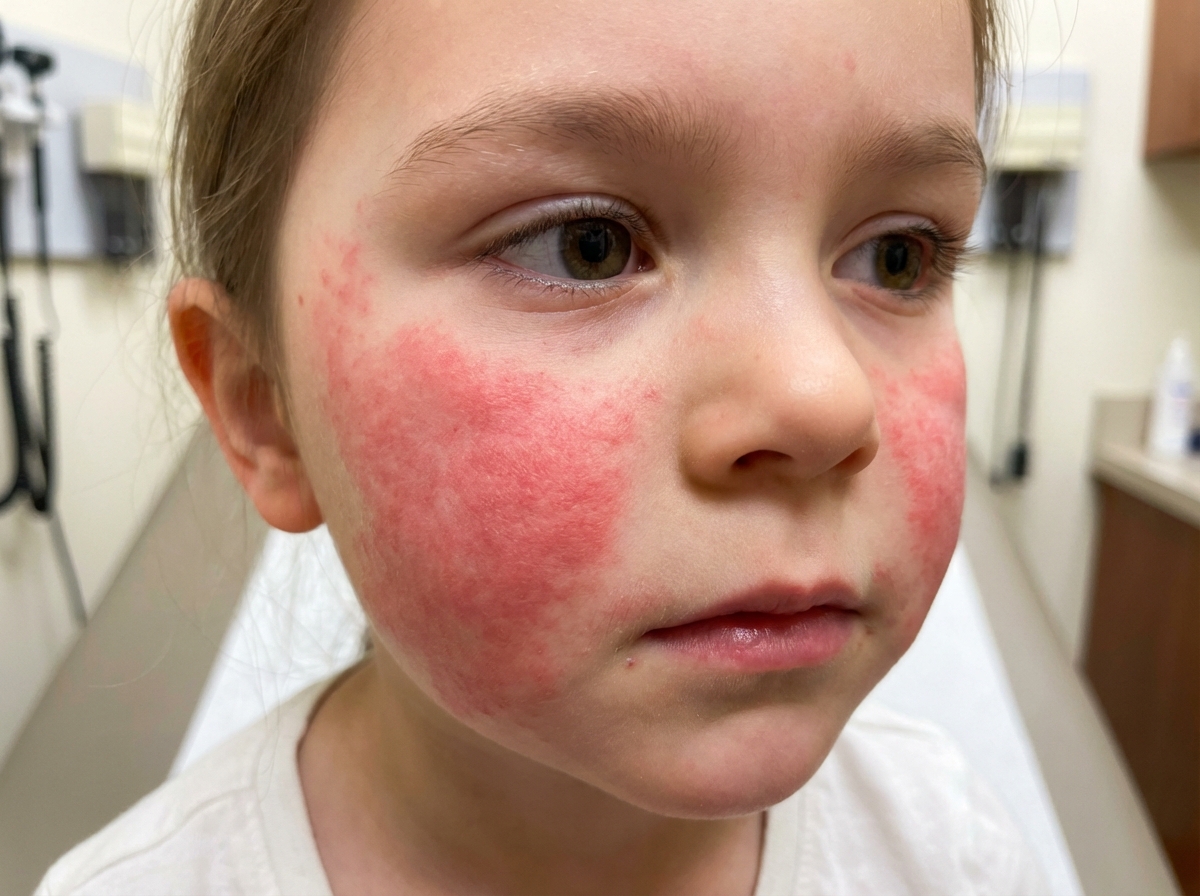
A 10-year-old girl with a rash is brought to the clinic by her mother. The patient’s mother says that the onset of the rash occurred 2 days ago. The rash was itchy, red, and initially localized to the cheeks with circumoral pallor, and it gradually spread to the arms and trunk. The patient’s mother also says her daughter had been reporting a high fever of 39.4°C (102.9°F), headaches, myalgia, and flu-like symptoms about a week ago, which resolved in 2 days with acetaminophen. The patient has no significant past medical history. Her vital signs include: temperature 37.0°C (98.6°F), pulse 90/min, blood pressure 125/85 mm Hg, respiratory rate 20/min. Physical examination shows a symmetric erythematous maculopapular rash on both cheeks with circumoral pallor, which extends to the patient’s trunk, arms, and buttocks. The remainder of the exam is unremarkable. Laboratory findings are significant for a leukocyte count of 7,100/mm3 and platelet count of 325,000/mm3. Which of the following is the next best step in the management of this patient?
A 9-year-old male presents to your office with an indurated rash on his face. You diagnose erythema infectiosum. Which of the following is characteristic of the virus causing this patient's disease?
Want unlimited practice?
Get full access to all questions, explanations, and performance tracking.
Scan to download app