
Failure to thrive evaluation — MCQs

A 7-day-old male infant presents to the pediatrician for weight loss. There is no history of excessive crying, irritability, lethargy, or feeding difficulty. The parents deny any history of fast breathing, bluish discoloration of lips/nails, fever, vomiting, diarrhea, or seizures. He was born at full term by vaginal delivery without any perinatal complications and his birth weight was 3.6 kg (8 lb). Since birth he has been exclusively breastfed and passes urine six to eight times a day. His physical examination, including vital signs, is completely normal. His weight is 3.3 kg (7.3 lb); length and head circumference are normal for his age and sex. Which of the following is the next best step in the management of the infant?
A two-year-old female presents to the pediatrician with her mother for a routine well-child visit. Her mother is concerned that the patient is a picky eater and refuses to eat vegetables. She drinks milk with meals and has juice sparingly. She goes to sleep easily at night and usually sleeps for 11-12 hours. The patient has trouble falling asleep for naps but does nap for 1-2 hours a few times per week. She is doing well in daycare and enjoys parallel play with the other children. Her mother reports that she can walk down stairs with both feet on each step. She has a vocabulary of 10-25 words that she uses in the form of one-word commands. She is in the 42nd percentile for height and 48th percentile for weight, which is consistent with her growth curves. On physical exam, she appears well nourished. She can copy a line and throw a ball. She can follow the command to “give me the ball and then close the door.” This child is meeting her developmental milestones in all but which of the following categories?
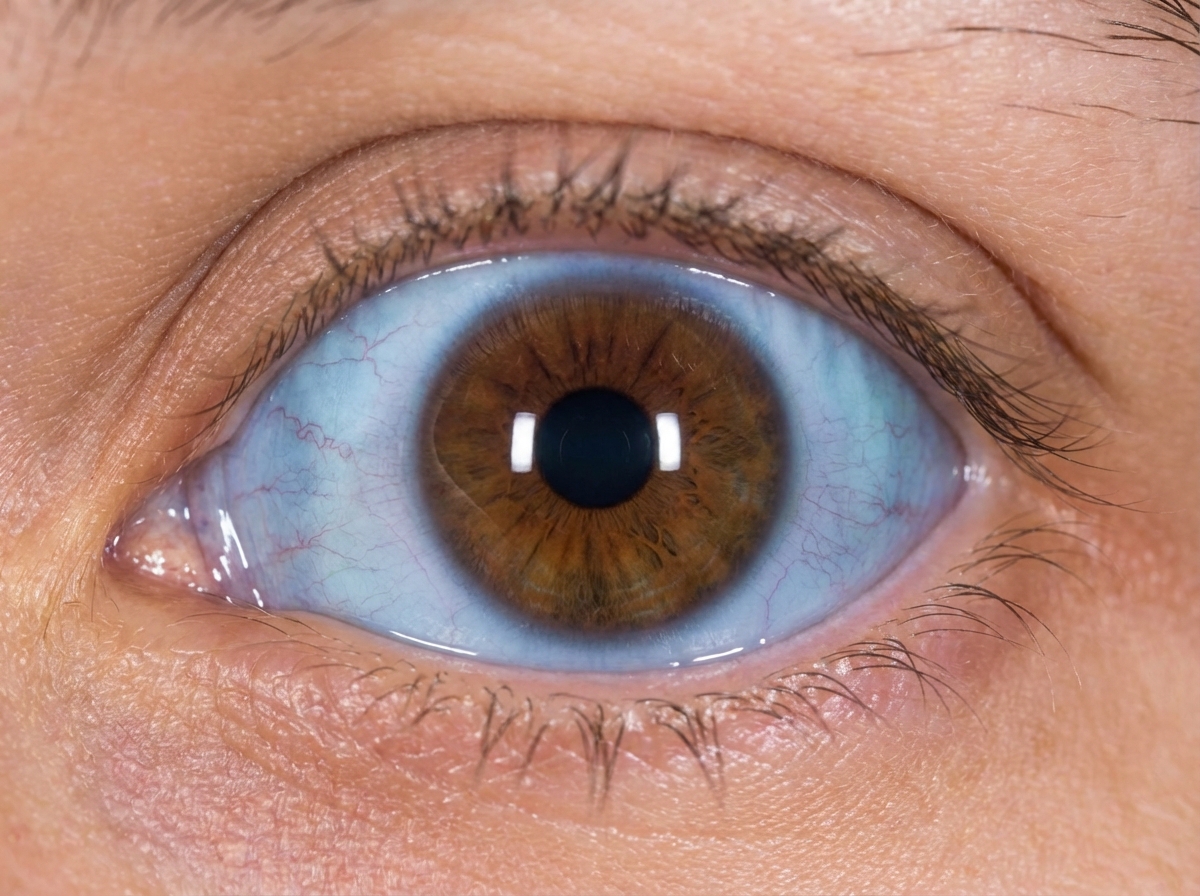
A 7-year-old girl presents to her primary care physician for a routine check-up. The physician allows the medical student to perform a physical examination. The medical student notes hearing impairment as well as the findings show in Figures A and B. Radiographs show indications of multiple old fractures of the humerus that have healed. After questioning the girl’s parents, the medical student learns that in addition, the patient is extremely picky with her food and eats a diet consisting mainly of cereal and pasta. What is the most likely etiology of the patient’s disease?
A 4-year-old girl is brought to the physician by her parents because she is severely underweight. She is easily fatigued and has difficulty keeping up with other children at her daycare. She has a good appetite and eats 3 full meals a day. She has 4 to 5 bowel movements daily with bulky, foul-smelling stools that float. She has had recurrent episodes of sinusitis since infancy. Her parents report that she recently started to snore during her sleep. She is at the 15th percentile for height and 3rd percentile for weight. Her vital signs are within normal limits. Examination shows pale conjunctivae. A few scattered expiratory crackles are heard in the thorax. There is abdominal distention. Which of the following is the most likely underlying cause of this patient's failure to thrive?
A 4-day-old male newborn is brought to the physician for a well-child examination. His mother is concerned that he is losing weight. He was born at 40 weeks' gestation and weighed 2980g (6-lb 9-oz); he currently weighs 2830g (6-lb 4-oz). Pregnancy was uncomplicated. He passed stool and urine 8 and 10 hours after delivery. He has been exclusively breast fed since birth and feeds 11–12 times daily. His mother says she changes 5–6 heavy diapers daily. Examination shows an open and firm anterior fontanelle. Mucous membranes are moist. Capillary refill time is less than 2 seconds. Cardiopulmonary examination shows no abnormalities. Which of the following is the most appropriate next best step in management?
A 13-year-old boy is being evaluated for failure to thrive and bad performance at school. He has a history of microcytic anemia and takes a multivitamin every morning with breakfast. An electrophoresis analysis shows no adult hemoglobin (HbA), elevated hemoglobin adult type 2 (HbA2), and normal fetal hemoglobin (HbF). A skull X-ray revealed a crewcut appearance. Which of the following is the most likely diagnosis?
A 6-month-old girl is brought to the physician because of drooling and excessive crying for 3 days. She calms down when cuddled or with a pacifier in her mouth. She feeds well and has no vomiting or diarrhea. She was breastfed exclusively for 5 months. She is given no medications and was born at 39 weeks gestation via spontaneous vaginal delivery. She is up to date on all vaccines and is meeting all developmental milestones. At the clinic, her weight is 7.3 kg (16 lb 1 oz) and her height is 65.8 cm (25.9 in) in length. She appears irritable. Her pulse is 124/min, the respirations are 32/min, the blood pressure is 92/63 mm Hg, and the temperature is 36.8°C (98.2°F). On physical examination, she has no conjunctivitis, cervical lymphadenopathy, or pharyngeal erythema. Which element of the physical examination is most likely to be present in this patient?
A laborer's younger child is brought to the OPD with a swollen belly and dull face. He has been fed rice water (rice milk) in his diet mostly. On investigations, the child is found to have low serum protein and low albumin. What is the probable diagnosis?
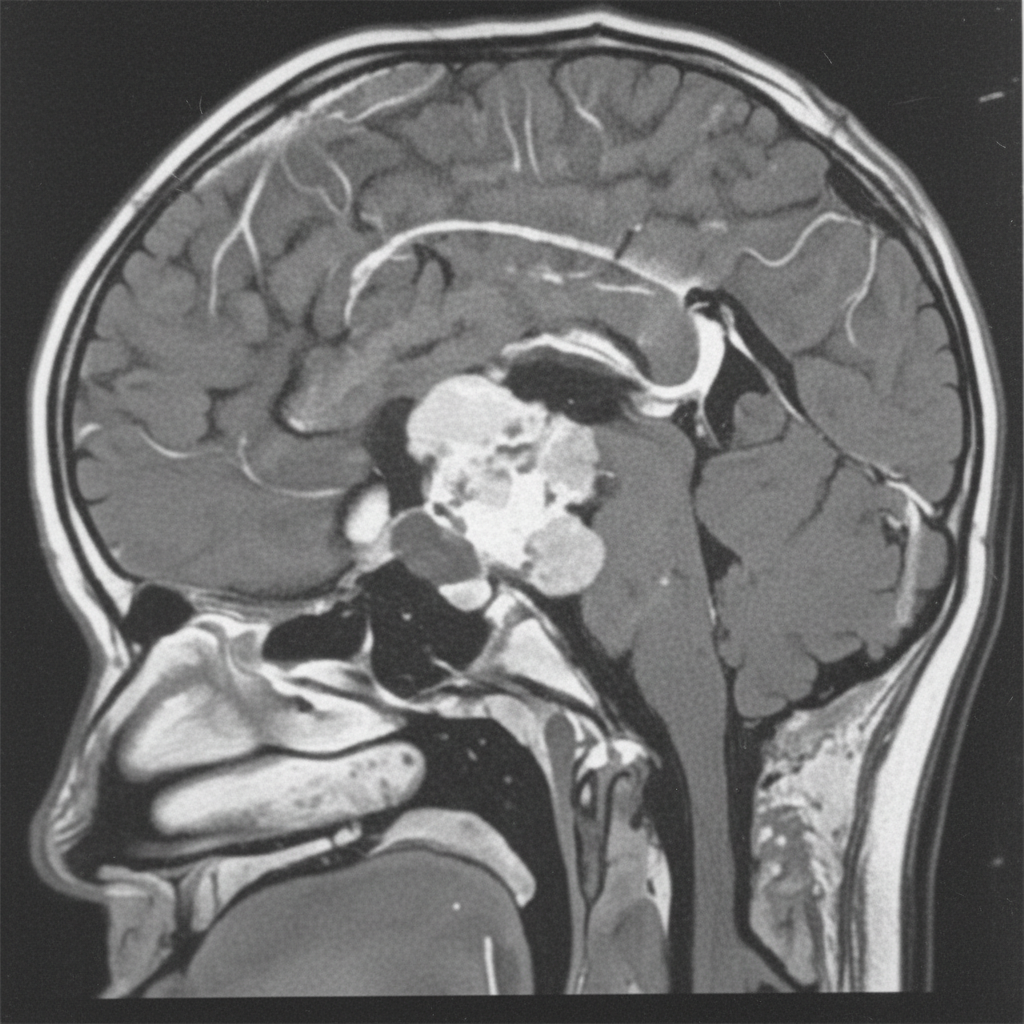
A 12-year-old boy presents with symptoms of headaches, visual disturbances, and growth retardation. An MRI scan is performed, and the image provided shows a cystic mass with both solid and calcified components in the suprasellar region, extending into the third ventricle. Based on the clinical presentation and MRI findings, what is the most likely diagnosis?
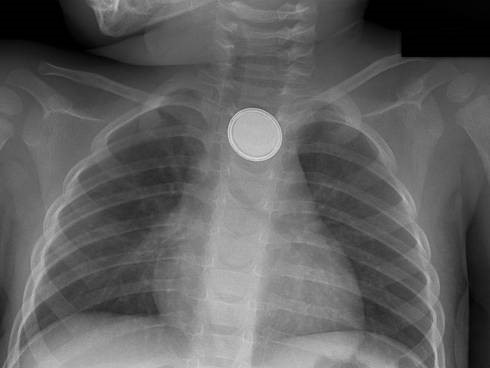
A baby was playing unattended and suddenly developed respiratory distress. Based on the X-ray provided, where is the foreign object most likely located?
Want unlimited practice?
Get full access to all questions, explanations, and performance tracking.
Scan to download app