
22q11.2 deletion syndrome — MCQs

A healthy, full-term 1-day-old female infant is evaluated after birth. She is noted to have a cleft palate and a systolic ejection murmur at the left intercostal space. Low-set ears and micrognathia are also noted on examination. A chest radiograph is obtained which reveals a boot-shaped heart and absence of thymus. Vital signs are unremarkable. Echocardiography is performed which demonstrates a ventricular septal defect, pulmonary valve stenosis, a misplaced aorta, and a thickened right ventricular wall. Family history is non-contributory; not much is known about the father. Based on this clinical presentation, which complication is this infant most likely to develop?
A 1-year-old boy presents to pediatrics clinic for a well-child visit. He has no complaints. He has a cleft palate and an abnormal facial appearance. He has been riddled with recurrent infections and is followed by cardiology for a ventricular septal defect (VSD). Vital signs are stable, and the patient's physical exam is benign. If this patient's medical history is part of a larger syndrome, what might one also discover that is consistent with the manifestations of this syndrome?
A child is born by routine delivery and quickly develops respiratory distress. He is noted to have epicanthal folds, low-set ears that are pressed against his head, widely set eyes, a broad, flat nose, clubbed feet, and a receding chin. The mother had one prenatal visit, at which time the routine ultrasound revealed an amniotic fluid index of 3 cm. What is the most likely underlying cause of this patient's condition?
A 16-year-old girl presents with primary amenorrhea. On exam, you note that she is short and has a shield chest. You order abdominal imaging, which suggests the presence of streak gonads. Of the choices listed below, which of the following karyotypes is possible in this patient? I: 45,XO II: 45,XO/46,XX mosaicism III: 46,X,del(Xp) or other structural X abnormalities
A 36-year-old G3P2002 presents to her obstetrician’s office for her first prenatal visit at ten weeks and two days gestation. She notes that she has felt nauseous the last several mornings and has been especially tired for a few weeks. Otherwise, she feels well. The patient has had two uncomplicated spontaneous vaginal deliveries at full term with her last child born six years ago. She is concerned about the risk of Down syndrome in this fetus, as her sister gave birth to an affected child at age 43. The patient has a history of generalized anxiety disorder, atopic dermatitis, and she is currently on escitalopram. At this visit, this patient’s temperature is 98.6°F (37.0°C), pulse is 70/min, blood pressure is 121/67 mmHg, and respirations are 13/min. The patient appears anxious, but overall comfortable, and cardiopulmonary and abdominal exams are unremarkable. Pelvic exam reveals normal female external genitalia, a closed and slightly soft cervix, a ten-week-sized uterus, and no adnexal masses. Which of the following is the best next step for definitively determining whether this patient’s fetus has Down syndrome?
An 8-year-old boy is brought to the physician for evaluation of developmental delay and recurrent tonic-clonic seizures. There is no family history of seizures or other serious illness. Current medications include risperidone for hyperactivity. He is at the 17th percentile for head circumference. Examination shows protrusion of the mandible, strabismus, and a laughing facial expression. His gait is unsteady. He has a vocabulary of about 200 words and cannot speak in full sentences. Karyotype analysis shows a 46, XY karyotype without chromosomal deletions. Which of the following genetic mechanisms best explains this patient's findings?
A 4-month-old boy with a history of multiple infections presents with muscle stiffness. On physical exam, he is found to have carpopedal spasm as well as a heart murmur. Based on your clinical suspicion you decide to obtain a chest X-ray which shows a diminished shadow in the mediastinum. A mutation in which of the following chromosomes is the most likely cause of this patient's presentation?
A 2-month-old boy is presented to the clinic for a well-child visit by his parents. They are concerned with his weak cry and difficulty with feeding. Birth history reveals that the boy was born at the 37th week of gestation by cesarean section due to poor fetal movement and fetal distress. His Apgar scores were 3 and 5 at 1st and 5th minute respectively and his birth weight was 2.5 kg (6 lb). His vital signs include heart rate 120/min, respiratory rate 40/min, blood pressure 90/50 mm Hg, and temperature 37.0°C (98.6°F). Physical examination reveals a malnourished boy with a small narrow forehead and a small jaw. His mouth is small and he has comparatively small genitals. He has a poor muscle tone. After repeated follow-up, he gains weight rapidly but his height fails to increase. Developmental milestones are delayed at the age of 3 years. Genetic testing reveals Prader-Willi syndrome. Which of the following is the most common mechanism for the development of this patient’s condition?
A 1-year-old girl born to a 40-year-old woman is undergoing an examination by a pediatric resident in the hospital. The pregnancy was uneventful and there were no complications during the delivery. The physical examination reveals midface hypoplasia with a flat nasal bridge and upslanting palpebral fissures. She has a small mouth and chest auscultation reveals a blowing holosystolic murmur that is heard best along the sternal border. The family history is unremarkable. A karyotype analysis is ordered because the resident suspects a numerical chromosomal disorder. Which of the following phenomena leads to the infant’s condition?
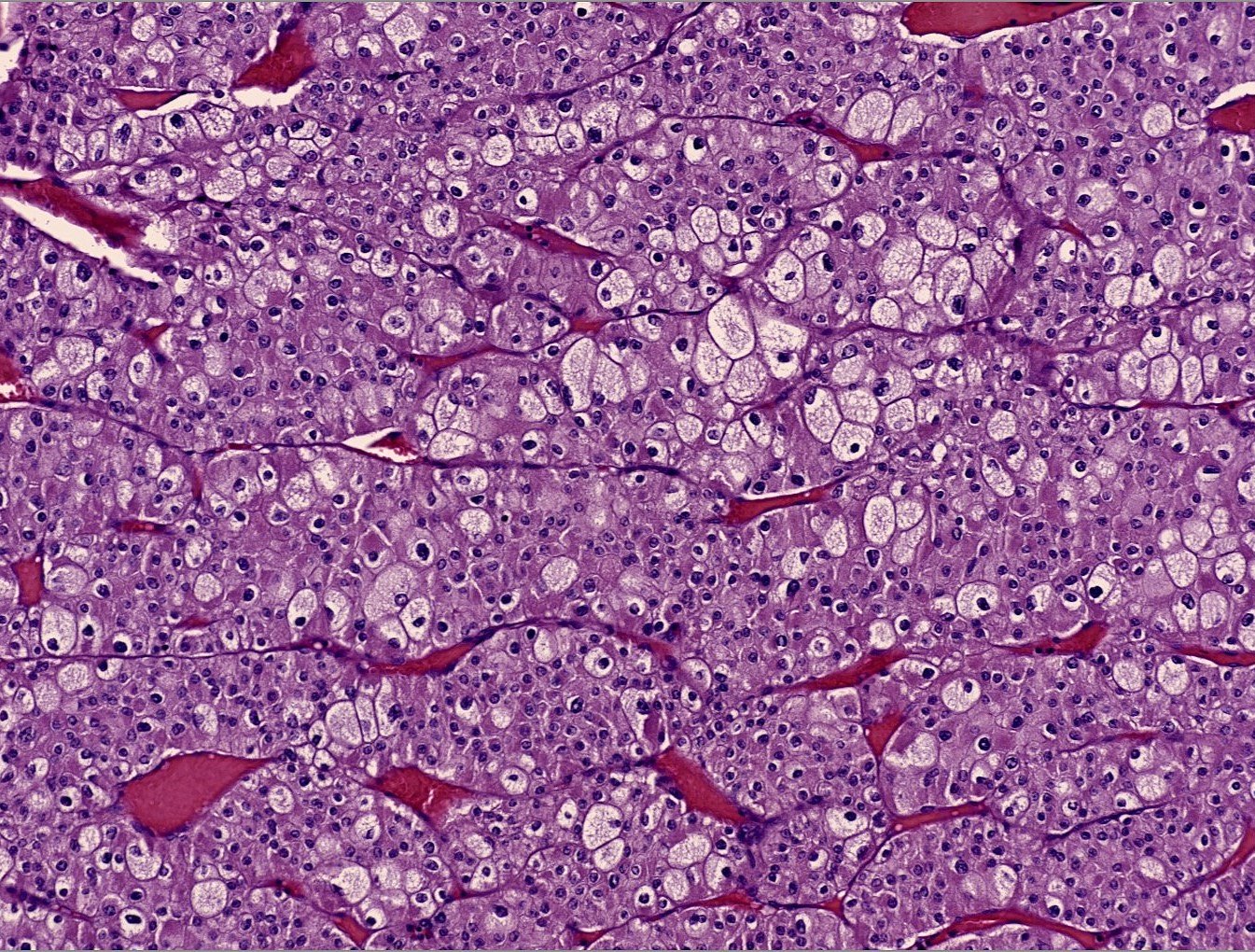
A 69-year-old man comes to the physician because of a 1-week history of blood in the urine and fatigue. He also has had a 5.0-kg (11-lb) weight loss during the past month. Physical examination shows pallor and cachexia. A nontender right flank mass is palpated. A CT scan of the chest, abdomen, and pelvis shows a 5-cm right upper pole renal mass and several pulmonary lesions. A biopsy specimen of an affected area of the lung is obtained. A photomicrograph of the biopsy specimen is shown. Molecular evaluation of the specimen is most likely to show which of the following genetic changes?
Want unlimited practice?
Get full access to all questions, explanations, and performance tracking.
Scan to download app