
Surgical management timing — MCQs

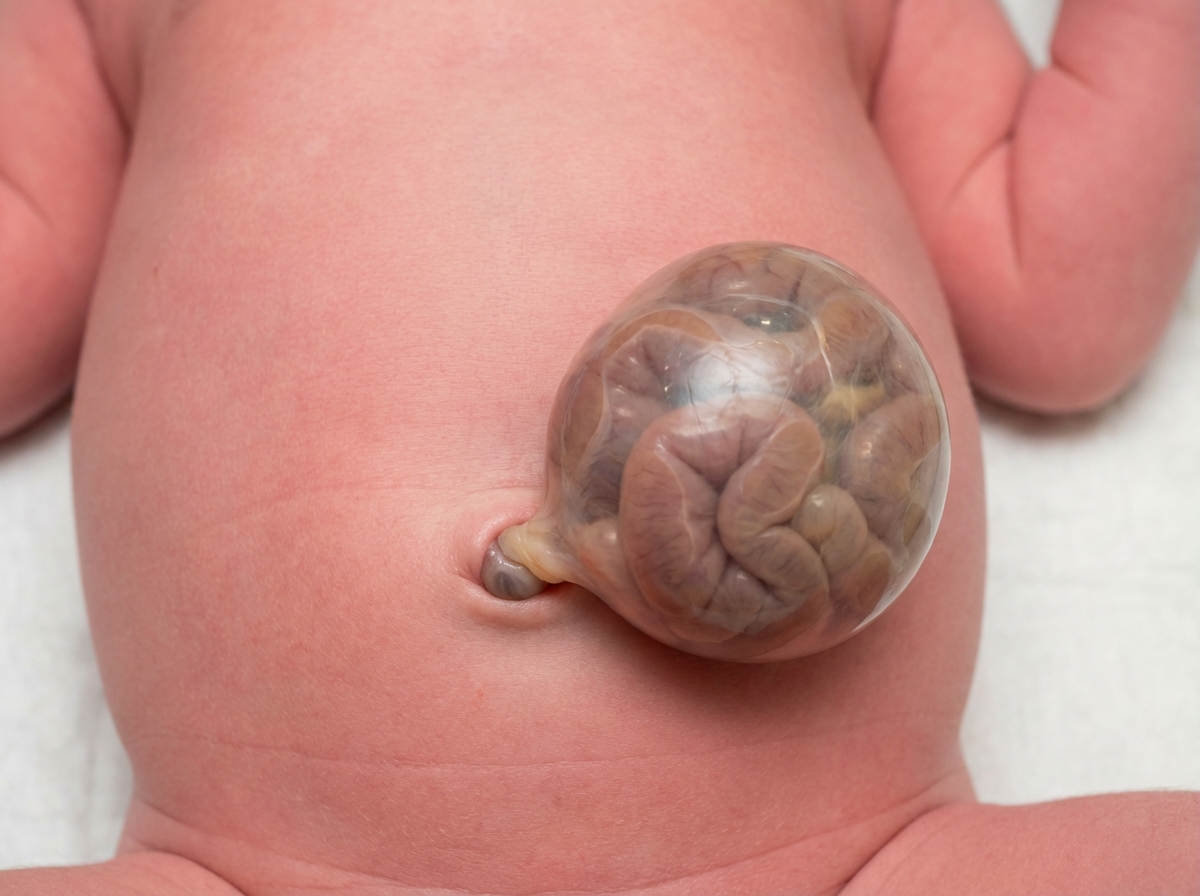
A 42-year-old woman presents to the emergency department in active labor. She has had no prenatal care and is unsure of the gestational age. Labor progresses rapidly and spontaneous vaginal delivery of a baby boy occurs 3 hours after presentation. On initial exam, the child is 1.9 kg (4.2 lb) with a small head and jaw. A sac-like structure containing intestine, as can be seen in the picture, protrudes from the abdominal wall. What complication is closely associated with this presentation?
An 8-year-old boy and his 26-year-old babysitter are brought into the emergency department with severe injuries caused by a motor vehicle accident. The child is wheeled to the pediatric intensive care unit with a severe injury to his right arm, as well as other external and internal injuries. He is hemorrhaging and found to be hemodynamically unstable. He subsequently requires transfusion and surgery, and he is currently unconscious. The pediatric trauma surgeon evaluates the child’s arm and realizes it will need to be amputated at the elbow. Which of the following is the most appropriate course of action to take with regards to the amputation?
A 4-year-old boy is brought to the physician by his parents for bedwetting. He went 3 months without wetting the bed but then started again 6 weeks ago. He has been wetting the bed about 1–2 times per week. He has not had daytime urinary incontinence or dysuria. His teachers report that he is attentive in preschool and plays well with his peers. He is able to name 5 colors, follow three-step commands, and recite his address. He can do a somersault, use scissors, and copy a square. Physical examination shows no abnormalities. Which of the following is the most appropriate next step in management?
A 6-month-old boy is brought to the physician because of a right-sided scrotal swelling for the past 2 months. The swelling is intermittent and appears usually after the patient has been taken outdoors in a baby carrier, and disappears the next morning. The patient was born at term without complications and has been healthy. Examination shows a 3-cm, soft, nontender, and fluctuant right scrotal mass that is reducible and does not extend into the inguinal area. A light held behind the scrotum shines through. There are no bowel sounds in the mass. The remainder of the examination shows no abnormalities. Which of the following is the most appropriate next step in the management of this patient?
Cardiac surgery is consulted on a newborn with a large ventricular septal defect. The child has poor weight gain and feeding difficulties. He requires furosemide and captopril to avoid dyspnea. On physical examination his temperature is 36.9°C (98.4°F), pulse rate is 158/min, respiratory rate is 30/min, and blood pressure is 94/62 mm Hg. Chest auscultation reveals a holosystolic murmur along the left lower sternal border and a mid-diastolic low-pitched rumble at the apex. Abdominal examination reveals the presence of hepatomegaly. An echocardiogram confirms a diagnosis of a membranous VSD while hemodynamic studies show a Qp:Qs ratio of 2.8:1. Which of the following is the best management option?
A 4-month-old girl is brought to the physician because she has been regurgitating and vomiting 10–15 minutes after feeding for the past 3 weeks. She is breastfed and formula-fed. She was born at 38 weeks' gestation and weighed 2966 g (6 lb 9 oz). She currently weighs 5878 g (12 lb 15 oz). She appears healthy. Vital signs are within normal limits. Examination shows a soft and nontender abdomen and no organomegaly. Which of the following is the most appropriate next best step in management?
A 4-year-old-female presents with a flattened, reddish 2 cm lump located at the base of the tongue. The patient's mother reports her having trouble swallowing, often leading to feeding difficulties. The mother also reports lethargy, constipation, dry skin, and hypothermia. Which of the following is the most appropriate management of this patient’s presentation?
A 2-year-old boy is brought to a pediatrician because his parents have noticed that he seems to be getting tired very easily at home. Specifically, they have noticed that he is often panting for breath after walking around the house for a few minutes and that he needs to take naps fairly often throughout the day. He has otherwise been well, and his parents do not recall any recent infections. He was born at home, and his mom did not receive any prenatal care prior to birth. Physical exam reveals a high-pitched, harsh, holosystolic murmur that is best heard at the lower left sternal border. No cyanosis is observed. Which of the following oxygen tension profiles would most likely be seen in this patient? (LV = left ventricle, RV = right ventricle, and SC = systemic circulation).
A 5-month-old boy is brought to the emergency department by his mother because his lips turned blue for several minutes while playing earlier that evening. She reports that he has had similar episodes during feeding that resolved quickly. He was born at term following an uncomplicated pregnancy and delivery. He is at the 25th percentile for length and below the 5th percentile for weight. His temperature is 37°C (98.6°F), pulse is 130/min, blood pressure is 83/55 mm Hg, and respirations are 42/min. Pulse oximetry on room air shows an oxygen saturation of 90%. During the examination, he sits calmly in his mother's lap. He appears well. The patient begins to cry when examination of his throat is attempted; his lips and fingers begin to turn blue. Further evaluation of this patient is most likely to show which of the following?
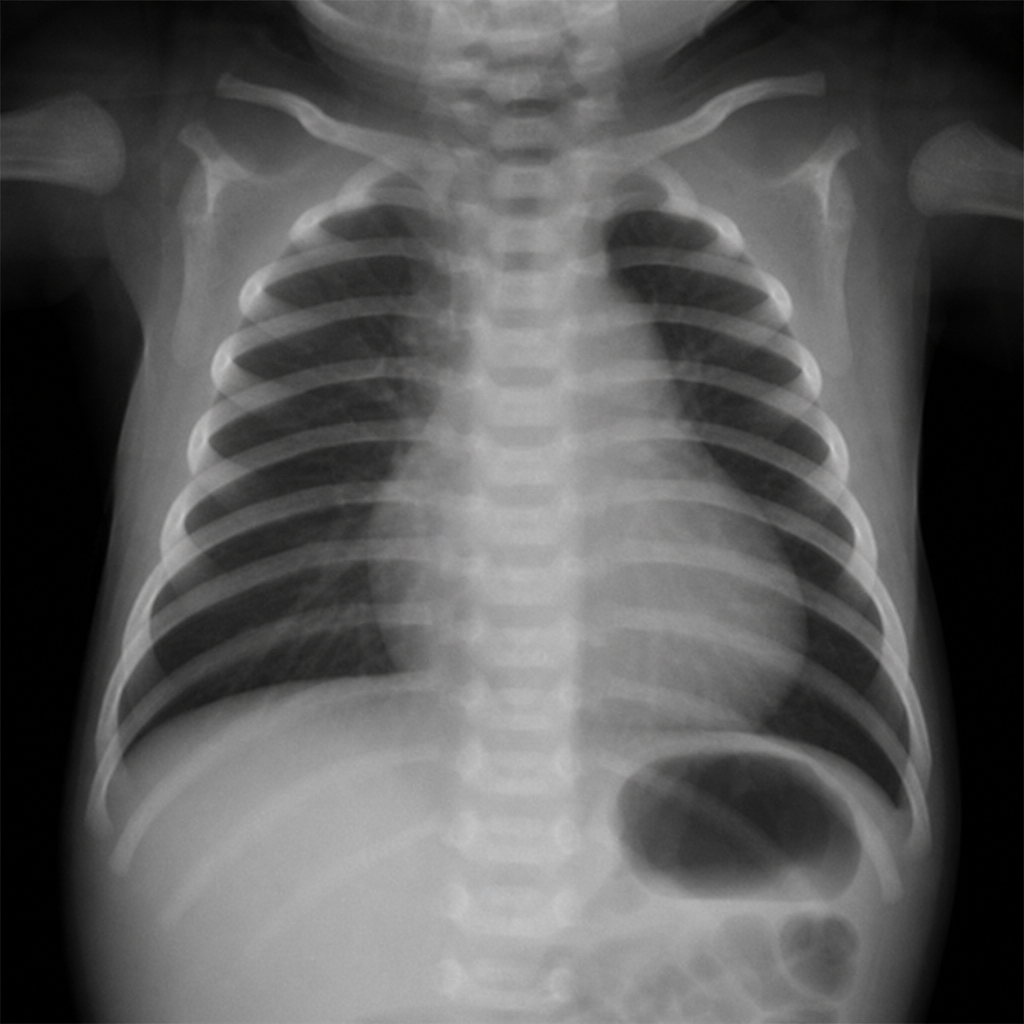
A 5-year-old child has central cyanosis and episodes of worsening cyanosis during exertion that improve when he squats. Examination shows digital clubbing, a right ventricular heave, a single S2, and a harsh systolic ejection murmur at the left upper sternal border. The chest radiograph shown was obtained during an unrelated evaluation of enteric tubing; it shows no pulmonary edema or focal lung disease. Which congenital heart defect most likely explains the child's clinical findings?
Want unlimited practice?
Get full access to all questions, explanations, and performance tracking.
Scan to download app