A 4-month-old infant girl is brought to the pediatrician because of feeding problems and recurrent infections. She has a blood pressure of 104/65 mm Hg and heart rate of 91/min. On physical examination, she has a cleft palate, malformed jaw, structural cardiac abnormalities, and diminished cell-mediated responses. Laboratory investigations reveal hypocalcemia. Which of the following is the most likely diagnosis?
Q32
A 14-year-old girl presents to the pediatrician because she has not experienced the onset of menstruation. Her mother reports that her pubic hair developed at the age of 9 years. Her mother also informs that she has been experiencing recurrent serous otitis media since early childhood. The temperature is 36.8°C (98.4°F), pulse is 88/min, blood pressure is 128/78 mm Hg, and respiratory rate is 14/min. The physical examination shows hypoplastic nails, along with short 4th and 5th metacarpals, and cubitus valgus bilaterally. In addition, the examination of her chest shows lack of breast development with widely spaced nipples. The auscultation of the chest reveals normal heart sounds with no murmur noted. The examination of the head and neck region shows a high arched palate, dental malocclusion, and a low hairline. Which of the following signs is most likely to be present on examination of her skin?
Q33
A 16-year-old teenager is brought to the pediatrician's office by her mother. The mother expresses concerns about her daughter's health because she has not achieved menarche. The daughter confirms this and upon further questioning, denies any significant weight loss, changes in mood, or changes in her appetite. She denies being sexually active. She is a good student who works hard and enjoys competing in sports. She was born via spontaneous vaginal delivery at 39 weeks. There was some discussion about mild birth defects, but her mother never followed up and can not recall the specifics. Her vaccines are up to date and she has met all developmental milestones. Past medical history and family history are benign. She has a heart rate of 90/min, respiratory rate of 17/min, blood pressure of 110/65 mm Hg, and temperature of 37.0°C (98.6°F). On physical examination, the patient is short in stature at the 33rd percentile in height. Additionally, she has some excessive skin in the neck and has a broad chest with widely spaced nipples. A urine pregnancy test is negative. Which of the following genetic abnormalities is the most likely cause of this patient's condition?
Q34
A healthy 37-year-old gravida-3-para-1 (G-3-P-1) who underwent in vitro fertilization delivers a boy vaginally. On examination, he is found to have a ventral urethral meatus inferior to the glans. Which statement is correct?
Q35
A 7-year-old girl is brought to the physician with complaints of recurrent episodes of dysuria for the past few months. Her parents reported 4 to 5 similar episodes in the last year. They also note that she has had several urinary tract infections throughout her childhood. She has no other medical problems and takes no medications. Her temperature is 38.6ºC (101.4°F), pulse is 88/min, and respiratory rate is 20/min. On physical examination, suprapubic tenderness is noted. On ultrasonography, hydronephrosis and scarring are present. Which of the following is the most appropriate next step?
Q36
A 2-year-old boy is brought to the physician by his father for a well-child examination. He recently emigrated from Mexico with his family and has not seen a physician since birth. Vital signs are within normal limits. Cardiac examination shows a harsh, grade 3/6 holosystolic murmur heard best at the left lower sternal border. During deep inspiration, the second heart sound is split. If left untreated, irreversible changes would most likely be seen in which of the following structures?
Q37
A 6-month-old infant girl is brought by her parents to the emergency room due to abnormal jerky movements of the upper and lower limbs for the past month. When questioned about her birth history, the parents mention that a prenatal scan of the fetal heart revealed that the patient had a mass in the left ventricle, which led to the diagnosis of a neurocutaneous disorder in the child. Which of the following findings is a characteristic cutaneous finding associated with this young patient’s disorder?
Q38
A 9-year-old boy, otherwise healthy, presents with persistent bleeding following tooth extraction. The patient’s mother states that yesterday, the patient had a tooth extracted that was complicated intraoperatively by persistent bleeding that continued postoperatively. She also says he has had no bleeding issues in the past. The past medical history is unremarkable. The patient is fully immunized and has been meeting all developmental milestones. The vital signs include: temperature 37.0°C (98.6°F), blood pressure 101/65 mm Hg, pulse 101/min, respirations 22/min, and oxygen saturation 98% on room air. The physical examination is significant for a wound consistent with the extraction of the second upper right molar, which is slowly oozing blood with no sign of a stable clot. There are no signs of infection. The laboratory findings are significant for the following:
Sodium 141 mEq/L
Potassium 4.1 mEq/L
Chloride 101 mEq/L
Bicarbonate 25 mEq/L
BUN 12 mg/dL
Creatinine 1.0 mg/dL
Glucose (fasting) 80 mg/dL
Bilirubin, conjugated 0.2 mg/dL
Bilirubin, total 1.0 mg/dL
AST (SGOT) 11 U/L
ALT (SGPT) 12 U/L
Alkaline Phosphatase 45 U/L
Prothrombin Time (PT) 14 s
Partial Thromboplastin Time (PTT) 35 s
WBC 8,500/mm3
RBC 4.00 x 10⁶/mm3
Hematocrit 37.5%
Hemoglobin 13.1 g/dL
Platelet Count 225,000/mm3
This patient’s condition would most likely also present with which of the following symptoms?
Q39
A newborn is brought to the pediatric clinic by his mother because she has noticed a swelling in the belly while dressing her baby. On physical examination, the newborn is found to have a non-tender upper abdominal mass. The clinician also noticed absent irises and undescended testes in this baby. A magnetic resonance image (MRI) scan of the abdomen shows a mass of intra-renal origin. Which 1 of the following genetic disorders is most probably the cause of this neonate’s symptoms and signs?
Q40
An 18-month-old boy is brought to the physician by his parents for the evaluation of passing large amounts of dark red blood from his rectum for 2 days. His parents noticed that he has also had several episodes of dark stools over the past 3 weeks. The parents report that their child has been sleeping more and has been more pale than usual over the past 24 hours. The boy's appetite has been normal and he has not vomited. He is at the 50th percentile for height and 50th percentile for weight. His temperature is 37°C (98.6°F), pulse is 135/min, respirations are 38/min, and blood pressure is 90/50 mm Hg. Examination shows pale conjunctivae. The abdomen is soft and nontender. There is a small amount of dark red blood in the diaper. Laboratory studies show:
Hemoglobin 9.5 g/dL
Hematocrit 30%
Mean corpuscular volume 68 μm3
Leukocyte count 7,200/mm3
Platelet count 300,000/mm3
Which of the following is most likely to confirm the diagnosis?
Congenital defects US Medical PG Practice Questions and MCQs
Question 31: A 4-month-old infant girl is brought to the pediatrician because of feeding problems and recurrent infections. She has a blood pressure of 104/65 mm Hg and heart rate of 91/min. On physical examination, she has a cleft palate, malformed jaw, structural cardiac abnormalities, and diminished cell-mediated responses. Laboratory investigations reveal hypocalcemia. Which of the following is the most likely diagnosis?
A. Adenosine deaminase (ADA) deficiency
B. DiGeorge syndrome (Correct Answer)
C. Severe combined immunodeficiency (SCID)
D. Chediak-Higashi syndrome
E. Wiskott-Aldrich syndrome
Explanation: ***DiGeorge syndrome***
- This syndrome is characterized by **Cleft palate**, **Abnormal facies**, **Thymic hypoplasia (leading to diminished cell-mediated immunity and recurrent infections)**, **Cardiac defects**, and **Hypocalcemia (due to parathyroid hypoplasia)**, which aligns with the
patient's presentation **(CATCH-22)**.
- It results from a **microdeletion on chromosome 22q11**, impacting the development of the third and fourth pharyngeal pouches.
*Adenosine deaminase (ADA) deficiency*
- This is a cause of **severe combined immunodeficiency (SCID)**, predominantly affecting both **T and B cell function**.
- While it causes recurrent infections, it does not typically present with the specific constellation of **facial anomalies, cardiac defects, cleft palate, and hypocalcemia** seen in DiGeorge syndrome.
*Severe combined immunodeficiency (SCID)*
- SCID encompasses a group of disorders characterized by profound defects in **T- and B-lymphocyte function**, leading to severe recurrent infections.
- However, SCID does not typically present with the associated **structural anomalies (cleft palate, malformed jaw, cardiac defects)** and **hypocalcemia** observed in this patient.
*Chediak-Higashi syndrome*
- This is an **autosomal recessive disorder** characterized by **partial oculocutaneous albinism**, recurrent pyogenic infections, and **neurological abnormalities**.
- It involves defective lysosomal trafficking, leading to giant lysosomes in phagocytes, but does not include **cleft palate, cardiac defects, or hypocalcemia**.
*Wiskott-Aldrich syndrome*
- This is an **X-linked recessive disorder** characterized by the triad of **eczema**, **thrombocytopenia** (leading to bleeding issues), and **immunodeficiency**.
- While it causes recurrent infections, it does not present with the specific **structural anomalies, cleft palate, or hypocalcemia** as described in the patient.
Question 32: A 14-year-old girl presents to the pediatrician because she has not experienced the onset of menstruation. Her mother reports that her pubic hair developed at the age of 9 years. Her mother also informs that she has been experiencing recurrent serous otitis media since early childhood. The temperature is 36.8°C (98.4°F), pulse is 88/min, blood pressure is 128/78 mm Hg, and respiratory rate is 14/min. The physical examination shows hypoplastic nails, along with short 4th and 5th metacarpals, and cubitus valgus bilaterally. In addition, the examination of her chest shows lack of breast development with widely spaced nipples. The auscultation of the chest reveals normal heart sounds with no murmur noted. The examination of the head and neck region shows a high arched palate, dental malocclusion, and a low hairline. Which of the following signs is most likely to be present on examination of her skin?
A. Cutaneous angiomas
B. Acanthosis nigricans
C. Elastosis perforans serpiginosa
D. Increased number of benign nevi (Correct Answer)
E. Xerosis
Explanation: ***Increased number of benign nevi***
- The constellation of symptoms (primary **amenorrhea**, hypoplastic nails, short 4th and 5th metacarpals, cubitus valgus, lack of breast development with widely spaced nipples, high arched palate, low hairline, and recurrent otitis media) is highly suggestive of **Turner syndrome** (45,XO).
- Patients with **Turner syndrome** frequently have an **increased number of benign melanocytic nevi** on their skin.
*Cutaneous angiomas*
- While various skin findings can occur in genetic syndromes, **cutaneous angiomas** are not a characteristic or common feature specifically associated with Turner syndrome.
- They are more typically seen in conditions like **hereditary hemorrhagic telangiectasia** or certain vascular malformations.
*Acanthosis nigricans*
- **Acanthosis nigricans** is characterized by velvety, hyperpigmented plaques, typically found in intertriginous areas.
- It is strongly associated with **insulin resistance**, obesity, and certain malignancies, none of which are directly indicated as primary features of Turner syndrome.
*Elastosis perforans serpiginosa*
- This is a rare dermatosis characterized by **papules** and **plaques** with central umbilication, often arranged in a serpiginous pattern.
- It is associated with conditions like **Ehlers-Danlos syndrome**, Marfan syndrome, and osteogenesis imperfecta, not Turner syndrome.
*Xerosis*
- **Xerosis**, or dry skin, is a common non-specific skin finding that can occur due to various reasons, including environmental factors or other medical conditions.
- It is not a specific diagnostic feature or a highly prevalent finding uniquely associated with Turner syndrome.
Question 33: A 16-year-old teenager is brought to the pediatrician's office by her mother. The mother expresses concerns about her daughter's health because she has not achieved menarche. The daughter confirms this and upon further questioning, denies any significant weight loss, changes in mood, or changes in her appetite. She denies being sexually active. She is a good student who works hard and enjoys competing in sports. She was born via spontaneous vaginal delivery at 39 weeks. There was some discussion about mild birth defects, but her mother never followed up and can not recall the specifics. Her vaccines are up to date and she has met all developmental milestones. Past medical history and family history are benign. She has a heart rate of 90/min, respiratory rate of 17/min, blood pressure of 110/65 mm Hg, and temperature of 37.0°C (98.6°F). On physical examination, the patient is short in stature at the 33rd percentile in height. Additionally, she has some excessive skin in the neck and has a broad chest with widely spaced nipples. A urine pregnancy test is negative. Which of the following genetic abnormalities is the most likely cause of this patient's condition?
A. 45,X (Correct Answer)
B. 47,XXY
C. Trisomy 21
D. 21-hydroxylase deficiency
E. 46,XX, t(14;21)
Explanation: ***45,X***
- This karyotype represents **Turner syndrome**, characterized by the absence of one X chromosome, which accounts for the patient's **primary amenorrhea**, **short stature**, **webbed neck**, and **broad chest with widely spaced nipples**.
- These features are classic findings in Turner syndrome, a condition associated with **gonadal dysgenesis** leading to ovarian failure and lack of secondary sexual characteristics.
*47,XXY*
- This karyotype corresponds to **Klinefelter syndrome**, which affects males and presents with **hypogonadism**, **gynecomastia**, and **reduced fertility**.
- It does not explain the physical findings in a female, such as primary amenorrhea, short stature, or webbed neck.
*Trisomy 21*
- This is the genetic abnormality seen in **Down syndrome**, characterized by distinct facial features (**epicanthal folds**, **flat nasal bridge**), **intellectual disability**, and various congenital anomalies.
- While patients with Down syndrome can have some developmental delays, the clinical presentation here with specific physical features like webbed neck and widely spaced nipples, along with primary amenorrhea, is not typical for Trisomy 21.
*21-hydroxylase deficiency*
- This is a form of **congenital adrenal hyperplasia (CAH)**, which can lead to **virilization in females** due to excessive androgen production, causing **ambiguous genitalia** at birth or later development of hirsutism and menstrual irregularities.
- It does not explain the specific phenotypic features presented, such as short stature, webbed neck, or widely spaced nipples, nor is primary amenorrhea the sole presenting symptom in classic CAH.
*46,XX, t(14;21)*
- This describes a **Robertsonian translocation involving chromosomes 14 and 21**, which is a genetic rearrangement. In a Robertsonian translocation, two acrocentric chromosomes fuse, resulting in 46 total chromosomes (not 45). If balanced, it typically results in a phenotypically normal individual.
- If unbalanced, it can lead to **translocation Down syndrome** (effectively Trisomy 21), or other conditions depending on the specific chromosomal material duplication or deletion, but this specific karyotype notation is not directly associated with the presented classic Turner syndrome features.
Question 34: A healthy 37-year-old gravida-3-para-1 (G-3-P-1) who underwent in vitro fertilization delivers a boy vaginally. On examination, he is found to have a ventral urethral meatus inferior to the glans. Which statement is correct?
A. Younger age of the mother is a major risk factor for this condition
B. Such anatomy is formed before the 12th week of intrauterine development
C. Hypospadias repair before the age of 3 years is associated with increased incidence of urethrocutaneous fistula
D. It results from failure of the genital folds to fuse (Correct Answer)
E. It results from failure of the genital swellings to fuse
Explanation: ***It results from failure of the genital folds to fuse***
- The condition described, a **ventral urethral meatus inferior to the glans**, is known as **hypospadias**.
- **Hypospadias** occurs due to the **incomplete fusion of the urethral (genital) folds** during the development of the penile urethra.
*Younger age of the mother is a major risk factor for this condition*
- **Advanced maternal age**, rather than younger age, is considered a potential risk factor for hypospadias, although the association is not strong.
- Other risk factors include **low birth weight**, **twin pregnancies**, and possibly **hormonal exposures**.
*Such anatomy is formed before the 12th week of intrauterine development*
- The **formation of the male urethra** by the fusion of the urethral folds occurs between the **8th and 12th weeks of gestation**.
- Therefore, the anomaly of hypospadias develops during this specific period, not before the 8th week.
*Hypospadias repair before the age of 3 years is associated with increased incidence of urethrocutaneous fistula*
- Current recommendations generally suggest **hypospadias repair between 6 and 18 months of age** to prevent psychological issues and facilitate toilet training.
- There is **no established evidence** that repair before age 3 significantly increases the incidence of **urethrocutaneous fistula**; in fact, early repair is often preferred.
*It results from failure of the genital swellings to fuse*
- The **genital swellings** develop into the scrotum in males and the labia majora in females; their failure to fuse would lead to **bifid scrotum** or other anomalies of the external genitalia, not specifically hypospadias.
- **Hypospadias** is specifically related to the **urethral folds**, not the genital swellings.
Question 35: A 7-year-old girl is brought to the physician with complaints of recurrent episodes of dysuria for the past few months. Her parents reported 4 to 5 similar episodes in the last year. They also note that she has had several urinary tract infections throughout her childhood. She has no other medical problems and takes no medications. Her temperature is 38.6ºC (101.4°F), pulse is 88/min, and respiratory rate is 20/min. On physical examination, suprapubic tenderness is noted. On ultrasonography, hydronephrosis and scarring are present. Which of the following is the most appropriate next step?
A. Urine culture and sensitivity
B. Voiding cystourethrogram (Correct Answer)
C. Magnetic resonance imaging
D. Ultrasonography of the abdomen and pelvis
E. Complete blood count
Explanation: ***Voiding cystourethrogram***
- The history of **recurrent UTIs**, **hydronephrosis**, and **scarring** on ultrasound strongly suggests a diagnosis of **vesicoureteral reflux (VUR)**.
- A **voiding cystourethrogram (VCUG)** is the definitive diagnostic test for VUR, as it directly visualizes the retrograde flow of urine from the bladder to the ureters.
*Urine culture and sensitivity*
- While a **urine culture** is essential to confirm the current UTI and guide antibiotic therapy, it does not identify the underlying anatomical cause of the recurrent infections and hydronephrosis.
- The child presents with signs of an active UTI (fever, dysuria, suprapubic tenderness), so a culture would be performed, but it's not the *next most appropriate step* for evaluating the **cause of recurrent UTIs and renal damage**.
*Magnetic resonance imaging*
- **MRI** is not typically the first-line imaging modality for evaluating recurrent UTIs and suspected VUR due to its higher cost, longer scan time, and need for sedation in children.
- It would be considered if more complex anatomical anomalies or soft tissue involvement were suspected, which is not indicated here.
*Ultrasonography of the abdomen and pelvis*
- An **ultrasound has already been performed** and revealed hydronephrosis and scarring, which are findings suggestive of VUR or obstruction.
- Repeating the ultrasound would not provide additional diagnostic information regarding the presence or grading of VUR, which is crucial for management.
*Complete blood count*
- A **CBC** would show signs of infection, such as **leukocytosis**, and is important for general patient assessment.
- However, it does not help in definitively diagnosing the underlying anatomical issue leading to recurrent UTIs and renal damage.
Question 36: A 2-year-old boy is brought to the physician by his father for a well-child examination. He recently emigrated from Mexico with his family and has not seen a physician since birth. Vital signs are within normal limits. Cardiac examination shows a harsh, grade 3/6 holosystolic murmur heard best at the left lower sternal border. During deep inspiration, the second heart sound is split. If left untreated, irreversible changes would most likely be seen in which of the following structures?
A. Pulmonary artery (Correct Answer)
B. Superior vena cava
C. Right atrium
D. Mitral valve
E. Ascending aorta
Explanation: ***Pulmonary artery***
- The patient's presentation is consistent with a **ventricular septal defect (VSD)**, characterized by a **harsh, holosystolic murmur** at the left lower sternal border. The **increased blood flow from the left to the right heart** leads to elevated pressure in the pulmonary vasculature.
- Over time, persistent **pulmonary hypertension** due to a VSD can cause **irreversible changes in the pulmonary arterioles** through remodeling, leading to **Eisenmenger syndrome**, where the shunt reverses and causes cyanosis.
*Superior vena cava*
- The superior vena cava carries deoxygenated blood from the upper body to the right atrium; it is generally not directly affected by the increased pressure or flow associated with a VSD.
- While it may experience some pressure changes with significant right heart strain, it does not undergo the same irreversible remodeling as the pulmonary vasculature.
*Right atrium*
- In a VSD, the right atrium generally receives normal venous return from the body and is not directly subjected to the high-pressure shunt.
- While the right ventricle bears the brunt of the increased volume and pressure, the right atrium would typically only be affected by severe, long-standing right ventricular failure.
*Mitral valve*
- The mitral valve is on the left side of the heart, separating the left atrium from the left ventricle, and is not directly involved in the shunt dynamics of a VSD.
- Although VSDs can sometimes be associated with other congenital cardiac abnormalities, the changes in the mitral valve itself are not the primary irreversible consequence of an isolated VSD.
*Ascending aorta*
- The ascending aorta is responsible for carrying oxygenated blood from the left ventricle to the systemic circulation.
- While a large VSD can affect left ventricular function, the ascending aorta itself does not experience the direct pressure overload or irreversible remodeling seen in the pulmonary artery.
Question 37: A 6-month-old infant girl is brought by her parents to the emergency room due to abnormal jerky movements of the upper and lower limbs for the past month. When questioned about her birth history, the parents mention that a prenatal scan of the fetal heart revealed that the patient had a mass in the left ventricle, which led to the diagnosis of a neurocutaneous disorder in the child. Which of the following findings is a characteristic cutaneous finding associated with this young patient’s disorder?
A. Cavernous hemangioma of the skin
B. Cutaneous neurofibromas
C. Cafe-au-lait spots
D. Ash-leaf spots (Correct Answer)
E. Port-wine stain
Explanation: ***Ash-leaf spots***
- This 6-month-old presents with **jerky movements** and a **left ventricular mass**, strongly indicative of **tuberous sclerosis complex (TSC)**.
- **Ash-leaf spots** (hypopigmented macules) are classic cutaneous findings in TSC.
*Cavernous hemangioma of the skin*
- While a **hemangioma** is a vascular lesion, it is not specifically associated with **tuberous sclerosis complex**, which involves hamartomas.
- This finding is more characteristic of conditions like **Sturge-Weber syndrome** (facial angioma).
*Cutaneous neurofibromas*
- **Cutaneous neurofibromas** are pathognomonic for **Neurofibromatosis type 1 (NF1)**.
- NF1 is also associated with plexiform neurofibromas and optic pathway gliomas, but not typically cardiac rhabdomyomas.
*Cafe-au-lait spots*
- **Cafe-au-lait spots** are a hallmark feature of **Neurofibromatosis type 1 (NF1)**.
- While also a neurocutaneous disorder, NF1 presents with neurofibromas and optic gliomas, not the cardiac rhabdomyoma seen here.
*Port-wine stain*
- A **port-wine stain** (nevus flammeus) is the characteristic cutaneous finding in **Sturge-Weber syndrome**.
- This condition is associated with leptomeningeal angiomas and glaucoma, not cardiac rhabdomyomas or the neurological symptoms described.
Question 38: A 9-year-old boy, otherwise healthy, presents with persistent bleeding following tooth extraction. The patient’s mother states that yesterday, the patient had a tooth extracted that was complicated intraoperatively by persistent bleeding that continued postoperatively. She also says he has had no bleeding issues in the past. The past medical history is unremarkable. The patient is fully immunized and has been meeting all developmental milestones. The vital signs include: temperature 37.0°C (98.6°F), blood pressure 101/65 mm Hg, pulse 101/min, respirations 22/min, and oxygen saturation 98% on room air. The physical examination is significant for a wound consistent with the extraction of the second upper right molar, which is slowly oozing blood with no sign of a stable clot. There are no signs of infection. The laboratory findings are significant for the following:
Sodium 141 mEq/L
Potassium 4.1 mEq/L
Chloride 101 mEq/L
Bicarbonate 25 mEq/L
BUN 12 mg/dL
Creatinine 1.0 mg/dL
Glucose (fasting) 80 mg/dL
Bilirubin, conjugated 0.2 mg/dL
Bilirubin, total 1.0 mg/dL
AST (SGOT) 11 U/L
ALT (SGPT) 12 U/L
Alkaline Phosphatase 45 U/L
Prothrombin Time (PT) 14 s
Partial Thromboplastin Time (PTT) 35 s
WBC 8,500/mm3
RBC 4.00 x 10⁶/mm3
Hematocrit 37.5%
Hemoglobin 13.1 g/dL
Platelet Count 225,000/mm3
This patient’s condition would most likely also present with which of the following symptoms?
A. Purpura fulminans
B. Hemarthrosis
C. Intracranial hemorrhage
D. Muscular hematoma
E. Epistaxis (Correct Answer)
Explanation: ***Epistaxis***
- The patient presents with **prolonged bleeding after tooth extraction** and normal PT/PTT findings, which points to a **platelet function defect** or **von Willebrand disease (vWD)**. Epistaxis (nosebleeds) is a common symptom of these conditions due to **impaired primary hemostasis**.
- **vWD** is the most common inherited bleeding disorder, often presenting with mucocutaneous bleeding symptoms like epistaxis, easy bruising, and menorrhagia.
*Purpura fulminans*
- Characterized by **widespread thrombosis** and **skin necrosis**, often triggered by severe infection (e.g., meningococcemia) or protein C deficiency.
- This condition involves widespread clotting and consumption of coagulation factors, leading to purpuric skin lesions, which is not suggested by the patient's presentation of isolated bleeding from an extraction site.
*Hemarthrosis*
- **Bleeding into joints** (hemarthrosis) is a hallmark symptom of **severe coagulation factor deficiencies**, such as hemophilia A or B.
- The patient's normal PTT (35 seconds) makes severe hemophilia less likely, as hemophilia typically causes a significantly prolonged PTT.
*Intracranial hemorrhage*
- While possible in severe bleeding disorders, **intracranial hemorrhage** is a very serious and often life-threatening complication, typically associated with profound defects in coagulation (e.g., severe hemophilia or severe thrombocytopenia).
- The presented symptoms of prolonged oozing from a tooth extraction site in an otherwise healthy child do not immediately suggest such a severe and acute risk without more alarming neurological symptoms or significantly deranged coagulation parameters.
*Muscular hematoma*
- **Deep tissue bleeds** and **large muscle hematomas** are more characteristic of **severe coagulation factor deficiencies** (e.g., hemophilia).
- The patient's clinical picture of persistent oozing from a mucosal surface and normal PTT makes a defect in secondary hemostasis, which would typically cause such deep bleeds, less probable.
Question 39: A newborn is brought to the pediatric clinic by his mother because she has noticed a swelling in the belly while dressing her baby. On physical examination, the newborn is found to have a non-tender upper abdominal mass. The clinician also noticed absent irises and undescended testes in this baby. A magnetic resonance image (MRI) scan of the abdomen shows a mass of intra-renal origin. Which 1 of the following genetic disorders is most probably the cause of this neonate’s symptoms and signs?
A. WT-1 missense mutation
B. Deletion 11-p-13 (Correct Answer)
C. Duplication of 11-p-15
D. Amplification of MYCN (N-myc) proto-oncogene
E. Trisomy 18
Explanation: ***Deletion 11-p-13***
* This describes the genetic abnormality associated with **WAGR syndrome**, which stands for **Wilms tumor**, **Aniridia**, **Genitourinary anomalies** (like undescended testes), and **intellectual disability** (though not explicitly mentioned, it's part of the syndrome).
* The presence of a **nephroblastoma (Wilms tumor)**, **absent irises (aniridia)**, and **undescended testes** in a newborn strongly points to WAGR syndrome, caused by a deletion on chromosome 11 at band p13, affecting the *WT1* gene locus.
*WT-1 missense mutation*
* While *WT1* gene mutations are associated with Wilms tumor, a **missense mutation** specifically in *WT1* is more commonly linked to **Denys-Drash syndrome**, which presents with Wilms tumor, diffuse mesangial sclerosis (nephropathy), and male pseudohermaphroditism, but typically *not aniridia*.
* The constellation of symptoms including aniridia and undescended testes together with a Wilms tumor is more characteristic of a larger deletion encompassing *PAX6* (responsible for aniridia) and *WT1*.
*Duplication of 11-p-15*
* A **duplication of 11p15** is associated with **Beckwith-Wiedemann syndrome**, which includes macrosomia, macroglossia, omphalocele, and an increased risk of Wilms tumor.
* However, Beckwith-Wiedemann syndrome does *not* typically present with aniridia or undescended testes as core features.
*Amplification of MYCN (N-myc) proto-oncogene*
* **MYCN amplification** is a significant genetic alteration found in neuroblastoma, a common extracranial solid tumor of childhood, originating from neural crest cells.
* **Neuroblastoma** is distinct from Wilms tumor (which is intra-renal) and does not typically present with the specific features of aniridia or undescended testes as co-occurring symptoms.
*Trisomy 18*
* **Trisomy 18 (Edwards syndrome)** is characterized by severe developmental delays, distinctive facial features, rocker-bottom feet, and various congenital anomalies affecting multiple organ systems (e.g., heart defects, kidney abnormalities, omphalocele).
* While kidney abnormalities can occur, **aniridia** and **isolated undescended testes combined with a Wilms tumor** are not classic features of Trisomy 18.
Question 40: An 18-month-old boy is brought to the physician by his parents for the evaluation of passing large amounts of dark red blood from his rectum for 2 days. His parents noticed that he has also had several episodes of dark stools over the past 3 weeks. The parents report that their child has been sleeping more and has been more pale than usual over the past 24 hours. The boy's appetite has been normal and he has not vomited. He is at the 50th percentile for height and 50th percentile for weight. His temperature is 37°C (98.6°F), pulse is 135/min, respirations are 38/min, and blood pressure is 90/50 mm Hg. Examination shows pale conjunctivae. The abdomen is soft and nontender. There is a small amount of dark red blood in the diaper. Laboratory studies show:
Hemoglobin 9.5 g/dL
Hematocrit 30%
Mean corpuscular volume 68 μm3
Leukocyte count 7,200/mm3
Platelet count 300,000/mm3
Which of the following is most likely to confirm the diagnosis?
A. Colonoscopy
B. Water-soluble contrast enema
C. Technetium-99m pertechnetate scan (Correct Answer)
D. Esophagogastroduodenoscopy
E. Plain abdominal x-ray
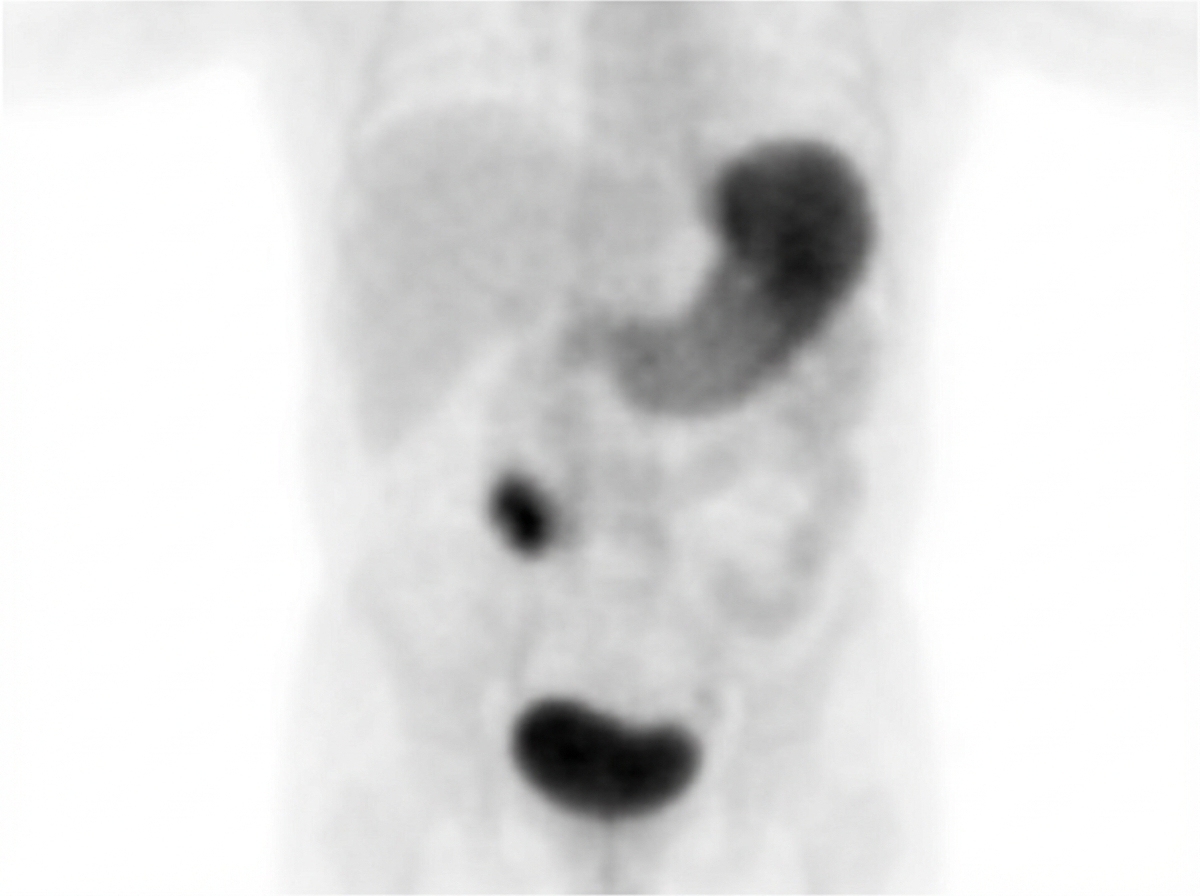
Explanation: **Technetium-99m pertechnetate scan**
- The presentation of painless **dark red rectal bleeding** in a toddler, coupled with signs of **anemia** (pale conjunctivae, hemoglobin 9.5 g/dL, MCV 68 μm³), strongly suggests a **Meckel's diverticulum** with ectopic gastric mucosa.
- A **Technetium-99m pertechnetate scan** specifically detects **ectopic gastric mucosa**, which is the most common cause of bleeding in a Meckel's diverticulum, making it the definitive diagnostic test.
*Colonoscopy*
- While useful for evaluating lower gastrointestinal bleeding, a **colonoscopy** is less likely to detect a Meckel's diverticulum, which often lies beyond the reach of a standard colonoscope.
- It involves more invasive preparation and carries higher risks for a young child compared to a nuclear scan for this specific suspicion.
*Water-soluble contrast enema*
- A **water-soluble contrast enema** is primarily used to diagnose conditions like intussusception or colonic obstructions by visualizing the bowel lumen.
- It is unlikely to visualize a Meckel's diverticulum or identify the bleeding source directly, especially one involving ectopic gastric mucosa.
*Esophagogastroduodenoscopy*
- An **esophagogastroduodenoscopy (EGD)** evaluates the upper gastrointestinal tract (esophagus, stomach, duodenum).
- The symptom of **dark red rectal bleeding** indicates a lower GI source, making an EGD a less appropriate initial diagnostic step.
*Plain abdominal x-ray*
- A **plain abdominal x-ray** is useful for identifying bowel obstruction, perforation, or foreign bodies, but it does not directly visualize or diagnose causes of GI bleeding like a Meckel's diverticulum.
- It provides limited information regarding the source of internal bleeding or the presence of anomalous tissue.