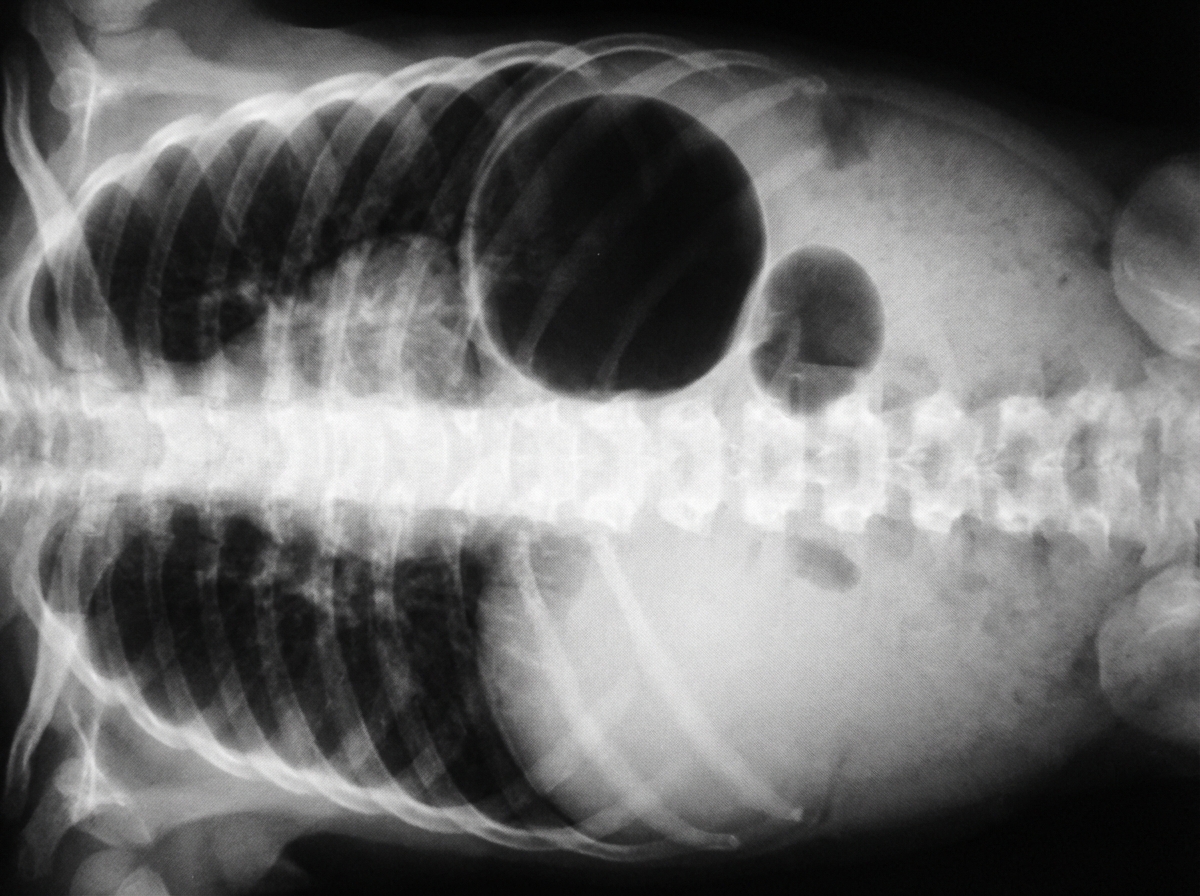
Two days following the home birth of her son, a mother brings the infant to the pediatric emergency room because of bilious vomiting. He is unable to pass meconium and his abdomen is distended. Endoscopic biopsy of the distal rectum demonstrates an absence of Meissner's and Auerbach's plexi in the bowel wall. Which of the following is the most likely diagnosis?
Q252
A 3550-g (7-lb 13-oz) male newborn is delivered at 37 weeks' gestation to a 28-year-old woman. Apgar scores are 9 and 10 at 1 and 5 minutes, respectively. His vital signs are within normal limits. Physical examination shows no abnormalities. Routine neonatal screening tests show mildly elevated TSH concentrations. Ultrasonography of the neck shows a complete absence of both lobes of the thyroid gland. This patient's normal physical examination findings, despite the total absence of a thyroid gland, is best explained by which of the following mechanisms?
Q253
A 14-year-old boy presents as a new patient to your practice. While conducting your physical exam, you observe the findings depicted in Figures A and B. Which of the following additional findings would most likely be found in this patient?
Q254
A 3000-g (6.6-lb) female newborn is delivered at term to a 23-year-old primigravid woman. The mother has had no prenatal care. Immunization records are not available. Cardiac examination shows a continuous heart murmur. There are several bluish macules on the skin that do not blanch with pressure. Slit lamp examination shows cloudy lenses in both eyes. The newborn does not pass his auditory screening tests. Which of the following is the most likely diagnosis?
Q255
A 7-month-old infant with Tetralogy of Fallot is brought to the emergency department by her parents because of a 1-day history of fever, cough, and difficulty breathing. She was born at 29 weeks of gestation. Her routine immunizations are up-to-date. She is currently in the 4th percentile for length and 2nd percentile for weight. She appears ill. Her temperature is 39.1°C (102.3°F). Physical examination shows diffuse wheezing, subcostal retractions, and bluish discoloration of the fingertips. Administration of which of the following would most likely have prevented this patient's current condition?
Q256
A 5-week-old infant born at 36 weeks' gestation is brought to the physician for a well-child examination. Her mother reports that she previously breastfed her for 15 minutes every 2 hours but now feeds her for 40 minutes every 4 hours. The infant has six wet diapers and two stools daily. She currently weighs 3500 g (7.7 lb) and is 52 cm (20.4 in) in length. Vital signs are with normal limits. Cardiopulmonary examination shows a grade 4/6 continuous murmur heard best at the left infraclavicular area. After confirming the diagnosis via echocardiography, which of the following is the most appropriate next step in management of this patient?
Q257
A 4-year-old boy is brought to the physician because of swelling around his eyes for 4 days. The swelling is most severe in the morning and milder by bedtime. Ten days ago, he had a sore throat that resolved spontaneously. His temperature is 37°C (98.6°F), pulse is 103/min, and blood pressure is 88/52 mm Hg. Examination shows 3+ pitting edema of the lower extremities and periorbital edema. The remainder of the examination shows no abnormalities. Laboratory studies show:
Hemoglobin 15.3 g/dL
Leukocyte count 10,500/mm3
Platelet count 480,000/mm3
Serum
Urea nitrogen 36 mg/dL
Glucose 67 mg/dL
Creatinine 0.8 mg/dL
Albumin 2.6 mg/dL
Urine
Blood negative
Glucose negative
Protein 4+
RBC none
WBC 0–1/hpf
Fatty casts numerous
Protein/creatinine ratio 6.8 (N ≤0.2)
Serum complement concentrations are within the reference ranges. Which of the following is the most appropriate next step in management?
Q258
A 26-year-old G1P0 woman at 32-weeks gestation presents for follow-up ultrasound. She was diagnosed with gestational diabetes during her second trimester, but admits to poor glucose control and non-adherence to insulin therapy. Fetal ultrasound reveals an asymmetric, enlarged interventricular septum, left ventricular outflow tract obstruction, and significantly reduced ejection fraction. Which of the following is the most appropriate step in management after delivery?
Q259
An 8-month-old boy is brought to a medical office by his mother. The mother states that the boy has been very fussy and has not been feeding recently. The mother thinks the baby has been gaining weight despite not feeding well. The boy was delivered vaginally at 39 weeks gestation without complications. On physical examination, the boy is noted to be crying in his mother’s arms. There is no evidence of cyanosis, and the cardiac examination is within normal limits. The crying intensifies when the abdomen is palpated. The abdomen is distended with tympany in the left lower quadrant. You suspect a condition caused by the failure of specialized cells to migrate. What is the most likely diagnosis?
Q260
A 13-year-old girl presents to a medical office for the evaluation of a lump on the front of her neck. The patient denies pain, but states that the mass bothers her because “it moves when I swallow”. The physical examination reveals a midline neck mass that is above the hyoid bone but below the level of the mandible. The mass is minimally mobile and feels fluctuant without erythema. The patient is afebrile and all vital signs are stable. A complete blood count and thyroid function tests are performed and are within normal limits. What is the most likely cause of this patient’s presentation?
Congenital defects US Medical PG Practice Questions and MCQs
Question 251: Two days following the home birth of her son, a mother brings the infant to the pediatric emergency room because of bilious vomiting. He is unable to pass meconium and his abdomen is distended. Endoscopic biopsy of the distal rectum demonstrates an absence of Meissner's and Auerbach's plexi in the bowel wall. Which of the following is the most likely diagnosis?
A. Juvenile polyposis syndrome
B. Hirschsprung’s disease (Correct Answer)
C. Ileocecal intussusception
D. Volvulus of the sigmoid colon
E. Meckel’s diverticulum
Explanation: **Hirschsprung’s disease**
- The classic presentation includes **bilious vomiting**, **abdominal distention**, and failure to pass **meconium** in a newborn, all indicative of a distal bowel obstruction.
- The definitive diagnosis is confirmed by a rectal biopsy showing the **absence of Meissner's (submucosal) and Auerbach's (myenteric) plexi**, which are essential for normal peristalsis.
*Juvenile polyposis syndrome*
- This is a condition characterized by the development of **multiple hamartomatous polyps** in the gastrointestinal tract, primarily in the colon.
- It typically presents with **rectal bleeding** and anemia, and less commonly with obstruction; it is not associated with the absence of ganglion cells.
*Ileocecal intussusception*
- This condition involves the **telescoping of one part of the intestine into another**, often presenting with sudden onset of intermittent abdominal pain, "currant jelly" stools, and a palpable "sausage-shaped" mass.
- It generally occurs in older infants and children and would not show an **absence of Meissner's and Auerbach's plexi**.
*Volvulus of the sigmoid colon*
- Sigmoid volvulus involves the **twisting of the sigmoid colon** around its mesentery, leading to obstruction and vascular compromise.
- It is rare in newborns and more common in older adults or individuals with chronic constipation, and typically presents with a rapidly distending abdomen and severe pain, without primary neural tissue anomalies.
*Meckel’s diverticulum*
- This is a **congenital outpouching of the small intestine** resulting from incomplete obliteration of the vitelline duct.
- While it can cause obstruction, bleeding, or inflammation (mimicking appendicitis), it usually presents with painless rectal bleeding or acute abdominal pain, and does not involve the absence of ganglion cells.
Question 252: A 3550-g (7-lb 13-oz) male newborn is delivered at 37 weeks' gestation to a 28-year-old woman. Apgar scores are 9 and 10 at 1 and 5 minutes, respectively. His vital signs are within normal limits. Physical examination shows no abnormalities. Routine neonatal screening tests show mildly elevated TSH concentrations. Ultrasonography of the neck shows a complete absence of both lobes of the thyroid gland. This patient's normal physical examination findings, despite the total absence of a thyroid gland, is best explained by which of the following mechanisms?
A. Transplacental transmission of thyroxine (Correct Answer)
B. Degradation of thyroid-binding globulin
C. Presence of lingual thyroid tissue
D. Production of TSH-receptor antibodies
E. Molecular mimicry of hCG subunit
Explanation: ***Transplacental transmission of thyroxine***
- Maternal thyroid hormones, including **thyroxine (T4)**, can cross the placenta and provide sufficient thyroid hormone to the fetus, masking congenital hypothyroidism at birth.
- This maternal hormone support explains the **normal physical examination findings** and Apgar scores despite the newborn's complete absence of a thyroid gland.
*Degradation of thyroid-binding globulin*
- The degradation of **thyroid-binding globulin (TBG)** would lead to *lower* total thyroid hormone levels, not higher or therapeutically sufficient levels.
- This mechanism is associated with conditions like severe liver disease or acute illness, which are not suggested here.
*Presence of lingual thyroid tissue*
- While a **lingual thyroid** is a form of ectopic thyroid tissue, if it were sufficient to maintain euthyroidism, the TSH levels would not be elevated, and the neck ultrasound would likely show its presence, not a complete absence of the gland.
- The elevated TSH suggests the body is trying to stimulate *non-existent* or insufficient thyroid tissue.
*Production of TSH-receptor antibodies*
- **TSH-receptor antibodies** are typically associated with conditions like Graves' disease (stimulating antibodies causing hyperthyroidism) or Hashimoto's thyroiditis (blocking antibodies causing hypothyroidism).
- Activating antibodies would cause hyperthyroidism, while blocking antibodies would result in hypothyroidism and symptoms, not a normal presentation with elevated TSH.
*Molecular mimicry of hCG subunit*
- **Human chorionic gonadotropin (hCG)** has a similar alpha subunit to TSH and can weakly stimulate the thyroid gland.
- This effect is seen in conditions like gestational thyrotoxicosis or molar pregnancies, causing *mild hyperthyroidism*, not masking primary congenital hypothyroidism.
Question 253: A 14-year-old boy presents as a new patient to your practice. While conducting your physical exam, you observe the findings depicted in Figures A and B. Which of the following additional findings would most likely be found in this patient?
A. Multiple café-au-lait macules (Correct Answer)
B. A white tuft of scalp hair since birth
C. The presence of ash-leaf spots
D. Facial angiofibromas
E. A family history of seizures and intellectual disability
Explanation: ***Multiple café-au-lait macules***
- The images show **Lisch nodules** (iris hamartomas), which are pathognomonic for **Neurofibromatosis type 1 (NF1)**.
- **Café-au-lait macules** are the most common and often earliest manifestation of NF1, present in **>99% of patients**.
- Diagnostic criteria require **≥6 café-au-lait macules** (>5mm in diameter prepubertal, >15mm postpubertal).
- This is the **most likely additional finding** in a patient with Lisch nodules.
*A family history of seizures and intellectual disability*
- While **learning disabilities** occur in ~50% of NF1 patients and **seizures** can occur, this is not the most specific or common finding.
- **Café-au-lait macules** and **cutaneous neurofibromas** are far more consistent and diagnostically significant.
*A white tuft of scalp hair since birth*
- A **white tuft of scalp hair** (poliosis) is characteristic of **Waardenburg syndrome**, not NF1.
- Waardenburg syndrome presents with **hearing loss**, **heterochromia iridis**, and **dystopia canthorum**.
*The presence of ash-leaf spots*
- **Ash-leaf spots** (hypopigmented macules) are a hallmark of **Tuberous Sclerosis Complex (TSC)**.
- TSC has different ocular findings like **retinal hamartomas**, not Lisch nodules.
*Facial angiofibromas*
- **Facial angiofibromas** (adenoma sebaceum) are a classic manifestation of **Tuberous Sclerosis Complex (TSC)**, not NF1.
- NF1 typically presents with **cutaneous and plexiform neurofibromas**, not angiofibromas.
Question 254: A 3000-g (6.6-lb) female newborn is delivered at term to a 23-year-old primigravid woman. The mother has had no prenatal care. Immunization records are not available. Cardiac examination shows a continuous heart murmur. There are several bluish macules on the skin that do not blanch with pressure. Slit lamp examination shows cloudy lenses in both eyes. The newborn does not pass his auditory screening tests. Which of the following is the most likely diagnosis?
A. Congenital parvovirus infection
B. Congenital cytomegalovirus infection
C. Congenital rubella infection (Correct Answer)
D. Congenital syphilis
E. Congenital toxoplasmosis
Explanation: ***Congenital rubella infection***
- The classic triad of congenital rubella includes **sensorineural hearing loss**, **ocular abnormalities** (e.g., cataracts, glaucoma), and **cardiac defects** (e.g., patent ductus arteriosus, pulmonary artery stenosis), all of which are present in this case.
- The **blueberry muffin rash** (bluish macules) is also a characteristic, although non-specific, finding due to **extramedullary hematopoiesis**.
*Congenital parvovirus infection*
- Primarily causes **hydrops fetalis**, severe **anemia**, and fetal demise, often without the specific cardiac, ocular, and auditory defects described.
- While it can cause skin lesions, the constellation of findings strongly points away from parvovirus.
*Congenital cytomegalovirus infection*
- Can cause **sensorineural hearing loss** and central nervous system abnormalities (e.g., **periventricular calcifications**, microcephaly), but **cardiac defects** and **cataracts** are less common than with rubella.
- The typical skin lesions are often petechiae or purpura, not the distinct bluish macules seen here.
*Congenital syphilis*
- Presents with a wide range of manifestations, including **hepatosplenomegaly**, **rash** (often maculopapular or desquamating), **saddle nose deformity**, and bone abnormalities.
- While it can cause some ocular (e.g., interstitial keratitis) and auditory issues, the specific combination of **cataracts**, **patent ductus arteriosus**, and **sensorineural deafness** is not its hallmark.
*Congenital toxoplasmosis*
- Characterized by the classic triad of **chorioretinitis**, **hydrocephalus**, and **intracranial calcifications**.
- While it can cause hearing loss and some skin manifestations, the cardiac defect and cataracts described are not typical features.
Question 255: A 7-month-old infant with Tetralogy of Fallot is brought to the emergency department by her parents because of a 1-day history of fever, cough, and difficulty breathing. She was born at 29 weeks of gestation. Her routine immunizations are up-to-date. She is currently in the 4th percentile for length and 2nd percentile for weight. She appears ill. Her temperature is 39.1°C (102.3°F). Physical examination shows diffuse wheezing, subcostal retractions, and bluish discoloration of the fingertips. Administration of which of the following would most likely have prevented this patient's current condition?
A. Palivizumab (Correct Answer)
B. Ceftriaxone
C. Ganciclovir
D. Ribavirin
E. Oseltamivir
Explanation: ***Palivizumab***
* The infant's symptoms (fever, cough, wheezing, subcostal retractions) and age, especially with a history of **prematurity** and **Tetralogy of Fallot**, strongly suggest **Respiratory Syncytial Virus (RSV) bronchiolitis**.
* **Palivizumab** is a prophylactic monoclonal antibody specifically indicated for preventing severe RSV disease in high-risk infants, including those born prematurely or with significant congenital heart disease.
* *Ceftriaxone*
* **Ceftriaxone** is an antibiotic used to treat bacterial infections, and the patient's presentation is more consistent with a viral respiratory illness.
* While bacterial superinfection can occur, ceftriaxone would not prevent the primary viral infection.
* *Ganciclovir*
* **Ganciclovir** is an antiviral medication used to treat **Cytomegalovirus (CMV)** infections, which typically present differently from RSV bronchiolitis.
* There is no indication of CMV infection in this patient's clinical picture.
* *Ribavirin*
* **Ribavirin** is an antiviral sometimes used to treat severe RSV infections in specific high-risk populations, but it is not a prophylactic agent and its use is limited due to toxicity.
* It would not have prevented the initial infection.
* *Oseltamivir*
* **Oseltamivir** is an antiviral medication used to treat **influenza virus** infections.
* The clinical presentation, particularly the diffuse wheezing and commonality in infants, is more characteristic of RSV than influenza.
Question 256: A 5-week-old infant born at 36 weeks' gestation is brought to the physician for a well-child examination. Her mother reports that she previously breastfed her for 15 minutes every 2 hours but now feeds her for 40 minutes every 4 hours. The infant has six wet diapers and two stools daily. She currently weighs 3500 g (7.7 lb) and is 52 cm (20.4 in) in length. Vital signs are with normal limits. Cardiopulmonary examination shows a grade 4/6 continuous murmur heard best at the left infraclavicular area. After confirming the diagnosis via echocardiography, which of the following is the most appropriate next step in management of this patient?
A. Surgical ligation
B. Indomethacin infusion
C. Reassurance and follow-up (Correct Answer)
D. Percutaneous device closure
E. Prostaglandin E1 infusion
Explanation: ***Reassurance and follow-up***
- This 5-week-old infant (41 weeks postmenstrual age) with a PDA is **hemodynamically stable** with normal vital signs, appropriate weight gain (3500g), adequate urine output (6 wet diapers/day), and effective feeding despite longer feeding times.
- The change in feeding pattern (40 minutes every 4 hours vs 15 minutes every 2 hours) actually represents **improved feeding efficiency** with the same total daily feeding time but longer intervals between feeds.
- Despite the loud murmur (grade 4/6), there are **no signs of congestive heart failure** (no tachypnea, no hepatomegaly, no failure to thrive).
- In a **clinically stable infant** without heart failure symptoms, **watchful waiting with close follow-up** is appropriate as many PDAs close spontaneously, particularly in infants born at 36 weeks gestation.
- Intervention would be indicated if the infant develops signs of heart failure or failure to thrive.
*Indomethacin infusion*
- **Indomethacin** (a prostaglandin synthesis inhibitor) is only effective for PDA closure in the **early neonatal period** (typically first 7-10 days of life) when the ductus is still responsive to prostaglandins.
- At **5 weeks of age** (41 weeks postmenstrual age), the ductus arteriosus has undergone structural maturation and is **no longer responsive** to prostaglandin inhibitors.
- This infant is well past the window for pharmacologic closure with indomethacin.
*Surgical ligation*
- **Surgical ligation** would be indicated for a hemodynamically significant PDA causing heart failure symptoms that are refractory to medical management.
- This infant is **hemodynamically stable** without signs of heart failure, so surgical intervention is not warranted at this time.
- Surgery carries significant risks and should be reserved for cases where conservative management has failed.
*Prostaglandin E1 infusion*
- **Prostaglandin E1** is used to **maintain ductal patency** in ductal-dependent congenital heart lesions (e.g., critical coarctation, transposition of great arteries, pulmonary atresia).
- This would be contraindicated in PDA as it would **worsen** the condition by keeping the ductus open.
- The clinical picture suggests isolated PDA, not a ductal-dependent lesion.
*Percutaneous device closure*
- **Percutaneous device closure** is typically performed in **older infants and children** (usually >6 months old and >6 kg) with persistent hemodynamically significant PDA.
- This 5-week-old infant weighing 3500g is **too small** for device closure.
- Additionally, the infant is currently stable and may not require intervention if the PDA closes spontaneously.
Question 257: A 4-year-old boy is brought to the physician because of swelling around his eyes for 4 days. The swelling is most severe in the morning and milder by bedtime. Ten days ago, he had a sore throat that resolved spontaneously. His temperature is 37°C (98.6°F), pulse is 103/min, and blood pressure is 88/52 mm Hg. Examination shows 3+ pitting edema of the lower extremities and periorbital edema. The remainder of the examination shows no abnormalities. Laboratory studies show:
Hemoglobin 15.3 g/dL
Leukocyte count 10,500/mm3
Platelet count 480,000/mm3
Serum
Urea nitrogen 36 mg/dL
Glucose 67 mg/dL
Creatinine 0.8 mg/dL
Albumin 2.6 mg/dL
Urine
Blood negative
Glucose negative
Protein 4+
RBC none
WBC 0–1/hpf
Fatty casts numerous
Protein/creatinine ratio 6.8 (N ≤0.2)
Serum complement concentrations are within the reference ranges. Which of the following is the most appropriate next step in management?
A. Prednisone therapy (Correct Answer)
B. Enalapril therapy
C. Cyclosporine therapy
D. Anti-streptolysin O levels
E. Furosemide therapy
Explanation: ***Prednisone therapy***
- This patient presents with symptoms and lab findings consistent with **nephrotic syndrome**: **marked edema** (periorbital, lower extremity), **hypoalbuminemia** (2.6 mg/dL), and **heavy proteinuria** (urine protein 4+, protein/creatinine ratio 6.8, numerous fatty casts). In a 4-year-old, nephrotic syndrome is most commonly **minimal change disease**, which is highly responsive to corticosteroids.
- **Prednisone** is the **first-line treatment** for minimal change disease, leading to remission in over 90% of cases. Early initiation can prevent complications of protracted edema and proteinuria.
*Enalapril therapy*
- **Enalapril** is an **ACE inhibitor** that can reduce proteinuria by lowering intraglomerular pressure, but it is not the primary treatment for inducing remission in minimal change disease.
- While it may be used as an **adjunctive therapy** for persistent proteinuria or hypertension, it will not address the underlying inflammatory process in minimal change disease.
*Cyclosporine therapy*
- **Cyclosporine** is an **immunosuppressant** reserved for patients with **steroid-resistant** or **steroid-dependent nephrotic syndrome**.
- It is not the initial treatment choice for a first presentation of nephrotic syndrome in a child before steroid responsiveness has been assessed.
*Anti-streptolysin O levels*
- **Anti-streptolysin O (ASO) titers** are used to diagnose recent **Streptococcus pyogenes infection**, which can cause **post-streptococcal glomerulonephritis (PSGN)**.
- PSGN typically presents with **nephritic syndrome** (hematuria, hypertension, mild proteinuria, low C3), which is different from the predominant **nephrotic picture** (heavy proteinuria, severe anasarca, normal C3) seen here. The normal complement levels also argue against PSGN.
*Furosemide therapy*
- **Furosemide** is a **loop diuretic** used to reduce severe edema by increasing urine output.
- While it can provide **symptomatic relief** for the edema, it does not address the underlying pathology of heavy proteinuria and hypoalbuminemia that causes the edema, and it is not the primary treatment to induce remission.
Question 258: A 26-year-old G1P0 woman at 32-weeks gestation presents for follow-up ultrasound. She was diagnosed with gestational diabetes during her second trimester, but admits to poor glucose control and non-adherence to insulin therapy. Fetal ultrasound reveals an asymmetric, enlarged interventricular septum, left ventricular outflow tract obstruction, and significantly reduced ejection fraction. Which of the following is the most appropriate step in management after delivery?
A. Medical management (Correct Answer)
B. Cardiac catheterization
C. Cardiac magnetic resonance imaging
D. Chest radiograph
E. Immediate surgical intervention
Explanation: ***Medical management***
- Asymmetric interventricular septal hypertrophy in infants of diabetic mothers is a transient phenomenon, primarily managed with **beta-blockers** to improve ventricular outflow.
- The condition typically **resolves spontaneously** within weeks to months as the infant's heart adapts to the extra-uterine environment and insulin levels normalize.
*Cardiac catheterization*
- This is an **invasive procedure** used primarily for diagnostic purposes or for certain interventional treatments, not typically the first-line for transient septal hypertrophy.
- It would carry unnecessary risks for an infant with a condition that is likely to resolve with medical management.
*Cardiac magnetic resonance imaging*
- While it provides detailed anatomical and functional information, **CMR is not usually indicated** for initial management of this specific condition in neonates.
- An echocardiogram has already provided sufficient diagnostic information to guide initial therapy.
*Chest radiograph*
- A chest radiograph provides information about **lung fields and heart size/shape**, but it offers very limited detail regarding specific cardiac structural abnormalities or function.
- It would not be helpful for characterizing the interventricular septum or ventricular outflow tract.
*Immediate surgical intervention*
- **Surgical myectomy** is reserved for severe, persistent left ventricular outflow tract obstruction that is *unresponsive* to maximal medical therapy and is causing significant symptoms or hemodynamic compromise.
- Given the transient nature of the condition associated with maternal diabetes, immediate surgery would be premature and overly aggressive.
Question 259: An 8-month-old boy is brought to a medical office by his mother. The mother states that the boy has been very fussy and has not been feeding recently. The mother thinks the baby has been gaining weight despite not feeding well. The boy was delivered vaginally at 39 weeks gestation without complications. On physical examination, the boy is noted to be crying in his mother’s arms. There is no evidence of cyanosis, and the cardiac examination is within normal limits. The crying intensifies when the abdomen is palpated. The abdomen is distended with tympany in the left lower quadrant. You suspect a condition caused by the failure of specialized cells to migrate. What is the most likely diagnosis?
A. Duodenal atresia
B. Hirschsprung disease (Correct Answer)
C. Meckel diverticulum
D. Pyloric stenosis
E. DiGeorge syndrome
Explanation: ***Correct: Hirschsprung disease***
- This diagnosis is characterized by the **failure of neural crest cells** to migrate, leading to an **aganglionic segment of the colon** that cannot relax.
- Symptoms like **abdominal distension**, **vomiting**, and **failure to thrive** in an 8-month-old are consistent with Hirschsprung disease.
*Incorrect: Duodenal atresia*
- **Duodenal atresia** typically presents in the **neonatal period** with **bilious vomiting** and a **double-bubble sign** on imaging.
- It is a congenital obstruction but does not involve the failed migration of specialized cells, and distension with tympany in the lower quadrant is not a primary feature.
*Incorrect: Meckel diverticulum*
- A **Meckel diverticulum** is a remnant of the **vitelline duct** and is often asymptomatic or can cause **painless rectal bleeding**.
- It does not present with the described symptoms of abdominal distention and fussiness related to an intestinal obstruction or motility disorder caused by cellular migration failure.
*Incorrect: Pyloric stenosis*
- **Pyloric stenosis** typically presents with **projectile non-bilious vomiting** and an **olive-shaped mass** in the epigastrium, usually between 2 and 8 weeks of age.
- The symptoms described, such as marked abdominal distention and crying intensifying with abdominal palpation, are not typical for pyloric stenosis.
*Incorrect: DiGeorge syndrome*
- **DiGeorge syndrome** is a genetic disorder associated with **thymic and parathyroid hypoplasia**, leading to **T-cell immunodeficiency** and **hypocalcemia**.
- While it involves developmental anomalies, it does not directly present with gastrointestinal obstruction or motility issues caused by failed cell migration as the primary symptom.
Question 260: A 13-year-old girl presents to a medical office for the evaluation of a lump on the front of her neck. The patient denies pain, but states that the mass bothers her because “it moves when I swallow”. The physical examination reveals a midline neck mass that is above the hyoid bone but below the level of the mandible. The mass is minimally mobile and feels fluctuant without erythema. The patient is afebrile and all vital signs are stable. A complete blood count and thyroid function tests are performed and are within normal limits. What is the most likely cause of this patient’s presentation?
A. Thyroid hyperplasia due to iodine deficiency
B. Persistent thyroid tissue at the tongue base
C. Deletion of the 22q11 gene
D. Cyst formation in a persistent thyroglossal duct (Correct Answer)
E. Lymph node enlargement
Explanation: ***Cyst formation in a persistent thyroglossal duct***
- A **midline neck mass** that **moves with swallowing** is highly characteristic of a **thyroglossal duct cyst**, as it is anatomically connected to the hyoid bone and the base of the tongue.
- The cyst forms from a remnant of the **thyroglossal duct**, the embryonic pathway of the thyroid gland's descent.
*Thyroid hyperplasia due to iodine deficiency*
- **Thyroid hyperplasia** (goiter) usually presents as a **diffuse or multinodular enlargement** of the thyroid gland, typically located **below the thyroid cartilage**, not above the hyoid bone.
- While thyroid function tests are normal here, iodine deficiency would typically lead to elevated TSH and lower thyroid hormones in advanced stages.
*Persistent thyroid tissue at the tongue base*
- **Lingual thyroid**, or persistent thyroid tissue at the tongue base, would present as a mass **at the base of the tongue**, not a midline neck mass above the hyoid bone.
- It would also typically move with tongue protrusion, rather than primarily with swallowing in the neck.
*Deletion of the 22q11 gene*
- **22q11 deletion syndrome** (DiGeorge syndrome) is associated with **cardiac defects**, **facial anomalies**, **palatal abnormalities**, and **thymic/parathyroid hypoplasia**, leading to immune deficiencies and hypocalcemia.
- It does not typically present with a **midline neck cyst** that moves with swallowing; while a cervical thymic cyst can occur, it is uncommon and would typically be lateral or lower in the neck.
*Lymph node enlargement*
- **Enlarged lymph nodes** are most commonly found in the **lateral neck**, although submental or submandibular nodes can be midline.
- However, they usually **do not move with swallowing** (unless very adhered to surrounding structures) and are often associated with infection or malignancy, which are not suggested here.