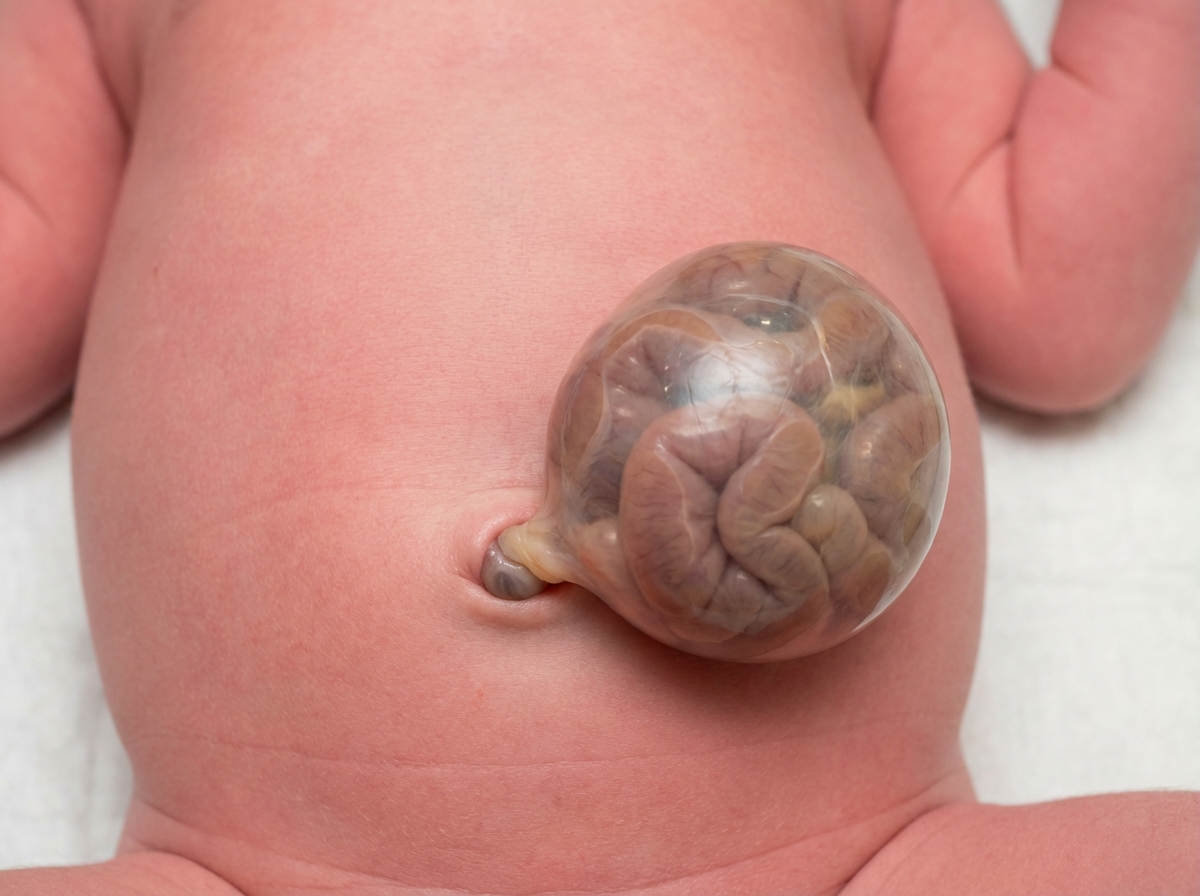
A 2-week-old male newborn is brought to the physician because his mother has noticed her son has occasional bouts of ""turning blue in the face"" while crying. He also tires easily and sweats while feeding. He weighed 2150 g (4 lb 11 oz) at birth and has gained 200 g (7 oz). The baby appears mildly cyanotic. Examination shows a 3/6 systolic ejection murmur heard over the left upper sternal border. A single S2 is present. An echocardiography confirms the diagnosis. Which of the following factors is the main determinant of the severity of this patient's cyanosis?
Q242
Six hours after delivery, a 3050-g (6-lb 12-oz) male newborn is noted to have feeding intolerance and several episodes of bilious vomiting. He was born at term to a healthy 35-year-old woman following a normal vaginal delivery. The pregnancy was uncomplicated, but the patient's mother had missed several of her prenatal checkups. The patient's older brother underwent surgery for pyloric stenosis as an infant. Vital signs are within normal limits. Physical examination shows epicanthus, upward slanting of the eyelids, low-set ears, and a single transverse palmar crease. The lungs are clear to auscultation. A grade 2/6 holosystolic murmur is heard at the left mid to lower sternal border. Abdominal examination shows a distended upper abdomen and a concave-shaped lower abdomen. There is no organomegaly. An x-ray of the abdomen is shown. Which of the following is the most likely diagnosis?
Q243
A 2-year-old boy is brought to the physician by his parents because of difficulty walking and cold feet for the past 2 months. His parents report that he tires quickly from walking. The patient was born at 37 weeks' gestation and has met all developmental milestones. There is no personal or family history of serious illness. He is at the 50th percentile for height and 40th percentile for weight. His temperature is 36.9°C (98.4°F), pulse is 119/min, respirations are 32/min, and blood pressure is 135/85 mm Hg. A grade 2/6 systolic murmur is heard in the left paravertebral region. Pedal pulses are absent. Further evaluation of this patient is most likely to show which of the following findings?
Q244
A 4-year-old boy is brought to his pediatrician by his mother for a physical exam before summer camp. They have no complaints or concerns at this time. He was born at 37 weeks gestation by cesarean delivery. The delivery was complicated by an omphalocele and macrosomia. During infancy and into early childhood, he struggled to breathe and eat due to an enlarged tongue. Growth and development were mostly normal with mild uneven growth of his body. He has one uncle that had similar symptoms and is alive and well. The child is up to date on all vaccines and is meeting developmental goals. He enjoys school and playing with his friends. His heart rate of 90/min, respiratory rate of 22/min, blood pressure of 110/65 mm Hg, and temperature of 36.9°C (98.4°F). Overall the child appears healthy. Physical exam findings include known hemihypertrophy of the right side along with a mildly enlarged tongue. This patient is at increased risk of developing which of the following?
Q245
A 24-hour-old girl is found to be cyanotic in the newborn nursery. She was born via spontaneous vaginal delivery at 38 weeks gestation to a gravida 1, para 0 healthy mother who received routine prenatal care. The patient is small for her gestational age. She manifests lower-extremity cyanosis along with a mesh-like mass on the back of her neck. Her vital signs are: pulse, 150/min; respirations, 48/min; and blood pressure, 120/80 mm Hg in the right arm, 124/82 mm Hg in the left arm, 80/40 mm Hg in the right leg, and 85/45 mm Hg in the left leg. Femoral pulses are 1+ and delayed. Cardiac examination shows a continuous murmur in the interscapular area. Auscultation of the lung reveals faint crackles at the base of the lung fields bilaterally. Which of the following is the most appropriate next step in management?
Q246
A two-month-old female presents to the emergency department for difficulty feeding. The patient was born at 38 weeks gestation to a 29-year-old primigravid via vaginal delivery. The newborn period has thus far been uncomplicated. The patient has been exclusively breastfed since birth. Her parents report that feeding had previously seemed to be going well, and the patient has been gaining weight appropriately. Over the past several days, the patient’s mother has noticed that the patient seems to tire out before the end of the feeding. She has also noticed that the patient begins to appear short of breath and has a bluish discoloration of her lips. The patient’s height and weight were in the 20th and 10th percentile at birth, respectively. Her current height and weight are in the 20th and 15th percentiles, respectively. Her temperature is 98.0°F (36.7°C), blood pressure is 60/48 mmHg, pulse is 143/min, and respirations are 40/min. On physical exam, the patient is in no acute distress and appears well developed. A systolic crescendo-decrescendo murmur can be heard at the left upper sternal border. Her abdomen is soft, non-tender, and non-distended. During the abdominal exam, the patient begins crying and develops cyanosis of the perioral region.
Which of the following is the best initial test to diagnose this patient’s condition?
Q247
A 5-year-old boy presents to his pediatrician for a well-child visit. His mother reports him to be doing well and has no concerns. The boy was born at 39 weeks gestation via spontaneous vaginal delivery. He is up to date on all vaccines and is meeting all developmental milestones. On physical exam, he is noted to have a right upper extremity blood pressure of 150/80 mm Hg. 2+ radial pulses and trace femoral pulses are felt. Cardiac auscultation reveals a regular rate and rhythm with a normal S1 and S2. A 2/6 long systolic murmur with systolic ejection click is heard over left sternal border and back. The point of maximal impulse is normal. Which of the following is the most likely diagnosis?
Q248
A 34-year-old G1P0 woman gives birth to a male infant at 35 weeks gestation. The child demonstrates a strong cry and moves all his arms and legs upon birth. Respirations are slow and irregular. His temperature is 99.1°F (37.3°C), blood pressure is 100/55 mmHg, pulse is 115/min, and respirations are 18/min. At a follow up appointment, the physician notices that the infant’s torso and upper extremities are pink while his lower extremities have a bluish hue. Which of the following will most likely be heard on auscultation of the patient’s chest?
Q249
A 2500-g (5-lb 8-oz) female newborn delivered at 37 weeks' gestation develops rapid breathing, grunting, and subcostal retractions shortly after birth. Despite appropriate lifesaving measures, the newborn dies 2 hours later. Autopsy shows bilateral renal agenesis. Which of the following is the most likely underlying cause of this newborn's respiratory distress?
Q250
A 2-year-old boy is brought to the physician for a well-child examination. Since infancy, he has frequently had large-volume stools that are loose and greasy. He was treated for otitis media twice in the past year. He has a history of recurrent respiratory tract infections since birth. He is at the 5th percentile for height and 3rd percentile for weight. Vital signs are within normal limits. Examination shows softening of the occipital and parietal bones. Scattered expiratory wheezing and rhonchi are heard throughout both lung fields. Which of the following is the most likely cause of this patient's symptoms?
Congenital defects US Medical PG Practice Questions and MCQs
Question 241: A 2-week-old male newborn is brought to the physician because his mother has noticed her son has occasional bouts of ""turning blue in the face"" while crying. He also tires easily and sweats while feeding. He weighed 2150 g (4 lb 11 oz) at birth and has gained 200 g (7 oz). The baby appears mildly cyanotic. Examination shows a 3/6 systolic ejection murmur heard over the left upper sternal border. A single S2 is present. An echocardiography confirms the diagnosis. Which of the following factors is the main determinant of the severity of this patient's cyanosis?
A. Left ventricular outflow obstruction
B. Right ventricular outflow obstruction (Correct Answer)
C. Atrial septal defect
D. Right ventricular hypertrophy
E. Ventricular septal defect
Explanation: **Right ventricular outflow obstruction**
- This clinical scenario describes a **cyanotic heart defect**, most likely **Tetralogy of Fallot**, given the cyanosis, exertion intolerance, and murmur at the left upper sternal border with a single S2.
- The severity of **right ventricular outflow tract obstruction (RVOTO)** directly dictates the amount of right-to-left shunting across a ventricular septal defect, which in turn determines the degree of **cyanosis**.
- More severe RVOTO → greater resistance to pulmonary blood flow → more deoxygenated blood shunted right-to-left through the VSD → worse cyanosis.
*Left ventricular outflow obstruction*
- **Left ventricular outflow obstruction** typically causes symptoms related to **heart failure** or **syncope** due to reduced systemic blood flow, rather than cyanosis.
- Examples include **aortic stenosis** or **coarctation of the aorta**, which do not present with significant cyanosis as a primary symptom.
*Atrial septal defect*
- An **atrial septal defect (ASD)** usually presents as a **left-to-right shunt**, leading to **acyanotic heart disease** and often symptoms of pulmonary overload.
- Cyanosis in an ASD only occurs if there is **pulmonary hypertension** leading to shunt reversal (Eisenmenger syndrome), which is unlikely in a 2-week-old.
*Right ventricular hypertrophy*
- **Right ventricular hypertrophy** is a consequence of increased workload on the right ventricle, often due to **pulmonary hypertension** or **right ventricular outflow obstruction**.
- While present in conditions causing cyanosis (like Tetralogy of Fallot), it is the *result* of the outflow obstruction, not the primary determinant of cyanosis severity itself.
*Ventricular septal defect*
- A **ventricular septal defect (VSD)** alone typically causes a **left-to-right shunt**, leading to **acyanotic heart disease** and symptoms of pulmonary overcirculation.
- In Tetralogy of Fallot, a VSD is present, but it's the **pulmonary stenosis (RVOTO)** that forces deoxygenated blood through the VSD into the systemic circulation, causing cyanosis.
Question 242: Six hours after delivery, a 3050-g (6-lb 12-oz) male newborn is noted to have feeding intolerance and several episodes of bilious vomiting. He was born at term to a healthy 35-year-old woman following a normal vaginal delivery. The pregnancy was uncomplicated, but the patient's mother had missed several of her prenatal checkups. The patient's older brother underwent surgery for pyloric stenosis as an infant. Vital signs are within normal limits. Physical examination shows epicanthus, upward slanting of the eyelids, low-set ears, and a single transverse palmar crease. The lungs are clear to auscultation. A grade 2/6 holosystolic murmur is heard at the left mid to lower sternal border. Abdominal examination shows a distended upper abdomen and a concave-shaped lower abdomen. There is no organomegaly. An x-ray of the abdomen is shown. Which of the following is the most likely diagnosis?
A. Hirschsprung's disease
B. Duodenal atresia (Correct Answer)
C. Necrotizing enterocolitis
D. Meconium ileus
E. Hypertrophic pyloric stenosis
Explanation: ***Duodenal atresia***
- The constellation of **bilious vomiting**, **feeding intolerance**, specific dysmorphic features like **epicanthus**, **upward slanting of eyelids**, **low-set ears**, and a **single transverse palmar crease** strongly suggests **Down syndrome (Trisomy 21)**. Duodenal atresia is highly associated with Down syndrome.
- The abdominal x-ray findings of a **distended stomach** and **distended duodenum** with a lack of gas distally (the **"double bubble" sign**) are pathognomonic for duodenal atresia.
*Hirschsprung's disease*
- While Hirschsprung's disease can cause **feeding intolerance** and **bilious vomiting**, it typically presents with **delayed passage of meconium** and a history of **constipation**.
- The classic radiographic sign is a **dilated proximal bowel** transitioning to a **narrowed aganglionic segment**, not the "double bubble" sign.
*Necrotizing enterocolitis*
- This condition usually affects **premature infants** and presents with abdominal distension, feeding intolerance, and **bloody stools**, with potential for sepsis.
- Radiographic findings include **pneumatosis intestinalis** (air in the bowel wall) and portal venous gas; the "double bubble" sign is not characteristic.
*Meconium ileus*
- **Meconium ileus** is often associated with **cystic fibrosis** and presents with failure to pass meconium, abdominal distension, and bilious vomiting.
- The x-ray would show **dilated loops of small bowel** with a ground-glass appearance, rather than the specific double bubble of duodenal atresia.
*Hypertrophic pyloric stenosis*
- This condition typically presents with **non-bilious projectile vomiting** around 3-6 weeks of age, not in the immediate neonatal period.
- The classic palpable finding is an **"olive-shaped" mass** in the epigastrium; imaging would show thickening of the pyloric muscle, not diffuse duodenal dilatation.
Question 243: A 2-year-old boy is brought to the physician by his parents because of difficulty walking and cold feet for the past 2 months. His parents report that he tires quickly from walking. The patient was born at 37 weeks' gestation and has met all developmental milestones. There is no personal or family history of serious illness. He is at the 50th percentile for height and 40th percentile for weight. His temperature is 36.9°C (98.4°F), pulse is 119/min, respirations are 32/min, and blood pressure is 135/85 mm Hg. A grade 2/6 systolic murmur is heard in the left paravertebral region. Pedal pulses are absent. Further evaluation of this patient is most likely to show which of the following findings?
A. Rib notching
B. Right ventricular outflow obstruction
C. Increased R wave amplitude in V5-V6 on ECG (Correct Answer)
D. Low tissue oxygenation in the legs
E. Interarm difference in blood pressure
Explanation: ***Increased R wave amplitude in V5-V6 on ECG***
- The patient's presentation with **difficulty walking**, **cold feet**, **absent pedal pulses**, **hypertension** (135/85 mm Hg), and a **systolic murmur in the left paravertebral region** strongly suggests **aortic coarctation**.
- Coarctation causes **increased afterload** on the left ventricle, leading to **left ventricular hypertrophy (LVH)**.
- LVH manifests on ECG as **increased R wave amplitude in V5-V6**, which would be expected in a 2-year-old with established coarctation and hypertension.
- This is a **direct consequence** of the chronic pressure overload and would be detected on further cardiovascular evaluation.
*Interarm difference in blood pressure*
- The classic finding in coarctation is **upper-to-lower extremity blood pressure difference** (arm vs. leg), not interarm difference.
- **Interarm BP differences** suggest subclavian artery involvement or aberrant anatomy, not typical coarctation.
- The key finding is **elevated BP in arms** with **reduced or absent pulses in legs**.
*Rib notching*
- **Rib notching** is a classic radiographic finding in **chronic aortic coarctation** due to collateral vessel development through intercostal arteries.
- However, it typically develops over **many years** and is rarely evident in a 2-year-old.
- It would be more expected in older children or adults with longstanding untreated coarctation.
*Right ventricular outflow obstruction*
- **Right ventricular outflow obstruction** is characteristic of conditions like **tetralogy of Fallot** or **pulmonic stenosis**.
- These present with **cyanosis** or **right-sided murmurs**, not the clinical picture of upper extremity hypertension with lower extremity hypoperfusion.
*Low tissue oxygenation in the legs*
- While coarctation causes **reduced blood flow** distal to the obstruction, this results in **decreased perfusion** rather than primary hypoxia.
- This is too vague and not a specific diagnostic finding compared to the clear ECG evidence of LVH.
Question 244: A 4-year-old boy is brought to his pediatrician by his mother for a physical exam before summer camp. They have no complaints or concerns at this time. He was born at 37 weeks gestation by cesarean delivery. The delivery was complicated by an omphalocele and macrosomia. During infancy and into early childhood, he struggled to breathe and eat due to an enlarged tongue. Growth and development were mostly normal with mild uneven growth of his body. He has one uncle that had similar symptoms and is alive and well. The child is up to date on all vaccines and is meeting developmental goals. He enjoys school and playing with his friends. His heart rate of 90/min, respiratory rate of 22/min, blood pressure of 110/65 mm Hg, and temperature of 36.9°C (98.4°F). Overall the child appears healthy. Physical exam findings include known hemihypertrophy of the right side along with a mildly enlarged tongue. This patient is at increased risk of developing which of the following?
A. Sudden infant death syndrome
B. Scoliosis
C. Alzheimer's disease
D. Diabetes mellitus
E. Wilms tumor (Correct Answer)
Explanation: ***Wilms tumor***
- The constellation of **macrosomia**, **omphalocele**, **macroglossia**, and **hemihypertrophy** in a child points to **Beckwith-Wiedemann syndrome (BWS)**.
- Children with BWS have a significantly increased risk of developing childhood cancers, most notably **Wilms tumor** (nephroblastoma) and **hepatoblastoma**.
*Sudden infant death syndrome*
- While macrosomia can be associated with some complications, **SIDS** is not a primary or significantly increased risk for children with BWS past infancy.
- SIDS is typically defined as the sudden, unexplained death of an infant younger than one year of age.
*Scoliosis*
- **Scoliosis** is a curvature of the spine that can occur in some genetic syndromes, but it is not a hallmark or particularly increased risk feature of BWS.
- **Hemihypertrophy** in BWS can cause limb length discrepancies, which might indirectly lead to scoliosis, but it's not a direct cancer risk associated with the syndrome.
*Alzheimer's disease*
- **Alzheimer's disease** is a neurodegenerative disorder that primarily affects older adults and is not associated with childhood syndromes like BWS.
- There is no known genetic link between BWS and an increased risk of early-onset or childhood Alzheimer's.
*Diabetes mellitus*
- While individuals with BWS can have issues with **hypoglycemia** in infancy due to **pancreatic islet cell hyperplasia**, they are not typically at an increased risk of developing **type 1 or type 2 diabetes mellitus** later in childhood.
- The initial hypoglycemia usually resolves over time.
Question 245: A 24-hour-old girl is found to be cyanotic in the newborn nursery. She was born via spontaneous vaginal delivery at 38 weeks gestation to a gravida 1, para 0 healthy mother who received routine prenatal care. The patient is small for her gestational age. She manifests lower-extremity cyanosis along with a mesh-like mass on the back of her neck. Her vital signs are: pulse, 150/min; respirations, 48/min; and blood pressure, 120/80 mm Hg in the right arm, 124/82 mm Hg in the left arm, 80/40 mm Hg in the right leg, and 85/45 mm Hg in the left leg. Femoral pulses are 1+ and delayed. Cardiac examination shows a continuous murmur in the interscapular area. Auscultation of the lung reveals faint crackles at the base of the lung fields bilaterally. Which of the following is the most appropriate next step in management?
A. Administration of alprostadil (Correct Answer)
B. Indomethacin
C. Lower extremity Doppler
D. Echocardiography
E. Arteriogram
Explanation: ***Administration of alprostadil***
- The patient presents with **lower-extremity cyanosis**, **differential blood pressures** (higher in arms, lower in legs), **delayed and diminished femoral pulses**, and a **continuous murmur in the interscapular area**. These findings are highly characteristic of **severe coarctation of the aorta**, possibly with a **patent ductus arteriosus (PDA)**.
- **Alprostadil** (prostaglandin E1) is crucial to maintain the **patency of the ductus arteriosus**, which provides an alternative route for blood flow to the lower body, improving systemic perfusion and reducing cyanosis until surgical correction can be performed.
*Indomethacin*
- **Indomethacin** is a prostaglandin inhibitor used to **close a PDA**, which would worsen the patient's condition by further reducing blood flow to the lower extremities in the setting of severe coarctation.
- Giving indomethacin would be contraindicated as it would exacerbate the circulatory compromise and potential organ ischemia in the lower body.
*Lower extremity Doppler*
- While a **lower extremity Doppler** could assess perfusion, the clinical presentation with **differential blood pressures** and **delayed femoral pulses** already strongly suggests an obstructive lesion like coarctation.
- The immediate priority is to stabilize the patient's circulation rather than further diagnostic imaging that might delay critical treatment.
*Echocardiography*
- **Echocardiography** is the definitive diagnostic tool for coarctation of the aorta. However, in an unstable neonate with clear clinical signs of severe coarctation and compromise, the **most appropriate NEXT step** is to initiate stabilizing treatment.
- While echocardiography will confirm the diagnosis and delineate the anatomy, it should be performed *after* alprostadil administration to support systemic circulation.
*Arteriogram*
- An **arteriogram** is an invasive procedure not typically used as a first-line diagnostic or management step for coarctation in neonates due to potential risks.
- Less invasive imaging like echocardiography is preferred for diagnosis, and immediate medical stabilization with alprostadil is the priority.
Question 246: A two-month-old female presents to the emergency department for difficulty feeding. The patient was born at 38 weeks gestation to a 29-year-old primigravid via vaginal delivery. The newborn period has thus far been uncomplicated. The patient has been exclusively breastfed since birth. Her parents report that feeding had previously seemed to be going well, and the patient has been gaining weight appropriately. Over the past several days, the patient’s mother has noticed that the patient seems to tire out before the end of the feeding. She has also noticed that the patient begins to appear short of breath and has a bluish discoloration of her lips. The patient’s height and weight were in the 20th and 10th percentile at birth, respectively. Her current height and weight are in the 20th and 15th percentiles, respectively. Her temperature is 98.0°F (36.7°C), blood pressure is 60/48 mmHg, pulse is 143/min, and respirations are 40/min. On physical exam, the patient is in no acute distress and appears well developed. A systolic crescendo-decrescendo murmur can be heard at the left upper sternal border. Her abdomen is soft, non-tender, and non-distended. During the abdominal exam, the patient begins crying and develops cyanosis of the perioral region.
Which of the following is the best initial test to diagnose this patient’s condition?
A. Chest radiograph
B. Electrocardiogram
C. Genetic testing
D. Echocardiogram (Correct Answer)
E. CT angiography
Explanation: ***Echocardiogram***
- The patient's symptoms (difficulty feeding, cyanosis, fatigue during feeding, crescendo-decrescendo murmur at the left upper sternal border) are highly suggestive of a **congenital heart defect**, specifically **Tetralogy of Fallot** given the cyanosis with crying.
- An **echocardiogram** is the gold standard for diagnosing and characterizing congenital heart defects, providing detailed visualization of cardiac structures, blood flow abnormalities, and ventricular function.
*Chest radiograph*
- While a chest radiograph can show overall heart size and pulmonary vasculature, it does not provide the detailed anatomical and functional information needed to definitively diagnose a specific **complex congenital heart defect**.
- For example, in **Tetralogy of Fallot**, it might show a **boot-shaped heart** but cannot visualize the ventricular septal defect, pulmonary stenosis, or overriding aorta as clearly as an echocardiogram.
*Electrocardiogram*
- An **ECG** can assess electrical activity of the heart and detect arrhythmias or ventricular hypertrophy (e.g., right ventricular hypertrophy in TOF).
- However, it does not provide anatomical information, which is crucial for the initial diagnosis and characterization of **structural heart defects**.
*Genetic testing*
- Some congenital heart defects can be associated with **genetic syndromes** (e.g., DiGeorge syndrome with Tetralogy of Fallot).
- Genetic testing may be considered *after* a cardiac diagnosis is established to investigate underlying syndromes, but it is not the initial diagnostic test for the cardiac condition itself.
*CT angiography*
- **CT angiography** provides excellent anatomical detail, especially for vascular structures and complex anatomy, and can be useful pre-operatively for surgical planning in some cases.
- However, it involves **radiation exposure** and usually requires sedation in infants, making an **echocardiogram** (non-invasive, no radiation, readily available) the preferred initial diagnostic imaging modality for congenital heart disease.
Question 247: A 5-year-old boy presents to his pediatrician for a well-child visit. His mother reports him to be doing well and has no concerns. The boy was born at 39 weeks gestation via spontaneous vaginal delivery. He is up to date on all vaccines and is meeting all developmental milestones. On physical exam, he is noted to have a right upper extremity blood pressure of 150/80 mm Hg. 2+ radial pulses and trace femoral pulses are felt. Cardiac auscultation reveals a regular rate and rhythm with a normal S1 and S2. A 2/6 long systolic murmur with systolic ejection click is heard over left sternal border and back. The point of maximal impulse is normal. Which of the following is the most likely diagnosis?
A. Takayasu arteritis
B. Essential hypertension
C. Interrupted aortic arch
D. Pheochromocytoma
E. Coarctation of the aorta (Correct Answer)
Explanation: ***Coarctation of the aorta***
- The classic presentation includes **hypertension in the upper extremities** and **diminished or delayed femoral pulses** due to narrowing of the aorta.
- A **systolic murmur heard over the left sternal border and back** is characteristic, often accompanied by an ejection click.
*Takayasu arteritis*
- This is a **large vessel vasculitis** that can cause pulse discrepancies and hypertension, but it typically affects **adolescent girls and young women** and presents with systemic inflammatory symptoms, which are absent here.
- While it can affect the aorta, the specific murmur and discrete pulse findings are more indicative of a fixed, congenital obstruction.
*Essential hypertension*
- Although the patient has hypertension, **essential hypertension** in a 5-year-old is rare and less likely to cause differential pulses (strong radial, weak femoral) and a specific cardiac murmur.
- A secondary cause, like coarctation, should be ruled out first in pediatric hypertension.
*Interrupted aortic arch*
- This is a more severe congenital heart defect where the **aortic arch is completely discontinuous**, leading to profound shock and heart failure usually in the neonatal period, making survival to age 5 without prior diagnosis highly unlikely.
- It would present with much more severe symptoms than described.
*Pheochromocytoma*
- This is a **catecholamine-secreting tumor** that causes episodic or sustained hypertension, sweating, and palpitations.
- It does not typically cause **differential pulses** or a **systolic murmur** pathognomonic for an obstructive lesion.
Question 248: A 34-year-old G1P0 woman gives birth to a male infant at 35 weeks gestation. The child demonstrates a strong cry and moves all his arms and legs upon birth. Respirations are slow and irregular. His temperature is 99.1°F (37.3°C), blood pressure is 100/55 mmHg, pulse is 115/min, and respirations are 18/min. At a follow up appointment, the physician notices that the infant’s torso and upper extremities are pink while his lower extremities have a bluish hue. Which of the following will most likely be heard on auscultation of the patient’s chest?
A. Holosystolic murmur radiating to the axilla
B. Continuous systolic and diastolic murmur at left upper sternal border (Correct Answer)
C. Holosystolic murmur radiating to the right sternal border
D. Early diastolic decrescendo murmur at the left sternal border
E. Rumbling noise in late diastole
Explanation: ***Continuous systolic and diastolic murmur at left upper sternal border***
- The infant's presentation with **pink upper extremities and torso** and **cyanotic lower extremities** (differential cyanosis) is pathognomonic for **patent ductus arteriosus (PDA) with right-to-left shunting**.
- This occurs when **pulmonary hypertension** (which can develop in premature infants) causes **reversal of flow** through the PDA, sending deoxygenated blood from the pulmonary artery into the **descending aorta** (post-ductal circulation).
- The upper body receives oxygenated blood from the ascending aorta (pre-ductal), while the lower body receives deoxygenated blood through the PDA, creating the classic **differential cyanosis**.
- A PDA produces a **continuous "machinery-like" murmur** (systolic and diastolic components) best heard at the **left upper sternal border** due to persistent flow between aorta and pulmonary artery.
- This finding is especially common in **premature infants** due to delayed ductal closure.
*Holosystolic murmur radiating to the axilla*
- This murmur is characteristic of **mitral regurgitation**, heard best at the apex with radiation to the axilla.
- Mitral regurgitation does not cause differential cyanosis and would not explain the post-ductal cyanosis pattern.
*Holosystolic murmur radiating to the right sternal border*
- This describes **tricuspid regurgitation**, which causes right-sided heart findings.
- Tricuspid regurgitation does not produce differential cyanosis and typically presents with systemic venous congestion.
*Early diastolic decrescendo murmur at the left sternal border*
- This murmur is characteristic of **aortic regurgitation**, heard best at the left sternal border in early diastole.
- Aortic regurgitation causes a wide pulse pressure and volume overload but does not explain the differential cyanosis pattern.
*Rumbling noise in late diastole*
- A low-pitched **diastolic rumble** suggests **mitral stenosis** (apex) or **tricuspid stenosis** (left lower sternal border).
- These valvular stenoses do not cause differential cyanosis and are extremely rare in neonates.
Question 249: A 2500-g (5-lb 8-oz) female newborn delivered at 37 weeks' gestation develops rapid breathing, grunting, and subcostal retractions shortly after birth. Despite appropriate lifesaving measures, the newborn dies 2 hours later. Autopsy shows bilateral renal agenesis. Which of the following is the most likely underlying cause of this newborn's respiratory distress?
A. Displacement of intestines into the pleural cavity
B. Injury to the diaphragmatic innervation
C. Collapse of the supraglottic airway
D. Decreased amniotic fluid ingestion
E. Pulmonary hypoplasia (Correct Answer)
Explanation: ***Pulmonary hypoplasia***
- **Bilateral renal agenesis** (Potter sequence) leads to severely reduced or absent fetal urine production, causing **oligohydramnios**.
- **Oligohydramnios** prevents normal lung development, resulting in **pulmonary hypoplasia**, which is the primary cause of respiratory distress and death in these newborns.
*Displacement of intestines into the pleural cavity*
- This describes a **congenital diaphragmatic hernia**, which can cause respiratory distress due to lung compression.
- However, the autopsy finding of **bilateral renal agenesis** points to Potter sequence as the underlying cause, not a diaphragmatic hernia.
*Injury to the diaphragmatic innervation*
- Injury to the phrenic nerve (diaphragmatic innervation) can lead to **diaphragmatic paralysis** and respiratory distress.
- This is not directly related to **bilateral renal agenesis** or the characteristic findings of Potter sequence.
*Collapse of the supraglottic airway*
- This describes conditions like **laryngomalacia** or other upper airway obstructions.
- While these can cause respiratory distress, they are not typically linked to **bilateral renal agenesis** or the systemic consequences of **oligohydramnios**.
*Decreased amniotic fluid ingestion*
- Fetal swallowing of amniotic fluid is important for gastrointestinal development and recycling of fluid.
- However, decreased ingestion primarily affects **gastrointestinal maturation** and amniotic fluid volume (if there is a swallowing problem), not directly lung development in the way oligohydramnios from renal agenesis does.
Question 250: A 2-year-old boy is brought to the physician for a well-child examination. Since infancy, he has frequently had large-volume stools that are loose and greasy. He was treated for otitis media twice in the past year. He has a history of recurrent respiratory tract infections since birth. He is at the 5th percentile for height and 3rd percentile for weight. Vital signs are within normal limits. Examination shows softening of the occipital and parietal bones. Scattered expiratory wheezing and rhonchi are heard throughout both lung fields. Which of the following is the most likely cause of this patient's symptoms?
A. CFTR gene mutation (Correct Answer)
B. Absent T cells
C. Impaired ciliary function
D. Gliadin autoantibodies
E. Deficient α1 antitrypsin
Explanation: ***CFTR gene mutation***
- The constellation of **recurrent respiratory infections** (otitis media, expiratory wheezing, rhonchi), **malabsorption** (large-volume, loose, greasy stools, poor growth), and signs suggestive of **vitamin D deficiency** (softening of occipital and parietal bones, or **craniotabes**) is highly indicative of **cystic fibrosis**.
- **Cystic fibrosis** is caused by a mutation in the **CFTR gene**, leading to defective chloride transport, resulting in thick secretions that obstruct ducts in multiple organs.
*Absent T cells*
- **Absent T cells** would lead to **severe combined immunodeficiency (SCID)**, characterized by recurrent severe infections (especially opportunistic infections), but typically does not cause malabsorption or chronic lung disease with thick mucus plugs.
- While infections are present, the detailed gastrointestinal and respiratory manifestations are not typical for SCID, and there is no mention of opportunistic infections.
*Impaired ciliary function*
- **Impaired ciliary function**, as seen in **primary ciliary dyskinesia (PCD)**, causes recurrent respiratory infections (bronchiectasis, otitis media, sinusitis) due to ineffective mucociliary clearance.
- However, PCD typically does not involve **malabsorption** or **pancreatic insufficiency**, which are prominent features in this patient.
*Gliadin autoantibodies*
- **Gliadin autoantibodies** are indicative of **celiac disease**, which can cause malabsorption (loose, greasy stools, poor growth) due to gluten-induced damage to the intestinal villi.
- While celiac disease causes gastrointestinal symptoms and poor growth, it does not explain the **recurrent respiratory infections**, **wheezing**, or physical findings such as **craniotabes**, which strongly point to a systemic disorder affecting multiple organ systems beyond the gut.
*Deficient α1 antitrypsin*
- **Alpha-1 antitrypsin deficiency** primarily affects the lungs (emphysema, bronchiectasis) and liver (cirrhosis), especially in adults, though it can present in childhood.
- It would explain some respiratory symptoms, but it typically does not cause the severe **malabsorption** or the specific pattern of **recurrent infections** and growth failure seen in this patient, especially not craniotabes.