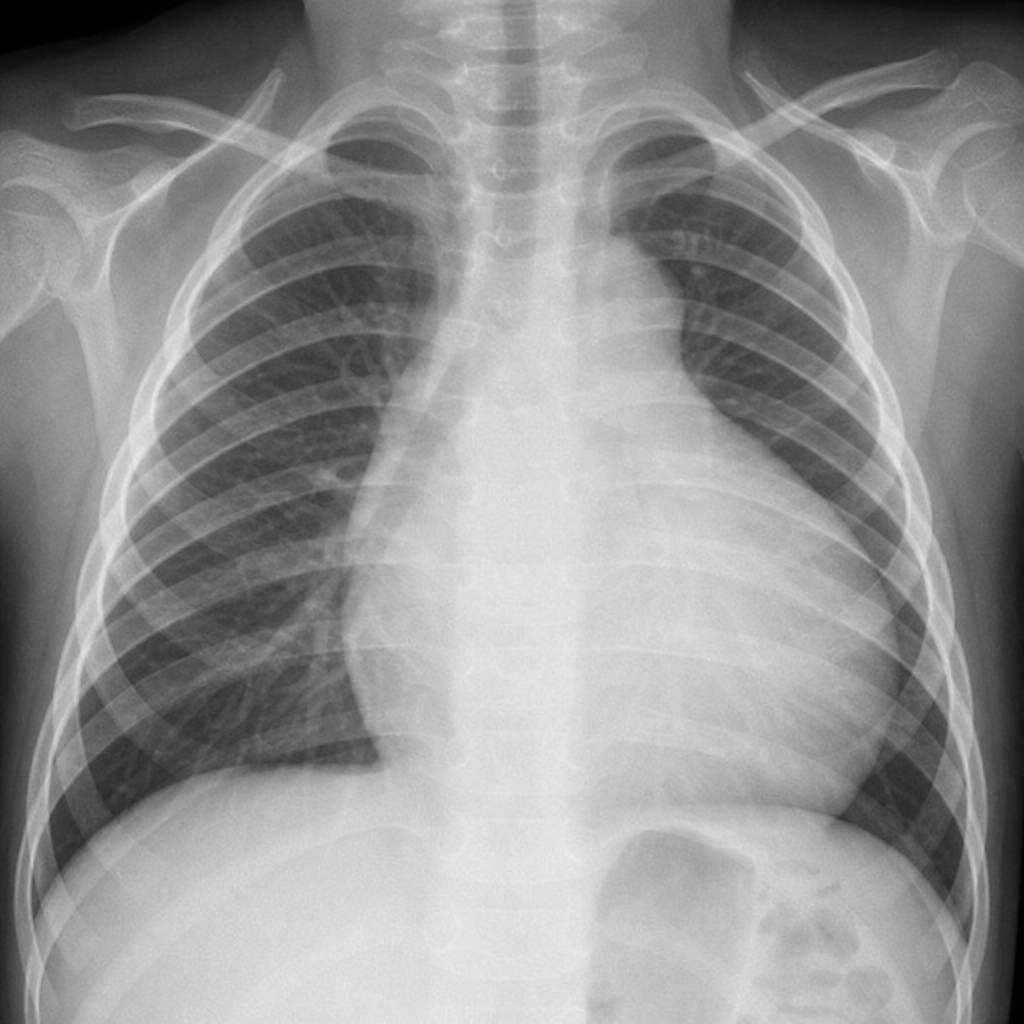
What is the characteristic metabolic finding in a baby with Congenital Hypertrophic Pyloric Stenosis (CHPS)?
Q12
A 1-year-old Caucasian male is on pancreatic enzyme replacement therapy (PERT) to maintain a healthy body mass index. Sweat chloride test is 68 mmol/L (< 29 mmol/L = normal). The patient has a relative who was also on PERT but passed away in his mid-20s due to respiratory failure, and was unable to have children. Which of the following would be most improved by PERT?
Q13
A 12-year-old boy presents to the pediatrician for a routine checkup. He and his family immigrated from Pakistan to the United States when he was 9 years of age. Per his mother, he had measles when he was 4 years of age and a high fever following a sore throat at the age 7. He received all appropriate vaccinations when he arrived in the United States. He takes no medications. He does well academically and plays soccer in a recreational league. He was born at 38 weeks gestation. His temperature is 98.4°F (36.9°C), blood pressure is 115/65 mmHg, pulse is 80/min, and respirations are 18/min. On exam, he is a healthy boy in no apparent distress. Breath sounds are equal bilaterally with good aeration. Fixed splitting of the second heart sound is noted on auscultation. Without adequate treatment, this patient will be at increased risk for developing which of the following?
Q14
An 11-year-old boy is brought to the physician for a follow-up examination. He has been having difficulties with his schoolwork over the past 4 years. He has a seizure disorder treated with valproic acid. He was able to walk independently at the age of 3 years and was able to use a fork and spoon at the age of 4 years. He is at the 40th percentile for height and 60th percentile for weight. Vitals signs are within normal limits. Examination shows multiple freckles in the axillary and groin skin folds as well as scoliosis. There are 14 hyperpigmented macules over the back and chest. There are multiple soft, painless nodules over the extremities and the trunk. Ophthalmic examination shows hyperpigmented iris nodules bilaterally. This patient is at increased risk for which of the following conditions?
Q15
A 3-week-old newborn is brought to the emergency department by his parents because of 4 episodes of vomiting that occurred that morning. The parents report that the vomit was yellowish-green with no blood in it. The patient was born at 38 weeks' gestation via vaginal delivery and has generally been healthy. He has passed normal stools each day. There is no family history of serious illness. He appears irritable and pale. His temperature is 37.0°C (98.6°F), pulse is 146/min, and blood pressure is 90/55 mm Hg. Examination shows a soft, mildly distended abdomen with no masses or organomegaly. A nasogastric tube is inserted and intravenous fluid resuscitation is initiated. An x-ray shows no gas distal to the duodenum. Which of the following is the most appropriate next step in management?
Q16
A 2-day-old female infant undergoes a newborn examination by her pediatrician. The physician adducts both of the patient's hips and exerts a posterior force on her knees; this results in an abnormally increased amount of translation of the left lower extremity in comparison to the contralateral side. The physician then abducts both hips and exerts an anterior force on the greater trochanters; this maneuver results in an audible 'clunk' heard and felt over the left hip. Ultrasound reveals decreased concavity of the left acetabulum and confirms the dislocation of the left hip when the above maneuvers are repeated under real-time ultrasound evaluation. Which of the following best characterizes this patient's condition?
Q17
A nine-year-old female presents to the pediatrician for short stature. The patient is in third grade and is the shortest child in her class. She is otherwise doing well in school, and her teacher reports that she is at or above grade level in all subjects. The patient has many friends and plays well with her two younger siblings at home. She has a past medical history of mild hearing loss in her right ear, which her previous pediatrician attributed to recurrent bouts of otitis media when she was younger. The patient’s mother is 5 feet 6 inches tall, and her father is 6 feet tall. Her family history is otherwise significant for hypothyroidism in her mother and hypertension in her father. The patient’s weight and height are in the 40th and 3rd percentile, respectively. Her temperature is 97.7°F (36.5°C), blood pressure is 155/94 mmHg, pulse is 67/min, and respirations are 14/min. On physical exam, the patient has a broad chest with widely spaced nipples. She is noted to have a short fourth metacarpal and moderate kyphosis.
This patient is most likely to have which of the following findings on physical exam?
Q18
A 5-day-old boy is brought to the emergency department because of altered mental status. His mother called an ambulance after finding him grey and unarousable in his crib. The patient was born via cesarean section due to preterm premature rupture of membranes (PPROM). Since birth, the infant has gained little weight and has been generally fussy. His temperature is 37.0°C (98.6°F), the pulse is 180/min, the respirations are 80/min, the blood pressure is 50/30 mm Hg, and the oxygen saturation is 80% on room air. Physical examination shows a mottled, cyanotic infant who is unresponsive to stimulation. Cardiopulmonary examination shows prominent heart sounds, wet rales in the inferior lungs bilaterally, strong brachial pulses, and absent femoral pulses. Endotracheal intubation is performed immediately and successfully. Which of the following signs would a chest X-ray likely show?
Q19
A 6-week-old girl is brought to the physician for a follow-up examination. She has had difficulty feeding with frequent regurgitation of milk and her mother is concerned that the child is not gaining weight appropriately. The mother reports that the girl's crying resembles a squeaky door. She is at the 2nd percentile for head circumference, 30th percentile for height, and 15th percentile for weight. Examination shows mandibular hypoplasia, a broad nasal bridge, widely-spaced eyes, and a round face. The palpebral fissures are down-slanting and she has a single palmar crease. A 3/6 pansystolic murmur is heard along the left lower sternal border. Which of the following is the most likely cause of this patient's symptoms?
Q20
An otherwise healthy 8-year-old girl is brought to the physician by her parents because of concern for growth retardation. Although she has always been short for her age, her classmates have begun teasing her for her height. She is at the 5th percentile for height and 25th percentile for weight. Physical examination shows a low-set posterior hairline, increased skin folds along the side of the neck, and a high-arched palate. The nipples are widely spaced and the fourth metacarpal bones are shortened bilaterally. This patient is at increased risk of developing which of the following complications?
Congenital defects US Medical PG Practice Questions and MCQs
Question 11: What is the characteristic metabolic finding in a baby with Congenital Hypertrophic Pyloric Stenosis (CHPS)?
A. Mixed acid-base disorder with hyperkalemia
B. Hypochloremic metabolic alkalosis (Correct Answer)
C. Metabolic acidosis with hyperchloremia
D. Respiratory alkalosis with hyponatremia
E. Hyperchloremic metabolic acidosis with hypokalemia
Explanation: ***Hypochloremic metabolic alkalosis***
- The persistent **vomiting** in CHPS leads to a significant loss of gastric acid (HCl), causing profound **hypochloremia** and an increase in serum bicarbonate.
- This loss of stomach acid results in a shift towards alkalinity, manifesting as a **metabolic alkalosis**.
- **Hypokalemia** also develops due to renal compensation mechanisms and urinary potassium losses.
*Mixed acid-base disorder with hyperkalemia*
- While electrolyte imbalances can be complex, **hyperkalemia** is not a characteristic finding; rather, **hypokalemia** is common due to renal compensation for metabolic alkalosis.
- A **mixed acid-base disorder** is less specific than the classic hypochloremic metabolic alkalosis seen in CHPS.
*Metabolic acidosis with hyperchloremia*
- **Metabolic acidosis** would imply a gain of acid or loss of alkali, which is contrary to the loss of acid from vomiting in CHPS.
- **Hyperchloremia** is also incorrect; the characteristic finding is **hypochloremia** due to the loss of gastric HCl.
*Respiratory alkalosis with hyponatremia*
- **Respiratory alkalosis** is caused by hyperventilation and is not directly related to the pathophysiology of CHPS.
- While **hyponatremia** can occur in severe dehydration, it is not the primary or most characteristic electrolyte derangement in CHPS, which is marked by hypochloremia and hypokalemia.
*Hyperchloremic metabolic acidosis with hypokalemia*
- This combines incorrect elements: **hyperchloremia** and **metabolic acidosis** are opposite to what occurs in CHPS.
- While **hypokalemia** is correct, the acid-base and chloride abnormalities are wrong.
- CHPS causes **hypochloremia** and **metabolic alkalosis**, not hyperchloremia and acidosis.
Question 12: A 1-year-old Caucasian male is on pancreatic enzyme replacement therapy (PERT) to maintain a healthy body mass index. Sweat chloride test is 68 mmol/L (< 29 mmol/L = normal). The patient has a relative who was also on PERT but passed away in his mid-20s due to respiratory failure, and was unable to have children. Which of the following would be most improved by PERT?
A. Hypoglycemia
B. A lack of respiratory infections
C. Bone mineral density (Correct Answer)
D. Expression of the autosomal recessive mutations of CFTR gene
E. Nasal polyps
Explanation: ***Bone mineral density***
- **Pancreatic enzyme replacement therapy (PERT)** improves digestion and absorption of nutrients, including fat-soluble vitamins like **vitamin D** and calcium.
- Improved nutrient absorption directly leads to better **bone mineralization** and increased **bone mineral density**, addressing the malabsorption-related bone issues common in **cystic fibrosis (CF)**.
*Hypoglycemia*
- **PERT** primarily addresses **exocrine pancreatic insufficiency**, improving the digestion of carbohydrates, fats, and proteins.
- While CF can eventually lead to **CF-related diabetes mellitus (CFRD)** with **hyperglycemia**, PERT does not directly treat endocrine dysfunction or regulate blood glucose levels.
- **Hypoglycemia** is not a typical manifestation of CF; PERT's role is in nutrient absorption, not blood glucose regulation.
*A lack of respiratory infections*
- **PERT** is specifically designed to alleviate symptoms related to **pancreatic insufficiency**, such as malabsorption and nutritional deficiencies.
- It does not directly affect the underlying **CFTR gene defect** in the lungs, which is responsible for the thick mucus and susceptibility to **respiratory infections**.
*Expression of the autosomal recessive mutations of CFTR gene*
- **PERT** provides exogenous digestive enzymes to compensate for the lack of endogenous enzymes in individuals with **cystic fibrosis**.
- It treats the symptoms of **pancreatic insufficiency** but does not alter the underlying **genetic mutation** or its expression.
*Nasal polyps*
- **Nasal polyps** are a common manifestation of **cystic fibrosis**, resulting from chronic inflammation and mucus accumulation in the nasal passages.
- **PERT** targets digestive issues and has no direct impact on the development or resolution of **nasal polyps**.
Question 13: A 12-year-old boy presents to the pediatrician for a routine checkup. He and his family immigrated from Pakistan to the United States when he was 9 years of age. Per his mother, he had measles when he was 4 years of age and a high fever following a sore throat at the age 7. He received all appropriate vaccinations when he arrived in the United States. He takes no medications. He does well academically and plays soccer in a recreational league. He was born at 38 weeks gestation. His temperature is 98.4°F (36.9°C), blood pressure is 115/65 mmHg, pulse is 80/min, and respirations are 18/min. On exam, he is a healthy boy in no apparent distress. Breath sounds are equal bilaterally with good aeration. Fixed splitting of the second heart sound is noted on auscultation. Without adequate treatment, this patient will be at increased risk for developing which of the following?
A. Extra-cardiac left-to-right shunting
B. Reversal of left-to-right shunting (Correct Answer)
C. Acute endocarditis
D. Mitral stenosis
E. Mitral regurgitation
Explanation: ***Reversal of left-to-right shunting***
- The presence of **fixed splitting of the second heart sound** is a classic sign of an **atrial septal defect (ASD)**, a left-to-right shunt.
- Without adequate treatment, a long-standing left-to-right shunt can lead to **pulmonary hypertension** and eventual **Eisenmenger syndrome**, characterized by reversal of the shunt (right-to-left shunting) and cyanosis.
*Extra-cardiac left-to-right shunting*
- An ASD is an **intra-cardiac** shunt, not an extra-cardiac shunt.
- **Extra-cardiac shunts** typically involve vessels outside the heart, such as a patent ductus arteriosus (PDA) which connects the aorta and pulmonary artery.
*Acute endocarditis*
- Patients with **secundum ASDs** (the type causing fixed splitting of S2) have a **low risk for infective endocarditis** and do not require prophylaxis according to current guidelines.
- While the patient's history of **streptococcal pharyngitis** (sore throat at age 7) could suggest **rheumatic fever**, the key finding of fixed S2 splitting points to a congenital heart defect (ASD), not acquired valvular disease.
*Mitral stenosis*
- **Mitral stenosis** is a narrowing of the mitral valve, often caused by **rheumatic fever**. While the patient's history of a high fever following a sore throat at age 7 might suggest rheumatic fever, fixed splitting of S2 is not a characteristic finding of mitral stenosis.
- Instead, mitral stenosis typically presents with a **diastolic murmur** and signs of left atrial enlargement.
*Mitral regurgitation*
- **Mitral regurgitation** is the leakage of blood backward through the mitral valve. Like mitral stenosis, it can be a complication of **rheumatic heart disease**.
- However, fixed splitting of S2 is not a typical finding for isolated mitral regurgitation, which presents with a **holosystolic murmur** best heard at the apex with radiation to the axilla.
Question 14: An 11-year-old boy is brought to the physician for a follow-up examination. He has been having difficulties with his schoolwork over the past 4 years. He has a seizure disorder treated with valproic acid. He was able to walk independently at the age of 3 years and was able to use a fork and spoon at the age of 4 years. He is at the 40th percentile for height and 60th percentile for weight. Vitals signs are within normal limits. Examination shows multiple freckles in the axillary and groin skin folds as well as scoliosis. There are 14 hyperpigmented macules over the back and chest. There are multiple soft, painless nodules over the extremities and the trunk. Ophthalmic examination shows hyperpigmented iris nodules bilaterally. This patient is at increased risk for which of the following conditions?
A. Giant cell astrocytoma
B. Renal cell carcinoma
C. Optic glioma (Correct Answer)
D. Glaucoma
E. Non-Hodgkin lymphoma
Explanation: ***Optic glioma***
- The constellation of **skin findings** (axillary/groin freckling, numerous hyperpigmented macules, soft painless nodules), seizure disorder, developmental delay, and Lisch nodules (iris nodules) are classic for **Neurofibromatosis type 1 (NF1)**.
- Patients with NF1 are at significantly increased risk for various tumors, including **optic gliomas**, which can cause vision problems and are typically low-grade astrocytomas of the optic nerve.
*Giant cell astrocytoma*
- **Subependymal giant cell astrocytomas (SEGAs)** are characteristic tumors of **Tuberous Sclerosis Complex (TSC)**, not NF1.
- While both NF1 and TSC are neurocutaneous syndromes, their hallmark features and associated tumors differ.
*Renal cell carcinoma*
- Although certain genetic syndromes can be associated with an increased risk of renal cell carcinoma, it is **not a primary feature or high-risk complication of NF1**.
- **Von Hippel-Lindau disease** is a classic syndrome associated with an increased risk of renal cell carcinoma.
*Glaucoma*
- While glaucoma can be seen in some genetic conditions or as a secondary complication, it is **not a direct, highly prevalent feature or increased risk condition specifically associated with NF1**.
- **Lisch nodules** (iris hamartomas) are characteristic of NF1, not glaucoma.
*Non-Hodgkin lymphoma*
- There is **no strong, consistent evidence** linking NF1 directly to a significantly increased risk of developing non-Hodgkin lymphoma.
- While cancer risk is generally elevated in NF1, a specific predilection for non-Hodgkin lymphoma is not a hallmark.
Question 15: A 3-week-old newborn is brought to the emergency department by his parents because of 4 episodes of vomiting that occurred that morning. The parents report that the vomit was yellowish-green with no blood in it. The patient was born at 38 weeks' gestation via vaginal delivery and has generally been healthy. He has passed normal stools each day. There is no family history of serious illness. He appears irritable and pale. His temperature is 37.0°C (98.6°F), pulse is 146/min, and blood pressure is 90/55 mm Hg. Examination shows a soft, mildly distended abdomen with no masses or organomegaly. A nasogastric tube is inserted and intravenous fluid resuscitation is initiated. An x-ray shows no gas distal to the duodenum. Which of the following is the most appropriate next step in management?
A. Abdominal ultrasound
B. Upper gastrointestinal contrast series (Correct Answer)
C. Emergent exploratory laparotomy
D. Laparoscopy
E. Flexible sigmoidoscopy
Explanation: ***Upper gastrointestinal contrast series***
- The presence of **bilious vomiting** in a neonate is a surgical emergency until proven otherwise, as it suggests an **intestinal obstruction** distal to the ampulla of Vater. The x-ray showing no gas distal to the duodenum further supports a proximal small bowel obstruction.
- An **upper GI contrast series** is the diagnostic study of choice to evaluate for **malrotation with midgut volvulus**, which is a life-threatening condition that can present with bilious vomiting in the first few weeks of life.
- Classic findings include an abnormally positioned duodenojejunal junction and a "corkscrew" appearance of the small bowel if volvulus is present.
*Abdominal ultrasound*
- While ultrasound can identify conditions like **pyloric stenosis** (which presents with non-bilious projectile vomiting), it is less sensitive for diagnosing **malrotation and volvulus**.
- In the context of bilious vomiting and absent distal gas, an upper GI contrast series is preferred due to its higher diagnostic yield for surgically urgent obstructions.
*Emergent exploratory laparotomy*
- Although **bilious vomiting** represents a surgical emergency, a definitive diagnosis is usually sought first to guide the surgical approach, especially when the patient is hemodynamically stable.
- Immediate laparotomy without prior imaging would be indicated if the patient showed signs of peritoneal irritation, hemodynamic instability, or obvious bowel compromise, which are not present in this case.
*Laparoscopy*
- **Laparoscopy** is a surgical procedure and not a primary diagnostic imaging modality for neonatal bowel obstruction.
- It may be used for definitive diagnosis and treatment after imaging studies have established a strong suspicion or confirmed malrotation, but it is not the appropriate next diagnostic step.
*Flexible sigmoidoscopy*
- **Flexible sigmoidoscopy** examines the rectum and sigmoid colon, which is irrelevant for a suspected **proximal intestinal obstruction** manifesting as bilious vomiting and absence of distal bowel gas.
- This procedure would be indicated for lower GI pathology such as bleeding or colitis, not for upper GI obstruction.
Question 16: A 2-day-old female infant undergoes a newborn examination by her pediatrician. The physician adducts both of the patient's hips and exerts a posterior force on her knees; this results in an abnormally increased amount of translation of the left lower extremity in comparison to the contralateral side. The physician then abducts both hips and exerts an anterior force on the greater trochanters; this maneuver results in an audible 'clunk' heard and felt over the left hip. Ultrasound reveals decreased concavity of the left acetabulum and confirms the dislocation of the left hip when the above maneuvers are repeated under real-time ultrasound evaluation. Which of the following best characterizes this patient's condition?
A. Deformation
B. Disruption
C. Sequence
D. Malformation (Correct Answer)
E. Mutation
Explanation: ***Malformation***
- **Developmental dysplasia of the hip (DDH)** is a classic example of a **malformation**, which is a morphologic defect resulting from an **intrinsically abnormal developmental process**.
- In DDH, the **acetabulum develops with decreased concavity** (shallow socket) and the hip joint structures form abnormally during embryonic/fetal development.
- The **Barlow maneuver** (adduction with posterior force) dislocates an unstable hip, while the **Ortolani maneuver** (abduction with anterior force) reduces the dislocated hip with an audible "clunk."
- While mechanical factors like **breech position** or **oligohydramnios** may contribute, the primary defect is **abnormal formation of the acetabular socket and femoral head relationship** from the developmental process itself.
*Deformation*
- A **deformation** is an abnormal form, shape, or position of a body part caused by **mechanical forces acting on normally formed structures**.
- Examples include **positional foot deformities** (metatarsus adductus from intrauterine constraint) or **plagiocephaly** (skull flattening from positioning).
- In DDH, the acetabulum is **intrinsically malformed** (shallow), not a normally formed structure that was mechanically deformed.
*Disruption*
- A **disruption** is breakdown of or interference with an **originally normal developmental process**, resulting from an **extrinsic destructive force**.
- Examples include **digital amputation from amniotic bands** or **porencephalic cysts** from vascular disruption.
- DDH involves abnormal development from the start, not destruction of normally developing tissue.
*Sequence*
- A **sequence** is a pattern of multiple abnormalities arising from a **single primary malformation or disruption**.
- Example: **Potter sequence** (renal agenesis → oligohydramnios → compressed facies, pulmonary hypoplasia, limb positioning defects).
- DDH is a single structural defect, not a cascade of multiple abnormalities.
*Mutation*
- A **mutation** refers to a **change in DNA sequence** that can lead to genetic disorders.
- While DDH can have genetic predisposition, the question asks about the **classification of the anatomic defect itself**, not the underlying cause.
- The appropriate embryologic classification for the acetabular abnormality is malformation.
Question 17: A nine-year-old female presents to the pediatrician for short stature. The patient is in third grade and is the shortest child in her class. She is otherwise doing well in school, and her teacher reports that she is at or above grade level in all subjects. The patient has many friends and plays well with her two younger siblings at home. She has a past medical history of mild hearing loss in her right ear, which her previous pediatrician attributed to recurrent bouts of otitis media when she was younger. The patient’s mother is 5 feet 6 inches tall, and her father is 6 feet tall. Her family history is otherwise significant for hypothyroidism in her mother and hypertension in her father. The patient’s weight and height are in the 40th and 3rd percentile, respectively. Her temperature is 97.7°F (36.5°C), blood pressure is 155/94 mmHg, pulse is 67/min, and respirations are 14/min. On physical exam, the patient has a broad chest with widely spaced nipples. She is noted to have a short fourth metacarpal and moderate kyphosis.
This patient is most likely to have which of the following findings on physical exam?
A. Continuous, machine-like murmur best heard in the left subclavicular region
B. Systolic ejection murmur best heard at the left upper sternal border
C. Holosystolic, harsh-sounding murmur best heard at the left lower sternal border
D. Continuous, flow murmur best heard in the interscapular region (Correct Answer)
E. Late systolic, crescendo murmur at the apex with mid-systolic click
Explanation: ***Continuous, flow murmur best heard in the interscapular region***
- The clinical presentation, including **short stature**, a **broad chest with widely spaced nipples**, **short fourth metacarpal**, **kyphosis**, and **hypertension**, is highly suggestive of **Turner syndrome**. A common cardiac anomaly in Turner syndrome is **coarctation of the aorta**, which can manifest as a **continuous flow murmur** heard best in the interscapular region due to collateral circulation.
- The significantly **elevated blood pressure** (155/94 mmHg) in a nine-year-old further supports the diagnosis of coarctation of the aorta, as **upper extremity hypertension** is a classic finding.
*Continuous, machine-like murmur best heard in the left subclavicular region*
- This describes a **Patent Ductus Arteriosus (PDA)**. While PDA can occur in individuals with Turner syndrome, it is not the most typical or defining cardiac finding, nor does it directly explain the severe hypertension observed.
- The machine-like murmur of a PDA is usually heard best at the **left upper sternal border**, not predominantly in the left subclavicular region as described.
*Systolic ejection murmur best heard at the left upper sternal border*
- This murmur description is characteristic of **pulmonic stenosis** or, less commonly, **aortic stenosis**. While bicuspid aortic valve (a risk factor for aortic stenosis) can be associated with Turner syndrome, the overall clinical picture with marked hypertension points more strongly to coarctation.
- The high blood pressure in this patient is more indicative of a **post-ductal obstructive lesion** like coarctation rather than isolated pulmonic or aortic stenosis.
*Holosystolic, harsh-sounding murmur best heard at the left lower sternal border*
- This describes a **Ventricular Septal Defect (VSD)**. VSDs are common congenital heart defects, but they are not specifically or primarily associated with Turner syndrome or the severe hypertension seen in this case.
- While VSDs can cause pulmonary hypertension in the long term, they typically present with volume overload symptoms earlier and do not commonly present with systemic hypertension as the primary cardiovascular sign.
*Late systolic, crescendo murmur at the apex with mid-systolic click*
- This classic description points to **mitral valve prolapse (MVP)**. While MVP can be found incidentally in the general population, and sometimes in congenital heart disease, it is not a hallmark feature of Turner syndrome or the cause of the severe hypertension shown in this patient.
- MVP is a relatively benign condition in most cases and would not account for the **high blood pressure** and other systemic features suggestive of coarctation of the aorta.
Question 18: A 5-day-old boy is brought to the emergency department because of altered mental status. His mother called an ambulance after finding him grey and unarousable in his crib. The patient was born via cesarean section due to preterm premature rupture of membranes (PPROM). Since birth, the infant has gained little weight and has been generally fussy. His temperature is 37.0°C (98.6°F), the pulse is 180/min, the respirations are 80/min, the blood pressure is 50/30 mm Hg, and the oxygen saturation is 80% on room air. Physical examination shows a mottled, cyanotic infant who is unresponsive to stimulation. Cardiopulmonary examination shows prominent heart sounds, wet rales in the inferior lungs bilaterally, strong brachial pulses, and absent femoral pulses. Endotracheal intubation is performed immediately and successfully. Which of the following signs would a chest X-ray likely show?
A. Tram tracking
B. Three sign (Correct Answer)
C. Target sign
D. Tubular artery sign
E. Tree-in-bud pattern
Explanation: ***Three sign***
- The **"3 sign"** (or "figure-3 sign") on chest X-ray is a **classic radiological finding** associated with **aortic coarctation**, created by pre-stenotic dilation, the indentation at the coarctation site, and post-stenotic dilation forming a "3" shape on the left heart border.
- The clinical presentation of a mottled, cyanotic infant with **discrepant pulses** (**strong brachial, absent femoral**) and signs of heart failure (wet rales, hypotension, poor perfusion) is pathognomonic for **critical coarctation of the aorta**.
- **Note:** In neonates with critical coarctation, chest X-ray more commonly shows **cardiomegaly and pulmonary edema/vascular congestion** rather than the "3 sign," which develops with chronic coarctation in older children and adults. However, among the given options, the "3 sign" is the radiological finding most specifically associated with this cardiac lesion.
*Tram tracking*
- **Tram tracking** (parallel lines representing thickened bronchial walls) is seen in **bronchiectasis** due to chronic inflammation and airway dilation.
- This finding is associated with chronic respiratory conditions and recurrent infections, not the acute cardiac emergency presenting in this neonate.
*Target sign*
- The **target sign** (or "doughnut sign") is seen on **abdominal imaging** (ultrasound or CT) and indicates **intussusception**, where bowel telescopes into itself.
- This is an abdominal pathology, not a chest X-ray finding, and does not explain the cardiovascular findings in this case.
*Tubular artery sign*
- This is **not a standard recognized radiological sign** associated with congenital heart disease or the clinical presentation described.
- It does not correspond to any established chest X-ray finding in cardiovascular pathology.
*Tree-in-bud pattern*
- The **tree-in-bud pattern** on chest CT (occasionally visible on X-ray when severe) represents **bronchiolar impaction** with mucus, pus, or fluid, seen in **infectious bronchiolitis or tuberculosis**.
- While this infant has respiratory distress, it is secondary to cardiac failure, not primary small airway disease or infection.
Question 19: A 6-week-old girl is brought to the physician for a follow-up examination. She has had difficulty feeding with frequent regurgitation of milk and her mother is concerned that the child is not gaining weight appropriately. The mother reports that the girl's crying resembles a squeaky door. She is at the 2nd percentile for head circumference, 30th percentile for height, and 15th percentile for weight. Examination shows mandibular hypoplasia, a broad nasal bridge, widely-spaced eyes, and a round face. The palpebral fissures are down-slanting and she has a single palmar crease. A 3/6 pansystolic murmur is heard along the left lower sternal border. Which of the following is the most likely cause of this patient's symptoms?
A. Microdeletion at chromosome 5 (Correct Answer)
B. Translocation at chromosome 21
C. X-linked gene mutation
D. Trisomy of chromosome 13
E. Maternal hypothyroidism
Explanation: ***Microdeletion at chromosome 5***
- The constellation of a **high-pitched, cat-like cry** ("squeaky door"), **microcephaly**, **developmental delay** (feeding difficulties, poor weight gain) and distinctive facial features (mandibular hypoplasia, broad nasal bridge, widely-spaced eyes, down-slanting palpebral fissures, round face) are characteristic of **Cri-du-chat syndrome**.
- **Cri-du-chat syndrome** is caused by a **deletion on the short arm of chromosome 5** (5p deletion). The presence of a **pansystolic murmur** suggests a congenital heart defect, which is also common in this syndrome.
*Translocation at chromosome 21*
- A translocation involving chromosome 21 is associated with **Down syndrome**, which presents with a **single palmar crease**, **up-slanting palpebral fissures** (not down-slanting as in this patient), and hypotonia, but typically not the characteristic cat-like cry.
- The cry in Down syndrome is typically **hoarse**, not high-pitched and squeaky. Down syndrome also features a **flat facial profile** and **protruding tongue**, different from the mandibular hypoplasia and broad nasal bridge seen here.
*X-linked gene mutation*
- **X-linked gene mutations** cause a wide range of disorders, but none are specifically associated with the unique combination of a **cat-like cry**, specific facial dysmorphology, and congenital heart defects seen in this patient.
- Examples include **Fragile X syndrome**, which causes intellectual disability, but has different physical characteristics (long face, large ears, macroorchidism in males) and typically no cat-like cry.
*Trisomy of chromosome 13*
- **Trisomy 13 (Patau syndrome)** presents with severe malformations including **microcephaly**, **microphthalmia**, **cleft lip/palate**, and **polydactyly**, often with profound intellectual disability and severe heart defects.
- While there is overlap in some features (e.g., microcephaly, heart defects), the characteristic **cat-like cry**, mandibular hypoplasia, and specific facial features described here are not typical of Patau syndrome.
*Maternal hypothyroidism*
- **Congenital hypothyroidism** (which can result from maternal hypothyroidism) can cause poor feeding, poor weight gain, and developmental delay. However, it does not typically cause the specific **craniofacial dysmorphic features**, microcephaly, or the characteristic **cat-like cry** seen in this patient.
- The murmur is also not a direct consequence of maternal hypothyroidism, but rather a structural heart defect consistent with a genetic syndrome.
Question 20: An otherwise healthy 8-year-old girl is brought to the physician by her parents because of concern for growth retardation. Although she has always been short for her age, her classmates have begun teasing her for her height. She is at the 5th percentile for height and 25th percentile for weight. Physical examination shows a low-set posterior hairline, increased skin folds along the side of the neck, and a high-arched palate. The nipples are widely spaced and the fourth metacarpal bones are shortened bilaterally. This patient is at increased risk of developing which of the following complications?
A. Precocious puberty
B. Aortic stenosis (Correct Answer)
C. Acute lymphoblastic leukemia
D. Lens dislocation
E. Intellectual disability
Explanation: ***Aortic stenosis***
- The patient's presentation with **short stature**, **low-set posterior hairline**, **webbed neck**, **widely spaced nipples**, and **shortened 4th metacarpals** is classic for **Turner syndrome (45,X)**.
- Individuals with Turner syndrome are at increased risk for **cardiovascular abnormalities**, particularly **bicuspid aortic valve** (30-50% of cases) and **coarctation of the aorta** (10-15% of cases).
- **Bicuspid aortic valve** commonly progresses to **aortic stenosis** over time due to abnormal leaflet mechanics and increased mechanical stress.
- Other cardiac complications include **aortic root dilation** and increased risk of **aortic dissection**.
*Precocious puberty*
- **Turner syndrome** is characterized by **gonadal dysgenesis** (streak ovaries), leading to **primary amenorrhea** and **delayed or absent puberty**, not precocious puberty.
- The lack of estrogen production in Turner syndrome typically results in insufficient development of secondary sexual characteristics.
*Acute lymphoblastic leukemia*
- While individuals with certain genetic syndromes (e.g., **Down syndrome**) have an increased risk of leukemia, there is **no established link** between **Turner syndrome** and increased risk of acute lymphoblastic leukemia.
- The risk of ALL is not a characteristic complication of Turner syndrome.
*Lens dislocation*
- **Lens dislocation** is a characteristic feature of conditions like **Marfan syndrome** (upward displacement) or **homocystinuria** (downward displacement).
- It is **not associated** with Turner syndrome.
*Intellectual disability*
- The majority of individuals with **Turner syndrome** have **normal intelligence**.
- While some may experience specific **visuospatial or nonverbal learning difficulties**, there is no generalized intellectual disability.