A 4-year-old male is brought into your office because his mother states he has been fatigued. He has not been acting like himself and has been getting tired easily while running around and playing with other children. As of last week, he has also been complaining of being short of breath. His vitals are temperature 98.6 deg F (37.2 deg C), blood pressure 100/75 mmHg, pulse 98/min, and respirations 22/min. On exam, the patient is short of breath, and there is a holosystolic murmur with an appreciable thrill along the left sternal border. There are no other noticeable abnormalities, and the mother states that the child's prenatal course along with genetic testing was normal. What is the most likely diagnosis?
Q112
A 2720-g (6-lb) female newborn delivered at 35 weeks’ gestation starts vomiting and becomes inconsolable 48 hours after birth. The newborn has not passed her first stool yet. Examination shows abdominal distention and high-pitched bowel sounds. A water-soluble contrast enema study shows microcolon. Serum studies show increased levels of immunoreactive trypsinogen. Which of the following is the most likely additional laboratory finding?
Q113
A 13-month-old girl is brought to the pediatric clinic by her mother due to progressive abdominal distension, poor feeding, and failure to thrive. The perinatal history was uneventful. The family emigrated from Sudan 8 years ago. The vital signs include: temperature 36.8°C (98.2°F), blood pressure 100/55 mm Hg, and pulse 99/min. The physical examination shows conjunctival pallor, hepatosplenomegaly, and parietal and frontal bossing of the skull. The laboratory test results are as follows:
Hemoglobin 8.7 g/dL
Mean corpuscular volume 62 μm3
Red cell distribution width 12.2% (normal value is 11.5–14.5%)
Reticulocyte count 2.1 %
Leucocyte count 10,200/mm3
Platelet count 392,000/mm3
The peripheral blood smear shows microcytic red cells, target cells, and many nucleated red cells. Which of the following is the most likely diagnosis?
Q114
A 2-year-old boy is brought to the physician because of an increasing productive cough with a moderate amount of white phlegm for the past week. He has been treated for pneumonia with antibiotic therapy four times over the past year. A chest x-ray performed 3 months ago showed no anatomical abnormalities. He has had multiple episodes of bulky greasy stools that don't flush easily. He is at 3rd percentile for height and at 5th percentile for weight. His temperature is 38°C (100.4°F), pulse is 132/min, and respirations are 44/min. A few inspiratory crackles are heard in the thorax. The abdomen is soft and nontender. The remainder of the examination shows no abnormalities. Which of the following is the best initial test to determine the underlying etiology of this patient's illness?
Q115
A 5-year-old boy is taken to his pediatrician by his mother for evaluation of painless testicular swelling. His mother says that it became apparent at 1 year of age and has been progressively increasing in size. There is no history of infectious diseases other than the seasonal flu. The boy has no history of trauma or surgery. He has not visited any tropical countries and his vaccinations are up to date. The vital signs are normal for the patient’s age. The physical examination reveals non-tender, fluctuating testicular swelling bilaterally with positive translucency. The swelling decreases slightly in the supine position and there is a positive cough impulse sign. A sonographic image is shown below. Which of the following statements about the patient’s condition is correct?
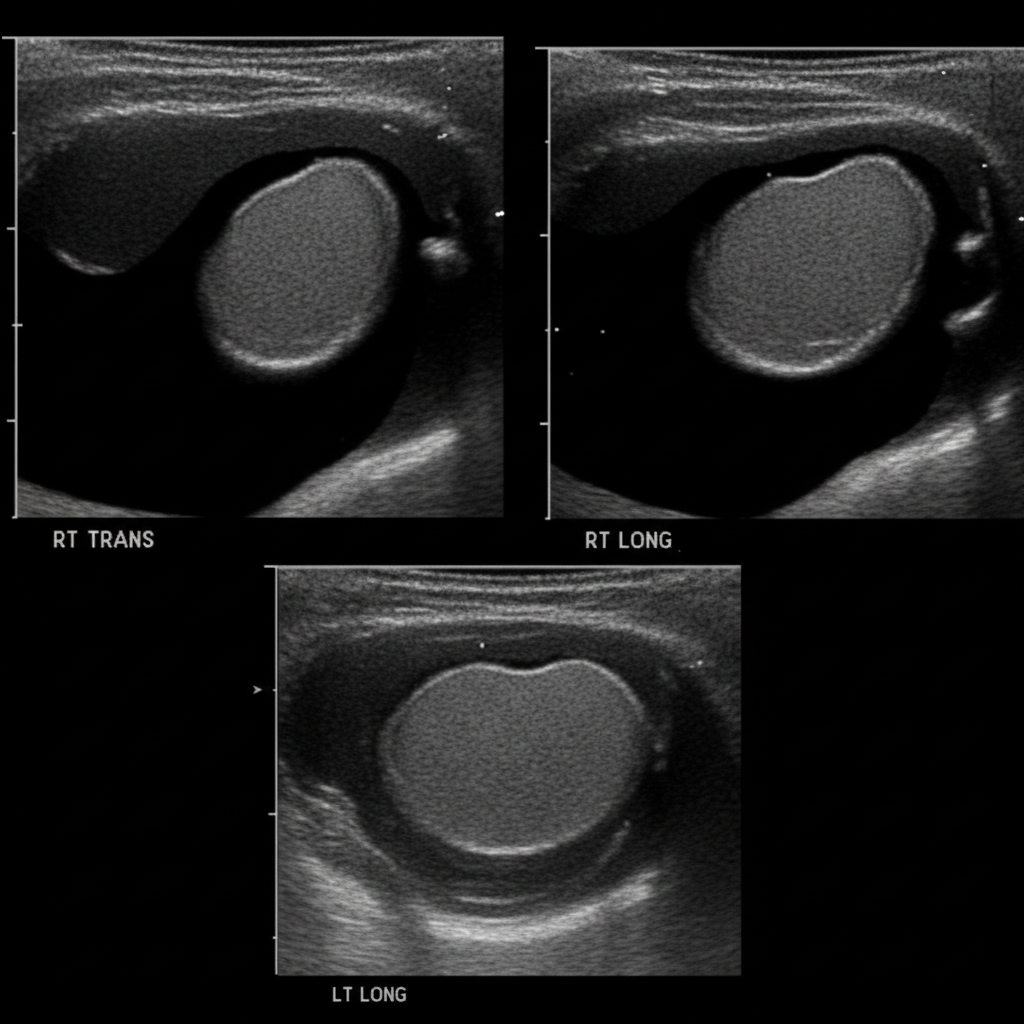
Q116
A 9-year-old boy is brought to the office due to exertional dyspnea and fatigability. He tires easily when walking or playing. His parents say that he was diagnosed with a congenital heart disease during his infancy, but they refused any treatment. They do not remember much about his diagnosis. The patient also had occasional respiratory infections throughout childhood that did not require hospitalization. He takes no medications. The patient has no family history of heart disease. His vital signs iclude: heart rate 98/min, respiratory rate 16/min, temperature 37.2°C (98.9°F), and blood pressure of 110/80 mm Hg. Physical examination shows toe cyanosis and clubbing but no finger abnormalities. Cardiac auscultation reveals a continuous machine-like murmur. All extremity pulses are full and equal. Which of the following is the most likely diagnosis?
Q117
A 3500-g (7.7-lbs) girl is delivered at 39 weeks' gestation to a 27-year-old woman, gravida 2, para 1. Apgar scores are 8 and 9 at 1 and 5 minutes, respectively. The mother had regular prenatal visits throughout the pregnancy. She did not smoke or drink alcohol. She took multivitamins as prescribed by her physician. The newborn appears active. The girl's temperature is 37°C (98.6°F), pulse is 120/min, and blood pressure is 55/35 mm Hg. Examination in the delivery room shows clitoromegaly. One day later, laboratory studies show:
Hemoglobin 12.8 g/dL
Leukocyte count 6,000/mm3
Platelet count 240,000/mm3
Serum
Na+ 133 mEq/L
K+ 5.2 mEq/L
Cl− 101 mEq/L
HCO3− 21 mEq/L
Urea nitrogen 15 mg/dL
Creatinine 0.8 mg/dL
Ultrasound of the abdomen and pelvis shows normal uterus and normal ovaries. Which of the following is the most appropriate next step in the management of this newborn patient?
Q118
An 8-year-old African-American boy is brought into the emergency department by his mother due to intense abdominal pain and pain in his thighs. The mother states that she also suffers from the same disease and that the boy has been previously admitted for episodes such as this. On exam, the boy is in 10/10 pain. His vitals are HR 110, BP 100/55, T 100.2F, RR 20. His CBC is significant for a hemoglobin of 9.5 and a white blood cell count of 13,000. His mother asks if there is anything that can help her child in the long-term. Which of the following can decrease the frequency and severity of these episodes?
Q119
A healthy, full-term 1-day-old female infant is evaluated after birth. She is noted to have a cleft palate and a systolic ejection murmur at the left intercostal space. Low-set ears and micrognathia are also noted on examination. A chest radiograph is obtained which reveals a boot-shaped heart and absence of thymus. Vital signs are unremarkable. Echocardiography is performed which demonstrates a ventricular septal defect, pulmonary valve stenosis, a misplaced aorta, and a thickened right ventricular wall. Family history is non-contributory; not much is known about the father. Based on this clinical presentation, which complication is this infant most likely to develop?
Q120
A 9-month-old boy is brought to the pediatrician for evaluation of blue discoloration of the fingernails. His parents recently immigrated from Venezuela. No prior medical records are available. His mother states that during breastfeeding, he sweats and his lips turn blue. Recently, he has begun to crawl and she has noticed a similar blue discoloration in his fingers. The vital signs include: temperature 37℃ (98.6℉), blood pressure 90/60 mm Hg, pulse 100/min, and respiratory rate 26/min. On examination, he appeared to be in mild distress and cyanotic. Both fontanelles were soft and non-depressed. Cardiopulmonary auscultation revealed normal breath sounds and a grade 2/6 systolic ejection murmur at the left upper sternal border with a single S-2. He is placed in the knee-chest position. This maneuver is an attempt to improve this patient's condition by which of the following mechanisms?
Congenital defects US Medical PG Practice Questions and MCQs
Question 111: A 4-year-old male is brought into your office because his mother states he has been fatigued. He has not been acting like himself and has been getting tired easily while running around and playing with other children. As of last week, he has also been complaining of being short of breath. His vitals are temperature 98.6 deg F (37.2 deg C), blood pressure 100/75 mmHg, pulse 98/min, and respirations 22/min. On exam, the patient is short of breath, and there is a holosystolic murmur with an appreciable thrill along the left sternal border. There are no other noticeable abnormalities, and the mother states that the child's prenatal course along with genetic testing was normal. What is the most likely diagnosis?
A. Atrial septal defect (ASD)
B. Endocardial cushion defect
C. Ventricular septal defect (VSD) (Correct Answer)
D. Patent ductus arteriosus (PDA)
E. Tetralogy of Fallot
Explanation: ***Ventricular septal defect (VSD)***
- A **holosystolic murmur** at the **left sternal border** with an associated **thrill** is a classic finding for a VSD.
- The patient's fatigue and shortness of breath (evidencing activity intolerance) are signs of **left-to-right shunting** causing increased pulmonary blood flow and eventual heart failure.
*Atrial septal defect (ASD)*
- An ASD typically presents with a **systolic ejection murmur** at the upper left sternal border due to increased flow across the pulmonic valve, not a holosystolic murmur.
- While it can cause fatigue and dyspnea, a thrill is less common, and the murmur quality is distinct.
*Endocardial cushion defect*
- This defect involves the atrioventricular septum, often resulting in a **split S2** and a **holosystolic murmur** best heard at the lower left sternal border.
- However, it is strongly associated with **Down syndrome**, which is ruled out by the normal genetic testing.
*Patent ductus arteriosus (PDA)*
- PDA is characterized by a **continuous "machinery" murmur** best heard below the left clavicle, which is distinct from the holosystolic murmur described.
- The associated symptoms of fatigue and dyspnea can occur, but the murmur differentiates it.
*Tetralogy of Fallot*
- This condition presents with **cyanosis** and a **crescendo-decrescendo systolic ejection murmur** at the left sternal border, not a holosystolic murmur with a thrill.
- Patients often exhibit "tet spells" and **clubbing**, which are absent in this presentation.
Question 112: A 2720-g (6-lb) female newborn delivered at 35 weeks’ gestation starts vomiting and becomes inconsolable 48 hours after birth. The newborn has not passed her first stool yet. Examination shows abdominal distention and high-pitched bowel sounds. A water-soluble contrast enema study shows microcolon. Serum studies show increased levels of immunoreactive trypsinogen. Which of the following is the most likely additional laboratory finding?
A. Increased sodium concentration in sweat (Correct Answer)
B. Decreased hydrogen ion concentration in renal collecting duct
C. Increased chloride concentration in alveolar fluid
D. Increased bicarbonate concentration in pancreatic secretions
E. Increased serum calcium concentration
Explanation: ***Increased sodium concentration in sweat***
- The clinical picture of **abdominal distention**, **vomiting**, failure to pass meconium, and **microcolon** in a preterm infant, combined with **elevated immunoreactive trypsinogen (IRT)**, is highly suggestive of **cystic fibrosis with meconium ileus**.
- In cystic fibrosis, the dysfunctional **cystic fibrosis transmembrane conductance regulator (CFTR) protein** impairs **chloride and sodium reabsorption** in sweat ducts, leading to **increased sodium and chloride concentration in sweat**.
- The **sweat chloride test** (which also measures sodium) is the **gold standard diagnostic test** for cystic fibrosis and is the most likely additional laboratory finding.
*Decreased hydrogen ion concentration in renal collecting duct*
- This finding is characteristic of **metabolic alkalosis** or certain forms of **renal tubular acidosis** where there is an inability to excrete hydrogen ions, which is not directly related to the pathophysiology of cystic fibrosis.
- While electrolyte imbalances can occur in cystic fibrosis due to gastrointestinal losses, this specific renal finding is not a primary or direct diagnostic feature.
*Increased chloride concentration in alveolar fluid*
- While it is true that cystic fibrosis causes **increased chloride concentration in airway surface liquid** due to defective CFTR, this is **not a routinely measurable laboratory test** used for diagnosis.
- The airway chloride concentration is a **local pathophysiologic finding** at the tissue level, not a practical diagnostic laboratory test.
- The question asks for an "additional **laboratory finding**," and the sweat chloride/sodium test is the standard diagnostic laboratory test, not measurement of alveolar fluid chloride.
*Increased bicarbonate concentration in pancreatic secretions*
- Patients with cystic fibrosis typically have **decreased bicarbonate secretion** in pancreatic secretions due to the dysfunctional CFTR channel, leading to acidic pancreatic fluid and precipitation of proteins, causing duct obstruction.
- This leads to **pancreatic insufficiency**, not increased bicarbonate concentration.
*Increased serum calcium concentration*
- **Hypercalcemia** is not a characteristic finding in cystic fibrosis; rather, patients with cystic fibrosis may be at risk for **osteopenia** or **osteoporosis** due to malabsorption of fat-soluble vitamins (including vitamin D) and chronic inflammation, potentially leading to **decreased serum calcium** in severe cases.
- This finding would suggest other conditions like hyperparathyroidism or malignancy.
Question 113: A 13-month-old girl is brought to the pediatric clinic by her mother due to progressive abdominal distension, poor feeding, and failure to thrive. The perinatal history was uneventful. The family emigrated from Sudan 8 years ago. The vital signs include: temperature 36.8°C (98.2°F), blood pressure 100/55 mm Hg, and pulse 99/min. The physical examination shows conjunctival pallor, hepatosplenomegaly, and parietal and frontal bossing of the skull. The laboratory test results are as follows:
Hemoglobin 8.7 g/dL
Mean corpuscular volume 62 μm3
Red cell distribution width 12.2% (normal value is 11.5–14.5%)
Reticulocyte count 2.1 %
Leucocyte count 10,200/mm3
Platelet count 392,000/mm3
The peripheral blood smear shows microcytic red cells, target cells, and many nucleated red cells. Which of the following is the most likely diagnosis?
A. Sickle cell disease
B. Beta-thalassemia major (Correct Answer)
C. Congenital dyserythropoietic anaemia
D. Alpha-thalassemia major
E. Glucose-6-phosphate dehydrogenase deficiency
Explanation: ***Beta-thalassemia major***
- The presentation of severe **microcytic anemia**, **hepatosplenomegaly**, **bone deformities** (**frontal and parietal bossing**), and **failure to thrive** in an infant from an endemic area (Sudan) is classic for **beta-thalassemia major** (Cooley's anemia).
- The reticulocyte count of 2.1% is **inadequate for the degree of anemia**, reflecting **ineffective erythropoiesis**, a hallmark of thalassemia, while the peripheral smear findings of **target cells** and **nucleated red cells** are also characteristic.
*Sickle cell disease*
- While sickle cell disease is also common in individuals of African descent, it typically presents with **vaso-occlusive crises**, **dactylitis**, or **splenic sequestration crises**, rather than the prominent bone deformities and extreme microcytic anemia seen here.
- The peripheral smear would show **sickle cells**, which are not mentioned.
*Congenital dyserythropoietic anaemia*
- This is a rare group of genetic disorders characterized by **ineffective erythropoiesis** and **morphological abnormalities** of erythroblasts in the bone marrow.
- Although it can cause anemia and hepatosplenomegaly, the distinct skeletal changes like frontal bossing are less typical, and the peripheral smear findings usually include **anisopoikilocytosis** rather than prominent target cells and nucleated red cells in the absence of severe marrow stress.
*Alpha-thalassemia major*
- This condition, also known as **hydrops fetalis**, is usually **lethal in utero** or shortly after birth due to severe anemia and massive edema.
- It is incompatible with a 13-month-old surviving infant.
*Glucose-6-phosphate dehydrogenase deficiency*
- This condition causes **hemolytic anemia** typically triggered by **oxidative stress** (e.g., certain foods like fava beans, medications, or infections).
- It presents with **acute hemolytic episodes** and generally leads to **normocytic or macrocytic anemia** with Heinz bodies, not the chronic microcytic anemia with skeletal deformities seen here.
Question 114: A 2-year-old boy is brought to the physician because of an increasing productive cough with a moderate amount of white phlegm for the past week. He has been treated for pneumonia with antibiotic therapy four times over the past year. A chest x-ray performed 3 months ago showed no anatomical abnormalities. He has had multiple episodes of bulky greasy stools that don't flush easily. He is at 3rd percentile for height and at 5th percentile for weight. His temperature is 38°C (100.4°F), pulse is 132/min, and respirations are 44/min. A few inspiratory crackles are heard in the thorax. The abdomen is soft and nontender. The remainder of the examination shows no abnormalities. Which of the following is the best initial test to determine the underlying etiology of this patient's illness?
A. X-ray of the chest
B. Genetic testing
C. Serum immunoglobulin level
D. Sweat chloride test (Correct Answer)
E. Stool analysis
Explanation: ***Sweat chloride test***
- The patient exhibits classic symptoms of **cystic fibrosis**, including recurrent respiratory infections, failure to thrive (low height and weight percentiles), and greasy, bulky stools suggestive of **pancreatic insufficiency**.
- A **sweat chloride test** measures the concentration of chloride in sweat and is the **most reliable initial screening test** for cystic fibrosis, given the characteristic clinical presentation.
*X-ray of the chest*
- While chest X-rays can show evidence of pulmonary involvement (e.g., **bronchiectasis**, hyperinflation), a previous X-ray showed no abnormalities, and it does not directly determine the **underlying etiology** of the multiple symptoms.
- It would be part of the respiratory assessment but is not the best initial test for diagnosing the systemic genetic disorder.
*Genetic testing*
- **Genetic testing** confirms the diagnosis of cystic fibrosis by identifying specific mutations in the **CFTR gene**.
- However, in a patient with a strong clinical suspicion, the **sweat chloride test** is typically performed first as a more accessible and cost-effective initial diagnostic test in many settings, with genetic testing used for confirmation or when sweat test results are equivocal.
*Serum immunoglobulin level*
- **Serum immunoglobulin levels** would assess for **immunodeficiency**, which can cause recurrent infections.
- While recurrent infections are present, the combination of **malabsorption** (greasy stools, failure to thrive) and respiratory symptoms points more strongly towards **cystic fibrosis** than a primary immunodeficiency.
*Stool analysis*
- **Stool analysis** can identify **malabsorption** (e.g., fecal fat content) or indicate **gastrointestinal infections**.
- While it could confirm pancreatic insufficiency, it does not directly diagnose the underlying cause of both respiratory and gastrointestinal symptoms as effectively as a sweat chloride test for cystic fibrosis.
Question 115: A 5-year-old boy is taken to his pediatrician by his mother for evaluation of painless testicular swelling. His mother says that it became apparent at 1 year of age and has been progressively increasing in size. There is no history of infectious diseases other than the seasonal flu. The boy has no history of trauma or surgery. He has not visited any tropical countries and his vaccinations are up to date. The vital signs are normal for the patient’s age. The physical examination reveals non-tender, fluctuating testicular swelling bilaterally with positive translucency. The swelling decreases slightly in the supine position and there is a positive cough impulse sign. A sonographic image is shown below. Which of the following statements about the patient’s condition is correct?
A. The structure shown does not communicate with the peritoneal cavity.
B. It is most likely a result of viral replication within testicular tissue.
C. Puncture of this structure will yield blood.
D. A similar condition in girls could involve the canal of Nuck. (Correct Answer)
E. Impaired lymphatic drainage from the scrotum is the cause of the patient’s condition.
Explanation: ***A similar condition in girls could involve the canal of Nuck.***
- The boy's symptoms (painless, fluctuating, translucent testicular swelling, decreasing in supine position, positive cough impulse) are classic for a **communicating hydrocele**. This condition results from the **incomplete closure of the processus vaginalis**.
- In females, the **canal of Nuck** is the remnant of the processus vaginalis that extends along the round ligament into the labia majora. A persistent patency of the canal of Nuck can lead to a **hydrocele of the canal of Nuck**, which is analogous to a communicating hydrocele in males.
*The structure shown does not communicate with the peritoneal cavity.*
- The description of the swelling decreasing in the **supine position** and a **positive cough impulse** strongly indicates a **communicating hydrocele**, meaning there *is* communication with the peritoneal cavity.
- In a non-communicating hydrocele, there is no communication with the peritoneum, and the fluid volume remains relatively constant regardless of position or intra-abdominal pressure changes.
*It is most likely a result of viral replication within testicular tissue.*
- The presentation of a **painless, transilluminating, gradually increasing swelling** over years is not consistent with a viral infection of the testes (**orchitis**), which would typically be acute, painful, and associated with systemic symptoms like fever.
- Viral orchitis, often caused by mumps, more commonly presents with **pain, tenderness, and inflammation** rather than the chronic, painless swelling described.
*Puncture of this structure will yield blood.*
- A **hydrocele** contains **serous fluid**, which is typically straw-colored and translucent, not blood.
- Puncturing a structure and yielding blood would suggest a **hematocele**, which is usually associated with trauma or a bleeding disorder, and would not transilluminate.
*Impaired lymphatic drainage from the scrotum is the cause of the patient’s condition.*
- **Impaired lymphatic drainage** (e.g., due to filariasis) leads to **lymphedema** or **chylocele**, which is typically non-translucent, firm, and often starts later in life, especially in endemic areas.
- The patient's history of not visiting tropical countries and the physical findings of translucency negate filariasis as a likely cause for this hydrocele.
Question 116: A 9-year-old boy is brought to the office due to exertional dyspnea and fatigability. He tires easily when walking or playing. His parents say that he was diagnosed with a congenital heart disease during his infancy, but they refused any treatment. They do not remember much about his diagnosis. The patient also had occasional respiratory infections throughout childhood that did not require hospitalization. He takes no medications. The patient has no family history of heart disease. His vital signs iclude: heart rate 98/min, respiratory rate 16/min, temperature 37.2°C (98.9°F), and blood pressure of 110/80 mm Hg. Physical examination shows toe cyanosis and clubbing but no finger abnormalities. Cardiac auscultation reveals a continuous machine-like murmur. All extremity pulses are full and equal. Which of the following is the most likely diagnosis?
A. Tetralogy of Fallot
B. Coarctation of the aorta
C. Ventricular septal defect
D. Atrial septal defect
E. Patent ductus arteriosus (Correct Answer)
Explanation: ***Patent ductus arteriosus***
- A **patent ductus arteriosus (PDA)** can cause differential cyanosis and clubbing (lower extremities more affected than upper) due to preferential flow of deoxygenated blood through the PDA to the descending aorta.
- The classic **continuous machine-like murmur** auscultated in the precordium is highly characteristic of a PDA.
*Tetralogy of Fallot*
- Patients typically present with **cyanosis and clubbing of all four extremities** due to right-to-left shunting at the ventricular level, not isolated toe cyanosis.
- While it can cause exertional dyspnea, the murmur is typically a **systolic ejection murmur** from pulmonary stenosis, not a continuous machine-like murmur.
*Coarctation of the aorta*
- This condition presents with **differential blood pressures and pulses** between the upper and lower extremities, with elevated upper extremity pressures.
- It does not typically cause cyanosis or a continuous machine-like murmur.
*Ventricular septal defect*
- A **ventricular septal defect (VSD)** typically causes a **holosystolic murmur** loudest at the lower left sternal border.
- Cyanosis develops late due to Eisenmenger syndrome, and if it occurs, it's typically central, affecting all extremities.
*Atrial septal defect*
- An **atrial septal defect (ASD)** usually presents with a **fixed split S2** and a **systolic ejection murmur** at the upper left sternal border due to increased flow across the pulmonic valve.
- Significant cyanosis is rare and occurs only in advanced stages with Eisenmenger syndrome, affecting all extremities if present.
Question 117: A 3500-g (7.7-lbs) girl is delivered at 39 weeks' gestation to a 27-year-old woman, gravida 2, para 1. Apgar scores are 8 and 9 at 1 and 5 minutes, respectively. The mother had regular prenatal visits throughout the pregnancy. She did not smoke or drink alcohol. She took multivitamins as prescribed by her physician. The newborn appears active. The girl's temperature is 37°C (98.6°F), pulse is 120/min, and blood pressure is 55/35 mm Hg. Examination in the delivery room shows clitoromegaly. One day later, laboratory studies show:
Hemoglobin 12.8 g/dL
Leukocyte count 6,000/mm3
Platelet count 240,000/mm3
Serum
Na+ 133 mEq/L
K+ 5.2 mEq/L
Cl− 101 mEq/L
HCO3− 21 mEq/L
Urea nitrogen 15 mg/dL
Creatinine 0.8 mg/dL
Ultrasound of the abdomen and pelvis shows normal uterus and normal ovaries. Which of the following is the most appropriate next step in the management of this newborn patient?
A. Spironolactone therapy
B. Estrogen replacement therapy
C. Dexamethasone therapy
D. Genital reconstruction surgery
E. Hydrocortisone and fludrocortisone therapy (Correct Answer)
Explanation: ***Hydrocortisone and fludrocortisone therapy***
- The newborn presents with **clitoromegaly** and electrolyte abnormalities including **hyponatremia** and **hyperkalemia**, which are characteristic findings of **salt-wasting congenital adrenal hyperplasia (CAH)**.
- CAH is caused by a deficiency in 21-hydroxylase enzyme, leading to inadequate production of cortisol and aldosterone. **Hydrocortisone** (glucocorticoid) and **fludrocortisone** (mineralocorticoid) are essential for replacing these deficient hormones and preventing adrenal crisis.
*Spironolactone therapy*
- **Spironolactone** is an **aldosterone antagonist** and would worsen the existing salt-wasting state and hyperkalemia seen in CAH.
- It works by blocking aldosterone, leading to increased sodium excretion and potassium retention, which is the opposite of what is needed in CAH.
*Estrogen replacement therapy*
- **Estrogen replacement therapy** is not indicated at this stage. It would not address the underlying hormonal deficiencies (cortisol and aldosterone) or correct the electrolyte imbalances in CAH.
- Estrogen is involved in female sexual development but does not play a primary role in the acute management of adrenal insufficiency in newborns with CAH.
*Dexamethasone therapy*
- **Dexamethasone** is a potent **glucocorticoid**, but it is generally not the first-line treatment for chronic management in infants with CAH due to its prolonged half-life and higher risk of growth suppression compared to hydrocortisone.
- While it could address the cortisol deficiency, it does not provide mineralocorticoid activity, which is crucial for managing the salt-wasting component.
*Genital reconstruction surgery*
- **Genital reconstruction surgery** may be considered later in life for cosmetic or functional reasons, but it is not the immediate or most appropriate next step in managing a newborn with CAH.
- The immediate priority is to stabilize the child's hormonal and electrolyte balance to prevent potentially life-threatening adrenal crisis.
Question 118: An 8-year-old African-American boy is brought into the emergency department by his mother due to intense abdominal pain and pain in his thighs. The mother states that she also suffers from the same disease and that the boy has been previously admitted for episodes such as this. On exam, the boy is in 10/10 pain. His vitals are HR 110, BP 100/55, T 100.2F, RR 20. His CBC is significant for a hemoglobin of 9.5 and a white blood cell count of 13,000. His mother asks if there is anything that can help her child in the long-term. Which of the following can decrease the frequency and severity of these episodes?
A. Hydroxyurea (Correct Answer)
B. Opiates
C. Exchange transfusion
D. Normal saline
E. Oxygen
Explanation: ***Hydroxyurea***
- **Hydroxyurea** increases the production of **fetal hemoglobin (HbF)**, which reduces the sickling of red blood cells and prevents vaso-occlusive crises
- By reducing sickling, it decreases the frequency and severity of pain crises, acute chest syndrome, and the need for hospitalizations in patients with sickle cell disease
- This is the **only FDA-approved disease-modifying therapy** for sickle cell disease that addresses the underlying pathophysiology
*Opiates*
- **Opiates** are used for **pain management** during acute sickle cell crises but do not address the underlying pathology or prevent future episodes
- While essential for symptom relief during vaso-occlusive crises, they do not decrease the **frequency or severity** of future episodes
*Exchange transfusion*
- **Exchange transfusion** is an acute treatment for severe complications of sickle cell disease, such as **acute chest syndrome** or **stroke**, by rapidly reducing the percentage of sickled cells
- It is not a long-term preventative measure to decrease crisis frequency or severity and carries risks like **alloimmunization** and iron overload
*Normal saline*
- **Normal saline** is used for **hydration** during sickle cell crises to improve blood flow and reduce sickling, but it is a supportive measure for acute episodes only
- It does not modify the disease course or prevent future crises, making its benefit primarily symptomatic during an acute event
*Oxygen*
- **Oxygen** therapy is indicated in sickle cell crises when the patient is **hypoxic**, as hypoxia can trigger or worsen sickling
- It is an acute supportive treatment and does not prevent the underlying pathophysiology or reduce the frequency of future crises
Question 119: A healthy, full-term 1-day-old female infant is evaluated after birth. She is noted to have a cleft palate and a systolic ejection murmur at the left intercostal space. Low-set ears and micrognathia are also noted on examination. A chest radiograph is obtained which reveals a boot-shaped heart and absence of thymus. Vital signs are unremarkable. Echocardiography is performed which demonstrates a ventricular septal defect, pulmonary valve stenosis, a misplaced aorta, and a thickened right ventricular wall. Family history is non-contributory; not much is known about the father. Based on this clinical presentation, which complication is this infant most likely to develop?
A. Catlike cry
B. Increased phenylalanine in the blood
C. Seizures (Correct Answer)
D. Webbing of the neck
E. Hyperthyroidism
Explanation: ***Seizures***
- This infant presents with features highly suggestive of **DiGeorge syndrome** (22q11.2 deletion syndrome), including **cleft palate**, **congenital heart defects** (Tetralogy of Fallot, indicated by VSD, pulmonary stenosis, overriding aorta, RV hypertrophy and boot-shaped heart), **low-set ears**, **micrognathia**, and **thymic aplasia/hypoplasia**.
- **Thymic aplasia** leads to **T-cell immunodeficiency**, and **parathyroid hypoplasia** (often associated with DiGeorge syndrome due to shared developmental origin from pharyngeal pouches) leads to **hypocalcemia**, which is the most common cause of **seizures** in these infants.
*Catlike cry*
- A **catlike cry** (or cri du chat) is characteristic of **Cri-du-chat syndrome** (5p deletion), which is not indicated by the constellation of symptoms presented.
- While Cri-du-chat syndrome can cause micrognathia and heart defects, it typically does not involve thymic aplasia or significant hypocalcemia leading to seizures.
*Increased phenylalanine in the blood*
- This is characteristic of **phenylketonuria (PKU)**, an inborn error of metabolism, which has no direct link to the symptoms described.
- PKU primarily causes neurological damage if untreated, but not the specific craniofacial or cardiac anomalies seen here.
*Webbing of the neck*
- **Webbing of the neck** is a common feature of **Turner syndrome** (45,XO), particularly with lymphedema, and also seen in **Noonan syndrome**.
- These syndromes have different clinical presentations and genetic etiologies than what is described in this infant.
*Hyperthyroidism*
- **Hyperthyroidism** is not typically associated with DiGeorge syndrome or the specific symptoms presented here.
- While some genetic syndromes can affect thyroid function, the primary concern in DiGeorge syndrome related to endocrine function is **parathyroid hypoplasia** leading to hypocalcemia.
Question 120: A 9-month-old boy is brought to the pediatrician for evaluation of blue discoloration of the fingernails. His parents recently immigrated from Venezuela. No prior medical records are available. His mother states that during breastfeeding, he sweats and his lips turn blue. Recently, he has begun to crawl and she has noticed a similar blue discoloration in his fingers. The vital signs include: temperature 37℃ (98.6℉), blood pressure 90/60 mm Hg, pulse 100/min, and respiratory rate 26/min. On examination, he appeared to be in mild distress and cyanotic. Both fontanelles were soft and non-depressed. Cardiopulmonary auscultation revealed normal breath sounds and a grade 2/6 systolic ejection murmur at the left upper sternal border with a single S-2. He is placed in the knee-chest position. This maneuver is an attempt to improve this patient's condition by which of the following mechanisms?
A. Increased systemic vascular resistance (Correct Answer)
B. Decreased obstruction of the choanae
C. Decreased pulmonary vascular resistance
D. Increased systemic venous return
E. Decreased systemic vascular resistance
Explanation: ***Increased systemic vascular resistance***
* The **knee-chest position** is a classic intervention for **tet spells** in infants with **TOF (tetralogy of Fallot)**.
* By compressing the femoral arteries, this maneuver increases **systemic vascular resistance (SVR)**, thereby reducing right-to-left shunting across the **ventricular septal defect (VSD)** and improving pulmonary blood flow.
* *Decreased obstruction of the choanae*
* This maneuver has no impact on the patency of the **choanae** (the posterior nasal openings).
* **Choanal atresia** is a separate congenital anomaly that causes respiratory distress, which is not suggested by this patient's presentation.
* *Decreased pulmonary vascular resistance*
* The knee-chest position primarily affects SVR, not **pulmonary vascular resistance (PVR)**.
* While decreasing PVR would be beneficial by increasing pulmonary blood flow, this is not the direct mechanism of the knee-chest position.
* *Increased systemic venous return*
* While the knee-chest position can transiently affect venous return, its primary therapeutic effect in tet spells is on **SVR**.
* Increased venous return alone would not counteract the right-to-left shunt in TOF.
* *Decreased systemic vascular resistance*
* A decrease in **SVR** would worsen the patient's condition by exacerbating the right-to-left shunt across the VSD, leading to more **cyanosis**.
* The goal of the knee-chest position is precisely the opposite: to increase SVR.