A female infant is born with a mutation in PKD1 on chromosome 16. An abdominal ultrasound performed shortly after birth would most likely reveal which of the following?
Q102
A previously healthy 2-year-old girl is brought to the physician because of a 1-week history of yellow discoloration of her skin, loss of appetite, and 3 episodes of vomiting. Her parents also report darkening of her urine and light stools. During the last 2 days, the girl has been scratching her abdomen and arms and has been crying excessively. She was born at 38 weeks' gestation after an uncomplicated pregnancy and delivery. Her family emigrated from Japan 8 years ago. Immunizations are up-to-date. Her vital signs are within normal limits. Examination shows jaundice of her skin and sclerae. Abdominal examination shows a mass in the right upper abdomen. Serum studies show:
Bilirubin (total) 5 mg/dL
Direct 4.2 mg/dL
Aspartate aminotransferase (AST) 20 U/L
Alanine aminotransferase (ALT) 40 U/L
γ-Glutamyltransferase (GGT) 110 U/L
Abdominal ultrasonography shows dilation of the gall bladder and a fusiform dilation of the extrahepatic bile duct. Which of the following is the most likely diagnosis?
Q103
An 8-year-old boy presents with a skin lesion on his back as shown in the picture. On physical examination, there are synchronous spasmodic movements of the neck, trunk, and extremities. The physician explains that this is likely due to a genetic condition, and further testing would be necessary to confirm the diagnosis. Which of the following genes is involved in the development of this patient’s condition?
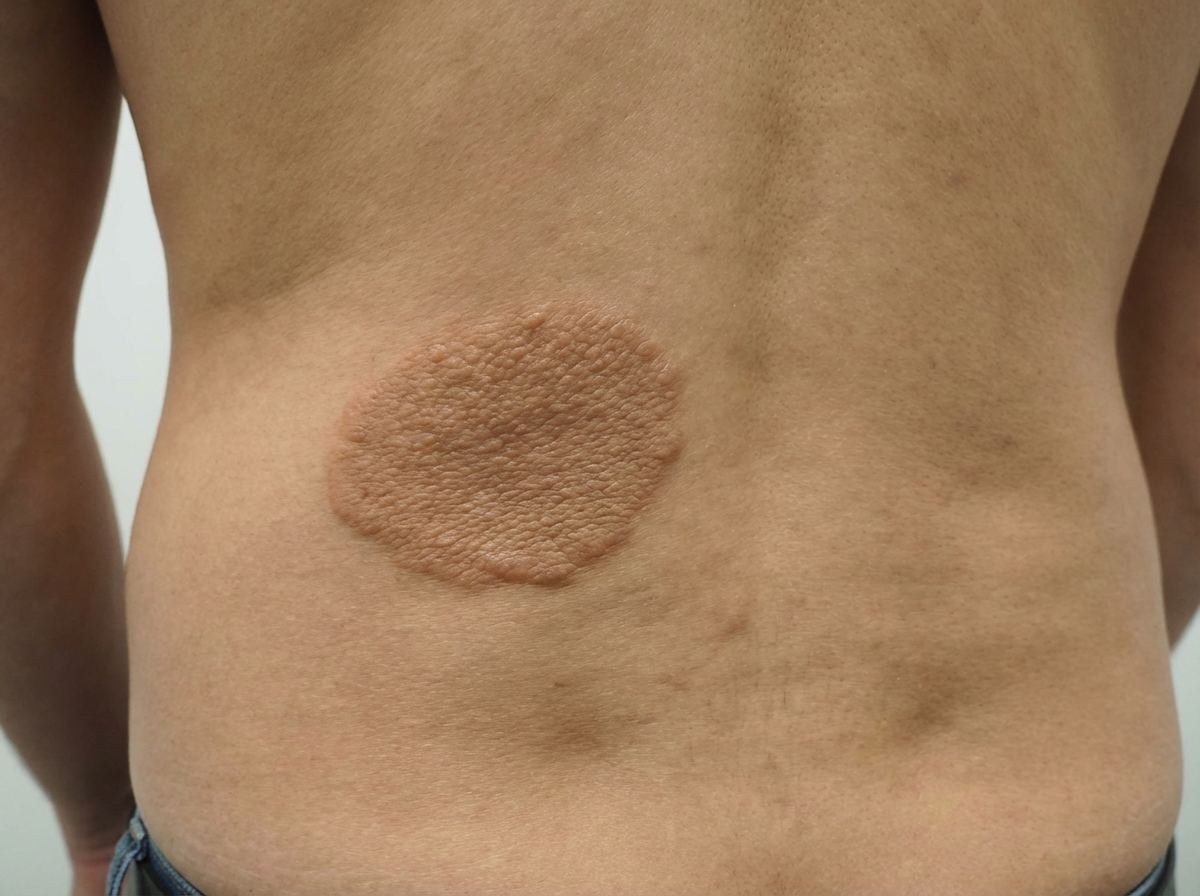
Q104
Cardiac surgery is consulted on a newborn with a large ventricular septal defect. The child has poor weight gain and feeding difficulties. He requires furosemide and captopril to avoid dyspnea. On physical examination his temperature is 36.9°C (98.4°F), pulse rate is 158/min, respiratory rate is 30/min, and blood pressure is 94/62 mm Hg. Chest auscultation reveals a holosystolic murmur along the left lower sternal border and a mid-diastolic low-pitched rumble at the apex. Abdominal examination reveals the presence of hepatomegaly. An echocardiogram confirms a diagnosis of a membranous VSD while hemodynamic studies show a Qp:Qs ratio of 2.8:1. Which of the following is the best management option?
Q105
A 3-week-old firstborn baby girl is brought to the pediatric emergency room with projectile vomiting. She started vomiting while feeding 12 hours ago and has been unable to keep anything down since then. After vomiting, she appears well and hungry, attempting to feed again. The vomitus has been non-bloody and non-bilious. The last wet diaper was 10 hours ago. The child was born at 40 weeks gestation to a healthy mother. On examination, the child appears sleepy but has a healthy cry during the exam. The child has dry mucous membranes and delayed capillary refill. There is a palpable olive-shaped epigastric mass on palpation. Which of the following is the most likely cause of this patient's condition?
Q106
A 28-year-old woman gives birth to a male infant. During her third-trimester antenatal sonogram, the radiologist noted a suspected congenital heart defect, but the exact nature of the defect was not clear. The pediatrician orders an echocardiogram after making sure that the baby’s vital signs are stable. This reveals the following findings: atresia of the muscular tricuspid valve, pulmonary outflow tract obstruction, open patent ductus arteriosus, a small ventricular septal defect, and normally related great arteries. The pediatrician explains the nature of the congenital heart defect to the infant's parents. He also informs them about the probable clinical features that are likely to develop in the infant, the proposed management plan, and the prognosis. Which of the following signs is most likely to manifest first in this infant?
Q107
A 3-week-old boy has non-bilious projectile vomiting that occurred after feeding. After vomiting, the infant is still hungry. The infant appears dehydrated and malnourished. A firm, “olive-like” mass of about 1.5 cm in diameter is palpated in the right upper quadrant, by the lateral edge of the rectus abdominus muscle. On laboratory testing, the infant is found to have a hypochloremic, hypokalemic metabolic alkalosis. Which of the following is most likely the cause of this patient’s symptoms?
Q108
A 12-day-old male newborn is brought to the emergency department because of a high-grade fever for 3 days. He has been lethargic and not feeding well during this period. He cries incessantly while passing urine. There is no family history of serious illness. He was delivered at 37 weeks' gestation and pregnancy was complicated by mild oligohydramnios. His immunizations are up-to-date. He is at the 35th percentile for length and 40th percentile for weight. His temperature is 39°C (102.2°F), pulse is 165/min, respirations are 60/min, and blood pressure is 55/30 mm Hg. Examination shows open anterior and posterior fontanelles. There is a midline lower abdominal mass extending 2–3 cm above the symphysis. Cardiopulmonary examination shows no abnormalities. The child is diagnosed with a urinary tract infection and broad spectrum antibiotic therapy is begun. This patient will most likely benefit the most from which of the following interventions?
Q109
A 2-year-old boy is brought to the physician by his parents for a well-child visit. During his last well-child visit 9 months ago, the patient had not begun talking. The parents report that their son frequently avoids eye contact and has no friends at daycare. He was born at term and has been healthy except for an episode of otitis media 6 months ago, which was treated with amoxicillin. His immunizations are up-to-date. He is at the 95 percentile for height, 20 percentile for weight, and 95 percentile for head circumference. He appears shy. His temperature is 37°C (98.6°F), pulse is 120/min, and blood pressure is 100/55 mm Hg. Examination shows elongated facial features and large ears. The patient does not speak. He does not follow instruction to build a stack of 2 blocks. Throughout the examination, he continually opens and closes his mother's purse and does not maintain eye contact. Which of the following findings is most likely to confirm the diagnosis?
Q110
A 14-year-old girl is brought to the physician because she frequently experiences cramping and pain in her legs during school sports. She is at the 10th percentile for height. Her blood pressure is 155/90 mm Hg. Examination shows a high-arched palate with maloccluded teeth and a low posterior hairline. The patient has a broad chest with widely spaced nipples. Pelvic examination shows normal external female genitalia with scant pubic hair. Without appropriate treatment, this patient is at the greatest risk of developing which of the following complications?
Congenital defects US Medical PG Practice Questions and MCQs
Question 101: A female infant is born with a mutation in PKD1 on chromosome 16. An abdominal ultrasound performed shortly after birth would most likely reveal which of the following?
A. Microscopic cysts
B. Normal kidneys (Correct Answer)
C. Adrenal atrophy
D. Horseshoe kidney
E. Bilateral kidney enlargement
Explanation: ***Normal kidneys***
- Autosomal dominant polycystic kidney disease (ADPKD), caused by a mutation in **PKD1 or PKD2**, typically presents with **cysts that develop later in life**, usually in adulthood.
- At birth, the kidneys of an infant with the ADPKD mutation are usually **structurally normal** and do not yet show macroscopic cyst formation on ultrasound.
*Microscopic cysts*
- While the genetic mutation is present, significant **macroscopic cyst formation** detectable by standard abdominal ultrasound does not typically occur at birth in ADPKD.
- The cysts develop and enlarge over decades, leading to symptoms later in adulthood.
*Adrenal atrophy*
- **Adrenal atrophy** is not a feature of polycystic kidney disease and is caused by other conditions like autoimmune diseases or prolonged corticosteroid use.
- The adrenal glands are distinct from the kidneys and are not directly affected by PKD1 mutations.
*Horseshoe kidney*
- **Horseshoe kidney** is a congenital anomaly where the kidneys are fused, usually at the lower poles, and is not associated with PKD1 mutations.
- This condition is a **developmental fusion defect** during embryogenesis.
*Bilateral kidney enlargement*
- Bilateral kidney enlargement due to multiple cysts is characteristic of **ADPKD in adulthood**, not at birth.
- Though ADPKD is a genetic condition, the **phenotypic expression (cyst growth)** progresses over time.
Question 102: A previously healthy 2-year-old girl is brought to the physician because of a 1-week history of yellow discoloration of her skin, loss of appetite, and 3 episodes of vomiting. Her parents also report darkening of her urine and light stools. During the last 2 days, the girl has been scratching her abdomen and arms and has been crying excessively. She was born at 38 weeks' gestation after an uncomplicated pregnancy and delivery. Her family emigrated from Japan 8 years ago. Immunizations are up-to-date. Her vital signs are within normal limits. Examination shows jaundice of her skin and sclerae. Abdominal examination shows a mass in the right upper abdomen. Serum studies show:
Bilirubin (total) 5 mg/dL
Direct 4.2 mg/dL
Aspartate aminotransferase (AST) 20 U/L
Alanine aminotransferase (ALT) 40 U/L
γ-Glutamyltransferase (GGT) 110 U/L
Abdominal ultrasonography shows dilation of the gall bladder and a fusiform dilation of the extrahepatic bile duct. Which of the following is the most likely diagnosis?
A. Biliary atresia
B. Mirizzi syndrome
C. Pancreatic pseudocyst
D. Hepatic abscess
E. Biliary cyst (Correct Answer)
Explanation: ***Biliary cyst***
- The combination of **jaundice**, **pruritus**, **light stools**, **dark urine**, an **RUQ mass**, and **fusiform dilation of the extrahepatic bile duct** on ultrasound is highly suggestive of a biliary cyst (specifically a choledochal cyst).
- The **elevated direct bilirubin** and **GGT** are consistent with **biliary obstruction**, while normal AST/ALT suggest minimal hepatocellular injury.
*Biliary atresia*
- Characterized by **progressive obliteration of the extrahepatic bile ducts**, typically presenting with persistent jaundice in the **first few weeks of life**, not at 2 years old.
- Ultrasound in biliary atresia often shows a **nondilated, atretic or absent common bile duct** and a **small or absent gallbladder**, which contradicts the findings of gallbladder dilation and a fusiform mass.
*Mirizzi syndrome*
- This syndrome involves **common hepatic duct obstruction** due to external compression by an impacted **gallstone in the cystic duct or gallbladder neck**.
- It is typically seen in **adults** and would not explain a congenital fusiform dilation of the extrahepatic bile duct.
*Pancreatic pseudocyst*
- A pancreatic pseudocyst is a **collection of pancreatic fluid** usually resulting from **pancreatitis or pancreatic trauma**.
- While it can cause an abdominal mass and obstructive symptoms, it would typically be located near the pancreas, not specifically presenting as a fusiform dilation of the bile duct, and pancreatic enzyme elevations would be more prominent.
*Hepatic abscess*
- A hepatic abscess is a **localized collection of pus in the liver**, often presenting with **fever, RUQ pain**, and elevated inflammatory markers.
- It would show as a **fluid collection within the liver parenchyma** on ultrasound, not a fusiform dilation of the bile duct.
Question 103: An 8-year-old boy presents with a skin lesion on his back as shown in the picture. On physical examination, there are synchronous spasmodic movements of the neck, trunk, and extremities. The physician explains that this is likely due to a genetic condition, and further testing would be necessary to confirm the diagnosis. Which of the following genes is involved in the development of this patient’s condition?
A. NF2
B. GNAQ
C. TSC1 (Correct Answer)
D. VHL
E. NF1
Explanation: ***TSC1***
- The image shows a **Shagreen patch**, a connective tissue nevus often described as having an "orange peel" or cobblestone texture, which is **pathognomonic for Tuberous Sclerosis Complex (TSC)**.
- The description of **synchronous spasmodic movements** (seizures) in this 8-year-old boy is a common neurological manifestation of TSC. While TSC patients may present with **infantile spasms in early childhood**, older children typically develop other seizure types including **generalized tonic-clonic or myoclonic seizures**.
- Mutations in the **TSC1** (hamartin gene on chromosome 9q34) or **TSC2** (tuberin gene on chromosome 16p13.3) genes are responsible for this autosomal dominant condition affecting the mTOR pathway.
*NF2*
- Mutations in the *NF2* gene cause **Neurofibromatosis type 2**, characterized primarily by **bilateral vestibular schwannomas** (acoustic neuromas) leading to hearing loss.
- Dermatological manifestations include **cafe-au-lait spots** (fewer than NF1) and **cutaneous schwannomas**, not Shagreen patches.
*GNAQ*
- The *GNAQ* gene is associated with **Sturge-Weber syndrome**, which presents with a **port-wine stain (facial nevus flammeus)** typically in the trigeminal distribution and neurological symptoms such as seizures and developmental delays.
- This patient's Shagreen patch is not consistent with the vascular malformation seen in Sturge-Weber syndrome.
*VHL*
- Mutations in the *VHL* gene cause **Von Hippel-Lindau disease**, which predisposes individuals to various tumors including **cerebellar and retinal hemangioblastomas**, **renal cell carcinoma**, and **pheochromocytomas**.
- The clinical picture of a Shagreen patch and seizures is not characteristic of Von Hippel-Lindau disease.
*NF1*
- Mutations in the *NF1* gene cause **Neurofibromatosis type 1**, characterized by **multiple cafe-au-lait spots** (≥6), **axillary/inguinal freckling (Crowe's sign)**, cutaneous neurofibromas, **Lisch nodules** (iris hamartomas), and optic gliomas.
- While it is a neurocutaneous disorder, the skin lesion presented (Shagreen patch) is specific to TSC, not NF1.
Question 104: Cardiac surgery is consulted on a newborn with a large ventricular septal defect. The child has poor weight gain and feeding difficulties. He requires furosemide and captopril to avoid dyspnea. On physical examination his temperature is 36.9°C (98.4°F), pulse rate is 158/min, respiratory rate is 30/min, and blood pressure is 94/62 mm Hg. Chest auscultation reveals a holosystolic murmur along the left lower sternal border and a mid-diastolic low-pitched rumble at the apex. Abdominal examination reveals the presence of hepatomegaly. An echocardiogram confirms a diagnosis of a membranous VSD while hemodynamic studies show a Qp:Qs ratio of 2.8:1. Which of the following is the best management option?
A. Continue medical treatment and provide reassurance about spontaneous closure of the defect
B. Hybrid surgery using both transcatheter device and surgical repair
C. Transcatheter occlusion of the defect
D. Surgical closure of the defect (Correct Answer)
E. Addition of digoxin to the current medical regimen with regular follow-up until spontaneous closure occurs
Explanation: ***Surgical closure of the defect***
* This newborn exhibits **symptoms of severe heart failure** due to a large VSD, including poor weight gain, feeding difficulties, and hepatomegaly, despite maximal medical therapy.
* A **Qp:Qs ratio of 2.8:1** indicates a significant left-to-right shunt, which, combined with the clinical picture, necessitates **surgical intervention** to prevent irreversible pulmonary vascular disease and improve prognosis.
*Continue medical treatment and provide reassurance about spontaneous closure of the defect*
* While some small VSDs close spontaneously, this child has a **large VSD** with **symptoms of severe heart failure** that require aggressive medical management (furosemide, captopril) and show no signs of improvement.
* **Reassurance of spontaneous closure** is inappropriate given the significant hemodynamic compromise and the potential for long-term complications without surgical intervention.
*Hybrid surgery using both transcatheter device and surgical repair*
* Hybrid approaches are typically reserved for **complex congenital heart defects** or specific anatomical challenges where a purely transcatheter or open surgical approach is not feasible or optimal.
* For a large membranous VSD requiring definitive closure, a **direct surgical approach** is generally preferred and more effective.
*Transcatheter occlusion of the defect*
* **Transcatheter occlusion** is generally indicated for **smaller, hemodynamically insignificant VSDs** or in specific anatomical situations, and it is usually performed in older children.
* A **large membranous VSD** with significant shunt and symptoms of heart failure is typically **not amenable to transcatheter closure** due to the size and location of the defect, and the risk of complications.
*Addition of digoxin to the current medical regimen with regular follow-up until spontaneous closure occurs*
* The child is already on **maximal medical therapy** (furosemide, captopril) and still experiencing severe symptoms, indicating medicine alone is insufficient.
* While digoxin can improve myocardial contractility, it is unlikely to significantly alter the natural history or **resolve the large shunt** in a VSD of this magnitude, and waiting for spontaneous closure would be detrimental.
Question 105: A 3-week-old firstborn baby girl is brought to the pediatric emergency room with projectile vomiting. She started vomiting while feeding 12 hours ago and has been unable to keep anything down since then. After vomiting, she appears well and hungry, attempting to feed again. The vomitus has been non-bloody and non-bilious. The last wet diaper was 10 hours ago. The child was born at 40 weeks gestation to a healthy mother. On examination, the child appears sleepy but has a healthy cry during the exam. The child has dry mucous membranes and delayed capillary refill. There is a palpable olive-shaped epigastric mass on palpation. Which of the following is the most likely cause of this patient's condition?
A. Failure of neural crest cell migration into the rectum
B. Telescoping of the small bowel into the large bowel
C. Hypertrophic muscularis externa (Correct Answer)
D. Patent tract between the trachea and esophagus
E. Failure of duodenal lumen recanalization
Explanation: ***Hypertrophic muscularis externa***
- The presented symptoms, including **projectile vomiting** in a 3-week-old, **non-bilious** emesis, post-vomiting **hunger**, and a **palpable olive-shaped mass** in the epigastrium, are classic signs of **pyloric stenosis**. This condition is caused by the **hypertrophy of the pyloric sphincter's muscularis externa**.
- Pyloric stenosis commonly presents between **2-8 weeks of age** and leads to an obstruction of gastric outflow, causing the characteristic vomiting and signs of dehydration like **dry mucous membranes** and **delayed capillary refill**.
*Failure of neural crest cell migration into the rectum*
- This describes **Hirschsprung disease**, which typically presents with **constipation**, **abdominal distension**, and a **failure to pass meconium** in the neonatal period.
- While it involves GI obstruction, its symptoms and location of obstruction are distinctly different from the projectile vomiting seen in this case.
*Telescoping of the small bowel into the large bowel*
- This is known as **intussusception**, which usually presents with **intermittent, colicky abdominal pain**, **"currant jelly" stools** (due to blood and mucus), and a sausage-shaped abdominal mass, typically in older infants (3 months to 3 years).
- The type of vomiting (often bilious) and stool characteristics are different from the patient's presentation.
*Patent tract between the trachea and esophagus*
- This describes a **tracheoesophageal fistula (TEF)**, often associated with esophageal atresia. Infants with TEF typically present with **choking, coughing, and cyanosis** during feeds, as well as aspiration, due to misdirection of fluid into the lungs.
- The symptoms are immediate and severe with initial feeds and do not typically involve progressive projectile vomiting after several weeks of life.
*Failure of duodenal lumen recanalization*
- This leads to **duodenal atresia**, which typically presents with **bilious vomiting** within the first 24-48 hours of life, and the classic "double bubble" sign on X-ray.
- The vomiting in this case is **non-bilious** and started later, which rules out duodenal atresia.
Question 106: A 28-year-old woman gives birth to a male infant. During her third-trimester antenatal sonogram, the radiologist noted a suspected congenital heart defect, but the exact nature of the defect was not clear. The pediatrician orders an echocardiogram after making sure that the baby’s vital signs are stable. This reveals the following findings: atresia of the muscular tricuspid valve, pulmonary outflow tract obstruction, open patent ductus arteriosus, a small ventricular septal defect, and normally related great arteries. The pediatrician explains the nature of the congenital heart defect to the infant's parents. He also informs them about the probable clinical features that are likely to develop in the infant, the proposed management plan, and the prognosis. Which of the following signs is most likely to manifest first in this infant?
A. Hepatomegaly
B. Bluish discoloration of lips (Correct Answer)
C. Peripheral edema
D. Clubbing of finger nails
E. Diaphoresis while sucking
Explanation: **Bluish discoloration of lips**
- The presence of **tricuspid atresia** and **pulmonary outflow tract obstruction** means that deoxygenated blood cannot effectively reach the lungs for oxygenation.
- This leads to a right-to-left shunt of deoxygenated blood through the **patent ductus arteriosus (PDA)** and **ventricular septal defect (VSD)** into the systemic circulation, causing **cyanosis** which would visibly manifest as bluish discoloration of the lips.
*Hepatomegaly*
- **Hepatomegaly** is typically observed in states of **right-sided heart failure** due to congestion of the liver. While structural heart defects can lead to heart failure, cyanosis due to shunting is a more immediate and direct consequence of the described anatomy.
- It would develop later as the heart struggles over time, not as the first sign.
*Peripheral edema*
- **Peripheral edema** is also a sign of **heart failure**, usually **right-sided heart failure**, and would indicate significant fluid retention.
- Like hepatomegaly, this symptom is not expected to be the very first manifestation, as the immediate problem is the lack of oxygenated blood.
*Clubbing of finger nails*
- **Clubbing of fingernails** is a **chronic sign of hypoxemia**, developing over weeks to months in response to persistent low oxygen levels.
- This condition requires sustained cyanosis over a longer period and would not be an initial finding in a newborn.
*Diaphoresis while sucking*
- **Diaphoresis while sucking** is a classic sign of **congestive heart failure** in infants, indicating increased metabolic demand and effort for feeding.
- While the infant may eventually develop heart failure symptoms, the immediate issue of inadequate pulmonary blood flow leads to central cyanosis as the earliest and most direct manifestation.
Question 107: A 3-week-old boy has non-bilious projectile vomiting that occurred after feeding. After vomiting, the infant is still hungry. The infant appears dehydrated and malnourished. A firm, “olive-like” mass of about 1.5 cm in diameter is palpated in the right upper quadrant, by the lateral edge of the rectus abdominus muscle. On laboratory testing, the infant is found to have a hypochloremic, hypokalemic metabolic alkalosis. Which of the following is most likely the cause of this patient’s symptoms?
A. Hypertrophy of the pylorus muscle (Correct Answer)
B. Intussusception
C. Achalasia
D. Duodenal atresia
E. Aganglionic colon segment
Explanation: ***Hypertrophy of the pylorus muscle***
- The classic presentation of **pyloric stenosis** includes **non-bilious projectile vomiting** in an infant, followed by continued hunger, a palpable **"olive-like" mass** in the right upper quadrant, and findings of **hypochloremic, hypokalemic metabolic alkalosis** due to fluid and acid loss from vomiting.
- The hypertrophy of the pylorus obstructs gastric emptying, leading to the characteristic vomiting pattern and subsequent electrolyte imbalances.
*Intussusception*
- This condition presents with sudden onset of intermittent, **severe abdominal pain**, often drawing the legs up to the chest, and produces **"currant jelly" stools** (blood and mucus).
- A palpable **sausage-shaped mass** may be felt, but projectile vomiting and the classic electrolyte abnormalities described are not typical features.
*Achalasia*
- Achalasia is a motility disorder of the **esophagus** characterized by impaired relaxation of the lower esophageal sphincter and absence of esophageal peristalsis.
- While it causes **dysphagia** and regurgitation, it does not typically present in a **3-week-old infant** with projectile vomiting or an "olive-like" mass.
*Duodenal atresia*
- This is a congenital obstruction of the duodenum, often presenting with **bilious vomiting** within the first 24-48 hours of life, and a characteristic **"double bubble" sign** on abdominal X-ray.
- It does not involve a palpable "olive-like" mass or the specific electrolyte imbalance seen in pyloric stenosis.
*Aganglionic colon segment*
- This describes **Hirschsprung disease**, which is characterized by the absence of ganglion cells in the distal colon, leading to **functional obstruction**.
- Symptoms typically involve **delayed passage of meconium** and chronic constipation, abdominal distension, and sometimes bilious vomiting, not the projectile non-bilious vomiting or palpable mass of pyloric stenosis.
Question 108: A 12-day-old male newborn is brought to the emergency department because of a high-grade fever for 3 days. He has been lethargic and not feeding well during this period. He cries incessantly while passing urine. There is no family history of serious illness. He was delivered at 37 weeks' gestation and pregnancy was complicated by mild oligohydramnios. His immunizations are up-to-date. He is at the 35th percentile for length and 40th percentile for weight. His temperature is 39°C (102.2°F), pulse is 165/min, respirations are 60/min, and blood pressure is 55/30 mm Hg. Examination shows open anterior and posterior fontanelles. There is a midline lower abdominal mass extending 2–3 cm above the symphysis. Cardiopulmonary examination shows no abnormalities. The child is diagnosed with a urinary tract infection and broad spectrum antibiotic therapy is begun. This patient will most likely benefit the most from which of the following interventions?
A. Urethral diverticulectomy
B. Endoscopic dextranomer gel injection
C. Ablation of urethral valves (Correct Answer)
D. Meatotomy
E. Vesicostomy
Explanation: ***Ablation of urethral valves***
- The patient's presentation with a **urinary tract infection (UTI)**, **lethargy**, **poor feeding**, **incessant crying during urination**, and a **palpable lower abdominal mass** in a male newborn strongly suggests **posterior urethral valves (PUV)**.
- **PUV** are the most common cause of **severe urinary tract obstruction** in male infants, leading to **reflux**, **hydronephrosis**, and **renal damage**; ablation is the definitive treatment.
*Urethral diverticulectomy*
- A **urethral diverticulum** is a sac-like protrusion from the urethra, which can cause symptoms such as **dysuria, post-void dribbling, and recurrent UTIs.**
- While it can cause UTIs, it is less common as a cause of severe obstruction and a palpable bladder mass in newborns compared to PUV.
*Endoscopic dextranomer gel injection*
- This procedure is primarily used to treat **vesicoureteral reflux (VUR)** by bulking up the ureterovesical junction.
- While VUR can be associated with PUV, this injection does not address the underlying **urethral obstruction** which is the primary problem here.
*Meatotomy*
- **Meatotomy** is a surgical procedure to enlarge the **urethral meatus**, typically performed for conditions like **meatal stenosis**.
- While meatal stenosis can cause obstructive symptoms, it would not typically lead to the severe bladder distension and upper urinary tract damage suggested by the abdominal mass and systemic symptoms of UTI in this case.
*Vesicostomy*
- A **vesicostomy** involves creating an opening between the **bladder and the abdominal wall** to allow continuous urine drainage.
- While it may be used as a **temporary initial measure** in critically ill neonates to decompress the bladder before valve ablation can be performed, it is a **diversion procedure** and not the definitive treatment to correct the underlying obstruction.
Question 109: A 2-year-old boy is brought to the physician by his parents for a well-child visit. During his last well-child visit 9 months ago, the patient had not begun talking. The parents report that their son frequently avoids eye contact and has no friends at daycare. He was born at term and has been healthy except for an episode of otitis media 6 months ago, which was treated with amoxicillin. His immunizations are up-to-date. He is at the 95 percentile for height, 20 percentile for weight, and 95 percentile for head circumference. He appears shy. His temperature is 37°C (98.6°F), pulse is 120/min, and blood pressure is 100/55 mm Hg. Examination shows elongated facial features and large ears. The patient does not speak. He does not follow instruction to build a stack of 2 blocks. Throughout the examination, he continually opens and closes his mother's purse and does not maintain eye contact. Which of the following findings is most likely to confirm the diagnosis?
A. An additional X chromosome
B. CGG trinucleotide repeats on X-chromosome (Correct Answer)
C. Mutation on chromosome 15
D. Three copies of the same chromosome
E. Defective phenylalanine hydroxylase activity
Explanation: ***CGG trinucleotide repeats on X-chromosome***
- The constellation of **developmental delay** (not talking at 2 years), **social and communication deficits** (avoids eye contact, no friends, repetitive behaviors), and **dysmorphology** (elongated facial features, large ears, large head circumference at 95th percentile) are highly suggestive of **Fragile X syndrome**.
- **Fragile X syndrome** is caused by an expansion of **CGG trinucleotide repeats** in the _FMR1_ gene on the X chromosome, leading to reduced or absent **fragile X mental retardation protein (FMRP)**.
- This is the most common inherited cause of intellectual disability and a leading genetic cause of autism spectrum disorder.
*An additional X chromosome*
- An additional X chromosome (e.g., **XXY karyotype**) is characteristic of **Klinefelter syndrome**, which primarily affects males, leading to **hypogonadism**, **infertility**, and sometimes mild cognitive deficits, but typically does not present with the specific facial features and social deficits seen here.
- While developmental delays can occur, the prominent **autism-like features** and distinct facial dysmorphism point away from Klinefelter syndrome.
*Mutation on chromosome 15*
- A **mutation on chromosome 15** is associated with disorders like **Prader-Willi syndrome** or **Angelman syndrome**, depending on whether the mutation is maternal or paternal in origin.
- **Prader-Willi syndrome** presents with **hypotonia** and **hyperphagia** leading to obesity, while **Angelman syndrome** presents with severe developmental delay, ataxia, and inappropriate laughter (happy puppet syndrome); these do not match the patient's presentation.
*Three copies of the same chromosome*
- Having **three copies of the same chromosome** (autosomal **trisomy**) is characteristic of conditions like **Down syndrome (Trisomy 21)**, **Edwards syndrome (Trisomy 18)**, or **Patau syndrome (Trisomy 13)**.
- While these syndromes cause developmental delays and distinct dysmorphic features, the specific combination of **elongated face**, **large ears**, and **autism-like behaviors** is not typical for these trisomies.
*Defective phenylalanine hydroxylase activity*
- **Defective phenylalanine hydroxylase activity** is the underlying cause of **phenylketonuria (PKU)**.
- **PKU** leads to intellectual disability, seizures, and a musty odor if untreated, but it does not cause the specific physical dysmorphology or the prominent social and communication deficits observed in this patient.
Question 110: A 14-year-old girl is brought to the physician because she frequently experiences cramping and pain in her legs during school sports. She is at the 10th percentile for height. Her blood pressure is 155/90 mm Hg. Examination shows a high-arched palate with maloccluded teeth and a low posterior hairline. The patient has a broad chest with widely spaced nipples. Pelvic examination shows normal external female genitalia with scant pubic hair. Without appropriate treatment, this patient is at the greatest risk of developing which of the following complications?
A. Alzheimer disease
B. Hyperphagia
C. Pulmonary stenosis
D. Osteoporosis (Correct Answer)
E. Severe acne
Explanation: ***Osteoporosis***
- This patient's presentation with **short stature**, high blood pressure, **webbed neck** (implied by low posterior hairline), and **wide-spaced nipples** is highly suggestive of **Turner syndrome (45,X0)**.
- Turner syndrome is characterized by **gonadal dysgenesis**, leading to **estrogen deficiency**, which is a major risk factor for developing **osteoporosis**.
- Without estrogen replacement therapy, patients with Turner syndrome have significantly increased risk of **low bone mineral density** and **fractures**.
*Pulmonary stenosis*
- While Turner syndrome is associated with **cardiac anomalies** such as **bicuspid aortic valve** and **coarctation of the aorta**, these are typically **congenital defects** present from birth rather than complications that develop over time.
- **Pulmonary stenosis** itself is not a primary cardiac finding in Turner syndrome.
- The question asks about complications that develop without treatment, making **osteoporosis** more appropriate as it progressively worsens due to chronic **estrogen deficiency**.
*Alzheimer disease*
- **Alzheimer disease** is a neurodegenerative disorder primarily associated with aging and genetics, not typically a direct complication of Turner syndrome.
- While cognitive profiles in Turner syndrome can differ (particularly with visuospatial skills), there is no established increased risk of Alzheimer disease.
*Hyperphagia*
- **Hyperphagia** (excessive eating) is characteristically associated with **Prader-Willi syndrome** due to hypothalamic dysfunction.
- It is not a feature or complication of **Turner syndrome**.
*Severe acne*
- **Severe acne** is often related to increased androgen levels or hormonal fluctuations during puberty.
- In Turner syndrome, there is typically **hypogonadism** and **estrogen deficiency**, which would not predispose to severe acne.