
Long-term outcomes and follow-up — MCQs

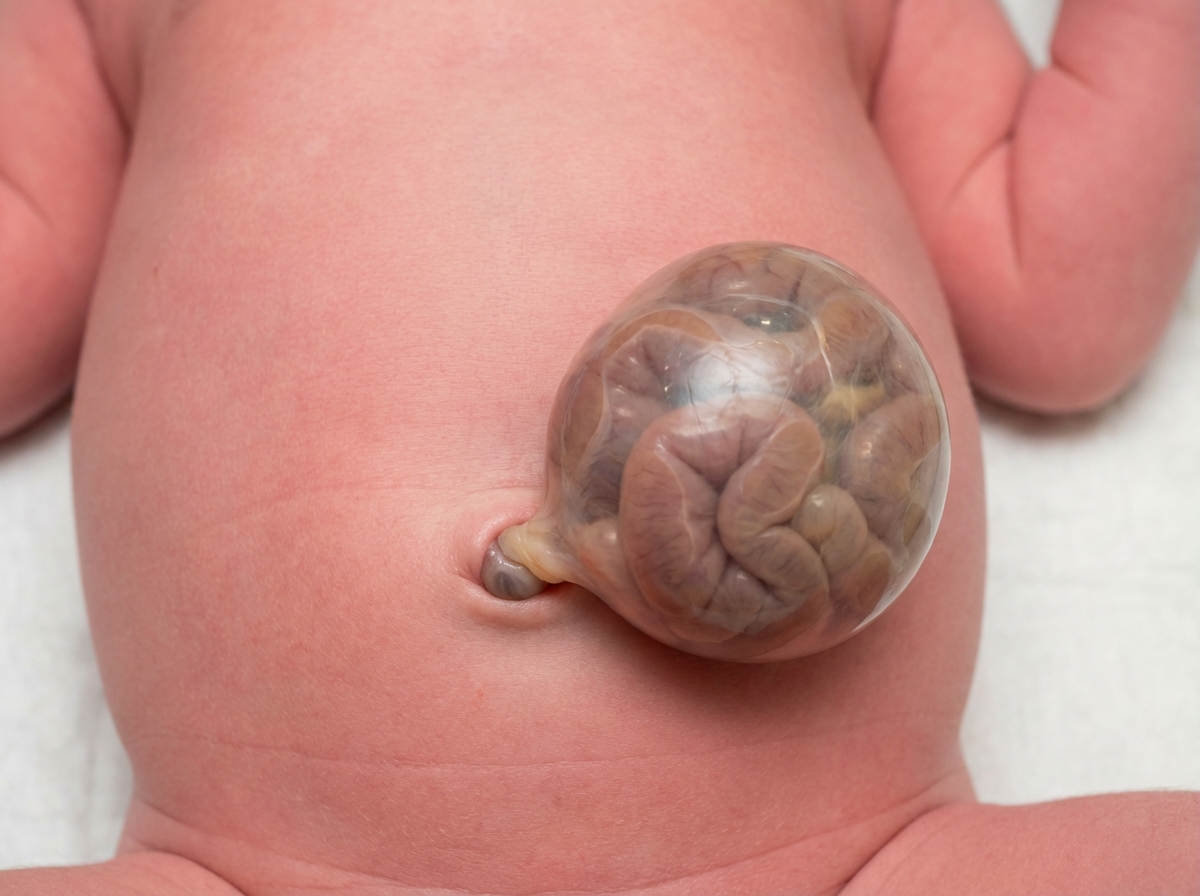
A 42-year-old woman presents to the emergency department in active labor. She has had no prenatal care and is unsure of the gestational age. Labor progresses rapidly and spontaneous vaginal delivery of a baby boy occurs 3 hours after presentation. On initial exam, the child is 1.9 kg (4.2 lb) with a small head and jaw. A sac-like structure containing intestine, as can be seen in the picture, protrudes from the abdominal wall. What complication is closely associated with this presentation?
A 14-year-old girl is brought to the physician because she frequently experiences cramping and pain in her legs during school sports. She is at the 10th percentile for height. Her blood pressure is 155/90 mm Hg. Examination shows a high-arched palate with maloccluded teeth and a low posterior hairline. The patient has a broad chest with widely spaced nipples. Pelvic examination shows normal external female genitalia with scant pubic hair. Without appropriate treatment, this patient is at the greatest risk of developing which of the following complications?
A 15-month-old boy is brought to the pediatrician for immunizations and assessment. His parents report that he is eating well and produces several wet diapers every day. He is occasionally fussy, but overall a happy and curious child. The boy was born at 39 weeks gestation via spontaneous vaginal delivery. On physical examination his vital signs are stable. His weight and height are above the 85th percentile for his age and sex. On chest auscultation, the pediatrician detects a loud harsh holosystolic murmur over the left lower sternal border. The first and second heart sounds are normal. An echocardiogram confirms the diagnosis of the muscular ventricular septal defect without pulmonary hypertension. Which of the following is the best management strategy for this patient?
A 3-year-old girl is brought to the physician for a well-child examination. She was born at term and has been healthy since. She can climb up and down the stairs and can pedal a tricycle. She has difficulty using a spoon to feed herself but can copy a line. She speaks in 2- to 3-word sentences that can be understood by most people. She is selfish while playing with children her age and throws tantrums quite often. She cannot put on her own shoes and socks. She does not tolerate separation from her parents. She is at 60th percentile for height and weight. Physical examination including neurologic examination reveals no abnormalities. Which of the following is the most appropriate assessment of her development?
Five minutes after initiating a change of position and oxygen inhalation, the oxytocin infusion is discontinued. A repeat CTG that is done 10 minutes later shows recurrent variable decelerations and a total of 3 uterine contractions in 10 minutes. Which of the following is the most appropriate next step in management?
A 1-day-old infant in the general care nursery, born at full term by uncomplicated cesarean section delivery, is noted to have a murmur, but otherwise appears well. On examination, respiratory rate is 40/min and pulse oximetry is 96%. Precordium is normoactive. With auscultation, S1 is normal, S2 is single, and a 2/6 systolic ejection murmur is heard at the left upper sternal border. Echocardiography shows infundibular pulmonary stenosis, overriding aorta, ventricular septal defect and concentric right ventricular hypertrophy. Which of the following correlate with the presence or absence of cyanosis in this baby?
A 4-year-old girl is brought to the physician by her parents because she is severely underweight. She is easily fatigued and has difficulty keeping up with other children at her daycare. She has a good appetite and eats 3 full meals a day. She has 4 to 5 bowel movements daily with bulky, foul-smelling stools that float. She has had recurrent episodes of sinusitis since infancy. Her parents report that she recently started to snore during her sleep. She is at the 15th percentile for height and 3rd percentile for weight. Her vital signs are within normal limits. Examination shows pale conjunctivae. A few scattered expiratory crackles are heard in the thorax. There is abdominal distention. Which of the following is the most likely underlying cause of this patient's failure to thrive?
A 3-year-old male presents with his parents to a pediatrician for a new patient visit. The child was recently adopted and little is known about his prior medical or family history. The parents report that the child seems to be doing well, but they are concerned because the patient is much larger than any of the other 3-year-olds in his preschool class. They report that he eats a varied diet at home, and that they limit juice and snack foods. On physical exam, the patient is in the 73rd percentile for weight, 99th percentile for height, and 86th percentile for head circumference. He appears mildly developmentally delayed. He has a fair complexion and tall stature with a prominent sternum. The patient also has joint hypermobility and hyperelastic skin. He appears to have poor visual acuity and is referred to an ophthalmologist, who diagnoses upward lens subluxation of the right eye. This child is most likely to develop which of the following complications?
A 2860-g (6-lb 3-oz) male newborn is born at term to a primigravid woman via spontaneous vaginal delivery. The mother has had no routine prenatal care. She reports that there is no family history of serious illness. The initial examination of the newborn shows bowing of the legs and respiratory distress upon palpation of the chest. The skin and joints are hyperextensible. X-rays of the chest and skull show multiple rib fractures and small, irregular bones along the cranial sutures. The patient is at increased risk of which of the following complications?
A 3-month-old African American boy presents to his pediatrician’s office for his routine well visit. He was born full-term from an uncomplicated vaginal delivery. He is exclusively breastfeeding and not receiving any medications or supplements. Today, his parents report no issues or concerns with their child. He is lifting his head for brief periods and smiling. He has received only 2 hepatitis B vaccines. Which of the following is the correct advice for this patient’s parents?
Want unlimited practice?
Get full access to all questions, explanations, and performance tracking.
Scan to download app