
Congenital heart defects — MCQs

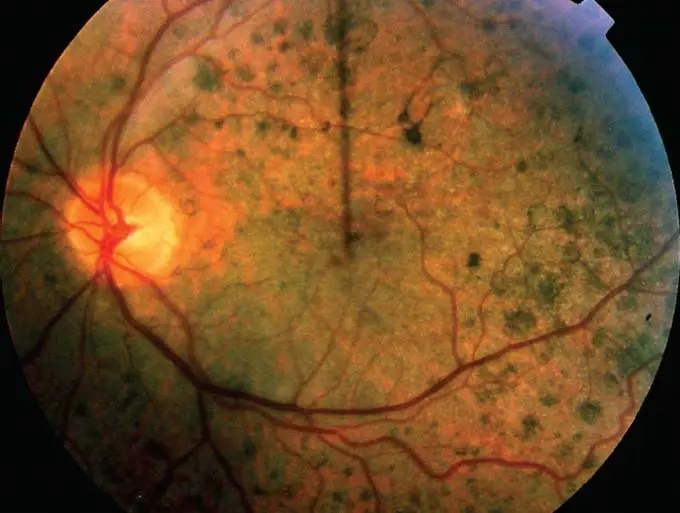
A male neonate is being examined by a pediatrician. His mother informs the doctor that she had a mild fever with rash, muscle pain, and swollen and tender lymph nodes during the second month of gestation. The boy was born at 39 weeks gestation via spontaneous vaginal delivery with no prenatal care. On physical examination, the neonate has normal vital signs. Retinal examination reveals the findings shown in the image. Which of the following congenital heart defects is most likely to be present in this neonate?
A 9-year-old boy is brought to the office due to exertional dyspnea and fatigability. He tires easily when walking or playing. His parents say that he was diagnosed with a congenital heart disease during his infancy, but they refused any treatment. They do not remember much about his diagnosis. The patient also had occasional respiratory infections throughout childhood that did not require hospitalization. He takes no medications. The patient has no family history of heart disease. His vital signs iclude: heart rate 98/min, respiratory rate 16/min, temperature 37.2°C (98.9°F), and blood pressure of 110/80 mm Hg. Physical examination shows toe cyanosis and clubbing but no finger abnormalities. Cardiac auscultation reveals a continuous machine-like murmur. All extremity pulses are full and equal. Which of the following is the most likely diagnosis?
A 4-year-old male is brought into your office because his mother states he has been fatigued. He has not been acting like himself and has been getting tired easily while running around and playing with other children. As of last week, he has also been complaining of being short of breath. His vitals are temperature 98.6 deg F (37.2 deg C), blood pressure 100/75 mmHg, pulse 98/min, and respirations 22/min. On exam, the patient is short of breath, and there is a holosystolic murmur with an appreciable thrill along the left sternal border. There are no other noticeable abnormalities, and the mother states that the child's prenatal course along with genetic testing was normal. What is the most likely diagnosis?
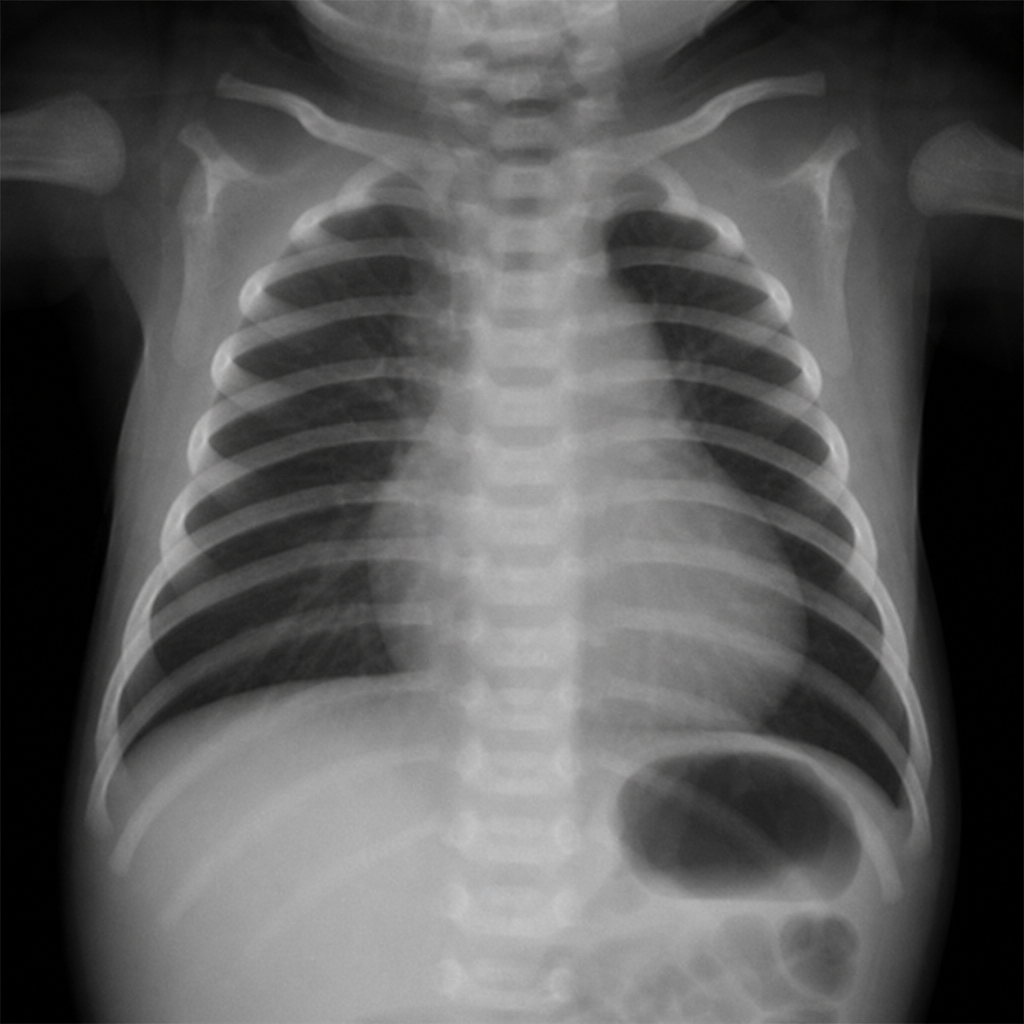
A 5-year-old child has central cyanosis and episodes of worsening cyanosis during exertion that improve when he squats. Examination shows digital clubbing, a right ventricular heave, a single S2, and a harsh systolic ejection murmur at the left upper sternal border. The chest radiograph shown was obtained during an unrelated evaluation of enteric tubing; it shows no pulmonary edema or focal lung disease. Which congenital heart defect most likely explains the child's clinical findings?
One day after doctors helped a 28-year-old primigravid woman deliver a 4700 g (10 lb 6 oz) boy, he has bluish discoloration of his lips and fingernails. Oxygen saturation on room air is 81%. Examination shows central cyanosis. A continuous machine-like murmur is heard over the left upper sternal border. A single S2 heart sound is present. Supplemental oxygen does not improve the cyanosis. Echocardiography shows the pulmonary artery arising from the posterior left ventricle and the aorta arising from the right ventricle with active blood flow between the right and left ventricles. Further evaluation of the mother is most likely to show which of the following?
A newborn male is evaluated 30 minutes after birth. He was born at 38 weeks gestation to a 39-year-old gravida 3 via vaginal delivery. The pregnancy was complicated by gestational diabetes, and the patient’s mother received routine prenatal care. The family declined all prenatal testing, including an anatomy ultrasound. The patient’s two older siblings are both healthy. Upon delivery, the patient appeared well and had good respiratory effort. He was noted to have acrocyanosis, and his Apgar scores were 8 and 9 at one and five minutes of life, respectively. The patient’s birth weight is 3840 g (8 lb 7 oz). His temperature is 98.7°F (37.1°C), blood pressure is 66/37 mmHg, pulse is 142/min, and respirations are 34/min. On physical exam, the patient has low-set ears, upslanting palpebral fissures, and a hypoplastic fifth finger. Which of the following is most likely to be found in this patient?
A 6-year-old boy is brought in for evaluation by his adopted mother due to trouble starting 1st grade. His teacher has reported that he has been having trouble focusing on tasks and has been acting out while in class. His family history is unknown as he was adopted 2 years ago. His temperature is 36.2°C (97.2°F), pulse is 80/min, respirations are 20/min, and blood pressure 110/70 mm Hg. Visual inspection of the boy's face shows a low set nasal bridge, a smooth philtrum, and small lower jaw. Which of the following findings would also likely be found on physical exam?
A 5-month-old boy is brought to the emergency department by his mother because his lips turned blue for several minutes while playing earlier that evening. She reports that he has had similar episodes during feeding that resolved quickly. He was born at term following an uncomplicated pregnancy and delivery. He is at the 25th percentile for length and below the 5th percentile for weight. His temperature is 37°C (98.6°F), pulse is 130/min, blood pressure is 83/55 mm Hg, and respirations are 42/min. Pulse oximetry on room air shows an oxygen saturation of 90%. During the examination, he sits calmly in his mother's lap. He appears well. The patient begins to cry when examination of his throat is attempted; his lips and fingers begin to turn blue. Further evaluation of this patient is most likely to show which of the following?
A 1-day-old infant in the general care nursery, born at full term by uncomplicated cesarean section delivery, is noted to have a murmur, but otherwise appears well. On examination, respiratory rate is 40/min and pulse oximetry is 96%. Precordium is normoactive. With auscultation, S1 is normal, S2 is single, and a 2/6 systolic ejection murmur is heard at the left upper sternal border. Echocardiography shows infundibular pulmonary stenosis, overriding aorta, ventricular septal defect and concentric right ventricular hypertrophy. Which of the following correlate with the presence or absence of cyanosis in this baby?
A 4-day-old male infant is brought to the physician because of respiratory distress and bluish discoloration of his lips and tongue. He was born at term and the antenatal period was uncomplicated. His temperature is 37.3°C (99.1°F), pulse is 170/min, respirations are 65/min, and blood pressure is 70/46 mm Hg. Pulse oximetry on room air shows an oxygen saturation of 82%. A grade 3/6 holosystolic murmur is heard over the left lower sternal border. A single S2 that does not split with respiration is present. Echocardiography shows defects in the interatrial and interventricular septae, as well as an imperforate muscular septum between the right atrium and right ventricle. Further evaluation of this patient is most likely to show which of the following?
Want unlimited practice?
Get full access to all questions, explanations, and performance tracking.
Scan to download app