
Osteosarcoma — MCQs

A 62-year-old retired professor comes to the clinic with the complaints of back pain and increasing fatigue over the last 4 months. For the past week, his back pain seems to have worsened. It radiates to his legs and is burning in nature, 6/10 in intensity. There is no associated tingling sensation. He has lost 4.0 kg (8.8 lb) in the past 2 months. There is no history of trauma. He has hypertension which is well controlled with medications. Physical examination is normal. Laboratory studies show normocytic normochromic anemia. Serum calcium is 12.2 mg/dL and Serum total proteins is 8.8 gm/dL. A serum protein electrophoresis shows a monoclonal spike. X-ray of the spine shows osteolytic lesions over L2–L5 and right femur. A bone marrow biopsy reveals plasmacytosis. Which of the following is the most preferred treatment option?
An investigator studying targeted therapy in patients with gastrointestinal stromal tumors requires a reliable test to determine the spatial distribution of CD117-positive cells in biopsy specimens. Which of the following is the most appropriate test?
A 12-year-old Caucasian male presents with his mother to the pediatrician’s office complaining of right thigh pain. He reports that he has noticed slowly progressive pain and swelling over the distal aspect of his right thigh over the past two months. He denies any recent trauma to the area and his temperature is 100.9°F (38.3°C). On exam, there is swelling and tenderness overlying the distal right femoral diaphysis. Laboratory evaluation is notable for an elevated white blood cell (WBC) count and elevated erythrocyte sedimentation rate (ESR). A radiograph of the patient’s right leg is shown. Biopsy of the lesion demonstrates sheets of monotonous small round blue cells with minimal cytoplasm. Which of the following genetic mutations is most likely associated with this patient’s condition?
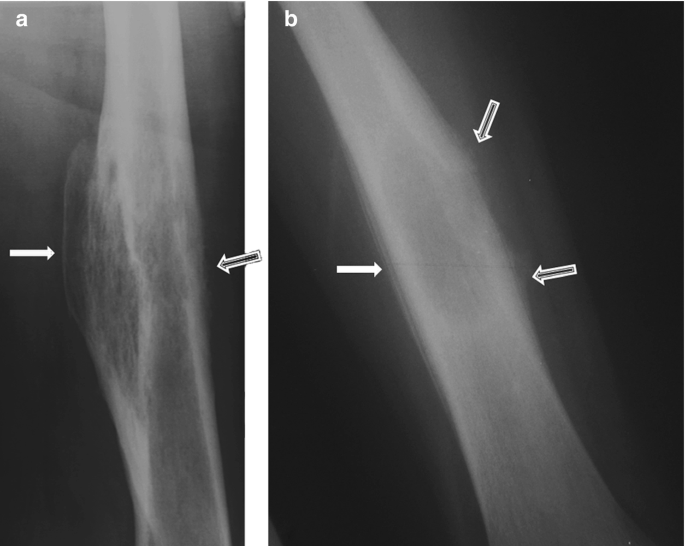
A 38-year-old woman seeks evaluation at the emergency room for sudden onset of pain and swelling of her left leg since last night. Her family history is significant for maternal breast cancer (diagnosed at 52 years of age) and a grandfather with bronchioloalveolar carcinoma of the lungs at 45 years of age. When the patient was 13 years old, she was diagnosed with osteosarcoma of the right distal femur that was successfully treated with surgery. The physical examination shows unilateral left leg edema and erythema that was tender to touch and warm. Homan's sign is positive. During the abdominal examination, you also notice a large mass in the left lower quadrant that is firm and fixed with irregular borders. Proximal leg ultrasonography reveals a non-compressible femoral vein and the presence of a thrombus after color flow Doppler evaluation. Concerned about the association between the palpable mass and a thrombotic event in this patient, you order an abdominal CT scan with contrast that reports a large left abdominopelvic cystic mass with thick septae consistent with ovarian cancer, multiple lymph node involvement, and ascites. Which of the following genes is most likely mutated in this patient?
A 5-year-old boy is brought to the pediatric clinic for evaluation of fever, pain, swelling in the left leg, and limping. Review of systems and history is otherwise unremarkable. The vital signs include: pulse 110/min, temperature 38.1°C (100.6°F), and blood pressure 100/70 mm Hg. On examination, there is a tender swelling over the lower part of his left leg. Which 1 of the following X-ray findings is most suggestive of Ewing’s sarcoma?
A 13-month-old boy with sickle cell anemia is brought to the emergency department because of continuous crying and severe left-hand swelling. His condition started 2 hours earlier without any preceding trauma. The child was given diclofenac syrup at home with no relief. The temperature is 37°C (98.6°F), blood pressure is 100/60 mm Hg, and pulse is 100/min. The physical examination reveals swelling and tenderness to palpation of the left hand. The hemoglobin level is 10.4 g/dL. Which of the following is the best initial step in management of this patient condition?
A 1-month-old boy is brought to the physician because of a 5-day history of generalized fatigue and multiple episodes of vomiting which is most pronounced after formula feeding. His vomiting progressed from 2–3 episodes on the first day to 6–8 episodes at present. The vomitus is whitish in color. The mother reports that he has been very hungry after each episode of vomiting. The patient was born at 38 weeks' gestation and weighed 3100 g (6 lb 13 oz); he currently weighs 3500 g (7 lb 11 oz). He appears irritable. His temperature is 37.1°C (98.8°F), pulse is 130/min, respirations are 43/min, and blood pressure is 74/36 mm Hg. Examination shows dry mucous membranes. The abdomen is soft and not distended. There is a round mass palpable in the epigastric region. The liver is palpated 1 cm below the right costal margin. Laboratory studies show: Hemoglobin 15.3 g/dL Leukocyte count 6300/mm3 Platelet count 230,000/mm3 Serum Na+ 133 mEq/L K+ 3.4 mEq/L Cl- 92 mEq/L Glucose 77 mg/dL Creatinine 1.0 mg/dL A urinalysis shows a decreased pH. Which of the following is the most appropriate next step in the management of this patient?
A newborn is delivered at 38 weeks gestation to a 28-year-old mother via spontaneous vaginal delivery. On examination in the delivery room, the infant has upslanting palpebral fissures, a flat nasal bridge, a single palmar crease bilaterally, and marked hypotonia. A harsh holosystolic murmur is heard at the left lower sternal border. The pediatric cardiology team is notified. Which of the following chromosomal findings is most consistent with this clinical presentation?
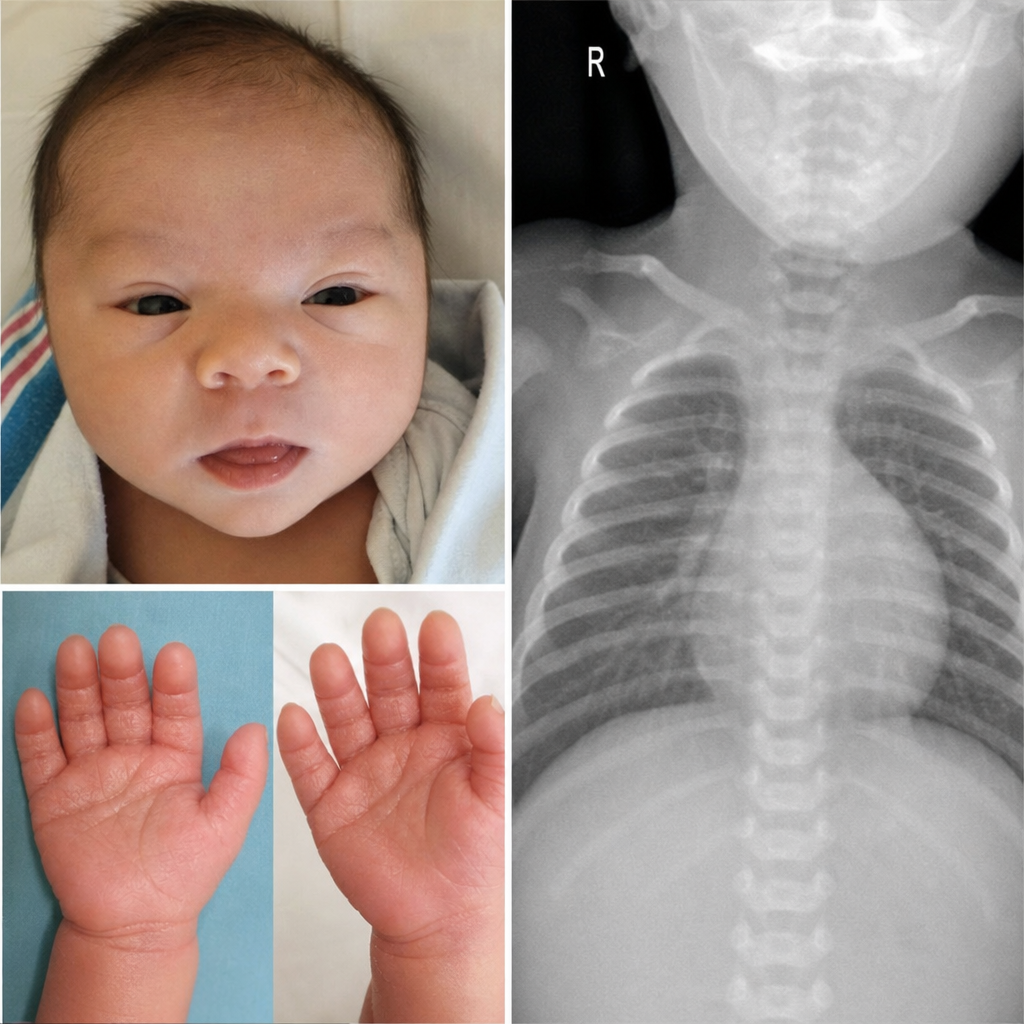
A 4-year-old boy with Down syndrome presents with fatigue and recurrent infections. CBC shows WBC 150,000/μL with 90% myeloblasts, hemoglobin 6.5 g/dL, platelets 15,000/μL. Flow cytometry confirms acute myeloid leukemia with megakaryoblastic features (AMKL). The parents are concerned about treatment intensity given their child's baseline developmental delays and increased treatment-related toxicity risk in Down syndrome. Evaluate the treatment approach considering the unique biology and competing risks.
A 15-year-old boy presents with right distal femur pain and a palpable mass. X-ray shows a mixed lytic-sclerotic lesion with periosteal elevation creating a Codman triangle and sunburst pattern. Biopsy confirms osteosarcoma. Staging shows pulmonary micrometastases. Alkaline phosphatase is markedly elevated. The family requests consideration of alternative therapies and limb salvage options. Synthesize the treatment plan addressing oncologic outcomes and functional preservation.
Want unlimited practice?
Get full access to all questions, explanations, and performance tracking.
Scan to download app