
Ewing sarcoma — MCQs

A 24-year-old man is brought to the physician because of increasing pain and swelling of the left knee for 2 months. The pain has awoken him from his sleep on multiple occasions. He tried ibuprofen but has had no relief of his symptoms. There is no family or personal history of serious illness. Vital signs are within normal limits. On examination, the left knee is mildly swollen and tender; range of motion is limited by pain. An x-ray of the left knee is shown. Which of the following is the most likely diagnosis?
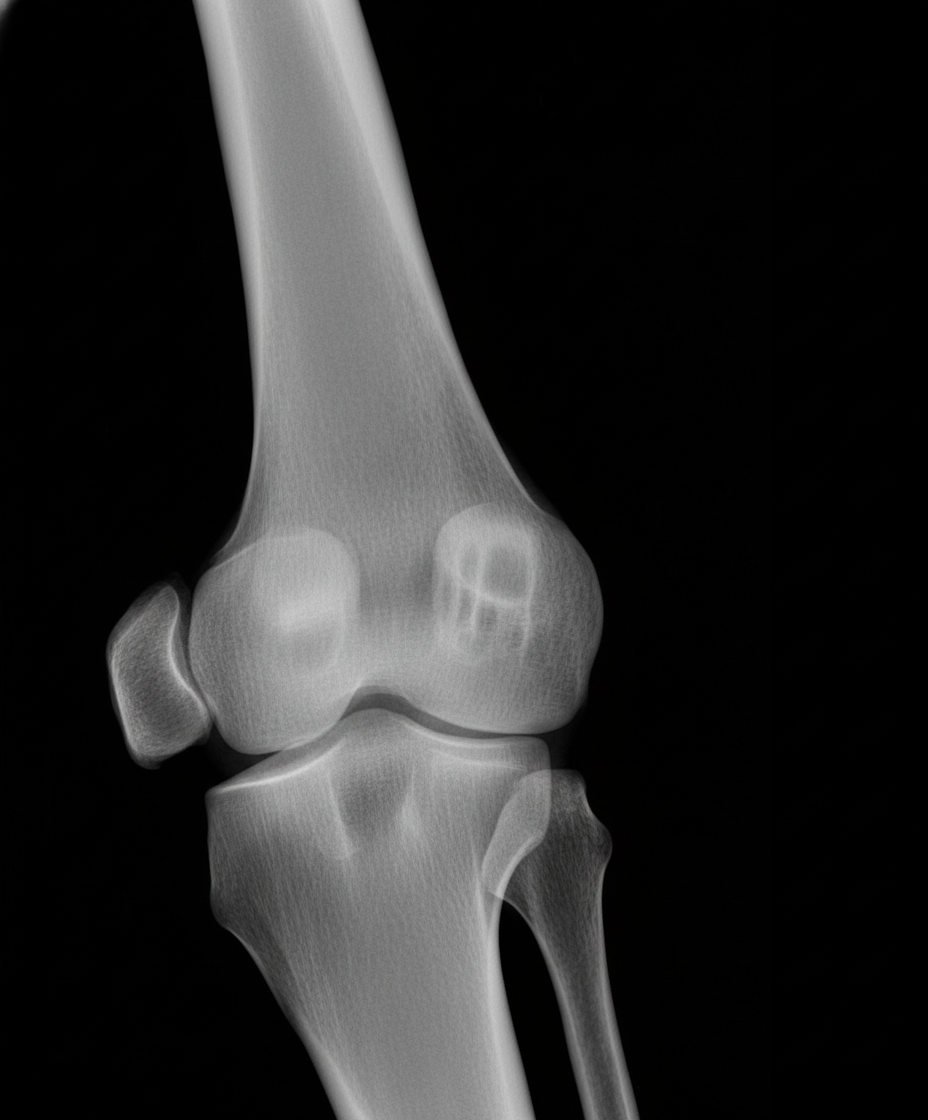
A 17-year-old boy is brought to the physician because of progressive right knee pain for the past 3 months. He reports that the pain is worse at night and while doing sports at school. He has not had any trauma to the knee or any previous problems with his joints. His vital signs are within normal limits. Examination of the right knee shows mild swelling and tenderness without warmth or erythema; the range of motion is limited. He walks with an antalgic gait. Laboratory studies show an alkaline phosphatase of 180 U/L and an erythrocyte sedimentation rate of 80 mm/h. An x-ray of the right knee is shown. Which of the following is the most likely diagnosis?
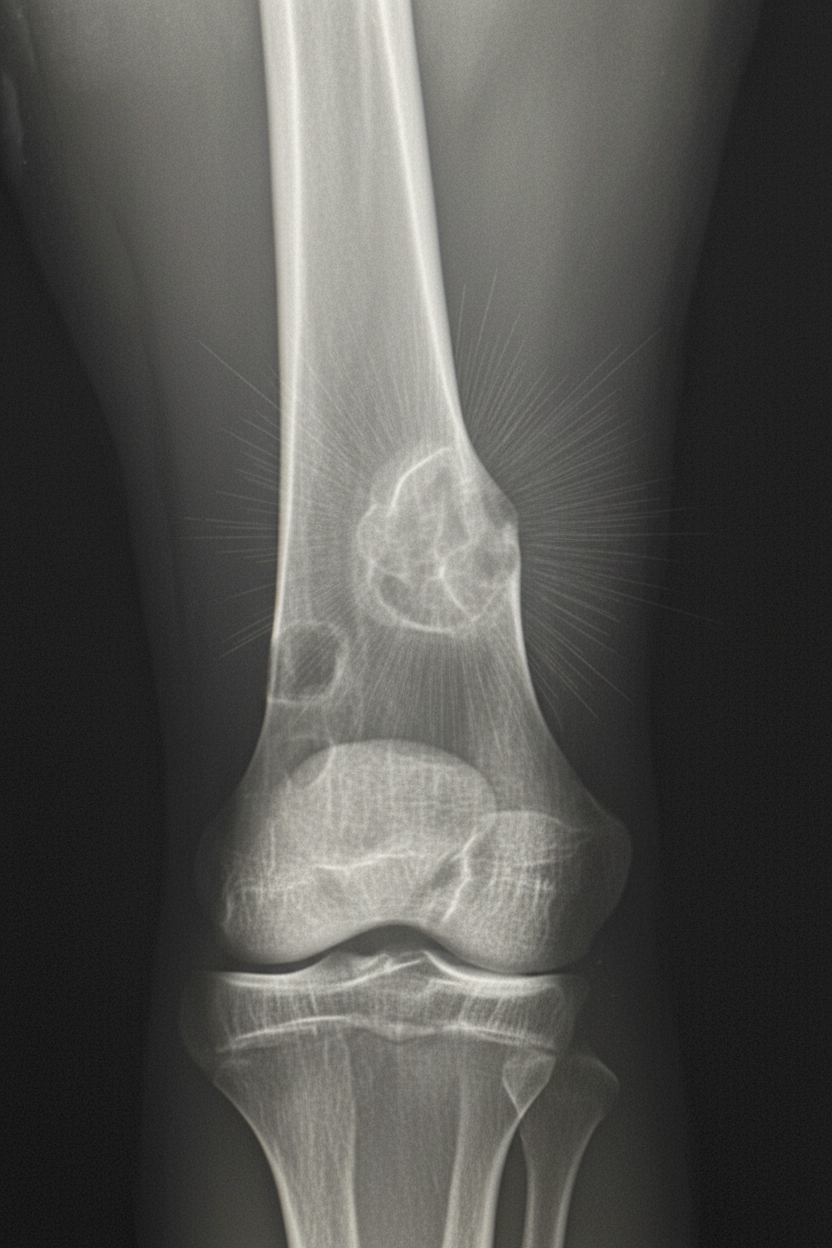
A 55-year-old male presents to his primary care physician complaining of right hip pain for the past eight months. He also reports progressive loss of hearing over the same time period. Radiographic imaging reveals multiple areas of expanded bony cortices and coarsened trabeculae in his right hip and skull. Laboratory analysis reveals an isolated elevation in alkaline phosphatase with normal levels of serum calcium and phosphate. Which of the following histologic findings is most likely to be seen if one of the lesions were biopsied?
An investigator is studying DNA repair processes in an experimental animal. The investigator inactivates a gene encoding a protein that physiologically excises nucleotides from damaged, bulky, helix-distorting DNA strands. A patient with a similar defect in this gene is most likely to present with which of the following findings?
A 12-year-old Caucasian male presents with his mother to the pediatrician’s office complaining of right thigh pain. He reports that he has noticed slowly progressive pain and swelling over the distal aspect of his right thigh over the past two months. He denies any recent trauma to the area and his temperature is 100.9°F (38.3°C). On exam, there is swelling and tenderness overlying the distal right femoral diaphysis. Laboratory evaluation is notable for an elevated white blood cell (WBC) count and elevated erythrocyte sedimentation rate (ESR). A radiograph of the patient’s right leg is shown. Biopsy of the lesion demonstrates sheets of monotonous small round blue cells with minimal cytoplasm. Which of the following genetic mutations is most likely associated with this patient’s condition?
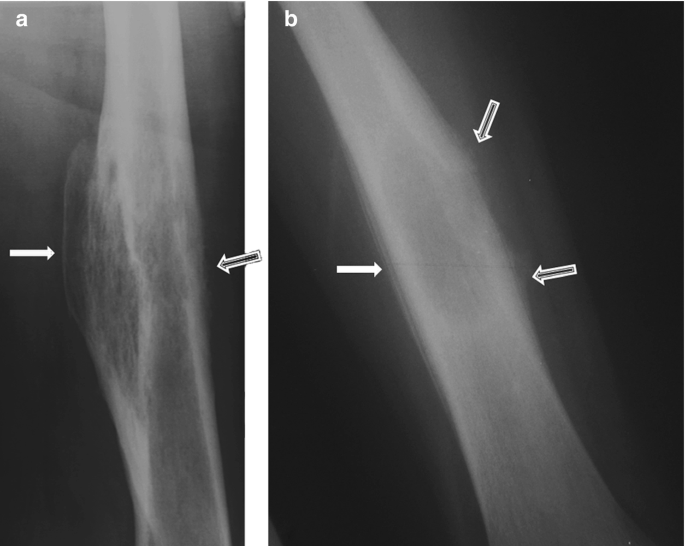
A 5-year-old boy is brought to the pediatric clinic for evaluation of fever, pain, swelling in the left leg, and limping. Review of systems and history is otherwise unremarkable. The vital signs include: pulse 110/min, temperature 38.1°C (100.6°F), and blood pressure 100/70 mm Hg. On examination, there is a tender swelling over the lower part of his left leg. Which 1 of the following X-ray findings is most suggestive of Ewing’s sarcoma?
An 18-month-old boy is brought to the doctor’s office for evaluation of abdominal pain. The boy looks emaciated and he is now significantly below his growth chart predicted weight. The family history is non-contributory. The vital signs are unremarkable. On physical examination, a non-tender mass is felt in the upper part of the abdomen. A magnetic resonance image (MRI) scan of his abdomen demonstrates a mass in his right adrenal gland. Biopsy of the mass demonstrates an abundance of small round blue cells. With this biopsy result, which 1 of the following findings would confirm the diagnosis?
A newborn is delivered at 38 weeks gestation to a 28-year-old mother via spontaneous vaginal delivery. On examination in the delivery room, the infant has upslanting palpebral fissures, a flat nasal bridge, a single palmar crease bilaterally, and marked hypotonia. A harsh holosystolic murmur is heard at the left lower sternal border. The pediatric cardiology team is notified. Which of the following chromosomal findings is most consistent with this clinical presentation?
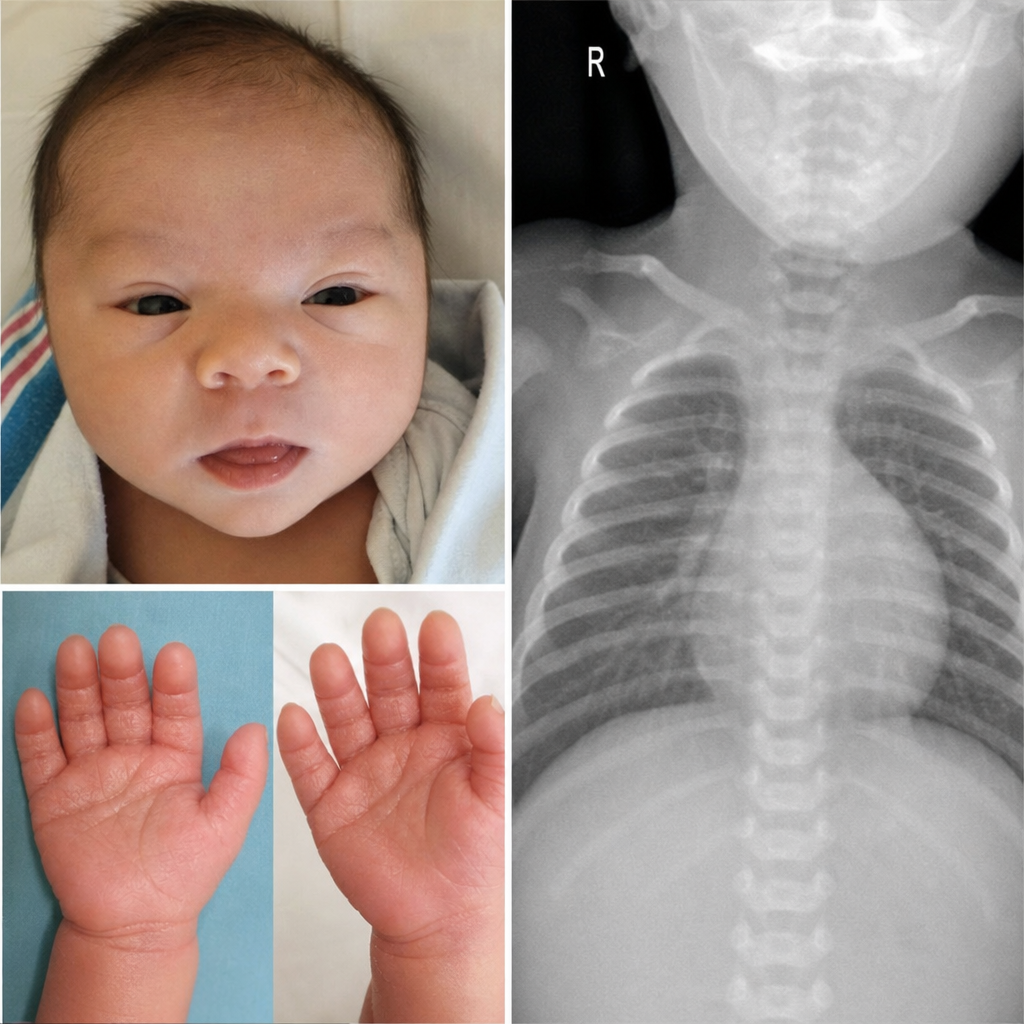
A 4-year-old boy with Down syndrome presents with fatigue and recurrent infections. CBC shows WBC 150,000/μL with 90% myeloblasts, hemoglobin 6.5 g/dL, platelets 15,000/μL. Flow cytometry confirms acute myeloid leukemia with megakaryoblastic features (AMKL). The parents are concerned about treatment intensity given their child's baseline developmental delays and increased treatment-related toxicity risk in Down syndrome. Evaluate the treatment approach considering the unique biology and competing risks.
A 15-year-old boy presents with right distal femur pain and a palpable mass. X-ray shows a mixed lytic-sclerotic lesion with periosteal elevation creating a Codman triangle and sunburst pattern. Biopsy confirms osteosarcoma. Staging shows pulmonary micrometastases. Alkaline phosphatase is markedly elevated. The family requests consideration of alternative therapies and limb salvage options. Synthesize the treatment plan addressing oncologic outcomes and functional preservation.
Want unlimited practice?
Get full access to all questions, explanations, and performance tracking.
Scan to download app