
Peripheral nerve disorders — MCQs

A patient presents with difficulty extending their wrist following trauma to the posterior forearm. Which of the following muscles would be most affected by injury to the posterior interosseous nerve?
A 33-year-old African American woman presents to the office complaining of blurry vision and headache for the past 2 weeks. She states that she has not been feeling herself lately and also fell down once after a dizzy episode. Her medical history is remarkable for hypertension and pulmonary sarcoidosis treated with hydralazine and prednisone respectively. She had a recent bout of acute optic neuritis, requiring high-dose IV methylprednisolone. Her temperature is 37°C (98.6°F), the blood pressure is 112/76 mm Hg, the pulse is 78/min, and the respirations are 14/min. On examination, the patient is mildly disoriented. Head and neck examination reveals a soft, supple neck and a right-sided facial droop. There is 5/5 muscle strength in all extremities. VDRL test is negative. A head MRI is pending. What is the most appropriate next step in the management of this patient?
A 35-year-old man is brought to the trauma bay by ambulance after sustaining a gunshot wound to the right arm. The patient is in excruciating pain and states that he can't move or feel his hand. The patient states that he has no other medical conditions. On exam, the patient's temperature is 98.4°F (36.9°C), blood pressure is 140/86 mmHg, pulse is 112/min, and respirations are 14/min. The patient is alert and his Glasgow coma scale is 15. On exam, he has a single wound on his right forearm without continued bleeding. The patient has preserved motor and sensation in his right elbow; however, he is unable to extend his wrist or extend his fingers further. He is able to clench his hand, but this is limited by pain. On sensory exam, the patient has no sensation to the first dorsal web space but has preserved sensation on most of the volar surface. Which of the following structures is most likely injured?
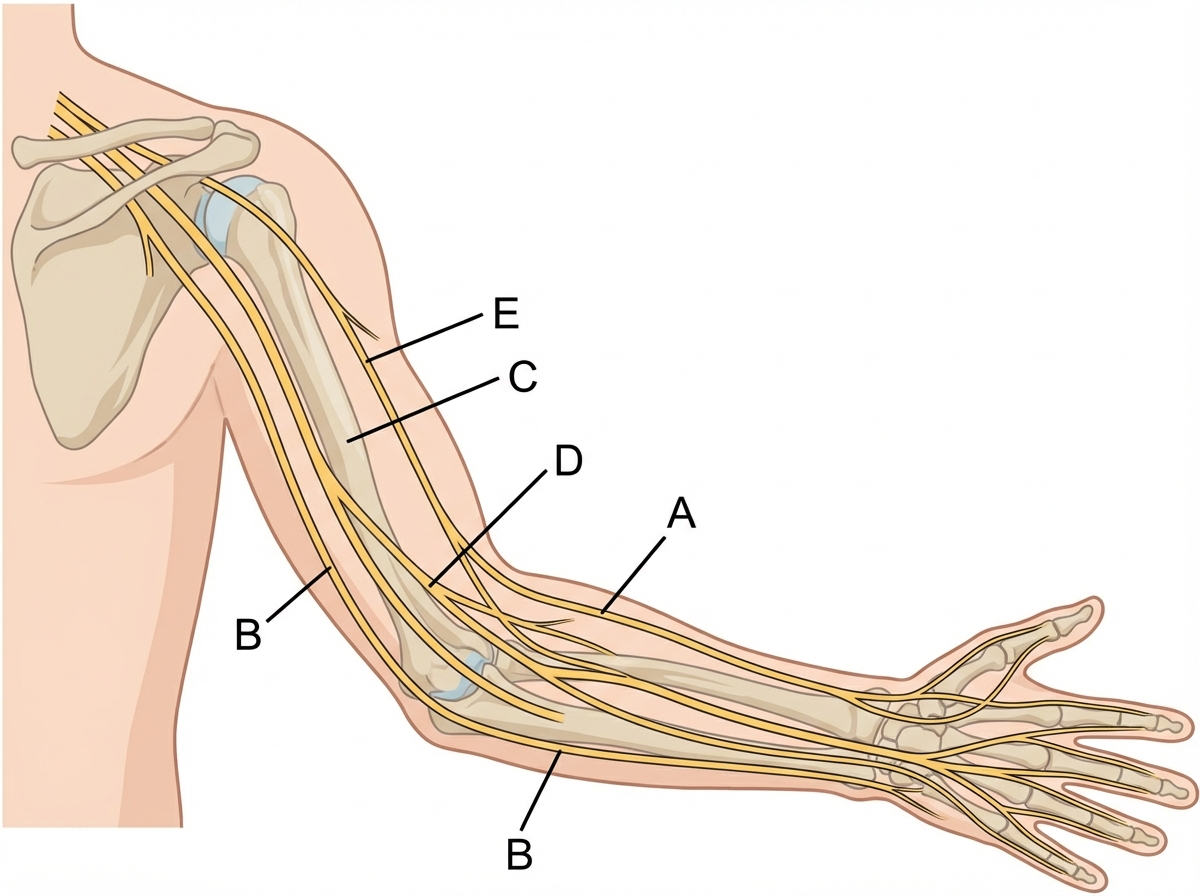
A 52-year-old female with a history of poorly-controlled diabetes presents to her primary care physician because of pain and tingling in her hands. These symptoms began several months ago and have been getting worse such that they interfere with her work as a secretary. She says that the pain is worse in the morning and she has been woken up at night by the pain. The tingling sensations have been located primarily in the thumb, index and middle fingers. On physical exam atrophy of the thenar eminence is observed and the pain is reproduced when the wrist is maximally flexed. The most likely cause of this patient's symptoms affects which of the nerves shown in the image provided?
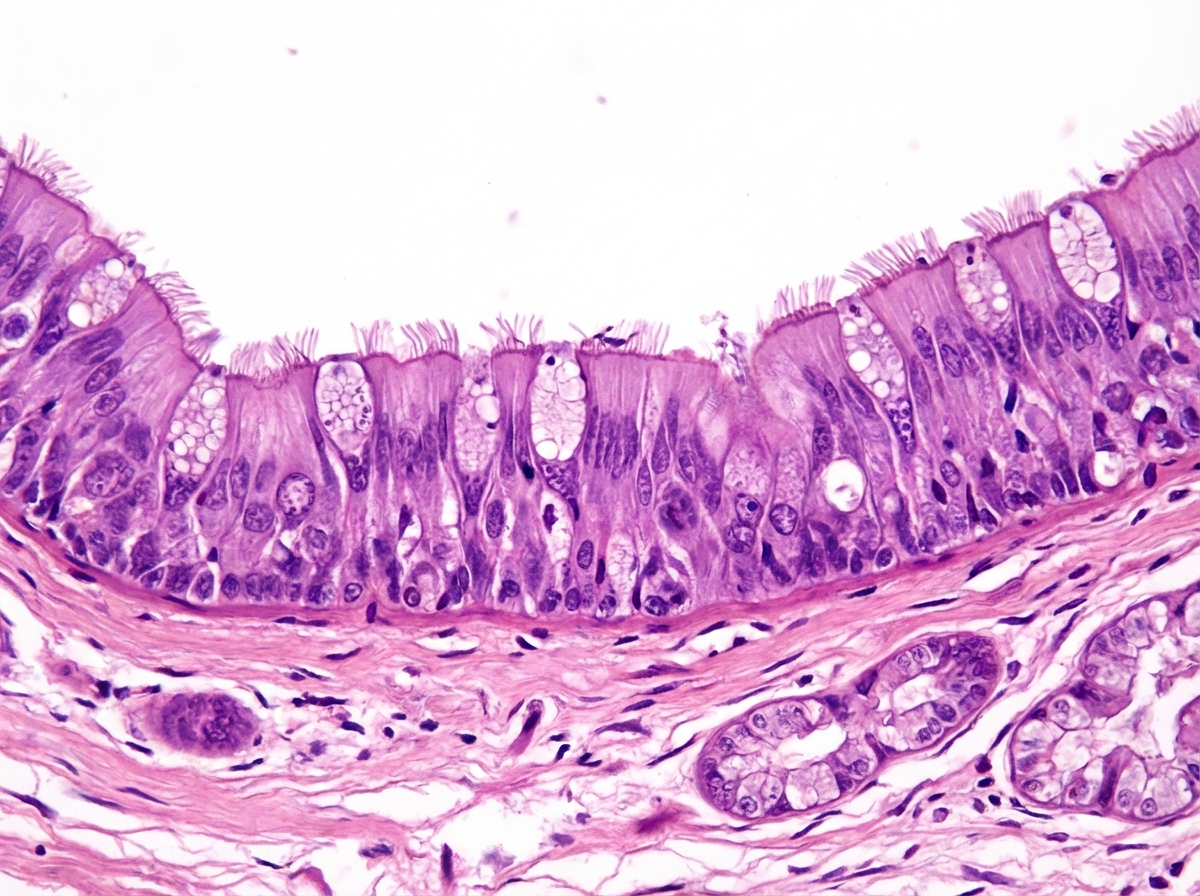
A research team is studying certain congenital anomalies of the respiratory tract. The method consists of marking a certain germinal layer with an isotope, following its development stages in chicken embryos, and finally analyzing the specimen. A given specimen of tissue is presented in the exhibit. Which of the following germinal structures most likely gave rise to the epithelial lining of this specimen?
A 55-year-old man presents with burning and shooting in his feet and lower legs, which becomes more severe at night. In the past 6 months, the pain has become much worse and disturbs his sleep. He has a history of type 2 diabetes mellitus and essential hypertension. Which of the following best represent the etiology of this patient’s condition?
A 27-year-old woman comes to the emergency department because of progressive numbness and weakness in her left arm and left leg for 2 days. During this period, she has also had urinary urgency and incontinence. Three months ago, she had blurry vision, difficulty distinguishing colors, and headache for one week, all of which have resolved. The patient has smoked a half pack of cigarettes daily for 10 years and drinks four glasses of wine each week. Her temperature is 37°C (98.6°F), pulse is 78/min, respirations are 14/min, and blood pressure is 110/68 mm Hg. Examination shows 3/5 strength in the left arm and leg, and 5/5 strength on the right side. Upon flexion of the neck, the patient experiences a shooting electric sensation that travels down the spine. MRI of the brain shows gadolinium-enhancing lesions in the right central sulcus, cervical spinal cord, and optic nerve. Which of the following is the most appropriate next step in the management of this patient?
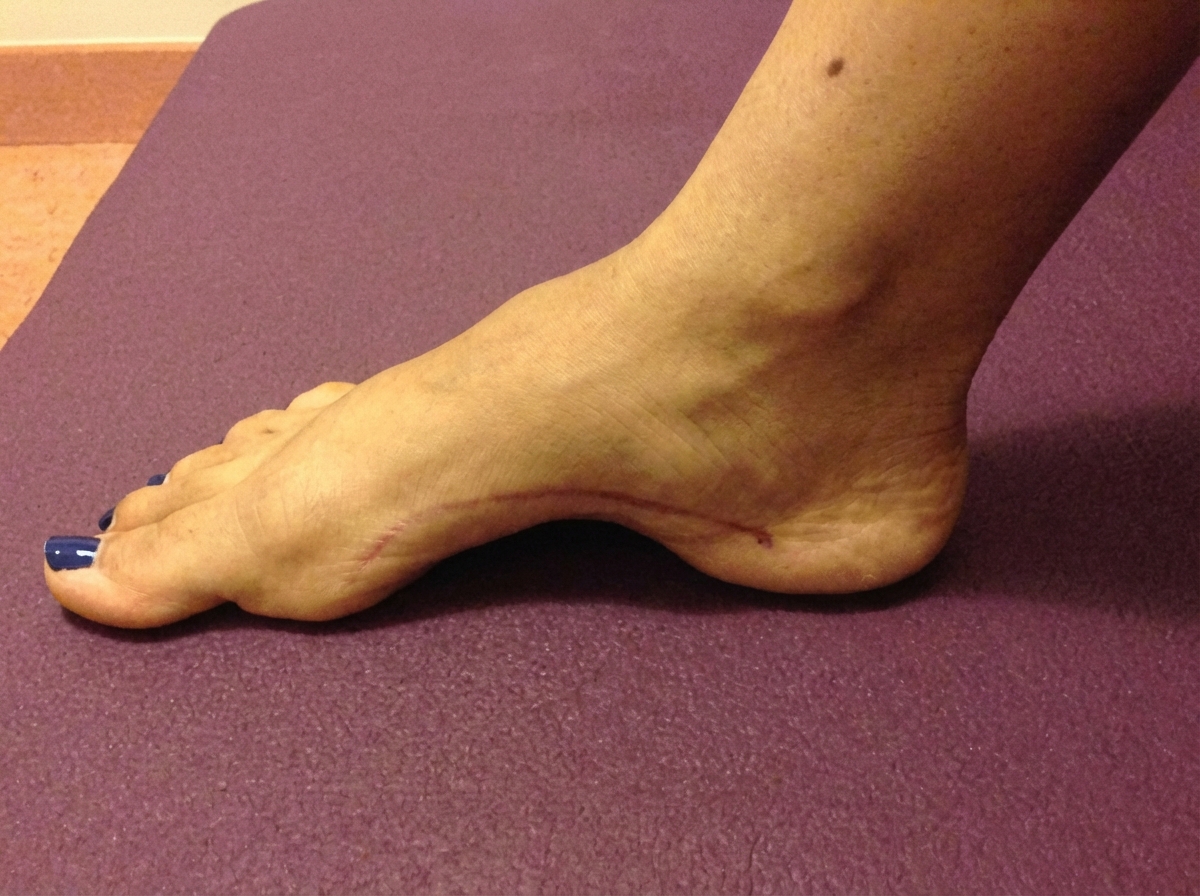
A 35-year-old man presents to the primary care office with a recent history of frequent falls. He had been able to walk normally until about a year ago when he started noticing that both of his legs felt weak. He's also had some trouble with feeling in his feet. These 2 problems have caused multiple falls over the last year. On physical exam, he has notable leg and foot muscular atrophy and 4/5 strength throughout his bilateral lower extremities. Sensation to light touch and pinprick is absent up to the mid-calf. Ankle jerk reflex is absent bilaterally. A photo of the patient's foot is shown. Which of the following best describes the etiology of this patient's condition?
A 54-year-old man is brought to the emergency department because of progressive tingling and weakness in both of his legs for the past two days. The patient reports that his symptoms interfere with his ability to walk. Two weeks ago, he had an upper respiratory tract infection, which resolved spontaneously. His vital signs are within normal limits. Examination shows weakness in the lower extremities with absent deep tendon reflexes. Reflexes are 1+ in the upper extremities. Sensation to pinprick and light touch is intact. Romberg's test is negative. Laboratory studies show a leukocyte count of 12,000/mm3. Cerebrospinal fluid analysis results show: Opening pressure normal Protein 200 mg/dL Glucose 70 mg/dL White blood cells 4/mm3 This patient is at increased risk for which of the following conditions?
A 67-year-old man presents with pain in both legs. He says the pain is intermittent in nature and has been present for approximately 6 months. The pain increases with walking, especially downhill, and prolonged standing. It is relieved by lying down and leaning forward. Past medical history is significant for type 2 diabetes mellitus, hypercholesterolemia, and osteoarthritis. The patient reports a 56-pack-year history but denies any alcohol or recreational drug use. His vital signs include: blood pressure 142/88 mm Hg, pulse 88/min, respiratory rate 14/min, temperature 37°C (98.6°F). On physical examination, the patient is alert and oriented. Muscle strength is 5/5 in his upper and lower extremities bilaterally. Babinski and Romberg tests are negative. Pulses measure 2+ in upper and lower extremities bilaterally. Which of the following is the next best step in the management of this patient?
Want unlimited practice?
Get full access to all questions, explanations, and performance tracking.
Scan to download app