
Atelectasis — MCQs

A 70-year-old man presents to the clinic with right-sided chest pain and difficulty breathing for the past 10 days. When it began, the pain was mild, but as time went on, it increased to a level at which the man found it difficult to breathe. Two years ago, he was diagnosed with clear cell carcinoma of the kidney. Vital signs include: pulse rate is 72/min, blood pressure is 122/80 mm Hg, respiratory rate is 16/min, and temperature is 37.0°C (98.6°F). On physical examination, the trachea appears to have deviated to the left, respiratory movements are diminished, there is decreased resonance on percussion, and there is an absence of breath sounds over the right hemithorax. Which of the following is the most likely clinical diagnosis in this patient?
A 60-year-old man presents to the emergency department complaining of worsening exertional dyspnea over the last week. He denies chest pain and lightheadedness but reports persistent cough with white sputum. His past medical history includes hypertension and diabetes mellitus. He has a 50 pack-year history of smoking but denies any illicit drug use or alcohol consumption. His temperature is 101°F (38.3°C), blood pressure is 154/104 mmHg, pulse is 110/min, respirations are 26/min, and oxygen saturation is 88% on a non-rebreather mask. Physical exam is notable for an obese man in distress. The anteroposterior diameter of the patient's chest is increased, and he has decreased breath sounds bilaterally with diffuse expiratory wheezing. Which of the following is the best next step in management?
Five weeks after delivery, a 1350-g (3-lb 0-oz) male newborn has respiratory distress. He was born at 26 weeks' gestation. He required intubation and mechanical ventilation for a month following delivery and has been on noninvasive pressure ventilation for 5 days. His temperature is 36.8°C (98.2°F), pulse is 148/min, respirations are 63/min, and blood pressure is 60/32 mm Hg. Pulse oximetry on 40% oxygen shows an oxygen saturation of 91%. Examination shows moderate intercostal and subcostal retractions. Scattered crackles are heard in the thorax. An x-ray of the chest shows diffuse granular densities and basal atelectasis. Which of the following is the most likely diagnosis?
A 57-year-old man presents to the clinic for a chronic cough over the past 4 months. The patient reports a productive yellow/green cough that is worse at night. He denies any significant precipitating event prior to his symptoms. He denies fever, chest pain, palpitations, weight changes, or abdominal pain, but endorses some difficulty breathing that waxes and wanes. He denies alcohol usage but endorses a 35 pack-year smoking history. A physical examination demonstrates mild wheezes, bibasilar crackles, and mild clubbing of his fingertips. A pulmonary function test is subsequently ordered, and partial results are shown below: Tidal volume: 500 mL Residual volume: 1700 mL Expiratory reserve volume: 1500 mL Inspiratory reserve volume: 3000 mL What is the functional residual capacity of this patient?
A previously healthy 66-year-old woman comes to the physician because of a 3-day history of fever, cough, and right-sided chest pain. Her temperature is 38.8°C (101.8°F) and respirations are 24/min. Physical examination shows dullness to percussion, increased tactile fremitus, and egophony in the right lower lung field. The remainder of the examination shows no abnormalities. Which of the following is the most likely cause of these findings?
A 4-year-old girl is brought to the emergency department by her parents with a sudden onset of breathlessness. She has been having similar episodes over the past few months with a progressive increase in frequency over the past week. They have noticed that the difficulty in breathing is more prominent during the day when she plays in the garden with her siblings. She gets better once she comes indoors. During the episodes, she complains of an inability to breathe and her parents say that she is gasping for breath. Sometimes they hear a noisy wheeze while she breathes. The breathlessness does not disrupt her sleep. On examination, she seems to be in distress with noticeable intercostal retractions. Auscultation reveals a slight expiratory wheeze. According to her history and physical findings, which of the following mechanisms is most likely responsible for this child’s difficulty in breathing?
A previously healthy 46-year-old woman comes to the physician with a one-week history of productive cough and fatigue. Two weeks ago, she had fever, nasal congestion, rhinorrhea, and myalgias that resolved with supportive care. She has not traveled out of the United States. Pulmonary examination shows dullness to percussion and increased fremitus at the right middle lobe. An x-ray of the chest is shown. A sputum sample is most likely to show which of the following findings?
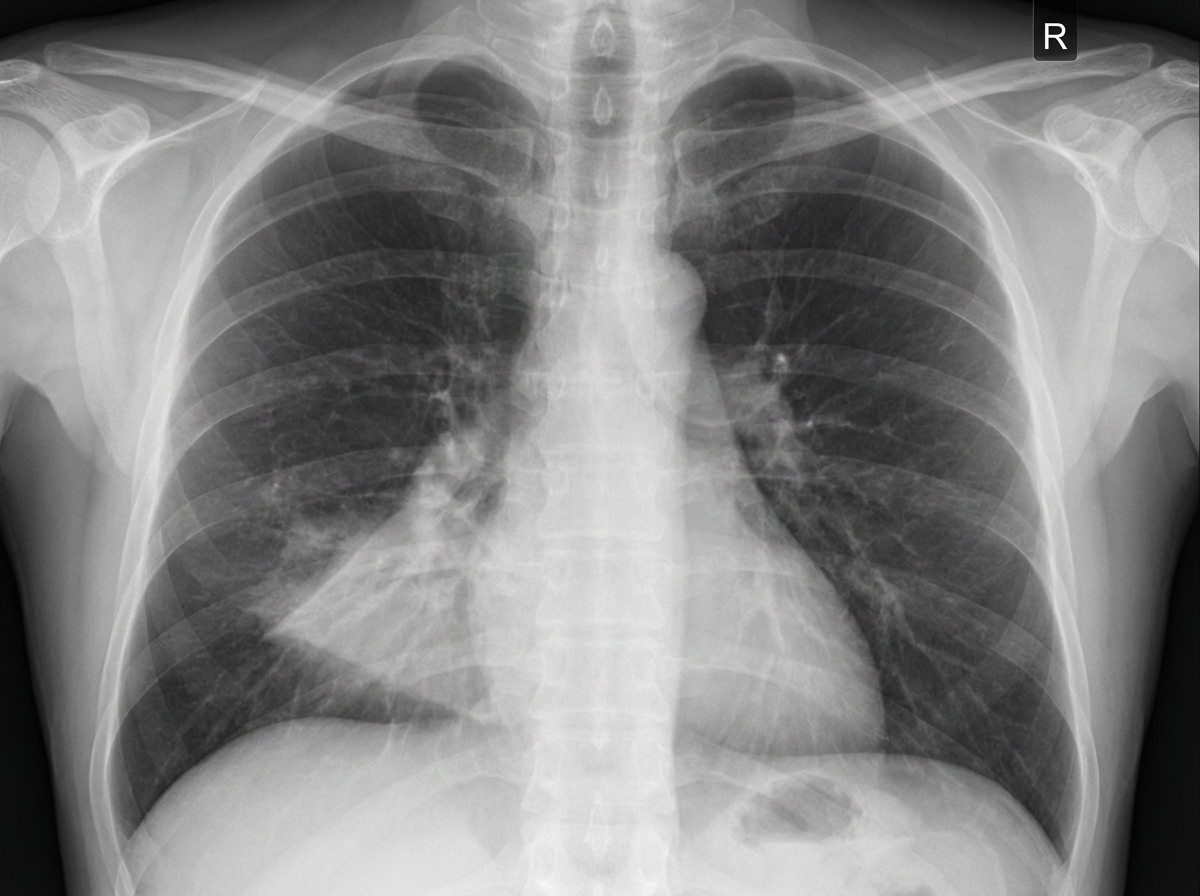
A 34-year-old man comes to the physician for a follow-up examination. He has a 3-month history of a nonproductive cough. He has been treated with diphenhydramine since his last visit 2 weeks ago, but his symptoms have persisted. He does not smoke. He drinks 3 beers on the weekends. He is 177 cm (5 ft 10 in) tall and weighs 100 kg (220.46 lbs); BMI is 35.1 kg/m2. His temperature is 37.1°C (98.8°F), pulse is 78/min, respirations are 14/min, and blood pressure is 130/80 mm Hg. Pulse oximetry on room air shows an oxygen saturation of 97%. Physical examination and an x-ray of the chest show no abnormalities. Which of the following is the most appropriate next step in management?
A 61-year-old man presents with gradually increasing shortness of breath. For the last 2 years, he has had a productive cough on most days. Past medical history is significant for hypertension and a recent admission to the hospital for pneumonia. He uses a triamcinolone inhaler and uses an albuterol inhaler as a rescue inhaler. He also takes lisinopril and a multivitamin daily. He has smoked a pack a day for the last 32 years and has no intention to quit now. Today, his blood pressure is 142/97 mm Hg, heart rate is 97/min, respiratory rate is 22/min, and temperature is 37.4°C (99.3°F). On physical exam, he has tachypnea and has some difficulty finishing his sentences. His heart has a regular rate and rhythm. Auscultation of his lungs reveals wheezing and rhonchi that improves after a deep cough. Fremitus is absent. Pulmonary function tests show FEV1/FVC of 55% with no change in FEV1 after albuterol treatment. Which of the following is the most likely pathology associated with this patient's disease?
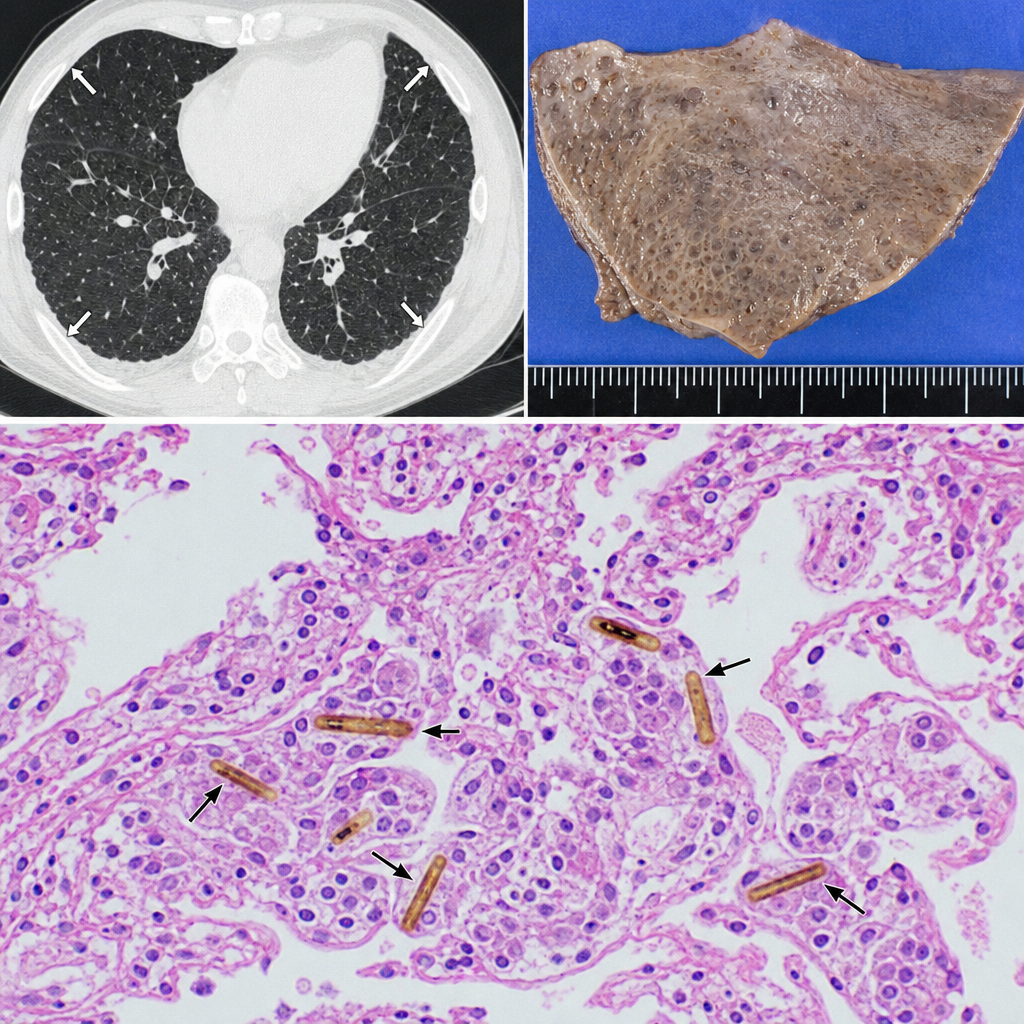
A 58-year-old man with a 40-pack-year smoking history presents with progressive dyspnea and a dry cough. Chest CT reveals bilateral pleural plaques. A wedge biopsy of the lung parenchyma is obtained. Histologic examination reveals elongated, beaded structures with a golden-brown iron-protein coat within macrophages and alveolar spaces, surrounded by mild interstitial fibrosis. Which of the following best describes the structure most characteristic of asbestos exposure identified in this biopsy?
Want unlimited practice?
Get full access to all questions, explanations, and performance tracking.
Scan to download app