A 31 year-old African-American female presents with painful shin nodules, uveitis, and calcified hilar lymph nodes. A transbronchial biopsy of the lung would most likely show which of the following histologies?
A 68-year-old male smoker dies suddenly in a car accident. He had smoked 2 packs per day for 40 years. His past medical history is notable for a frequent, very productive cough, recurrent respiratory infections and occasional wheezing. He had no other medical problems. At autopsy, which of the following is most likely to be found in this patient?
A 44-year-old man comes to the physician because of a 5-month history of persistent cough productive of thick, yellow sputum and worsening shortness of breath. One year ago, he had similar symptoms that lasted 4 months. He has smoked two packs of cigarettes daily for the past 20 years. Physical examination shows scattered expiratory wheezing and rhonchi throughout both lung fields. Microscopic examination of a lung biopsy specimen is most likely to show which of the following findings?
A 63-year-old man with alpha-1-antitrypsin deficiency is brought to the emergency department 1 hour after his daughter found him unresponsive. Despite appropriate care, the patient dies. At autopsy, examination of the lungs shows enlargement of the airspaces in the respiratory bronchioles and alveoli. Enzymatic activity of which of the following cells is the most likely cause of these findings?
A 60-year-old man who is a chronic smoker comes to the hospital with the chief complaint of shortness of breath which has worsened over the past 2 days. He also has a productive cough with yellowish sputum. There is no history of hemoptysis, chest pain, fever, palpitations, or leg swelling. He had a viral illness one week ago. He has been using an inhaler for 10 years for his respiratory disease. He sleeps with 2 pillows every night. He received 100 mg of hydrocortisone and antibiotics in the emergency department, and his symptoms have subsided. His FEV1/FVC ratio is < 0.70, and FEV1 is 40% of predicted. What is the most likely finding that can be discovered from the histology of his bronchi?
A 59-year-old man comes to the physician because of a 1-year history of progressive shortness of breath and nonproductive cough. Pulmonary examination shows bibasilar inspiratory crackles. An x-ray of the chest shows multiple nodular opacities in the upper lobes and calcified hilar nodules. Pulmonary functions tests show an FEV1:FVC ratio of 80% and a severely decreased diffusing capacity for carbon monoxide. A biopsy specimen of a lung nodule shows weakly birefringent needles surrounded by concentric layers of hyalinized collagen. The patient has most likely been exposed to which of the following?
An investigator is studying early post-mortem changes in the lung. Autopsies are performed on patients who died following recent hospital admissions. Microscopic examination of the lungs at one of the autopsies shows numerous macrophages with brown intracytoplasmic inclusions. A Prussian blue stain causes these inclusions to turn blue. These findings are most consistent with a pathological process that would manifest with which of the following symptoms?
A 65-year-old male presented to his primary care physician with exertional dyspnea. The patient had a 30-year history of smoking one pack of cigarettes per day. Physical examination reveals a barrel-chested appearance, and it is noted that the patient breathes through pursed lips. Spirometry shows decreased FEV1, FVC, and FEV1/FVC. This patient’s upper lobes are most likely to demonstrate which of the following?
A 55-year-old woman comes to the physician with a 6-month history of cough and dyspnea. She has smoked 1 pack of cigarettes daily for the past 30 years. Analysis of the sputum sample from bronchoalveolar lavage shows abnormal amounts of an isoform of elastase that is normally inhibited by alpha-1 antitrypsin. The cell responsible for secreting this elastase is most likely also responsible for which of the following functions?
A 15-year-old boy is brought to the emergency department with a 30 minute history of difficulty breathing. He was playing basketball in gym class when he suddenly felt pain in the right side of his chest that got worse when he tried to take a deep breath. Physical exam reveals a tall, thin boy taking rapid shallow breaths. There are decreased breath sounds in the right lung fields and the right chest is hyperresonant to percussion. Which of the following is true of the lesions that would most likely be seen in this patient's lungs?
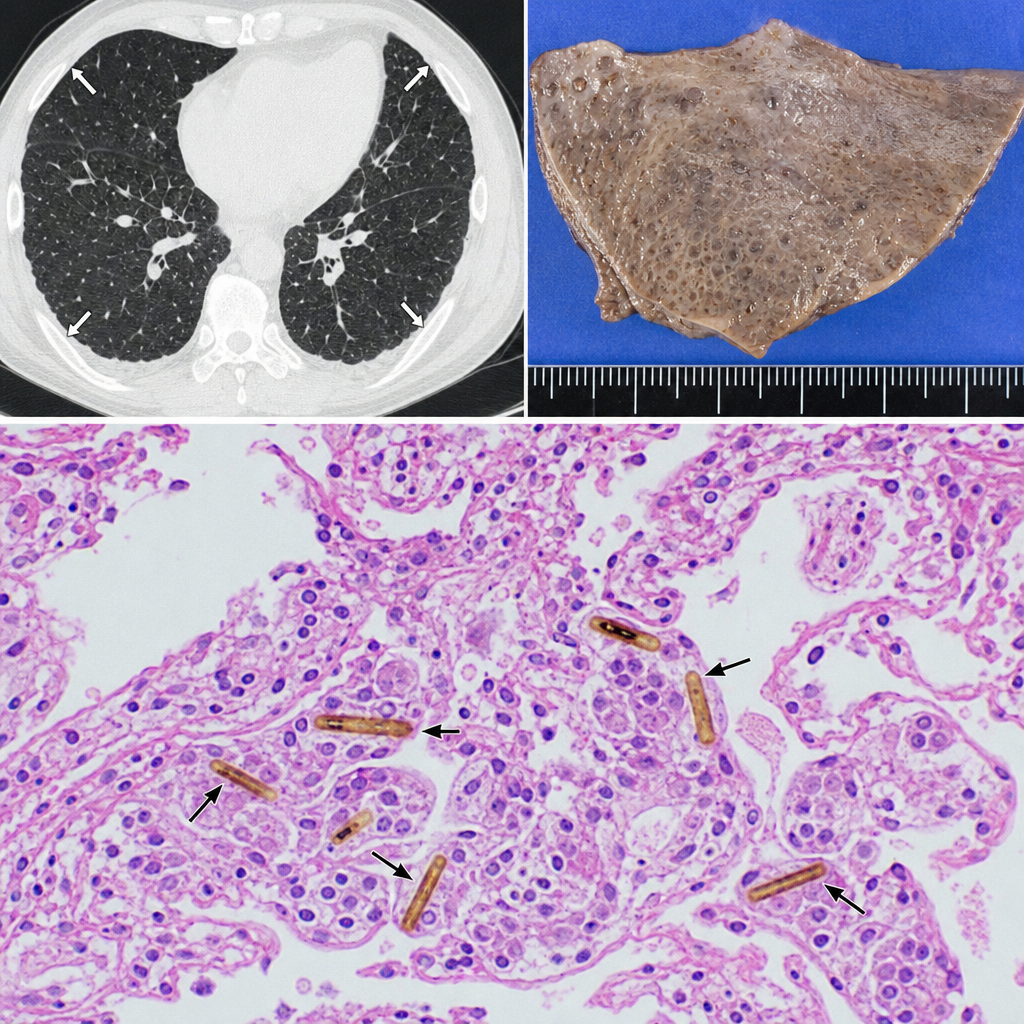
Explanation: ***Non-caseating granulomas*** - The constellation of **erythema nodosum** (painful shin nodules), **uveitis**, and **hilar lymphadenopathy** in an African-American female is highly characteristic of **sarcoidosis**. - **Sarcoidosis** is pathologically defined by the presence of **non-caseating granulomas** in affected tissues, which would be visible on a transbronchial biopsy. *Golden-brown fusiform rods* - These are **ferruginous bodies**, characteristic of **asbestosis**, which is not supported by the patient's presentation. - Asbestosis would typically involve a history of **asbestos exposure** and present with **pleural plaques** or **interstitial fibrosis**. *Inflammation, fibrosis and cyst formation that is most prominent in subpleural regions* - This description is more indicative of **pulmonary Langerhans cell histiocytosis**, a rare disease usually associated with **smoking**. - It does not align with the patient's specific systemic manifestations like uveitis or erythema nodosum. *Silica particles (birefringent) surrounded by collagen* - This describes the histological findings of **silicosis**, an occupational lung disease resulting from exposure to **silica dust**. - Silicosis is not typically associated with uveitis or erythema nodosum. *Patchy interstitial lymphoid infiltrate into walls of alveolar units* - This pattern can be seen in various interstitial lung diseases, but it is not specific for sarcoidosis. - It could be found in conditions like **lymphoid interstitial pneumonia**, which does not fit the overall clinical picture.
Explanation: ***Increased number and activity of goblet cells*** - The patient's history of a **productive cough**, **recurrent respiratory infections**, and **wheezing** in a chronic smoker strongly indicates **chronic bronchitis**. - **Chronic bronchitis** is pathologically characterized by **hypertrophy of mucous glands** and an **increase in goblet cell number and activity**, leading to excessive mucus production. *Ferruginous bodies* - **Ferruginous bodies** are typically found in **asbestosis**, a lung disease caused by asbestos exposure. - While asbestos exposure can cause respiratory symptoms, the sudden death and clinical picture without specific exposure history do not point to asbestosis as the primary diagnosis. *Mucous gland atrophy* - **Mucous gland atrophy** is generally not associated with chronic smoking and the symptoms described. - In conditions like chronic bronchitis, there is actually **hypertrophy** and **hyperplasia** of the mucous glands, leading to increased mucus production. *Interstitial fibrosis of the lung* - **Interstitial fibrosis** is characteristic of conditions like **idiopathic pulmonary fibrosis** or other **interstitial lung diseases**. - While smoking is a risk factor for some forms of fibrosis, the predominant symptoms of a productive cough and recurrent infections are more indicative of chronic bronchitis rather than diffuse interstitial fibrosis. *Pleural plaques* - **Pleural plaques** are **fibrous thickenings of the pleura**, almost exclusively associated with **asbestos exposure**. - They are usually asymptomatic and do not directly explain the productive cough, recurrent infections, and wheezing presented in this patient's history.
Explanation: **Increased goblet cells** - This patient's presentation of persistent cough with thick, yellow sputum, worsening shortness of breath, and a history of heavy smoking points towards **chronic bronchitis**. - **Chronic bronchitis** is pathologically defined by **mucus gland hyperplasia** and **goblet cell hypertrophy** in the bronchial airways, leading to excessive mucus production. *Decreased smooth muscle cells* - Airway smooth muscle can undergo **hyperplasia** and **hypertrophy** in chronic obstructive pulmonary diseases (COPD) like chronic bronchitis, rather than a decrease. - A decrease in smooth muscle cells is not a characteristic pathological finding in chronic bronchitis. *Decreased alveolar macrophages* - **Alveolar macrophages** are crucial for clearing inhaled particles and pathogens and are typically **increased** or functionally altered in chronic inflammatory lung conditions. - A decrease in these immune cells would not be a typical finding in chronic bronchitis and would likely lead to increased susceptibility to infections. *Increased ciliated epithelial cells* - In chronic bronchitis, there is often a **loss of ciliated epithelial cells** as they are replaced by **goblet cells** and undergo **squamous metaplasia** due to chronic irritation. - The remaining ciliated cells may be dysfunctional, impairing mucociliary clearance. *Increased club cells* - **Club cells** (formerly Clara cells) are non-ciliated, secretory cells found in the small airways that protect the bronchiolar epithelium. - While they play a role in airway defense, their significant increase is not a primary or characteristic pathological feature of chronic bronchitis.
Explanation: ***Alveolar macrophages*** - In **alpha-1-antitrypsin deficiency**, alveolar macrophages (and neutrophils) release **elastase**, which is normally inhibited by alpha-1-antitrypsin. - Unchecked elastase activity from alveolar macrophages leads to the **destruction of elastic fibers** in the alveolar walls, causing emphysema with characteristic **panacinar** distribution (worse in lower lobes). - This results in enlargement of airspaces distal to terminal bronchioles. *Ciliated bronchiolar epithelial cells* - These cells are primarily involved in **mucociliary clearance** and do not produce proteolytic enzymes that degrade elastic tissue. - Their dysfunction would lead to impaired mucus clearance and increased susceptibility to infections, but not emphysema. *Elastic fibers in alveolar septa* - Elastic fibers are **extracellular matrix components**, not cells. - While their destruction is the pathological mechanism of emphysema, they do not have enzymatic activity. *Type I pneumocytes* - **Type I pneumocytes** form the structural lining of the alveoli and are primarily involved in gas exchange. - They do not produce elastase or other proteolytic enzymes responsible for tissue destruction in emphysema. *Alveolar septal cells* - This term broadly refers to structural cells including Type I and Type II pneumocytes. - While these cells may be damaged secondarily in emphysema, they do not produce the elastase responsible for elastic fiber destruction.
Explanation: ***Increase Reid index*** - The patient's history of **chronic smoking**, progressive dyspnea, productive cough, and **obstructive spirometry** (FEV1/FVC < 0.70, FEV1 40% predicted) are highly suggestive of **chronic bronchitis**, a component of COPD. - An increased **Reid index** (ratio of the thickness of the submucosal gland layer to the thickness of the bronchial wall cartilage) is a characteristic histological finding in **chronic bronchitis**, reflecting **mucous gland hypertrophy** and hyperplasia. *Curschmann spirals* - These are **mucus plugs** that have been molded into twisted spirals from smaller airways and are characteristic of **bronchial asthma**. - While both asthma and COPD involve airway obstruction, the patient's history (chronic smoker, long-standing symptoms, FEV1/FVC < 0.70) points more strongly to **COPD** (chronic bronchitis and/or emphysema) rather than asthma as the primary condition. *Non-caseating granuloma* - This is a hallmark histological finding of **sarcoidosis**, a multisystem inflammatory disease. - The patient's symptoms and history are not consistent with sarcoidosis, and there is no mention of other typical manifestations such as erythema nodosum or hilar lymphadenopathy. *Ferruginous bodies* - These are **asbestos fibers** coated with an iron-containing protein, found in the lungs of individuals with **asbestosis**. - The patient's history does not indicate any exposure to asbestos, and his symptoms are more aligned with chronic obstructive pulmonary disease. *Charcot-Leyden crystals* - These are microscopic crystals found in the sputum of patients with allergic diseases, particularly **bronchial asthma**, formed from the breakdown products of eosinophils. - While the patient uses an inhaler, the overall clinical picture, especially chronic smoking history and severe persistent obstruction, makes **chronic bronchitis** more likely than asthma as the predominant underlying pathology.
Explanation: ***Crystalline silica*** - The biopsy finding of **weakly birefringent needles surrounded by concentric layers of hyalinized collagen** is pathognomonic for silicosis, a disease caused by inhalation of crystalline silica. - The presence of **upper lobe nodular opacities** and **calcified hilar nodules (egg-shell calcifications)** on chest X-ray are classic radiographic features of silicosis. *Carbon dust* - Inhalation of carbon dust causes **coal worker's pneumoconiosis**, which also presents with nodular opacities but typically shows **macules or micronodules** and lacks the distinctive birefringent silica crystals. - While it can cause progressive massive fibrosis, the specific biopsy findings of concentric collagen layers and birefringent needles point away from simple carbon dust exposure. *Asbestos fibers* - Asbestos exposure is associated with **lower lobe involvement**, **pleural plaques**, and **mesothelioma**, which are not described in this patient. - Biopsy would reveal **ferruginous bodies (asbestos bodies)**, which are not mentioned in the description. *Moldy hay* - Exposure to moldy hay is associated with **hypersensitivity pneumonitis (farmer's lung)**, an immune-mediated lung disease. - This condition presents with **diffuse interstitial infiltrates** and **granulomas**, not nodular opacities with specific crystalline findings. *Beryllium* - Beryllium exposure causes **berylliosis**, which is an inflammatory granulomatous disease that can mimic sarcoidosis. - It typically presents with **granulomas and interstitial fibrosis** and does not show the weakly birefringent needles with hyalinized collagen characteristic of silicosis.
Explanation: ***Shortness of breath that worsens when supine*** - The presence of **hemosiderin-laden macrophages** (also known as **heart failure cells**) in the lung, indicated by brown intracytoplasmic inclusions staining positive with Prussian blue, signifies **pulmonary edema** due to chronic passive congestion. - This condition is typically caused by **left-sided heart failure**, which often manifests as **orthopnea** (shortness of breath worse when supine) and **paroxysmal nocturnal dyspnea**. *Purulent expectoration that worsens in the lateral recumbent position* - **Purulent expectoration**, particularly with positional worsening, is characteristic of a **lung abscess** or **bronchiectasis**, which are infectious conditions. - These conditions would feature neutrophils and necrotic debris, not hemosiderin-laden macrophages, as the primary microscopic finding. *Diaphoresis that worsens at night* - **Night sweats** and **diaphoresis** are classic symptoms of **tuberculosis** or certain malignancies like lymphoma. - These conditions are not typically associated with hemosiderin-laden macrophages as a primary pulmonary finding. *Lower extremity swelling that worsens on standing* - **Dependent edema** in the lower extremities that worsens with standing is a hallmark symptom of **right-sided heart failure** or **venous insufficiency**. - While related to heart failure, the pulmonary findings described (hemosiderin-laden macrophages) are more directly linked to chronic **left-sided heart failure** and pulmonary congestion. *Dry cough that worsens early in the morning* - A **dry cough** that is worse in the morning can be a symptom of **asthma**, **bronchitis**, or **GERD**. - These conditions do not typically present with hemosiderin-laden macrophages from chronic pulmonary congestion.
Explanation: ***Centriacinar emphysema*** - This patient's history of **heavy smoking** and clinical presentation (dyspnea, barrel chest, pursed-lip breathing, abnormal spirometry) are highly suggestive of **COPD with emphysema**. - **Centriacinar emphysema** is the most common form of emphysema associated with **smoking** and predominantly affects the **upper lobes** of the lungs. *Panacinar emphysema* - This type of emphysema is typically associated with **alpha-1 antitrypsin deficiency** and affects the **lower lobes** of the lungs more uniformly. - While it also causes obstructive lung disease, it is not the primary form linked to smoking in the upper lobes. *Calcified nodule* - A **calcified nodule** in the lung usually represents a benign process, such as a healed **granuloma** from a fungal infection or tuberculosis. - It does not explain the widespread obstructive lung disease and changes seen in emphysema. *Hypersensitivity pneumonitis* - This is an **immunological reaction** to inhaled organic dusts or chemicals, leading to inflammation of the **alveoli and bronchioles**. - It typically causes a **restrictive or mixed pattern** on spirometry, not the **pure obstructive pattern** seen in this patient, and is not associated with smoking. *Uncalcified nodule* - An **uncalcified nodule** is a discrete lung lesion that could represent various pathologies, including **neoplasm** or **infection**. - This finding does not explain the diffuse obstructive lung disease, barrel chest, or pursed-lip breathing associated with emphysema.
Explanation: ***Phagocytosis of foreign material*** - The abnormal elastase described is **neutrophil elastase**, which is normally inhibited by **alpha-1 antitrypsin**. - **Neutrophils** are the primary cells responsible for secreting this elastase, and their main function is the **phagocytosis of foreign material** and pathogens. *Production of lactoferrin* - **Lactoferrin** is an iron-binding protein with antimicrobial properties, primarily produced by **neutrophils**, but it is not their defining or most unique function in the context of elastase secretion and lung pathology. - While neutrophils do produce lactoferrin, the question asks for a function that aligns with the described cellular pathology following elastase release. *Degradation of toxins* - While certain immune cells and organs (e.g., liver) are involved in **detoxification**, it is not a primary or most characteristic function of **neutrophils** in the lung. - Neutrophils are more focused on direct microbial killing and inflammation rather than broad toxin degradation. *Secretion of mucus* - **Mucus secretion** in the airways is primarily a function of **goblet cells** and submucosal glands, not neutrophils. - Excessive mucus secretion is a feature of chronic bronchitis, which can coexist with emphysema, but neutrophils themselves do not secrete mucus. *Diffusion of gases* - **Gas diffusion** is the primary function of **type I pneumocytes** in the alveolar sacs, which form the thin barrier between air and blood. - This function is entirely unrelated to the role of neutrophils or the secretion of elastase.
Explanation: ***Found near the pleura*** - This patient's symptoms (sudden chest pain, difficulty breathing, decreased breath sounds, hyperresonance) are classic for a **spontaneous pneumothorax**. - In primary spontaneous pneumothorax, the air leak typically results from the rupture of **subpleural blebs** or **bullae**, which are small air-filled sacs located just beneath the visceral pleura at the lung apices. - This is the key anatomic characteristic of the lesions responsible for this condition. *Found predominantly in the lower lobes* - Blebs causing primary spontaneous pneumothorax are typically found in the **apical (upper) regions** of the lung, not the lower lobes. - The apices experience greater mechanical stress during breathing, making blebs more likely to form and rupture there. - Lower lobe involvement is not characteristic of primary spontaneous pneumothorax in young, healthy individuals. *Related to liver failure* - **Liver failure** is not directly associated with the formation of subpleural blebs or bullae that cause spontaneous pneumothorax. - Liver failure can cause respiratory issues like **hepatopulmonary syndrome** or **ascites-related diaphragmatic splinting**, but not this specific type of lung lesion. *Related to smoking* - Smoking is a significant risk factor for **secondary spontaneous pneumothorax** by causing emphysema and damaging lung parenchyma, leading to bullae formation. - However, in a **15-year-old boy** with a primary spontaneous pneumothorax, the underlying blebs are often congenital or idiopathic, and smoking is less likely to be the direct cause. - The key feature is the **subpleural location** of these blebs, typically at the lung apices.
Explanation: ***Pulmonary hamartoma*** - The histological description of **disorganized hyaline cartilage**, **myxoid regions**, and **ciliated epithelium** is pathognomonic for a pulmonary hamartoma, which is a benign tumor-like malformation. - The features of a **well-circumscribed** and **calcified nodule** on CT are also highly suggestive of a hamartoma. *Small cell lung carcinoma* - This is a **highly malignant neuroendocrine tumor** that typically presents as a centrally located mass, often with associated paraneoplastic syndromes. - Histologically, it would show small, dark, round to oval cells with scant cytoplasm, not mature cartilage or epithelium. *Bronchogenic cyst* - These are **congenital pulmonary anomalies** that are typically fluid-filled and lined by ciliated epithelium, but they do not contain cartilage or myxoid stromal elements. - They are usually cystic on imaging and rarely calcified in the described manner. *Eosinophilic granuloma* - This is a form of **Langerhans cell histiocytosis**, characterized by the proliferation of Langerhans cells and an inflammatory infiltrate rich in eosinophils. - It would present with **star-shaped nodules** or cysts on imaging and distinct histological features (birbeck granules, S100 positive Langerhans cells), very different from the described tissue. *Mature teratoma* - A mature teratoma contains **tissues derived from all three germ layers**, such as hair, teeth, bone, and various epithelial linings. - While it can contain cartilage and epithelium, the description of **disorganized hyaline cartilage interspersed with myxoid regions** in a lung nodule is most specific to a pulmonary hamartoma, not a widespread mixture of diverse mature tissues seen in a teratoma.
Explanation: ***Fibrocalcific parietal pleural plaques on the diaphragm*** - A retired **shipyard worker** has a high likelihood of **asbestos exposure**, which often leads to the development of **pleural plaques**, especially on the diaphragm and parietal pleura. - These plaques are **fibrocalcific** and are the most common radiographic manifestation of prior asbestos exposure, often found incidentally. *Hyperinflated lungs with a loss of lung markings* - This description is characteristic of **emphysema**, specifically the destruction of alveolar walls leading to air trapping and reduced vascular markings. - While smoking could be common among shipyard workers, this finding does not directly indicate an **occupational lung disease** specific to asbestos exposure. *Enlarged hilar lymph nodes* - **Enlarged hilar lymph nodes** are a prominent feature in conditions like **sarcoidosis**, tuberculosis, or certain lymphomas. - It is not a typical or specific finding for asbestos-related lung disease in the absence of other complications like malignancy. *Nodular calcium lesions in the apex of the lung* - **Nodular calcium lesions in the apex of the lung** are highly suggestive of **granulomatous disease**, most commonly **healed primary tuberculosis**. - This finding is not directly associated with asbestos exposure or other common occupational lung diseases. *No specific radiographic findings* - A **chest x-ray** is highly effective in detecting significant asbestos-related changes due to their characteristic appearance. - Given the patient's occupational history, the absence of specific findings would be less likely if there were any significant asbestos-related changes.
Explanation: ***Asbestos*** - The presence of **ferruginous bodies** on lung biopsy is highly characteristic of **asbestosis**, which is caused by occupational exposure to asbestos fibers. - Exposure to **asbestos** can lead to **pulmonary hypertension** due to the development of diffuse interstitial fibrosis and vascular remodeling. *Coal* - Exposure to **coal dust** causes **coal worker's pneumoconiosis** and can lead to progressive massive fibrosis but is not typically associated with ferruginous bodies as a defining marker. - While coal dust can cause pulmonary hypertension, the specific biopsy finding of ferruginous bodies points away from coal as the primary etiology. *Beryllium* - **Berylliosis** is a granulomatous disease that can cause interstitial lung disease, but its characteristic histological finding is **non-caseating granulomas**, not ferruginous bodies. - It is typically caused by exposure to beryllium, a light metal used in various industries. *Silica* - Exposure to **silica** causes **silicosis**, characterized by distinctive **fibrotic nodules** found predominantly in the upper lobes. - While silicosis can also lead to pulmonary hypertension, it does not typically present with ferruginous bodies on histology. *Iron* - Exposure to **iron dust** can cause **siderosis**, a benign pneumoconiosis where iron particles accumulate in the lungs, but it generally does not cause significant fibrosis or pulmonary hypertension. - Iron overload in the lung does not produce the characteristic ferruginous bodies observed in asbestos exposure.
Explanation: ***Small cell lung carcinoma*** - The patient's **hyponatremia** and **seizure** are indicative of **syndrome of inappropriate antidiuretic hormone (SIADH)**, a common paraneoplastic syndrome associated with **small cell lung carcinoma (SCLC)**. - The history of **heavy smoking**, **weight loss**, **fatigue**, **persistent cough**, and a **hilar mass** on chest X-ray are all classic presentations of SCLC. *Squamous cell lung carcinoma* - While strongly associated with smoking and often presenting as a hilar mass, it is more commonly linked to paraneoplastic syndromes like **hypercalcemia** due to PTHrP secretion, not SIADH. - Seizures in this context would likely be secondary to metastatic brain lesions rather than severe hyponatremia from SIADH directly. *Large cell lung carcinoma* - This type of lung cancer is often diagnosed by exclusion, when other more specific types cannot be identified. It can present with a variety of symptoms, but it is less consistently associated with **SIADH** than SCLC. - Tumors commonly grow rapidly and can present as large peripheral masses, though hilar involvement is also possible. *Bronchial carcinoid tumor* - These are typically **slow-growing neuroendocrine tumors** that are generally less aggressive than other lung cancers. - While they can cause paraneoplastic syndromes like **Cushing's syndrome** or **carcinoid syndrome**, SIADH is not a common association, and the patient's rapidly progressing symptoms and significant weight loss point away from this diagnosis. *Lung adenocarcinoma* - This is the most common type of lung cancer in **non-smokers**, although it can occur in smokers. It often presents as a **peripheral lung mass** and is less commonly associated with **hilar masses**. - While it can be associated with various paraneoplastic syndromes, **SIADH** is much less common compared to SCLC, and the clinical picture does not align as strongly.
Explanation: ***Beryllium*** - **Chronic beryllium disease** (CBD) is characterized by **noncaseating granulomas** in the lungs, similar to sarcoidosis, and is associated with occupational exposure to beryllium. - Exposure typically occurs in workers involved in aerospace, ceramics, and electronics manufacturing. *Asbestos* - Exposure to **asbestos** is primarily associated with **asbestosis**, which features diffuse interstitial fibrosis, and an increased risk of mesothelioma and lung cancer. - While it causes lung disease, it does not typically present with noncaseating granulomas as the primary pathological finding. *Silica* - **Silicosis** results from inhaling **crystalline silica** and is characterized by nodular opacities, often with “egg-shell” calcifications in hilar lymph nodes, and fibrotic nodules, but not noncaseating granulomas. - The granulomas in silicosis are typically fibrotic and hyalinized, lacking the noncaseating appearance. *Coal dust* - Inhalation of **coal dust** leads to **coal worker's pneumoconiosis** (CWP), which can range from simple CWP with small nodular opacities to progressive massive fibrosis (PMF). - The pathology involves **macrophage accumulation** laden with coal dust, leading to fibrosis, rather than forming noncaseating granulomas. *Organic dust* - Exposure to **organic dusts** (e.g., from molds, animal proteins, cotton) can lead to **hypersensitivity pneumonitis**, characterized by diffuse inflammation of the lung interstitium and airways. - While granulomas can sometimes be seen in hypersensitivity pneumonitis, they are often poorly formed and are not the defining feature of the occupational lung disease that aligns with the described clinical picture with prominent nodular infiltrates and noncaseating granulomas, which is more characteristic of beryllium.
Explanation: ***Subpleural cystic enlargement*** - The patient's presentation with **dyspnea, non-productive cough, late inspiratory crackles**, and **restrictive lung disease** (normal FEV1/FVC ratio of 90% with reduced FVC of 50%) is highly suggestive of **pulmonary fibrosis**. - **Subpleural cystic enlargement** (honeycombing) is the characteristic histological finding in advanced pulmonary fibrosis, particularly in the **usual interstitial pneumonia (UIP)** pattern seen in **idiopathic pulmonary fibrosis (IPF)**. - The chronic, progressive nature (1-year history) and the restrictive PFT pattern make this the most likely biopsy finding. *Arteriovenous malformations* - These are abnormal vascular connections between arteries and veins that can cause **hypoxemia** and are typically associated with **hereditary hemorrhagic telangiectasia (Osler-Weber-Rendu disease)**. - They do not explain the restrictive PFT pattern or the typical presentation of chronic progressive fibrosis with late inspiratory crackles. *Linear immunofluorescence along alveolar basement membranes* - This finding on **direct immunofluorescence** with **IgG deposition** is characteristic of **Goodpasture syndrome** (anti-GBM disease), which causes pulmonary hemorrhage and rapidly progressive glomerulonephritis. - This condition presents with **hemoptysis** and **acute renal failure**, not chronic non-productive cough, and would show an obstructive or mixed pattern if hemorrhage were present. *Hyaline membranes* - **Hyaline membranes** are proteinaceous material lining alveoli seen in **acute respiratory distress syndrome (ARDS)** or **diffuse alveolar damage (DAD)**. - The patient's **chronic 1-year symptoms** and restrictive PFTs indicate chronic interstitial lung disease, not acute lung injury. *Charcot-Leyden crystals* - **Charcot-Leyden crystals** are formed from breakdown of **eosinophils** and are found in conditions with eosinophilic inflammation, such as **asthma** or **eosinophilic pneumonia**. - While these conditions can cause cough and dyspnea, they would typically show an **obstructive pattern** (reduced FEV1/FVC) in asthma, not the restrictive pattern seen here.
Explanation: ***Primary tuberculosis*** - The combination of **fever**, **chest pain with deep breathing**, **weight loss**, a **subpleural nodule**, **right hilar lymphadenopathy**, and **granulomas with acellular cores** on biopsy strongly points to primary tuberculosis. - Granulomas in tuberculosis are typically **caseating** (acellular cores often imply caseating necrosis in this context), and the presence of hilar lymphadenopathy with a peripheral nodule (Ghon complex) is classic for primary infection. *Hodgkin lymphoma* - While Hodgkin lymphoma can cause fever, weight loss (B symptoms), and lymphadenopathy, the presence of a **subpleural nodule** and **granulomas with acellular cores** is not typical. - Histology would show **Reed-Sternberg cells** amidst a mixed inflammatory infiltrate, not granulomas with acellular cores. *Chronic berylliosis* - This condition is caused by **beryllium exposure** and typically presents with a history of occupational exposure and **non-caseating granulomas**. - No history of beryllium exposure is provided, and the granulomas described are consistent with **caseating necrosis** (acellular cores). *Miliary tuberculosis* - Miliary tuberculosis involves widespread dissemination, often presenting with **diffuse, small nodules** (millet seed-sized) across both lungs on X-ray, rather than a single subpleural nodule and hilar lymphadenopathy. - While it features granulomas, the **radiological pattern** is distinct. *Pulmonary sarcoidosis* - Sarcoidosis is characterized by **non-caseating granulomas** in multiple organs, often presenting with bilateral hilar lymphadenopathy and pulmonary involvement. - The description of **acellular cores** suggests **caseating granulomas**, which are not typical of sarcoidosis.
Explanation: ***Increased type II pneumocytes*** - **Type II pneumocytes** are responsible for producing **surfactant** and act as **progenitor cells** for **type I pneumocytes**. - In response to injury, like that caused by **influenza pneumonia**, type II pneumocytes proliferate to replace damaged type I pneumocytes and repair the alveolar epithelium. *Decreased alveolar macrophages* - **Alveolar macrophages** are immune cells that **phagocytose** pathogens and cellular debris in the alveoli. - In an active infection like **influenza pneumonia**, their numbers would likely be **increased** due to their role in immune response, not decreased. *Increased goblet cells* - **Goblet cells** are found in the larger airways and are responsible for **mucus production**. - While respiratory infections can increase mucus production, the question specifies **lung parenchyma** (alveoli) where goblet cells are not typically found. *Decreased interstitial fibroblasts* - **Interstitial fibroblasts** contribute to the structural integrity of the lung and can differentiate into **myofibroblasts** during repair and fibrosis. - In the context of pneumonia and potential repair processes, fibroblast activity might be altered, but a decrease is unlikely given their role in tissue remodeling, and an increase might be seen in the context of **fibrosis**. *Increased alveolar squamous epithelial cells* - **Alveolar squamous epithelial cells** are **type I pneumocytes**, which form the primary gas-exchange surface. - **Influenza pneumonia** causes damage and destruction of type I pneumocytes, meaning their numbers would be **decreased**, not increased.
Explanation: ***Sheets of small round cells with hyperchromatic nuclei*** - Grossly increased **ADH levels** in a smoker suggest **syndrome of inappropriate antidiuretic hormone (SIADH)**, which is commonly associated with **small cell lung carcinoma (SCLC)**. - SCLC is characterized histologically by sheets of **small (lymphocyte-like) cells** with scant cytoplasm and **hyperchromatic nuclei**. *Layered squamous cells with keratin pearls* - This description corresponds to **squamous cell carcinoma**, which is associated with smoking but typically causes **hypercalcemia** due to parathyroid hormone-related peptide (PTHrP) production, not elevated ADH. - Key histological features are **keratin pearls** and **intercellular bridges**. *Pleomorphic giant cells with leukocyte fragments in cytoplasm* - This describes **large cell carcinoma**, which is a diagnosis of exclusion and does not typically manifest with paraneoplastic SIADH. - **Large cell carcinoma** is characterized by large, anaplastic cells without differentiation towards squamous, glandular, or small cell features. *Hyperplasia of mucin producing glandular tissue* - This appearance is characteristic of **adenocarcinoma**, which often arises in non-smokers and is not typically associated with SIADH. - **Adenocarcinoma** exhibits glandular differentiation and often produces mucin. *Tall columnar cells bordering the alveolar septum* - This refers to **lepidic growth pattern** often seen in some subtypes of **adenocarcinoma (e.g., adenocarcinoma in situ or minimally invasive adenocarcinoma)**. - While it is a type of lung cancer, it is not primarily associated with SIADH as a paraneoplastic syndrome.
Explanation: **Fibrinopurulent leukocytic exudate with lysed erythrocytes** - This description aligns with the **gray hepatization** stage of lobar pneumonia, characterized by the accumulation of **fibrin**, **neutrophils**, and **lysed red blood cells** in the alveolar spaces, giving the lung a firm, grayish-brown appearance. - The patient's presentation of **fever, dyspnea, productive cough with purulent sputum**, and Gram-positive cocci points to bacterial pneumonia, and the severe outcome suggests a progression to this advanced stage. *Dilation of alveolar capillaries and serous exudate with abundant bacteria* - This describes the stage of **congestion**, which is the initial phase of pneumonia. - While it includes bacterial presence, it does not account for the **firm, grayish-brown appearance** of the lung found at autopsy. *Fibrinous exudate with erythrocytes, leukocytes, and bacteria* - This describes the stage of **red hepatization**, which follows congestion. - In red hepatization, the lung appears red and firm due to engorged capillaries and intra-alveolar hemorrhage, which is distinct from the **pale, grayish-brown appearance** mentioned in the autopsy findings. *Resorbed exudate with aerated alveoli* - This describes the stage of **resolution**, where the inflammatory exudate is cleared, and the lung tissue returns to normal. - Given the patient's death and autopsy findings of a firm, discolored lung, resolution had **not occurred**. *Neutrophilic infiltrate in the bronchiolar walls and adjacent alveoli* - This pattern is more characteristic of **bronchopneumonia**, which presents as patchy consolidation centered around bronchioles. - The description of a **pale, grayish-brown, firm lung** suggests a more widespread lobar involvement rather than a patchy bronchopneumonia.
Explanation: ***Inflamed bronchus with hypertrophy and hyperplasia of mucous glands*** - The patient's history of a **productive cough for 2 years**, a **32-pack-year smoking history**, and **irreversible obstructive lung disease** (FEV1/FVC of 55% with no change after albuterol) are classic signs of **chronic bronchitis**. - The defining pathological feature of chronic bronchitis involves **inflammation of the large airways**, leading to **mucous gland hypertrophy** and **hyperplasia**, resulting in excessive mucus production and airway obstruction. *Airway hypersensitivity* - **Airway hypersensitivity** is characteristic of **asthma**, where triggers cause sudden bronchoconstriction, which is typically **reversible** with bronchodilators. - The patient's FEV1/FVC ratio **did not improve with albuterol**, indicating an irreversible obstruction not typical of hypersensitivity alone. *Chronic granulomatous inflammation with bilateral hilar lymphadenopathy* - This description is characteristic of **sarcoidosis**, a systemic inflammatory disease. - While sarcoidosis can cause respiratory symptoms, it does not fit the typical presentation of **chronic productive cough** in a heavy smoker, and the classic PFT findings for sarcoidosis are **restrictive**, not obstructive. *Consolidation and red hepatization* - **Consolidation** and **red hepatization** are pathological features seen in the acute phase of **lobar pneumonia**, reflecting alveolar inflammation and exudation. - The patient had a recent admission for pneumonia, but his current chronic symptoms and PFT results point to an underlying **obstructive lung disease (chronic bronchitis)**, not acute pneumonia. *Permanent bronchial dilation* - **Permanent bronchial dilation** is known as **bronchiectasis**, which results from chronic inflammation and infection leading to destruction of the bronchial walls. - While chronic bronchitis can sometimes lead to bronchiectasis, the primary and most direct pathological finding for the symptoms described (chronic productive cough in a smoker with irreversible obstruction) is the **inflammation and mucous gland changes** within the bronchi.
Explanation: ***Intra-alveolar hyaline membrane formation*** - The patient's presentation with **severe hypoxemia**, **rales**, decreased breath sounds, and rapid deterioration despite oxygen supplementation is highly suggestive of **Acute Respiratory Distress Syndrome (ARDS)**. - **Hyaline membranes** form in ARDS due to damage to the alveolar-capillary barrier, leading to fluid and protein exudation into the alveoli, which combines with necrotic epithelial cells. *Diffuse lipid droplets and globules* - This finding is characteristic of **fat embolism syndrome**, which typically occurs after long bone fractures or orthopedic procedures. - While fat embolism can cause respiratory distress, the clinical context of **severe pancreatitis** points away from it. *Large clot in pulmonary artery* - A large clot in the pulmonary artery would indicate a **pulmonary embolism**, which can cause sudden onset dyspnea and hypoxemia. - However, the gradual deterioration, generalized rales, and bilateral decreased breath sounds are more consistent with a diffuse parenchymal lung process like ARDS rather than a localized vascular obstruction. *Hemosiderin-laden alveolar macrophages* - Also known as **heart failure cells**, these are seen in conditions involving chronic extravasation of red blood cells into the alveoli, such as **congestive heart failure** or **pulmonary hemorrhage**. - This patient's acute presentation and primary diagnosis of pancreatitis do not align with chronic conditions causing hemosiderin deposition. *Decreased lecithin to sphingomyelin ratio* - A decreased **lecithin to sphingomyelin ratio** is a marker of **fetal lung immaturity** and is seen in **Neonatal Respiratory Distress Syndrome (NRDS)**. - It is not relevant in an adult patient developing acute respiratory failure due to pancreatitis-induced ARDS.
Explanation: ***Protein-rich fluid*** - This patient presents with symptoms and radiographic findings consistent with **bacterial pneumonia** and an associated **pleural effusion**. - Pleural effusions associated with pneumonia are typically **exudative**, meaning they are rich in **protein** and cells due to inflammation and increased capillary permeability. *Malignant cells* - While malignancy can cause pleural effusions, the clinical picture here points strongly to an **infectious etiology** (pneumonia) rather than cancer. - The presence of **fever** and recent cold-like symptoms transitioning to bacterial pneumonia makes malignancy less likely as the primary cause of the effusion. *Specific gravity of 1.010* - A specific gravity of 1.010 or less is characteristic of a **transudative effusion**, which is typically seen in conditions like **heart failure** or **cirrhosis**. - **Exudative effusions**, like the one expected with bacterial pneumonia, generally have a **higher specific gravity (>1.020)** due to their high protein content. *Hypocellular fluid* - An effusion associated with **bacterial pneumonia** is typically **inflammatory** and contains numerous cells, including **neutrophils**, bacteria, and dead cells. - Hypocellular fluid would be more characteristic of a **transudative effusion**, resulting from hydrostatic pressure imbalances rather than inflammation. *Clear fluid* - Pleural effusions from **bacterial pneumonia** are often **turbid** or **cloudy** due to the high concentration of inflammatory cells, proteins, and possibly bacteria. - **Clear fluid** is more commonly associated with **transudative effusions** or certain non-purulent exudative conditions.
Explanation: ***Lymphocytic inflammation of the bronchiolar wall*** - The development of inflammation and fibrosis in the **terminal bronchioles** years after a lung transplant, despite initial success, is highly suggestive of **chronic rejection**, also known as **bronchiolitis obliterans syndrome (BOS)**. - Chronic rejection in lung transplantation is primarily characterized by **lymphocytic inflammation** leading to fibrosis and obliteration of the small airways, consistent with the patient's presentation. *Proliferation of grafted immunocompetent T cells* - This mechanism describes **graft-versus-host disease (GVHD)**, which occurs when immunocompetent cells in the graft attack recipient tissues. - While GVHD can occur in organ transplantation, it is more commonly associated with **hematopoietic stem cell transplantation** and typically presents with a broader range of systemic symptoms, not primarily localized bronchiolar inflammation and fibrosis. *Staphylococcus aureus pneumonia* - **Bacterial pneumonia** would typically present with acute symptoms such as fever, cough with purulent sputum, and acute infiltrates on imaging. - While infections are a risk post-transplant, a subacute process leading to **fibrosis** over 3 years is less typical for a bacterial pneumonia, which tends to be more acute and responsive to antibiotics. *T-cell mediated vascular damage* - This mechanism is characteristic of **acute humoral rejection** (antibody-mediated rejection) or some forms of acute cellular rejection, which often target the **vasculature** of the graft. - While vascular damage can occur, the primary pathology described by inflammation and fibrosis in the **bronchioles** specifically points more towards chronic rejection affecting the airways themselves rather than predominantly the blood vessels. *Cytotoxic T lymphocytes reacting against foreign MHCs* - This describes the fundamental mechanism for **acute cellular rejection** in transplantation, where recipient T cells recognize foreign **MHC molecules** on donor cells. - Acute cellular rejection typically occurs earlier (within weeks to months) post-transplant and involves prominent lymphocytic infiltrates, but the primary long-term fibrotic obstructive pathology of the bronchioles (BOS) is specifically the chronic form of T-cell mediated injury.
Explanation: ***Pulmonary embolism*** - A pulmonary embolism blocks **blood flow** to a portion of the lung, creating **dead space ventilation** (high V/Q ratio). - In the affected alveoli, **no blood perfusion** means no oxygen extraction occurs, so the alveolar oxygen content remains **high and similar to tracheal/inspired air**. - This is the classic physiological state where ventilation continues but perfusion is absent, preventing gas exchange. *Foreign body obstruction distal to the trachea* - A complete obstruction **prevents fresh air** from reaching the affected alveoli. - The trapped gas undergoes **resorption atelectasis**: oxygen is absorbed into capillary blood, CO2 diffuses in, and alveolar gas equilibrates with **venous blood** composition. - Alveolar oxygen content becomes **very low**, not similar to tracheal air. *Emphysema* - Emphysema involves destruction of **alveolar walls** and enlargement of airspaces with impaired gas exchange. - While V/Q mismatch occurs, oxygen is still extracted by perfusing blood. - Alveolar oxygen content is **lower than tracheal air** due to ongoing (though inefficient) gas exchange. *Exercise* - During exercise, **oxygen consumption increases** dramatically with enhanced cardiac output and oxygen extraction. - Alveolar oxygen content is **significantly lower** than tracheal air due to increased oxygen uptake by blood. *Pulmonary fibrosis* - Pulmonary fibrosis causes **thickening of the alveolar-capillary membrane**, impairing oxygen diffusion. - Despite diffusion limitation, blood still perfuses the alveoli and extracts oxygen. - Alveolar oxygen content is **lower than tracheal air**, though the A-a gradient is increased.
Explanation: ***Fluid in the alveolar space*** - The patient's presentation with **wet gangrene** and subsequent development of **confusion**, **tachypnea**, **fever**, **tachycardia**, and **hypotension** is consistent with **septic shock**. - The **severe hypoxemia** (PO2 of 55 mm Hg despite 100% FiO2) in the setting of sepsis strongly suggests **Acute Respiratory Distress Syndrome (ARDS)**, which is characterized by **non-cardiogenic pulmonary edema** or **fluid accumulation in the alveolar space**. *Abscess in the lung parenchyma* - A lung abscess typically presents with **purulent sputum**, **fever**, and **cough**, and while it can cause hypoxemia, it usually doesn't lead to such profound widespread respiratory failure with a normal PCO2 in the initial stages. - The primary issue here is diffuse lung injury causing severe oxygenation impairment, not a localized collection of pus. *Nodular thickening of the interlobular septa* - This finding is more characteristic of **lymphangitic carcinomatosis** or certain types of **pulmonary fibrosis**, which are typically chronic conditions. - It would not explain the acute onset of severe hypoxemia and respiratory failure in a patient with sepsis. *Emboli in the pulmonary vasculature* - While a **pulmonary embolism** can cause hypoxemia and could be considered in a patient with immobility, the **clinical context of septic shock** with **systemic inflammatory response** makes **ARDS the most likely diagnosis**. - The **profound refractory hypoxemia despite 100% FiO2** and the **bilateral diffuse nature** of gas exchange impairment in this septic patient are classic for ARDS rather than PE. - Additionally, the patient has a clear **source of infection** (wet gangrene) leading to sepsis-induced ARDS. *Hyperinflation of the lungs* - **Hyperinflation** is characteristic of **obstructive lung diseases** like **COPD** or **asthma**. - It does not explain the acute onset of severe hypoxemia and respiratory failure in the context of sepsis, nor would it lead to the specific blood gas findings observed here.
Atelectasis
Practice Questions
Pulmonary edema
Practice Questions
Acute respiratory distress syndrome
Practice Questions
Obstructive lung diseases (emphysema, bronchitis)
Practice Questions
Asthma pathology
Practice Questions
Bronchiectasis
Practice Questions
Restrictive lung diseases
Practice Questions
Interstitial lung diseases
Practice Questions
Pulmonary vascular disorders
Practice Questions
Pulmonary infections
Practice Questions
Lung tumors (primary and metastatic)
Practice Questions
Pleural diseases
Practice Questions
Congenital lung anomalies
Practice Questions
Get full access to all questions, explanations, and performance tracking.
Start For Free