
CNS trauma — MCQs

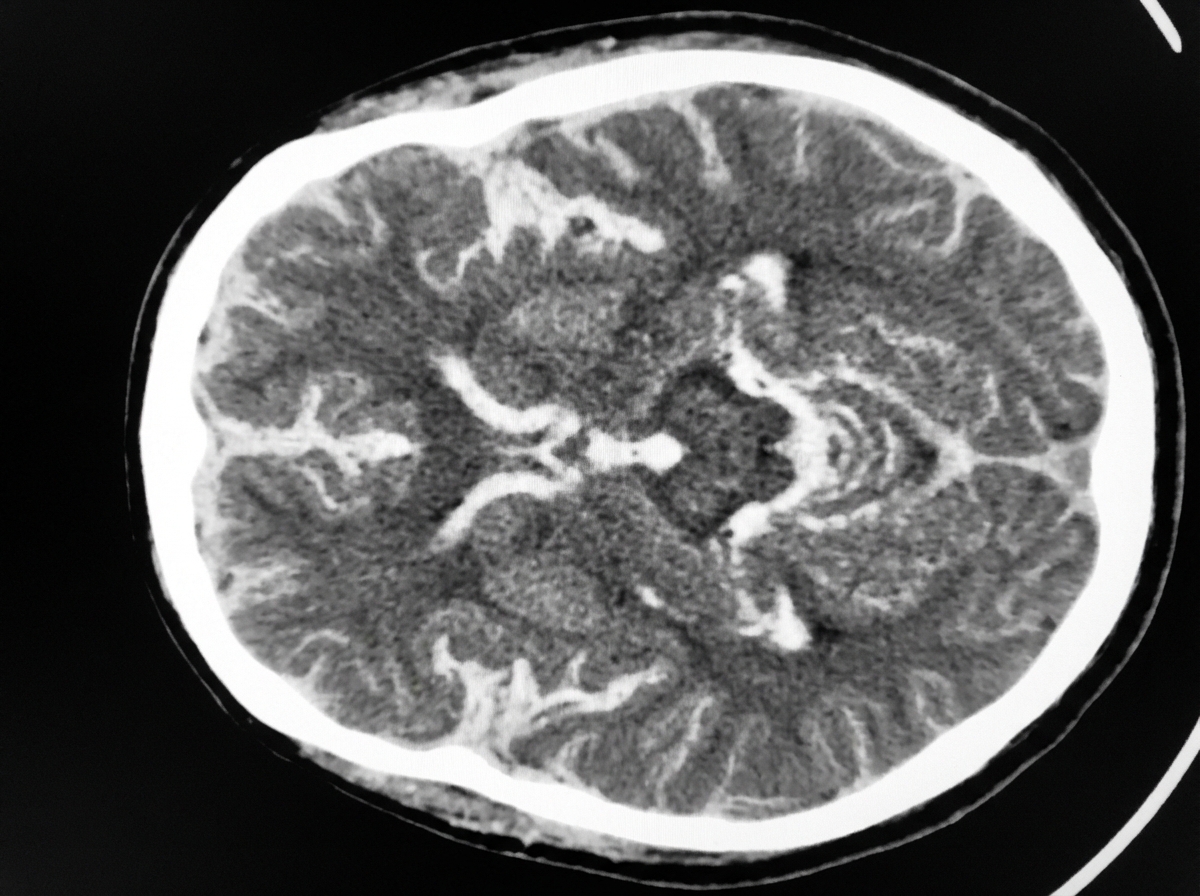
A 54-year-old man is brought to the emergency department 30 minutes after being hit by a car while crossing the street. He had a left-sided tonic-clonic seizure and one episode of vomiting while being transported to the hospital. On arrival, he is not oriented to person, place, or time. Physical examination shows flaccid paralysis of all extremities. A CT scan of the head is shown. This patient's symptoms are most likely the result of a hemorrhage in which of the following structures?
A 15-year-old boy is brought to the emergency department one hour after sustaining an injury during football practice. He collided head-on into another player while wearing a mouthguard and helmet. Immediately after the collision he was confused but able to use appropriate words. He opened his eyes spontaneously and followed commands. There was no loss of consciousness. He also had a headache with dizziness and nausea. He is no longer confused upon arrival. He feels well. Vital signs are within normal limits. He is fully alert and oriented. His speech is organized and he is able to perform tasks demonstrating full attention, memory, and balance. Neurological examination shows no abnormalities. There is mild tenderness to palpation over the crown of his head but no signs of skin break or fracture. Which of the following is the most appropriate next step?
A 4-month-old infant is brought to the emergency department with seizures. CT scan reveals bilateral subdural hematomas of different ages and retinal hemorrhages. Which of the following mechanisms best explains these findings?
A 38-year-old man comes to the physician for a follow-up examination. He has quadriparesis as a result of a burst fracture of the cervical spine that occurred after a fall from his roof 1 month ago. He has urinary and bowel incontinence. He appears malnourished. His temperature is 37.1°C (98.8°F), pulse is 88/min, and blood pressure is 104/60 mm Hg. Examination shows spasticity in all extremities. Muscle strength is decreased in proximal and distal muscle groups bilaterally. Deep tendon reflexes are 4+ bilaterally. Plantar reflex shows extensor response bilaterally. Sensation to pinprick and temperature is absent below the neck. Sensation to vibration, position, and light touch is normal bilaterally. Rectal tone is decreased. There is a 1-cm area of erythema over the sacrum. Which of the following is the most likely cause of this patient's symptoms?
A 2-month-old boy is brought to the emergency room by his mother who reports he has appeared lethargic for the past 3 hours. She reports that she left the patient with a new nanny this morning, and he was behaving normally. When she got home in the afternoon, the patient seemed lethargic and would not breastfeed as usual. At birth, the child had an Apgar score of 8/9 and weighed 2.8 kg (6.1 lb). Growth has been in the 90th percentile, and the patient has been meeting all developmental milestones. There is no significant past medical history, and vaccinations are up-to-date. On physical examination, the patient does not seem arousable. Ophthalmologic examination shows retinal hemorrhages. Which of the following findings would most likely be expected on a noncontrast CT scan of the head?
A 66-year-old woman is brought to the emergency department 4 hours after falling and hitting her head while skiing. Initially, she refused treatment, but an hour ago she began to develop a severe headache, nausea, and right leg weakness. She has osteopenia. Her only medication is a daily multivitamin. She has no visual changes and is oriented to person, time, and place. Her temperature is 37.2°C (99°F), pulse is 72/min, respirations are 18/min and regular, and blood pressure is 128/75 mm Hg. Examination shows a 5-cm bruise on the left side of her skull. The pupils are equal, round, and reactive to light and accommodation. Muscle strength is 0/5 in her right knee and foot. Which of the following is the most likely cause of this patient's symptoms?
A 57-year-old man was brought into the emergency department unconscious 2 days ago. His friends who were with him at that time say he collapsed on the street. Upon arrival to the ED, he had a generalized tonic seizure. At that time, he was intubated and is being treated with diazepam and phenytoin. A noncontrast head CT revealed hemorrhages within the pons and cerebellum with a mass effect and tonsillar herniation. Today, his blood pressure is 110/65 mm Hg, heart rate is 65/min, respiratory rate is 12/min (intubated, ventilator settings: tidal volume (TV) 600 ml, positive end-expiratory pressure (PEEP) 5 cm H2O, and FiO2 40%), and temperature is 37.0°C (98.6°F). On physical examination, the patient is in a comatose state. Pupils are 4 mm bilaterally and unresponsive to light. Cornea reflexes are absent. Gag reflex and cough reflex are also absent. Which of the following is the next best step in the management of this patient?
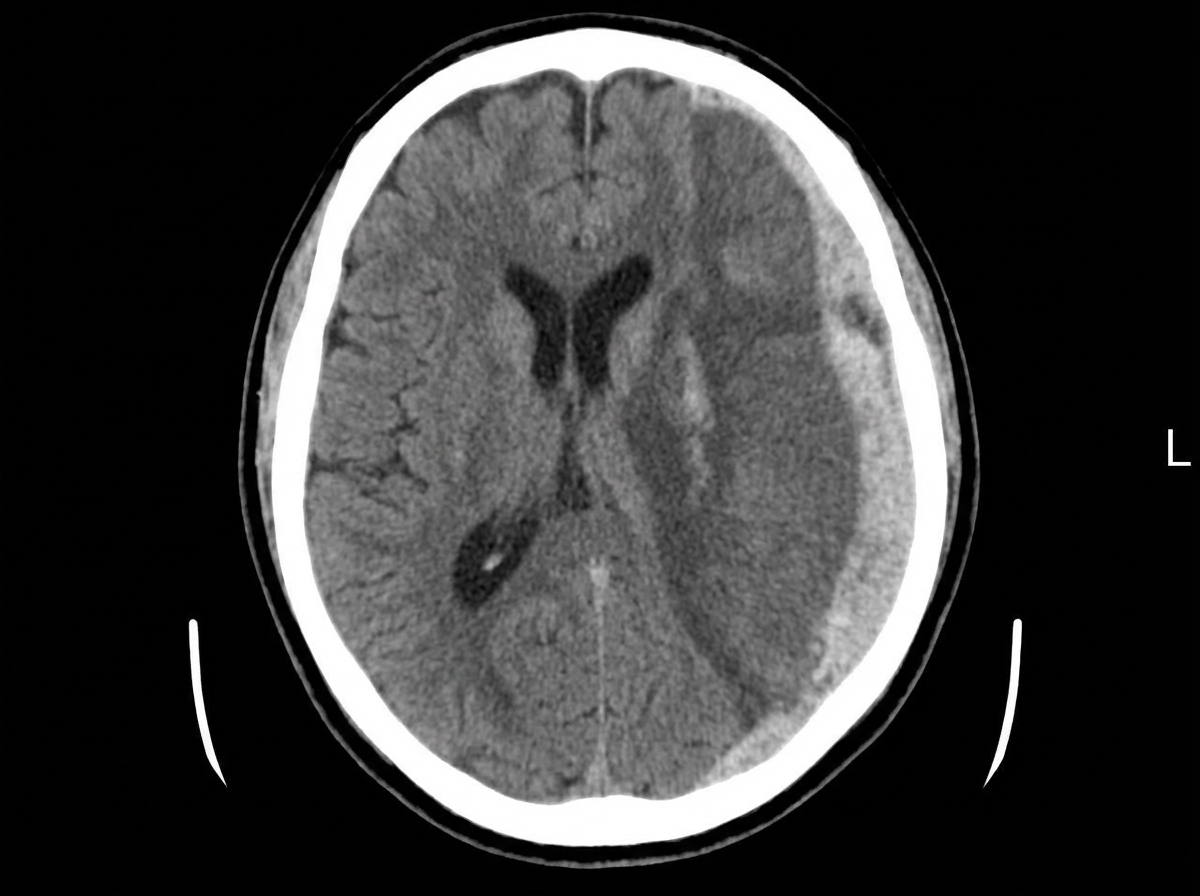
A 68-year-old man is brought to the emergency department by his wife because of a 2-week history of progressive disorientation and a 1-day history of left-sided weakness and difficulty speaking. The wife reports that the patient had a minor fall 4 months ago, during which he may have hit his head. He has hypertension and hyperlipidemia. He drinks 3–4 bottles of beer daily. He is only oriented to person. Neurological examination shows moderate spastic weakness, decreased sensation, and increased deep tendon reflexes in the left upper and lower extremities. A CT scan of the head is shown. Which of the following is the most likely cause of this patient's condition?
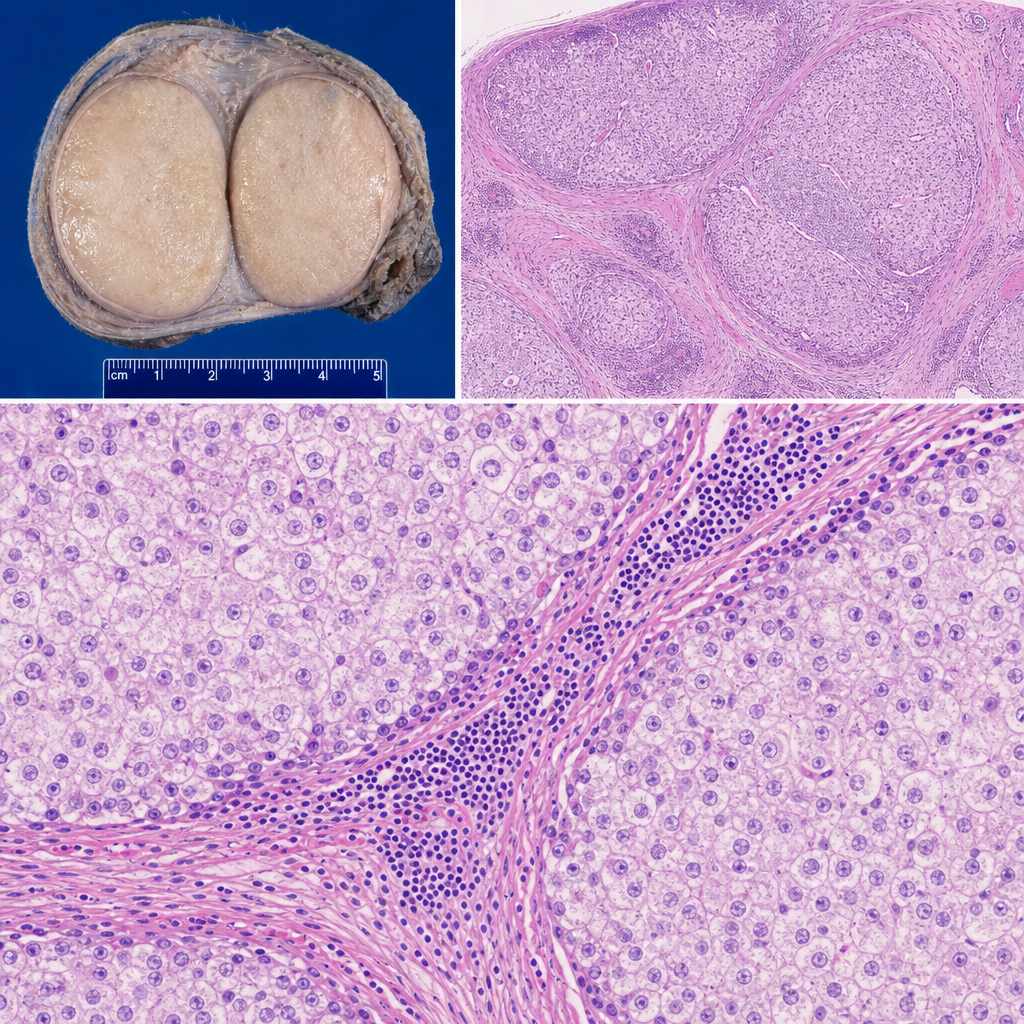
A 28-year-old man presents with a painless right testicular mass. Orchiectomy is performed. Gross examination reveals a 4 cm well-circumscribed, homogeneous, pale tan-gray mass without hemorrhage or necrosis. Histological sections show a monotonous population of large cells with clear, glycogen-rich cytoplasm and central round nuclei with prominent nucleoli, arranged in nests separated by fibrous septa infiltrated by mature lymphocytes. Which of the following best explains why the lymphocytic infiltrate is present within the fibrous septa of this tumor?
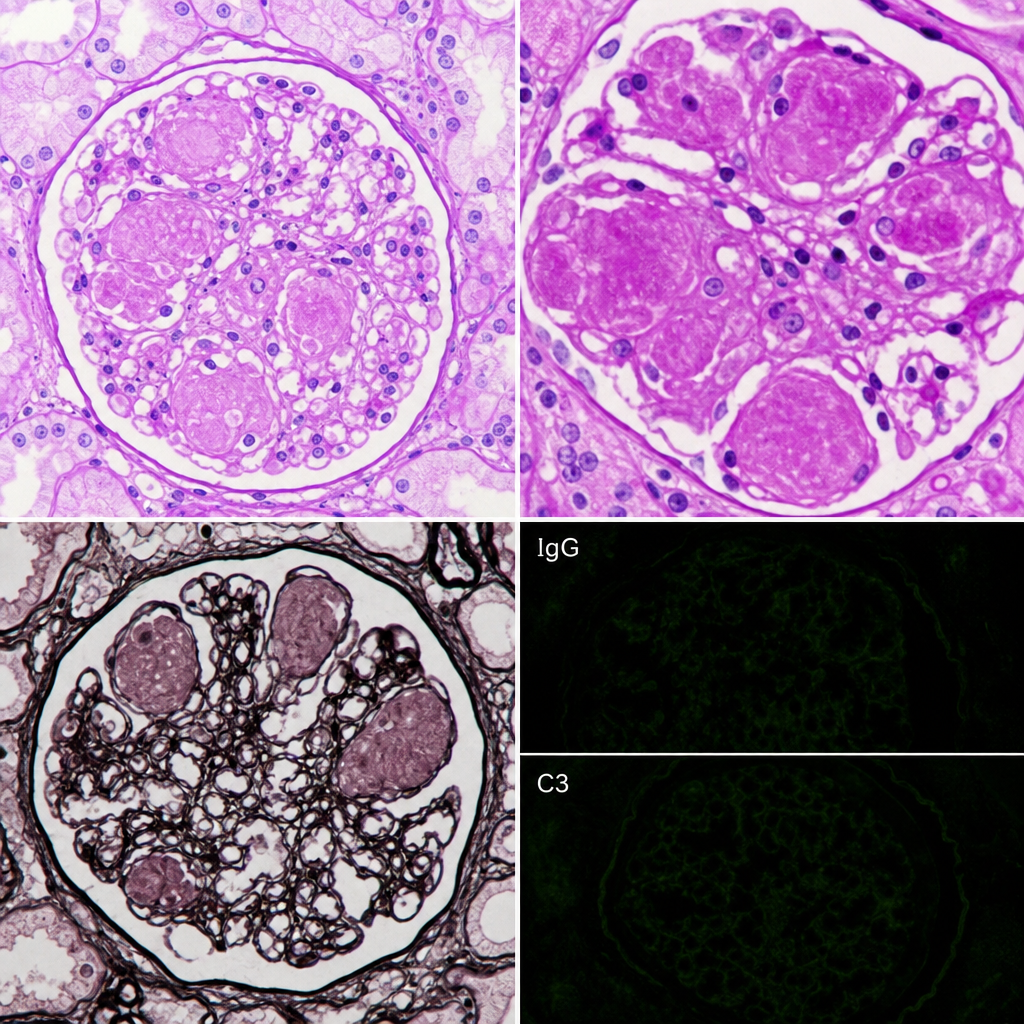
A 62-year-old man with poorly controlled type 2 diabetes mellitus for 18 years presents with proteinuria of 4.2 g/day and a serum creatinine of 2.8 mg/dL. Renal biopsy is performed. The biopsy shows PAS-positive, homogeneous, acellular nodular deposits in the mesangium of glomeruli, with associated capillary loop obliteration and diffuse glomerular basement membrane thickening. Immunofluorescence is negative for immune complex deposits and monoclonal light chain staining. Which of the following pathological processes best explains the formation of the nodular deposits seen in this biopsy?
Want unlimited practice?
Get full access to all questions, explanations, and performance tracking.
Scan to download app