A 19-year-old man comes to the physician for evaluation of night sweats, pruritus, and enlarging masses in his right axilla and supraclavicular area for 2 weeks. Physical examination shows painless, rubbery lymphadenopathy in the right axillary, supraclavicular, and submental regions. An excisional biopsy of an axillary node is performed. If present, which of the following features would be most concerning for a neoplastic process?
Q72
A 62-year-old man seeks evaluation at a local walk-in clinic for mid-low back pain of several weeks. He has tried different rehabilitation therapies and medications with no improvement. He was prescribed some pain medications and sent home last week, but the patient presents today with difficulty walking and worsening of his back pain. He was referred to the ER, where he was examined and found to have hypoesthesia from T12 to S4–S5, significant muscle weakness in both lower limbs, and reduced knee and ankle deep tendon reflexes. A hypotonic anal sphincter with conserved deep anal pressure was demonstrated on digital rectal examination, as well as a multinodular, asymmetric prostate. Imaging studies showed multiple sclerotic bone lesions along the spine. Subsequently, a prostate core biopsy was obtained which confirmed the diagnosis of prostate cancer. Which of the following characteristics would you expect in the specimen?
Q73
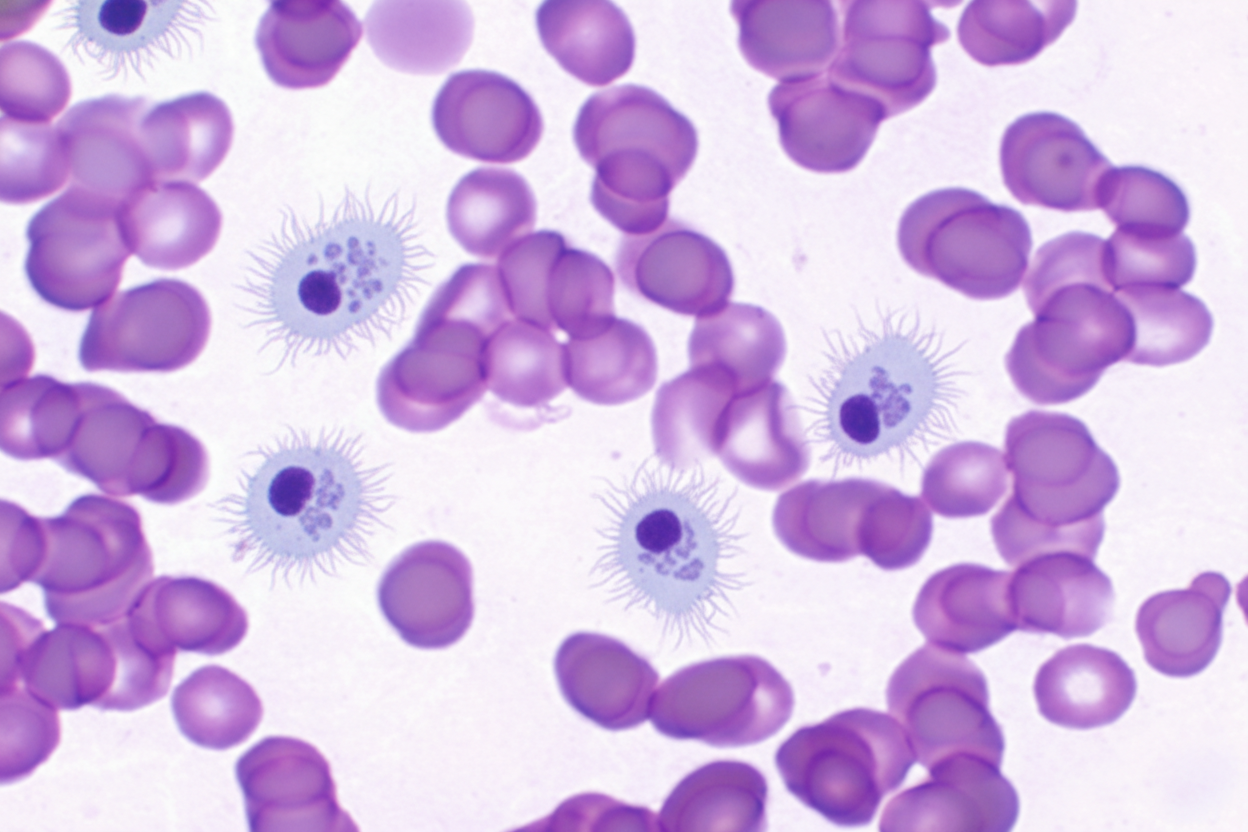
A 62-year-old man comes to the physician because of easy bruising and recurrent nosebleeds over the past 4 months. During the same time period, the patient has felt weak and has had a 10-kg (22-lb) weight loss. Physical examination shows mucosal pallor and bruising on the upper and lower extremities in various stages of healing. The spleen is palpated 4 cm below the left costal margin. Laboratory studies show anemia and thrombocytopenia. A photomicrograph of a peripheral blood smear is shown. Histologic examination of a bone marrow biopsy in this patient is most likely to show which of the following findings?
Q74
An otherwise healthy 66-year-old man comes to the physician for evaluation of rough skin over his forehead and the back of his hands. He has tried applying different types of moisturizers with no improvement. He has worked on a farm all his life. Physical examination shows two erythematous papules with a gritty texture and central scale over the left temple and three similar lesions over the dorsum of his hands. This patient's skin lesions increase his risk of developing a skin condition characterized by which of the following findings on histopathology?
Q75
A 62-year-old woman presents to the clinic for a 2-month history of ‘fogginess’. She reports that for the last couple of months she feels like she has "lost a step" in her ability to think clearly, often forgetting where she parked her car or to lock the front door after leaving the house. She also feels that her mood has been low. On further questioning, she reports mild constipation and that she has had a bothersome, progressively worsening cough over the past couple of months, accompanied by 6.8 kg (15 lb) unintentional weight loss. She has a history of hypertension for which she takes amlodipine daily. She has smoked 1.5 packs of cigarettes per day for the last 40 years. Physical exam is unremarkable. Laboratory studies show:
Na+ 138 mg/dL
K+ 3.9 mg/dL
Cl- 101 mg/dL
HCO3- 24 mg/dL
BUN 10 mg/dL
Cr 0.6 mg/dL
Glucose 86 mg/dL
Ca2+ 13.6 mg/dL
Mg2+ 1.9 mg/dL
Parathyroid hormone (PTH) 2 pg/mL (10–65)
1,25-hydroxyvitamin D 15 pg/mL (20–45)
Quantiferon-gold negative
Which of the following best describes this patient's most likely underlying pathology?
Q76
A 63-year-old man comes to the physician because of increasing generalized fatigue for 3 months. He is having more difficulty with keeping up with his activities of daily living and has lost 2.5 kg (5.5 lb) over the past month. He has hypertension and hyperlipidemia. He does not smoke and drinks two to three beers on weekends. His medications include lisinopril, hydrochlorothiazide, and atorvastatin. His temperature is 37.1°C (98.8°F), pulse is 85/min, respirations are 15/min, and blood pressure is 125/73 mm Hg. Examination shows pale conjunctivae. The remainder of the examination shows no abnormalities. His hematocrit is 27.3%, leukocyte count is 4500/mm3, and platelet count is 102,000/mm3. A peripheral blood smear shows numerous blast cells that stain positive for myeloperoxidase, CD33, and CD34. Which of the following is the most likely diagnosis?
Q77
A 62-year-old man comes to the physician because of progressive fatigue and dyspnea on exertion for 3 months. During this time, he has also had increased straining during defecation and a 10-kg (22-lb) weight loss. He has no personal or family history of serious medical illness. Physical examination shows conjunctival pallor. Laboratory studies show microcytic anemia. Test of the stool for occult blood is positive. Colonoscopy shows an exophytic mass in the ascending colon. Pathologic examination of the mass shows a well-differentiated adenocarcinoma. A gain-of-function mutation in which of the following genes is most likely involved in the pathogenesis of this patient's condition?
Q78
A 52-year-old man arrives to the clinic for arthritis and leg swelling. The patient reports that the joint pains began 8 months ago. He has tried acetaminophen and ibuprofen without significant improvement. He reports the leg swelling began within the past 2 months and has gotten progressively worse. The patient’s medical history is significant for diabetes. His medications include metformin and aspirin. The patient works as an accountant. He smokes cigars socially. The patient’s temperature is 99°F (37.2°C), blood pressure is 130/78 mmHg, pulse is 70/min, and respirations are 14/min with an oxygen saturation of 98% on room air. Physical examination notes a tan, overweight male with 2+ edema of bilateral lower extremities. Which of the following tumor markers is most likely to be associated with this patient’s condition?
Q79
A 75-year-old man comes to the physician because of abdominal pain and nausea over the past 2 weeks and a 1-month history of pain in his knees and hips. He has smoked one pack of cigarettes daily for 30 years. Physical examination shows decreased muscle strength. Laboratory studies show:
Hemoglobin 11.0 mg/dL
Serum
Creatinine 1.5 mg/dL
Calcium 12.2 mg/dL
Parathyroid hormone 115 pg/mL
Parathyroid hormone-related peptide elevated
Urine
Blood 2+
Ultrasonography of his abdomen shows a 6-cm mass in his right kidney. Nephrectomy is performed. A photograph of the resected specimen is shown. The patient's tumor most likely originated from which of the following locations?
Q80
A 51-year-old woman comes to the physician because of a persistent cough and a 5-kg (11-lb) weight loss over the past 2 months. Yesterday, she coughed up bloody sputum. She does not smoke. Pulmonary examination shows decreased breath sounds over the right upper lobe. A CT scan of the chest shows a mass in the periphery of the right upper lobe. Histopathologic examination of a specimen obtained on CT-guided biopsy shows glandular cells with papillary components and signet ring cells that stain positive for mucin. An alteration in which of the following genes is most likely to have occurred in this patient?
Neoplasia US Medical PG Practice Questions and MCQs
Question 71: A 19-year-old man comes to the physician for evaluation of night sweats, pruritus, and enlarging masses in his right axilla and supraclavicular area for 2 weeks. Physical examination shows painless, rubbery lymphadenopathy in the right axillary, supraclavicular, and submental regions. An excisional biopsy of an axillary node is performed. If present, which of the following features would be most concerning for a neoplastic process?
A. Diffuse mitotic activity in secondary follicles
B. Predominance of histiocytes in the medullary sinuses
C. Preponderance of lymphocytes with a single immunoglobulin variable domain allele (Correct Answer)
D. Positive staining of the paracortex for cluster of differentiation 8
E. Polyclonal proliferation of lymphocytes with a single nucleus
Explanation: ***Preponderance of lymphocytes with a single immunoglobulin variable domain allele***
- A **monoclonal proliferation** of lymphocytes (i.e., a preponderance of lymphocytes with a single immunoglobulin variable domain allele) is a definitive indicator of a **lymphoid neoplasm**, such as lymphoma or leukemia.
- This finding demonstrates that the lymphocytes are derived from a single clone, which is characteristic of cancer, unlike the diverse, polyclonal response seen in reactive conditions.
*Diffuse mitotic activity in secondary follicles*
- While increased **mitotic activity** can be seen in lymphomas, it is also a normal finding in **reactive lymphoid hyperplasia** within germinal centers, which are sites of active immune response.
- The descriptor "diffuse" primarily points to spread, but in the context of secondary follicles, it would mostly suggest high metabolic and cell division rates that are not exclusively neoplastic.
*Predominance of histiocytes in the medullary sinuses*
- An increase in **histiocytes (macrophages)** in the medullary sinuses (sinus histiocytosis) is a common finding in **reactive lymph nodes**, indicating an increased immune response and filtration of antigens.
- It is generally considered a benign condition and a sign of enhanced immune activity rather than malignancy.
*Positive staining of the paracortex for cluster of differentiation 8*
- The **paracortex** is the T-cell rich area of the lymph node, and **CD8+ T cells** are normal components of the immune response, particularly against viral infections and intracellular pathogens.
- An increase in CD8+ T cells can be seen in various reactive conditions and does not, by itself, indicate a neoplastic process.
*Polyclonal proliferation of lymphocytes with a single nucleus*
- **Polyclonal proliferation** is characteristic of a **normal immune response** or reactive lymphoid hyperplasia, where various B and T cell clones respond to an antigen.
- The phrase "single nucleus" is not a discriminating factor for malignancy versus benign conditions, as nearly all lymphocytes, whether neoplastic or not, possess a single nucleus.
Question 72: A 62-year-old man seeks evaluation at a local walk-in clinic for mid-low back pain of several weeks. He has tried different rehabilitation therapies and medications with no improvement. He was prescribed some pain medications and sent home last week, but the patient presents today with difficulty walking and worsening of his back pain. He was referred to the ER, where he was examined and found to have hypoesthesia from T12 to S4–S5, significant muscle weakness in both lower limbs, and reduced knee and ankle deep tendon reflexes. A hypotonic anal sphincter with conserved deep anal pressure was demonstrated on digital rectal examination, as well as a multinodular, asymmetric prostate. Imaging studies showed multiple sclerotic bone lesions along the spine. Subsequently, a prostate core biopsy was obtained which confirmed the diagnosis of prostate cancer. Which of the following characteristics would you expect in the specimen?
A. Well-formed glands with an increase in interglandular stroma
B. Fat invasion
C. Prostatic intraepithelial neoplasia
D. Small, closely-packed, well-formed glands
E. Perineural invasion (Correct Answer)
Explanation: ***Perineural invasion***
- **Perineural invasion** is a common finding in prostate adenocarcinoma, indicating that cancer cells have invaded the nerves surrounding the prostatic glands. This feature is often associated with a higher Gleason score and increased likelihood of extraprostatic extension and metastasis.
- While not visible on gross examination, its presence on biopsy can influence staging and treatment decisions for prostate cancer, particularly regarding the risk of recurrence and spread to other tissues.
*Well-formed glands with an increase in interglandular stroma*
- This description is more indicative of **benign prostatic hyperplasia (BPH)**, a non-cancerous enlargement of the prostate, characterized by an increase in both glandular and stromal components.
- In BPH, the glands typically remain well-formed, and the stroma often proliferates, but these features do not represent malignancy.
*Fat invasion*
- **Fat invasion** is not a typical characteristic of prostate cancer within the prostate gland itself, as the prostate is not primarily composed of fat.
- While prostate cancer can invade periprostatic fatty tissue if it extends beyond the prostatic capsule, fat invasion within the biopsy specimen from the prostate proper is not a diagnostic feature of adenocarcinoma.
*Prostatic intraepithelial neoplasia*
- **Prostatic intraepithelial neoplasia (PIN)** is a pre-malignant lesion where the prostatic ductal and acinar cells show cytologic atypia but remain confined within the basement membrane.
- While PIN (especially high-grade PIN) can be associated with prostate cancer and may precede its development, it is not cancer itself and is not the definitive diagnosis in this case where prostate cancer has been confirmed.
*Small, closely-packed, well-formed glands*
- This description could represent a **low-grade prostate adenocarcinoma** (Gleason pattern 3), where the glands are still relatively well-formed but are more numerous and crowded than in benign tissue.
- However, compared to perineural invasion, which is a more definitive sign of aggressive behavior and advanced disease in a patient presenting with metastatic features (sclerotic bone lesions, neurologic symptoms), this histological finding alone is less specific for the advanced cancer described.
Question 73: A 62-year-old man comes to the physician because of easy bruising and recurrent nosebleeds over the past 4 months. During the same time period, the patient has felt weak and has had a 10-kg (22-lb) weight loss. Physical examination shows mucosal pallor and bruising on the upper and lower extremities in various stages of healing. The spleen is palpated 4 cm below the left costal margin. Laboratory studies show anemia and thrombocytopenia. A photomicrograph of a peripheral blood smear is shown. Histologic examination of a bone marrow biopsy in this patient is most likely to show which of the following findings?
A. Neoplastic granulocytes with low leukocyte alkaline phosphatase score
B. Neoplastic lymphocytes that stain positive for tartrate-resistant acid phosphatase (Correct Answer)
C. Neoplastic myeloid cells that stain positive for myeloperoxidase
D. Neoplastic lymphoid cells that stain positive for terminal deoxynucleotidyl transferase activity
E. Dysplastic erythroid cells that stain positive for iron
Explanation: ***Neoplastic lymphocytes that stain positive for tartrate-resistant acid phosphatase***
- The patient's symptoms of **easy bruising, recurrent nosebleeds, weakness, weight loss, mucosal pallor, and thrombocytopenia**, along with **splenomegaly**, are highly suggestive of a **hematologic malignancy**. The peripheral blood smear shows **lymphocytes with characteristic cytoplasmic projections ("hairy cells")**.
- **Hairy cell leukemia (HCL)** is a **B-cell lymphoma** characterized by the proliferation of these specific lymphocytes. These cells are known to stain positively for **tartrate-resistant acid phosphatase (TRAP)**, a diagnostic hallmark of this condition.
*Neoplastic granulocytes with low leukocyte alkaline phosphatase score*
- This description is characteristic of **chronic myeloid leukemia (CML)**, which typically presents with **markedly elevated white blood cell counts** (granulocytosis) and a low leukocyte alkaline phosphatase (LAP) score.
- The patient's presentation of **pancytopenia** (anemia, thrombocytopenia) and lack of **marked leukocytosis** makes CML less likely.
*Neoplastic myeloid cells that stain positive for myeloperoxidase*
- **Myeloperoxidase (MPO)** positivity is a key feature of **acute myeloid leukemia (AML)**, specifically distinguishing myeloid blasts from lymphoid blasts.
- While AML can cause **pancytopenia** and **splenomegaly**, the specific morphology of **hairy cells** in the peripheral smear and the absence of overt blasts point away from AML.
*Neoplastic lymphoid cells that stain positive for terminal deoxynucleotidyl transferase activity*
- **Terminal deoxynucleotidyl transferase (TdT)** is an enzyme found in immature lymphocytes and is a marker for **acute lymphoblastic leukemia (ALL)** and some lymphomas.
- The patient's age (62 years old) makes ALL less common than in children, and the clinical picture, particularly the **massive splenomegaly without significant lymphadenopathy** often seen in ALL, is more characteristic of hairy cell leukemia.
*Dysplastic erythroid cells that stain positive for iron*
- This finding is suggestive of **myelodysplastic syndromes (MDS)**, particularly refractory anemia with ring sideroblasts, where there is ineffective erythropoiesis and iron deposition in mitochondria of erythroid precursors (ring sideroblasts).
- While MDS can lead to **anemia** and **thrombocytopenia**, the distinctive morphology of **hairy cells** in the peripheral smear and the prominent **splenomegaly** are not typical features of MDS.
Question 74: An otherwise healthy 66-year-old man comes to the physician for evaluation of rough skin over his forehead and the back of his hands. He has tried applying different types of moisturizers with no improvement. He has worked on a farm all his life. Physical examination shows two erythematous papules with a gritty texture and central scale over the left temple and three similar lesions over the dorsum of his hands. This patient's skin lesions increase his risk of developing a skin condition characterized by which of the following findings on histopathology?
A. Intraepidermal acantholysis
B. Noncaseating granulomas
C. Atypical melanocytes
D. Keratin pearls (Correct Answer)
E. Basaloid cells
Explanation: ***Keratin pearls***
- The patient's description (rough, erythematous papules with gritty texture and central scale on sun-exposed areas) is characteristic of **actinic keratoses**, which are premalignant lesions for **squamous cell carcinoma (SCC)**.
- **Squamous cell carcinoma** is histopathologically characterized by features like **keratin pearls** (whorls of keratinocytes) and atypical keratinocytes invading the dermis.
*Intraepidermal acantholysis*
- **Acantholysis** (loss of cohesion between keratinocytes) is a hallmark of **pemphigus vulgaris** and other pemphigus disorders, which present as blistering skin diseases, not gritty papules.
- This finding is not associated with premalignant actinic keratoses or SCC.
*Noncaseating granulomas*
- **Noncaseating granulomas** are characteristic of **sarcoidosis**, a multisystem inflammatory disease that can affect the skin.
- This finding is unrelated to sun-induced premalignant lesions or SCC.
*Atypical melanocytes*
- **Atypical melanocytes** are a key feature of **melanoma**, a highly malignant skin cancer arising from melanocytes.
- While sun exposure is a risk factor for melanoma, the described lesions are more classic for actinic keratoses, leading to SCC, not melanoma.
*Basaloid cells*
- **Basaloid cells** forming peripheral palisading and nodular aggregates are characteristic of **basal cell carcinoma (BCC)**.
- Although BCC is also a sun-induced skin cancer, actinic keratoses are primarily precursors to SCC, and the lesions described are more typical of SCC precursors.
Question 75: A 62-year-old woman presents to the clinic for a 2-month history of ‘fogginess’. She reports that for the last couple of months she feels like she has "lost a step" in her ability to think clearly, often forgetting where she parked her car or to lock the front door after leaving the house. She also feels that her mood has been low. On further questioning, she reports mild constipation and that she has had a bothersome, progressively worsening cough over the past couple of months, accompanied by 6.8 kg (15 lb) unintentional weight loss. She has a history of hypertension for which she takes amlodipine daily. She has smoked 1.5 packs of cigarettes per day for the last 40 years. Physical exam is unremarkable. Laboratory studies show:
Na+ 138 mg/dL
K+ 3.9 mg/dL
Cl- 101 mg/dL
HCO3- 24 mg/dL
BUN 10 mg/dL
Cr 0.6 mg/dL
Glucose 86 mg/dL
Ca2+ 13.6 mg/dL
Mg2+ 1.9 mg/dL
Parathyroid hormone (PTH) 2 pg/mL (10–65)
1,25-hydroxyvitamin D 15 pg/mL (20–45)
Quantiferon-gold negative
Which of the following best describes this patient's most likely underlying pathology?
A. Toxicity (exogenous)
B. Infectious
C. Endocrine
D. Inflammatory
E. Neoplastic (Correct Answer)
Explanation: ***Neoplastic***
- The patient's presentation with **unexplained weight loss**, worsening cough, and **hypercalcemia** with **suppressed PTH** and low 1,25-hydroxyvitamin D is highly concerning for **paraneoplastic syndrome** due to malignancy, most likely lung cancer given her significant smoking history.
- The cognitive 'fogginess' and low mood could be attributed to **hypercalcemia**, a common paraneoplastic manifestation.
*Toxicity (exogenous)*
- While exogenous toxins can cause neurological symptoms, there is **no clear exposure** history or laboratory findings (e.g., specific drug levels) to support this diagnosis.
- The constellation of cough, weight loss, and hypercalcemia with suppressed PTH is not typical for common exogenous toxicities.
*Infectious*
- The patient's symptoms are chronic and progressive, rather than acute, and the **Quantiferon-gold test was negative**, ruling out tuberculosis.
- There are no other objective signs of infection such as fever, elevated white blood cell count, or specific serological markers to suggest an infectious etiology.
*Endocrine*
- Although the patient has hypercalcemia (an endocrine issue), the **extremely low PTH** indicates that the parathyroid glands are not the primary source of the elevated calcium. This points away from primary hyperparathyroidism.
- The overall presentation, including cough and weight loss, extends beyond a simple endocrine disorder and suggests a broader systemic process.
*Inflammatory*
- There are **no signs of systemic inflammation** such as fever, elevated CRP, elevated ESR, or specific autoantibodies in the provided data.
- While some inflammatory conditions can cause constitutional symptoms, they do not typically present with this specific combination of hypercalcemia, suppressed PTH, and a persistent cough with weight loss.
Question 76: A 63-year-old man comes to the physician because of increasing generalized fatigue for 3 months. He is having more difficulty with keeping up with his activities of daily living and has lost 2.5 kg (5.5 lb) over the past month. He has hypertension and hyperlipidemia. He does not smoke and drinks two to three beers on weekends. His medications include lisinopril, hydrochlorothiazide, and atorvastatin. His temperature is 37.1°C (98.8°F), pulse is 85/min, respirations are 15/min, and blood pressure is 125/73 mm Hg. Examination shows pale conjunctivae. The remainder of the examination shows no abnormalities. His hematocrit is 27.3%, leukocyte count is 4500/mm3, and platelet count is 102,000/mm3. A peripheral blood smear shows numerous blast cells that stain positive for myeloperoxidase, CD33, and CD34. Which of the following is the most likely diagnosis?
A. Non-Hodgkin lymphoma
B. Acute myeloid leukemia (Correct Answer)
C. Hairy cell leukemia
D. Chronic lymphocytic leukemia
E. Acute lymphoblastic leukemia
Explanation: ***Acute myeloid leukemia***
- The presence of **numerous blast cells** that stain positive for **myeloperoxidase (MPO)** and **CD33** is highly characteristic of **acute myeloid leukemia (AML)**.
- The patient's symptoms of **fatigue**, **weight loss**, **pale conjunctivae (anemia)**, and **pancytopenia** (low hematocrit, leukopenia, thrombocytopenia) are consistent with bone marrow infiltration by leukemic blasts.
*Non-Hodgkin lymphoma*
- Characterized by **lymphadenopathy** and systemic 'B' symptoms (fever, night sweats, weight loss), which are not prominent features here.
- While it can cause cytopenias, the presence of **myeloperoxidase-positive blasts** would point away from lymphoma, which involves lymphocytes.
*Hairy cell leukemia*
- Typically presents with **pancytopenia**, **splenomegaly**, and characteristic **hairy cells** on peripheral smear.
- These cells are **CD103, CD123, and CD25 positive** and tartrate-resistant acid phosphatase (TRAP) positive, which differs from the findings in this case.
*Chronic lymphocytic leukemia*
- Characterized by an accumulation of **mature-appearing lymphocytes** (not blasts) in the blood, bone marrow, and lymph nodes.
- These cells typically express **CD5 and CD20**, and **myeloperoxidase** would be negative.
*Acute lymphoblastic leukemia*
- Involves **lymphoblasts**, which are typically **MPO-negative** and express lymphoid markers like **CD10, CD19, and CD22**.
- While it can present with similar symptoms and pancytopenia as AML, the **MPO positivity rules it out**.
Question 77: A 62-year-old man comes to the physician because of progressive fatigue and dyspnea on exertion for 3 months. During this time, he has also had increased straining during defecation and a 10-kg (22-lb) weight loss. He has no personal or family history of serious medical illness. Physical examination shows conjunctival pallor. Laboratory studies show microcytic anemia. Test of the stool for occult blood is positive. Colonoscopy shows an exophytic mass in the ascending colon. Pathologic examination of the mass shows a well-differentiated adenocarcinoma. A gain-of-function mutation in which of the following genes is most likely involved in the pathogenesis of this patient's condition?
A. APC
B. TP53
C. MLH1
D. KRAS (Correct Answer)
E. DCC
Explanation: ***KRAS***
- A **gain-of-function mutation** in **KRAS** is a common early event in the development of colorectal adenocarcinoma, driving uncontrolled cell growth and proliferation.
- This mutation is frequently found in **sporadic colorectal cancers**, particularly in the advanced stages of adenoma to carcinoma progression.
*APC*
- **APC** is a **tumor suppressor gene**, and mutations in it are typically **loss-of-function**, not gain-of-function.
- While APC mutations are crucial early steps in the adenoma-carcinoma sequence, they lead to inactivation of the gene, not increased function.
*TP53*
- **TP53** is a **tumor suppressor gene** which, when mutated, usually involves **loss-of-function** or dominant-negative effects, impairing its ability to induce apoptosis or cell cycle arrest.
- Mutations in TP53 are typically associated with **later stages** of colorectal cancer progression and tend to be loss-of-function, not gain-of-function.
*MLH1*
- **MLH1** is involved in **DNA mismatch repair**, and mutations here lead to **microsatellite instability** and are characteristic of hereditary nonpolyposis colorectal cancer (Lynch syndrome).
- These are typically **loss-of-function mutations** that impair DNA repair, not gain-of-function mutations promoting oncogenesis directly through signaling pathways.
*DCC*
- **DCC** (**Deleted in Colorectal Carcinoma**) is a **tumor suppressor gene**, and its inactivation or loss is associated with colorectal cancer progression, particularly the transition from adenoma to carcinoma.
- Mutations or deletions in DCC result in a **loss-of-function**, not a gain-of-function, contributing to tumor growth by failing to regulate cell differentiation and apoptosis.
Question 78: A 52-year-old man arrives to the clinic for arthritis and leg swelling. The patient reports that the joint pains began 8 months ago. He has tried acetaminophen and ibuprofen without significant improvement. He reports the leg swelling began within the past 2 months and has gotten progressively worse. The patient’s medical history is significant for diabetes. His medications include metformin and aspirin. The patient works as an accountant. He smokes cigars socially. The patient’s temperature is 99°F (37.2°C), blood pressure is 130/78 mmHg, pulse is 70/min, and respirations are 14/min with an oxygen saturation of 98% on room air. Physical examination notes a tan, overweight male with 2+ edema of bilateral lower extremities. Which of the following tumor markers is most likely to be associated with this patient’s condition?
A. Alkaline phosphatase
B. Chromogranin
C. CA 19-9
D. Carcinoembryonic antigen
E. Alpha fetoprotein (Correct Answer)
Explanation: ***Alpha fetoprotein***
- The patient's presentation with **chronic arthritis**, **progressive bilateral leg edema**, and **diabetes** in an overweight patient raises clinical suspicion for **underlying liver disease**, potentially **cirrhosis** progressing to **hepatocellular carcinoma (HCC)**.
- The combination of **arthritis** (suggesting possible iron deposition arthropathy) and **diabetes** may indicate **hemochromatosis**, a condition that leads to **cirrhosis** and significantly increases HCC risk.
- The **bilateral lower extremity edema** suggests **portal hypertension** from cirrhosis or hypoalbuminemia from hepatic dysfunction.
- **Alpha-fetoprotein (AFP)** is the most established and validated tumor marker for detecting and monitoring **hepatocellular carcinoma**, which develops in approximately 20-30% of patients with cirrhosis.
*Alkaline phosphatase*
- While **alkaline phosphatase (ALP)** can be elevated in liver disease including HCC, it is a **non-specific marker** that primarily indicates **cholestasis** or **bone disease**.
- ALP is not a specific tumor marker and would not be the "most likely" marker associated with a suspected malignancy.
*Chromogranin*
- **Chromogranin A** is a tumor marker for **neuroendocrine tumors** (carcinoid syndrome, pheochromocytoma, gastrinomas).
- The patient's clinical presentation does not suggest a neuroendocrine malignancy (no flushing, diarrhea, hypertensive episodes, or peptic ulcer disease).
*CA 19-9*
- **CA 19-9** is primarily a tumor marker for **pancreatic adenocarcinoma** and sometimes cholangiocarcinoma or gastric cancer.
- The clinical presentation lacks features of pancreatic cancer (no jaundice, weight loss, abdominal pain, or obstructive symptoms).
*Carcinoembryonic antigen*
- **Carcinoembryonic antigen (CEA)** is most commonly associated with **colorectal cancer** and other adenocarcinomas (lung, breast, gastric).
- CEA is not a specific or primary marker for HCC and does not fit this clinical picture as well as AFP.
Question 79: A 75-year-old man comes to the physician because of abdominal pain and nausea over the past 2 weeks and a 1-month history of pain in his knees and hips. He has smoked one pack of cigarettes daily for 30 years. Physical examination shows decreased muscle strength. Laboratory studies show:
Hemoglobin 11.0 mg/dL
Serum
Creatinine 1.5 mg/dL
Calcium 12.2 mg/dL
Parathyroid hormone 115 pg/mL
Parathyroid hormone-related peptide elevated
Urine
Blood 2+
Ultrasonography of his abdomen shows a 6-cm mass in his right kidney. Nephrectomy is performed. A photograph of the resected specimen is shown. The patient's tumor most likely originated from which of the following locations?
A. Collecting tubules
B. Proximal convoluted tubules (Correct Answer)
C. Glomerulus
D. Renal pelvis
E. Distal convoluted tubules
Explanation: ***Proximal convoluted tubules***
- The patient's symptoms (abdominal pain, nausea, bone pain, hypercalcemia, elevated PTHrP, renal mass, anemia, hematuria) are classic for **renal cell carcinoma (RCC)**, which typically arises from the **proximal convoluted tubules**.
- RCC often secretes **parathyroid hormone-related peptide (PTHrP)**, leading to **hypercalcemia** through paraneoplastic mechanisms.
- Note: In typical malignancy-associated hypercalcemia, PTHrP causes hypercalcemia which should **suppress** endogenous PTH via negative feedback; the elevated PTH shown here may represent concurrent primary hyperparathyroidism or laboratory timing issues.
*Collecting tubules*
- Tumors originating from the collecting tubules are rare and are known as **collecting duct carcinoma (Bellini duct carcinoma)**.
- These aggressive tumors typically present with **hematuria** and flank pain but are less commonly associated with paraneoplastic syndromes like PTHrP-induced hypercalcemia.
*Glomerulus*
- Tumors originating directly from the glomerulus, such as primary glomerular cancers, are exceedingly rare.
- Most glomerular pathologies are inflammatory or degenerative rather than primary neoplasms.
*Renal pelvis*
- Tumors in the renal pelvis are typically **urothelial carcinomas (transitional cell carcinomas)**, which arise from the urothelial lining.
- While they can present with hematuria and flank pain, they are less commonly associated with the paraneoplastic syndrome of hypercalcemia due to PTHrP secretion compared to RCC.
*Distal convoluted tubules*
- Tumors originating from the distal convoluted tubules are uncommon.
- **Oncocytomas**, a benign renal tumor, are thought to arise from the distal nephron or collecting ducts, but they do not typically cause paraneoplastic syndromes like hypercalcemia.
Question 80: A 51-year-old woman comes to the physician because of a persistent cough and a 5-kg (11-lb) weight loss over the past 2 months. Yesterday, she coughed up bloody sputum. She does not smoke. Pulmonary examination shows decreased breath sounds over the right upper lobe. A CT scan of the chest shows a mass in the periphery of the right upper lobe. Histopathologic examination of a specimen obtained on CT-guided biopsy shows glandular cells with papillary components and signet ring cells that stain positive for mucin. An alteration in which of the following genes is most likely to have occurred in this patient?
A. TP53
B. SMAD4 (DPC4)
C. APC
D. MYCL1
E. ALK (Correct Answer)
Explanation: ***ALK***
- The patient's presentation with **adenocarcinoma** (glandular cells, mucin, peripheral location) in a **non-smoker** suggests a higher likelihood of specific driver mutations, such as **ALK rearrangements**.
- **ALK gene rearrangements** are characteristic oncogenic drivers in a subset of lung adenocarcinomas, particularly in younger patients and non-smokers.
*TP53*
- **TP53** is a tumor suppressor gene frequently mutated in many cancers, including lung cancer, but its mutation is not as specific to the clinical and histopathological findings of this patient's adenocarcinoma presenting in a non-smoker.
- While common in lung cancer overall, **TP53 mutations** are more strongly associated with squamous cell carcinoma or small cell lung cancer, or with smoking-related adenocarcinoma.
*SMAD4 (DPC4)*
- **SMAD4** is a tumor suppressor gene primarily associated with **pancreatic cancer** and **colorectal cancer**, playing a key role in the TGF-β signaling pathway.
- Its mutation is not a common or characteristic driver in lung adenocarcinoma, especially with the features described.
*APC*
- The **APC gene** is a tumor suppressor gene centrally involved in the **Wnt signaling pathway** and is primarily associated with **colorectal cancer**, particularly **familial adenomatous polyposis**.
- APC mutations are not typically found as primary drivers in lung adenocarcinoma.
*MYCL1*
- **MYCL1 (L-MYC)** is an oncogene belonging to the MYC family, implicated in cell proliferation and apoptosis.
- While MYC family genes can be amplified in various cancers, **MYCL1 amplification** is more characteristic of **small cell lung cancer**, not adenocarcinoma, and does not align with the glandular and papillary features described.