A 62-year-old woman comes to the physician for evaluation of a mole on her forearm that has increased in size over the last several months. Physical examination shows a 9-mm skin lesion on the right forearm with irregular borders. An excisional biopsy is performed, and genetic analysis shows a mutation in the gene that encodes B-Raf. Which of the following cellular events most likely predisposed this patient to developing this skin lesion?
Q52
A 19-month-old girl is brought by her mother to the local walk-in clinic after noticing a mass protruding from her vagina. The mass had the appearance of "a bunch of grapes". She also says that she has been having a vaginal discharge for the past 6 months. Her family and personal history are not significant for malignancies or inherited disorders. The physical examination is unremarkable except for the presence of soft nodules protruding from the vaginal canal. A tissue sample is obtained for histologic evaluation. Several weeks later the patient returns to the walk-in clinic for a scheduled follow-up visit. The pathology report describes a polypoid mass beneath an epithelial surface with atypical stromal cells positive for polyclonal desmin. What is the most likely diagnosis in this patient?
Q53
A 26-year-old nulligravid woman presents to her gynecologist after noticing a lump in her right breast while showering. She states that she first noticed the lump approximately 2 weeks ago, when the mass was slightly tender to touch. Since then, the lump has gotten slightly smaller and is now non-tender. The patient is otherwise healthy. She does not take oral contraceptives. Her last menses was approximately 2 weeks ago. There is no family history of cancer. On exam, the patient's temperature is 98.3°F (36.8°C), blood pressure is 116/84 mmHg, pulse is 65/min, and respirations are 12/min. In her right breast, there is a small 1.5 cm mass that is mobile, well-circumscribed, and firm. Which of the following is most likely on histological examination of the mass?
Q54
A 28-year-old patient presents to a medical office for a consultation regarding a mole on her nose that is increasing in size. She also complains of frequent headaches, which she associates with stress on the job. She works as a civil engineer and spends much of her time outside. Her past medical history is positive for bronchial asthma; nevertheless, her vitals are stable. The mole is 8 mm in diameter, has irregular borders, and is brown in color. A biopsy is performed and sent for genetic analysis. A mutation is found. A mutation in which gene is characteristic of this patient’s main diagnosis?
Q55
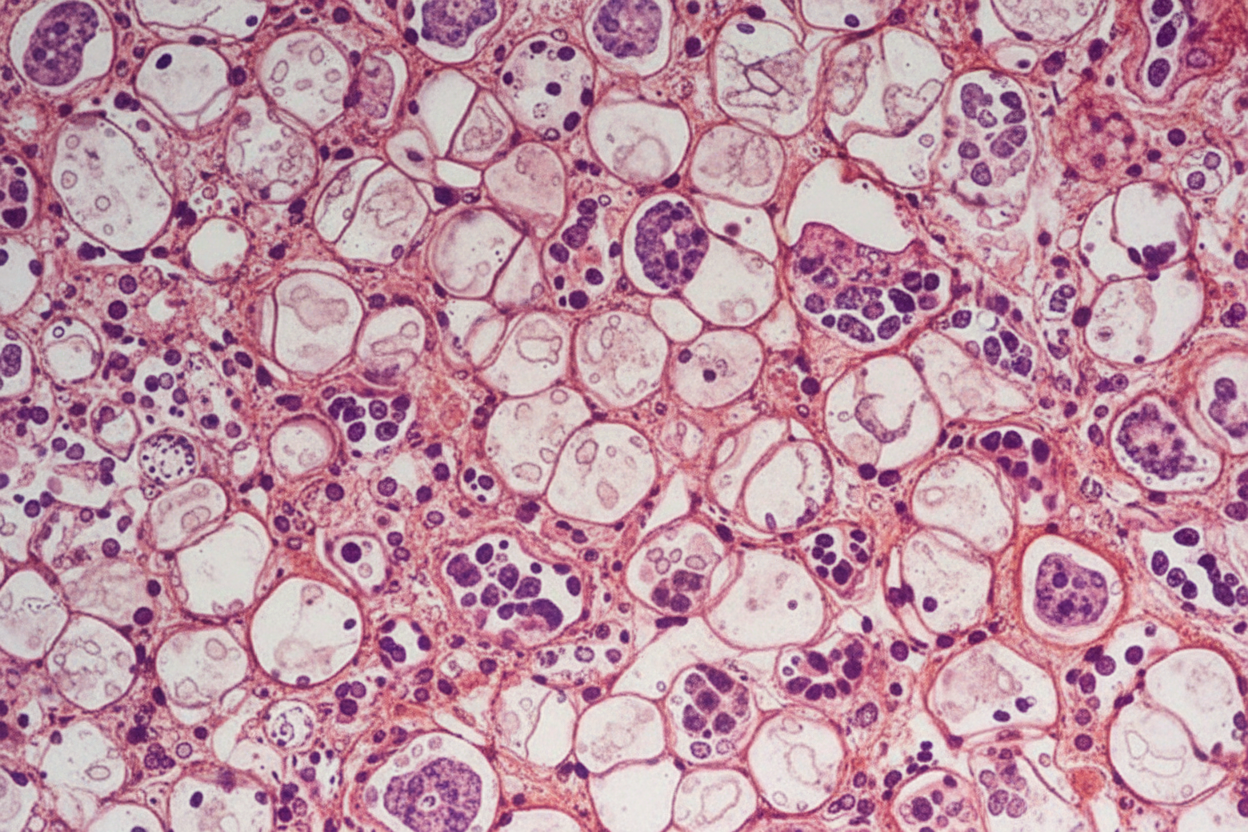
An 82-year-old woman presents to the emergency department because of excruciating right flank pain and fever for the past 2 days. She states that she is having trouble urinating. Her past medical history is unremarkable. A urinalysis is performed and comes back positive for leukocytes and gram-negative bacilli. A contrast computed tomography of the abdomen is performed and reveals a large retroperitoneal mass compressing the right ureter, leading to hydronephrosis of the right kidney. The mass is excised. Histopathologic evaluation of the mass is shown in the image below, and it is determined to be malignant. Which of the following is the most likely diagnosis in this patient?
Q56
A previously healthy 48-year-old man comes to the physician because of a 3-week history of progressively worsening jaundice, generalized itching, and epigastric discomfort. He also complains of nausea and loss of appetite. His stools have looked like clay for the past week. He has returned from a vacation in Thailand one week ago, where he got a new tattoo. He is sexually active with multiple partners and does not use protection. His vital signs are within normal limits. Examination shows jaundice and scleral icterus. Superficial excoriations are seen on all limbs. Abdominal examination shows no abnormalities. Serum studies show a fasting glucose level of 198 mg/dL, total bilirubin concentration of 10.6 mg/dL, direct bilirubin concentration of 9.8 mg/dl, and alkaline phosphatase activity of 450 U/L. Abdominal ultrasonography shows dilation of the biliary and pancreatic ducts and a 3-cm hypoechoic solid mass with irregular margins in the head of the pancreas. An elevation of which of the following serum findings is most specific for this patient's condition?
Q57
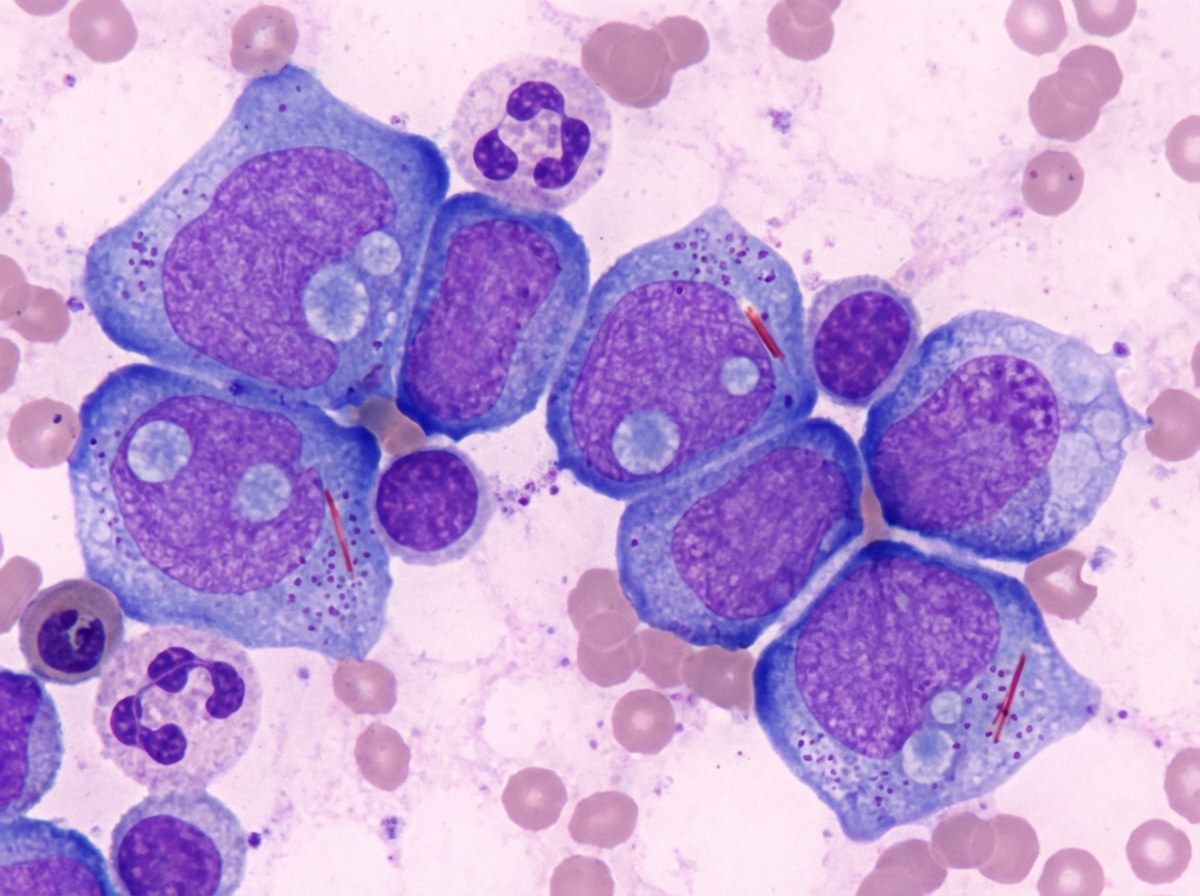
A 70-year-old retired police officer is being evaluated for fatigue. A peripheral smear shows extremely elevated numbers of immature myeloid cells, which are positive for myeloperoxidase and a translocation t(15,17). Which of the following statements is true regarding his condition?
Q58
A 63-year-old man comes to the physician because of a 2-month history of progressive fatigue. He also has shortness of breath and palpitations, which worsen on physical exertion and improve with rest. He has had intermittent constipation, low-grade fever, and generalized myalgia for the past 3 months. He has had a 10.4-kg (23-lb) weight loss over the past 4 months despite no change in appetite. His temperature is 37°C (98.6°F), pulse is 108/min, respirations are 16/min, and blood pressure is 130/78 mm Hg. Examination shows pale conjunctivae. His hemoglobin concentration is 9.1 g/dL, mean corpuscular volume is 70 μm3, and serum ferritin is 12 ng/mL. Test of the stool for occult blood is positive. Colonoscopy shows a 1.7-cm wide exophytic ulcer with irregular, bleeding edges in the ascending colon. Which of the following biopsy findings would have been the greatest predisposing factor for developing this patient's current condition?
Q59
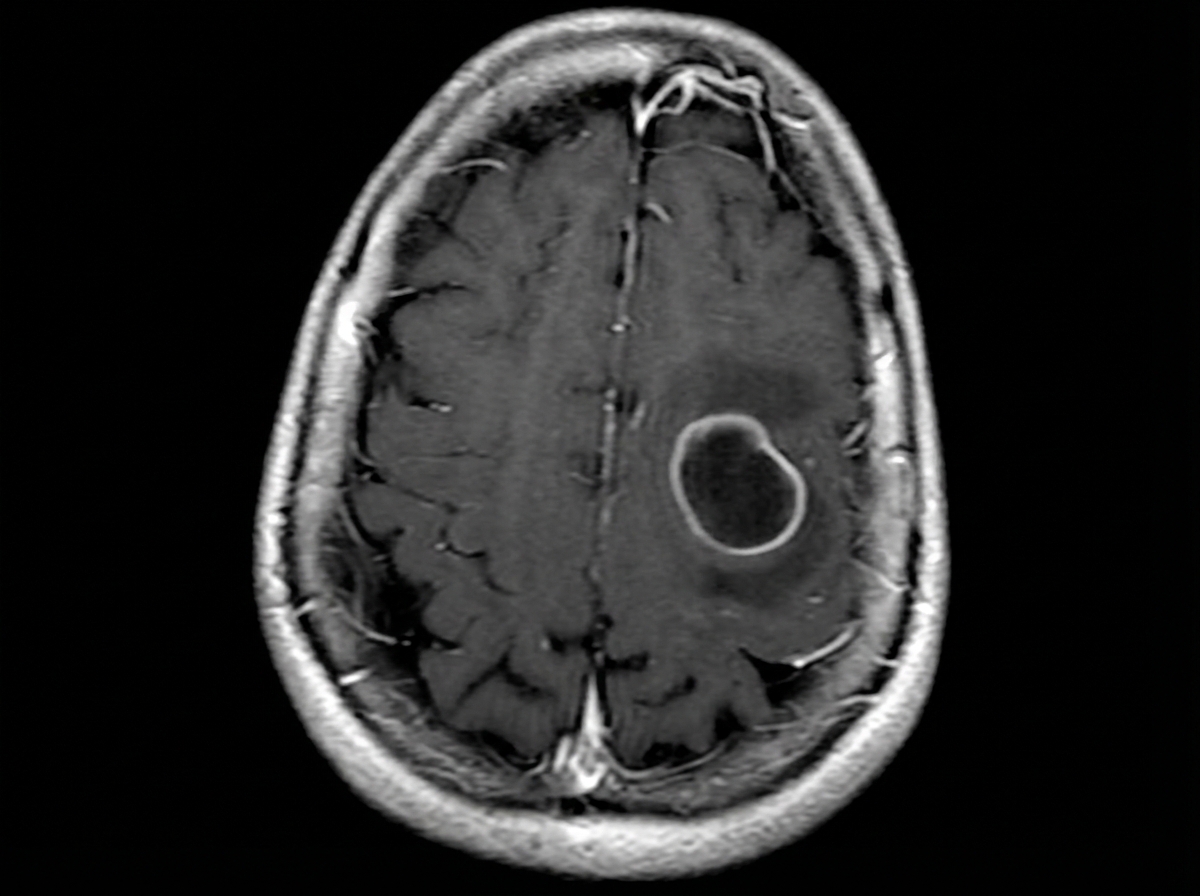
A 57-year-old man is brought to the emergency department by his wife 20 minutes after having had a seizure. He has had recurrent headaches and dizziness for the past 2 weeks. An MRI of the brain shows multiple, round, well-demarcated lesions in the brain parenchyma at the junction between gray and white matter. This patient's brain lesions are most likely comprised of cells that originate from which of the following organs?
Q60
A 55-year old man living in Midwest USA comes in complaining of painless hematuria for the past week. He denies dysuria but complains of fatigue and lethargy at work. He has lost about 9.0 kg (20.0 lb) in the past 6 months. He drinks 1–2 beers on the weekends over the past 10 years but denies smoking. He has worked at a plastic chemical plant for the past 30 years and has never been out of the country. His father died of a heart attack at age 62 and his mother is still alive and well. There is a distant history of pancreatic cancer, but he can not remember the specifics. His vitals are stable and his physical exam is unremarkable. Urinary analysis is positive for RBCs. A cystoscopy is performed and finds a pedunculated mass projecting into the bladder lumen. A biopsy shows malignant cells. Which of the following is the most concerning risk factor for this patient’s condition?
Neoplasia US Medical PG Practice Questions and MCQs
Question 51: A 62-year-old woman comes to the physician for evaluation of a mole on her forearm that has increased in size over the last several months. Physical examination shows a 9-mm skin lesion on the right forearm with irregular borders. An excisional biopsy is performed, and genetic analysis shows a mutation in the gene that encodes B-Raf. Which of the following cellular events most likely predisposed this patient to developing this skin lesion?
A. Deamination of cytosine, guanine, and adenine nucleotides
B. Relocation of a chromosomal segment onto a nonhomologous chromosome
C. Formation of covalent bonds between adjacent pyrimidine bases (Correct Answer)
D. Insufficient phosphorylation of p53
E. Double-strand breaks in DNA molecules
Explanation: ***Formation of covalent bonds between adjacent pyrimidine bases***
- This describes **pyrimidine dimers**, typically **thymine dimers**, which are formed due to **UV radiation exposure**.
- UV radiation is the primary environmental risk factor for **melanoma**, and the **B-Raf mutation** (common in melanoma) is often linked to these UV-induced DNA lesions.
*Deamination of cytosine, guanine, and adenine nucleotides*
- **Deamination** is a chemical alteration of DNA bases that can lead to mutations, but it is not the most direct or common mechanism for UV-induced melanoma.
- While deamination can occur spontaneously or be induced by certain chemicals, it is not the primary event linked to **UV radiation** and **B-Raf mutations** in melanoma.
*Relocation of a chromosomal segment onto a nonhomologous chromosome*
- This describes a **translocation**, a type of chromosomal rearrangement.
- While translocations can be associated with some cancers (e.g., leukemias, sarcomas), they are not the typical mechanism for initiating **melanoma** or directly causing **B-Raf mutations**.
*Insufficient phosphorylation of p53*
- **p53 phosphorylation** is crucial for its activation as a tumor suppressor protein, and insufficient phosphorylation would impair its function.
- However, the direct cause of this specific melanoma with a **B-Raf mutation** is usually DNA damage (like pyrimidine dimers) rather than a primary defect in p53 phosphorylation.
*Double-strand breaks in DNA molecules*
- **Double-strand breaks (DSBs)** are highly deleterious DNA lesions that can lead to chromosomal rearrangements or cell death if not repaired.
- While DSBs can be caused by various factors, including high-energy radiation, they are not the most common or characteristic DNA lesion specifically implicated in the initiation of **melanoma** due to UV exposure and subsequent **B-Raf mutation**.
Question 52: A 19-month-old girl is brought by her mother to the local walk-in clinic after noticing a mass protruding from her vagina. The mass had the appearance of "a bunch of grapes". She also says that she has been having a vaginal discharge for the past 6 months. Her family and personal history are not significant for malignancies or inherited disorders. The physical examination is unremarkable except for the presence of soft nodules protruding from the vaginal canal. A tissue sample is obtained for histologic evaluation. Several weeks later the patient returns to the walk-in clinic for a scheduled follow-up visit. The pathology report describes a polypoid mass beneath an epithelial surface with atypical stromal cells positive for polyclonal desmin. What is the most likely diagnosis in this patient?
A. Squamous cell carcinoma (SCC)
B. Verrucous carcinoma
C. Sarcoma (Correct Answer)
D. Adenocarcinoma
E. Melanoma
Explanation: ***Sarcoma***
- The description of a **"bunch of grapes"** mass in a young girl, along with **atypical stromal cells** positive for **polyclonal desmin**, is highly characteristic of **embryonal rhabdomyosarcoma** (a type of sarcoma botryoides).
- **Desmin positivity** indicates a muscle cell origin, and the **polypoid mass** is consistent with the gross appearance of this aggressive childhood tumor.
*Squamous cell carcinoma (SCC)*
- SCC of the vagina is extremely rare in a **19-month-old girl** and typically affects older women.
- Histologically, SCC would show **dysplastic squamous epithelial cells** with **keratinization** or intercellular bridges, not atypical stromal cells positive for desmin.
*Verrucous carcinoma*
- This is a rare, well-differentiated variant of SCC, also typically occurring in **older individuals** and associated with HPV infection.
- It presents as a **warty, exophytic lesion** with minimal cellular atypia, distinct from a "bunch of grapes" mass and desmin positivity.
*Adenocarcinoma*
- Vaginal adenocarcinoma can occur in young girls, particularly **clear cell adenocarcinoma** associated with **diethylstilbestrol (DES) exposure**; however, this patient has no such history.
- Histology would show glandular differentiation and mucin production, not atypical stromal cells expressing desmin.
*Melanoma*
- Vaginal melanoma is very rare, typically presenting as a **pigmented lesion** in postmenopausal women.
- Histopathology would reveal malignant melanocytes with **positive S-100 and HMB-45 staining**, not atypical stromal cells positive for desmin.
Question 53: A 26-year-old nulligravid woman presents to her gynecologist after noticing a lump in her right breast while showering. She states that she first noticed the lump approximately 2 weeks ago, when the mass was slightly tender to touch. Since then, the lump has gotten slightly smaller and is now non-tender. The patient is otherwise healthy. She does not take oral contraceptives. Her last menses was approximately 2 weeks ago. There is no family history of cancer. On exam, the patient's temperature is 98.3°F (36.8°C), blood pressure is 116/84 mmHg, pulse is 65/min, and respirations are 12/min. In her right breast, there is a small 1.5 cm mass that is mobile, well-circumscribed, and firm. Which of the following is most likely on histological examination of the mass?
A. Large, pleomorphic cells with associated central necrosis and microcalcifications
B. Cysts with “leaf-like” projections
C. Terminal duct lobular units surrounded by dense stroma
D. Hypercellular stroma with overgrowth of fibrous and glandular tissues (Correct Answer)
E. Dilated glands with 2 cell layers present
Explanation: ***Hypercellular stroma with overgrowth of fibrous and glandular tissues***
- The clinical presentation of a **mobile, well-circumscribed, firm breast mass** in a young nulligravid woman, which slightly decreased in tenderness and size, is highly characteristic of a **fibroadenoma**.
- Histologically, fibroadenomas are benign tumors composed of both **fibrous and glandular tissue**, with a characteristic **hypercellular stroma** surrounding compressed ducts.
*Large, pleomorphic cells with associated central necrosis and microcalcifications*
- This histological description is characteristic of **ductal carcinoma in situ (DCIS)** or **invasive ductal carcinoma (IDC)**, particularly the **comedo type DCIS**.
- The patient's clinical presentation with a mobile, non-tender lump that improved and her young age make **malignancy less likely**.
*Cysts with “leaf-like” projections*
- This describes the histological appearance of a **phyllodes tumor**, which can be benign, borderline, or malignant.
- While phylloides tumors can present as mobile masses, they tend to **grow rapidly** and often become quite large, unlike the description of the mass in this patient.
*Terminal duct lobular units surrounded by dense stroma*
- This description is characteristic of **fibrocystic changes** in the breast, a common benign condition.
- While fibrocystic changes can cause lumps and tenderness, the presence of a distinct, mobile, well-circumscribed mass is more indicative of a **fibroadenoma**.
*Dilated glands with 2 cell layers present*
- This describes **sclerosing adenosis** or other types of **adenosis**, which are benign proliferative lesions within the breast.
- While these can present as masses, the classic presentation of a fibroadenoma with its distinct encapsulation and mobility is a more precise fit.
Question 54: A 28-year-old patient presents to a medical office for a consultation regarding a mole on her nose that is increasing in size. She also complains of frequent headaches, which she associates with stress on the job. She works as a civil engineer and spends much of her time outside. Her past medical history is positive for bronchial asthma; nevertheless, her vitals are stable. The mole is 8 mm in diameter, has irregular borders, and is brown in color. A biopsy is performed and sent for genetic analysis. A mutation is found. A mutation in which gene is characteristic of this patient’s main diagnosis?
A. DCC
B. APC
C. BRAF (Correct Answer)
D. c-MYC
E. BCL-2
Explanation: ***BRAF***
- The patient's presentation with an **enlarging mole** on the nose with **irregular borders** and significant sun exposure strongly suggests **melanoma**.
- **BRAF mutations** are found in approximately 50% of melanomas and are a key target for therapy.
*DCC*
- The DCC (Deleted in Colorectal Carcinoma) gene is primarily associated with **colorectal cancer**.
- While it plays a role in apoptosis and cellular differentiation, it is not a characteristic mutation for melanoma.
*APC*
- The APC (Adenomatous Polyposis Coli) gene is a **tumor suppressor gene** most famously linked to **familial adenomatous polyposis** and **colorectal cancer**.
- Mutations in APC are not characteristic of melanoma.
*c-MYC*
- The c-MYC gene is an **oncogene** involved in cell growth, proliferation, and apoptosis, commonly amplified or mutated in various cancers like lymphomas and some solid tumors.
- While important in cancer biology, c-MYC mutations are not a primary driver or characteristic mutation for melanoma.
*BCL-2*
- BCL-2 is an **anti-apoptotic gene** known for its role in preventing programmed cell death, and its overexpression is common in lymphomas (especially follicular lymphoma).
- It is not a characteristic mutation associated with melanoma development or progression.
Question 55: An 82-year-old woman presents to the emergency department because of excruciating right flank pain and fever for the past 2 days. She states that she is having trouble urinating. Her past medical history is unremarkable. A urinalysis is performed and comes back positive for leukocytes and gram-negative bacilli. A contrast computed tomography of the abdomen is performed and reveals a large retroperitoneal mass compressing the right ureter, leading to hydronephrosis of the right kidney. The mass is excised. Histopathologic evaluation of the mass is shown in the image below, and it is determined to be malignant. Which of the following is the most likely diagnosis in this patient?
A. Rhabdomyosarcoma
B. Leiomyosarcoma
C. Lipoma
D. Teratoma
E. Liposarcoma (Correct Answer)
Explanation: ***Liposarcoma***
- The **most common primary malignant retroperitoneal tumor** in adults, particularly in elderly patients
- Characteristically presents as a **large retroperitoneal mass** causing compressive symptoms such as hydronephrosis
- **Histopathological features** include pleomorphic lipoblasts with varying degrees of differentiation (well-differentiated, dedifferentiated, myxoid, or pleomorphic subtypes)
- The clinical presentation of an elderly patient with a malignant retroperitoneal mass strongly suggests this diagnosis
*Rhabdomyosarcoma*
- Primarily a **pediatric malignancy**, most common in children and young adults under 20 years old
- Most frequently arises in the **head and neck, genitourinary tract, or extremities**, not typically retroperitoneal
- Histologically shows skeletal muscle differentiation with rhabdomyoblasts, not lipoblastic features
*Leiomyosarcoma*
- More commonly found in the **uterus, gastrointestinal tract, or blood vessels**
- While it can occur in the retroperitoneum, it is **less common** than liposarcoma in this location
- Histologically demonstrates **smooth muscle differentiation** with spindle cells, not the lipoblastic features characteristic of the described mass
*Lipoma*
- A **benign tumor** composed of mature adipose tissue without cellular atypia
- Would not present as a **malignant mass** on histopathologic evaluation
- Generally asymptomatic and slow-growing; unlikely to cause severe symptoms like excruciating pain or obstructive hydronephrosis
*Teratoma*
- Contains tissue derived from **all three germ layers** (ectoderm, mesoderm, endoderm)
- More commonly associated with **gonadal or midline structures** (ovaries, testes, mediastinum)
- Rare in the retroperitoneum in elderly patients; histology would show diverse tissue types rather than predominantly lipoblastic features
Question 56: A previously healthy 48-year-old man comes to the physician because of a 3-week history of progressively worsening jaundice, generalized itching, and epigastric discomfort. He also complains of nausea and loss of appetite. His stools have looked like clay for the past week. He has returned from a vacation in Thailand one week ago, where he got a new tattoo. He is sexually active with multiple partners and does not use protection. His vital signs are within normal limits. Examination shows jaundice and scleral icterus. Superficial excoriations are seen on all limbs. Abdominal examination shows no abnormalities. Serum studies show a fasting glucose level of 198 mg/dL, total bilirubin concentration of 10.6 mg/dL, direct bilirubin concentration of 9.8 mg/dl, and alkaline phosphatase activity of 450 U/L. Abdominal ultrasonography shows dilation of the biliary and pancreatic ducts and a 3-cm hypoechoic solid mass with irregular margins in the head of the pancreas. An elevation of which of the following serum findings is most specific for this patient's condition?
A. Anti-HBc immunoglobulin M
B. Alpha-fetoprotein
C. Elevated anti-neutrophil cytoplasmic antibodies
D. Glucagon
E. Cancer antigen 19-9 (Correct Answer)
Explanation: ***Cancer antigen 19-9***
- The patient's symptoms (progressively worsening jaundice, epigastric discomfort, clay-colored stools, weight loss, nausea) and imaging findings (dilation of biliary and pancreatic ducts, hypoechoic solid mass in the pancreatic head) are highly suggestive of **pancreatic cancer**.
- **CA 19-9** is a tumor marker that is elevated in most patients with pancreatic cancer and is used for diagnosis, monitoring treatment response, and detecting recurrence.
*Anti-HBc immunoglobulin M*
- **Anti-HBc IgM** indicates **acute hepatitis B infection**, which can cause jaundice but typically presents with elevated transaminases, and abdominal ultrasound would show liver inflammation, not a pancreatic mass or ductal dilation.
- While unprotected sexual activity is a risk factor for hepatitis B, the clinical picture with an obstructed biliary system points away from acute viral hepatitis as the primary cause.
*Alpha-fetoprotein*
- **Alpha-fetoprotein (AFP)** is a tumor marker primarily associated with **hepatocellular carcinoma** and some germ cell tumors.
- Although the patient has jaundice, the ultrasound findings of a pancreatic mass and dilated ducts are not consistent with hepatocellular carcinoma.
*Elevated anti-neutrophil cytoplasmic antibodies*
- **Anti-neutrophil cytoplasmic antibodies (ANCAs)** are associated with **autoimmune vasculitides** (e.g., GPA, MPA) and some inflammatory bowel diseases, not typically with obstructive jaundice due to a pancreatic mass.
- There are no symptoms or signs to suggest a systemic vasculitis in this patient.
*Glucagon*
- **Glucagon** is a hormone involved in glucose regulation. While the patient has elevated fasting glucose, a specific elevation of glucagon itself is associated with a rare **glucagonoma**, which typically presents with a characteristic rash (necrolytic migratory erythema), diabetes, and weight loss, none of which are the primary presenting features here.
- The elevated fasting glucose is more likely a paraneoplastic effect of pancreatic cancer, as the mass is compressing the bile ducts, and the patient has other features specific to pancreatic ductal adenocarcinoma.
Question 57: A 70-year-old retired police officer is being evaluated for fatigue. A peripheral smear shows extremely elevated numbers of immature myeloid cells, which are positive for myeloperoxidase and a translocation t(15,17). Which of the following statements is true regarding his condition?
A. Myelodysplastic syndromes may give rise to the condition.
B. This condition is also developed early in life in patients with Down syndrome.
C. Philadelphia chromosome may be seen and indicates a poor prognosis.
D. Auer rods are responsible for gum hyperplasia and bleeding.
E. The patient can be treated with a vitamin A derivative. (Correct Answer)
Explanation: ***The patient can be treated with a vitamin A derivative.***
- The presence of **immature myeloid cells** positive for **myeloperoxidase (MPO)** and a **t(15;17) translocation** strongly indicates **Acute Promyelocytic Leukemia (APL)**.
- APL is effectively treated with **all-trans retinoic acid (ATRA)**, which is a **vitamin A derivative**, as it induces differentiation of the promyelocytes.
*Myelodysplastic syndromes may give rise to the condition.*
- While myelodysplastic syndromes (MDS) can transform into other types of **acute myeloid leukemia (AML)**, they typically give rise to other subtypes of AML, not specifically APL, which has a distinct genetic translocation.
- MDS would usually show a **dysplastic morphology** in multiple cell lines, which is not described as the primary feature here.
*This condition is also developed early in life in patients with Down syndrome.*
- **Down syndrome** patients have an increased risk of specific leukemias, particularly **Acute Megakaryoblastic Leukemia (AML M7)** in early childhood, and **Acute Lymphoblastic Leukemia (ALL)**.
- APL, characterized by t(15;17), is not specifically associated with Down syndrome.
*Philadelphia chromosome may be seen and indicates a poor prognosis.*
- The **Philadelphia chromosome (t(9;22))** is characteristic of **Chronic Myeloid Leukemia (CML)** and some cases of **B-ALL**, not APL.
- The t(15;17) translocation is the defining feature of APL, and Philadelphia chromosome is not seen in this condition.
*Auer rods are responsible for gum hyperplasia and bleeding.*
- **Auer rods** are indeed characteristic of AML, including APL, and are formed by abnormal fusion of primary granules.
- However, **gum hyperplasia and bleeding** are more distinctly characteristic of **Acute Monocytic Leukemia (AML M5)** due to monocyte infiltration, rather than directly caused by Auer rods.
Question 58: A 63-year-old man comes to the physician because of a 2-month history of progressive fatigue. He also has shortness of breath and palpitations, which worsen on physical exertion and improve with rest. He has had intermittent constipation, low-grade fever, and generalized myalgia for the past 3 months. He has had a 10.4-kg (23-lb) weight loss over the past 4 months despite no change in appetite. His temperature is 37°C (98.6°F), pulse is 108/min, respirations are 16/min, and blood pressure is 130/78 mm Hg. Examination shows pale conjunctivae. His hemoglobin concentration is 9.1 g/dL, mean corpuscular volume is 70 μm3, and serum ferritin is 12 ng/mL. Test of the stool for occult blood is positive. Colonoscopy shows a 1.7-cm wide exophytic ulcer with irregular, bleeding edges in the ascending colon. Which of the following biopsy findings would have been the greatest predisposing factor for developing this patient's current condition?
A. A pedunculated inflammatory polyp
B. A villous adenomatous polyp (Correct Answer)
C. A serrated hyperplastic polyp
D. A submucosal lipomatous polyp
E. A tubular adenomatous polyp
Explanation: ***A villous adenomatous polyp***
- Villous adenomas are **predisposed to malignant transformation** due to their large size, increased cellular atypia, and high-grade dysplasia.
- The patient's presentation with **iron-deficiency anemia**, weight loss, and a bleeding colonic ulcer is highly suggestive of **colorectal adenocarcinoma**, which often arises from adenomatous polyps.
*A pedunculated inflammatory polyp*
- Inflammatory polyps are typically **non-neoplastic** and develop in response to chronic inflammation, such as in inflammatory bowel disease.
- They have **minimal to no malignant potential** and are not a significant risk factor for colorectal cancer.
*A serrated hyperplastic polyp*
- Hyperplastic polyps are generally **benign** and have a very low risk of malignant transformation, especially if small and located in the rectosigmoid colon.
- While serrated polyps (including sessile serrated adenomas) can progress to cancer via the **serrated pathway**, hyperplastic polyps specifically are largely considered harmless.
*A submucosal lipomatous polyp*
- Lipomas are **benign tumors** composed of mature adipose tissue that arise in the submucosa.
- They are **non-neoplastic** and have no malignant potential, thus not contributing to cancer development.
*A tubular adenomatous polyp*
- Tubular adenomas are adenomatous polyps with malignant potential, but **villous adenomas have a higher risk** of progression to adenocarcinoma.
- The presence of symptoms such as anemia and weight loss, along with the description of a bleeding ulcer, points to a more advanced lesion, which is more characteristic of a villous component or an already transformed malignancy.
Question 59: A 57-year-old man is brought to the emergency department by his wife 20 minutes after having had a seizure. He has had recurrent headaches and dizziness for the past 2 weeks. An MRI of the brain shows multiple, round, well-demarcated lesions in the brain parenchyma at the junction between gray and white matter. This patient's brain lesions are most likely comprised of cells that originate from which of the following organs?
A. Kidney
B. Skin
C. Lung (Correct Answer)
D. Thyroid
E. Prostate
Explanation: ***Lung (Correct Answer)***
- **Lung cancer** is the most common cause of **brain metastases** in adults, accounting for approximately **50% of all cases**
- The clinical presentation—seizure, headaches, dizziness, and **multiple, round, well-demarcated lesions at the gray-white matter junction**—is classic for metastatic lung cancer
- Both **small cell and non-small cell lung cancers** have high propensity for hematogenous spread to the brain
- The watershed areas at the gray-white junction are common sites due to lodging of tumor emboli in terminal arterioles
*Kidney (Incorrect)*
- **Renal cell carcinoma (RCC)** can metastasize to the brain but accounts for only **5-10% of brain metastases**
- While RCC metastases can appear similar on imaging, lung cancer is statistically more likely given its higher prevalence
- RCC metastases are often **highly vascular and may hemorrhage**, which is not mentioned in this case
*Skin (Incorrect)*
- **Melanoma** has the **highest propensity per case** to metastasize to the brain among all cancers
- However, the **overall incidence of melanoma is much lower** than lung cancer, making it a less probable primary source
- Melanoma brain metastases often present as **hemorrhagic lesions** and would typically have skin findings or history
*Thyroid (Incorrect)*
- **Thyroid cancer** rarely metastasizes to the brain (accounts for <1% of brain metastases)
- Brain metastases from thyroid cancer typically occur in **advanced papillary or follicular carcinoma** or in **anaplastic thyroid cancer**
- More common metastatic sites for thyroid cancer are lung and bone
*Prostate (Incorrect)*
- **Prostate cancer very rarely metastasizes to the brain** (<1% of cases)
- Prostate cancer preferentially metastasizes to **bone (especially axial skeleton), lymph nodes, and liver**
- Brain metastases from prostate cancer suggest extremely advanced, aggressive disease and are exceptionally uncommon
Question 60: A 55-year old man living in Midwest USA comes in complaining of painless hematuria for the past week. He denies dysuria but complains of fatigue and lethargy at work. He has lost about 9.0 kg (20.0 lb) in the past 6 months. He drinks 1–2 beers on the weekends over the past 10 years but denies smoking. He has worked at a plastic chemical plant for the past 30 years and has never been out of the country. His father died of a heart attack at age 62 and his mother is still alive and well. There is a distant history of pancreatic cancer, but he can not remember the specifics. His vitals are stable and his physical exam is unremarkable. Urinary analysis is positive for RBCs. A cystoscopy is performed and finds a pedunculated mass projecting into the bladder lumen. A biopsy shows malignant cells. Which of the following is the most concerning risk factor for this patient’s condition?
A. Aromatic amine exposure (Correct Answer)
B. Alcohol
C. Vinyl chloride exposure
D. Genetic predisposition
E. Schistosoma haematobium infection
Explanation: ***Aromatic amine exposure***
- The patient's 30-year employment at a **plastic chemical plant** is a significant risk factor, as many chemicals used in such industries contain **aromatic amines**.
- Exposure to **aromatic amines** is a well-established cause of **transitional cell carcinoma** of the bladder, which is consistent with the painless hematuria and the finding of a malignant bladder mass.
*Alcohol*
- While heavy alcohol consumption can contribute to various health issues, it is **not considered a direct or strong risk factor** for bladder cancer.
- The patient's reported consumption of "1-2 beers on the weekends" over 10 years is relatively moderate and unlikely to be the primary cause of his severe presentation.
*Vinyl chloride exposure*
- **Vinyl chloride** exposure is primarily associated with **hepatic angiosarcoma** and, to a lesser extent, lung cancer and brain tumors.
- It is **not a significant risk factor** for bladder cancer, differentiating it from the patient's presentation of a bladder mass.
*Genetic predisposition*
- While there can be a genetic component to some cancers, the familial history mentioned (father died of heart attack, distant history of pancreatic cancer) does **not specifically point to a strong genetic predisposition** for bladder cancer.
- The powerful occupational exposure to chemicals is a much more direct and concerning risk factor in this case.
*Schistosoma haematobium infection*
- **Schistosoma haematobium** infection is a known cause of **squamous cell carcinoma** of the bladder, especially in endemic regions like parts of Africa and the Middle East.
- The patient has **never been out of the country** and lives in the Midwest USA, making this infection highly unlikely.