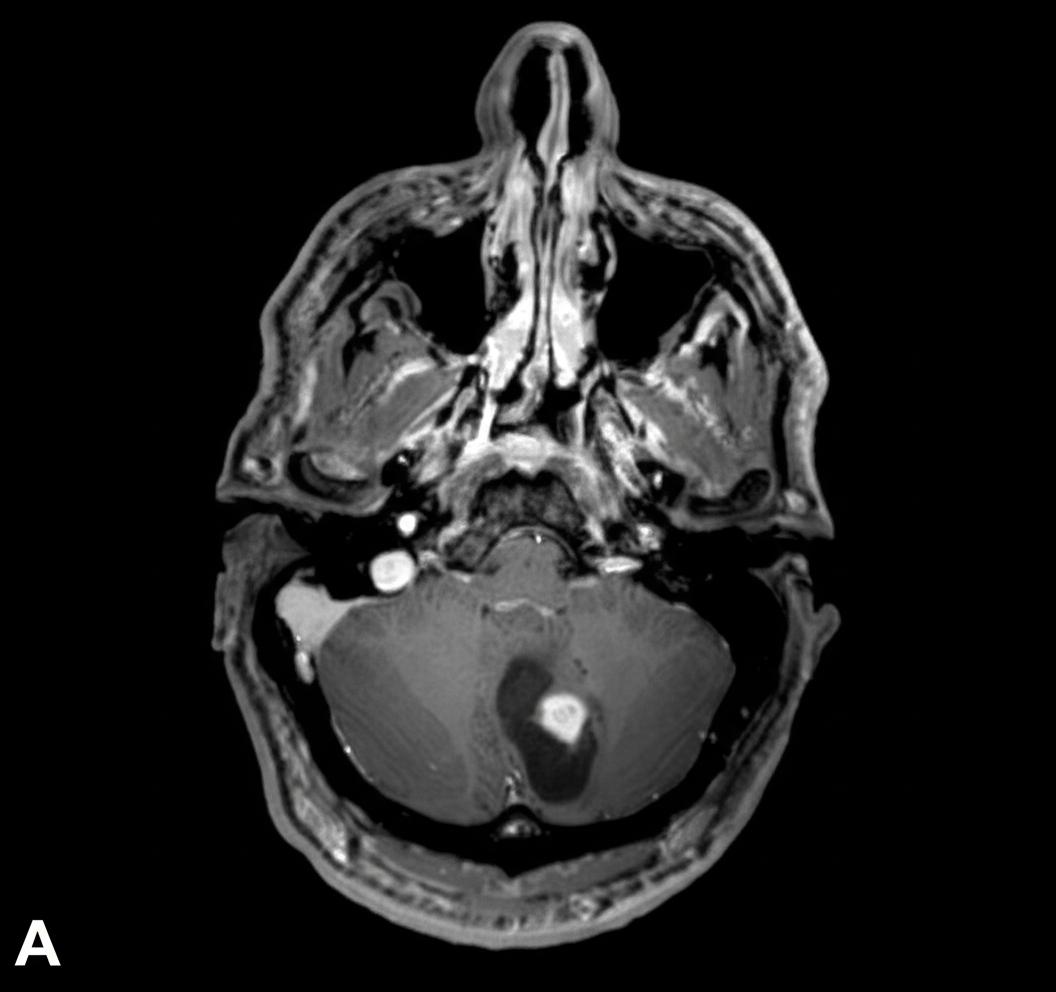
A 9-year-old girl is brought to her primary care physician because of a 4-month history of early morning headaches and worsening fatigue. The headaches are often accompanied by nausea and sometimes relieved by vomiting. She stopped going to her ballet lessons 2 weeks ago because she was embarrassed about falling frequently and having increasing difficulty performing the steps. Her temperature is 36.8°C (98.2°F), pulse is 98/min, and blood pressure is 105/65 mm Hg. She has a broad-based gait. While standing with both feet together and raising her arms, closing her eyes does not affect her balance. She is unable to perform rapid, alternating movements with her hands. An MRI of the brain is shown. Which of the following is the most likely diagnosis?
Q32
A sexually active 37-year-old man comes to the physician because of a 7-day history of itching in the area of his genitals. He also reports burning on micturition. He has type 2 diabetes mellitus, which is well controlled with oral metformin. Pelvic examination shows tender, atrophic white papules on the glans and prepuce, with erythema of the surrounding skin. The urinary meatus is narrowed and sclerotic. Which of the following is the most appropriate next step in diagnosis?
Q33
A 29-year-old man comes to the physician because of a 3-month history of fatigue, weight loss, and multiple painless swellings on his neck and axilla. He reports that his swellings become painful after he drinks alcohol. Physical examination shows nontender cervical and axillary lymphadenopathy. A lymph node biopsy specimen shows giant binucleate cells. Which of the following is the most likely diagnosis?
Q34
A 32-year-old Caucasian man presents to the physician because of the swelling and discomfort of the right testis for 3 weeks. There is no history of trauma, fever, or night sweats. He had surgery for an undescended right testis when he was 6 months old. There is no history of liver disease or hypogonadism. He has fathered 2 children. He takes no medications and denies any illicit drug use. The vital signs are within normal limits. Palpation of the scrotum reveals a firm nontender mass that cannot be separated from the right testis. Examination of the left testis shows no abnormalities. There is no supraclavicular or inguinal lymphadenopathy. Gynecomastia is present. The rest of the physical examination is unremarkable. Ultrasound shows an enlarged right testicle with a hypoechoic mass replacing a large portion of the normal architecture. The left testis is normal. The laboratory test results are as follows:
HCG Elevated
AFP Elevated
LDH Normal
Which of the following is the most likely diagnosis?
Q35
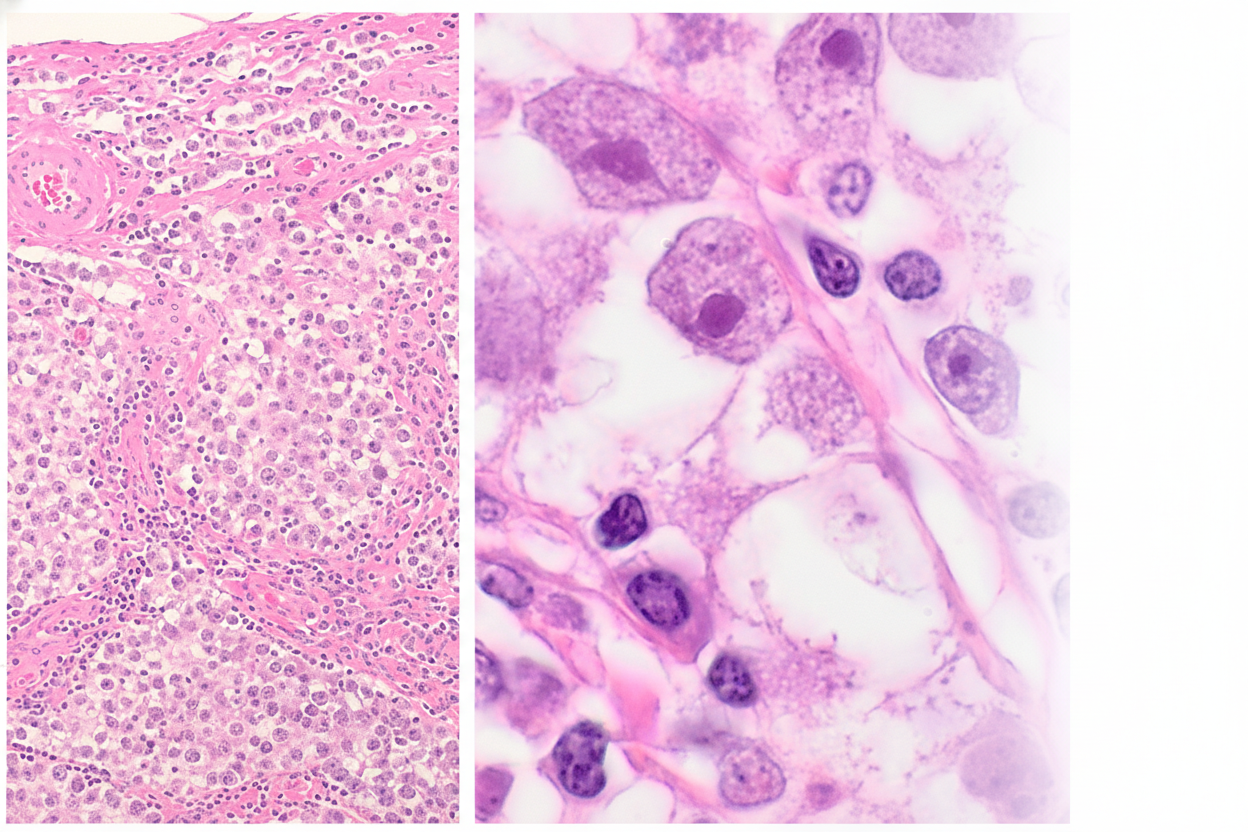
A 22-year-old man comes to the physician for the evaluation of a 2-day history of right testicular pain. At the age of 6 months, he was treated for hypospadias and cryptorchidism. Physical examination shows a rubbery, large right testicle. Orchidectomy is performed. A photomicrograph of a section of the mass is shown. Which of the following additional findings is most likely in this patient?
Q36
A 60-year-old woman comes to the physician because of lower back pain, generalized weakness, and weight loss that has occurred over the past 6 weeks. She also says that her urine has appeared foamy recently. Physical examination shows focal midline tenderness of the lumbar spine and conjunctival pallor. Her temperature is 100.5°F (38°C). A photomicrograph of a bone marrow biopsy specimen is shown. Further evaluation of this patient is most likely to show which of the following findings?
Q37
A 72-year-old man presents to the clinic for the evaluation of a lesion on his nose that has been slowly getting larger for the past 2 months. The patient notes no history of trauma, pruritus, or pain, but states that the size of the lesion is making his nose feel uncomfortable. On exam, the nodule is pink with rolled borders. Telangiectasias are also present within the lesion, with central ulceration. What is the characteristic histologic appearance of this lesion?
Q38
A 21-year-old male college student is very anxious about having thyroid cancer as he found a lump in his neck a few days ago. He has also had diarrhea and a feeling of warmth on his face for 3 days now. His father and uncle both have been diagnosed with thyroid cancer. The lump is about 1 cm in diameter and is fixed and nontender on palpation. Physical examination is otherwise unremarkable. Ultrasound shows a non-cystic cold nodule that requires fine needle aspiration for diagnosis. Thyroid functions tests are normal, and his calcitonin level is 346 ug/ml. Which of the following genetic mutations would warrant thyroidectomy in this patient?
Q39
A 12-year-old boy is brought in by his mother for a routine checkup. The patient’s mother says he is frequently fatigued and looks pale. She also claims that he has recently become “much quieter” than normal and is no longer interested in playing baseball with his friends. The patient’s mother believes it may just be “growing pains.” The patient has no significant medical history. He is the 90th percentile for height and weight and has been meeting all developmental milestones. The patient is afebrile, and his vital signs are within normal limits. Physical examination reveals several small bruises on the patient’s right arm and on both thighs. Laboratory findings are significant for the following:
Sodium 140 mEq/L
Potassium 4.2 mEq/L
Chloride 101 mEq/L
Bicarbonate 27 mEq/L
BUN 16 mg/dL
Creatinine 1.2 mg/dL
Glucose (fasting) 111 mg/dL
WBC 3,400/mm3
RBC 4.20 x 10⁶/mm3
Hematocrit 22%
Hemoglobin 7.1 g/dL
Platelet count 109,000/mm3
A peripheral blood smear reveals myeloblasts. Which of the following is the next best step in the management of this patient?
Q40
A 62-year-old man comes to the physician because of a 2-month history of an itchy rash and a 7-kg (15-lb) weight loss. Physical examination shows multiple erythematous plaques on the arms, legs, and chest. There are palpable lymph nodes in the axillary and inguinal areas. A biopsy of a skin lesion shows aggregates of neoplastic cells within the epidermis. A peripheral blood smear is most likely to show which of the following findings in this patient?
Neoplasia US Medical PG Practice Questions and MCQs
Question 31: A 9-year-old girl is brought to her primary care physician because of a 4-month history of early morning headaches and worsening fatigue. The headaches are often accompanied by nausea and sometimes relieved by vomiting. She stopped going to her ballet lessons 2 weeks ago because she was embarrassed about falling frequently and having increasing difficulty performing the steps. Her temperature is 36.8°C (98.2°F), pulse is 98/min, and blood pressure is 105/65 mm Hg. She has a broad-based gait. While standing with both feet together and raising her arms, closing her eyes does not affect her balance. She is unable to perform rapid, alternating movements with her hands. An MRI of the brain is shown. Which of the following is the most likely diagnosis?
A. Ependymoma
B. Oligodendroglioma
C. Pilocytic astrocytoma (Correct Answer)
D. Acoustic schwannoma
E. Diffuse brainstem glioma
Explanation: ***Pilocytic astrocytoma***
- This is the most common **pediatric cerebellar tumor**, often presenting with **hydrocephalus** (causing morning headaches, nausea, and vomiting) and **cerebellar dysfunction** (ataxia, broad-based gait, dysdiadochokinesia).
- Imaging typically shows a **cystic lesion with an enhancing mural nodule**, consistent with the MRI findings of a large posterior fossa mass.
*Ependymoma*
- Ependymomas are also posterior fossa tumors, but they typically arise from the **floor of the fourth ventricle** and often show **calcifications** and characteristic "plastic tumor" extension into the cisterns, which are not clearly seen here.
- While they can cause hydrocephalus and cerebellar symptoms, the characteristic imaging findings differentiate it from a pilocytic astrocytoma.
*Oligodendroglioma*
- **Oligodendrogliomas** are typically found in the **cerebral hemispheres** of adults and are characterized by calcifications and slow growth.
- This patient is a child, and the tumor is located in the **posterior fossa**, making oligodendroglioma less likely.
*Acoustic schwannoma*
- **Acoustic schwannomas** arise from the vestibular portion of the **eighth cranial nerve** and primarily cause **hearing loss**, tinnitus, and balance issues.
- They are typically located at the **cerebellopontine angle** and are rare in children unless associated with neurofibromatosis type 2.
*Diffuse brainstem glioma*
- **Diffuse brainstem gliomas** cause rapid progressive **cranial nerve deficits**, ataxia, and long tract signs by infiltrating the brainstem.
- While they can cause hydrocephalus, the imaging usually shows an **expansile, poorly circumscribed lesion** within the brainstem itself, which is not the appearance here.
Question 32: A sexually active 37-year-old man comes to the physician because of a 7-day history of itching in the area of his genitals. He also reports burning on micturition. He has type 2 diabetes mellitus, which is well controlled with oral metformin. Pelvic examination shows tender, atrophic white papules on the glans and prepuce, with erythema of the surrounding skin. The urinary meatus is narrowed and sclerotic. Which of the following is the most appropriate next step in diagnosis?
A. Local application of fluconazole
B. Test lesion with acetic acid application
C. Biopsy of the lesion (Correct Answer)
D. Local application of tacrolimus
E. Local application of clobetasol
Explanation: ***Biopsy of the lesion***
- The patient's symptoms, including **atrophic white papules**, **sclerosis**, and **meatal narrowing**, are highly suggestive of **lichen sclerosus** (LS), a chronic inflammatory skin condition.
- A **biopsy** is crucial for confirming the diagnosis of LS and ruling out other conditions, including **squamous cell carcinoma**, which can coexist or develop from LS.
*Local application of fluconazole*
- **Fluconazole** is an antifungal medication indicated for **candidal infections** which typically present as pruritus, erythema, and white discharge or plaques, but not atrophic papules or sclerosis associated with meatal narrowing.
- While patients with diabetes are prone to fungal infections, the description of **atrophic papules** and **sclerosis** makes a fungal infection less likely as the primary diagnosis.
*Test lesion with acetic acid application*
- **Acetic acid application** is used to identify **acetowhite lesions**, which are characteristic of human papillomavirus (HPV) infection causing **genital warts**.
- The described lesions (atrophic white papules, sclerosis) are not typical for genital warts, making this test less appropriate as a primary diagnostic step.
*Local application of tacrolimus*
- **Tacrolimus** is a topical calcineurin inhibitor often used for inflammatory skin conditions like eczema or sometimes lichen planus, but it's not the initial diagnostic step for suspected LS with atypical features.
- While tacrolimus might be considered for treatment in some cases of lichen sclerosus, it should only be initiated after a definitive diagnosis, preferably with a biopsy to exclude malignancy.
*Local application of clobetasol*
- **Clobetasol** is a potent topical corticosteroid used to treat inflammatory skin conditions, including lichen sclerosus, to reduce inflammation and itching.
- While it's a potential treatment for LS, applying it before a definitive diagnosis via biopsy could mask features or delay the detection of a possible malignancy.
Question 33: A 29-year-old man comes to the physician because of a 3-month history of fatigue, weight loss, and multiple painless swellings on his neck and axilla. He reports that his swellings become painful after he drinks alcohol. Physical examination shows nontender cervical and axillary lymphadenopathy. A lymph node biopsy specimen shows giant binucleate cells. Which of the following is the most likely diagnosis?
A. Diffuse large B-cell lymphoma
B. Acute retroviral syndrome
C. Hodgkin lymphoma (Correct Answer)
D. Acute lymphocytic leukemia
E. Adult T-cell lymphoma
Explanation: ***Hodgkin lymphoma***
- The presence of **fatigue, weight loss, and painless lymphadenopathy** (B symptoms) in a young man is highly suggestive of Hodgkin lymphoma.
- The **lymph node biopsy showing giant binucleate cells** (Reed-Sternberg cells) is pathognomonic for Hodgkin lymphoma, and **alcohol-induced lymph node pain** is a classic, though uncommon, symptom.
*Diffuse large B-cell lymphoma*
- This is an **aggressive non-Hodgkin lymphoma** that can present with rapidly enlarging lymph nodes and B symptoms.
- However, the characteristic **Reed-Sternberg cells** found on biopsy are not seen in diffuse large B-cell lymphoma.
*Acute retroviral syndrome*
- This syndrome typically presents with **flu-like symptoms, fever, sore throat, and generalized lymphadenopathy** within weeks of HIV infection.
- It is usually **self-limiting** and does not feature the specific histopathology of giant binucleate cells on lymph node biopsy.
*Acute lymphocytic leukemia*
- This is a **hematologic malignancy** characterized by the proliferation of immature lymphoid cells.
- It often presents with symptoms of **bone marrow failure** (anemia, bleeding, infections) and can have lymphadenopathy, but the diagnostic lymph node biopsy features are not consistent with Reed-Sternberg cells.
*Adult T-cell lymphoma*
- This rare lymphoma is associated with **human T-lymphotropic virus type 1 (HTLV-1) infection** and is more common in endemic regions.
- It can present with lymphadenopathy, skin lesions, and hypercalcemia, but the histopathology would show **pleomorphic T-cells**, not Reed-Sternberg cells.
Question 34: A 32-year-old Caucasian man presents to the physician because of the swelling and discomfort of the right testis for 3 weeks. There is no history of trauma, fever, or night sweats. He had surgery for an undescended right testis when he was 6 months old. There is no history of liver disease or hypogonadism. He has fathered 2 children. He takes no medications and denies any illicit drug use. The vital signs are within normal limits. Palpation of the scrotum reveals a firm nontender mass that cannot be separated from the right testis. Examination of the left testis shows no abnormalities. There is no supraclavicular or inguinal lymphadenopathy. Gynecomastia is present. The rest of the physical examination is unremarkable. Ultrasound shows an enlarged right testicle with a hypoechoic mass replacing a large portion of the normal architecture. The left testis is normal. The laboratory test results are as follows:
HCG Elevated
AFP Elevated
LDH Normal
Which of the following is the most likely diagnosis?
A. Leydig cell tumor
B. Embryonal carcinoma (Correct Answer)
C. Lymphoma
D. Seminomatous germ cell tumor
E. Metastasis to testis
Explanation: ***Embryonal carcinoma***
- This is the best answer among the options because embryonal carcinomas can produce **both HCG and AFP**, unlike the other tumor types listed. While **both markers being elevated** is more classically seen in **mixed germ cell tumors**, embryonal carcinoma is the only pure tumor type among the options that can explain this marker profile.
- The presence of **gynecomastia** is consistent with elevated HCG production.
- The history of **undescended testis (cryptorchidism)** is a significant risk factor for testicular germ cell tumors, increasing risk 3-5 fold.
- The **firm, nontender mass** with a **hypoechoic mass** on ultrasound is characteristic of a germ cell tumor.
*Leydig cell tumor*
- Leydig cell tumors are **sex cord-stromal tumors** (non-germ cell) and do **not produce HCG or AFP**.
- They can cause **gynecomastia** due to estrogen production, but the elevated tumor markers rule this out.
*Lymphoma*
- Testicular lymphoma is more common in **older men** (typically over 60) and presents as a rapidly enlarging, firm testicular mass.
- Lymphoma does **not produce HCG or AFP**, making it incompatible with the laboratory findings.
*Seminomatous germ cell tumor*
- While seminomas can elevate **HCG** in 10-20% of cases (due to syncytiotrophoblastic giant cells), they **never produce AFP**.
- The presence of **elevated AFP** in this patient definitively rules out a pure seminoma.
*Metastasis to testis*
- Metastatic disease to the testis is rare and usually occurs from **prostate, lung, melanoma, or kidney** primaries.
- Metastases would **not produce HCG or AFP**. The tumor marker profile and risk factors strongly favor a primary testicular germ cell tumor.
Question 35: A 22-year-old man comes to the physician for the evaluation of a 2-day history of right testicular pain. At the age of 6 months, he was treated for hypospadias and cryptorchidism. Physical examination shows a rubbery, large right testicle. Orchidectomy is performed. A photomicrograph of a section of the mass is shown. Which of the following additional findings is most likely in this patient?
A. Increased glandular breast tissue (Correct Answer)
B. Increased placental alkaline phosphatase
C. Decreased eye contact
D. Decreased smell perception
E. Increased radio-femoral delay
Explanation: ***Increased glandular breast tissue***
- Testicular germ cell tumors, particularly **non-seminomatous tumors** (choriocarcinoma, embryonal carcinoma, or mixed germ cell tumors), can produce **β-hCG (beta-human chorionic gonadotropin)**.
- β-hCG stimulates **Leydig cells** to produce testosterone, which is then converted to **estrogen** via aromatization, leading to **gynecomastia** (increased glandular breast tissue).
- This patient's history of **cryptorchidism** is a major risk factor for testicular germ cell tumors.
- Gynecomastia is the most clinically relevant additional finding in patients with β-hCG-secreting testicular tumors.
*Increased placental alkaline phosphatase*
- **Placental alkaline phosphatase (PLAP)** is a tumor marker elevated in **seminomas** and some other germ cell tumors.
- However, PLAP is a laboratory marker of the tumor itself, not an additional clinical finding representing a secondary effect of the tumor.
- The question asks for an "additional finding" in the patient, implying a clinical manifestation beyond the tumor itself.
*Decreased eye contact*
- **Decreased eye contact** is a behavioral finding associated with autism spectrum disorder and other neurodevelopmental conditions.
- This finding has no association with testicular germ cell tumors, cryptorchidism, or hormonal abnormalities related to testicular pathology.
*Decreased smell perception*
- **Anosmia or hyposmia** (decreased smell perception) is characteristic of **Kallmann syndrome**, which presents with hypogonadotropic hypogonadism and is associated with cryptorchidism.
- However, this patient presents with a **testicular mass** at age 22, which is not consistent with Kallmann syndrome.
- Kallmann syndrome would present with delayed puberty and small testes, not a testicular tumor.
*Increased radio-femoral delay*
- **Radio-femoral delay** is a classic physical finding in **coarctation of the aorta**, a congenital cardiac defect.
- This cardiovascular finding is completely unrelated to testicular pathology, germ cell tumors, or their hormonal effects.
Question 36: A 60-year-old woman comes to the physician because of lower back pain, generalized weakness, and weight loss that has occurred over the past 6 weeks. She also says that her urine has appeared foamy recently. Physical examination shows focal midline tenderness of the lumbar spine and conjunctival pallor. Her temperature is 100.5°F (38°C). A photomicrograph of a bone marrow biopsy specimen is shown. Further evaluation of this patient is most likely to show which of the following findings?
A. Myeloblasts with needle-shaped cytoplasmic inclusions
B. Erythrocytes with cytoplasmic hemoglobin inclusions
C. Neutrophils with hypersegmented nuclear lobes
D. Grouped erythrocytes with stacked-coin appearance (Correct Answer)
E. B-lymphocytes with radial cytoplasmic projections
Explanation: ***Grouped erythrocytes with stacked-coin appearance***
- The patient's presentation of **lower back pain** (lytic bone lesions), **foamy urine** (proteinuria from Bence Jones proteins), **weight loss**, and **fever** strongly suggests **multiple myeloma**.
- Bone marrow biopsy would show **increased plasma cells**, and further evaluation with **peripheral blood smear** would reveal **rouleaux formation** (stacked-coin appearance of RBCs).
- Rouleaux formation occurs due to **increased serum proteins** (M-protein/paraprotein) that decrease the negative charge between erythrocytes, causing them to stack.
- This finding, combined with **anemia** (conjunctival pallor) and **hypercalcemia** symptoms, is characteristic of multiple myeloma.
*Myeloblasts with needle-shaped cytoplasmic inclusions*
- This describes **Auer rods**, which are pathognomonic for **acute myeloid leukemia (AML)**.
- AML typically presents with **bleeding**, **infections**, and **pancytopenia**, rather than bone pain and foamy urine.
- The patient's clinical picture points to a **plasma cell dyscrasia**, not myeloid leukemia.
*Erythrocytes with cytoplasmic hemoglobin inclusions*
- This finding (Howell-Jolly bodies, Heinz bodies, or other inclusions) suggests **hemolytic anemia**, **thalassemia**, or **asplenia**.
- These conditions do not explain the **bone pain**, **proteinuria**, or **plasma cell proliferation** seen in this case.
- The patient's symptoms are better explained by **multiple myeloma**, not hemoglobinopathy.
*Neutrophils with hypersegmented nuclear lobes*
- Hypersegmented neutrophils (≥5 lobes) are characteristic of **megaloblastic anemia** due to **vitamin B12** or **folate deficiency**.
- While this could cause weakness and anemia, it does not explain the **bone pain**, **fever**, **foamy urine**, or **lumbar spine tenderness**.
- The complete clinical picture is consistent with **multiple myeloma**, not nutritional deficiency.
*B-lymphocytes with radial cytoplasmic projections*
- This describes **hairy cell leukemia**, a rare B-cell neoplasm with characteristic "hairy" projections.
- Hairy cell leukemia presents with **splenomegaly** and **pancytopenia**, not the bone lesions and proteinuria seen here.
- The patient's presentation aligns with **plasma cell myeloma**, not B-cell lymphoproliferative disorder.
Question 37: A 72-year-old man presents to the clinic for the evaluation of a lesion on his nose that has been slowly getting larger for the past 2 months. The patient notes no history of trauma, pruritus, or pain, but states that the size of the lesion is making his nose feel uncomfortable. On exam, the nodule is pink with rolled borders. Telangiectasias are also present within the lesion, with central ulceration. What is the characteristic histologic appearance of this lesion?
A. Palisading nuclei (Correct Answer)
B. Keratin pearls
C. Sawtooth lymphocytic infiltrate
D. Epidermal hyperplasia with cutaneous darkening
E. Atypical melanocytes
Explanation: ***Palisading nuclei***
- The clinical presentation of a **slowly enlarging, pink nodule with rolled borders**, **telangiectasias**, and **central ulceration** on the nose is highly suggestive of **basal cell carcinoma (BCC)**.
- Histologically, BCC is characterized by nests of **basaloid cells** with **palisading nuclei** at the periphery of the tumor nests.
*Keratin pearls*
- **Keratin pearls**, or **dyskeratosis**, are characteristic histologic features of **squamous cell carcinoma (SCC)**, which typically presents with a more scaly or ulcerating lesion, often firmer and redder.
- While SCC can ulcerate, the **rolled borders** and **telangiectasias** are less common than in BCC.
*Sawtooth lymphocytic infiltrate*
- A **sawtooth lymphocytic infiltrate** at the dermo-epidermal junction is a classic histological finding in **lichen planus**, a pruritic, papular rash.
- This condition does not match the description of a solitary, enlarging nodule on the nose.
*Epidermal hyperplasia with cutaneous darkening*
- **Epidermal hyperplasia with cutaneous darkening** (acanthosis nigricans) is a velvety, hyperpigmented thickening of the skin, often associated with insulin resistance or malignancy.
- This is a diffuse skin change and does not resemble the localized, nodular lesion described.
*Atypical melanocytes*
- The presence of **atypical melanocytes** in the epidermis and/or dermis is characteristic of **melanoma** or precursor lesions like dysplastic nevi.
- Melanoma lesions typically show irregular borders, varied pigmentation, and rapid growth, which differ from the described lesion.
Question 38: A 21-year-old male college student is very anxious about having thyroid cancer as he found a lump in his neck a few days ago. He has also had diarrhea and a feeling of warmth on his face for 3 days now. His father and uncle both have been diagnosed with thyroid cancer. The lump is about 1 cm in diameter and is fixed and nontender on palpation. Physical examination is otherwise unremarkable. Ultrasound shows a non-cystic cold nodule that requires fine needle aspiration for diagnosis. Thyroid functions tests are normal, and his calcitonin level is 346 ug/ml. Which of the following genetic mutations would warrant thyroidectomy in this patient?
A. A loss of function of PPARɣ
B. MEN1 gene mutation
C. Down expression of the Ras protooncogene
D. RET gene mutation (Correct Answer)
E. Activating mutation of the BRAF gene
Explanation: ***RET gene mutation***
- The patient's symptoms (neck lump, flushing, diarrhea, elevated calcitonin, family history of thyroid cancer) are highly suggestive of **medullary thyroid carcinoma (MTC)**. MTC is strongly associated with **activating germline mutations in the RET proto-oncogene**, which warrant prophylactic thyroidectomy.
- An elevated **calcitonin level** is a key biochemical marker for MTC, and a positive family history, especially with features of MEN 2 syndrome, points towards a germline RET mutation.
*A loss of function of PPARɣ*
- **PPARɣ (Peroxisome Proliferator-Activated Receptor gamma)** loss of function is not directly associated with medullary thyroid carcinoma or the symptoms described.
- Mutations in PPARG are occasionally seen in follicular thyroid carcinoma, but not MTC.
*MEN1 gene mutation*
- **MEN1 gene mutations** are associated with **Multiple Endocrine Neoplasia Type 1 (MEN 1)**, which includes parathyroid hyperplasia, pituitary adenomas, and pancreatic endocrine tumors, but generally **not medullary thyroid carcinoma**.
- While MEN1 can cause endocrine tumors, it does not typically present with the significantly elevated calcitonin or the specific type of thyroid cancer seen in this patient.
*Down expression of the Ras protooncogene*
- **RAS gene mutations** (like HRAS, KRAS, NRAS) are commonly found in **follicular and papillary thyroid carcinomas**, but not in medullary thyroid carcinoma.
- "Down expression" or reduced expression of a proto-oncogene would typically reduce its oncogenic potential, which is less likely to cause a rapidly growing, aggressively presenting tumor like MTC.
*Activating mutation of the BRAF gene*
- **BRAF V600E mutation** is the most common genetic alteration in **papillary thyroid carcinoma (PTC)**. BRAF is a serine/threonine kinase involved in the MAPK signaling pathway.
- While PTC is a common thyroid cancer, the patient's presentation with flushing, diarrhea, and high calcitonin is classic for **medullary thyroid carcinoma**, not papillary thyroid carcinoma.
Question 39: A 12-year-old boy is brought in by his mother for a routine checkup. The patient’s mother says he is frequently fatigued and looks pale. She also claims that he has recently become “much quieter” than normal and is no longer interested in playing baseball with his friends. The patient’s mother believes it may just be “growing pains.” The patient has no significant medical history. He is the 90th percentile for height and weight and has been meeting all developmental milestones. The patient is afebrile, and his vital signs are within normal limits. Physical examination reveals several small bruises on the patient’s right arm and on both thighs. Laboratory findings are significant for the following:
Sodium 140 mEq/L
Potassium 4.2 mEq/L
Chloride 101 mEq/L
Bicarbonate 27 mEq/L
BUN 16 mg/dL
Creatinine 1.2 mg/dL
Glucose (fasting) 111 mg/dL
WBC 3,400/mm3
RBC 4.20 x 10⁶/mm3
Hematocrit 22%
Hemoglobin 7.1 g/dL
Platelet count 109,000/mm3
A peripheral blood smear reveals myeloblasts. Which of the following is the next best step in the management of this patient?
A. Packed red blood cell transfusion
B. Administration of oral ferrous sulfate
C. Chest radiograph
D. Referral to social services
E. Bone marrow biopsy (Correct Answer)
Explanation: ***Bone marrow biopsy***
- The patient's symptoms (fatigue, pallor, quiet demeanor, bruising), pancytopenia (low WBC, Hemoglobin, Platelets), and especially the presence of **myeloblasts on peripheral blood smear**, are highly suggestive of **acute leukemia**.
- A **bone marrow biopsy** is crucial for confirming the diagnosis of leukemia, classifying its type, and guiding subsequent treatment.
*Packed red blood cell transfusion*
- While the patient has significant anemia (Hb 7.1 g/dL), a transfusion would address the symptom of anemia but not the underlying cause.
- Without a definitive diagnosis, a transfusion is a supportive measure, not the next best diagnostic or management step in this scenario given the strong suspicion of leukemia.
*Administration of oral ferrous sulfate*
- The anemia presented is likely due to bone marrow failure from leukemia, not **iron deficiency**.
- Treating with oral iron would be ineffective and delay the correct diagnosis and treatment of the underlying malignancy.
*Chest radiograph*
- A chest radiograph might be indicated later to assess for mediastinal involvement or infection, but it is not the immediate next step for diagnosing the suspected hematological malignancy.
- The primary diagnostic concern here is the abnormal blood counts and myeloblasts, which point towards a bone marrow issue.
*Referral to social services*
- While the presence of bruises might raise suspicion for abuse in other contexts, the constellation of symptoms here (fatigue, pallor, pancytopenia with myeloblasts) strongly points to an underlying medical condition, specifically **acute leukemia**.
- Focusing on a social work referral at this stage would delay critical medical diagnosis and intervention.
Question 40: A 62-year-old man comes to the physician because of a 2-month history of an itchy rash and a 7-kg (15-lb) weight loss. Physical examination shows multiple erythematous plaques on the arms, legs, and chest. There are palpable lymph nodes in the axillary and inguinal areas. A biopsy of a skin lesion shows aggregates of neoplastic cells within the epidermis. A peripheral blood smear is most likely to show which of the following findings in this patient?
A. Giant cells with bilobed nuclei
B. Plasma cells with intracytoplasmic inclusions
C. Erythrocytes with basophilic nuclear remnants
D. Myeloblasts with azurophilic granules
E. CD4+ cells with cerebriform nuclei (Correct Answer)
Explanation: ***CD4+ cells with cerebriform nuclei***
- This clinical presentation, including an itchy rash, weight loss, erythematous plaques, palpable lymph nodes, and neoplastic cells in the epidermis, is highly suggestive of **Sézary syndrome**, a leukemic variant of **mycosis fungoides**.
- On a peripheral blood smear, Sézary cells (malignant CD4+ T-lymphocytes) are characteristic, featuring large, atypical nuclei that are often described as **cerebriform** or "brain-like" due to their deep nuclear convolutions.
*Giant cells with bilobed nuclei*
- **Reed-Sternberg cells** are characterized by their large size and typical bilobed nuclei with prominent nucleoli ("owl's eye" appearance), which are pathognomonic for **Hodgkin lymphoma**.
- While Hodgkin lymphoma can present with pruritus and lymphadenopathy, the skin biopsy showing neoplastic cells within the epidermis points away from Hodgkin lymphoma and towards a cutaneous T-cell lymphoma.
*Plasma cells with intracytoplasmic inclusions*
- **Plasma cells with intracytoplasmic inclusions** (e.g., Russell bodies or Mott cells) are seen in conditions involving reactive plasmacytosis or plasma cell dyscrasias like **multiple myeloma**, **Waldenstrom macroglobulinemia**, or **monoclonal gammopathy of undetermined significance (MGUS)**.
- These conditions do not typically present with the described skin lesions of Sézary syndrome.
*Erythrocytes with basophilic nuclear remnants*
- **Erythrocytes with basophilic nuclear remnants**, known as **Howell-Jolly bodies**, are red blood cell inclusions that represent nuclear fragments.
- They are typically seen in conditions of **hyposplenism** or **asplenism**, where the spleen's ability to remove these remnants is impaired. This finding is unrelated to the described neoplastic process.
*Myeloblasts with azurophilic granules*
- **Myeloblasts with azurophilic granules** are immature myeloid cells found in the bone marrow and peripheral blood in patients with **acute myeloid leukemia (AML)**.
- While AML can cause weight loss and sometimes non-specific skin lesions (**leukemia cutis**), the specific description of neoplastic cells within the epidermis in this context is more consistent with a T-cell lymphoma than AML.