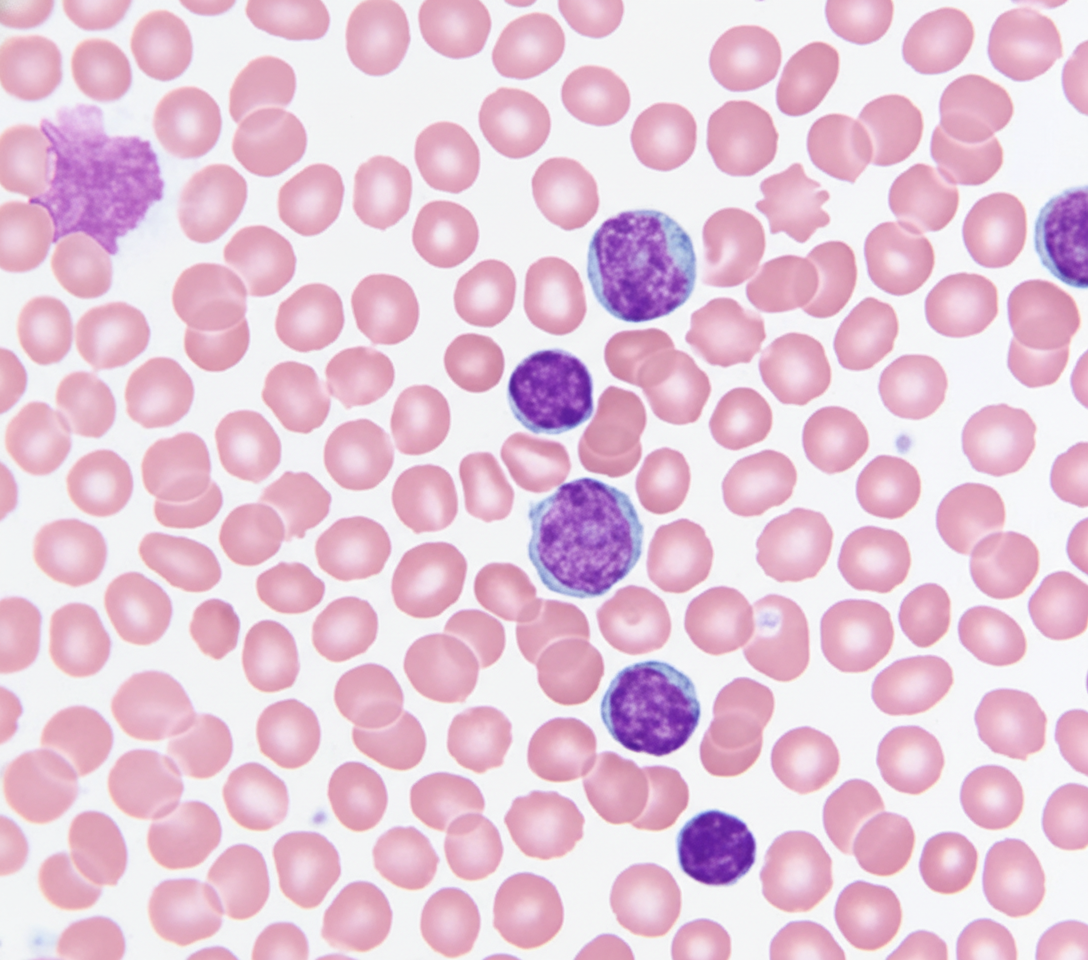
A 70-year-old man presents to his physician for evaluation of fullness and swelling of the left side of the abdomen over the last month. During this time, he has had night sweats and lost 2 kg (4.4 lb) unintentionally. He has no history of severe illness and takes no medications. The vital signs include: blood pressure 115/75 mm Hg, pulse 75/min, and temperature 36.8℃ (98.2℉). The abdomen has asymmetric distention. Percussion and palpation of the left upper quadrant reveal splenomegaly. No lymphadenopathy is detected. Heart and lung examination shows no abnormalities. The laboratory studies show the following:
Hemoglobin 9.5 g/dL
Mean corpuscular volume 95 μm3
Leukocyte count 8,000/mm3
Platelet count 240,000/mm3
Ultrasound shows a spleen size of 15 cm, mild hepatomegaly, and mild ascites. The peripheral blood smear shows teardrop-shaped and nucleated red blood cells (RBCs) and immature myeloid cells. Marrow is very difficult to aspirate but reveals hyperplasia of all 3 lineages. The tartrate-resistant acid phosphatase (TRAP) test is negative. The cytogenetic analysis is negative for translocation between chromosomes 9 and 22. Which of the following laboratory findings is most likely to be present in this patient?
Q262
A 59-year-old woman comes to the physician because of a 2-month history of fatigue and abdominal discomfort. Over the past 6 months, she has had a 5.4-kg (12-lb) weight loss. She takes no medications. Her temperature is 37.8°C (100°F), pulse is 70/min, respirations are 13/min, and blood pressure is 125/80 mm Hg. Cardiopulmonary examination shows no abnormalities. The spleen is palpated 3 cm below the left costal margin. Laboratory studies show:
Hemoglobin 9.4 g/dL
Mean corpuscular volume 86 μm3
Leukocyte count 58,000/mm3
Segmented neutrophils 54%
Bands 8%
Lymphocytes 7%
Myelocytes 5%
Metamyelocytes 10%
Promyelocytes 4%
Blasts 5%
Monocytes 1%
Eosinophils 4%
Basophils 2%
Platelet count 850,000/mm3
Serum
Creatinine
0.9 mg/dL
LDH 501 U/L
Bone marrow biopsy shows hyperplastic myelopoiesis with granulocytosis. Which of the following is the most appropriate next step in management?
Q263
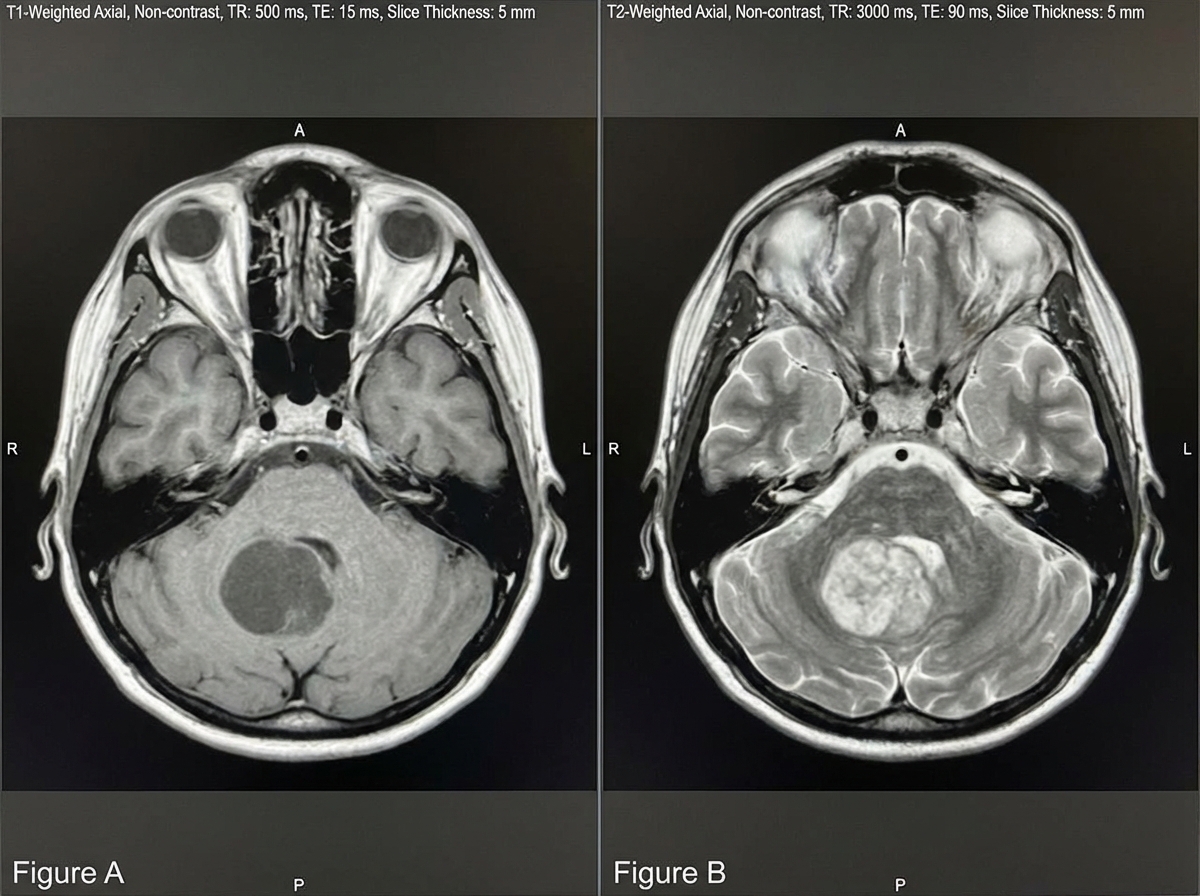
An 11-year-old boy is brought to the pediatrician by his mother for vomiting. The patient has been vomiting for the past week, and his symptoms have not been improving. His symptoms are worse in the morning and tend to improve throughout the day. The patient also complains of occasional headaches and had diarrhea several days ago. The patient eats a balanced diet and does not drink soda or juice. The patient's brothers both had diarrhea recently that resolved spontaneously. His temperature is 99.5°F (37.5°C), blood pressure is 80/45 mmHg, pulse is 90/min, respirations are 16/min, and oxygen saturation is 98% on room air. On physical exam, the patient appears to be in no acute distress. Cardiopulmonary exam reveals a minor flow murmur. Neurological exam reveals cranial nerves II-XII as grossly intact with mild narrowing of the patient's visual fields. The patient's gait is stable, and he is able to jump up and down. Which of the following is the most likely direct cause of this patient's presentation?
Q264
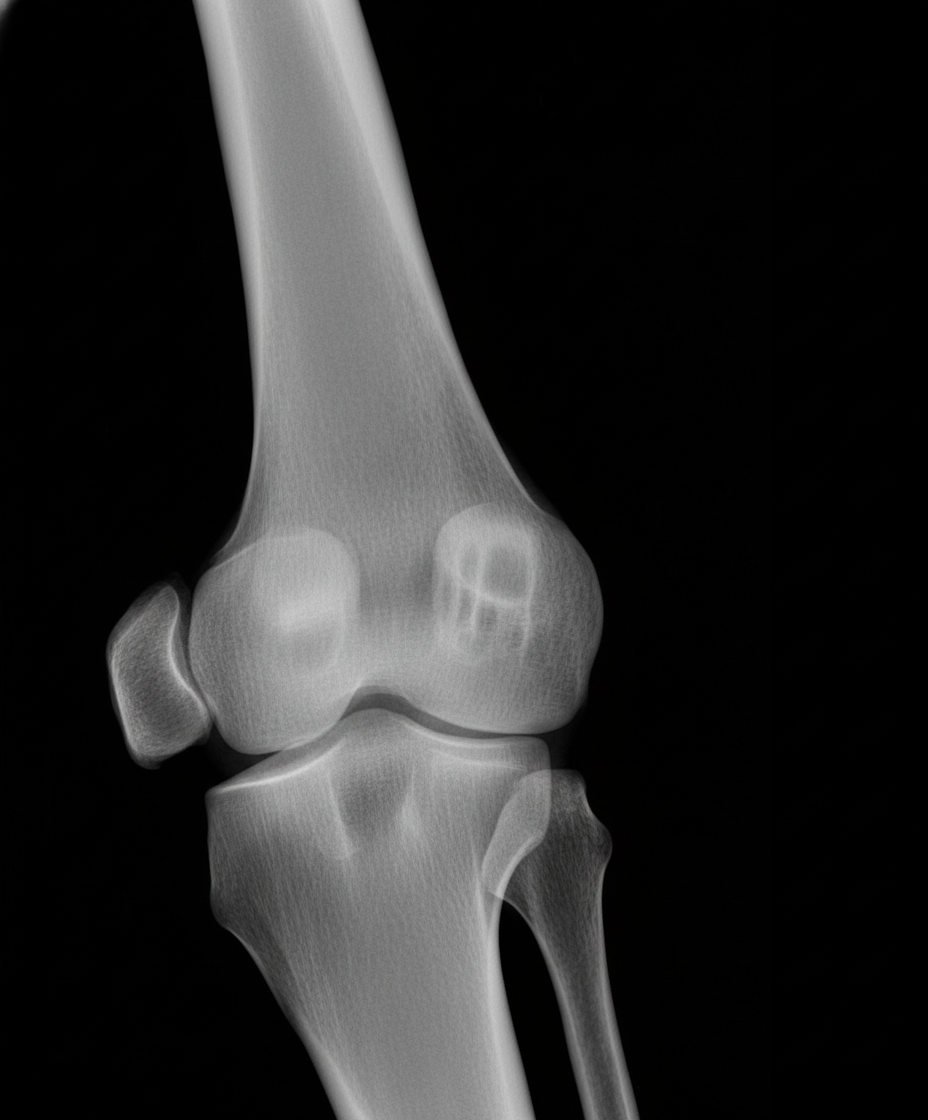
A 24-year-old man is brought to the physician because of increasing pain and swelling of the left knee for 2 months. The pain has awoken him from his sleep on multiple occasions. He tried ibuprofen but has had no relief of his symptoms. There is no family or personal history of serious illness. Vital signs are within normal limits. On examination, the left knee is mildly swollen and tender; range of motion is limited by pain. An x-ray of the left knee is shown. Which of the following is the most likely diagnosis?
Q265
A 55-year-old female presents to her primary care physician complaining of a mass in her mid-thigh. The mass has grown slowly over the past six months and is not painful. The patient’s past medical history is notable for hypertension and hyperlipidemia. She takes lisinopril and rosuvastatin. On examination, there is a firm, immobile mass on the medial aspect of the distal thigh. She has full range of motion and strength in her lower extremities and patellar reflexes are 2+ bilaterally. A biopsy of the mass reveals multiple pleomorphic smooth muscle cells with nuclear atypia. The patient subsequently initiates radiation therapy with plans to undergo surgical resection. This tumor will most strongly stain for which of the following?
Q266
A 71-year-old man presents to the primary care clinic with non-specific complaints of fatigue and malaise. His past medical history is significant for diabetes mellitus type II, hypertension, non-seminomatous testicular cancer, and hypercholesterolemia. He currently smokes 1 pack of cigarettes per day, drinks a glass of wine per day, and he currently denies any illicit drug use. His vital signs include: temperature, 36.7°C (98.0°F); blood pressure, 126/74 mm Hg; heart rate, 87/min; and respiratory rate, 17/min. On examination, his physician notices cervical and inguinal lymphadenopathy bilaterally, as well as splenomegaly. The patient comments that he has lost 18.1 kg (40 lb) over the past 6 months without a change in diet or exercise, which he was initially not concerned about. The physician orders a complete blood count and adds on flow cytometry. Based on his age and overall epidemiology, which of the following is the most likely diagnosis?
Q267
A 53-year-old man comes to the physician for recurring fever and night sweats for the past 6 months. The fevers persist for 7 to 10 days and then subside completely for about a week before returning again. During this period, he has also noticed two painless lumps on his neck that have gradually increased in size. Over the past year, he has had an 8.2-kg (18.1 lbs) weight loss. Two years ago, he had a severe sore throat and fever, which was diagnosed as infectious mononucleosis. He has smoked a pack of cigarettes daily for the past 10 years. He does not drink alcohol. His job involves monthly international travel to Asia and Africa. He takes no medications. His temperature is 39°C (102.2°F), pulse is 90/min, respirations are 22/min, and blood pressure is 105/60 mm Hg. Physical examination shows 2 enlarged, nontender, fixed cervical lymph nodes on each side of the neck. Microscopic examination of a specimen obtained on biopsy of a cervical lymph node is shown. Which of the following additional findings is most likely present in this patient?
Q268
A 64-year-old male presents to his primary care physician. Laboratory work-up and physical examination are suggestive of a diagnosis of prostatic adenocarcinoma. A tissue biopsy is obtained, which confirms the diagnosis. Which of the following is indicative of metastatic disease?
Q269
A 70-year-old man comes to the physician because of right-sided back pain, red urine, and weight loss for the last 4 months. He has smoked one pack of cigarettes daily for 40 years. A CT scan of the abdomen shows a large right-sided renal mass. Biopsy of the mass shows polygonal clear cells filled with lipids. Which of the following features is necessary to determine the tumor grade in this patient?
Q270
A 63-year-old man comes to the physician for the evaluation of a skin lesion on his chest. He first noticed the lesion 2 months ago and thinks that it has increased in size since then. The lesion is not painful or pruritic. He has type 2 diabetes mellitus, hypercholesterolemia, and glaucoma. The patient has smoked 1 pack of cigarettes daily for the last 40 years and drinks two to three beers on the weekend. Current medications include metformin, atorvastatin, topical timolol, and a multivitamin. Vital signs are within normal limits. The lesion is partly elevated on palpation and does not change its form on pinching. A photograph of the lesion is shown. Which of the following is the most likely diagnosis?
Neoplasia US Medical PG Practice Questions and MCQs
Question 261: A 70-year-old man presents to his physician for evaluation of fullness and swelling of the left side of the abdomen over the last month. During this time, he has had night sweats and lost 2 kg (4.4 lb) unintentionally. He has no history of severe illness and takes no medications. The vital signs include: blood pressure 115/75 mm Hg, pulse 75/min, and temperature 36.8℃ (98.2℉). The abdomen has asymmetric distention. Percussion and palpation of the left upper quadrant reveal splenomegaly. No lymphadenopathy is detected. Heart and lung examination shows no abnormalities. The laboratory studies show the following:
Hemoglobin 9.5 g/dL
Mean corpuscular volume 95 μm3
Leukocyte count 8,000/mm3
Platelet count 240,000/mm3
Ultrasound shows a spleen size of 15 cm, mild hepatomegaly, and mild ascites. The peripheral blood smear shows teardrop-shaped and nucleated red blood cells (RBCs) and immature myeloid cells. Marrow is very difficult to aspirate but reveals hyperplasia of all 3 lineages. The tartrate-resistant acid phosphatase (TRAP) test is negative. The cytogenetic analysis is negative for translocation between chromosomes 9 and 22. Which of the following laboratory findings is most likely to be present in this patient?
A. Monoclonal elevation of IgG
B. Hair-like cell-membrane projections
C. JAK2 mutation (Correct Answer)
D. Philadelphia chromosome
E. Reed-Sternberg cells
Explanation: ***JAK2 mutation***
- The patient's presentation with **splenomegaly**, **night sweats**, **weight loss**, **teardrop cells**, **nucleated red blood cells**, and a "dry tap" (difficulty aspirating marrow) are highly suggestive of **primary myelofibrosis**.
- A **JAK2 mutation** (specifically JAK2 V617F) is found in approximately 50-60% of patients with primary myelofibrosis and is a crucial diagnostic marker, distinguishing it from other myeloproliferative neoplasms. Other driver mutations include CALR (~25-30%) and MPL (~5-10%).
*Monoclonal elevation of IgG*
- **Monoclonal elevation of IgG** is characteristic of **plasma cell disorders** such as **multiple myeloma** or **monoclonal gammopathy of undetermined significance (MGUS)**.
- This patient's symptoms and laboratory findings, particularly the peripheral blood smear with **teardrop cells** and a "dry tap," do not align with a plasma cell dyscrasia.
*Hair-like cell-membrane projections*
- **Hair-like cell-membrane projections** are the hallmark of **hairy cell leukemia**, a rare B-cell lymphoproliferative disorder.
- While hairy cell leukemia can cause **splenomegaly** and **pancytopenia**, the presence of **teardrop cells** and **immature myeloid cells** in the peripheral smear, along with a "dry tap," makes this diagnosis unlikely. The **negative TRAP test** also argues against hairy cell leukemia since TRAP positivity is characteristic of this condition.
*Philadelphia chromosome*
- The **Philadelphia chromosome (t(9;22))** encoding the **BCR-ABL1 fusion gene** is the defining characteristic of **chronic myeloid leukemia (CML)**.
- While CML can present with **splenomegaly** and **myeloid immature cells**, the absence of the Philadelphia chromosome on cytogenetic analysis (as stated in the stem) and the presence of **teardrop cells** and **dry tap** rule out CML in favor of myelofibrosis.
*Reed-Sternberg cells*
- **Reed-Sternberg cells** are large, multinucleated cells characteristic of **Hodgkin lymphoma**.
- Hodgkin lymphoma typically presents with **lymphadenopathy** and systemic symptoms, but the hematological findings and evidence of myelofibrosis in this patient do not support a diagnosis of lymphoma.
Question 262: A 59-year-old woman comes to the physician because of a 2-month history of fatigue and abdominal discomfort. Over the past 6 months, she has had a 5.4-kg (12-lb) weight loss. She takes no medications. Her temperature is 37.8°C (100°F), pulse is 70/min, respirations are 13/min, and blood pressure is 125/80 mm Hg. Cardiopulmonary examination shows no abnormalities. The spleen is palpated 3 cm below the left costal margin. Laboratory studies show:
Hemoglobin 9.4 g/dL
Mean corpuscular volume 86 μm3
Leukocyte count 58,000/mm3
Segmented neutrophils 54%
Bands 8%
Lymphocytes 7%
Myelocytes 5%
Metamyelocytes 10%
Promyelocytes 4%
Blasts 5%
Monocytes 1%
Eosinophils 4%
Basophils 2%
Platelet count 850,000/mm3
Serum
Creatinine
0.9 mg/dL
LDH 501 U/L
Bone marrow biopsy shows hyperplastic myelopoiesis with granulocytosis. Which of the following is the most appropriate next step in management?
A. Serum protein electrophoresis
B. Cytogenetic studies (Correct Answer)
C. Observation and follow-up
D. All-trans retinoic acid
E. Cytarabine and daunorubicin
Explanation: ***Cytogenetic studies***
- The patient's presentation with **splenomegaly**, **leukocytosis with a left shift** (including myelocytes, metamyelocytes, and some blasts), **thrombocytosis**, and **fatigue, weight loss, and abdominal discomfort** are highly suggestive of a myeloproliferative neoplasm, specifically **chronic myeloid leukemia (CML)**.
- **Cytogenetic studies** (e.g., FISH or conventional karyotyping) are crucial to confirm CML by detecting the **Philadelphia chromosome (t(9;22))**, which forms the **BCR-ABL1 fusion gene**, the hallmark of this disease.
*Serum protein electrophoresis*
- **Serum protein electrophoresis (SPEP)** is primarily used to diagnose and monitor **monoclonal gammopathies**, such as multiple myeloma or Waldenström macroglobulinemia.
- It is not relevant for the diagnosis of myeloproliferative disorders like CML, which involve myeloid cell lines, not plasma cells.
*Observation and follow-up*
- Given the patient's symptomatic presentation (fatigue, weight loss, abdominal discomfort), significant leukocytosis, thrombocytosis, and splenomegaly, **active intervention and diagnosis are warranted**.
- Observing a patient with suspected CML is not appropriate, as it can progress to an accelerated phase or blast crisis if left untreated.
*All-trans retinoic acid*
- **All-trans retinoic acid (ATRA)** is a specific treatment used for **acute promyelocytic leukemia (APL)**, a subtype of acute myeloid leukemia.
- APL characteristically presents with mature promyelocytes and is associated with the **t(15;17) translocation**, which is distinct from the findings and suspected diagnosis in this patient.
*Cytarabine and daunorubicin*
- **Cytarabine and daunorubicin** constitute a common chemotherapy regimen used for **induction therapy in acute myeloid leukemia (AML)**.
- The patient's blood counts, particularly the lower blast percentage (5%) and prominent left shift with mature myeloid forms, are more consistent with a chronic myeloproliferative disorder like CML, rather than an acute leukemia that would necessitate this aggressive treatment.
Question 263: An 11-year-old boy is brought to the pediatrician by his mother for vomiting. The patient has been vomiting for the past week, and his symptoms have not been improving. His symptoms are worse in the morning and tend to improve throughout the day. The patient also complains of occasional headaches and had diarrhea several days ago. The patient eats a balanced diet and does not drink soda or juice. The patient's brothers both had diarrhea recently that resolved spontaneously. His temperature is 99.5°F (37.5°C), blood pressure is 80/45 mmHg, pulse is 90/min, respirations are 16/min, and oxygen saturation is 98% on room air. On physical exam, the patient appears to be in no acute distress. Cardiopulmonary exam reveals a minor flow murmur. Neurological exam reveals cranial nerves II-XII as grossly intact with mild narrowing of the patient's visual fields. The patient's gait is stable, and he is able to jump up and down. Which of the following is the most likely direct cause of this patient's presentation?
A. Remnant of Rathke's pouch (Correct Answer)
B. Intracerebellar mass
C. Gram-positive enterotoxin
D. Gram-negative microaerophilic bacteria
E. Non-enveloped, (+) ssRNA virus
Explanation: ***Remnant of Rathke's pouch***
- The patient's symptoms, including **morning vomiting**, **headaches**, and **visual field narrowing**, are highly suggestive of **increased intracranial pressure** from a **craniopharyngioma**.
- **Craniopharyngiomas** are benign tumors derived from remnants of **Rathke's pouch** and are the most common supratentorial tumors in children.
- These suprasellar masses compress the **optic chiasm**, causing **bitemporal hemianopsia** (visual field defects).
*Intracerebellar mass*
- While an intracerebellar mass could cause **increased intracranial pressure** and vomiting, the specific **visual field narrowing** points toward a suprasellar lesion affecting the optic chiasm, not a cerebellar location.
- Cerebellar masses typically cause **ataxia**, **nystagmus**, and coordination problems, which are not present in this patient.
*Gram-positive enterotoxin*
- A **gram-positive enterotoxin** (e.g., *S. aureus*, *B. cereus*) would cause acute onset, severe gastrointestinal symptoms with vomiting and diarrhea, but would not explain the **neurological symptoms** like headaches and visual field deficits.
- The patient's prolonged symptoms (one week of vomiting) and neurological findings do not align with acute food poisoning.
*Gram-negative microaerophilic bacteria*
- **Gram-negative microaerophilic bacteria** like *Helicobacter pylori* or *Campylobacter* can cause gastritis or gastroenteritis, but do not explain the **neurological signs** of increased intracranial pressure or visual field defects.
- The patient's chronic vomiting with neurological signs indicates intracranial pathology rather than gastrointestinal infection.
*Non-enveloped, (+) ssRNA virus*
- A **non-enveloped, (+) ssRNA virus** (e.g., norovirus, enterovirus) would cause acute, self-limiting gastroenteritis with vomiting and diarrhea.
- It would not explain the **progressive neurological symptoms** and the prolonged duration of vomiting, which suggests a structural intracranial lesion rather than viral gastroenteritis.
Question 264: A 24-year-old man is brought to the physician because of increasing pain and swelling of the left knee for 2 months. The pain has awoken him from his sleep on multiple occasions. He tried ibuprofen but has had no relief of his symptoms. There is no family or personal history of serious illness. Vital signs are within normal limits. On examination, the left knee is mildly swollen and tender; range of motion is limited by pain. An x-ray of the left knee is shown. Which of the following is the most likely diagnosis?
A. Aneurysmal bone cyst
B. Chondrosarcoma
C. Ewing sarcoma
D. Osteoclastoma (Correct Answer)
E. Fibrous dysplasia
Explanation: ***Osteoclastoma***
- The X-ray image shows an **epiphyseal lytic lesion** in the distal femur/proximal tibia which is characteristic of an osteoclastoma, also known as a **giant cell tumor of bone**.
- These tumors typically present in young adults (20-40 years old) with pain, swelling, and **limited range of motion**, often waking the patient at night, which matches the clinical presentation.
*Aneurysmal bone cyst*
- This lesion is typically **expansile** and **multiloculated** with fluid-fluid levels on MRI, and usually arises in the **metaphysis** of long bones, not exclusively in the epiphysis.
- While it can cause pain and swelling, its radiographic appearance is often distinct from the lytic, soap-bubble appearance seen here.
*Chondrosarcoma*
- Chondrosarcomas are typically found in older adults and often show **intralesional calcifications** (popcorn or ring-and-arc calcifications) on X-ray, which are absent in this case.
- They also tend to arise in the metaphysis or diaphysis, not primarily in the epiphysis.
*Ewing sarcoma*
- Ewing sarcoma usually presents as an **aggressive, destructive lesion** with an **"onion-skin" periosteal reaction** and occurs predominantly in children and adolescents.
- The patient's age and the purely lytic, non-sclerotic appearance without periosteal reaction make Ewing sarcoma less likely.
*Fibrous dysplasia*
- Fibrous dysplasia is a developmental anomaly characterized by **"ground-glass" matrix** appearance on X-ray and often an **expansile, intramedullary lesion**.
- It usually occurs in the diaphysis or metaphysis and does not typically present as a purely epiphyseal lytic lesion in a mature skeleton.
Question 265: A 55-year-old female presents to her primary care physician complaining of a mass in her mid-thigh. The mass has grown slowly over the past six months and is not painful. The patient’s past medical history is notable for hypertension and hyperlipidemia. She takes lisinopril and rosuvastatin. On examination, there is a firm, immobile mass on the medial aspect of the distal thigh. She has full range of motion and strength in her lower extremities and patellar reflexes are 2+ bilaterally. A biopsy of the mass reveals multiple pleomorphic smooth muscle cells with nuclear atypia. The patient subsequently initiates radiation therapy with plans to undergo surgical resection. This tumor will most strongly stain for which of the following?
A. Cytokeratin
B. Desmin (Correct Answer)
C. Chromogranin
D. Neurofilament
E. Glial fibrillary acidic protein
Explanation: ***Desmin***
- The biopsy results describe **pleomorphic smooth muscle cells with nuclear atypia**, which is characteristic of a **leiomyosarcoma**, a malignant tumor derived from smooth muscle.
- **Desmin** is a muscle-specific intermediate filament that is strongly positive in tumors of smooth muscle origin, including leiomyosarcomas, making it the most appropriate stain for diagnosis.
*Cytokeratin*
- **Cytokeratin** is an intermediate filament protein found in **epithelial cells** and is a marker for carcinomas.
- Leiomyosarcomas are mesenchymal tumors, so they would typically be **negative for cytokeratin**.
*Chromogranin*
- **Chromogranin** is a marker for **neuroendocrine tumors**, such as carcinoids and pheochromocytomas.
- This tumor's histological features and derivation from smooth muscle rule out a neuroendocrine origin.
*Neurofilament*
- **Neurofilament** proteins are found in **neurons** and are markers for tumors of neural origin, such as neuroblastomas or schwannomas.
- The presented tumor is of mesenchymal origin, not neural.
*Glial fibrillary acidic protein*
- **Glial fibrillary acidic protein (GFAP)** is an intermediate filament found in **astrocytes** and is a marker for glial tumors, such as astrocytomas and glioblastomas, which originate in the central nervous system.
- A thigh mass is not consistent with a glial tumor.
Question 266: A 71-year-old man presents to the primary care clinic with non-specific complaints of fatigue and malaise. His past medical history is significant for diabetes mellitus type II, hypertension, non-seminomatous testicular cancer, and hypercholesterolemia. He currently smokes 1 pack of cigarettes per day, drinks a glass of wine per day, and he currently denies any illicit drug use. His vital signs include: temperature, 36.7°C (98.0°F); blood pressure, 126/74 mm Hg; heart rate, 87/min; and respiratory rate, 17/min. On examination, his physician notices cervical and inguinal lymphadenopathy bilaterally, as well as splenomegaly. The patient comments that he has lost 18.1 kg (40 lb) over the past 6 months without a change in diet or exercise, which he was initially not concerned about. The physician orders a complete blood count and adds on flow cytometry. Based on his age and overall epidemiology, which of the following is the most likely diagnosis?
A. Hairy cell leukemia
B. Acute myelogenous leukemia
C. Chronic myelogenous leukemia
D. Acute lymphocytic leukemia
E. Chronic lymphocytic leukemia (Correct Answer)
Explanation: ***Chronic lymphocytic leukemia***
- The patient's age (71 years), non-specific symptoms like **fatigue and malaise**, unexplained **weight loss**, and findings of **lymphadenopathy** and **splenomegaly** are highly suggestive of **chronic lymphocytic leukemia (CLL)**.
- CLL is the most common leukemia in adults in Western countries, typically affecting older individuals, and is characterized by the accumulation of **monoclonal B lymphocytes** which can lead to lymphadenopathy and splenomegaly.
*Hairy cell leukemia*
- This condition is characterized by **pancytopenia**, **splenomegaly**, and the presence of **"hairy" cells** on peripheral smear and bone marrow.
- Lymphadenopathy is typically **less prominent or absent** in hairy cell leukemia compared to CLL.
*Acute myelogenous leukemia*
- AML typically presents with a **rapid onset of symptoms** due to bone marrow failure, such as severe anemia, thrombocytopenia (bleeding), and granulocytopenia (infections).
- While it can cause fatigue, the **lymphadenopathy and splenomegaly** are less characteristic as the primary presenting features compared to CLL, and the leukemia is defined by the proliferation of **myeloblasts**.
*Chronic myelogenous leukemia*
- CML is often associated with the **Philadelphia chromosome (BCR-ABL fusion gene)** while this patient's case is not specified.
- It usually presents with marked **leukocytosis with a left shift** (including myelocytes, metamyelocytes, and band forms), prominent splenomegaly, but often **less pronounced lymphadenopathy** than seen in CLL.
*Acute lymphocytic leukemia*
- ALL is primarily a disease of **childhood**, though it can occur in adults, but it is much less common in this age group than CLL.
- It usually presents with **abrupt onset** symptoms related to bone marrow failure, like fever, pallor, petechiae, and can have more prominent lymphadenopathy and hepatosplenomegaly but the age and chronic nature of symptoms point away from ALL.
Question 267: A 53-year-old man comes to the physician for recurring fever and night sweats for the past 6 months. The fevers persist for 7 to 10 days and then subside completely for about a week before returning again. During this period, he has also noticed two painless lumps on his neck that have gradually increased in size. Over the past year, he has had an 8.2-kg (18.1 lbs) weight loss. Two years ago, he had a severe sore throat and fever, which was diagnosed as infectious mononucleosis. He has smoked a pack of cigarettes daily for the past 10 years. He does not drink alcohol. His job involves monthly international travel to Asia and Africa. He takes no medications. His temperature is 39°C (102.2°F), pulse is 90/min, respirations are 22/min, and blood pressure is 105/60 mm Hg. Physical examination shows 2 enlarged, nontender, fixed cervical lymph nodes on each side of the neck. Microscopic examination of a specimen obtained on biopsy of a cervical lymph node is shown. Which of the following additional findings is most likely present in this patient?
A. Acid fast bacilli in the sputum
B. Leukocyte count > 500,000/μL
C. CD15/30 positive cells (Correct Answer)
D. Auer rods on peripheral smear
E. Anti-viral capsid antigen IgG and IgM positive
Explanation: ***CD15/30 positive cells***
- The patient's symptoms of **recurring fever and night sweats (B symptoms)**, significant **weight loss**, and **enlarged, nontender, fixed cervical lymph nodes** are classic presentations of **Hodgkin lymphoma**.
- **Hodgkin lymphoma** is characterized by the presence of **Reed-Sternberg cells**, which are large, often binucleated cells originating from B lymphocytes and are typically positive for **CD15 and CD30 markers**.
*Acid fast bacilli in the sputum*
- While **tuberculosis** can cause fever, night sweats, and weight loss, the presence of **painless, fixed lymph nodes** and the characteristic recurring fever pattern (Pel-Ebstein fever, though not explicitly named, the description fits) are more indicative of lymphoma.
- Absence of respiratory symptoms like cough and the lack of specific risk factors for active tuberculosis (other than travel to endemic areas) make it less likely, though it should be in the differential.
*Leukocyte count > 500,000/μL*
- An extremely high leukocyte count (>500,000/μL) is characteristic of **leukostasis** seen in severe cases of **chronic myeloid leukemia (CML)** or other leukemias.
- The patient's symptoms are not consistent with CML, which typically presents with splenomegaly and less specific B symptoms, and the lymph node biopsy points away from leukemia.
*Auer rods on peripheral smear*
- **Auer rods** are pathognomonic for **acute myeloid leukemia (AML)** and would be found in myeloid blast cells on a peripheral smear or bone marrow biopsy.
- The clinical picture of waxing and waning fevers, night sweats, weight loss, and localized lymphadenopathy is not typical for AML, which usually presents with rapid onset of pancytopenia-related symptoms.
*Anti-viral capsid antigen IgG and IgM positive*
- A positive **anti-viral capsid antigen (VCA) IgM** indicates a **recent or active Epstein-Barr virus (EBV) infection (infectious mononucleosis)**, while positive VCA IgG indicates past infection. The patient had infectious mononucleosis two years ago.
- While **EBV is associated with some types of Hodgkin lymphoma**, currently positive IgM would suggest a new or reactivated infection, not the long-standing progressive symptoms described by the patient. His prior infectious mononucleosis is a risk factor for Hodgkin lymphoma, but not necessarily an active finding.
Question 268: A 64-year-old male presents to his primary care physician. Laboratory work-up and physical examination are suggestive of a diagnosis of prostatic adenocarcinoma. A tissue biopsy is obtained, which confirms the diagnosis. Which of the following is indicative of metastatic disease?
A. Decreased serum alkaline phosphatase
B. New-onset lower back pain (Correct Answer)
C. Palpation of a hard nodule on digital rectal examination
D. Involvement of the periurethral zone
E. Elevated prostatic acid phosphatase (PAP)
Explanation: ***New-onset lower back pain***
- **Lower back pain** in a patient with prostatic adenocarcinoma is a classic symptom of **bone metastases**, as prostate cancer frequently spreads to the spine.
- This symptom suggests the tumor has invaded the **vertebrae**, causing pain due to bone destruction or nerve compression.
*Decreased serum alkaline phosphatase*
- **Decreased serum alkaline phosphatase** is generally not indicative of metastatic prostate cancer; rather, **elevated alkaline phosphatase** typically suggests **bone metastases** due to increased osteoblastic activity.
- Lowering of this enzyme might be seen if a patient is undergoing successful treatment, but not as an indicator of new metastatic disease.
*Palpation of a hard nodule on digital rectal examination*
- A **hard nodule** on digital rectal examination is a common finding in **localized prostate cancer** but does not specifically indicate metastatic disease.
- This finding suggests a primary tumor within the prostate gland, not necessarily spread to distant sites.
*Involvement of the periurethral zone*
- **Prostate cancer** typically originates in the **peripheral zone** of the prostate, not the periurethral zone.
- While involvement of any zone indicates presence of cancer, it does not, by itself, suggest **metastatic disease** unless there is further evidence of spread beyond the prostate capsule.
*Elevated prostatic acid phosphatase (PAP)*
- While **elevated prostatic acid phosphatase (PAP)** can be a marker for prostate cancer activity and, in some cases, advanced or metastatic disease, it is **less specific and sensitive** than **PSA** for general screening and monitoring.
- In modern practice, it's not the primary indicator used to confirm metastatic spread on its own when more definitive markers and imaging are available.
Question 269: A 70-year-old man comes to the physician because of right-sided back pain, red urine, and weight loss for the last 4 months. He has smoked one pack of cigarettes daily for 40 years. A CT scan of the abdomen shows a large right-sided renal mass. Biopsy of the mass shows polygonal clear cells filled with lipids. Which of the following features is necessary to determine the tumor grade in this patient?
A. Invasion of surrounding structures
B. Response to chemotherapy
C. Nuclear pleomorphism and nucleolar prominence (Correct Answer)
D. Involvement of regional lymph nodes
E. Size of malignant proliferation
Explanation: ***Nuclear pleomorphism and nucleolar prominence***
- The **Fuhrman nuclear grading system** (and newer WHO/ISUP grading system) for renal cell carcinoma is based on **nuclear morphologic features**: nuclear size, nuclear contour irregularity, and most importantly, **nucleolar prominence**.
- **Grade 1**: Small uniform nuclei with inconspicuous nucleoli
- **Grade 2**: Slightly irregular nuclei with small nucleoli visible at 400× magnification
- **Grade 3**: Moderately irregular nuclei with prominent nucleoli visible at 100× magnification
- **Grade 4**: Marked nuclear pleomorphism, multilobated nuclei, and prominent nucleoli
- Higher nuclear grades correlate with more aggressive tumor behavior and worse prognosis.
*Invasion of surrounding structures*
- This feature is crucial for **tumor staging (T stage)**, specifically T3 disease when perinephric fat, renal vein, or IVC is invaded, and T4 when beyond Gerota's fascia.
- **Invasion** determines surgical approach and prognosis related to local spread but does not define histological grade.
*Response to chemotherapy*
- **Response to chemotherapy** is evaluated after treatment and is not a feature used for grading at diagnosis.
- Clear cell RCC is **chemoresistant**; treatment typically involves targeted therapy (VEGF inhibitors, mTOR inhibitors) or immunotherapy, not traditional chemotherapy.
*Involvement of regional lymph nodes*
- **Lymph node involvement** is a component of **tumor staging (N stage)**: N0 (no nodes), N1 (regional nodes positive).
- It indicates metastatic spread and significantly worsens prognosis but does not contribute to **histological grade**, which assesses cellular differentiation.
*Size of malignant proliferation*
- **Tumor size** is the primary criterion for **T staging**: T1a (≤4 cm), T1b (>4-7 cm), T2a (>7-10 cm), T2b (>10 cm), all confined to kidney.
- Size is a prognostic factor but does not determine **histological grade**, which is based exclusively on nuclear microscopic features.
Question 270: A 63-year-old man comes to the physician for the evaluation of a skin lesion on his chest. He first noticed the lesion 2 months ago and thinks that it has increased in size since then. The lesion is not painful or pruritic. He has type 2 diabetes mellitus, hypercholesterolemia, and glaucoma. The patient has smoked 1 pack of cigarettes daily for the last 40 years and drinks two to three beers on the weekend. Current medications include metformin, atorvastatin, topical timolol, and a multivitamin. Vital signs are within normal limits. The lesion is partly elevated on palpation and does not change its form on pinching. A photograph of the lesion is shown. Which of the following is the most likely diagnosis?
A. Seborrheic keratosis
B. Malignant melanoma (Correct Answer)
C. Keratoacanthoma
D. Basal cell carcinoma
E. Lentigo maligna
Explanation: ***Malignant melanoma***
- The lesion's **recent growth** and **elevated, irregular appearance** (as suggested by "partly elevated on palpation and does not change its form on pinching," implying a solid, infiltrative nature) in a patient with a history of **significant sun exposure** (implied by age and lesion location) are highly suspicious for melanoma.
- While visual representation is key, this description aligns with a potentially advanced melanoma, characterized by **asymmetry, irregular borders, varied color, and a diameter greater than 6mm (ABCD rule)**, especially given the reported growth.
*Seborrheic keratosis*
- Typically presents as a **"stuck-on"** appearance, often described as velvety or warty, and is usually **benign** and grows slowly, if at all.
- The elevated, firm nature of the described lesion that does not change on pinching is less consistent with the soft, waxy texture often found in seborrheic keratosis.
*Keratoacanthoma*
- Characterized by rapid growth over weeks to months, often forming a **dome-shaped nodule with a central keratotic plug**.
- While it can grow quickly, the detailed description and the potential for a more variegated appearance (melanoma) are not fully captured by this option, and it often has spontaneous regression, which is not suggested here.
*Basal cell carcinoma*
- Most commonly presents as a **pearly nodule with telangiectasias**, or a **rolled border** with central ulceration.
- While it can be elevated and solid, the description of rapid growth and the implication of an irregular clinical appearance (without direct visualization) make melanoma a stronger consideration.
*Lentigo maligna*
- This is a form of melanoma in situ that typically appears as a **slowly enlarging, flat, irregularly shaped, and variegated brown-to-black patch** on chronically sun-damaged skin.
- Although the patient's age and lesion location fit, the description of "partly elevated on palpation" suggests a more invasive lesion, making **malignant melanoma** (which encompasses invasive forms) a more appropriate diagnosis.