A 46-year-old overweight male presents to his primary care physician for an annual checkup. He has a history of gastroesophageal reflux disease (GERD) with biopsy confirming Barrett's esophagus on therapy with omeprazole. Review of systems is unremarkable, and the patient is otherwise doing well. Vitals are within normal limits and stable. The patient asks about the need for continuing his omeprazole therapy. You recommend he continue his medication because of which of the following most probable long-term sequelae associated with Barrett's esophagus?
Q12
A 43-year-old woman presents to a physician with repeated bruising, which she noticed over the last week. Some bruises developed spontaneously, while others were observed following minor trauma. The patient also mentions that she has been experiencing significant fatigue and weakness for the past 4 months and that her appetite has been considerably reduced for a few months. Past medical history is noncontributory. Both of her parents are still alive and healthy. She drinks socially and does not smoke. On physical examination, her temperature is 37.6°C (99.7°F), pulse rate is 88/min, blood pressure is 126/84 mm Hg, and respiratory rate is 18/min. Her general examination reveals mild bilateral cervical and axillary lymphadenopathy with multiple petechiae and ecchymoses over the body. Palpation of the abdomen reveals the presence of hepatomegaly and splenomegaly. Her detailed diagnostic workup, including complete blood counts, coagulation studies, and bone marrow biopsy, confirms the diagnosis of a subtype of acute myeloid leukemia, which is characterized by neoplastic proliferation of promyelocytes and good response to all-trans retinoic acid. The neoplastic cells are myeloperoxidase positive and contain azurophilic crystal rods. Which of the following genetic abnormalities is most likely to be present in this patient?
Q13
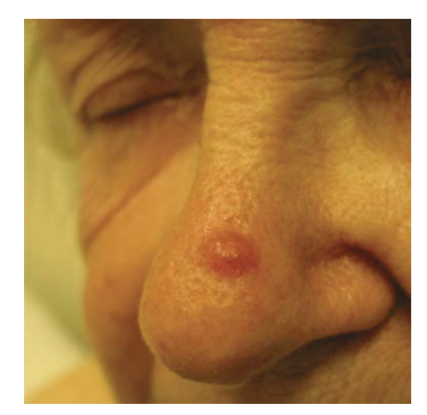
A 68-year-old man comes to the physician 3 months after noticing skin changes on his scalp. When he scrapes off the crust of the lesion, it reappears after a few days. Occasionally, his scalp itches or he notices a burning sensation. He had a mole removed on his right forearm 5 years ago. He is a retired winemaker. His vital signs are within normal limits. Examination shows multiple rough patches on his scalp. A photograph is shown. Which of the following is the most likely diagnosis?
Q14
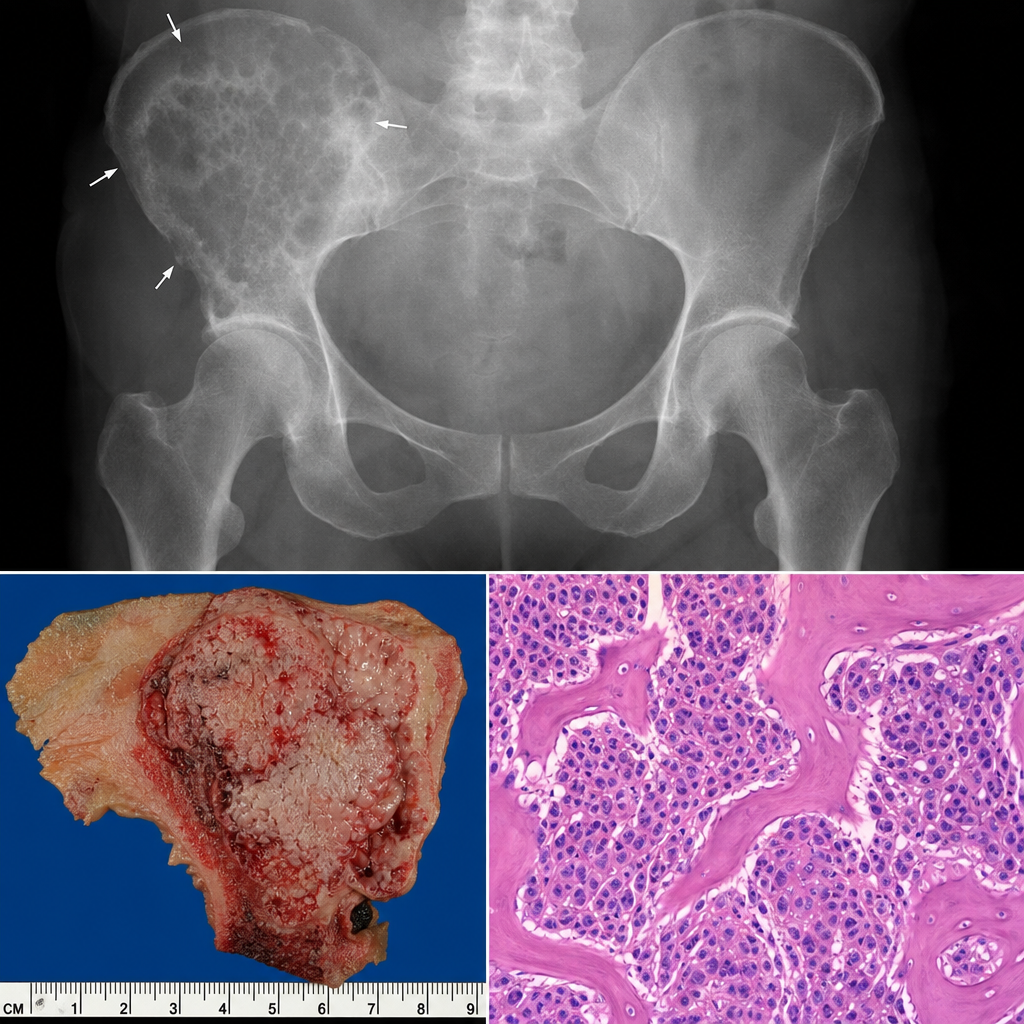
A 38-year-old woman comes to the physician for a 3-month history of bloody discharge from the right nipple. Her mother died of breast cancer at the age of 69 years. Mammography 6 months ago did not show any abnormalities. Examination of the breast shows expression of a small amount of serosanguinous fluid from the right nipple; there are no palpable breast masses or axillary lymphadenopathy. Ultrasonography of the right breast shows a single dilated duct. Which of the following is the most likely diagnosis?
Q15
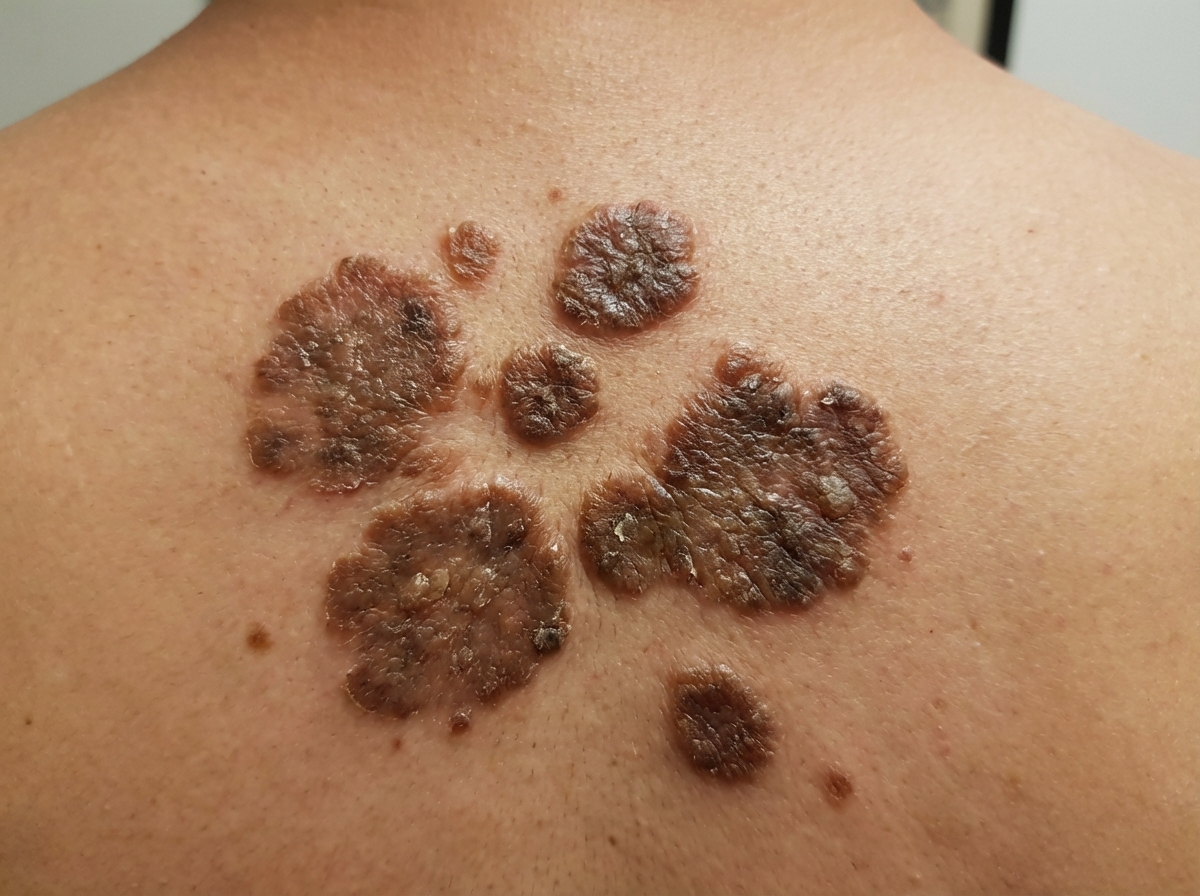
A 68-year-old man comes to the physician because of a 3-month history of a painless skin lesion on his neck. The lesion has gradually become darker in color. Sometimes it is itchy. He also noticed one similar lesion on his lower back. He is a retired gardener. He has smoked half a pack of cigarettes daily for 40 years. His temperature is 36.7°C (98°F), pulse is 72/min, and blood pressure is 123/78 mm Hg. Physical examination shows a 0.8-cm hyperpigmented papule on his neck and a 0.6-cm hyperpigmented papule on his lower back, both of which have a greasy and wax-like appearance. A photograph of the neck is shown. Which of the following is the most likely diagnosis?
Q16
A 68-year-old man comes to the physician for evaluation of a lump in his left axilla that he first noticed 1 year ago. He reports that the size of the mass has varied over time and that there have been similar masses in his neck and groin. He has not had fever, weight loss, or night sweats. Physical examination shows a nontender, rubbery mass in the left axilla and a similar, smaller mass in the right groin. His spleen is palpable 3 cm below the left costal margin. Laboratory studies, including complete blood count, are within reference ranges. Genetic analysis obtained on resection of the axillary mass shows a t(14;18) translocation. Which of the following is the most likely diagnosis?
Q17
A 45-year-old woman gravida 1, para 1, comes to the physician because of a 2-month history of a right breast lump and a 4.5-kg (10-lb) weight loss. She has not had any breast pain or nipple discharge. She had right breast mastitis 10 years ago while breastfeeding but has no other history of serious illness. Palpation of the right breast shows a 3-cm firm mass with well-defined margins lateral to the right nipple. There is dimpling of the overlying skin but no rash. The left breast is normal. A mammogram shows a density with calcifications in a star-shaped formation in the same location of the mass. Histological examination of a biopsy specimen from the breast mass is most likely to show which of the following?
Q18
A 1-year-old, pale-looking boy presents with high-grade fever and ecchymosis, which he has been experiencing for the past 2 weeks. The boy has achieved all developmental milestones on time and has no history of medical illness in the past. Lab investigations reveal the following:
Hemoglobin 5.5 g/dL
WBC 112,000/mm3
Platelets 15,000/mm3
ESR 105/1st hour
The boy is referred to a hematologist, who suspects that he may be suffering from the neoplastic proliferation of immature B cells. The physician decides to do a flow cytometry analysis. Detection of which of the following markers would help confirm the suspected diagnosis?
Q19
A 55-year-old man comes to the physician because of worsening fatigue and recurrent bleeding from his gums for 2 weeks. Physical examination shows marked pallor. There are scattered red, nonblanching pinpoint spots on his trunk and extremities. Laboratory studies show a hemoglobin of 8.0 g/dL, a leukocyte count of 80,000/mm3, and a platelet count of 104,000/mm3. Genetic analysis of a bone marrow aspirate shows leukemic cells with a balanced translocation between the long arms of chromosome 15 and 17. These cells are most likely to stain positive for which of the following?
Q20
An 85-year-old man who recently immigrated to the US from Spain presents to your office complaining of hoarseness and dysphagia for the past 2 months. He says his symptoms have been getting progressively worse, and he expresses concerns about the difficulty swallowing as he cannot eat well and has even lost 9 kg (20 lb) since his last visit 3 months ago. He denies any shortness of breath, coughing of blood, and chest pain. His bowel and bladder habit are normal. Past medical history is unremarkable. He has a 60-pack-year history of smoking tobacco and drinks alcohol occasionally. Which of the following is the most likely cause of his symptoms?
Neoplasia US Medical PG Practice Questions and MCQs
Question 11: A 46-year-old overweight male presents to his primary care physician for an annual checkup. He has a history of gastroesophageal reflux disease (GERD) with biopsy confirming Barrett's esophagus on therapy with omeprazole. Review of systems is unremarkable, and the patient is otherwise doing well. Vitals are within normal limits and stable. The patient asks about the need for continuing his omeprazole therapy. You recommend he continue his medication because of which of the following most probable long-term sequelae associated with Barrett's esophagus?
A. Adenocarcinoma (Correct Answer)
B. Gastro-intestinal stromal tumor (GIST)
C. Squamous cell carcinoma (SCC)
D. Transitional cell carcinoma
E. MALT lymphoma
Explanation: ***Adenocarcinoma***
- **Barrett's esophagus** is a premalignant condition characterized by the change of the normal stratified squamous epithelium of the esophagus to columnar epithelium with goblet cells.
- This metaplasia is a significant risk factor for the development of **esophageal adenocarcinoma**, making long-term acid suppression crucial.
*Gastro-intestinal stromal tumor (GIST)*
- **GISTs** are rare tumors arising from the interstitial cells of Cajal, most commonly found in the stomach or small intestine, not typically associated with Barrett's esophagus.
- They are generally not influenced by acid-suppressive therapy and do not originate from the esophageal mucosa affected by metaplasia.
*Squamous cell carcinoma (SCC)*
- **Squamous cell carcinoma** of the esophagus is typically linked to risk factors like smoking and alcohol consumption, and arises from the normal squamous lining.
- While it is a type of esophageal cancer, it is not the type associated with Barrett's esophagus; adenocarcinoma is the primary malignancy linked to this condition.
*Transitional cell carcinoma*
- **Transitional cell carcinoma** primarily affects the urinary tract (bladder, ureters, renal pelvis), not the esophagus.
- This type of cancer has no known association with Barrett's esophagus or chronic acid reflux.
*MALT lymphoma*
- **MALT lymphoma** (Mucosa-Associated Lymphoid Tissue lymphoma) is a type of non-Hodgkin lymphoma often associated with chronic inflammation, such as *H. pylori* infection in the stomach.
- It is not a sequela of Barrett's esophagus and does not arise from the metaplastic epithelium of the esophagus.
Question 12: A 43-year-old woman presents to a physician with repeated bruising, which she noticed over the last week. Some bruises developed spontaneously, while others were observed following minor trauma. The patient also mentions that she has been experiencing significant fatigue and weakness for the past 4 months and that her appetite has been considerably reduced for a few months. Past medical history is noncontributory. Both of her parents are still alive and healthy. She drinks socially and does not smoke. On physical examination, her temperature is 37.6°C (99.7°F), pulse rate is 88/min, blood pressure is 126/84 mm Hg, and respiratory rate is 18/min. Her general examination reveals mild bilateral cervical and axillary lymphadenopathy with multiple petechiae and ecchymoses over the body. Palpation of the abdomen reveals the presence of hepatomegaly and splenomegaly. Her detailed diagnostic workup, including complete blood counts, coagulation studies, and bone marrow biopsy, confirms the diagnosis of a subtype of acute myeloid leukemia, which is characterized by neoplastic proliferation of promyelocytes and good response to all-trans retinoic acid. The neoplastic cells are myeloperoxidase positive and contain azurophilic crystal rods. Which of the following genetic abnormalities is most likely to be present in this patient?
A. t(15;17)(q24;q21) (Correct Answer)
B. inv(16)(p13q22)
C. t(1;22)(p13;q13)
D. t(9;11)(p22;q23)
E. t(8;21)(q22;q22)
Explanation: ***t(15;17)(q24;q21)***
- This translocation is the hallmark of **acute promyelocytic leukemia (APL)**, a subtype of **AML** characterized by the proliferation of **promyelocytes**.
- **APL** is uniquely responsive to **all-trans retinoic acid (ATRA)** and is associated with the presence of **Auer rods (azurophilic crystal rods)**, which are myeloperoxidase positive.
*inv(16)(p13q22)*
- This inversion is characteristic of acute myelomonocytic leukemia with **eosinophilia**, a subtype of **AML**.
- While it is a recurrent cytogenetic abnormality in **AML**, it does not typically present with the classic features of **APL**, such as sensitivity to **ATRA** or the presence of numerous **Auer rods** in promyelocytes.
*t(1;22)(p13;q13)*
- This translocation is associated with **acute megakaryoblastic leukemia (AMKL)** in infants.
- **AMKL** is a rare subtype of **AML** that primarily affects infants and toddlers and is not consistent with the patient's age or the specific morphology described.
*t(9;11)(p22;q23)*
- This translocation involves the **MLL gene** and is commonly seen in **acute monoblastic or myelomonocytic leukemia**, particularly in young children.
- While it is associated with **AML**, it does not lead to the promyelocytic morphology, **Auer rods**, or **ATRA** sensitivity seen in the patient's case.
*t(8;21)(q22;q22)*
- This translocation is frequently found in **AML with maturation** (M2 subtype according to the FAB classification).
- Patients with this translocation generally have a favorable prognosis but do not present with the specific features of **APL**, such as **promyelocytic differentiation** and **ATRA responsiveness**.
Question 13: A 68-year-old man comes to the physician 3 months after noticing skin changes on his scalp. When he scrapes off the crust of the lesion, it reappears after a few days. Occasionally, his scalp itches or he notices a burning sensation. He had a mole removed on his right forearm 5 years ago. He is a retired winemaker. His vital signs are within normal limits. Examination shows multiple rough patches on his scalp. A photograph is shown. Which of the following is the most likely diagnosis?

A. Keratoacanthoma
B. Amelanotic melanoma
C. Actinic keratosis (Correct Answer)
D. Seborrheic keratosis
E. Bowen disease
Explanation: ***Actinic keratosis***
- The patient's presentation with **multiple rough patches** on the scalp that **reappear after scraping** and cause itching or burning is classic for actinic keratosis. This condition is also supported by his age, history of sun exposure (a retired winemaker), and a prior skin cancer (mole removal).
- **Actinic keratoses** are **premalignant lesions** caused by chronic UV exposure and can progress to squamous cell carcinoma.
*Keratoacanthoma*
- Characterized by rapid growth, forming a **dome-shaped nodule with a central crater filled with keratin**.
- While it can occur on sun-exposed areas, its typical appearance and growth pattern differ from the described rough, recurring patches.
*Amelanotic melanoma*
- This is a type of melanoma that **lacks pigment**, making it difficult to distinguish clinically, but it often presents as a rapidly growing nodule or plaque with irregular borders.
- While a previous melanoma history increases suspicion for other skin cancers, the description of **rough, recurring patches** is less typical for amelanotic melanoma, which usually shows more aggressive growth and ulceration.
*Seborrheic keratosis*
- These are **benign epidermal tumors** that typically appear as "stuck-on" greasy, waxy, or wart-like lesions that are often well-demarcated.
- They do not typically present as **rough patches that reappear after scraping off a crust**, and are generally not considered premalignant.
*Bowen disease*
- Also known as **squamous cell carcinoma in situ**, Bowen disease presents as a **slowly enlarging, red, scaly patch or plaque** with irregular borders.
- While it is a form of squamous cell carcinoma, the description of **"rough patches" that form a crust and reappear** is more indicative of the more superficial and earlier-stage changes seen in actinic keratosis.
Question 14: A 38-year-old woman comes to the physician for a 3-month history of bloody discharge from the right nipple. Her mother died of breast cancer at the age of 69 years. Mammography 6 months ago did not show any abnormalities. Examination of the breast shows expression of a small amount of serosanguinous fluid from the right nipple; there are no palpable breast masses or axillary lymphadenopathy. Ultrasonography of the right breast shows a single dilated duct. Which of the following is the most likely diagnosis?
A. Invasive ductal carcinoma
B. Paget disease of the breast
C. Phyllodes tumor
D. Breast lipoma
E. Intraductal papilloma (Correct Answer)
Explanation: ***Intraductal papilloma***
- This lesion typically presents with **bloody or serosanguinous nipple discharge** from a single duct, as described in the patient.
- It is a **benign proliferative lesion** that grows within a major lactiferous duct, often leading to ductal dilatation on ultrasound, without a palpable mass or suspicious mammographic findings.
*Invasive ductal carcinoma*
- While it can cause bloody nipple discharge, it is more commonly associated with a **palpable mass**, skin changes, or abnormal findings on mammography.
- The absence of a palpable mass, normal mammogram 6 months prior, and isolated ductal dilatation on ultrasound make it less likely in this scenario.
*Paget disease of the breast*
- This condition presents as an **eczematous lesion of the nipple and areola**, often with itching, scaling, and ulceration.
- While it can be associated with an underlying invasive or in situ carcinoma, the primary presenting symptom is skin changes, not solely nipple discharge in a seemingly normal breast.
*Phyllodes tumor*
- These are **biphasic fibroepithelial tumors** that typically present as a rapidly growing, palpable breast mass.
- They do not characteristically present with isolated nipple discharge, especially without any palpable mass.
*Breast lipoma*
- A breast lipoma is a **benign fatty tumor** that presents as a soft, mobile, non-tender lump.
- It does not cause nipple discharge and is usually easily identifiable on imaging as a fatty lesion.
Question 15: A 68-year-old man comes to the physician because of a 3-month history of a painless skin lesion on his neck. The lesion has gradually become darker in color. Sometimes it is itchy. He also noticed one similar lesion on his lower back. He is a retired gardener. He has smoked half a pack of cigarettes daily for 40 years. His temperature is 36.7°C (98°F), pulse is 72/min, and blood pressure is 123/78 mm Hg. Physical examination shows a 0.8-cm hyperpigmented papule on his neck and a 0.6-cm hyperpigmented papule on his lower back, both of which have a greasy and wax-like appearance. A photograph of the neck is shown. Which of the following is the most likely diagnosis?
A. Seborrheic keratosis (Correct Answer)
B. Basal cell carcinoma
C. Dermatofibroma
D. Lentigo maligna
E. Actinic keratosis
Explanation: ***Seborrheic keratosis***
- The description of **hyperpigmented papules** with a **greasy, wax-like appearance** and a gradual darkening over 3 months is highly characteristic of seborrheic keratosis. These lesions often appear "stuck-on" to the skin.
- The patient's age (68 years old) and the presence of **multiple lesions** (neck and lower back) are consistent with seborrheic keratoses, which are common benign epidermal tumors that increase in incidence with age.
*Basal cell carcinoma*
- Basal cell carcinoma typically presents as a **pearly papule** with **rolled borders** and **telangiectasias**, or as a non-healing sore.
- While basal cell carcinoma can be pigmented and occur on sun-exposed areas, it usually lacks the greasy, wax-like or "stuck-on" appearance seen in this patient.
*Dermatofibroma*
- A dermatofibroma is a **firm, often hyperpigmented nodule** that typically develops after minor trauma or insect bites and exhibits the **"dimple sign"** when squeezed.
- It usually presents as a solitary lesion and does not have the greasy, wax-like texture described.
*Lentigo maligna*
- Lentigo maligna is a form of melanoma in situ, appearing as a **slowly enlarging, irregularly pigmented macule** or patch on chronically sun-exposed skin, often with variable colors and indistinct borders.
- While it can be hyperpigmented and occur on the neck (a sun-exposed area), it is typically flat rather than papular and lacks the greasy, wax-like appearance.
*Actinic keratosis*
- Actinic keratoses are **red, scaly, rough-textured lesions** that develop on sun-exposed skin and are considered **precancerous**.
- They do not typically have a greasy or wax-like appearance, nor are they usually described as "papules" in the same way seborrheic keratoses are.
Question 16: A 68-year-old man comes to the physician for evaluation of a lump in his left axilla that he first noticed 1 year ago. He reports that the size of the mass has varied over time and that there have been similar masses in his neck and groin. He has not had fever, weight loss, or night sweats. Physical examination shows a nontender, rubbery mass in the left axilla and a similar, smaller mass in the right groin. His spleen is palpable 3 cm below the left costal margin. Laboratory studies, including complete blood count, are within reference ranges. Genetic analysis obtained on resection of the axillary mass shows a t(14;18) translocation. Which of the following is the most likely diagnosis?
A. Diffuse large B-cell lymphoma
B. Follicular lymphoma (Correct Answer)
C. Burkitt lymphoma
D. Hodgkin lymphoma
E. Marginal zone lymphoma
Explanation: ***Follicular lymphoma***
- The presence of a **t(14;18) translocation**, which leads to overexpression of the **BCL2 gene**, is a hallmark of follicular lymphoma.
- The clinical presentation of **waxing and waning lymphadenopathy** in multiple sites (axilla, neck, groin) and **splenomegaly** in an elderly patient is classic for follicular lymphoma.
*Diffuse large B-cell lymphoma*
- This lymphoma is typically characterized by **rapid growth** and often presents with B symptoms (fever, weight loss, night sweats), which are absent here.
- The **t(14;18) translocation** is typically associated with follicular lymphoma, though it can occasionally be seen in transformed DLBCL, but the waxing and waning course points away from de novo DLBCL.
*Burkitt lymphoma*
- Characterized by the **t(8;14) translocation** resulting in c-MYC overexpression, not t(14;18).
- It presents with **very aggressive growth** and typically affects children or young adults, often involving extranodal sites like the jaw or abdomen.
*Hodgkin lymphoma*
- Diagnosed by the presence of **Reed-Sternberg cells** and typically presents with contiguous lymphadenopathy and often B symptoms, which are not described.
- It does not involve the **t(14;18) translocation**.
*Marginal zone lymphoma*
- Does not typically involve the **t(14;18) translocation** and commonly arises in extranodal sites, often related to chronic inflammation or autoimmune disease.
- The clinical picture of multifocal, waxing and waning lymphadenopathy with splenomegaly is less characteristic for marginal zone lymphoma.
Question 17: A 45-year-old woman gravida 1, para 1, comes to the physician because of a 2-month history of a right breast lump and a 4.5-kg (10-lb) weight loss. She has not had any breast pain or nipple discharge. She had right breast mastitis 10 years ago while breastfeeding but has no other history of serious illness. Palpation of the right breast shows a 3-cm firm mass with well-defined margins lateral to the right nipple. There is dimpling of the overlying skin but no rash. The left breast is normal. A mammogram shows a density with calcifications in a star-shaped formation in the same location of the mass. Histological examination of a biopsy specimen from the breast mass is most likely to show which of the following?
A. Large, pink-staining cells in the epidermis
B. Orderly rows of monomorphic cells that do not stain with E-cadherin
C. Dilated ducts lined with neoplastic cells and necrotic centers
D. Disorganized nests of glandular cells with surrounding fibrosis (Correct Answer)
E. Infiltration of ductal cells blocking the dermal lymphatics
Explanation: ***Disorganized nests of glandular cells with surrounding fibrosis***
- The presentation of a **firm breast mass with dimpling**, **weight loss**, and **mammographic calcifications in a star-shaped formation** (spiculated mass) is highly indicative of **invasive ductal carcinoma (IDC)**, the most common type of breast cancer.
- Histologically, IDC is characterized by **disorganized nests, cords, or single cells of malignant glandular epithelium** infiltrating the surrounding stroma, often provoking a significant **desmoplastic reaction** (fibrosis).
*Large, pink-staining cells in the epidermis*
- This description is characteristic of **Paget disease of the nipple**, which involves the spread of adenocarcinoma cells into the epidermis of the nipple and areola.
- While Paget disease can be associated with an underlying invasive carcinoma, the primary histological finding of the mass itself would not be epidermal cells, and the described mass and mammographic findings are more direct for IDC.
*Orderly rows of monomorphic cells that do not stain with E-cadherin*
- This histological pattern is characteristic of **invasive lobular carcinoma (ILC)**, where cells invade in **single-file lines** due to the loss of **E-cadherin** adhesion protein.
- However, ILC typically presents with a **poorly defined mass** on mammogram due to its diffuse infiltrative growth pattern, rather than a firm mass with spiculated calcifications.
*Dilated ducts lined with neoplastic cells and necrotic centers*
- This describes **ductal carcinoma in situ (DCIS)**, particularly the **comedo type**, which is characterized by malignant cells filling the ducts, often with central necrosis.
- While DCIS can present with calcifications, the presence of a **palpable firm mass**, **skin dimpling**, and **weight loss** strongly suggests an **invasive process**, not just in situ disease.
*Infiltration of ductal cells blocking the dermal lymphatics*
- This finding is characteristic of **inflammatory breast cancer**, where tumor cells invade and obstruct the **dermal lymphatic vessels**, leading to skin changes resembling mastitis ("peau d'orange" or erythema and warmth).
- While skin dimpling is present, the absence of diffuse redness, warmth, and "peau d'orange" makes inflammatory breast cancer less likely than IDC, and the histological description refers to the secondary effect on lymphatics rather than the primary tumor architecture.
Question 18: A 1-year-old, pale-looking boy presents with high-grade fever and ecchymosis, which he has been experiencing for the past 2 weeks. The boy has achieved all developmental milestones on time and has no history of medical illness in the past. Lab investigations reveal the following:
Hemoglobin 5.5 g/dL
WBC 112,000/mm3
Platelets 15,000/mm3
ESR 105/1st hour
The boy is referred to a hematologist, who suspects that he may be suffering from the neoplastic proliferation of immature B cells. The physician decides to do a flow cytometry analysis. Detection of which of the following markers would help confirm the suspected diagnosis?
A. CD16
B. CD3, TCR
C. CD56
D. CD19, terminal deoxynucleotidyl transferase (Tdt) (Correct Answer)
E. MHC II
Explanation: ***CD19, terminal deoxynucleotidyl transferase (Tdt)***
- The combination of **CD19** (a pan B-cell marker) and **terminal deoxynucleotidyl transferase (Tdt)** (an enzyme found in immature lymphocytes) is highly specific for **B-cell acute lymphoblastic leukemia (B-ALL)**.
- The clinical presentation with **fever**, **pallor**, **ecchymosis**, and laboratory findings of **anemia**, **thrombocytopenia**, and **markedly elevated WBC count** (primarily blasts) is consistent with ALL, and therefore these markers would confirm the suspected diagnosis of neoplastic proliferation of immature B cells.
*CD16*
- **CD16** is typically found on **natural killer (NK) cells**, macrophages, and neutrophils.
- Its presence would suggest a different lineage and would not confirm a B-cell precursor malignancy.
*CD3, TCR*
- **CD3** and **T-cell receptor (TCR)** are specific markers for **T lymphocytes**.
- While T-ALL is another form of acute lymphoblastic leukemia, the question specifically suspects neoplastic proliferation of **immature B cells**, making these markers irrelevant for the suspected diagnosis.
*CD56*
- **CD56** is a marker primarily associated with **natural killer (NK) cells** and some T-cell lymphomas.
- It would not be expected on immature B cells and therefore would not support the suspected diagnosis.
*MHC II*
- **MHC Class II** molecules are found on professional antigen-presenting cells (APCs) such as **B cells**, macrophages, and dendritic cells.
- While B cells do express MHC class II, its presence alone is not specific enough to confirm a **neoplastic proliferation of immature B cells**, as mature B cells and some other cell types also express it, and it does not indicate immaturity or malignancy on its own in this context.
Question 19: A 55-year-old man comes to the physician because of worsening fatigue and recurrent bleeding from his gums for 2 weeks. Physical examination shows marked pallor. There are scattered red, nonblanching pinpoint spots on his trunk and extremities. Laboratory studies show a hemoglobin of 8.0 g/dL, a leukocyte count of 80,000/mm3, and a platelet count of 104,000/mm3. Genetic analysis of a bone marrow aspirate shows leukemic cells with a balanced translocation between the long arms of chromosome 15 and 17. These cells are most likely to stain positive for which of the following?
A. Periodic acid-Schiff
B. Cluster of differentiation 1a
C. Tartrate resistant acid phosphatase
D. Terminal deoxynucleotidyl transferase
E. Myeloperoxidase (Correct Answer)
Explanation: ***Myeloperoxidase***
- The presence of **fatigue**, **bleeding gums**, **pallor**, and **petechiae**, along with a **high WBC count (80,000/mm3)** and **anemia (Hb 8.0 g/dL)**, are characteristic of **acute myeloid leukemia (AML)**.
- The key diagnostic feature of this specific type of AML is the **t(15;17) translocation**, which is indicative of **acute promyelocytic leukemia (APL)**. Leukemic cells in APL are **promyelocytes** and are strongly positive for **myeloperoxidase (MPO)**.
*Periodic acid-Schiff*
- **PAS positivity** is characteristic of **acute lymphoblastic leukemia (ALL)**, particularly the L1 and L2 subtypes, due to the presence of **glycogen**.
- This patient's symptoms and the **t(15;17) translocation** are consistent with AML, not ALL.
*Cluster of differentiation 1a*
- **CD1a** is a marker expressed on **Langerhans cells** and is characteristic of **Langerhans cell histiocytosis**, a rare disorder involving proliferation of immature dendritic cells.
- This condition does not present with the specific hematologic and genetic features described in the patient.
*Tartrate resistant acid phosphatase*
- **TRAP positivity** is a hallmark of **hairy cell leukemia**, a rare, chronic B-cell lymphoproliferative disorder.
- Hairy cell leukemia typically presents with **splenomegaly**, **pancytopenia**, and characteristic "hairy" cells, none of which are detailed in this case.
*Terminal deoxynucleotidyl transferase*
- **TdT** is a nuclear enzyme found in **pre-B and pre-T lymphocytes** and is a reliable marker for **acute lymphoblastic leukemia (ALL)**.
- Given the **t(15;17) translocation**, consistent with acute promyelocytic leukemia (a subtype of AML), TdT would not be expected to be positive.
Question 20: An 85-year-old man who recently immigrated to the US from Spain presents to your office complaining of hoarseness and dysphagia for the past 2 months. He says his symptoms have been getting progressively worse, and he expresses concerns about the difficulty swallowing as he cannot eat well and has even lost 9 kg (20 lb) since his last visit 3 months ago. He denies any shortness of breath, coughing of blood, and chest pain. His bowel and bladder habit are normal. Past medical history is unremarkable. He has a 60-pack-year history of smoking tobacco and drinks alcohol occasionally. Which of the following is the most likely cause of his symptoms?
A. Malignant proliferation of squamous cells (Correct Answer)
B. Transformation leading to metaplasia in the lower esophagus
C. Chronic autoimmune gastritis
D. Malignant proliferation of glandular tissue in the esophagus
E. Reduced lower esophageal pressure
Explanation: ***Malignant proliferation of squamous cells***
- The patient's presentation with **progressive hoarseness, dysphagia, and significant weight loss** in an 85-year-old male with a significant **60-pack-year smoking history** strongly suggests **squamous cell carcinoma of the esophagus or larynx/pharynx**.
- **Tobacco and alcohol use** are major risk factors for squamous cell carcinoma of the upper aerodigestive tract, and his symptoms align with advanced disease.
*Transformation leading to metaplasia in the lower esophagus*
- This describes **Barrett's esophagus**, a metaplastic change from squamous to columnar epithelium in the lower esophagus, usually due to **chronic gastroesophageal reflux disease (GERD)**.
- While Barrett's esophagus can progress to **adenocarcinoma** (with smoking as an additional risk factor), the primary presentation here with **hoarseness** strongly suggests squamous cell carcinoma of the upper aerodigestive tract rather than adenocarcinoma of the distal esophagus.
*Chronic autoimmune gastritis*
- This condition primarily affects the **stomach**, leading to **vitamin B12 deficiency** and megaloblastic anemia, and generally does not cause hoarseness or dysphagia as primary symptoms.
- The patient's symptoms are localized to the throat and esophagus, with systemic signs of disease progression (weight loss), rather than gastric issues.
*Malignant proliferation of glandular tissue in the esophagus*
- This refers to **esophageal adenocarcinoma**, which typically arises from **Barrett's esophagus** in the **distal esophagus**.
- While dysphagia and weight loss can occur, the prominent **hoarseness** points more towards a lesion affecting the pharynx or larynx, which are more commonly sites of **squamous cell carcinoma** due to smoking, rather than glandular tissue (adenocarcinoma).
*Reduced lower esophageal pressure*
- This is a characteristic feature of **achalasia**, a motility disorder where the lower esophageal sphincter fails to relax, leading to **dysphagia** and regurgitation.
- However, achalasia does not typically cause **hoarseness**, nor does it inherently explain the rapid and significant **weight loss** in the context of extensive smoking history, which strongly points to malignancy.