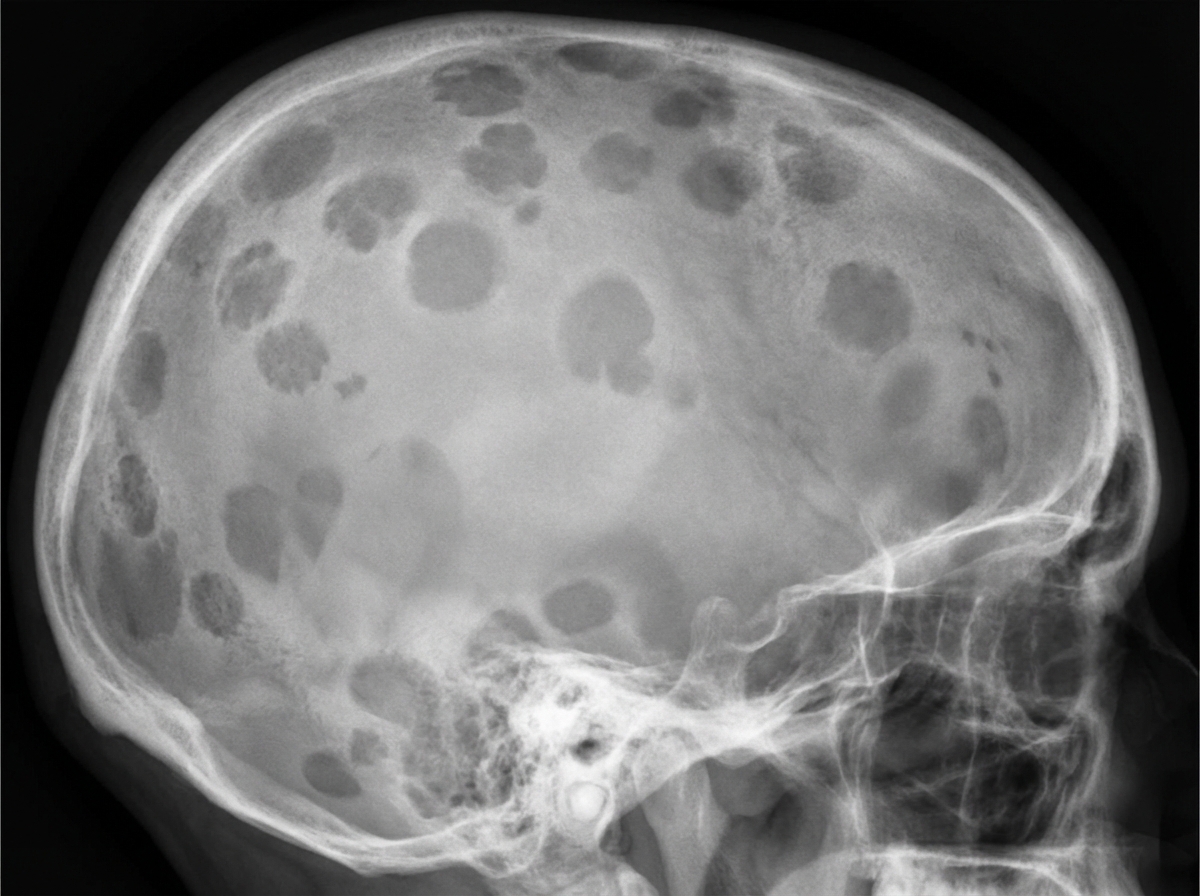
A previously healthy 75-year-old woman comes to the physician because of fatigue and decreasing exercise tolerance over the past 6 weeks. She also has intermittent episodes of dizziness. She has never smoked and does not drink alcohol. She takes a daily multivitamin. She appears pale. Physical examination shows a smooth liver that is palpable 1 cm below the costal margin. The spleen is not palpable. Laboratory studies show:
Hemoglobin 9.8 g/dL
MCV 104 fL
Reticulocyte count 0.2 %
Folate 21 ng/mL (N = 2–20)
Vitamin B12 789 pg/mL (N = 200–900)
A peripheral blood smear shows anisocytosis and bone marrow aspirate shows ringed sideroblasts. This patient is most likely to develop which of the following?
Q152
A 52-year-old man is brought to the emergency department because of headaches, vertigo, and changes to his personality for the past few weeks. He was diagnosed with HIV 14 years ago and was started on antiretroviral therapy at that time. Medical records from one month ago indicate that he followed his medication schedule inconsistently. Since then, he has been regularly taking his antiretroviral medications and trimethoprim-sulfamethoxazole. His vital signs are within normal limits. Neurological examination shows ataxia and apathy. Mini-Mental State Examination score is 15/30. Laboratory studies show:
Hemoglobin 12.5 g/dL
Leukocyte count 8400/mm3
Segmented neutrophils 80%
Eosinophils 1%
Lymphocytes 17%
Monocytes 2%
CD4+ T-lymphocytes 90/μL
Platelet count 328,000/mm3
An MRI of the brain with contrast shows a solitary ring-enhancing lesion involving the corpus callosum and measuring 4.5 cm in diameter. A lumbar puncture with subsequent cerebrospinal fluid analysis shows slight pleocytosis, and PCR is positive for Epstein-Barr virus DNA. Which of the following is the most likely diagnosis?
Q153
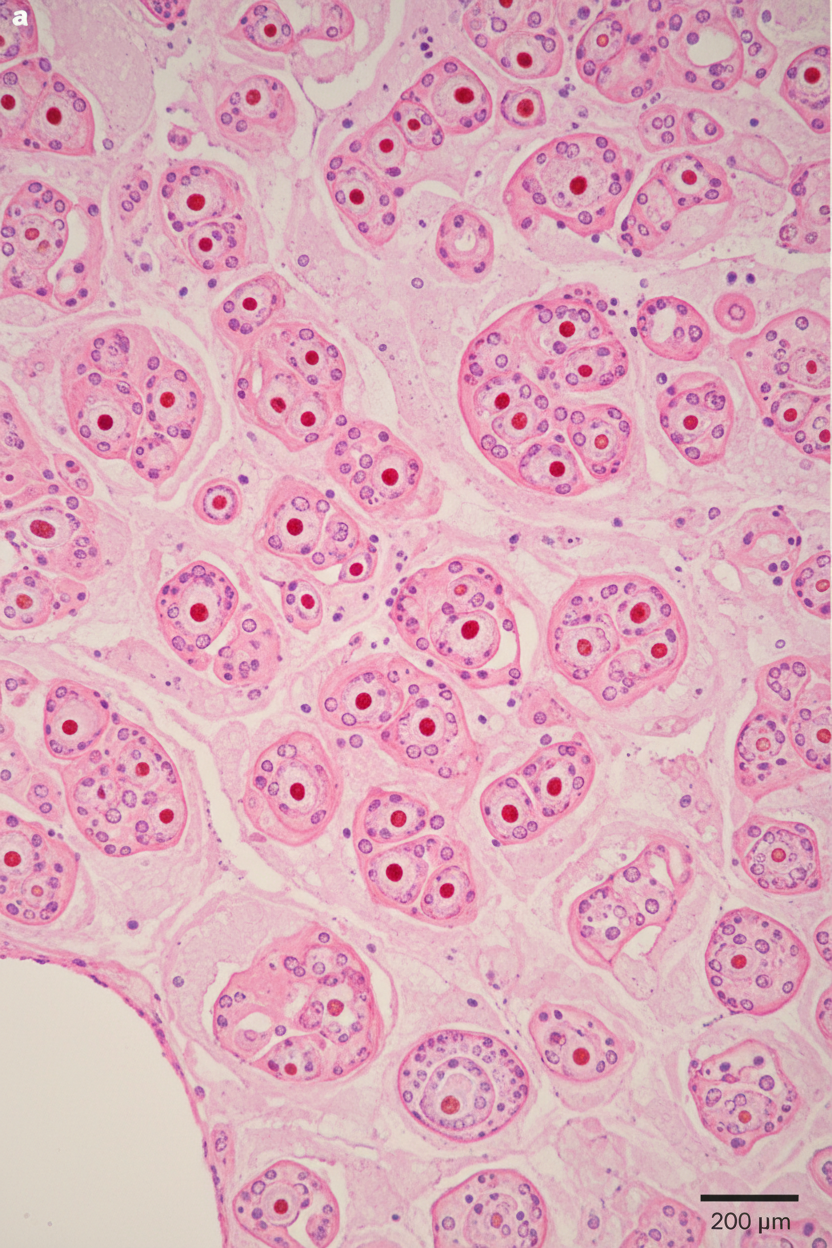
A 57-year-old man comes to the physician with a 3-month history of right flank pain. Urinalysis shows 60 RBC/hpf. Renal ultrasound shows a 3 cm, well-defined mass in the upper pole of the right kidney. A photomicrograph of a section of the resected mass is shown. Which of the following is the most likely diagnosis?
Q154
A 67-year-old woman comes to the physician because of a 9-month history of progressive fatigue. Examination shows pallor. Her hemoglobin concentration is 8.9 g/dL, mean corpuscular volume is 75 μm3, and serum ferritin is 9 ng/mL. Test of the stool for occult blood is positive. Colonoscopy shows an irregular, bleeding 3-cm exophytic ulcer in the right colon. Which of the following lesions is the greatest risk factor for this patient's condition?
Q155
A 53-year-old woman comes to the emergency department because of blurry vision, headache, and multiple episodes of nosebleeds over the last few weeks. During this time, she has also been itching a lot, especially after getting ready for work in the mornings. She has had an 8-kg (17.6-lb) weight loss and increasing fatigue during the past 6 months. Her temperature is 37.8°C (100.0°F), pulse is 80/min, respirations are 15/min, and blood pressure is 158/90 mm Hg. Physical examination shows no lesions or evidence of trauma in the nasal cavity. Her face, palms, nail beds, oral mucosa, and conjunctiva appear red. Abdominal examination shows splenomegaly. Her hemoglobin concentration is 19 g/dL, hematocrit is 58%, platelets are 450,000/μL, and erythropoietin level is below normal. A peripheral blood smear shows RBC precursor cells. Which of the following is the most likely underlying cause of this patient's condition?
Q156
A 73-year-old man is brought to the emergency department because of fever and a productive cough for 2 days. He has had increasing fatigue and dyspnea for the past 2 weeks. During this time he has lost 3 kg (6.6 lb). He received chemotherapy for myelodysplastic syndrome (MDS) 1 year ago. He is currently on supportive treatment and regular blood transfusions. He does not smoke or drink alcohol. The vital signs include: temperature 38.5℃ (101.3℉), pulse 93/min, respiratory rate 18/min, and blood pressure 110/65 mm Hg. He has petechiae distally on the lower extremities and several purpura on the trunk and extremities. Several enlarged lymph nodes are detected in the axillary and cervical regions on both sides. On auscultation of the lungs, crackles are heard in the left lower lobe area. Physical examination of the heart and abdomen shows no abnormalities. The laboratory studies show the following:
Hemoglobin 9 g/dL
Mean corpuscular volume 95 μm3
Leukocyte count 18,000/mm3
Platelet count 40,000/mm3
Prothrombin time 11 sec (INR = 1)
Based on these findings, this patient is most likely to have developed which of the following?
Q157
A 34-year-old man comes to the physician because of a 3-week history of left testicular swelling. He has no pain. He underwent a left inguinal hernia repair as a child. He takes no medications. He appears healthy. His vital signs are within normal limits. Examination shows an enlarged, nontender left testicle. When the patient is asked to cough, there is no bulge present in the scrotum. When a light is held behind the scrotum, it does not shine through. There is no inguinal lymphadenopathy. Laboratory studies show:
Hemoglobin 14.5 g/dL
Leukocyte count 8,800/mm3
Platelet count 345,000/mm3
Serum
Glucose 88 mg/dL
Creatinine 0.8 mg/dL
Total bilirubin 0.7 mg/dL
Alkaline phosphatase 35 U/L
AST 15 U/L
ALT 14 U/L
Lactate dehydrogenase 60 U/L
β-Human chorionic gonadotropin 80 mIU/mL (N < 5)
α-Fetoprotein 6 ng/mL (N < 10)
Which of the following is the most likely diagnosis?
Q158
A 52-year-old female was found upon mammography to have branching calcifications in the right lower breast. Physical exam revealed a palpable nodularity in the same location. A tissue biopsy was taken from the lesion, and the pathology report diagnosed the lesion as comedocarcinoma. Which of the following histological findings is most likely present in the lesion?
Q159
A 35-year-old man presents to the primary care office with a recent history of frequent falls. He had been able to walk normally until about a year ago when he started noticing that both of his legs felt weak. He's also had some trouble with feeling in his feet. These 2 problems have caused multiple falls over the last year. On physical exam, he has notable leg and foot muscular atrophy and 4/5 strength throughout his bilateral lower extremities. Sensation to light touch and pinprick is absent up to the mid-calf. Ankle jerk reflex is absent bilaterally. A photo of the patient's foot is shown. Which of the following best describes the etiology of this patient's condition?
Q160
A 76-year-old woman is brought to the physician because of lesions on her left arm. She first noticed them 3 months ago and they have grown larger since that time. She has not had any pain or pruritus in the area. She has a history of invasive ductal carcinoma of the left breast, which was treated with mastectomy and radiation therapy 27 years ago. Since that time, she has had lymphedema of the left arm. Physical examination shows extensive edema of the left arm. There are four coalescing, firm, purple-blue nodules on the left lateral axillary region and swelling of the surrounding skin. Which of the following is the most likely diagnosis?
Neoplasia US Medical PG Practice Questions and MCQs
Question 151: A previously healthy 75-year-old woman comes to the physician because of fatigue and decreasing exercise tolerance over the past 6 weeks. She also has intermittent episodes of dizziness. She has never smoked and does not drink alcohol. She takes a daily multivitamin. She appears pale. Physical examination shows a smooth liver that is palpable 1 cm below the costal margin. The spleen is not palpable. Laboratory studies show:
Hemoglobin 9.8 g/dL
MCV 104 fL
Reticulocyte count 0.2 %
Folate 21 ng/mL (N = 2–20)
Vitamin B12 789 pg/mL (N = 200–900)
A peripheral blood smear shows anisocytosis and bone marrow aspirate shows ringed sideroblasts. This patient is most likely to develop which of the following?
A. Hairy cell leukemia
B. Chronic lymphocytic leukemia
C. Burkitt lymphoma
D. Acute myelocytic leukemia (Correct Answer)
E. Sézary syndrome
Explanation: ***Acute myelocytic leukemia***
- The presence of **fatigue**, **anemia** (Hb 9.8 g/dL), **macrocytosis** (MCV 104 fL), **low reticulocyte count** (0.2%), and specifically **ringed sideroblasts** in the bone marrow aspirate points to a myelodysplastic syndrome (MDS) with ringed sideroblasts.
- A significant portion of patients with **myelodysplastic syndromes** (MDS), especially those with ringed sideroblasts, are at an elevated risk of transforming to **acute myelocytic leukemia (AML)**, making this the most likely future complication.
*Hairy cell leukemia*
- This typically presents with **splenomegaly**, **pancytopenia**, and characteristic **'hairy' lymphocytes** on peripheral smear, none of which are described here.
- The patient's presentation with **ringed sideroblasts** is not a feature of hairy cell leukemia.
*Chronic lymphocytic leukemia*
- Characterized by **lymphocytosis** (>5000 clonal B lymphocytes/µL), often with **lymphadenopathy** and **splenomegaly**, and typically presenting in older adults.
- The current findings of **macrocytic anemia** and **ringed sideroblasts** do not align with the typical features of CLL.
*Burkitt lymphoma*
- This is an aggressive B-cell lymphoma often associated with specific **translocations (e.g., t(8;14))** and rapidly growing tumors, especially in endemic regions.
- The patient's signs of **anemia** and **ringed sideroblasts** are not suggestive of Burkitt lymphoma.
*Sézary syndrome*
- This is a **leukemic variant of cutaneous T-cell lymphoma**, characterized by generalized erythroderma, lymphadenopathy, and circulating malignant T-cells (Sézary cells).
- The patient's anemic presentation and **ringed sideroblasts** are not consistent with Sézary syndrome.
Question 152: A 52-year-old man is brought to the emergency department because of headaches, vertigo, and changes to his personality for the past few weeks. He was diagnosed with HIV 14 years ago and was started on antiretroviral therapy at that time. Medical records from one month ago indicate that he followed his medication schedule inconsistently. Since then, he has been regularly taking his antiretroviral medications and trimethoprim-sulfamethoxazole. His vital signs are within normal limits. Neurological examination shows ataxia and apathy. Mini-Mental State Examination score is 15/30. Laboratory studies show:
Hemoglobin 12.5 g/dL
Leukocyte count 8400/mm3
Segmented neutrophils 80%
Eosinophils 1%
Lymphocytes 17%
Monocytes 2%
CD4+ T-lymphocytes 90/μL
Platelet count 328,000/mm3
An MRI of the brain with contrast shows a solitary ring-enhancing lesion involving the corpus callosum and measuring 4.5 cm in diameter. A lumbar puncture with subsequent cerebrospinal fluid analysis shows slight pleocytosis, and PCR is positive for Epstein-Barr virus DNA. Which of the following is the most likely diagnosis?
A. CNS lymphoma (Correct Answer)
B. AIDS dementia
C. Glioblastoma
D. Bacterial brain abscess
E. Progressive multifocal leukoencephalopathy
Explanation: ***CNS lymphoma***
- The patient's **immunosuppressed state (CD4 count 90/µL)** and the **solitary ring-enhancing lesion in the corpus callosum** are highly suggestive of CNS lymphoma.
- The **positive Epstein-Barr virus (EBV) DNA in CSF** is a strong indicator, as primary CNS lymphoma in HIV-positive patients is often associated with EBV infection.
*AIDS dementia*
- Characterized by **widespread cortical atrophy** and demyelination rather than a solitary, well-defined mass.
- While associated with cognitive decline, it doesn't typically present with a **mass lesion** or **EBV DNA in CSF**.
*Glioblastoma*
- More commonly presents as an **irregularly enhancing mass** in immunocompetent individuals and is less common in HIV patients with low CD4 counts.
- **EBV DNA in CSF** is not a feature of glioblastoma.
*Bacterial brain abscess*
- Usually presents with **fever, seizures, and focal neurological deficits**, and often multiple lesions.
- There is no mention of fever or a clear source of bacterial infection, and **EBV DNA in CSF** is not typical.
*Progressive multifocal leukoencephalopathy*
- Typically presents with **non-enhancing white matter lesions** without mass effect.
- Caused by the **JC virus (JCV)**, not EBV, and does not show ring enhancement.
Question 153: A 57-year-old man comes to the physician with a 3-month history of right flank pain. Urinalysis shows 60 RBC/hpf. Renal ultrasound shows a 3 cm, well-defined mass in the upper pole of the right kidney. A photomicrograph of a section of the resected mass is shown. Which of the following is the most likely diagnosis?
A. Chromophobe renal cell carcinoma
B. Nephroblastoma
C. Angiomyolipoma
D. Oncocytoma (Correct Answer)
E. Clear cell renal carcinoma
Explanation: ***Oncocytoma***
- Oncocytomas are characterized by cells with abundant, eosinophilic, granular cytoplasm due to numerous **mitochondria**, arranged in nests or cords.
- While typically benign, they can sometimes present with symptoms like **flank pain** and **hematuria**, mimicking renal cell carcinoma, which necessitates imaging and histology for definitive diagnosis.
*Chromophobe renal cell carcinoma*
- This tumor is characterized by cells with prominent cell membranes and pale, often reticulated cytoplasm, giving it a **"vegetable cell"** appearance, and is typically **CK7 positive**.
- Its cells are larger than oncocytoma cells and the cytoplasm is paler, not eosinophilic and granular.
*Nephroblastoma*
- Also known as Wilms tumor, it predominantly affects **children** (typically under 5 years old) and is characterized by a triphasic histology (blastemal, stromal, epithelial components).
- The patient's age (57 years old) makes nephroblastoma highly unlikely.
*Angiomyolipoma*
- This is a benign tumor composed of **blood vessels, smooth muscle, and mature adipose tissue**, which would be evident on imaging (fat content) and histology.
- While it can cause flank pain and hematuria, its microscopic appearance is distinct from the uniform, granular cells of an oncocytoma.
*Clear cell renal carcinoma*
- Characterized by cells with abundant **clear cytoplasm** due to dissolved lipids and glycogen, often arranged in nests and cords with a rich capillary network.
- The cytoplasm of oncocytoma cells is eosinophilic and granular, not clear.
Question 154: A 67-year-old woman comes to the physician because of a 9-month history of progressive fatigue. Examination shows pallor. Her hemoglobin concentration is 8.9 g/dL, mean corpuscular volume is 75 μm3, and serum ferritin is 9 ng/mL. Test of the stool for occult blood is positive. Colonoscopy shows an irregular, bleeding 3-cm exophytic ulcer in the right colon. Which of the following lesions is the greatest risk factor for this patient's condition?
A. Serrated hyperplastic polyp
B. Villous adenomatous polyp (Correct Answer)
C. Pedunculated inflammatory polyp
D. Submucosal lipomatous polyp
E. Tubular adenomatous polyp
Explanation: ***Villous adenomatous polyp***
- The patient presents with **iron deficiency anemia** (low hemoglobin, low MCV, low ferritin) and **GI bleeding** (positive occult blood, bleeding exophytic ulcer), indicating a **colon malignancy**.
- **Villous adenomas** have the highest malignant potential among polyps, with a progression rate to adenocarcinoma of around 30-70%, making them the greatest risk factor for the patient's condition.
*Serrated hyperplastic polyp*
- While **sessile serrated adenomas** (SSAs) can have malignant potential, **hyperplastic polyps** are generally considered benign and have little to no risk of progressing to adenocarcinoma.
- The patient's presentation with an **irregular, bleeding ulcer** is more indicative of an advanced lesion than a typical hyperplastic polyp.
*Pedunculated inflammatory polyp*
- **Inflammatory polyps** are benign mucosal projections resulting from chronic inflammation, such as inflammatory bowel disease, and have **no malignant potential**.
- They are distinct from adenomatous polyps, which are true neoplastic growths with varying degrees of dysplasia.
*Submucosal lipomatous polyp*
- **Lipomatous polyps** are benign, non-epithelial lesions composed of mature adipose tissue, typically found in the submucosa.
- They are **non-neoplastic** and carry no malignant potential, thus not contributing to the risk of colorectal cancer.
*Tubular adenomatous polyp*
- **Tubular adenomas** are common but have a lower malignant potential (about 5-10% lifetime risk) compared to villous adenomas.
- While they can progress to adenocarcinoma, the **villous component** is a stronger predictor of malignancy and is more consistent with a large, bleeding exophytic ulcer described in the right colon.
Question 155: A 53-year-old woman comes to the emergency department because of blurry vision, headache, and multiple episodes of nosebleeds over the last few weeks. During this time, she has also been itching a lot, especially after getting ready for work in the mornings. She has had an 8-kg (17.6-lb) weight loss and increasing fatigue during the past 6 months. Her temperature is 37.8°C (100.0°F), pulse is 80/min, respirations are 15/min, and blood pressure is 158/90 mm Hg. Physical examination shows no lesions or evidence of trauma in the nasal cavity. Her face, palms, nail beds, oral mucosa, and conjunctiva appear red. Abdominal examination shows splenomegaly. Her hemoglobin concentration is 19 g/dL, hematocrit is 58%, platelets are 450,000/μL, and erythropoietin level is below normal. A peripheral blood smear shows RBC precursor cells. Which of the following is the most likely underlying cause of this patient's condition?
A. Stress erythrocytosis
B. Increased intracranial pressure
C. Mutated JAK2 gene (Correct Answer)
D. Megakaryocyte proliferation
E. Renal cell carcinoma
Explanation: ***Mutated JAK2 gene***
- The patient's symptoms, including **elevated hemoglobin and hematocrit**, **splenomegaly**, **pruritus after showering (aquagenic pruritus)**, and **low erythropoietin levels**, are highly suggestive of **polycythemia vera (PV)**.
- **Polycythemia vera** is a chronic myeloproliferative neoplasm characterized by uncontrolled production of red blood cells, often due to a **JAK2 V617F mutation**, leading to constitutive activation of the JAK-STAT pathway independent of erythropoietin.
*Stress erythrocytosis*
- **Stress erythrocytosis** (or relative polycythemia) is characterized by an elevated hematocrit due to **decreased plasma volume**, not an actual increase in red blood cell mass.
- It would not explain the associated symptoms like **splenomegaly**, **pruritus**, or the presence of **RBC precursor cells** in the peripheral smear, which indicate increased erythropoiesis.
*Increased intracranial pressure*
- **Increased intracranial pressure** can cause headache and blurry vision (due to papilledema), but does not explain the **systemic symptoms** like pruritus, splenomegaly, weight loss, or the specific hematological findings (high hemoglobin, low erythropoietin).
- The nosebleeds are more likely related to abnormal platelet function or vessel distension in the context of PV.
*Megakaryocyte proliferation*
- While **megakaryocyte proliferation** is a feature of **myeloproliferative neoplasms**, particularly **essential thrombocythemia** and **primary myelofibrosis**, it is not the primary underlying cause that explains the entire clinical picture for PV.
- In PV, panmyelosis (proliferation of all myeloid lineages, including megakaryocytes) occurs, but the **JAK2 mutation** is the driving oncogenic event leading to this proliferation.
*Renal cell carcinoma*
- **Renal cell carcinoma** can cause **secondary polycythemia** by secreting erythropoietin, which would lead to **elevated erythropoietin levels**.
- This patient has **below-normal erythropoietin levels**, ruling out erythropoietin-producing tumors as the cause of her polycythemia.
Question 156: A 73-year-old man is brought to the emergency department because of fever and a productive cough for 2 days. He has had increasing fatigue and dyspnea for the past 2 weeks. During this time he has lost 3 kg (6.6 lb). He received chemotherapy for myelodysplastic syndrome (MDS) 1 year ago. He is currently on supportive treatment and regular blood transfusions. He does not smoke or drink alcohol. The vital signs include: temperature 38.5℃ (101.3℉), pulse 93/min, respiratory rate 18/min, and blood pressure 110/65 mm Hg. He has petechiae distally on the lower extremities and several purpura on the trunk and extremities. Several enlarged lymph nodes are detected in the axillary and cervical regions on both sides. On auscultation of the lungs, crackles are heard in the left lower lobe area. Physical examination of the heart and abdomen shows no abnormalities. The laboratory studies show the following:
Hemoglobin 9 g/dL
Mean corpuscular volume 95 μm3
Leukocyte count 18,000/mm3
Platelet count 40,000/mm3
Prothrombin time 11 sec (INR = 1)
Based on these findings, this patient is most likely to have developed which of the following?
A. Non-cardiogenic pulmonary edema
B. Acute myeloid leukemia (Correct Answer)
C. Disseminated intravascular coagulation
D. Small cell lung cancer
E. Burkitt lymphoma
Explanation: ***Acute myeloid leukemia***
- The patient's history of **myelodysplastic syndrome (MDS)**, combined with the current presentation of **fever**, **fatigue**, **dyspnea**, significant **weight loss**, **generalized lymphadenopathy**, **petechiae**, **purpura**, and dramatically altered blood counts (**leukocytosis**, **thrombocytopenia**, **anemia**), is highly suggestive of progression from MDS to **acute myeloid leukemia (AML)**.
- The elevated **white blood cell count (18,000/mm3)** with anemia and thrombocytopenia, along with systemic symptoms and a history of a pre-leukemic condition, points directly to a clonal proliferation of myeloid blasts, which is the hallmark of AML.
*Non-cardiogenic pulmonary edema*
- While the patient has dyspnea and crackles, **non-cardiogenic pulmonary edema** is a symptom or complication, not an underlying primary diagnosis that explains the constellation of other systemic findings like lymphadenopathy, petechiae, weight loss, and the specific blood count abnormalities.
- Pulmonary edema can be a complication of severe sepsis or acute respiratory distress syndrome, but it does not account for the **malignant hematological picture**.
*Disseminated intravascular coagulation*
- **Disseminated intravascular coagulation (DIC)** is a possibility given the petechiae and purpura, indicating a coagulopathy, and it can be a complication of severe infection or malignancy.
- However, the patient's **PT/INR is normal**, and while his platelet count is low, DIC would typically also involve deranged coagulation times (prolonged PT/INR and aPTT) to a greater extent, and the overarching clinical picture with lymphadenopathy and history of MDS points to an underlying hematological malignancy as the primary issue rather than DIC as the sole diagnosis.
*Small cell lung cancer*
- **Small cell lung cancer** could cause weight loss and fatigue, and potentially paraneoplastic syndromes leading to certain hematological changes, but would not typically present with such pronounced **generalized lymphadenopathy** and the specific **pancytopenia-like picture** (anemia, thrombocytopenia with leukocytosis) without a clear lung mass or primary respiratory symptoms beyond crackles.
- The history of MDS transitioning to leukemia is a much more direct and likely explanation for the presenting signs and symptoms.
*Burkitt lymphoma*
- **Burkitt lymphoma** is a high-grade B-cell lymphoma that can cause lymphadenopathy and systemic symptoms, but it typically presents with distinct patterns of involvement (e.g., jaw mass in endemic form, abdominal involvement in sporadic form) and less commonly transitions directly from MDS.
- While it can manifest with bone marrow involvement, the particular blood count abnormalities and the history of **MDS progressing to acute leukemia** makes AML a far more probable diagnosis.
Question 157: A 34-year-old man comes to the physician because of a 3-week history of left testicular swelling. He has no pain. He underwent a left inguinal hernia repair as a child. He takes no medications. He appears healthy. His vital signs are within normal limits. Examination shows an enlarged, nontender left testicle. When the patient is asked to cough, there is no bulge present in the scrotum. When a light is held behind the scrotum, it does not shine through. There is no inguinal lymphadenopathy. Laboratory studies show:
Hemoglobin 14.5 g/dL
Leukocyte count 8,800/mm3
Platelet count 345,000/mm3
Serum
Glucose 88 mg/dL
Creatinine 0.8 mg/dL
Total bilirubin 0.7 mg/dL
Alkaline phosphatase 35 U/L
AST 15 U/L
ALT 14 U/L
Lactate dehydrogenase 60 U/L
β-Human chorionic gonadotropin 80 mIU/mL (N < 5)
α-Fetoprotein 6 ng/mL (N < 10)
Which of the following is the most likely diagnosis?
A. Seminoma (Correct Answer)
B. Leydig cell tumor
C. Choriocarcinoma
D. Spermatocele of testis
E. Yolk sac tumor
Explanation: **Seminoma**
- The elevated **beta-human chorionic gonadotropin (β-hCG)** in the presence of a normal alpha-fetoprotein (α-FP) is highly suggestive of seminoma, especially in a painless testicular mass in a young man.
- While AFP is typically not elevated in pure seminomas, β-hCG can be mildly to moderately elevated in approximately 10-30% of cases, consistent with this presentation.
*Leydig cell tumor*
- These tumors often produce androgens or estrogens, leading to symptoms like **precocious puberty** in boys or **gynecomastia** in adult men, which are not described.
- Serum tumor markers like β-hCG and α-FP are typically **not elevated** in Leydig cell tumors.
*Choriocarcinoma*
- This highly aggressive germ cell tumor is characterized by **markedly elevated β-hCG levels**, often much higher than 80 mIU/mL, and can also elevate α-FP.
- Given the relatively mild β-hCG elevation and normal α-FP, choriocarcinoma is less likely.
*Spermatocele of testis*
- A spermatocele is a **benign cyst** that typically transilluminates (light shines through), which is absent in this case.
- Tumor markers like β-hCG and α-FP would be **normal** in a spermatocele, ruling it out.
*Yolk sac tumor*
- Yolk sac tumors are characterized by **elevated alpha-fetoprotein (α-FP)** levels, which are normal in this patient.
- While they can also elevate β-hCG in some cases, the defining marker, α-FP, is not elevated here.
Question 158: A 52-year-old female was found upon mammography to have branching calcifications in the right lower breast. Physical exam revealed a palpable nodularity in the same location. A tissue biopsy was taken from the lesion, and the pathology report diagnosed the lesion as comedocarcinoma. Which of the following histological findings is most likely present in the lesion?
A. Disordered glandular cells invading the ductal basement membrane
B. Pleomorphic cells surrounding areas of comedonecrosis (Correct Answer)
C. Extensive lymphocytic infiltrate
D. Halo cells in epidermal tissue
E. Orderly rows of cells surrounding lobules
Explanation: ***Pleomorphic cells surrounding areas of comedonecrosis***
- **Comedocarcinoma** specifically refers to a high-grade subtype of **ductal carcinoma in situ (DCIS)** characterized by **central necrosis (comedonecrosis)** surrounded by **pleomorphic epithelial cells**.
- The presence of branching calcifications on mammography is also a classic sign often associated with **comedonecrosis** within the ducts.
*Disordered glandular cells invading the ductal basement membrane*
- This description is characteristic of **invasive ductal carcinoma**, where malignant cells breach the basement membrane and infiltrate surrounding tissues, which is not stated in the diagnosis of comedocarcinoma.
- Comedocarcinoma is a form of **carcinoma in situ**, meaning the cancerous cells are confined within the ductal system and have not yet invaded the basement membrane.
*Extensive lymphocytic infiltrate*
- While immune cell infiltrates can be seen in various cancers, an **extensive lymphocytic infiltrate** is more characteristic of conditions like **medullary carcinoma** of the breast or specific immune responses, not a defining feature of comedocarcinoma.
- It does not directly relate to the characteristic histological appearance of **comedonecrosis** and **pleomorphic cells** seen in comedocarcinoma.
*Halo cells in epidermal tissue*
- **Halo cells** (koilocytes) are characteristic of **human papillomavirus (HPV) infection** and are found in **cervical or anal squamous lesions**, not typically in breast tissue.
- This finding is completely unrelated to breast pathology and specifically to comedocarcinoma.
*Orderly rows of cells surrounding lobules*
- This description is more indicative of **lobular carcinoma in situ (LCIS)** or some benign proliferative lesions, where cellular architecture tends to maintain some order.
- **Comedocarcinoma** involves disordered, pleomorphic cells within ducts, often with central necrosis, and does not form orderly rows surrounding lobules.
Question 159: A 35-year-old man presents to the primary care office with a recent history of frequent falls. He had been able to walk normally until about a year ago when he started noticing that both of his legs felt weak. He's also had some trouble with feeling in his feet. These 2 problems have caused multiple falls over the last year. On physical exam, he has notable leg and foot muscular atrophy and 4/5 strength throughout his bilateral lower extremities. Sensation to light touch and pinprick is absent up to the mid-calf. Ankle jerk reflex is absent bilaterally. A photo of the patient's foot is shown. Which of the following best describes the etiology of this patient's condition?
A. Metabolic
B. Genetic (Correct Answer)
C. Ischemic
D. Autoimmune
E. Infectious
Explanation: ***Genetic***
- The combination of **progressive weakness and sensory deficits** starting in the distal extremities, **muscle atrophy**, absent ankle jerks, and the characteristic foot deformity (*pes cavus* and hammertoes, visible in the image) in a 35-year-old strongly suggests a hereditary neuropathy, most commonly **Charcot-Marie-Tooth disease (CMT)**.
- CMT is a group of inherited neurological disorders characterized by slowly progressive degeneration of peripheral nerves, leading to distal muscle weakness and sensory loss, and is the most prevalent inherited peripheral neuropathy.
*Metabolic*
- While metabolic conditions can cause neuropathy (e.g., **diabetes**), they typically present with a more classic "stocking-glove" distribution of sensory loss, and the characteristic foot deformities and progressive severe atrophy seen here are less typical as initial presentation without a clear history of underlying metabolic disease.
- Absence of other metabolic derangements, such as diabetes, thyroid dysfunction, or vitamin deficiencies, makes this less likely to be the primary cause.
*Ischemic*
- **Ischemic neuropathies** are usually acute, painful, and often associated with vascular risk factors or specific arterial occlusions, which are not described in this patient's chronic, bilateral, and symmetric presentation.
- There is no mention of claudication or other signs of vascular insufficiency.
*Autoimmune*
- **Autoimmune neuropathies** like **Guillain-Barré Syndrome (GBS)** or **Chronic Inflammatory Demyelinating Polyradiculoneuropathy (CIDP)** often have a more acute or subacute onset (GBS) or relapsing-remitting course (CIDP), and GBS typically presents with ascending weakness reaching a nadir and then improving, which is not consistent with this patient's chronic, progressive course.
- While CIDP can be chronic, the classic inherited foot deformities are not typically seen, and the pattern of nerve involvement might differ.
*Infectious*
- **Infectious neuropathies** (e.g., HIV, Lyme disease, leprosy) would typically have associated systemic symptoms, a different progression pattern, or specific exposures that are not mentioned in the patient's history.
- The chronic, slowly progressive nature with specific deformities makes a common infectious cause less likely compared to a genetic disorder.
Question 160: A 76-year-old woman is brought to the physician because of lesions on her left arm. She first noticed them 3 months ago and they have grown larger since that time. She has not had any pain or pruritus in the area. She has a history of invasive ductal carcinoma of the left breast, which was treated with mastectomy and radiation therapy 27 years ago. Since that time, she has had lymphedema of the left arm. Physical examination shows extensive edema of the left arm. There are four coalescing, firm, purple-blue nodules on the left lateral axillary region and swelling of the surrounding skin. Which of the following is the most likely diagnosis?
A. Thrombophlebitis
B. Cellulitis
C. Melanoma
D. Angiosarcoma (Correct Answer)
E. Kaposi sarcoma
Explanation: ***Angiosarcoma***
- The presence of **firm, purple-blue nodules** in a patient with **chronic lymphedema** following **mastectomy and radiation** for breast cancer is highly suggestive of **angiosarcoma (Stewart-Treves syndrome)**.
- This rare but aggressive vascular malignancy often presents as skin lesions in the setting of long-standing lymphedema, particularly in the upper extremity after breast cancer treatment.
*Thrombophlebitis*
- Typically presents with **erythema**, **tenderness**, and **pain** along the course of a superficial vein, which is not described here.
- The lesions would likely blanch with pressure and feel more like a cord or streak, rather than firm, discrete nodules.
*Cellulitis*
- Would present with **warmth**, **tenderness**, **erythema with ill-defined borders**, and often **fever**, none of which are mentioned.
- While lymphedema is a risk factor for cellulitis, the description of discrete, firm, purple-blue nodules growing over time is not characteristic.
*Melanoma*
- Although melanoma can present as a dark lesion, it often has **irregular borders**, **asymmetry**, and **color variegation**, and is typically associated with UV exposure.
- While it can be nodular, the specific context of chronic lymphedema and the description of purple-blue lesions are more indicative of a vascular tumor.
*Kaposi sarcoma*
- Characterized by **purple-brown skin lesions** and is primarily associated with **HIV infection** or **immunosuppression**, neither of which is indicated in this patient.
- While it is a vascular tumor, the unique presentation in the context of chronic lymphedema post-breast cancer therapy makes angiosarcoma a more fitting diagnosis.