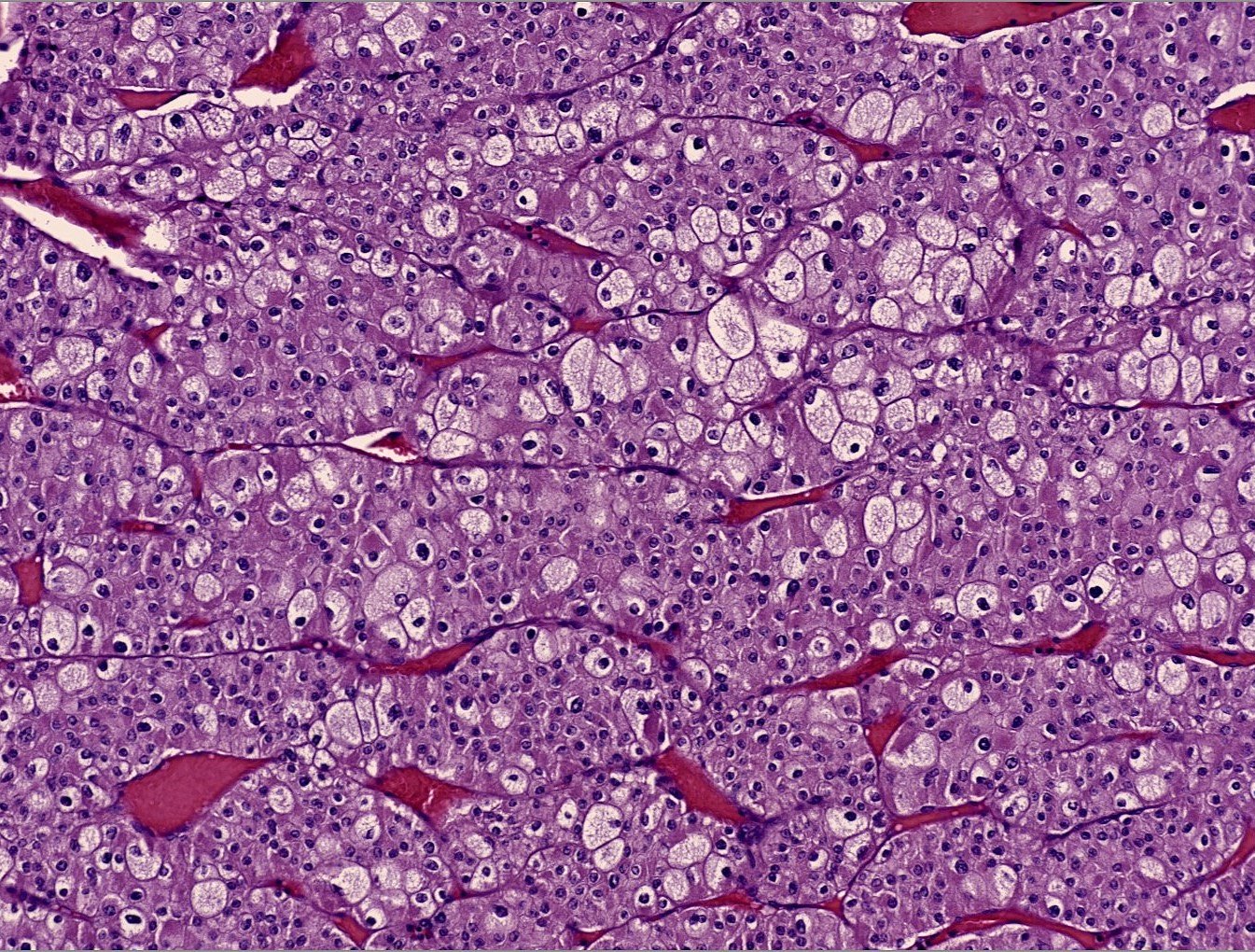
A 40-year-old male presents to his primary care physician for a regularly scheduled check-up. Physical examination reveals nontender cervical lymphadenopathy. A biopsy of the lymph node reveals aggregates of follicular architecture, and cytogenic analysis shows a t(14;18) translocation. The protein most likely responsible for the patient’s condition does which of the following:
Q142
A 67-year-old man presents to the emergency department with altered mental status. The patient is non-verbal at baseline, but his caretakers at the nursing home noticed he was particularly somnolent recently. The patient has a past medical history of diabetes and Alzheimer dementia. His temperature is 99.7°F (37.6°C), blood pressure is 157/98 mmHg, pulse is 150/min, respirations are 16/min, and oxygen saturation is 98% on room air. Laboratory values are obtained and shown below.
Hemoglobin: 9 g/dL
Hematocrit: 33%
Leukocyte count: 8,500/mm^3 with normal differential
Platelet count: 197,000/mm^3
Serum:
Na+: 139 mEq/L
Cl-: 102 mEq/L
K+: 4.3 mEq/L
HCO3-: 25 mEq/L
BUN: 37 mg/dL
Glucose: 99 mg/dL
Creatinine: 2.4 mg/dL
Ca2+: 12.2 mg/dL
The patient has lost 20 pounds over the past month. His parathyroid hormone is within normal limits, and his urinary calcium is increased. Physical exam demonstrates discomfort when the patient's lower back and extremities are palpated. Which of the following is the most accurate diagnostic test for this patient's underlying diagnosis?
Q143
A 1-year-old boy is brought to the physician for the evaluation of swelling around the eyelids. He was born at term after an uncomplicated pregnancy. He is at the 95th percentile for weight and 60th percentile for length. His blood pressure is 130/86 mm Hg. Physical examination shows an empty scrotal sac and a left-sided abdominal mass. Ophthalmologic examination shows no abnormalities. Urinalysis shows a proteinuria of 3+ and fatty casts. Abdominal ultrasound shows a hypervascular mass at the upper pole of the kidney. Which of the following best describes the pathogenesis of this patient's disease?
Q144
A 6-year-old boy is brought to the physician by his parents because of right lower extremity weakness, worsening headaches, abdominal pain, dark urine, and a 5-kg (11-lb) weight loss for the past 2 months. His teachers report that he has not been paying attention in class and his grades have been worsening. He has a history of infantile seizures. Physical examination shows a palpable abdominal mass and left costovertebral angle tenderness. Neurological exam shows decreased strength of the right lower limb. He has several acne-like angiofibromas around the nose and cheeks. Further evaluation is most likely to show which of the following?
Q145
An 11-month-old boy presents with a scaly erythematous rash on his back for the past 2 days. No significant past medical history. Family history is significant for the fact that the patient’s parents are first-degree cousins. In addition, his older sibling had similar symptoms and was diagnosed with a rare unknown skin disorder. On physical examination, whitish granulomatous plaques are present in the oral mucosa, which exhibit a tendency to ulcerate, as well as a scaly erythematous rash on his back. A complete blood count reveals that the patient is anemic. A plain radiograph of the skull shows lytic bone lesions. Which of the following immunohistochemical markers, if positive, would confirm the diagnosis in this patient?
Q146
A 32-year-old man visits his family physician for 10 months of persistent left flank pain, weight loss, and fatigue. Also, he has had hematuria a couple of times in the last month. His mother was diagnosed and treated for a pheochromocytoma when she was 36 years old, and his father died at 45 years due to myocardial infarction. His personal medical history is not relevant. He does not smoke and used to be a varsity athlete in high school and university. Physical examination shows temporal wasting, pale mucous membranes and palms, a palpable mass in the left flank, and a varicocele that does not reduce upon recumbency. His family physician sends the patient to the emergency department for an abdominal computed tomography (CT) scan, which shows a complex left renal mass and a hemangioblastoma in T10. A biopsy of the renal mass is ordered by the oncology team, which demonstrates compact cells with prominent nucleoli, eosinophilic cytoplasm within a network of a small and thin-walled vasculature. What is the most likely type of tumor in this patient?
Q147
A 72-year-old male visits his gastroenterologist for a check-up one year following resection of a 2-cm malignant lesion in his sigmoid colon. Serum levels of which of the following can be used in this patient to test for cancer recurrence?
Q148
A 15-year-old girl comes to the physician because of a sore throat and subjective fevers for the past 2 weeks. She has been feeling lethargic and is unable to attend school. She has a history of multiple episodes of streptococcal pharyngitis treated with amoxicillin. She immigrated with her family to the United States from China 10 years ago. She appears thin. Her temperature is 37.8°C (100°F), pulse is 97/min, and blood pressure is 90/60 mm Hg. Examination shows pharyngeal erythema and enlarged tonsils with exudates and palatal petechiae. There is cervical lymphadenopathy. The spleen is palpated 2 cm below the left costal margin. Her hemoglobin concentration is 12 g/dL, leukocyte count is 14,100/mm3 with 54% lymphocytes (12% atypical lymphocytes), and platelet count is 280,000/mm3. A heterophile agglutination test is positive. The underlying cause of this patient's symptoms is most likely to increase the risk of which of the following conditions?
Q149
A 70-year-old man comes to the physician because of progressive fatigue and lower back pain for the past 4 months. The back pain worsened significantly after he had a minor fall while doing yard work the previous day. For the past year, he has had a feeling of incomplete emptying of his bladder after voiding. His vital signs are within normal limits. Examination shows bilateral paravertebral muscle spasm, severe tenderness over the second lumbar vertebra, and mild tenderness over the lower thoracic vertebrae. Neurologic examination shows no abnormalities. His hemoglobin is 10.5 g/dl, alkaline phosphatase is 110 U/L, and serum calcium is 11.1 mg/dl. An x-ray of the skull is shown. Which of the following is the most appropriate next step in diagnosis?
Q150
A 9-year-old boy is brought to the physician for evaluation of 2 months of progressive clumsiness, falls, and increased urinary frequency. Physical examination shows bilateral temporal visual field loss. An MRI of the head shows a small calcified suprasellar mass. The patient undergoes surgery with complete removal of the mass. Pathological examination of the specimen shows a lobular tumor composed of cysts filled with oily, brownish-yellow fluid. This mass is most likely derived from which of the following structures?
Neoplasia US Medical PG Practice Questions and MCQs
Question 141: A 40-year-old male presents to his primary care physician for a regularly scheduled check-up. Physical examination reveals nontender cervical lymphadenopathy. A biopsy of the lymph node reveals aggregates of follicular architecture, and cytogenic analysis shows a t(14;18) translocation. The protein most likely responsible for the patient’s condition does which of the following:
A. Regulates passage through the cell cycle
B. Activates DNA repair proteins
C. Regulates cell growth through signal transduction
D. Inhibits apoptosis (Correct Answer)
E. Provides mitotic cytoskeleton
Explanation: ***Inhibits apoptosis***
- The t(14;18) translocation is characteristic of **follicular lymphoma** and leads to the overexpression of the **BCL-2 protein**.
- **BCL-2** is an anti-apoptotic protein that prevents programmed cell death, allowing abnormal cells to accumulate.
*Regulates passage through the cell cycle*
- Proteins involved in **cell cycle regulation** (e.g., p53, Rb) control progression through different phases, but BCL-2's primary role is in cell survival, not direct cell cycle progression.
- Dysregulation of cell cycle proteins is seen in many cancers, but the specific BCL-2 translocation primarily affects apoptosis.
*Activates DNA repair proteins*
- **DNA repair proteins** (e.g., ATM, BRCA1/2) are crucial for maintaining genomic integrity and correcting DNA damage.
- While important in cancer development, their activation is not the direct function of the BCL-2 protein overexpressed due to the t(14;18) translocation.
*Regulates cell growth through signal transduction*
- **Signal transduction pathways** often involve growth factors and their receptors (e.g., RTKs) that regulate cell proliferation and differentiation.
- While BCL-2 indirectly impacts cell numbers by preventing apoptosis, its direct role is not in initiating or participating in growth-promoting signal transduction cascades.
*Provides mitotic cytoskeleton*
- The **mitotic cytoskeleton**, composed of microtubules, is essential for chromosome segregation during cell division.
- Proteins like tubulin are the primary components, and BCL-2 has no direct role in forming or organizing these structures.
Question 142: A 67-year-old man presents to the emergency department with altered mental status. The patient is non-verbal at baseline, but his caretakers at the nursing home noticed he was particularly somnolent recently. The patient has a past medical history of diabetes and Alzheimer dementia. His temperature is 99.7°F (37.6°C), blood pressure is 157/98 mmHg, pulse is 150/min, respirations are 16/min, and oxygen saturation is 98% on room air. Laboratory values are obtained and shown below.
Hemoglobin: 9 g/dL
Hematocrit: 33%
Leukocyte count: 8,500/mm^3 with normal differential
Platelet count: 197,000/mm^3
Serum:
Na+: 139 mEq/L
Cl-: 102 mEq/L
K+: 4.3 mEq/L
HCO3-: 25 mEq/L
BUN: 37 mg/dL
Glucose: 99 mg/dL
Creatinine: 2.4 mg/dL
Ca2+: 12.2 mg/dL
The patient has lost 20 pounds over the past month. His parathyroid hormone is within normal limits, and his urinary calcium is increased. Physical exam demonstrates discomfort when the patient's lower back and extremities are palpated. Which of the following is the most accurate diagnostic test for this patient's underlying diagnosis?
A. Peripheral blood smear
B. Urine protein levels
C. Bone marrow biopsy (Correct Answer)
D. Radiograph of the lumbar spine
E. Urine, blood, and cerebrospinal fluid cultures
Explanation: **Bone marrow biopsy**
- The patient presents with **hypercalcemia**, **elevated creatinine** (acute kidney injury), **anemia**, **weight loss**, and bony pain, which are classic features of **multiple myeloma**; a bone marrow biopsy is crucial for diagnosis and staging by identifying plasma cell infiltration.
- Identification of > **10% clonal plasma cells** in the bone marrow confirms the diagnosis of multiple myeloma in patients with myeloma-defining events (e.g., hypercalcemia, renal failure, anemia, bone lesions).
*Peripheral blood smear*
- While a peripheral blood smear might show **rouleaux formation** in multiple myeloma due to increased plasma proteins, it is not specific or diagnostic as rouleaux can be seen in other conditions like inflammation.
- It does not quantify the percentage of **clonal plasma cells**, which is essential for diagnosing multiple myeloma.
*Urine protein levels*
- **Urine protein electrophoresis (UPEP)** and **immunofixation** are important for detecting Bence-Jones proteinuria (clonal free light chains) which supports the diagnosis of multiple myeloma, but quantifying general urine protein levels (e.g., with a 24-hour collection) is not as specific or diagnostic.
- While **elevated urine protein** is expected in multiple myeloma due to light chain excretion, it doesn't provide definitive evidence of plasma cell dyscrasia or bone marrow involvement.
*Radiograph of the lumbar spine*
- **Skeletal surveys** (including radiographs) are used to identify **lytic bone lesions** characteristic of multiple myeloma, which contribute to pain and hypercalcemia.
- Although important for identifying bone involvement, radiographs are not the most accurate diagnostic test for the underlying disease itself, as they do not directly evaluate the presence of **clonal plasma cells**.
*Urine, blood, and cerebrospinal fluid cultures*
- These cultures are primarily used to diagnose **infections**, which can cause altered mental status and fever.
- While infection is a consideration, the constellation of hypercalcemia, renal failure, anemia, and bone pain points strongly toward multiple myeloma, making cultures less likely to reveal the primary underlying diagnosis.
Question 143: A 1-year-old boy is brought to the physician for the evaluation of swelling around the eyelids. He was born at term after an uncomplicated pregnancy. He is at the 95th percentile for weight and 60th percentile for length. His blood pressure is 130/86 mm Hg. Physical examination shows an empty scrotal sac and a left-sided abdominal mass. Ophthalmologic examination shows no abnormalities. Urinalysis shows a proteinuria of 3+ and fatty casts. Abdominal ultrasound shows a hypervascular mass at the upper pole of the kidney. Which of the following best describes the pathogenesis of this patient's disease?
A. Inhibition of hypoxia-inducible factor 1α
B. Increased expression of insulin-like growth factor 2
C. Deficiency of 17α-hydroxylase
D. Loss of function of zinc finger transcription factor
E. Deletion of the WT1 gene on chromosome 11 (Correct Answer)
Explanation: ***Deletion of the WT1 gene on chromosome 11***
- This patient presents with the classic features of **Denys-Drash syndrome**: **gonadal dysgenesis** (**empty scrotal sac**), **renal disease** (**nephrotic syndrome** with proteinuria and fatty casts, hypertension), and **Wilms tumor**.
- **Denys-Drash syndrome** is caused by a **germline mutation** (often deletion) in the **WT1 tumor suppressor gene** located on **chromosome 11p13**. The WT1 gene encodes a zinc finger transcription factor critical for genitourinary development.
*Inhibition of hypoxia-inducible factor 1α*
- This is linked to some rare forms of **renal cell carcinoma**, particularly those associated with **VHL disease**, but not directly to **Wilms tumor** or the specific constellation of symptoms seen here.
- **HIF-1α** typically promotes angiogenesis and cell survival under hypoxic conditions, and its inhibition would generally not lead to tumor formation in this context.
*Increased expression of insulin-like growth factor 2*
- **IGF-2 overexpression** is associated with **Beckwith-Wiedemann syndrome**, which also involves an increased risk of **Wilms tumor**, as well as other features like **macroglossia** and **hemihypertrophy**.
- While both conditions are linked to Wilms tumor and chromosome 11, the presence of **gonadal dysgenesis** and significant **renal disease** (nephrotic syndrome) strongly points to **Denys-Drash syndrome** rather than Beckwith-Wiedemann, which is a separate pathogenetic mechanism (often involving epigenetic changes in the 11p15.5 region).
*Deficiency of 17α-hydroxylase*
- This enzyme deficiency leads to **congenital adrenal hyperplasia** with features like **hypertension** and **gonadal dysgenesis** (due to impaired sex steroid synthesis) but *does not* cause **renal tumors** or **nephrotic syndrome**.
- The elevated blood pressure in 17α-hydroxylase deficiency is due to accumulation of mineralocorticoid precursors, distinct from the renal pathology here.
*Loss of function of zinc finger transcription factor*
- While the **WT1 gene** does encode a **zinc finger transcription factor**, this answer is too vague and non-specific. Multiple genes encode zinc finger transcription factors involved in various developmental and disease processes.
- The **correct and specific answer** is the **deletion of the WT1 gene on chromosome 11**, which precisely identifies the pathogenetic mechanism of Denys-Drash syndrome rather than using a generic functional description.
Question 144: A 6-year-old boy is brought to the physician by his parents because of right lower extremity weakness, worsening headaches, abdominal pain, dark urine, and a 5-kg (11-lb) weight loss for the past 2 months. His teachers report that he has not been paying attention in class and his grades have been worsening. He has a history of infantile seizures. Physical examination shows a palpable abdominal mass and left costovertebral angle tenderness. Neurological exam shows decreased strength of the right lower limb. He has several acne-like angiofibromas around the nose and cheeks. Further evaluation is most likely to show which of the following?
A. Subependymal giant cell astrocytoma
B. Vestibular schwannoma
C. Pheochromocytoma
D. Lisch nodules
E. Renal angiomyolipomas (Correct Answer)
Explanation: ***Renal angiomyolipomas***
- The patient's presentation of **infantile seizures**, **facial angiofibromas (adenoma sebaceum)**, and multiple organ system involvement strongly indicates **tuberous sclerosis complex (TSC)**.
- The **palpable abdominal mass**, **costovertebral angle tenderness**, and **dark urine (hematuria)** are key findings pointing to renal pathology.
- **Renal angiomyolipomas** occur in approximately **80% of TSC patients** and are the most common renal manifestation of the disease.
- These benign tumors contain blood vessels, smooth muscle, and fat, and can cause flank pain, hematuria, and palpable masses, all present in this patient.
- Given the prominent renal symptoms, further evaluation with imaging (CT or ultrasound) would most likely reveal renal angiomyolipomas.
*Subependymal giant cell astrocytoma*
- While **subependymal giant cell astrocytomas (SEGAs)** are indeed associated with TSC and could explain the neurological symptoms (headaches, weakness), they occur in only **10-20% of TSC patients**.
- The question asks what further evaluation is **most likely** to show - the prominent renal findings (palpable mass, CVA tenderness, hematuria) make renal imaging the most likely next step, which would reveal angiomyolipomas.
- SEGAs are a valid TSC manifestation but less likely than renal angiomyolipomas given the clinical presentation emphasizing renal symptoms.
*Vestibular schwannoma*
- **Vestibular schwannomas** are associated with **Neurofibromatosis type 2 (NF2)**, not tuberous sclerosis.
- These tumors typically present with hearing loss, tinnitus, and balance problems, none of which are described in this patient.
- The facial angiofibromas and infantile seizures clearly point to TSC, not NF2.
*Lisch nodules*
- **Lisch nodules** are iris hamartomas pathognomonic for **Neurofibromatosis type 1 (NF1)**.
- NF1 presents with café-au-lait spots, neurofibromas, and optic gliomas, not facial angiofibromas or the pattern seen here.
- This patient's constellation of findings is diagnostic of TSC, not NF1.
*Pheochromocytoma*
- **Pheochromocytomas** cause episodic hypertension, palpitations, headaches, and sweating due to catecholamine excess.
- While associated with genetic syndromes (MEN2, NF1, VHL), they are not a typical feature of tuberous sclerosis.
- The patient's symptoms and physical findings do not suggest pheochromocytoma, and there is no mention of hypertensive episodes or associated symptoms.
Question 145: An 11-month-old boy presents with a scaly erythematous rash on his back for the past 2 days. No significant past medical history. Family history is significant for the fact that the patient’s parents are first-degree cousins. In addition, his older sibling had similar symptoms and was diagnosed with a rare unknown skin disorder. On physical examination, whitish granulomatous plaques are present in the oral mucosa, which exhibit a tendency to ulcerate, as well as a scaly erythematous rash on his back. A complete blood count reveals that the patient is anemic. A plain radiograph of the skull shows lytic bone lesions. Which of the following immunohistochemical markers, if positive, would confirm the diagnosis in this patient?
A. CD30
B. CD1a (Correct Answer)
C. CD15
D. CD21
E. CD40L
Explanation: ***CD1a***
- The constellation of **scaly erythematous rash**, **oral granulomatous plaques**, **lytic bone lesions**, and **anemia** in an infant, especially with a history of **consanguinity** and an affected sibling, strongly suggests **Langerhans cell histiocytosis (LCH)**.
- **CD1a** is a classic and definitive **immunohistochemical marker** for Langerhans cells, which are the neoplastic cells in LCH.
*CD30*
- **CD30** is typically associated with **anaplastic large cell lymphoma** and **Hodgkin lymphoma**, and is not a marker for Langerhans cell histiocytosis.
- While some skin lesions can be present in these lymphomas, the overall clinical picture, particularly the lytic bone lesions and oral plaques, is inconsistent with CD30-positive lymphomas.
*CD15*
- **CD15** is primarily a marker for **neutrophils** and is also expressed in **Reed-Sternberg cells** of Hodgkin lymphoma.
- It does not characterize Langerhans cells and would not confirm the diagnosis of Langerhans cell histiocytosis.
*CD21*
- **CD21** is a marker for **B-lymphocytes**, follicular dendritic cells, and some epithelial cells, involved in complement receptor function.
- It is not expressed on Langerhans cells and is not relevant to the diagnosis of Langerhans cell histiocytosis.
*CD40L (CD154)*
- **CD40L (CD154)** is a **T-cell surface protein** crucial for T-cell help to B cells and macrophage activation. Its deficiency causes **X-linked hyper-IgM syndrome**.
- It is not a marker used for the direct diagnosis of Langerhans cell histiocytosis.
Question 146: A 32-year-old man visits his family physician for 10 months of persistent left flank pain, weight loss, and fatigue. Also, he has had hematuria a couple of times in the last month. His mother was diagnosed and treated for a pheochromocytoma when she was 36 years old, and his father died at 45 years due to myocardial infarction. His personal medical history is not relevant. He does not smoke and used to be a varsity athlete in high school and university. Physical examination shows temporal wasting, pale mucous membranes and palms, a palpable mass in the left flank, and a varicocele that does not reduce upon recumbency. His family physician sends the patient to the emergency department for an abdominal computed tomography (CT) scan, which shows a complex left renal mass and a hemangioblastoma in T10. A biopsy of the renal mass is ordered by the oncology team, which demonstrates compact cells with prominent nucleoli, eosinophilic cytoplasm within a network of a small and thin-walled vasculature. What is the most likely type of tumor in this patient?
A. Collecting duct carcinoma
B. Clear-cell carcinoma (Correct Answer)
C. Oncocytic carcinoma
D. Papillary carcinoma
E. Chromophobe carcinoma
Explanation: ***Clear-cell carcinoma***
- This patient's presentation with a **renal mass**, hemangioblastoma, a family history of **pheochromocytoma** (his mother), and an early death of his father (likely from heart disease associated with pheochromocytoma) is highly suggestive of **Von Hippel-Lindau (VHL) syndrome**. **Clear cell renal cell carcinoma** is the most common renal tumor associated with VHL syndrome.
- The biopsy description of **compact cells with prominent nucleoli**, **eosinophilic cytoplasm**, and a **network of small and thin-walled vasculature** is characteristic of clear cell renal cell carcinoma.
*Collecting duct carcinoma*
- This is a rare and aggressive subtype of **renal cell carcinoma** that typically presents with a mass in the renal medulla, often with central necrosis.
- Its histological features involve atypical cells arranged in **tubules or ducts**, which does not match the description of compact cells with eosinophilic cytoplasm.
*Oncocytic carcinoma*
- **Oncocytic carcinoma** is a rare and generally benign tumor. It is characterized histologically by cells with abundant, granular eosinophilic cytoplasm.
- While it has eosinophilic cytoplasm, it lacks the prominent nucleoli and compact cell arrangement seen in the biopsy, and it is not typically associated with VHL syndrome.
*Papillary carcinoma*
- **Papillary carcinoma** is characterized by cells arranged in papillary formations or tubular structures. It is generally associated with different genetic syndromes (e.g., hereditary papillary renal carcinoma).
- The histological description provided, particularly the "compact cells" and vasculature, does not fit the typical papillary architecture.
*Chromophobe carcinoma*
- **Chromophobe carcinoma** is characterized by large cells with distinct cell borders and pale, flocculent cytoplasm. It typically has a good prognosis.
- This type of carcinoma is generally not associated with VHL syndrome and its histological features do not align with the biopsy description of compact cells with eosinophilic cytoplasm and prominent nucleoli.
Question 147: A 72-year-old male visits his gastroenterologist for a check-up one year following resection of a 2-cm malignant lesion in his sigmoid colon. Serum levels of which of the following can be used in this patient to test for cancer recurrence?
A. Gamma glutamyl transferase
B. Cancer antigen 125 (CA-125)
C. Alpha-fetoprotein
D. Carcinoembryonic antigen (Correct Answer)
E. CA-19-9 tumor marker
Explanation: ***Carcinoembryonic antigen***
- **Carcinoembryonic antigen (CEA)** is the most widely used **tumor marker** for monitoring **colorectal cancer recurrence** after surgical resection.
- Elevated or rising levels of CEA in a patient previously treated for colorectal cancer suggest a high probability of **disease recurrence** or metastasis.
*Gamma glutamyl transferase*
- **Gamma glutamyl transferase (GGT)** is an enzyme primarily found in the liver and kidneys, and its elevation is typically indicative of **hepatobiliary disease** or **alcohol abuse**.
- It is not a specific marker for colorectal cancer and would not be used to monitor for recurrence.
*Cancer antigen 125 (CA-125)*
- **CA-125** is a tumor marker primarily associated with **ovarian cancer** and is used for monitoring its progression and recurrence.
- It does not have a role in the surveillance of colorectal cancer.
*Alpha-fetoprotein*
- **Alpha-fetoprotein (AFP)** is a primary tumor marker for **hepatocellular carcinoma** (liver cancer) and **germ cell tumors**.
- It is not used for monitoring colorectal cancer recurrence.
*CA-19-9 tumor marker*
- **CA-19-9** is primarily associated with **pancreatic cancer** and can also be elevated in some gastrointestinal cancers, but it is not the preferred marker for colorectal cancer surveillance.
- **CEA** is the standard and most reliable marker for **colorectal cancer recurrence**.
Question 148: A 15-year-old girl comes to the physician because of a sore throat and subjective fevers for the past 2 weeks. She has been feeling lethargic and is unable to attend school. She has a history of multiple episodes of streptococcal pharyngitis treated with amoxicillin. She immigrated with her family to the United States from China 10 years ago. She appears thin. Her temperature is 37.8°C (100°F), pulse is 97/min, and blood pressure is 90/60 mm Hg. Examination shows pharyngeal erythema and enlarged tonsils with exudates and palatal petechiae. There is cervical lymphadenopathy. The spleen is palpated 2 cm below the left costal margin. Her hemoglobin concentration is 12 g/dL, leukocyte count is 14,100/mm3 with 54% lymphocytes (12% atypical lymphocytes), and platelet count is 280,000/mm3. A heterophile agglutination test is positive. The underlying cause of this patient's symptoms is most likely to increase the risk of which of the following conditions?
A. Kaposi sarcoma
B. Glomerulonephritis
C. Pneumonia
D. Nasopharyngeal carcinoma (Correct Answer)
E. Necrotizing retinitis
Explanation: ***Nasopharyngeal carcinoma***
- The patient's symptoms (sore throat, fatigue, pharyngeal erythema, enlarged tonsils with exudates, palatal petechiae, cervical lymphadenopathy, splenomegaly, atypical lymphocytosis, and positive heterophile agglutination test) are classic for **infectious mononucleosis**, caused by the **Epstein-Barr virus (EBV)**.
- EBV infection is a significant risk factor for developing **nasopharyngeal carcinoma**, especially in individuals of Chinese descent, making this the most likely long-term complication.
*Kaposi sarcoma*
- **Kaposi sarcoma** is associated with **human herpesvirus 8 (HHV-8)**, not EBV.
- It is typically seen in immunocompromised individuals, such as those with HIV/AIDS, or in specific endemic regions.
*Glomerulonephritis*
- **Glomerulonephritis** can be a complication of **Streptococcus pyogenes infections** (post-streptococcal glomerulonephritis) or other autoimmune diseases, but it is not directly linked to EBV infection.
- The patient's history of streptococcal pharyngitis is relevant for this, but her current presentation points to EBV.
*Pneumonia*
- While pneumonia can occur as a secondary complication in severely ill patients with infectious mononucleosis, it is not a direct long-term increased risk associated with the underlying EBV infection itself.
- EBV primarily affects lymphoid tissues.
*Necrotizing retinitis*
- **Necrotizing retinitis** is most commonly associated with **cytomegalovirus (CMV)** infection, particularly in immunocompromised patients (e.g., HIV/AIDS).
- It is not a typical complication or long-term risk of EBV infection.
Question 149: A 70-year-old man comes to the physician because of progressive fatigue and lower back pain for the past 4 months. The back pain worsened significantly after he had a minor fall while doing yard work the previous day. For the past year, he has had a feeling of incomplete emptying of his bladder after voiding. His vital signs are within normal limits. Examination shows bilateral paravertebral muscle spasm, severe tenderness over the second lumbar vertebra, and mild tenderness over the lower thoracic vertebrae. Neurologic examination shows no abnormalities. His hemoglobin is 10.5 g/dl, alkaline phosphatase is 110 U/L, and serum calcium is 11.1 mg/dl. An x-ray of the skull is shown. Which of the following is the most appropriate next step in diagnosis?
A. Bone marrow biopsy
B. Bone scan
C. Serum vitamin D levels
D. Prostate biopsy
E. Serum protein electrophoresis (Correct Answer)
Explanation: ***Serum protein electrophoresis***
- The patient's symptoms (fatigue, back pain with minor fall causing vertebral tenderness), laboratory findings (**anemia**, **hypercalcemia**), and especially the skull X-ray showing **numerous lytic lesions** (also known as "punched-out" lesions) are highly suggestive of **multiple myeloma**.
- **Serum protein electrophoresis** (SPEP) is the most appropriate next step as it is crucial for identifying and quantifying the **monoclonal protein (M-spike)** produced by plasma cells, which is diagnostic for multiple myeloma.
*Bone marrow biopsy*
- While a bone marrow biopsy is used to confirm the diagnosis of multiple myeloma by identifying **clonal plasma cells**, it is typically done after initial screening tests like SPEP strongly suggest the diagnosis.
- SPEP is a less invasive and often the first definitive diagnostic step before proceeding to bone marrow biopsy.
*Bone scan*
- **Bone scans (technetium-99m scintigraphy)** are generally not useful for detecting the purely **lytic lesions** characteristic of multiple myeloma, as these lesions do not involve increased osteoblastic activity (bone formation) which is necessary for tracer uptake.
- X-rays and MRI are more effective for visualizing lytic lesions in multiple myeloma.
*Serum vitamin D levels*
- While vitamin D levels are important for bone health, measuring them is not a primary diagnostic step in a suspected case of multiple myeloma.
- The patient's symptoms and signs point strongly towards a neoplastic process, not a primary vitamin D deficiency.
*Prostate biopsy*
- The patient's age and urinary symptoms (incomplete bladder emptying) could raise suspicion for **prostatic enlargement** (benign prostatic hyperplasia or prostate cancer). However, the prominent lytic bone lesions, hypercalcemia, and anemia point more definitively towards a systemic hematologic malignancy like multiple myeloma rather than metastatic prostate cancer.
- While prostate cancer can cause blastic bone metastases, the X-ray shows classic lytic lesions, which are less typical of prostate cancer metastases and more characteristic of multiple myeloma.
Question 150: A 9-year-old boy is brought to the physician for evaluation of 2 months of progressive clumsiness, falls, and increased urinary frequency. Physical examination shows bilateral temporal visual field loss. An MRI of the head shows a small calcified suprasellar mass. The patient undergoes surgery with complete removal of the mass. Pathological examination of the specimen shows a lobular tumor composed of cysts filled with oily, brownish-yellow fluid. This mass is most likely derived from which of the following structures?
A. Arachnoid cells
B. Ventricular ependyma
C. Lactotroph cells
D. Rathke pouch (Correct Answer)
E. Astroglial cells
Explanation: ***Rathke pouch***
- The combination of **suprasellar mass**, visual field deficits (bitemporal hemianopsia due to optic chiasm compression), **calcification**, and cystic components filled with **oily, brownish-yellow fluid** in a child points strongly to a **craniopharyngioma**.
- **Craniopharyngiomas** are benign tumors derived from remnants of **Rathke's pouch**, which is an embryonic evagination of the stomodeum that gives rise to the anterior pituitary.
*Arachnoid cells*
- Tumors arising from **arachnoid cells** are typically **meningiomas**, which are more common in adults and usually present as dural-based masses, often without significant cystic components.
- While meningiomas can calcify, their characteristic histology (whorled patterns, psammoma bodies) and typical presentation differ from craniopharyngiomas.
*Ventricular ependyma*
- Tumors derived from **ependyma** are **ependymomas**, which typically arise within the ventricles of the brain or spinal cord.
- They are less common in the suprasellar region and their characteristic cystic or fluid content is usually not described as oily and brownish-yellow.
*Lactotroph cells*
- **Lactotroph cells** are found in the **anterior pituitary gland**, and tumors arising from them are **prolactinomas**.
- While prolactinomas can present with visual field defects due to suprasellar extension, they are typically solid pituitary adenomas, rarely calcified, and do not contain oily, brownish-yellow fluid.
*Astroglial cells*
- Tumors originating from **astroglial cells** include **astrocytomas** and **glioblastomas**, which are highly variable in presentation but are typically solid or have pseudocystic areas, not an oily, brownish-yellow fluid-filled cyst.
- While some astrocytomas can calcify, their microscopic appearance and characteristic fluid content are different from what is described.