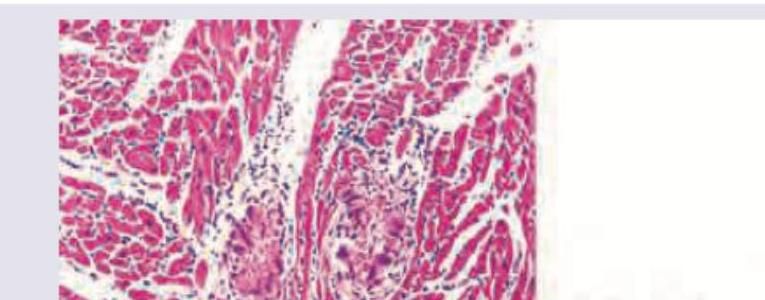
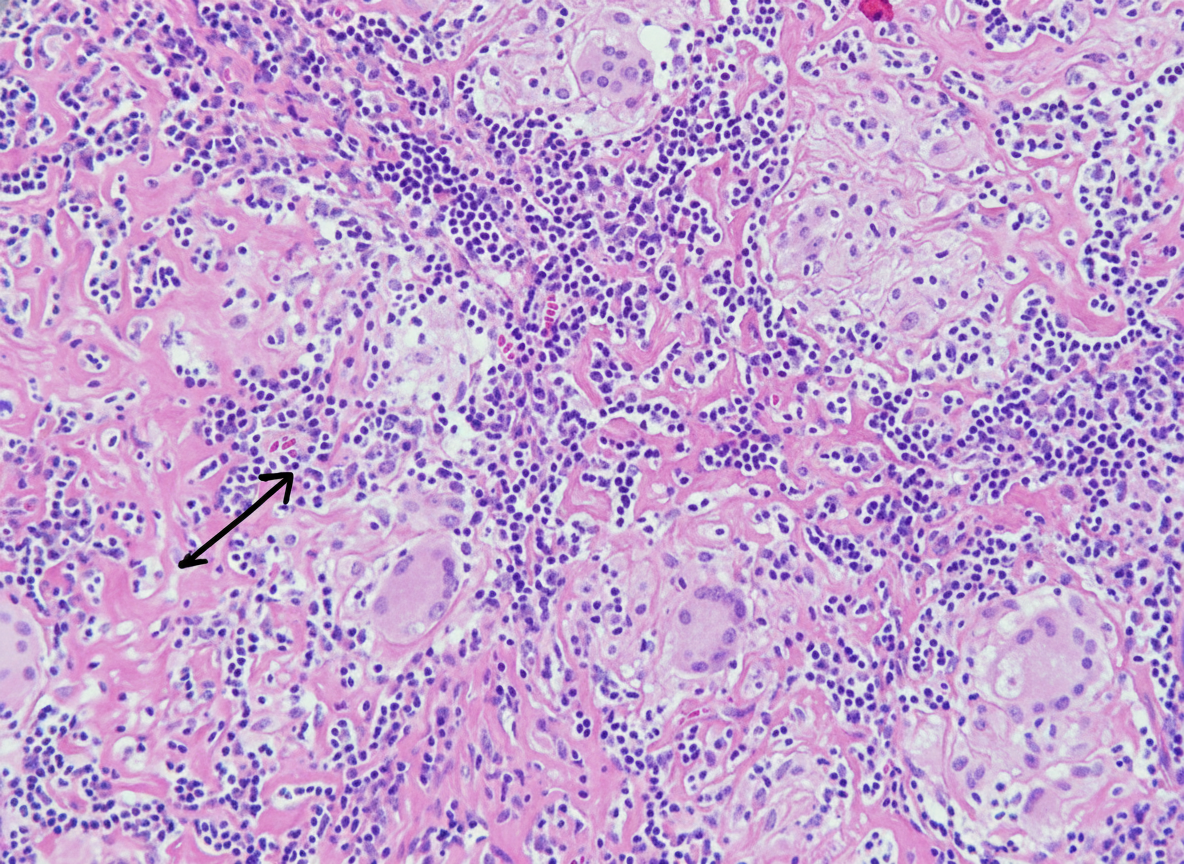
A 32-year-old man who recently emigrated from Somalia comes to the physician because of a 4-week history of fever, cough, and chest pain. He has had a 5-kg (11-lb) weight loss over the last 3 months despite no changes in appetite. His temperature is 38.1°C (100.6°F). Physical examination shows enlarged cervical lymph nodes. The lungs are clear to auscultation. The results of an interferon-γ release assay are positive. An x-ray of the chest shows bilateral mediastinal lymphadenopathy. A transbronchial needle aspiration biopsy of a mediastinal lymph node is performed; a photomicrograph of the specimen is shown. The structure indicated by the arrow is most likely comprised of which of the following types of cells?
Q52
A 23-year-old woman comes to the physician because of a 5-month history of a pruritic rash on the bilateral upper extremities. She has no history of serious illness and takes no medications. A skin biopsy of the rash shows intraepidermal accumulation of edematous fluid and widening of intercellular spaces between keratinocytes. Which of the following is the most likely diagnosis?
Q53
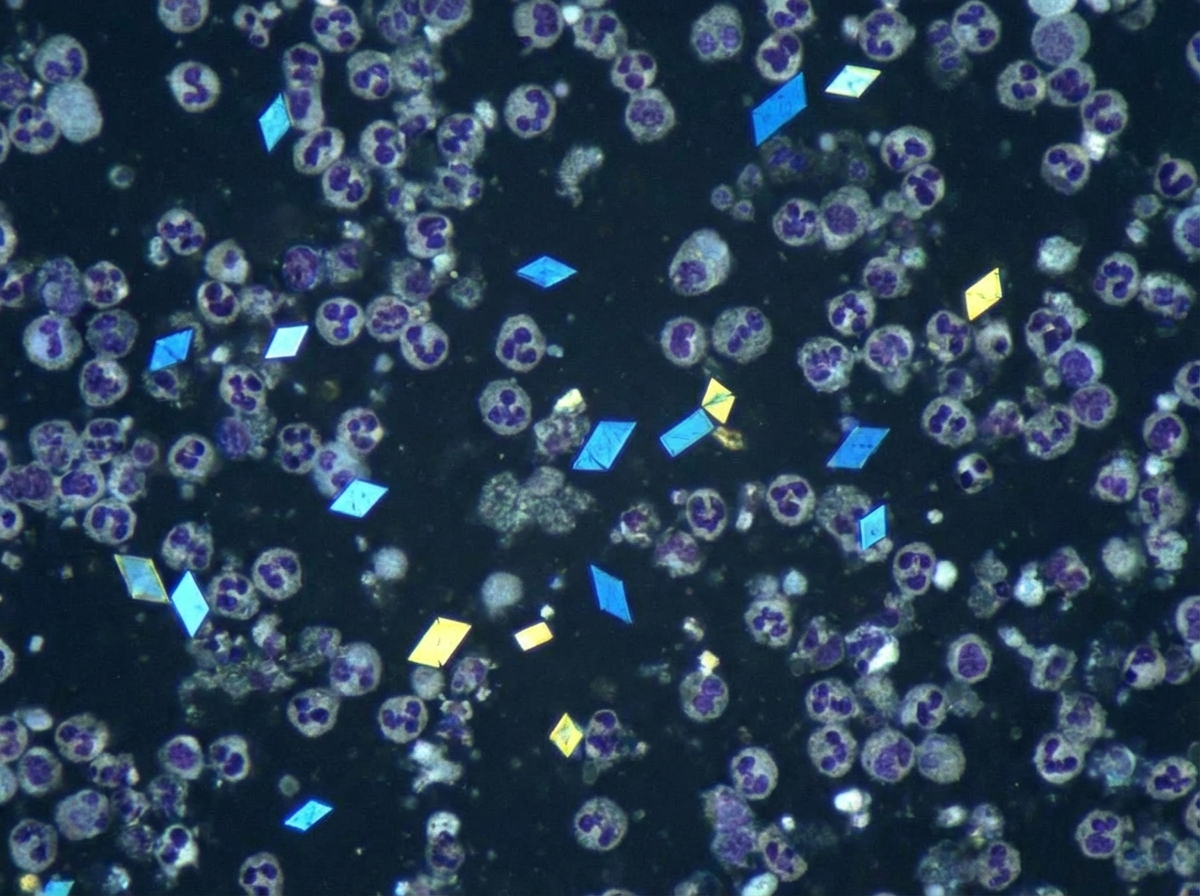
A 62-year-old man comes to the physician because of a swollen and painful right knee for the last 3 days. He has no history of joint disease. His vital signs are within normal limits. Examination shows erythema and swelling of the right knee, with limited range of motion due to pain. Arthrocentesis of the right knee joint yields 7 mL of cloudy fluid with a leukocyte count of 29,000/mm3 (97% segmented neutrophils). Compensated polarized light microscopy of the aspirate is shown. Which of the following is the most likely underlying mechanism of this patient's knee pain?
Q54
A 27-year-old woman presents to the emergency department for fever and generalized malaise. Her symptoms began approximately 3 days ago, when she noticed pain with urination and mild blood in her urine. Earlier this morning she experienced chills, flank pain, and mild nausea. Approximately 1 month ago she had the "flu" that was rhinovirus positive and was treated with supportive management. She has a past medical history of asthma. She is currently sexually active and uses contraception inconsistently. She occasionally drinks alcohol and denies illicit drug use. Family history is significant for her mother having systemic lupus erythematosus. Her temperature is 101°F (38.3°C), blood pressure is 125/87 mmHg, pulse is 101/min, and respirations are 18/min. On physical examination, she appears uncomfortable. There is left-sided flank, suprapubic, and costovertebral angle tenderness. Urine studies are obtained and a urinalysis is demonstrated below:
Color: Amber
pH: 6.8
Leukocyte: Positive
Protein: Trace
Glucose: Negative
Ketones: Negative
Blood: Positive
Nitrite: Positive
Leukocyte esterase: Positive
Specific gravity: 1.015
If a renal biopsy is performed in this patient, which of the following would most likely be found on pathology?
Q55
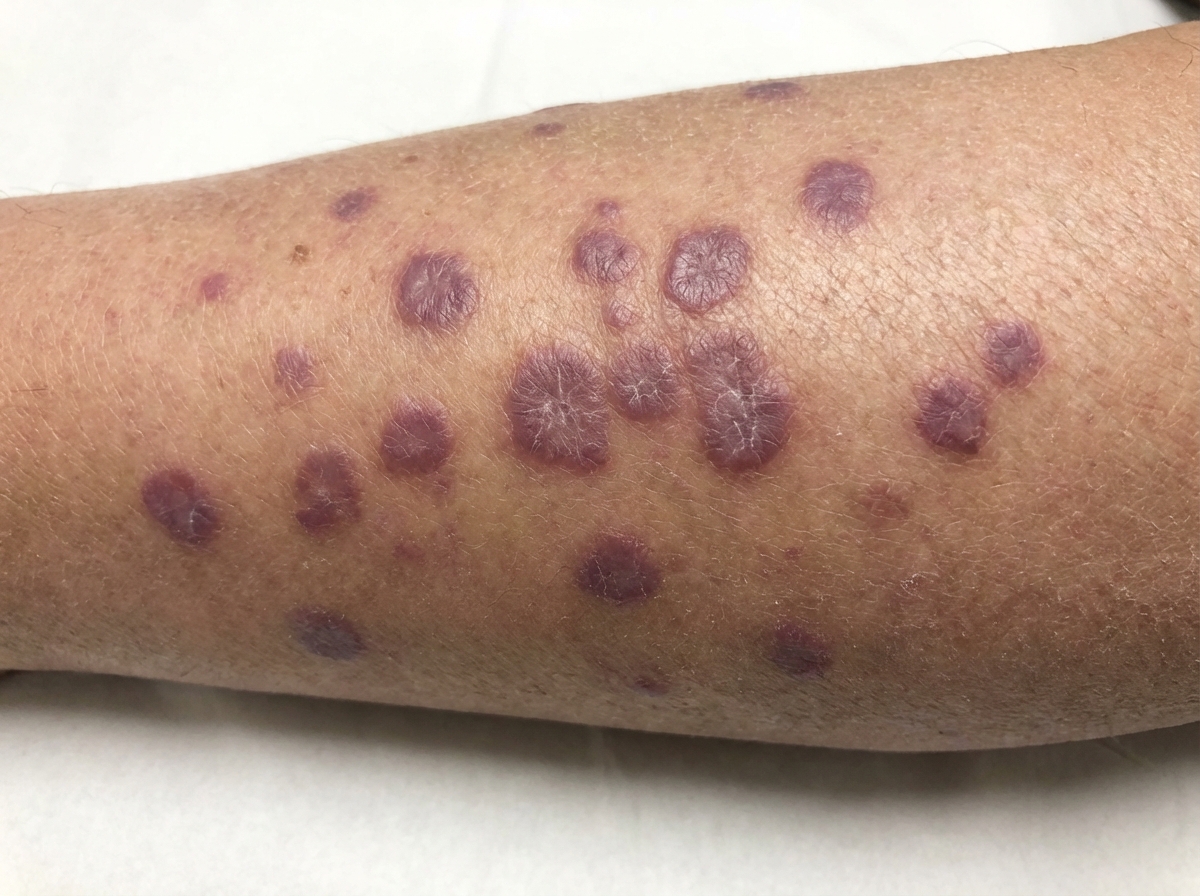
A previously healthy 46-year-old woman comes to her physician because of an itchy rash on her legs. She denies any recent trauma, insect bites, or travel. Her vital signs are within normal limits. Examination of the oral cavity shows white lace-like lines on the buccal mucosa. A photograph of the rash is shown. A biopsy specimen of the skin lesion is most likely to show which of the following?
Q56
A 45-year-old immigrant presents with unintentional weight loss, sleep hyperhidrosis, and a persistent cough. He says these symptoms have been present for quite some time. Upon imaging, many granulomas in the upper lobes are present. It is noted that these apical granulomas have centers of necrosis that appear cheese-like in appearance. Encircling the area of necrosis are large cells with cytoplasms pale in color. Of the following surface markers, which one is most closely associated with these cells?
Q57
A 39-year-old male presents to your office with nodular skin lesions that progress from his right hand to right shoulder. The patient reports that the initial lesion, currently necrotic and ulcerative, developed from an injury he received while weeding his shrubs a couple weeks earlier. The patient denies symptoms of respiratory or meningeal disease. Which of the following most likely characterizes the pattern of this patient’s skin lesions:
Q58
A 36-year-old man is admitted to the hospital because of a 1-day history of epigastric pain and vomiting. He has had similar episodes of epigastric pain in the past. He drinks 8 oz of vodka daily. Five days after admission, the patient develops aspiration pneumonia and sepsis. Despite appropriate therapy, the patient dies. At autopsy, the pancreas appears gray, enlarged, and nodular. Microscopic examination of the pancreas shows localized deposits of calcium. This finding is most similar to an adaptive change that can occur in which of the following conditions?
Inflammation US Medical PG Practice Questions and MCQs
Question 51: A 32-year-old man who recently emigrated from Somalia comes to the physician because of a 4-week history of fever, cough, and chest pain. He has had a 5-kg (11-lb) weight loss over the last 3 months despite no changes in appetite. His temperature is 38.1°C (100.6°F). Physical examination shows enlarged cervical lymph nodes. The lungs are clear to auscultation. The results of an interferon-γ release assay are positive. An x-ray of the chest shows bilateral mediastinal lymphadenopathy. A transbronchial needle aspiration biopsy of a mediastinal lymph node is performed; a photomicrograph of the specimen is shown. The structure indicated by the arrow is most likely comprised of which of the following types of cells?
A. Natural killer cells
B. B cells
C. Fibroblasts
D. Neutrophils
E. Macrophages (Correct Answer)
Explanation: ***Macrophages***
- The photomicrograph shows a **granuloma**, characterized by collections of **epithelioid histiocytes** (modified macrophages) and **multinucleated giant cells**, which are essentially fused macrophages.
- This morphology, coupled with the clinical picture of fever, cough, weight loss, positive interferon-γ release assay, and mediastinal lymphadenopathy in a patient from an endemic area, is highly suggestive of **tuberculosis**, a classic granulomatous disease.
*Natural killer cells*
- Natural killer cells are part of the innate immune system and are primarily involved in **killing virally infected cells** and **tumor cells**.
- They are not the primary cellular component forming the characteristic structure of a granuloma.
*B cells*
- B cells are responsible for **antibody production** and antigen presentation.
- While B cells may be present in the periphery of a granuloma, they do not form the core epithelioid and giant cell components.
*Fibroblasts*
- Fibroblasts produce **collagen** and the extracellular matrix, playing a role in **scar formation** and the fibrotic wall that can surround chronic granulomas.
- They do not constitute the primary cellular components of the inflammatory core of a granuloma.
*Neutrophils*
- Neutrophils are typically associated with **acute inflammation** and bacterial infections, characterized by pus formation.
- They are not the predominant cell type in the organized structure of a **granuloma** found in tuberculosis.
Question 52: A 23-year-old woman comes to the physician because of a 5-month history of a pruritic rash on the bilateral upper extremities. She has no history of serious illness and takes no medications. A skin biopsy of the rash shows intraepidermal accumulation of edematous fluid and widening of intercellular spaces between keratinocytes. Which of the following is the most likely diagnosis?
A. Dermatitis herpetiformis
B. Eczematous dermatitis (Correct Answer)
C. Acanthosis nigricans
D. Lichen planus
E. Psoriasis vulgaris
Explanation: ***Eczematous dermatitis***
- The biopsy findings of **intraepidermal edema** and **widening of intercellular spaces between keratinocytes (spongiosis)** are classic histopathologic features of eczematous dermatitis.
- The clinical presentation of a **pruritic rash** on the upper extremities further supports this diagnosis, as eczema is characterized by itching and inflammation.
*Dermatitis herpetiformis*
- This condition is characterized by **subepidermal vesicles** and **neutrophilic infiltrates** in the dermal papillae, with IgA deposition, which differs from the findings described.
- It is strongly associated with **celiac disease** and presents with intensely pruritic, grouped papules and vesicles, predominantly on extensor surfaces.
*Acanthosis nigricans*
- Histologically, acanthosis nigricans shows **papillomatosis** and **hyperkeratosis**, with epidermal thickening, rather than intraepidermal edema or spongiosis.
- Clinically, it presents as **hyperpigmented, velvety plaques** in intertriginous areas, not a generalized pruritic rash.
*Lichen planus*
- Biopsy of lichen planus would reveal a **band-like lymphocytic infiltrate** at the dermoepidermal junction, **sawtooth rete ridges**, and **Civatte bodies**.
- Clinically, it often presents with **pruritic, polygonal, purple, planar papules and plaques** (the 6 Ps), which is not consistent with the described rash.
*Psoriasis vulgaris*
- Histopathologically, psoriasis is characterized by **acanthosis**, **parakeratosis**, **Munro microabscesses**, and **dilated blood vessels** in the dermal papillae.
- Clinically, it manifests as **erythematous plaques with silvery scales**, typically on extensor surfaces, distinguishing it from a generalized pruritic rash with spongiosis.
Question 53: A 62-year-old man comes to the physician because of a swollen and painful right knee for the last 3 days. He has no history of joint disease. His vital signs are within normal limits. Examination shows erythema and swelling of the right knee, with limited range of motion due to pain. Arthrocentesis of the right knee joint yields 7 mL of cloudy fluid with a leukocyte count of 29,000/mm3 (97% segmented neutrophils). Compensated polarized light microscopy of the aspirate is shown. Which of the following is the most likely underlying mechanism of this patient's knee pain?
A. Immune complex-mediated cartilage destruction
B. Calcium pyrophosphate deposition (Correct Answer)
C. Bacterial infection of the joint
D. Mechanical stress and trauma
E. Monosodium urate deposition
Explanation: ***Calcium pyrophosphate deposition***
- The **cloudy fluid** with a leukocyte count of **29,000/mm³** predominantly composed of **segmented neutrophils** indicates acute inflammation, characteristic of **pseudogout** (calcium pyrophosphate dihydrate crystal deposition disease).
- **Compensated polarized light microscopy** would reveal **weakly positive birefringent rhomboid-shaped crystals**, confirming CPPD deposition.
- The **age** of the patient (62 years), **acute monoarticular involvement of the knee**, and sudden onset support a diagnosis of **pseudogout**.
*Immune complex-mediated cartilage destruction*
- This mechanism is characteristic of **rheumatoid arthritis** or **systemic lupus erythematosus**, which present with **chronic polyarticular involvement** and systemic features.
- The acute monoarticular presentation and synovial fluid findings are inconsistent with an immune complex-mediated process.
*Bacterial infection of the joint*
- Septic arthritis typically presents with **synovial fluid WBC counts >50,000/mm³** (often >100,000), though some overlap exists.
- The **absence of fever** and presence of **crystal findings on polarized microscopy** distinguish pseudogout from bacterial infection.
- Septic arthritis would not show crystals on microscopy and would require immediate Gram stain and culture.
*Mechanical stress and trauma*
- While mechanical injury can cause joint effusion, the **high neutrophil count** and **acute inflammatory findings** indicate a crystal-induced or infectious arthropathy rather than traumatic injury.
- There is no history of **trauma** reported, and traumatic effusions typically have lower WBC counts with predominantly red blood cells.
*Monosodium urate deposition*
- This indicates **gout**, which presents with **strongly negative birefringent needle-shaped crystals** on polarized microscopy (not the weakly positive birefringent rhomboid crystals of pseudogout).
- Gout more commonly affects the **first metatarsophalangeal joint** and typically occurs in younger patients with hyperuricemia risk factors.
- The patient's age and knee involvement are more consistent with **pseudogout**.
Question 54: A 27-year-old woman presents to the emergency department for fever and generalized malaise. Her symptoms began approximately 3 days ago, when she noticed pain with urination and mild blood in her urine. Earlier this morning she experienced chills, flank pain, and mild nausea. Approximately 1 month ago she had the "flu" that was rhinovirus positive and was treated with supportive management. She has a past medical history of asthma. She is currently sexually active and uses contraception inconsistently. She occasionally drinks alcohol and denies illicit drug use. Family history is significant for her mother having systemic lupus erythematosus. Her temperature is 101°F (38.3°C), blood pressure is 125/87 mmHg, pulse is 101/min, and respirations are 18/min. On physical examination, she appears uncomfortable. There is left-sided flank, suprapubic, and costovertebral angle tenderness. Urine studies are obtained and a urinalysis is demonstrated below:
Color: Amber
pH: 6.8
Leukocyte: Positive
Protein: Trace
Glucose: Negative
Ketones: Negative
Blood: Positive
Nitrite: Positive
Leukocyte esterase: Positive
Specific gravity: 1.015
If a renal biopsy is performed in this patient, which of the following would most likely be found on pathology?
A. Diffuse capillary and glomerular basement membrane thickening
B. Suppurative inflammation with interstitial neutrophilic infiltration (Correct Answer)
C. Mesangial proliferation
D. Focal and segmental sclerosis of the glomeruli and mesangium
E. Granulomatous inflammation with epithelioid macrophages
Explanation: ***Suppurative inflammation with interstitial neutrophilic infiltration***
- The patient's symptoms (fever, chills, flank pain, dysuria, hematuria) and positive urinalysis (nitrite, leukocyte esterase, WBCs) are highly indicative of **acute pyelonephritis**, a bacterial infection of the kidney.
- A renal biopsy in acute pyelonephritis typically shows **suppurative (purulent) inflammation** characterized by an influx of **neutrophils** into the renal interstitium and tubules, representing acute inflammation.
- This is the hallmark pathological finding in acute bacterial pyelonephritis.
*Diffuse capillary and glomerular basement membrane thickening*
- This finding is characteristic of **membranous nephropathy**, a cause of nephrotic syndrome presenting with proteinuria and edema, not an acute infection.
- The patient's clinical presentation with fever, flank pain, and signs of bacterial infection does not align with membranous nephropathy.
*Granulomatous inflammation with epithelioid macrophages*
- **Granulomatous inflammation** is a chronic inflammatory pattern seen in conditions like **tuberculosis, sarcoidosis, or fungal infections**.
- The acute presentation, positive nitrites (indicating gram-negative bacteria), and clinical course are inconsistent with granulomatous disease, which would have a more indolent course.
*Mesangial proliferation*
- **Mesangial proliferation** is a feature of glomerular diseases like **IgA nephropathy** (which can present after upper respiratory infection) or lupus nephritis.
- While the patient has a family history of lupus, her acute infectious symptoms with positive nitrites indicate bacterial pyelonephritis, not a glomerular disease.
*Focal and segmental sclerosis of the glomeruli and mesangium*
- This finding is characteristic of **Focal Segmental Glomerulosclerosis (FSGS)**, a primary glomerular disease that typically presents with nephrotic syndrome (heavy proteinuria, edema, hypoalbuminemia).
- The patient's acute infectious symptoms and signs of urinary tract infection are inconsistent with FSGS.
Question 55: A previously healthy 46-year-old woman comes to her physician because of an itchy rash on her legs. She denies any recent trauma, insect bites, or travel. Her vital signs are within normal limits. Examination of the oral cavity shows white lace-like lines on the buccal mucosa. A photograph of the rash is shown. A biopsy specimen of the skin lesion is most likely to show which of the following?
A. Inflammation of subcutaneous adipose tissue
B. Proliferation of vascular endothelium
C. Lymphocytes at the dermoepidermal junction (Correct Answer)
D. Decreased thickness of the stratum granulosum
E. Deposition of antibodies around epidermal cells
Explanation: ***Lymphocytes at the dermoepidermal junction***
- The patient's symptoms (itchy rash on legs, white lace-like lines on buccal mucosa) are classic for **lichen planus**.
- Skin biopsy in lichen planus typically shows a **dense band-like lymphocytic infiltrate** at the dermoepidermal junction, often obscuring the basal layer.
*Inflammation of subcutaneous adipose tissue*
- This finding, often called **panniculitis**, is seen in conditions like **erythema nodosum** or **lupus panniculitis**, which present differently.
- The rash described, particularly with oral involvement, does not suggest a primary inflammatory process in the subcutaneous fat.
*Proliferation of vascular endothelium*
- This is characteristic of **vascular tumors** or **vasculitis**, where there is an overgrowth or inflammation of blood vessel lining cells.
- The patient's presentation with an itchy rash and oral lesions is not consistent with these vascular conditions.
*Decreased thickness of the stratum granulosum*
- A **decreased or absent stratum granulosum** along with **parakeratosis** is a hallmark of **psoriasis**.
- The clinical features of psoriasis (silvery scales, extensor surface involvement) differ from those described for this patient.
*Deposition of antibodies around epidermal cells*
- This finding, particularly **intercellular antibody deposition**, is characteristic of pemphigus group diseases.
- While these can cause oral lesions, they typically present with **flaccid blisters** and erosions, not the lace-like pattern seen in lichen planus.
Question 56: A 45-year-old immigrant presents with unintentional weight loss, sleep hyperhidrosis, and a persistent cough. He says these symptoms have been present for quite some time. Upon imaging, many granulomas in the upper lobes are present. It is noted that these apical granulomas have centers of necrosis that appear cheese-like in appearance. Encircling the area of necrosis are large cells with cytoplasms pale in color. Of the following surface markers, which one is most closely associated with these cells?
A. CD20
B. CD3
C. CD4
D. CD14 (Correct Answer)
E. CD8
Explanation: ***CD14***
- The description of **caseating granulomas** in the upper lobes with large cells having pale cytoplasm points towards **tuberculosis** and the presence of **epithelioid macrophages**.
- **CD14** is a surface marker commonly found on **monocytes** and **macrophages**, making it the most appropriate choice among the given options.
- Note: While epithelioid macrophages (the activated form seen in granulomas) may downregulate CD14 compared to circulating monocytes, CD14 remains the most closely associated macrophage marker among these choices. **CD68** would be the ideal marker for tissue macrophages, but it is not listed.
*CD20*
- **CD20** is a surface marker characteristic of **B lymphocytes**.
- While B cells might be present in inflammatory lesions, they are not the predominant cell type described as "large cells with pale cytoplasm" forming the granuloma.
*CD3*
- **CD3** is a pan T-cell marker, indicating the presence of all types of **T lymphocytes**.
- While T cells (specifically CD4+ T helper cells) are crucial in granuloma formation, the "large cells with pale cytoplasm" encasing the necrosis specifically refer to epithelioid macrophages, not T cells.
*CD4*
- **CD4** is a surface marker for **helper T lymphocytes**.
- **CD4+ T cells** play a critical role in orchestrating the immune response and granuloma formation in tuberculosis through IFN-γ secretion, but the description of the large cells with pale cytoplasm refers to macrophages, not lymphocytes.
*CD8*
- **CD8** is a surface marker for **cytotoxic T lymphocytes**.
- **CD8+ T cells** are also involved in the immune response to mycobacterial infection but are not the primary cell type described as forming the bulk of the granuloma's characteristic "large cells with pale cytoplasm."
Question 57: A 39-year-old male presents to your office with nodular skin lesions that progress from his right hand to right shoulder. The patient reports that the initial lesion, currently necrotic and ulcerative, developed from an injury he received while weeding his shrubs a couple weeks earlier. The patient denies symptoms of respiratory or meningeal disease. Which of the following most likely characterizes the pattern of this patient’s skin lesions:
A. Contact dermatitis
B. Dermatophyte colonization
C. Hematogenous dissemination
D. Arthropod bite
E. Ascending lymphangitis (Correct Answer)
Explanation: ***Ascending lymphangitis***
- The patient's presentation of a primary lesion on the hand that progresses to nodular lesions along the right arm to the shoulder, following an injury sustained while gardening, is characteristic of **sporotrichosis**.
- **Sporotrichosis** causes **lymphocutaneous spread** via the lymphatic system, manifesting as a chain of nodules along lymphatic channels, which is consistent with ascending lymphangitis.
*Contact dermatitis*
- This condition involves an **inflammatory reaction** of the skin to an irritant or allergen, typically presenting as an itchy rash, redness, and sometimes blisters,
- It does not usually result in distinct nodular lesions that specifically track along lymphatic pathways in an ascending pattern.
*Dermatophyte colonization*
- This refers to a superficial fungal infection affecting the skin, hair, or nails, causing conditions like **tinea corporis** or **tinea pedis**.
- Dermatophyte infections typically present as **ring-shaped lesions** with central clearing or scaling and do not cause ascending nodular lesions along lymphatic routes.
*Hematogenous dissemination*
- This route involves the spread of pathogens through the **bloodstream**, leading to systemic infection or multiple lesions in various, often distant, organs or skin sites.
- While it can manifest with skin lesions, the specific pattern of **localized trauma followed by ascending nodules** along a limb is more indicative of lymphatic spread rather than systemic hematogenous dissemination.
*Arthropod bite*
- An arthropod bite typically results in a **localized reaction** at the site of the bite, such as a wheal, papule, or erythema, often accompanied by itching or pain.
- While an arthropod bite could be an initial injury, it would not directly explain the subsequent development of multiple, progressively ascending nodular lesions characteristic of lymphatic spread.
Question 58: A 36-year-old man is admitted to the hospital because of a 1-day history of epigastric pain and vomiting. He has had similar episodes of epigastric pain in the past. He drinks 8 oz of vodka daily. Five days after admission, the patient develops aspiration pneumonia and sepsis. Despite appropriate therapy, the patient dies. At autopsy, the pancreas appears gray, enlarged, and nodular. Microscopic examination of the pancreas shows localized deposits of calcium. This finding is most similar to an adaptive change that can occur in which of the following conditions?
A. Primary hyperparathyroidism
B. Sarcoidosis
C. Multiple myeloma
D. Congenital CMV infection
E. Chronic kidney disease (Correct Answer)
Explanation: ***Chronic kidney disease***
- The pancreatic finding represents **dystrophic calcification** (calcium deposition in damaged tissue with normal serum calcium levels), a consequence of chronic pancreatitis.
- **Chronic kidney disease** is the most similar condition because it also involves pathologic calcification as an adaptive/pathologic change, though through a different mechanism called **metastatic calcification**.
- In CKD, **hyperphosphatemia** and secondary **hyperparathyroidism** elevate the serum calcium-phosphate product, leading to calcium deposition in **normal tissues** (blood vessels, kidneys, lungs, gastric mucosa).
- Both conditions demonstrate **pathologic calcification as a tissue response** to metabolic derangement, making CKD the best answer among the options provided.
*Primary hyperparathyroidism*
- Causes **hypercalcemia** and **hypophosphatemia** due to excess PTH secretion.
- Can lead to **metastatic calcification** in normal tissues, but is less commonly associated with widespread tissue calcification compared to CKD.
- The mineral imbalance pattern differs from CKD (high calcium, low phosphate vs. high phosphate, variable calcium).
*Sarcoidosis*
- Causes **hypercalcemia** due to increased 1,25-dihydroxyvitamin D production by activated macrophages in granulomas.
- Can result in **metastatic calcification**, particularly nephrocalcinosis.
- However, this is less common and less extensive than the calcification seen in CKD.
*Multiple myeloma*
- Produces **hypercalcemia** through osteolytic bone destruction and cytokine-mediated bone resorption.
- Can theoretically cause **metastatic calcification**, but this is not a typical or prominent feature of the disease.
- The hypercalcemia is usually addressed before significant tissue calcification occurs.
*Congenital CMV infection*
- Causes **dystrophic calcification** in damaged tissues, typically **periventricular intracranial calcifications**.
- While this involves the same type of calcification (dystrophic), CMV infection is not characterized by systemic or progressive calcification as an adaptive metabolic response.
- The calcifications are focal sequelae of viral tissue damage, not a widespread metabolic derangement.