
Intestinal infections — MCQs

A 16-year-old male with no significant past medical, surgical, or family history presents to his pediatrician with new symptoms following a recent camping trip. He notes that he went with a group of friends and 1 other group member is experiencing similar symptoms. Over the past 5 days, he endorses significant flatulence, nausea, and greasy, foul-smelling diarrhea. He denies tenesmus, urgency, and bloody diarrhea. The blood pressure is 118/74 mm Hg, heart rate is 88/min, respiratory rate is 14/min, and temperature is 37.0°C (98.6°F). Physical examination is notable for mild, diffuse abdominal tenderness. He has no blood in the rectal vault. What is the patient most likely to report about his camping activities?
A 32-year-old woman comes to the emergency department with a 2-day history of abdominal pain and diarrhea. She has had about 8 voluminous stools per day, some of which were bloody. She visited an international food festival three days ago. She takes no medications. Her temperature is 39.5°C (103.1°F), pulse is 90/min, and blood pressure is 110/65 mm Hg. Examination shows a tender abdomen, increased bowel sounds, and dry mucous membranes. Microscopic examination of the stool shows polymorphonuclear leukocytes. Stool culture results are pending. Which of the following most likely caused the patient's symptoms?
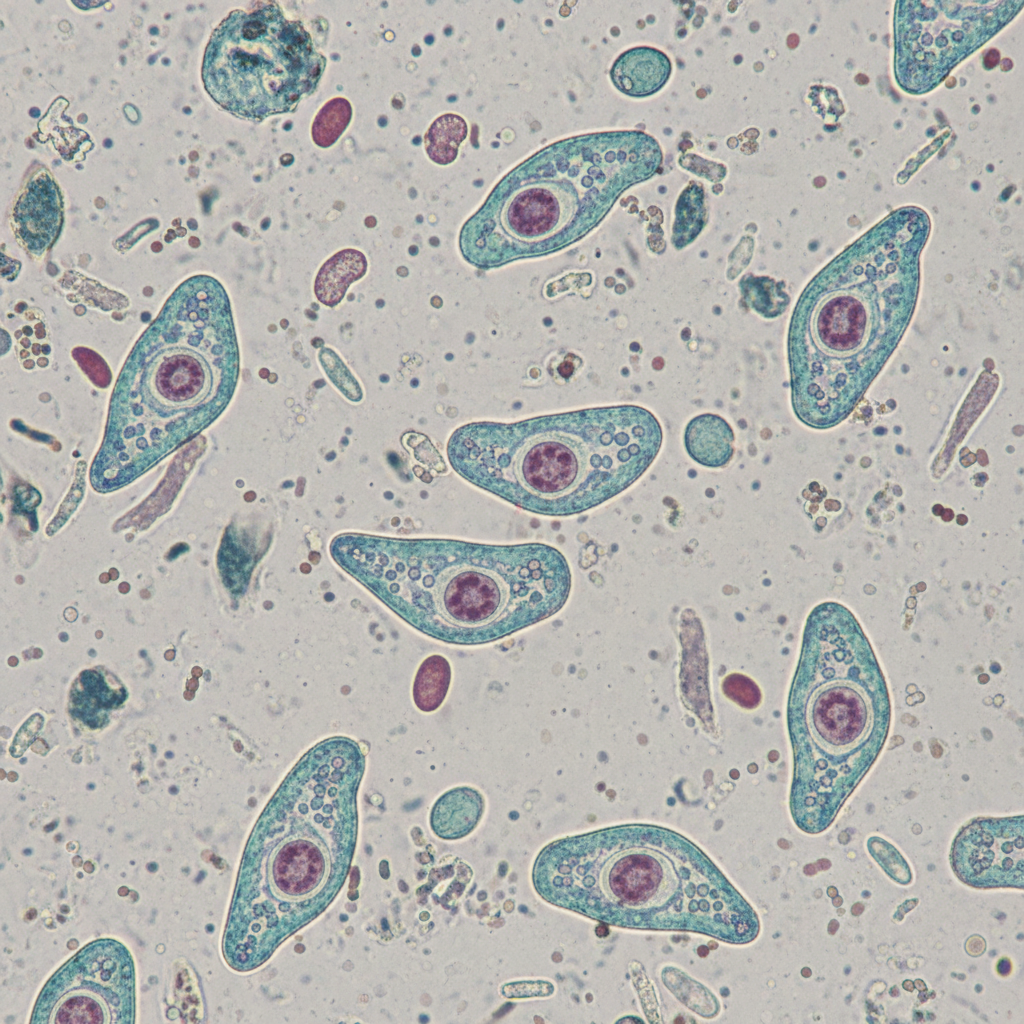
A 31-year-old man comes to the physician because of a 2-day history of abdominal pain and diarrhea. He reports that his stools are streaked with blood and mucus. He returned from a vacation in the Philippines 3 weeks ago. His vital signs are within normal limits. Abdominal examination shows hyperactive bowel sounds. A photomicrograph of a trichrome-stained wet mount of a stool specimen is shown. Which of the following organisms is the most likely cause of this patient's symptoms?
A 2-year-old male presents to the emergency department with fatigue and lethargy. Upon presentation, the patient is found to be severely dehydrated. The patient's mother says that he has been having non-bloody diarrhea for a day. She also says that the patient has not received any vaccinations after 6 months and currently attends a daycare center. Which of the following organisms is most likely responsible for the symptoms seen in this child?
A stool sample was taken from a 19-year-old male who presented with profuse watery diarrhea. He recently returned from a trip to Central America. A microbiologist identified the causative agent as a gram-negative, oxidase-positive, comma-shaped bacteria that is able to grow well in a pH > 8. Which of the following is a mechanism of action of the toxin produced by this bacteria?
A 47-year-old man comes to the physician because of abdominal pain and foul-smelling, watery diarrhea for several days. He has not had nausea, vomiting, or blood in the stool. He has a history of alcohol use disorder and recently completed a 7-day course of clindamycin for pneumonia. He has not traveled out of the United States. Which of the following toxins is most likely to be involved in the pathogenesis of this patient's symptoms?
A mother brings her 4-year-old boy to the physician, as the boy has a 7-day history of foul-smelling diarrhea, abdominal cramps, and fever. The mother adds that he has been vomiting as well, and she is very much worried. The child is in daycare, and the mother endorses sick contacts with both family and friends. The boy has not been vaccinated as the parents do not think it is necessary. On physical exam, the child appears dehydrated. Stool examination is negative for blood cells, pus, and ova or parasites. What is the most likely diagnosis?
A 24-year-old woman presents with fever, abdominal pain, and bloody bowel movements. She says her symptoms onset 2 days ago and have not improved. She describes the abdominal pain as moderate, cramping in character, and poorly localized. 1 week ago, she says she was on a camping trip with her friends and had barbecued chicken which she thought tasted strange. The patient denies any chills, hemoptysis, hematochezia, or similar symptoms in the past. The vital signs include: pulse 87/min and temperature 37.8°C (100.0°F). Physical examination is significant for moderate tenderness to palpation in the periumbilical region with no rebound or guarding. Stool is guaiac positive. Which of the following is a complication associated with this patient’s most likely diagnosis?
A 19-year-old male college student presents to the clinic in the month of January with a 2-day history of watery diarrhea. The patient also complains of weakness, nausea, vomiting and abdominal cramps. He has no significant past medical history. He does not take any medication. He drinks socially on the weekends but does not smoke cigarettes. He recently returned from a cruise with his fraternity brothers. Blood pressure is 110/70 mm Hg, heart rate is 104/min, respiratory rate is 12/min and temperature is 37.7°C (99.9°F). On physical examination his buccal mucosa is dry. The physician suggests oral rehydration therapy. Which of the following is the most likely causative agent?
A 58-year-old female, being treated on the medical floor for community-acquired pneumonia with levofloxacin, develops watery diarrhea. She reports at least 9 episodes of diarrhea within the last two days, with lower abdominal discomfort and cramping. Her temperature is 98.6° F (37° C), respiratory rate is 15/min, pulse is 67/min, and blood pressure is 122/98 mm Hg. Her physical examination is unremarkable. Laboratory testing shows: Hb% 13 gm/dL Total count (WBC): 13,400/mm3 Differential count: Neutrophils: 80% Lymphocytes: 15% Monocytes: 5% ESR: 33 mm/hr What is the most likely diagnosis?
Want unlimited practice?
Get full access to all questions, explanations, and performance tracking.
Scan to download app