
General Pathology — MCQs

On this page
A 17-year-old boy comes to the physician because of a nonpruritic rash on his chest for 1 week. He returned from a trip to Puerto Rico 10 days ago. He started using a new laundry detergent after returning. He has type 1 diabetes mellitus controlled with insulin. His mother has Hashimoto thyroiditis, and his sister has severe facial acne. Examination of the skin shows multiple, nontender, round, hypopigmented macules on the chest and trunk. There is fine scaling when the lesions are scraped with a spatula. Which of the following is the most likely underlying mechanism of this patient's symptoms?
A syndrome caused by chromosomal anomalies is being researched in the immunology laboratory. Several congenital conditions are observed among the participating patients, mostly involving the thymus and the heart. Common facial features of affected individuals are shown in the image below. Flow cytometry analysis of patient samples reveals a CD19+ and CD3- result. Imaging confirms complete absence of thymic tissue. What kind of congenital anomaly is most consistent with the absent T cells in this patient, specifically in the thymus?
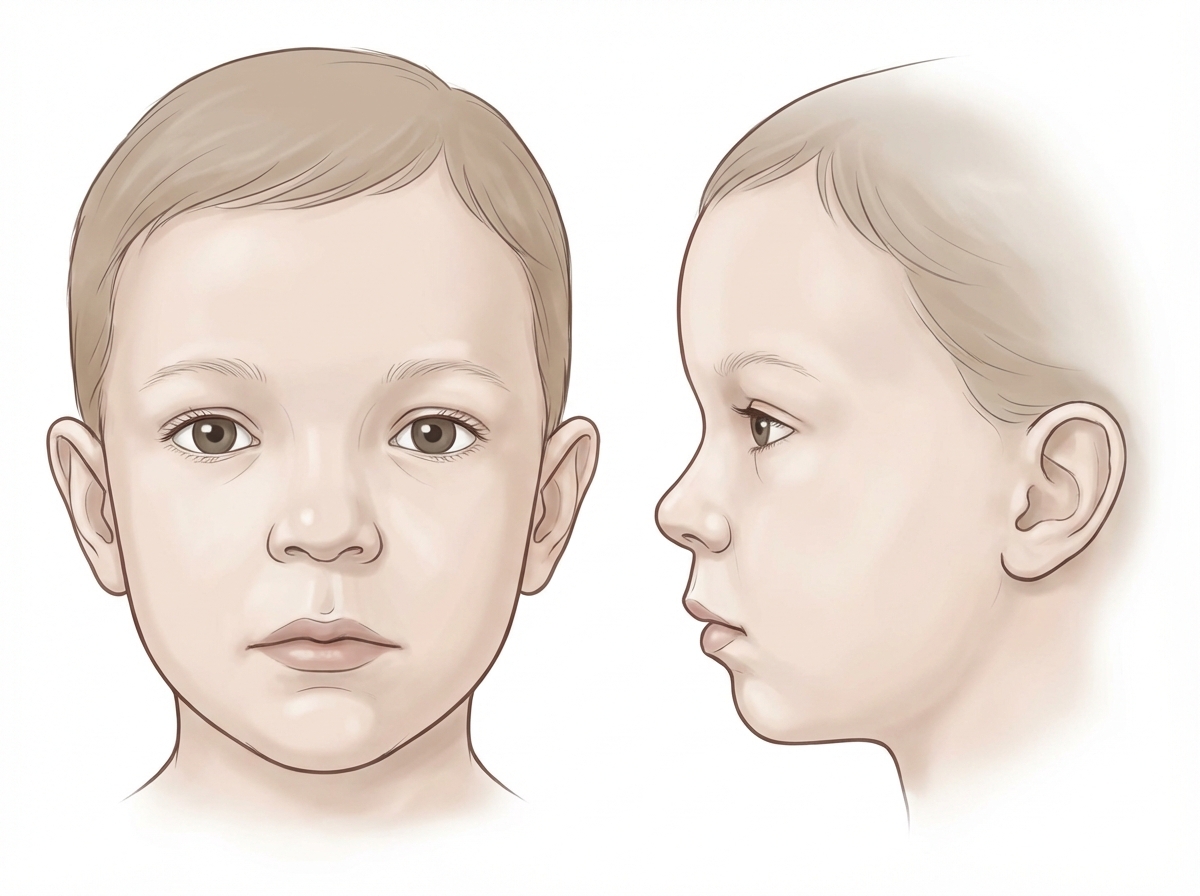
A 65-year-old man with no significant medical history begins to have memory loss and personality changes. Rapidly, over the next few months his symptoms increase in severity. He experiences a rapid mental deterioration associated with sudden, jerking movements, particularly in response to being startled. He has gait disturbances as well. Eventually, he lapses into a coma and dies approximately ten months after the onset of symptoms. Which of the following would most likely be seen on autopsy of the brain in this patient?
Practice by Chapter
Hemodynamic disorders
Practice Questions
Thromboembolic disease
Practice Questions
Shock pathophysiology
Practice Questions
Edema mechanisms
Practice Questions
Amyloidosis
Practice Questions
Genetic disorders
Practice Questions
Environmental pathology
Practice Questions
Nutritional diseases
Practice Questions
Pediatric pathology principles
Practice Questions
Forensic pathology principles
Practice Questions
Laboratory techniques in pathology
Practice Questions
Molecular diagnostic methods
Practice Questions
Immunohistochemistry
Practice Questions
Want unlimited practice?
Get full access to all questions, explanations, and performance tracking.
Scan to download app