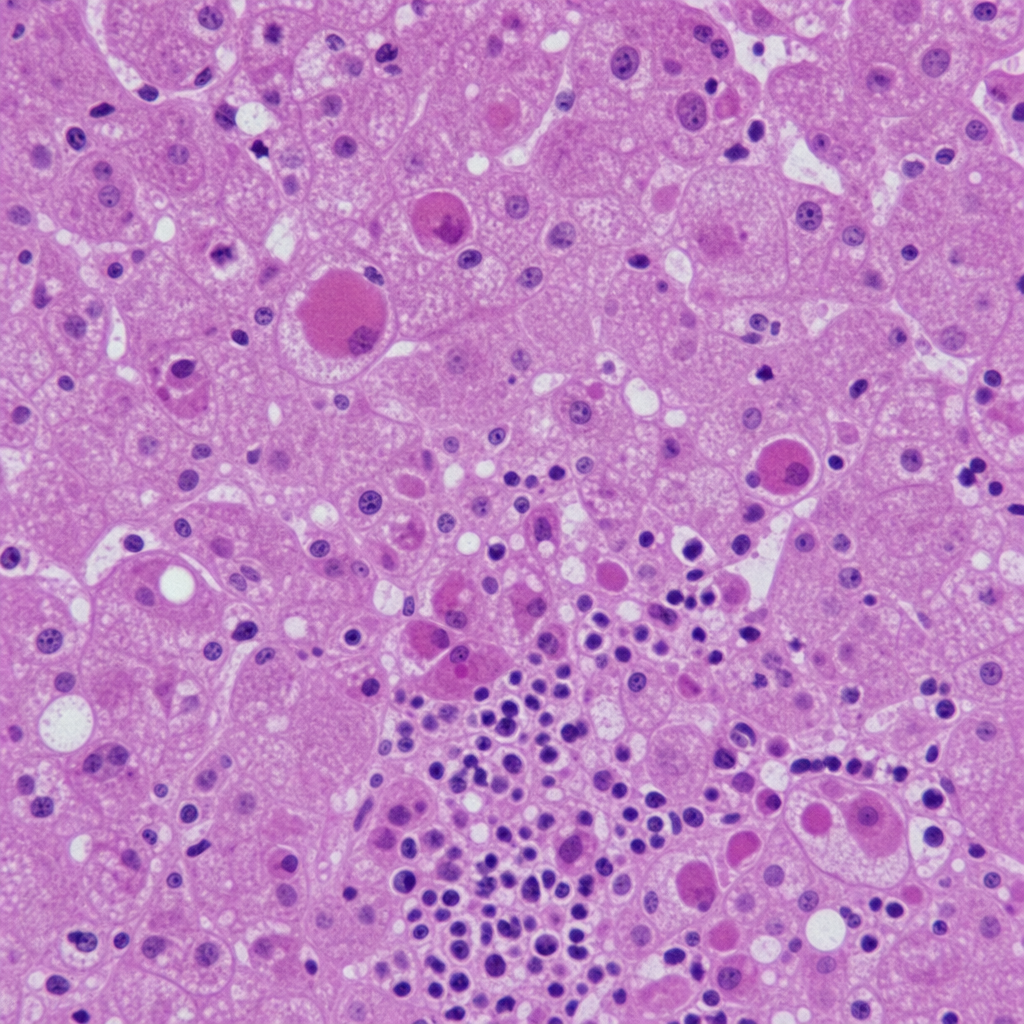
An 83-year-old woman with a history of atrial fibrillation, multiple ischemic strokes, and early dementia is found unresponsive in her apartment at her retirement community. She is believed to have not refilled any of her medications for a month, and it is determined that she passed away from a stroke nearly 2 weeks ago. The family is adamant that she receive an autopsy. Which of the following findings are most likely on brain histology?
A 64-year-old woman is brought to the emergency department 30 minutes after the onset of right-sided weakness and impaired speech. On admission, she is diagnosed with thrombotic stroke and treatment with alteplase is begun. Neurologic examination four weeks later shows residual right hemiparesis. A CT scan of the head shows hypoattenuation in the territory of the left middle cerebral artery. Which of the following processes best explains this finding?
A 38-year-old man is admitted to the hospital because of fever, yellowing of the skin, and nausea for 1 day. He recently returned from a backpacking trip to Brazil and Paraguay, during which he had a 3-day episode of high fever that resolved spontaneously. Physical examination shows jaundice, epigastric tenderness, and petechiae over his trunk. Five hours after admission, he develops dark brown emesis and anuria. Despite appropriate lifesaving measures, he dies. Postmortem liver biopsy shows eosinophilic degeneration of hepatocytes with condensed nuclear chromatin. This patient’s hepatocytes were most likely undergoing which of the following processes?
A 22-year-old man presents with an itchy rash. His physical exam reveals crusting vesicular clusters on an erythematous base with surrounding edema, located on his upper back. Which of the following is the most likely diagnosis?
A 75-year-old woman with a history of stroke 1 year ago was found unconscious on the floor of her home by her son. The patient was brought to the emergency department by ambulance but expired prior to arrival. An autopsy was performed and showed the cause of death to be a massive ischemic stroke. The coroner also examined sections taken from the area of her prior stroke. Which histologic finding would be prominent in the area of her stroke from one year prior?
A 62-year-old man goes to the emergency room (ER) for an intense lower abdominal pain associated with inability to urinate. Physical examination shows tenderness of the lower abdomen bilaterally. Rectal examination reveals an enlarged, smooth, and symmetrical prostate. The ER team fails to pass a Foley catheter through the urethra, and the urology team decides to place a suprapubic catheter to drain the urine and relieve the patient’s symptoms. An ultrasound shows dilation of the collecting system in both kidneys. Laboratory studies show an elevated serum creatinine of 1.6 mg/dL for an estimated glomerular filtration rate (eGFR) of 50 ml/min/1.73 m2. The patient visits the urology team for a follow-up visit 3 weeks after the acute event, in which he claims to have close to normal urination. However, his serum creatinine stays elevated at 1.5 mg/dL. What renal gross findings correlate with this patient’s condition?
A 13-year-old African-American boy is brought to the physician because of a 4-week history of left groin and buttock pain. The pain is worse with activity but also present at rest. He has had many episodes of abdominal, back, and chest pain that required hospitalization in the past. He is at the 20th percentile for height and 25th percentile for weight. His temperature is 36.7°C (98°F), blood pressure is 115/82 mm Hg, and pulse is 84/min. Examination shows tenderness over the lateral aspect of the left hip with no swelling, warmth, or erythema. There is pain with passive abduction and internal rotation of the left hip. Leukocyte count is 8,600/mm3. Which of the following is the most likely cause of this patient's symptoms?
A 55-year-old man is brought to the emergency room by his roommate due to an abdominal pain that started 2 hours ago. His pain is dull, aching, and radiates to the back. He admits to binge drinking alcohol for the past 2 days. Past medical history is significant for multiple admissions to the hospital for similar abdominal pain events, hypertension, and hyperlipidemia. He takes chlorthalidone and atorvastatin. He admits to heavy alcohol consumption over the past 10 years. He has smoked a pack of cigarettes a day for the last 20 years. In the emergency department, his temperature is 38.9℃ (102.0℉), pulse rate is 100/min, and respiratory rate is 28/min. On physical examination, he looks generally unwell and diaphoretic. Auscultation of his heart and lungs reveals an elevated heart rate with a regular rhythm. His lungs are clear to auscultation bilaterally. His abdomen is tympanitic with generalized tenderness. Evaluation of lab values reveals a leukocyte count of 28,000/mm3 with 89% of neutrophils. His amylase level is 255 U/L. A CT scan of the abdomen shows the diffuse enlargement of the pancreas. Which pathological process is most likely occurring in this patient’s peripancreatic tissue?
A 3-year-old boy is brought to the physician for a well-child examination. He has had multiple falls while walking and running for the past 4 months. He used to be able to climb stairs independently but now requires assistance. He started speaking in 2-word sentences at 2 years of age. He is at the 50th percentile for height and the 60th percentile for weight. Examination shows a waddling gait and enlargement of bilateral calves. Muscle strength is decreased in the bilateral lower extremities. Patellar and ankle reflexes are 1+ bilaterally. To rise from a sitting position, he uses his hands to support himself to an upright position. Diagnosis is confirmed by a muscle biopsy and immunohistochemistry. Which of the following is most likely responsible for the most severe clinical presentation of this disease?
A 72-year-old female is brought to the emergency department by ambulance because she was unable to walk. She says that she cut her leg while falling about a week ago. Since then, the wound has started draining fluid and become progressively more painful. She is found to have necrotizing fasciitis and is taken emergently to the operating room. Histological examination of cells along the fascial planes reveal cells undergoing necrosis. Which of the following represents the earliest sign that a cell has progressed to irreversible damage in this patient?
Explanation: **Cystic cavitation** - A **stroke** that occurred two weeks prior would most likely show **cystic cavitation** as the brain tissue attempts to repair itself after the damage. - Over time, the necrotic tissue is removed, and a fluid-filled cavity forms, which is the final stage of **infarction resolution**. *Cellular debris and lymphocytes* - While **cellular debris** would be present, **lymphocytes** are typically later responders in inflammation, and at two weeks, the most prominent feature would be cavitation. - **Microglia** and **macrophages** would be the primary cells involved in clearing debris, leading to cavitation. *Fat saponification* - **Fat saponification** is a type of **fat necrosis** seen in areas like the pancreas or breast, not typically in the brain after an ischemic stroke. - This process involves the hydrolysis of triglycerides into fatty acids that combine with calcium, forming a chalky substance. *Cellular debris and neutrophils* - **Neutrophils** are characteristic of the very **early stages of acute inflammation**, typically within the first 24-48 hours after an ischemic stroke. - By two weeks, most neutrophils would have resolved, and mononuclear cells and macrophages would predominate. *Increased binding of acidophilic dyes* - **Increased binding of acidophilic dyes** (like eosin) is seen in **early ischemic changes** (e.g., within hours to days), indicating **cell necrosis** like **red neurons**. - At two weeks, the tissue has progressed beyond this immediate necrotic stage to active removal and cavitation.
Explanation: ***Liquefactive necrosis*** - This is the characteristic type of necrosis seen in the **central nervous system** following an ischemic insult like a stroke. - The brain tissue is rapidly digested by hydrolytic enzymes, forming a **cyst-like cavity** filled with fluid (hence "hypoattenuation" on CT), reflecting the accumulation of necrotic cellular debris. *Caseous necrosis* - This is a form of cell death typically associated with **tuberculous infections** and some fungal infections. - It results in the formation of a cheesy, friable material consisting of fragmented cells and granular debris, which is not characteristic of stroke. *Gangrenous necrosis* - This type of necrosis is typically seen in the **extremities** and is often associated with a loss of blood supply and subsequent bacterial infection. - It involves tissue death due to ischemia, often accompanied by signs of putrefaction, making it distinct from a brain infarct. *Coagulative necrosis* - This is the most common type of necrosis and occurs in solid organs (e.g., heart, kidney) due to **ischemia**, preserving the architectural outlines of the dead cells for a period. - Unlike the brain, where rapid liquefaction occurs, coagulative necrosis is not the primary form of cell death observed in the central nervous system after an ischemic stroke. *Fat necrosis* - This occurs in **adipose tissue**, usually due to trauma or enzymatic digestion (e.g., in pancreatitis). - It involves the breakdown of fats into fatty acids, which then combine with calcium to form chalky white areas, which is not relevant to a cerebral infarct.
Explanation: ***Apoptosis*** - The patient's symptoms (fever, jaundice, epigastric tenderness, petechiae, dark emesis, anuria) and history of travel to endemic areas are highly suggestive of **Yellow Fever**. - **Eosinophilic degeneration of hepatocytes with condensed nuclear chromatin**, described as **Councilman bodies** or **apoptotic bodies**, is a characteristic histological finding in Yellow Fever and indicates programmed cell death. *Regeneration* - This process involves the replacement of damaged tissue with new, healthy tissue, which would contradict the patient's rapidly deteriorating condition and death. - While regeneration can occur in the liver, the described histological findings of **eosinophilic degeneration** and **condensed nuclear chromatin** are indicative of cell death, not repair. *Steatosis* - **Steatosis** refers to the accumulation of fat droplets within hepatocytes, which is usually seen in conditions like alcoholic liver disease or non-alcoholic fatty liver disease. - This is not consistent with the eosinophilic degeneration and condensed chromatin described, which point to a different type of cellular injury. *Necrosis* - **Necrosis** is a form of unregulated cell death often associated with inflammation and cellular swelling; the description of **eosinophilic degeneration** and **condensed nuclear chromatin** points specifically to apoptotic cell death rather than necrotic changes which would typically include cell swelling and rupture. - While Yellow Fever does cause significant liver damage leading to cell death, the specific histological features (e.g., Councilman bodies) are characteristic of **apoptosis**, not typically seen in necrosis. *Proliferation* - **Proliferation** refers to an increase in the number of cells, typically in response to a stimulus or as part of a disease process like cancer. - The patient's rapid decline and the histological findings of dying cells (eosinophilic degeneration, condensed chromatin) are antithetical to cellular proliferation.
Explanation: ***Herpes zoster*** - The description of **crusting vesicular clusters on an erythematous base with surrounding edema** is highly characteristic of **herpes zoster** (shingles). - While not explicitly mentioned, herpes zoster typically follows a **dermatomal distribution**, which would explain a localized rash on the upper back. *Herpes simplex virus infection* - HSV lesions are also vesicular but usually present as **grouped vesicles on an erythematous base**, often around the mouth (cold sores) or genitals. - Unlike zoster, HSV **causes** recurrent infections at the same site, and widespread lesions are rare in immunocompetent individuals. *Impetigo* - Impetigo is a superficial bacterial infection characterized by **honey-colored crusts** that develop from ruptured vesicles or bullae. - While it can be vesicular, the primary lesions are typically **pustules** or vesicles that rapidly become crusted, and the characteristic honey-colored crust is a key differentiating feature. *Atopic eczema* - Atopic eczema presents with **erythematous, intensely pruritic patches and plaques**, often with lichenification in chronic cases. - While vesicles can occur during acute flares, the predominant features are usually dry, scaly skin and intense itching, without the prominent clustering of vesicles seen in the patient. *Contact dermatitis* - Contact dermatitis manifests as an **itchy, erythematous rash** that appears at the site of contact with an allergen or irritant. - It can include vesicles, but the rash typically has clear borders reflecting the area of contact and often does not show the highly grouped, clustered pattern characteristic of shingles.
Explanation: ***Cyst formed by astrocyte processes*** - After a significant ischemic stroke, the brain tissue undergoes liquefactive necrosis. Over time (months to a year), the necrotic tissue is removed by macrophages, leaving behind a fluid-filled cavity or **cyst**. - This cyst is typically surrounded by a wall of **reactive astrocytes** (gliosis) which form a glial scar to contain the damage. *Necrosis and neutrophils* - **Necrosis** is characteristic of acute ischemic injury, but neutrophils are prominent only in the very early stages (hours to days) of inflammation. - One year after a stroke, neutrophils would no longer be present; the area would have progressed beyond acute inflammation. *Red neurons* - **Red neurons** are an early histological sign of irreversible neuronal damage due to ischemia, appearing within **12-24 hours** after the insult. - They represent acute cell death but would have long been cleared by a year post-stroke. *Macrophages* - **Macrophages** (microglia) are actively involved in clearing necrotic debris from the stroke site, primarily within **days to weeks** after the event. - While still present, they are less prominent than the established cyst and glial scar at **one year**. *Reactive gliosis and vascular proliferation* - **Reactive gliosis** (astrocytic activation) is indeed a component of the long-term response to injury, contributing to the formation of the cyst wall. - However, **vascular proliferation** is more characteristic of subacute infarcts (weeks) and less dominant than the mature cystic lesion at one year.
Explanation: ***Thin cortical rim*** - This patient has **acute obstructive nephropathy** from benign prostatic hyperplasia (BPH) causing bilateral hydronephrosis. - The ultrasound showing **dilation of the collecting system** in both kidneys and persistent elevated creatinine despite relief of obstruction indicates **hydronephrosis with cortical damage**. - The classic gross finding in hydronephrosis is **thinning of the renal cortex** due to compression from dilated calyces and renal pelvis, creating a **thin cortical rim** appearance. - Even though obstruction was relieved after 3 weeks, the persistent creatinine elevation suggests **permanent nephron loss** from cortical atrophy. *Granular surface* - A **granular surface** is the gross finding of **chronic glomerulonephritis** or end-stage chronic kidney disease from various causes, resulting from cortical scarring and fibrosis. - This develops over **years**, not weeks, and represents chronic irreversible damage from conditions like hypertensive nephrosclerosis, diabetic nephropathy, or chronic glomerulonephritis. - This patient's 3-week obstruction is too acute to produce chronic granular scarring. *Pale cortical deposits* - **Pale cortical deposits** might be seen in conditions like **amyloidosis** or some forms of acute tubular necrosis with extensive tubular casts. - This is not characteristic of obstructive nephropathy or hydronephrosis. *Ureteropelvic junction narrowing* - **UPJ narrowing** is an anatomical finding (a cause of obstruction), not a gross finding of the renal parenchyma itself. - While UPJ obstruction can cause hydronephrosis, this patient's obstruction is at the bladder outlet (prostatic), not at the UPJ. *Enlarged kidneys with bosselated surface* - **Bosselated surface with enlarged kidneys** is pathognomonic for **autosomal dominant polycystic kidney disease (ADPKD)**, where multiple cysts distort the renal architecture. - This patient's presentation is consistent with obstructive nephropathy from BPH, not inherited cystic disease.
Explanation: ***Avascular necrosis*** - The patient's history of recurrent pain crises (abdominal, back, chest pain) and **African-American ethnicity** strongly suggest **sickle cell disease**, where vascular occlusion can lead to **avascular necrosis (AVN)** of bone. - The presenting symptoms of chronic groin and buttock pain, particularly with activity and at rest, and pain on hip movement (abduction, internal rotation) are classic for **femoral head AVN**. *Impaired skeletal growth* - While patients with chronic diseases like sickle cell can have impaired growth, this option describes a **general growth problem**, not a specific acute cause of severe hip pain. - Impaired skeletal growth itself does not typically cause **localized, acute groin and buttock pain** that is worsened by movement. *Transient synovitis* - This condition is typically **acute and self-limiting**, lasting usually a few days to a week, not 4 weeks, and commonly follows a viral illness. - It primarily affects younger children (ages 3-8) and is less common in adolescents with a history suggestive of sickle cell disease. *Septic arthritis* - Septic arthritis presents with **acute onset of severe pain**, fever, and local signs of inflammation like warmth, swelling, and erythema, which are absent in this case. - The patient's **leukocyte count is normal** (8,600/mm3), which makes septic arthritis less likely. *Proximal femoral osteosarcoma* - Osteosarcoma usually presents with **progressively worsening bone pain** and often a palpable mass or swelling, which is not described here. - While rare, it's less likely given the patient's strong history suggestive of an underlying condition that predisposes to AVN.
Explanation: ***Fat necrosis*** - This patient presents with **acute pancreatitis**, characterized by severe epigastric pain radiating to the back, elevated amylase, and diffuse pancreatic enlargement on CT, all exacerbated by **binge drinking**. - In acute pancreatitis, activated pancreatic enzymes, particularly **lipases**, leak into the peripancreatic fat, causing enzymatic breakdown of fat into fatty acids, which then combine with calcium to form **calcium soaps** (saponification), clinically recognizable as fat necrosis. *Caseous necrosis* - This type of necrosis is typically associated with **tuberculosis** and fungal infections, forming a cheesy, crumbly appearance. - It involves a granulomatous inflammatory response and does not align with the enzyme-driven fat breakdown seen in pancreatitis. *Fibrinoid necrosis* - This is a vascular injury characterized by the deposition of **fibrin-like material** in arterial walls, often seen in immune-mediated vasculitis or severe hypertension. - It is not a primary pathological process in the peripancreatic tissue during acute pancreatitis. *Coagulative necrosis* - This form of necrosis is characteristic of **ischemic injury** in most solid organs (e.g., heart, kidney) where the cellular architecture is preserved for some time. - While pancreatic necrosis can occur, the specific breakdown of peripancreatic fat by lipases leads to fat necrosis, not coagulative necrosis of the fat itself. *Liquefactive necrosis* - This type of necrosis occurs in tissues rich in hydrolytic enzymes and low in structural proteins, such as the **brain after ischemia** or in **abscesses**. - While pancreatic tissue undergoing severe necrosis can exhibit liquefaction, the specific process affecting the surrounding fat in pancreatitis is fat necrosis due to lipase activity.
Explanation: ***Frameshift mutation*** - The patient's presentation with **waddling gait**, **Gowers' sign**, **calf pseudohypertrophy**, and progressive muscle weakness is characteristic of **Duchenne Muscular Dystrophy (DMD)**. - **Frameshift mutations** in the **dystrophin gene** lead to a premature stop codon, resulting in a severely truncated and non-functional dystrophin protein, causing the most severe form of the disease. *Missense mutation* - A **missense mutation** results in a single amino acid change, which may lead to a partially functional protein. - This type of mutation typically causes **Becker Muscular Dystrophy (BMD)**, which is a milder form compared to DMD, with later onset and slower progression. *Silent mutation* - A **silent mutation** codes for the same amino acid, having no effect on the protein sequence or function. - Therefore, it would not lead to any clinical disease, let alone the severe presentation described. *Splice site mutation* - A **splice site mutation** can lead to altered mRNA splicing, potentially resulting in exon skipping or intron retention. - If the mutation disrupts the reading frame (out-of-frame), it causes DMD with complete loss of dystrophin; if the reading frame is maintained (in-frame), it causes milder BMD with partially functional dystrophin. - However, a frameshift mutation specifically guarantees reading frame disruption and the most severe phenotype. *Same sense mutation* - This term is synonymous with a **silent mutation** or a **synonymous mutation**, meaning it results in the same, unchanged amino acid sequence due to the redundancy of the genetic code. - As such, it would not alter protein function and would not cause a clinical disease.
Explanation: ***Condensation of DNA into a basophilic mass*** - **Karyopyknosis**, or the **condensation of nuclear chromatin into a dense, shrunken mass**, is an early microscopic sign of irreversible cell injury leading to necrosis. It indicates the cell has committed to a death pathway. - This nuclear change is characterized by the nucleus appearing as a **small, dense, and deeply basophilic structure** due to chromatin clumping. *Fragmentation of the nucleus* - **Karyorrhexis**, the fragmentation of the pyknotic nucleus, occurs *after* karyopyknosis, indicating a later stage of irreversible injury. - This process involves the breakdown of the condensed nuclear fragments, leading to their subsequent disappearance. *Membrane blebbing from organelles* - **Membrane blebbing** can occur in both reversible and irreversible injury, but its presence on *organelles* specifically doesn't necessarily represent the *earliest* sign of irreversible damage compared to nuclear changes. - While significant blebbing points towards severe damage, **nuclear changes** are often considered more definitive early markers of irreversible commitment. *Chromatin dissolution and disappearance* - **Karyolysis**, the dissolution and fading of the nucleus due to enzymatic degradation, represents a *later* stage of irreversible injury, occurring after karyopyknosis and karyorrhexis. - In this stage, the nucleus eventually completely disappears, leaving only an anucleated ghost cell. *Ribosomal detachment from the endoplasmic reticulum* - **Ribosomal detachment** from the endoplasmic reticulum is an early sign of **reversible cell injury**, leading to decreased protein synthesis. - It indicates initial cellular stress but not necessarily a commitment to irreversible damage or necrosis.
Explanation: ***Ingestion of spores with in vivo toxin production*** - The patient's history of introducing **pureed foods** (especially honey or home-canned foods), combined with symptoms like **flaccid paralysis**, **ptosis**, **sluggish pupillary reflexes**, **constipation**, and **poor feeding**, is highly suggestive of **infant botulism**. - **Infant botulism** is caused by the ingestion of *Clostridium botulinum* **spores**, which **germinate in the intestine** and produce **neurotoxin in vivo** that blocks acetylcholine release at the neuromuscular junction. - This differs from foodborne botulism in adults where **preformed toxin** is ingested. - The **descending paralysis** pattern (cranial nerves first, then trunk and extremities) and **autonomic dysfunction** (constipation, poor feeding) are characteristic features. *Haemophilus influenzae infection* - While *Haemophilus influenzae* can cause various infections (meningitis, epiglottitis) in unimmunized children, it does not typically present with **descending flaccid paralysis** and **autonomic dysfunction** seen here. - Would expect fever and more acute systemic illness with H. influenzae infection. *Bacterial infection of the meninges* - Meningitis would typically present with symptoms such as **fever**, **nuchal rigidity**, **altered mental status**, and potentially **seizures**. - The **flaccid tone** and **bilateral ptosis with pupillary abnormalities** are inconsistent with meningitis. - Meningitis would show increased (not decreased) muscle tone. *Post-viral ascending demyelinating polyneuropathy* - This describes **Guillain-Barré syndrome (GBS)**, which typically presents with **ascending paralysis** (starts in legs, moves upward) and often follows viral infections. - GBS is rare in infants this young, and the **descending pattern** (cranial nerves affected first) points away from this diagnosis. - GBS typically has **areflexia**, not just sluggish reflexes, and pupillary involvement is uncommon. *Autoantibodies against acetylcholine receptors* - This mechanism is characteristic of **myasthenia gravis**, which can present with muscle weakness, ptosis, and feeding difficulties. - However, myasthenia gravis is extremely rare in infants of this age and typically has a more chronic, fluctuating course rather than acute onset. - **Pupillary reflexes are typically spared** in myasthenia gravis, whereas they are affected in botulism. - The severe constipation and autonomic features point strongly to botulism rather than myasthenia gravis.
Explanation: ***Granular casts*** - The patient's elevated **creatinine (2.1 mg/dL)** suggests **acute kidney injury (AKI)**, likely due to the **alkylating agent** used for her ovarian cancer. **Granular casts** are a hallmark of **acute tubular necrosis (ATN)**, a common cause of AKI, due to damaged renal tubular epithelial cells. - The presence of **fatigue, nausea, weight loss, malaise, and drowsiness** further supports a diagnosis of AKI, consistent with systemic effects of renal impairment. *Normal findings* - This option is incorrect because the patient's elevated **creatinine** indicates significant renal dysfunction that would manifest in abnormal urinalysis findings, suggesting an underlying pathology. - A **normal urinalysis** would be inconsistent with the clinical picture and lab values showing compromised kidney function. *RBC casts* - **Red blood cell (RBC) casts** are indicative of **glomerulonephritis**, vasculitis, or severe kidney injury with glomerular involvement. - While AKI is present, there are no other symptoms or lab findings (e.g., hematuria) to suggest glomerular disease as the primary pathology. *WBC casts* - **White blood cell (WBC) casts** are highly suggestive of **pyelonephritis** (kidney infection) or **interstitial nephritis**. - The patient has no signs of infection (e.g., fever, flank pain) or specific drug-induced interstitial nephritis, making this less likely. *Elevated protein* - Elevated protein in the urine (**proteinuria**) is a non-specific finding that can be seen in various kidney diseases, including glomerular damage, tubular dysfunction, and overflow proteinuria. - While proteinuria may be present due to kidney injury, **granular casts** are more specific to the diagnosis of **acute tubular necrosis**, which is the most probable cause of AKI in this context of chemotherapy.
Explanation: ***Autoimmune lymphoproliferative syndrome*** - A defect in the **CD95 (Fas) receptor pathway** impairs the normal **apoptotic deletion of self-reactive lymphocytes**, leading to their accumulation. - This accumulation results in **lymphadenopathy, splenomegaly, and autoimmune manifestations** due to uncontrolled lymphocyte proliferation. *Chronic granulomatous disease* - This condition is characterized by a defect in **NADPH oxidase**, leading to recurrent infections and granuloma formation due to the inability of phagocytes to produce **reactive oxygen species**. - It does not primarily involve the CD95 apoptosis pathway. *Chédiak-Higashi syndrome* - This is an **autosomal recessive disorder** involving a defect in lysosomal trafficking, leading to impaired function of phagocytes, melanocytes, and platelets. - Symptoms include **recurrent pyogenic infections, partial albinism, and neurological abnormalities**, not directly linked to the CD95 pathway. *Follicular lymphoma* - This is a type of non-Hodgkin lymphoma characterized by a **t(14;18) translocation**, which causes overexpression of the **BCL2 gene**, an anti-apoptotic protein. - While it involves impaired apoptosis, the primary defect is not in the CD95 receptor itself but rather in the regulation of apoptosis through BCL2. *Leukocyte adhesion deficiency* - This is a rare **immunodeficiency disorder** characterized by defects in **leukocyte adhesion molecules (integrins)**, impairing the ability of white blood cells to adhere to endothelial surfaces and migrate to sites of infection. - It results in **recurrent bacterial infections and impaired wound healing**, unrelated to the CD95 apoptosis pathway.
Explanation: ***Hyperphosphorylated tau inclusion bodies*** - The patient's symptoms of **disinhibition** (kissing strangers, public urination), **personality changes** (binge eating sweets), and **progressive language dysfunction** are characteristic of **frontotemporal dementia (FTD)**. - FTD has heterogeneous pathology: approximately **40-50% of cases** involve **tau pathology** (forming Pick bodies and neurofibrillary tangles), while 50-60% show **TDP-43 pathology**. - The term **"inclusion bodies"** specifically refers to the aggregated, pathological deposits visible microscopically, making this the most precise answer. - Tau pathology is particularly associated with **Pick's disease**, a subtype of FTD characterized by **Pick bodies** (spherical tau inclusions). *Intracellular hyperphosphorylated tau proteins* - This describes the **same pathological process** as the correct answer but is **less specific**. - While technically accurate for tau-positive FTD cases, the term lacks the specificity of "inclusion bodies," which denotes the characteristic aggregated form seen on microscopy. - In pathology, precision matters: stating "inclusion bodies" indicates you recognize the specific morphological finding. *Alpha-synuclein* - **Alpha-synuclein** aggregates (Lewy bodies) are characteristic of **Lewy body dementia** and **Parkinson's disease dementia**. - These conditions typically present with **fluctuating cognition**, **visual hallucinations**, **parkinsonism**, and **REM sleep behavior disorder**. - The prominent behavioral disinhibition and language dysfunction without parkinsonian features point away from synucleinopathies. *Large intracellular vacuoles* - **Spongiform change** (vacuolation) with prion protein accumulation is pathognomonic for **Creutzfeldt-Jakob disease (CJD)**. - CJD presents with **rapidly progressive dementia** (weeks to months), **myoclonus**, **ataxia**, and periodic sharp waves on EEG. - The **gradual 8-month progression** and absence of myoclonus make prion disease unlikely. *Perivascular inflammation* - **Perivascular lymphocytic infiltration** indicates **inflammatory or infectious CNS disease**, such as **vasculitis** or **viral encephalitis**. - This patient's **chronic, insidious progression** over 8 months without acute features argues against an inflammatory process.
Explanation: ***Fat necrosis*** - The patient's presentation with severe epigastric pain radiating to the back, elevated serum amylase and lipase, **alcohol abuse**, and diffuse pancreatic enlargement indicates **acute pancreatitis**. - **Fat necrosis** is a characteristic pathologic finding in acute pancreatitis, resulting from the release of activated pancreatic enzymes (like lipase) into the surrounding adipose tissue, causing **FFA (free fatty acid)** formation that complexes with calcium (saponification). *Liquefactive necrosis* - This type of necrosis is characterized by the complete digestion of dead cells, resulting in a **viscous liquid mass**. - It is typically seen in **bacterial infections** or **cerebral infarcts**, not primarily in pancreatitis. *Dry gangrene* - **Dry gangrene** involves ischemic necrosis, usually affecting the extremities, where the tissue becomes **dry, shrunken, and black**. - It is caused by **lack of blood supply** and does not fit the clinical picture of acute pancreatitis. *Caseous necrosis* - **Caseous necrosis** is a distinct form of coagulative necrosis, characterized by a **cheese-like appearance** of the necrotic tissue. - It is most commonly associated with **tuberculosis** and certain fungal infections, not acute pancreatitis. *Coagulative necrosis* - **Coagulative necrosis** is characterized by the preservation of the cell shape and tissue architecture for several days after cell death, often due to **ischemia** (e.g., myocardial infarction). - While pancreatic cells can undergo coagulative necrosis in severe ischemia, **fat necrosis** is specifically and prominently associated with the enzymatic destruction in acute pancreatitis.
Explanation: ***Pericentral hepatocytes*** - **Pericentral hepatocytes** (Zone 3) are located furthest from the hepatic arterial and portal venule blood supply, making them most vulnerable to **ischemic injury**. - This region is primarily responsible for drug metabolism and detoxification, processes that require high oxygen demand. *Ito cells* - **Ito cells**, or hepatic stellate cells, are located in the **space of Disse** and are primarily involved in vitamin A storage and fibrosis upon activation. - While important for liver function, they are not the cells most sensitive to acute ischemia. *Ductal cells* - **Ductal cells** line the bile ducts and are involved in bile modification and transport. - They are generally more resistant to ischemia compared to hepatocytes. *Periportal hepatocytes* - **Periportal hepatocytes** (Zone 1) are closest to the incoming arterial and portal blood supply, making them the most oxygenated and last to be affected by ischemia. - These cells are important for oxidative metabolism and gluconeogenesis, and are more vulnerable to toxicity than ischemia. *Sinusoidal endothelial cells* - **Sinusoidal endothelial cells** form the lining of the hepatic sinusoids and are involved in exchange between blood and hepatocytes. - Although damage to these cells can contribute to overall liver dysfunction, they are not the primary cell type most sensitive to ischemia compared to pericentral hepatocytes.
Explanation: ***Necrosis of tubular epithelial cells*** - The patient presents with classic signs of **acute kidney injury (AKI)**, including confusion, decreased urinary output, decreased skin turgor, dry oral mucosa, tachycardia, hypotension, elevated creatinine (3.1 mg/dL), and urea nitrogen (42 mg/dL). - The presence of **brownish granular casts** in the urine is highly suggestive of **acute tubular necrosis (ATN)**, secondary to ischemia caused by severe dehydration and hypoperfusion. *Immune complex deposition in mesangium* - This typically points to a **glomerular pathology**, such as IgA nephropathy or post-infectious glomerulonephritis. - These conditions would usually present with **hematuria** and **proteinuria**, not necessarily brownish granular casts or the acute dehydration found here. *Leukocytic infiltration of renal interstitium* - This finding is characteristic of **acute interstitial nephritis**, which is often caused by drug hypersensitivity or infection. - The clinical presentation with dehydration and granular casts is not typical for acute interstitial nephritis. *Necrosis of renal papillae* - **Renal papillary necrosis** is often associated with analgesic abuse, sickle cell disease, diabetes, or obstruction. - While it can cause AKI, it typically presents with **flank pain** and **hematuria**, and the urine sediment would show ghost cells or fragments of necrotic papillae, not specifically brownish granular casts. *Disruption of glomerular podocytes* - **Podocyte disruption** is seen in primary glomerular diseases like minimal change disease or focal segmental glomerulosclerosis. - These conditions primarily cause **nephrotic syndrome** (heavy proteinuria, edema), which is not the main presentation here.
Explanation: ***Hemidesmosomes*** - The clinical picture of **tense blisters** that do not pop with rubbing (**negative Nikolsky sign**), along with the histological finding of the **entire epidermis lifting away from the basal lamina** (subepidermal blistering), strongly suggests **bullous pemphigoid**. - **Immunofluorescence showing linear deposits** along the basement membrane zone is characteristic of bullous pemphigoid, which is caused by autoantibodies targeting proteins within the hemidesmosomes. *Gap junctions* - **Gap junctions** are involved in **intercellular communication** and the passage of small molecules between cells. - Defects in gap junctions do not typically lead to blistering skin disorders. *Lamellar bodies* - **Lamellar bodies** are organelles in **keratinocytes** that release lipids to form the **skin barrier**. - Defects in lamellar bodies are associated with disorders like **ichthyosis**, not blistering as described. *Zonula occludens* - **Zonula occludens**, also known as **tight junctions**, are crucial for forming a **seal between epithelial cells**, regulating paracellular transport. - Dysfunctional tight junctions can lead to increased permeability but are not directly involved in the formation of subepidermal blisters. *Macula adherens* - **Macula adherens**, or **desmosomes**, are cell-to-cell adhesion structures that provide strong mechanical attachments between keratinocytes. - Defects in desmosomes are associated with **pemphigus vulgaris** and **pemphigus foliaceus**, which typically present with **flaccid blisters** that show a **positive Nikolsky sign** and involve intraepidermal cleavage.
Explanation: ***Metaplasia*** - Chronic irritation from **cigarette smoking** can cause the **bronchial epithelium** to change from ciliated columnar to stratified squamous, a process known as **metaplasia**. - This adaptation makes the tissue more resistant to injury but results in the loss of important protective functions like **mucociliary clearance**. *Hyperplasia* - **Hyperplasia** involves an increase in the number of cells in a tissue or organ, often in response to increased demand or chronic stimulation. - While smoking can cause hyperplasia of goblet cells and mucous glands in the bronchi, the direct epithelial change in response to chronic irritation is more specifically **metaplasia**. *Hypertrophy* - **Hypertrophy** is an increase in the size of individual cells, leading to an increase in the size of the organ or tissue. - This is not the primary adaptive change seen in the bronchial epithelium in response to chronic smoking; instead, cells change their type. *Dysplasia* - **Dysplasia** refers to disorderly cell growth, often characterized by variations in cell size, shape, and organization; it is considered a precursor to cancer. - While chronic smoking can eventually lead to dysplasia and then carcinoma, the initial and most common adaptive change in the bronchial epithelium is **metaplasia**. *Atrophy* - **Atrophy** is a decrease in cell size or number, leading to a reduction in the size of an organ or tissue, usually due to decreased workload, nutrition, or blood supply. - This is not a typical response of the bronchial epithelium to chronic irritation from smoking, which tends to induce proliferative or adaptive changes.
Explanation: ***Typical blood smear findings include spherocytes.*** - In autoimmune hemolytic anemia (AIHA), **spherocytes** are characteristic findings on a blood smear due to partial phagocytosis of antibody-coated red blood cells by macrophages. - Spherocytes are **smaller, denser red blood cells** lacking central pallor, which are more fragile and susceptible to lysis. *Parvovirus B19 can trigger AIHA.* - While parvovirus B19 can cause **transient aplastic crisis** in patients with underlying hemolytic conditions, it is not a direct trigger for autoimmune hemolytic anemia where the immune system attacks red blood cells. - AIHA is characterized by autoimmunity, not by direct viral destruction of red blood cells or suppression of erythropoiesis by parvovirus B19. *The indirect Coombs test is positive if red blood cells are coated with antibody or complement.* - The **direct Coombs test** (or direct antiglobulin test) is positive if red blood cells are coated with antibody or complement in vivo. - The **indirect Coombs test** detects unbound antibodies in the patient's serum that can bind to donor red blood cells, primarily used for cross-matching or antibody screening. *The direct Coombs test is positive if there are antibodies in the serum.* - The **direct Coombs test** detects **antibodies or complement components directly bound to the surface of the patient's red blood cells**, indicating in vivo sensitization. - The presence of free antibodies in the serum is detected by the **indirect Coombs test**, not the direct Coombs test. *Heinz bodies are common findings in blood smear.* - **Heinz bodies** are precipitates of denatured hemoglobin, typically seen in conditions like **G6PD deficiency** or unstable hemoglobinopathies, due to oxidative stress. - They are not characteristic findings in autoimmune hemolytic anemia, which is caused by immune-mediated red blood cell destruction.
Explanation: ***Hepatic mitochondrial injury*** - The patient's history of a recent viral illness treated with over-the-counter medications, followed by acute encephalopathy, liver dysfunction (**elevated AST/ALT**, **prolonged PT**), and cerebral edema (**optic disc swelling**, **severe headache**), is highly indicative of **Reye syndrome**. - Reye syndrome is characterized by **microvesicular fatty change in the liver** and mitochondrial dysfunction, primarily caused by **aspirin use during viral infections** in children, leading to hepatic and cerebral morbidity. *Acute viral hepatitis* - While acute viral hepatitis can cause elevated liver enzymes, it typically does not lead to rapid onset **cerebral edema** and neurological decline (disorientation, severe headache with optic disc swelling) to this extent. - The constellation of symptoms points more specifically to a systemic metabolic derangement affecting both the brain and liver, rather than primary viral inflammation of the liver only. *Ruptured berry aneurysm* - A ruptured berry aneurysm would present with a **sudden-onset severe headache** (thunderclap headache) and signs of **subarachnoid hemorrhage**, such as meningismus. - While it could cause optic disc swelling due to increased intracranial pressure, it would not explain the **hepatic dysfunction** (elevated AST/ALT, prolonged PT) and would likely not follow a prodromal viral illness in this manner. *Autoimmune destruction of beta cells* - **Autoimmune destruction of beta cells** leads to **Type 1 diabetes mellitus**, characterized by **hyperglycemia**, polyuria, polydipsia, and weight loss. - This condition does not cause acute encephalopathy, elevated liver enzymes, or coagulopathy. The glucose level in this patient is within the normal range, ruling out acute diabetic ketoacidosis. *Ethylene glycol poisoning* - Ethylene glycol poisoning can cause **renal failure**, metabolic acidosis with an ** elevated anion gap**, and neurological symptoms (ataxia, confusion, coma). - Although it can cause altered mental status, it typically features **kidney injury** and severe acidosis, which are not mentioned in this patient presentation, and does not directly cause the observed hepatic enzyme elevations and coagulopathy in this specific pattern.
Explanation: ***A region of kidney where blood flow is obstructed*** - Myocardial infarction leads to **coagulative necrosis**, characterized by the preservation of the cell's outline but with loss of nuclei, often due to **ischemia**. - **Kidney infarction** also results from obstructed blood flow, causing ischemia and subsequent **coagulative necrosis**, making it histologically similar to a myocardial infarction. *The central nervous system following a stroke* - A stroke typically causes **liquefactive necrosis** in the central nervous system, due to the high lipid content and enzymatic digestion of dead cells. - This type of necrosis leads to the formation of a **cystic space** rather than the preserved architecture seen in coagulative necrosis. *An abscess* - An abscess is characterized by **liquefactive necrosis** due to a bacterial infection, involving the accumulation of pus (dead neutrophils and tissue debris). - The inflammatory response and enzymatic digestion distinguish it from the preserved tissue architecture of coagulative necrosis. *The lung following a tuberculosis infection* - Tuberculosis infection typically causes **caseous necrosis** in the lung, which is a combination of coagulative and liquefactive necrosis. - This appears as **cheesy, amorphous material** grossly, and histologically lacks the clear cell outlines of coagulative necrosis. *Acute pancreatitis resulting from release of enzymatically active enzymes into the pancreas* - Acute pancreatitis leads to **fat necrosis**, where pancreatic enzymes (lipase) digest adipose tissue, often forming **chalky white deposits** due to calcium saponification. - This is distinct from coagulative necrosis, as it specifically targets fat tissue and involves enzymatic destruction rather than ischemic cell death.
Explanation: ***Myofibroblasts*** - The patient presents with a **contracture** (restricted range of motion and hyperextension of the hand due to a thick scar) after a burn, which is characteristic of the action of **myofibroblasts**. - Myofibroblasts are specialized cells that possess features of both fibroblasts (synthesizing **collagen** and extracellular matrix) and smooth muscle cells (containing **actin microfilaments**), allowing them to exert contractile force which leads to scar contraction. *Fibroblasts* - While fibroblasts are crucial for **wound healing** by producing collagen and other extracellular matrix components, they primarily lay down the foundation for scar tissue. - They lack the strong contractile capabilities that lead to significant **tissue retraction** and contracture. *Neutrophils* - Neutrophils are **acute inflammatory cells** that primarily function in the early stages of wound healing to phagocytose debris and pathogens. - They do not play a direct role in the formation of **scar tissue** or **contractures**. *Macrophages* - Macrophages are important **immune cells** involved in clearing debris, presenting antigens, and releasing growth factors during the later stages of wound healing. - They also influence fibroblast activity, but they do not directly cause **tissue contraction** or scar formation. *Endothelial cells* - Endothelial cells line **blood vessels** and are essential for **angiogenesis** (formation of new blood vessels) during wound healing. - They are not involved in the **contractile process** that leads to scar contracture.
Explanation: ***Glucose-6-phosphate-dehydrogenase deficiency*** - The recurrent episodes of **hemolytic anemia** triggered by infections (upper respiratory tract infections), the presence of **Heinz bodies** on the peripheral smear, and a **negative direct Coombs test** are highly indicative of G6PD deficiency. - The history of exchange transfusion for **neonatal hyperbilirubinemia** is also consistent, as G6PD deficiency can cause severe neonatal jaundice. *Gilbert syndrome* - This condition is characterized by **unconjugated hyperbilirubinemia** due to reduced UDP-glucuronosyltransferase activity, but it does not cause hemolytic anemia or the other signs and symptoms noted. - Patients with Gilbert syndrome usually have normal complete blood count results and typically present with intermittent jaundice during stress, fasting, or illness, without evidence of hemolysis. *Hereditary spherocytosis* - While it causes hemolytic anemia and can lead to **splenomegaly** and **jaundice**, the peripheral smear would typically show **spherocytes** rather than Heinz bodies. - Hereditary spherocytosis is diagnosed with an osmotic fragility test. *IgG mediated autoimmune hemolytic anemia* - This condition would be characterized by a **positive direct Coombs test**, which is explicitly stated as negative in this patient. - While it causes hemolytic anemia, the triggers and specific blood smear findings differ. *Sickle cell disease* - This condition is characterized by **sickle-shaped red blood cells** on the peripheral smear, which are not mentioned. - While it causes anemia, jaundice, and can be exacerbated by infections, the presence of Heinz bodies and the specific triggers point away from sickle cell disease.
Explanation: ***Decreased spectrin in the RBC membrane*** - This presentation is highly suggestive of **hereditary spherocytosis**, characterized by **defects in red blood cell membrane proteins** like **spectrin**, ankyrin, or band 3 protein. - The patient's features—**jaundice**, **anemia**, **splenomegaly**, elevated **indirect bilirubin**, increased **LDH**, high **MCHC**, and a family history of splenectomy (often a treatment for hereditary spherocytosis)—point to this diagnosis. *Deficient glucose-6 phosphate dehydrogenase* - **G6PD deficiency** typically presents with **hemolytic anemia** following exposure to **oxidative stressors** (e.g., certain drugs, fava beans, infections). - While an infection might trigger hemolysis, the chronic nature of the symptoms, **splenomegaly**, and high MCHC are less typical for G6PD deficiency. *Decreased synthesis of alpha chains of hemoglobin* - This describes **alpha thalassemia**, which would present with **microcytic hypochromic anemia** (low MCV, low MCH) rather than the normal MCV and high MCHC seen here. - While chronic hemolysis can occur in severe forms, the specific lab values do not align with thalassemia. *Increased hemoglobin S* - **Sickle cell anemia** involves **hemoglobin S**, leading to sickling of red blood cells under hypoxic conditions. - Patients typically experience **vaso-occlusive crises** and different RBC morphology (e.g., sickle cells, target cells) and usually a normocytic or macrocytic anemia, which is not fully consistent with the high MCHC seen here in isolation. *Deficiency of pyruvate kinase* - **Pyruvate kinase deficiency** causes **hemolytic anemia** due to impaired glycolysis, leading to insufficient ATP production in RBCs. - While it presents with chronic hemolysis, **splenomegaly**, and jaundice, it typically does not cause the characteristic **high MCHC** seen in hereditary spherocytosis, nor does it typically present with a positive family history of splenectomy in father.
Explanation: ***Extravascular hemolysis*** - The patient's presentation with **recurrent severe pain episodes** requiring ED visits, low hemoglobin (8 g/dL), elevated LDH (540 U/L), and normal leukocyte and platelet counts in an African American man strongly suggests **sickle cell disease**. - In sickle cell disease, abnormal hemoglobin leads to fragile red blood cells that are prematurely destroyed in the **spleen and liver** (extravascular hemolysis), resulting in **anemia** and **elevated LDH**. - The **microcytic anemia** (MCV 72 um³) is atypical for uncomplicated sickle cell disease and likely represents **concurrent iron deficiency** (from chronic hemoglobinuria and urinary iron loss) or **coexistent thalassemia trait**, both common in patients with chronic hemolytic anemias. *Folate deficiency* - Folate deficiency typically causes a **macrocytic anemia** (elevated MCV > 100 um³), which contradicts the patient's **microcytic anemia** (MCV 72 um³). - While folate requirements can increase in chronic hemolytic states, the primary laboratory abnormality here points away from macrocytic anemia. *Chronic inflammation* - Anemia of chronic inflammation usually presents with **normocytic or mildly microcytic anemia** and low serum iron, but it typically does not cause the markedly elevated **LDH** (540 U/L) seen in this patient. - The recurrent severe pain crises requiring ED visits and morphine are characteristic of **vaso-occlusive crises** in sickle cell disease, not simple anemia of chronic inflammation. *Ineffective erythropoiesis* - **Ineffective erythropoiesis** means that red blood cells are produced but are defective and destroyed in the bone marrow before release, often seen in conditions like **myelodysplastic syndromes** or **thalassemia major**. - While it can cause anemia and elevated LDH, the **episodic severe pain crises** requiring ED visits and morphine are pathognomonic for **sickle cell vaso-occlusive crises**, not ineffective erythropoiesis. - The clinical presentation strongly points to peripheral hemolysis rather than primarily ineffective production. *Vitamin B12 deficiency* - Like folate deficiency, vitamin B12 deficiency results in **macrocytic anemia** (elevated MCV > 100 um³), not the **microcytic anemia** (MCV 72 um³) observed in this patient. - It's also associated with neurological symptoms (paresthesias, ataxia, dementia), which are not mentioned here.
Explanation: ***Absence of peroxisomes*** - The clinical picture of **poor feeding**, **facial grimacing**, **hepatomegaly**, **hypotonia**, and **elevated very long-chain fatty acids (VLCFAs)** is classic for **Zellweger syndrome**, a **peroxisomal biogenesis disorder**. - In Zellweger syndrome, the **absence or reduced number of functional peroxisomes** in liver cells (and other cells) leads to the accumulation of VLCFAs and other metabolic defects. *Accumulation of foam cells* - **Foam cells** are typically seen in disorders involving the accumulation of lipids within macrophages, such as **Niemann-Pick disease** or **atherosclerosis**. - While lipid metabolism is affected in Zellweger, the primary cellular abnormality in liver cells isn't predominantly foam cell formation but rather the absence of peroxisomes. *Presence of eosinophilic apoptotic bodies* - **Eosinophilic apoptotic bodies (Councilman bodies)** are characteristic of **acute viral hepatitis**, particularly **hepatitis A** or **B**, indicating hepatocellular necrosis and apoptosis. - This finding is unrelated to Zellweger syndrome or the metabolic defects described. *Absence of bile ducts* - The **absence of bile ducts** is characteristic of **biliary atresia**, a condition causing neonatal cholestasis and obstructive jaundice. - While this infant has jaundice and hepatomegaly, the presence of specific facial features, hypotonia, and elevated VLCFAs points away from isolated biliary atresia. *Presence of centrilobular necrosis* - **Centrilobular necrosis** is often seen in conditions causing **hypoxic liver injury** (e.g., shock, severe heart failure) or certain **toxic/drug-induced liver injuries**. - This specific pattern of necrosis is not a primary pathological feature of Zellweger syndrome.
Explanation: ***Electromyography*** - Electromyography (EMG) can help confirm the diagnosis by demonstrating characteristic **myopathic changes**, such as short-duration, low-amplitude motor unit potentials, and increased insertional activity. This helps differentiate myopathy from other neuromuscular disorders. - The patient's presentation with **proximal muscle weakness**, dysphagia, and significantly elevated muscle enzymes (CK and LDH) strongly suggests an inflammatory myopathy like polymyositis or dermatomyositis, for which EMG is a crucial diagnostic step. *Temporal artery biopsy* - This procedure is primarily used to diagnose **giant cell arteritis**, a condition presenting with headache, jaw claudication, and visual disturbances, which are not described in this patient. - While an elevated ESR is present, it is a non-specific inflammatory marker and, in this context, points more towards a systemic inflammatory process affecting muscles. *Lumbar puncture* - A lumbar puncture is used to analyze **cerebrospinal fluid (CSF)** and is indicated for suspected infections (meningitis, encephalitis) or inflammatory conditions of the central nervous system. - The patient's symptoms are localized to muscle weakness, with intact sensation and reflexes, making a primary CNS cause less likely at this stage. *Tensilon test* - The Tensilon test (edrophonium test) is used to diagnose **myasthenia gravis**, a neuromuscular junction disorder characterized by fluctuating muscle weakness that *improves with rest* and worsens with activity. - This patient's symptoms do not improve with rest, and the significantly elevated muscle enzymes point away from a neuromuscular junction disorder and towards a primary muscle pathology. *Skin biopsy* - A skin biopsy is useful for diagnosing dermatological conditions, including **dermatomyositis**, if a characteristic rash (e.g., heliotrope eruption, Gottron's papules) is present. - While dermatomyositis is a possibility, the question focuses on muscle weakness and enzyme elevation, suggesting that a muscle-specific investigative tool (like EMG or muscle biopsy) is a more direct next step for characterizing the primary muscle involvement.
Explanation: ***10 days*** - **Neovascularization** and the absence of cavitation with **liquefactive necrosis** are indicative of a subacute phase of ischemic injury, typically seen around 1-3 weeks. - The proliferation of **glial fibrillary acidic protein (GFAP)** positive neural cells (astrocytes) signifies **astrogliosis**, a repair response common after approximately one week, peaking around 2-3 weeks post-injury. *2 days* - At 2 days, the primary histological findings would be **neutrophilic infiltration** and initial stages of neuronal necrosis. - **Neovascularization** and significant astrogliosis are generally not prominent until later in the recovery phase. *2 hours* - Within 2 hours, there would be minimal to no gross changes, and microscopic examination might show only **red neurons** (eosinophilic neurons with pyknotic nuclei) reflecting early irreversible neuronal damage. - There would be no signs of inflammation, tissue breakdown, or repair processes like neovascularization or astrogliosis. *25 days* - By 25 days (approximately 3-4 weeks), **cavitation** with a **cystic astrocytic glial scar** would likely be prominent at the site of liquefactive necrosis, which is explicitly stated as absent in the question. - While astrogliosis would still be present, the lack of cavitation points to an earlier stage of repair. *12 hours* - At 12 hours, gross changes are typically still absent or subtle, and microscopic findings would primarily involve **edema** and early signs of neuronal injury (e.g., changes in Nissl bodies, mild eosinophilia). - Inflammatory cell infiltration and reparative processes like neovascularization or astrogliosis would not yet be significant.
Explanation: ***Legg-Calve-Perthes disease*** - The patient's history of **sickle cell disease** (implied by hydroxyurea use and recurrent pain crises) puts him at risk for **avascular necrosis** of the femoral head. Legg-Calve-Perthes disease is also a form of avascular necrosis, specifically affecting the femoral head in children. - Both conditions involve the **interruption of blood supply** to the femoral head, leading to bone death and subsequent collapse, which manifests as severe hip pain. *Posterior dislocation of the hip* - While a posterior hip dislocation causes severe pain, it is an acute traumatic injury and does not share the same underlying pathophysiology of **ischemic necrosis** as seen in the patient's likely condition. - A dislocated hip would typically present with a **visible deformity** and inability to bear weight, which is not primarily described here, although pain is severe. *Developmental dysplasia of the hip* - This condition is a **congenital abnormality** involving abnormal development of the hip joint, leading to instability or dislocation. - Its pathophysiology is related to **joint development**, not an interruption of blood supply to the bone. *Iliotibial band syndrome* - This is an **overuse injury** resulting from inflammation and tightness of the iliotibial band, typically causing pain on the lateral aspect of the knee or hip. - Its pathophysiology is **mechanical irritation and inflammation**, not a vascular disorder leading to bone necrosis. *Osgood-Schlatter disease* - This condition is characterized by **tibial tuberosity apophysitis**, an inflammation of the growth plate at the point where the patellar tendon attaches to the shinbone. - It is an **overuse injury** mainly affecting adolescent athletes and does not involve avascular necrosis of bone.
Explanation: ***Mutant prion accumulation*** - The rapid progression of **dementia** (2 weeks), coupled with **myoclonus** (jerky, repetitive, twitching movements), is highly suggestive of **Creutzfeldt-Jakob disease (CJD)**, which is caused by mutant prion accumulation. - CJD presents with a **spongiform encephalopathy** characterized by neuronal loss, astrocytosis, and vacuolation in the grey matter. *Copper accumulation* - **Copper accumulation** is characteristic of **Wilson's disease**, which typically presents with liver disease, neurological symptoms (e.g., dyskinesias, dystonia, tremor, psychiatric changes), and Kayser-Fleischer rings. - The onset and rapid progression of symptoms, particularly the presence of myoclonus, are not typical for Wilson's disease. *Severe cerebral ischemia* - **Severe cerebral ischemia** can lead to sudden neurological deficits, but a diffuse, rapidly progressive cognitive decline and myoclonus like this is not typical of a single ischemic event. - While strokes can cause dementia, the presentation here points to a more widespread and rapidly progressive neurodegenerative process. *Increased number of CAG repeats* - An increased number of **CAG repeats** is associated with **Huntington's disease**, which typically presents with chorea, psychiatric symptoms, and a more insidious onset of cognitive decline, usually without myoclonus as a prominent early feature. - The rapid progression described in the patient is not typical of Huntington's disease. *Extracellular senile plaques* - **Extracellular senile plaques** (amyloid-beta) are a hallmark of **Alzheimer's disease**, which is characterized by a slowly progressive memory loss and cognitive decline over years, not weeks. - While Alzheimer's eventually leads to severe cognitive impairment, the rapid onset and myoclonus make this diagnosis unlikely.
Explanation: ***Eosinophilic neuronal cytoplasm with pyknotic nuclei*** - This describes **red neurons**, which are the earliest microscopically detectable change in **cerebral ischemia**, appearing as early as **6-12 hours** after an ischemic event. - The sudden onset of neurological deficits and the MRI finding of a **thrombus in the left middle cerebral artery** indicate an acute ischemic stroke, aligning with this early histopathologic finding. *Neutrophilic infiltration with central necrosis* - **Neutrophilic infiltration** is seen later in the evolution of an ischemic stroke, typically peaking around **24-48 hours** after the event. - While central necrosis occurs, the **18-hour time frame** (patient died 12 hours after presenting at 6 hours post-onset) makes extensive neutrophilic infiltration less likely to be the *most prominent* finding compared to initial neuronal changes. *Glial scarring with fibrous tissue hypertrophy* - **Glial scarring** and **fibrous tissue hypertrophy** are late-stage changes that occur during the **repair phase** of an infarct, weeks to months after the initial ischemic event. - The patient died **18 hours after symptom onset** (presented at 6 hours + died 12 hours later), making these chronic changes highly improbable. *Reactive gliosis with vascular proliferation* - **Reactive gliosis** and **vascular proliferation** are also subacute to chronic changes observed in the brain following an infarct, typically beginning several days and evolving over weeks. - These changes are part of the **healing process** and would not be the most likely finding in a patient who died within 18 hours of stroke onset. *Normal brain parenchyma* - The presence of an **acute onset of neurological deficits**, a **thrombus in the left middle cerebral artery**, and subsequent death after a cerebrovascular event makes normal brain parenchyma highly unlikely. - Even at 6 hours, **microscopic changes** like red neurons would be present, even if gross changes are not yet fully developed.
Explanation: ***Apoptosis of keratinocytes in the epidermis*** - This patient's symptoms, including **painful rash**, **erythema with scaling**, warmth, and tenderness after sun exposure, are classic for a **sunburn**. - **Ultraviolet (UV) radiation** directly damages the DNA in **keratinocytes**, leading to a programmed cell death known as **apoptosis**, which is a key mechanism in sunburn. *T-cell-mediated inflammatory reaction in the dermis* - This mechanism is characteristic of **delayed-type hypersensitivity reactions** or certain **autoimmune skin conditions** (e.g., lichen planus), which typically develop over days and don't directly explain an acute sunburn. - While T-cells are involved in resolving severe sunburn, the initial and primary damage in this acute presentation is directly to the keratinocytes, not a primary T-cell-mediated inflammation. *Vascular endothelial cell injury in the superficial dermis* - While capillaries in the dermis do dilate leading to **erythema** in sunburn, the primary cellular damage from UV radiation is to the overlying **epidermal keratinocytes**, not directly to the endothelial cells. - Endothelial injury is more prominent in conditions like **vasculitis** or severe thermal burns, not typical sunburn. *Immune complex deposits at the dermoepidermal junction* - This mechanism is characteristic of **lupus erythematosus** or **bullous skin diseases** (e.g., bullous pemphigoid), which present with distinct blistering and systemic symptoms, unlike this acute sunburn. - There is no indication of autoimmune disease or immune complex deposition in the patient's presentation. *Mast cell activation in the superficial dermis* - Mast cell activation contributes to **urticaria** (hives) or immediate hypersensitivity reactions, characterized by **wheals and intense itching**, which are not the primary symptoms described here. - While mast cells may play a minor role in the inflammatory cascade of sunburn, they are not the primary underlying mechanism of direct UV damage and keratinocyte death.
Explanation: ***Perisinusoidal space*** - In cirrhosis, **hepatic stellate cells** (Ito cells) in the **perisinusoidal space** (space of Disse) are activated by liver injury. - These activated cells transform into myofibroblast-like cells, leading to increased **collagen production** and fibrous deposition, initially in the space of Disse. *Lumen of sinusoids* - The lumen of the sinusoids is where blood from the portal vein and hepatic artery mixes and flows past hepatocytes. - Fibrous deposition does not typically begin within the **lumen** itself; rather, it occurs in the surrounding tissue. *Lumen of bile ducts* - Bile ducts are involved in the transport of bile, and while certain cholangiopathies can cause fibrosis, the primary site of early fibrosis in **alcoholic cirrhosis** is not within the bile duct lumens. - Fibrosis associated with bile ducts is usually seen in **biliary cirrhosis**, not directly in the lumen. *Portal field* - The portal field (or portal triad) contains the portal vein, hepatic artery, and bile duct. While fibrosis eventually extends to and connects portal fields, the **earliest microscopic changes** in alcoholic liver disease begin in the pericentral/perisinusoidal regions. - Extensive fibrosis in the portal fields is characteristic of later stages of cirrhosis, forming **bridging fibrosis**. *Interlobular connective tissue* - Interlobular connective tissue provides structural support between liver lobules. - While fibrosis can eventually infiltrate and replace this tissue, the **initial deposition** in alcoholic cirrhosis specifically targets the perisinusoidal space.
Explanation: ***Spectrin*** - The description of **spherical red blood cells (spherocytes)**, **autosomal dominant inheritance**, **anemia due to extravascular hemolysis**, and potential benefit from **splenectomy** are classic features of **hereditary spherocytosis**. - **Hereditary spherocytosis** is caused by defects in red blood cell membrane proteins, most commonly **spectrin**, **ankyrin**, band 3, or protein 4.2, which compromise the structural integrity of the cell membrane and lead to the formation of fragile, spherical RBCs. *Decay accelerating factor* - **Decay accelerating factor (DAF)**, or CD55, is a cell surface protein that protects cells from complement-mediated lysis. - A deficiency in DAF, along with **CD59**, is characteristic of **paroxysmal nocturnal hemoglobinuria (PNH)**, which presents with **intravascular hemolysis**, dark urine, and thrombotic tendencies, not primarily extravascular hemolysis with spherocytes. *Iron absorption* - Disorders of **iron absorption**, such as **hemochromatosis** (excess iron absorption) or iron deficiency anemia (impaired iron absorption), do not directly cause **spherical red blood cells** or primary hemolytic anemia. - Hemochromatosis involves iron overload and organ damage, while iron deficiency leads to **microcytic hypochromic anemia**. *Glucose-6-phosphate dehydrogenase* - A deficiency in **glucose-6-phosphate dehydrogenase (G6PD)** causes **episodic hemolytic anemia** triggered by oxidative stress (e.g., fava beans, certain drugs, infections). - This typically presents with **Heinz bodies** and **bite cells** on blood smear, not spherocytes, and is an X-linked recessive disorder, not autosomal dominant. *Glycosylphosphatidylinositol* - **Glycosylphosphatidylinositol (GPI)** anchors proteins like DAF and CD59 to the cell surface. - A defect in the synthesis of the GPI anchor, specifically in the PIGA gene, is the underlying cause of **paroxysmal nocturnal hemoglobinuria (PNH)**, leading to a deficiency of GPI-anchored proteins and complement-mediated **intravascular hemolysis**.
Explanation: ***Cortical laminar necrosis*** - This patient's **persistent neurological deficits** (hemiparesis, hemianopsia, aphasia) lasting 2 weeks following a prolonged seizure (50 minutes) indicate **irreversible neuronal damage** from **cortical laminar necrosis**. - **Status epilepticus** (seizures >5 minutes) causes excitotoxic injury and ischemic damage to neurons, particularly affecting layers 3, 5, and 6 of the cerebral cortex, leading to **permanent structural damage**. - The time course (persistent deficits beyond 48-72 hours) distinguishes this from transient post-ictal Todd's paralysis, which resolves within hours to 2 days. - The distribution of deficits (left cortical involvement affecting right body) correlates with cortical injury patterns in status epilepticus. *Ruptured intracranial aneurysm* - A ruptured aneurysm typically presents with **sudden onset of severe headache** ("thunderclap headache"), meningismus, and altered consciousness, which is not consistent with this patient's subacute presentation following a witnessed seizure. - While subarachnoid hemorrhage can cause seizures, the clear temporal relationship to prolonged status epilepticus and absence of acute hemorrhage symptoms make this unlikely. *Lacunar stroke* - Lacunar strokes result from occlusion of small penetrating arteries, typically presenting with **pure motor hemiparesis**, pure sensory stroke, ataxic hemiparesis, or dysarthria-clumsy hand syndrome. - The combination of **hemiparesis, homonymous hemianopsia, and receptive aphasia** indicates a **large cortical territory** insult involving Wernicke's area and optic radiations, not the subcortical structures affected by lacunar infarcts. *Intraventricular hemorrhage* - Intraventricular hemorrhage usually presents with **acute neurological deterioration**, altered consciousness, signs of increased intracranial pressure (headache, vomiting), and meningismus, which are not described here. - The subacute evolution of focal cortical deficits over 2 weeks following documented status epilepticus points away from an acute hemorrhagic event. *Brain abscess* - A brain abscess would typically present with **signs of infection** (fever, elevated WBC, elevated inflammatory markers), progressive headache, and focal neurological deficits evolving over days to weeks. - This patient's **normal temperature**, absence of systemic infection signs, and clear temporal relationship to a prolonged seizure 3 weeks ago make an infectious etiology unlikely.
Explanation: ***Microglia*** - The presence of **liquefactive necrosis** and **edema** indicates a recent **cerebral infarct**, which triggers an inflammatory response. **Microglia** are the primary immune cells of the CNS and become activated macrophages in response to injury, expressing markers like **CD40**. - Their morphology is usually not well-defined with **Nissl stain** (which highlights neuronal rough endoplasmic reticulum), as they are small, highly motile cells that undergo significant morphological changes upon activation. *Astrocytes* - **Astrocytes** are involved in glial scarring after injury and express **GFAP**, but they are not the primary phagocytic cells responsible for clearing debris in **liquefactive necrosis**. - While they can become reactive (astrogliosis), their main role is structural support and maintenance of the blood-brain barrier, not phagocytosis of necrotic tissue. *Oligodendrocytes* - **Oligodendrocytes** are responsible for forming **myelin sheaths** in the CNS and are particularly vulnerable to ischemic injury. - They are not phagocytic cells and do not express **CD40** as an activation marker in response to necrosis; their primary role does not involve clearing cellular debris. *Neurons* - **Neurons** are the cells that primarily undergo **liquefactive necrosis** in an ischemic stroke; they are not the immune cells responding to the injury. - They are exquisitely sensitive to ischemia and would be dying rather than actively expressing **CD40** to clear debris. Additionally, if these cells were neurons, they **would be readily visible** with **Nissl stain** (which specifically highlights neuronal Nissl substance), contradicting the observation that the cells are **not readily discernible** with this stain. *Radial glial cells* - **Radial glial cells** primarily function during **nervous system development** as scaffolding for neuronal migration and as neural stem cells. - In the adult brain, they are largely absent or function as neural stem cells in specific neurogenic niches, and they are not involved in mediating the acute inflammatory response to an ischemic stroke.
Explanation: ***Uterine myometrium in pregnancy*** - During pregnancy, the uterine myometrial cells undergo significant **hypertrophy** (increase in cell size) in response to hormonal stimulation, primarily *estrogen* and *progesterone*. - This leads to a marked increase in the amount of **cytoplasm** and overall cell size, while maintaining relatively **uniform nuclei**, which precisely matches the microscopic findings described. - The smooth muscle cells can increase **10-40 fold** in size, making this the classic example of physiologic hypertrophy. - Note: Hyperplasia (increased cell number) also occurs but is less prominent; the microscopic findings described emphasize the hypertrophic changes. *Liver following partial resection* - The liver primarily undergoes **hyperplasia** (increase in cell number) to regenerate following partial resection. - While some hypertrophy occurs, the dominant microscopic finding is an increase in hepatocyte **number** through proliferation rather than a marked increase in individual cell size and cytoplasm as the primary feature. *Female breasts at puberty* - Breast development at puberty involves both **hyperplasia** of the glandular epithelium and ductal structures and **adipose tissue deposition**, driven by *estrogen* and *progesterone*. - The findings described (marked increase in cell size and cytoplasm with uniform nuclei) are more characteristic of the extreme cell hypertrophy seen in the gravid uterus rather than the mixed growth and differentiation patterns of pubertal breast development. *Ovaries following menopause* - Following menopause, the ovaries undergo **atrophy**, meaning a decrease in size and cellular activity due to declining hormonal production. - This process involves a **decrease in cell size** and number, which is the opposite of the microscopic findings described in the question. *Cervix with chronic inflammation* - Chronic inflammation in the cervix can cause various changes, including **squamous metaplasia** (transformation of columnar epithelium to squamous epithelium) or an influx of inflammatory cells. - While there might be some reactive cellular changes, it does not typically involve a widespread, uniform increase in cell size and cytoplasm within existing cells as described, but rather a change in cell type or infiltration by inflammatory cells.
Explanation: ***Swelling of the mitochondria*** - The patient presents with **acute kidney injury (AKI)** evidenced by elevated creatinine and **muddy-brown casts**, indicative of **acute tubular necrosis (ATN)**, likely due to **hypovolemia and ischemia** from the trauma and blood loss. **Mitochondrial swelling** is an early and **reversible** sign of cellular injury, particularly in **ischemic injury** where oxidative phosphorylation is compromised leading to impaired ATP production and ion pump dysfunction. - This cellular change occurs due to the influx of water and ions into the mitochondria as the cell struggles to maintain homeostasis, but it can reverse if adequate perfusion and oxygenation are restored before irreversible damage (e.g., membrane rupture) occurs. *Rupture of lysosomes* - **Lysosomal rupture** leads to the release of hydrolytic enzymes into the cytoplasm, causing **autodigestion** and **irreversible cellular damage**, characteristic of **necrosis**, not reversible injury. - This event typically signifies a point of no return for the cell, occurring after prolonged or severe injury, whereas the question asks for a **reversible change**. *Release of cytochrome C* - The **release of cytochrome c** from the mitochondria into the cytoplasm is a critical event that triggers the **intrinsic pathway of apoptosis (programmed cell death)**. - While cells undergoing apoptosis can be removed without causing inflammation, its release signifies a commitment to cell death and is not considered a **reversible cellular change** in the context of cellular injury. *Vacuolization of the endoplasmatic reticulum* - **Endoplasmic reticulum (ER) vacuolization** can occur with cellular swelling, representing distention of the ER due to fluid accumulation, but it is a less specific or primary indicator of **reversible ischemic injury** compared to mitochondrial swelling. - While it can be seen in injury, it is not as universally recognized as a primary **reversible marker** of impending necrosis as mitochondrial swelling. *Protease-induced cytoskeletal damage* - **Protease-induced cytoskeletal damage** is a feature of **irreversible cell injury** and **necrosis**, where activated proteases (like calpains) degrade structural proteins of the cell, leading to loss of cell shape and integrity. - This represents a significant breakdown of cellular architecture, indicating that the cell is past the point of recovery.
Explanation: ***Frameshift*** - A frameshift mutation occurs when **one or more base pairs are inserted or deleted**, shifting the reading frame of mRNA. - In this case, a **single base pair deletion** shortens the gene by one nucleotide and alters the entire downstream protein sequence. - This typically results in a **non-functional or truncated protein** due to premature stop codons, consistent with the severe cystic fibrosis phenotype observed. *Missense* - A missense mutation involves a **single nucleotide substitution** that results in a codon coding for a different amino acid. - This would **not shorten the gene length** by one base pair, as the question describes a deletion, not a substitution. - Missense mutations typically cause milder phenotypes than frameshift mutations. *Silent* - A silent mutation is a **nucleotide substitution** that does not change the amino acid sequence due to the redundancy of the genetic code. - It would **not shorten the gene length** or alter protein function, making it inconsistent with the severe clinical presentation. *Insertion* - An insertion mutation involves **adding one or more nucleotide base pairs** into a DNA sequence. - This would **lengthen the gene**, not shorten it, directly contradicting the finding that the gene is shortened by one base pair. *Nonsense* - A nonsense mutation is a **single nucleotide substitution** that creates a premature stop codon, leading to a truncated protein. - While it produces non-functional protein, it involves a **substitution, not a deletion**, and would not be described as shortening the gene by one base pair.
Explanation: ***Absence of dystrophin protein*** - The patient's presentation with **delayed walking (17 months)**, **clumsiness**, **Gowers' sign** (using hands to "walk up" the legs to stand), and **bilateral calf enlargement (pseudohypertrophy)** are classic signs of **Duchenne muscular dystrophy (DMD)**, a condition caused by the absence of the **dystrophin protein**. - DMD is an **X-linked recessive disorder** that leads to progressive muscle degeneration and weakness, initially affecting proximal muscles and later distal muscles. *Myotonin protein kinase defect* - This defect is associated with **myotonic dystrophy**, characterized by **myotonia (delayed muscle relaxation)**, muscle wasting, cataracts, and sometimes cardiac conduction defects. - The patient's symptoms do not align with myotonia, nor are the characteristic features of myotonic dystrophy present. *SMN1 gene defect* - A defect in the **survival motor neuron 1 (SMN1)** gene causes **spinal muscular atrophy (SMA)**, which is characterized by progressive **motor neuron degeneration** leading to muscle weakness and atrophy, especially in proximal muscles. - SMA typically presents with severe hypotonia and muscle weakness, often earlier in infancy, and does not typically involve calf pseudohypertrophy or the specific Gowers' maneuver described. *Arylsulfatase A deficiency* - This deficiency causes **metachromatic leukodystrophy**, a lysosomal storage disorder affecting the **myelin sheath** in the central and peripheral nervous systems. - Symptoms include progressive neurological deterioration, ataxia, and cognitive decline, which are not consistent with the patient's primary muscle-related presentation. *Loss of the ATM protein* - The loss of the **ATM (ataxia-telangiectasia mutated)** protein is responsible for **ataxia-telangiectasia**, an autosomal recessive disorder. - This condition is characterized by **progressive cerebellar ataxia**, oculocutaneous telangiectasias, immunodeficiency, and an increased risk of cancer, none of which are descriptive of this patient's symptoms.
Explanation: ***Myositis ossificans*** - The patient's history of **repetitive trauma** from rifle drills and firing exercises, coupled with the development of a **painful, firm mass** in the shoulder and **limited range of motion**, is classic for myositis ossificans. - This condition involves the **heterotopic ossification** (bone formation) within muscle or soft tissue following trauma or overuse. *Lipoma* - A lipoma is a **benign fatty tumor** that is typically soft, movable, and **painless**, which contradicts the patient's presentation of a painful, firm mass with limited range of motion. - While it can present as a mass, it does not explain the pain associated with movement or the history of significant physical exertion. *Acromioclavicular joint separation* - An AC joint separation usually results from a **direct fall onto the shoulder** or an outstretched arm, leading to pain, swelling, and often a visible deformity at the AC joint, which is distinct from a mass in the deltopectoral groove. - It is characterized by **ligamentous injury** rather than heterotopic bone formation in the muscle. *Arteriovenous fistula* - An arteriovenous fistula is an **abnormal connection between an artery and a vein**, which typically presents as a pulsatile mass, a bruit (swishing sound), and thrill on palpation. - These features are not described in the patient's presentation, and it does not explain the firm, painful mass with restricted range of motion associated with trauma. *Osteoid osteoma* - An osteoid osteoma is a **benign bone tumor** characterized by localized pain, often worse at night and relieved by NSAIDs. - While it can cause pain, it typically presents within the bone itself rather than as a soft tissue mass, and its pain pattern is distinct from the exercise-induced pain and stiffness described.
Explanation: ***Spongiform vacuolation of the cortex*** - The constellation of **rapidly progressive dementia**, **myoclonus** (involuntary muscle jerking provoked by loud noises), and **elevated 14-3-3 protein in CSF** is highly indicative of **Creutzfeldt-Jakob disease (CJD)**. - CJD is a **prion disease** characterized pathologically by **spongiform changes** (vacuolation) in the gray matter of the cerebral cortex, cerebellum, and deep nuclei, as well as neuronal loss and astrogliosis. *Degeneration of the substantia nigra pars compacta* - This finding is characteristic of **Parkinson's disease**, which typically presents with a **slowly progressive movement disorder** (tremor, rigidity, bradykinesia) rather than rapid dementia and myoclonus. - While Parkinson's can later involve cognitive decline, the rapid progression and specific neurological signs point away from it as the primary diagnosis. *Focal inflammatory demyelination and gliosis* - These findings are typical of **multiple sclerosis** or other **inflammatory demyelinating diseases**. - While these can cause neurological symptoms, they rarely present with the aggressive, rapidly fatal course and myoclonus seen in this patient, and the CSF 14-3-3 protein is not a specific marker for them. *Deposits of amyloid beta peptides* - This is the hallmark pathological feature of **Alzheimer's disease**, which presents as a **gradual, progressive memory impairment** and cognitive decline, typically over many years, without the prominent myoclonus or rapid progression to death seen here. - The presence of 14-3-3 protein in CSF is not characteristic of Alzheimer's disease. *Marked atrophy of caudate and putamen* - This is the classic pathological finding in **Huntington's disease**, which is an inherited neurodegenerative disorder characterized by **chorea**, psychiatric disturbances, and dementia. - While Huntington's can cause dementia, its typical presentation is earlier onset, often with prominent chorea, and a slower progression than described, without the myoclonus or 14-3-3 CSF findings.
Explanation: ***Healing by secondary intention will occur along with the deposition of large amount of granulation tissue.*** - **Lacerations** and **abrasions**, especially those requiring occasional debridement, typically heal by **secondary intention** because the wound edges are not approximated. - This process involves significant **granulation tissue** formation, wound contraction, and subsequent re-epithelialization to fill the tissue defect. *Abundant lymphocytes accumulate during the healing process, forming a granuloma.* - While lymphocytes participate in wound healing, their abundant accumulation forming a **granuloma** is characteristic of **chronic inflammation** or specific infections (e.g., tuberculosis), not typical acute wound healing. - **Granuloma formation** is a distinct immune response to persistent stimuli and does not characterize routine healing of lacerations. *The formation of granulation tissue is not affected by factors such as blood sugar and decreased circulation of blood.* - **Granulation tissue** formation is highly sensitive to systemic factors such as **blood glucose levels** (impaired in diabetes) and **circulatory status** (e.g., peripheral vascular disease). - These factors significantly impact wound healing, often leading to delayed or impaired repair. *Healing involves abscess formation, which should be drained.* - **Abscess formation** indicates a localized collection of pus, usually due to bacterial infection, and is a complication of healing, not an inherent part of the healing process itself. - Normal wound healing aims to repair tissue without infection or pus collection. *Healing by primary intention will occur without granulation tissue formation.* - **Healing by primary intention** occurs in clean wounds with approximated edges, resulting in minimal scar formation; it involves only a small amount of granulation tissue. - The patient's wounds are described as lacerations and abrasions, suggesting **tissue loss** and open wounds that would not be approximated, thus favoring secondary intention.
Explanation: ***Microvesicular steatosis*** - The child's history of fever treated with **multiple medications** and subsequent lethargy, vomiting, and hepatomegaly, despite fever resolution, is highly suggestive of **Reye syndrome**. - **Reye syndrome** is characterized pathologically by widespread **microvesicular steatosis** in the liver, meaning small lipid droplets accumulate within hepatocytes without displacing the nucleus. *Hepatocyte necrosis with ballooning degeneration* - This pattern is typical of **acute viral hepatitis** or other forms of severe acute liver injury, where inflammation and direct cellular damage lead to cell death and swelling. - While Reye syndrome can cause liver dysfunction, the primary histological feature is **lipid accumulation**, not significant inflammation or necrosis in the typical sense. *Macronodular cirrhosis* - This indicates **end-stage liver disease** characterized by large regenerating nodules separated by fibrous septa, often seen in chronic conditions like hepatitis B or C. - The patient's presentation is acute, and **cirrhosis** is a chronic process, making this diagnosis unlikely. *Macrovesicular steatosis* - This involves **large lipid droplets** that displace the hepatocyte nucleus, commonly seen in **alcoholic fatty liver disease** or **non-alcoholic fatty liver disease (NAFLD)**. - While the patient has a history of fetal alcohol syndrome, his acute presentation points to Reye syndrome, which specifically causes **microvesicular steatosis**. *Micronodular cirrhosis* - This type of cirrhosis is characterized by small, uniform regenerating nodules and thick fibrous septa, often associated with **alcoholic liver disease** in its earlier stages. - Similar to macronodular cirrhosis, this is a **chronic condition** and does not fit the acute presentation of Reye syndrome.
Explanation: ***Release of mitochondrial cytochrome c*** - The described biopsy findings (shrunken cells, dense eosinophilic cytoplasm, nuclear shrinkage, plasma membrane blebbing) are characteristic features of **apoptosis**. - **Cytochrome c release from mitochondria** is a key event in the intrinsic pathway of apoptosis, leading to the activation of caspases and subsequent cellular demise. *Inhibition of Fas/FasL interaction* - **Fas/FasL interaction** typically triggers the extrinsic pathway of apoptosis. Its inhibition would prevent this pathway, not explain the observed apoptotic changes. - Denervation-induced muscle atrophy and cell death are primarily mediated by the intrinsic apoptotic pathway due to cellular stress. *Deactivation of caspases* - **Caspases** are the primary executioners of apoptosis; their deactivation would prevent programmed cell death. - The observed cellular changes directly indicate active apoptosis, which requires caspase activation. *Degradation of Bcl-2-associated X protein* - **Bax protein (Bcl-2-associated X protein)** is a pro-apoptotic protein; its degradation would inhibit apoptosis, as Bax is crucial for mitochondrial outer membrane permeabilization. - The observed apoptotic features suggest increased Bax activity or function, not degradation. *Denaturation of cytoplasmic proteins* - While protein denaturation can occur in various forms of cell injury, it is a more general finding and does not specifically explain the highly organized, distinct morphological changes of **apoptotic cell death** (shrunken cells, nuclear changes, blebbing). - Protein denaturation is also a prominent feature of **necrosis**, which presents with different morphological characteristics like cell swelling and rupture.
Explanation: ***Granzyme B*** - **Granzyme B** is a serine protease released by **cytotoxic T cells** and **natural killer cells** that directly initiates apoptosis by cleaving and activating caspases within the target cell. - Upon entry into the target cell, granzyme B activates executioner caspases, such as caspase-3 and caspase-7, leading to the **proteolytic cascade** that dismantles the cell. *Cytochrome C* - **Cytochrome c** is a mitochondrial protein that, when released into the cytoplasm, can trigger the **intrinsic pathway of apoptosis** by forming the apoptosome. - While it's crucial for the intrinsic pathway, cytotoxic T cells primarily induce the **extrinsic pathway** of apoptosis. *TNF-α* - **TNF-α (Tumor Necrosis Factor-alpha)** is a cytokine that can induce apoptosis by binding to its receptor (TNFR1), activating adaptor proteins like TRADD and FADD, and subsequently initiating the extrinsic apoptotic pathway. - However, while TNF-α can induce apoptosis, the scenario specifically mentions **cytotoxic T cells** as the cause, whose primary mechanism involves granzymes and perforin rather than TNF-α secretion. *Caspases* - **Caspases** are a family of cysteine proteases that are central to the apoptotic process, acting as both initiator and executioner enzymes. - They are the *effectors* of apoptosis but are not the direct substances *secreted by cytotoxic T cells* to initiate the process in the target cell. *Bcl-2* - **Bcl-2** is an anti-apoptotic protein that inhibits the release of cytochrome c from mitochondria, thereby preventing the activation of the intrinsic pathway of apoptosis. - It is a regulator *within the target cell* that prevents apoptosis, not a substance secreted by cytotoxic T cells to *induce* it.
Explanation: ***Characterized by the preservation of cellular shape*** * **Coagulation necrosis** results from **protein denaturation**, which prevents the breakdown of the cell's structural proteins and enzymes. * This preserves the **outline of the cell** and tissue architecture for a period of time, even after cell death, giving it a ghost-like appearance. *The result of denaturation of glucose* * **Glucose** is a simple sugar and does not undergo denaturation in the context of necrosis; rather, **proteins** are denatured. * Denaturation refers to the disruption of the three-dimensional structure of proteins, not carbohydrates. *Characteristic of brain ischemia* * **Brain ischemia** typically results in **liquefactive necrosis**, not coagulation necrosis. * This is due to the brain's high lipid content and the abundance of hydrolytic enzymes that rapidly digest the tissue. *Commonly associated with acute pancreatic necrosis* * **Acute pancreatitis** is primarily associated with **fat necrosis** (due to lipase activity) and **hemorrhagic necrosis**, not classic coagulation necrosis. * The release of activated pancreatic enzymes leads to the digestion of local adipose tissue and blood vessels. *The result of hydrolytic enzymes* * While hydrolytic enzymes are involved in various forms of necrosis, **coagulation necrosis** is characterized by the **denaturation of structural proteins and enzymes**, which initially inhibits their proteolytic activity. * **Liquefactive necrosis**, conversely, is largely driven by the release of powerful hydrolytic enzymes.
Explanation: ***Biopsy and histopathologic analysis of skin lesions*** - This patient's presentation of **vesiculobullous rash**, **oral erosions**, and **conjunctivitis** following recent trimethoprim-sulfamethoxazole use is highly suggestive of **Stevens-Johnson Syndrome (SJS)** or **Toxic Epidermal Necrolysis (TEN)**. - **Skin biopsy with histopathologic analysis** is the **gold standard** for **confirming** SJS/TEN, showing characteristic findings of **full-thickness epidermal necrosis**, **keratinocyte apoptosis**, and **subepidermal blistering** with minimal dermal inflammation. - These histologic features definitively establish the diagnosis and differentiate SJS/TEN from other vesiculobullous disorders. *Direct immunofluorescence analysis of perilesional skin biopsy* - While **direct immunofluorescence (DIF)** can be helpful in the workup, it typically shows **negative or sparse staining** in SJS/TEN, as this is not an autoimmune bullous disease. - DIF is primarily used to **rule out** conditions like **pemphigus vulgaris** (which shows intercellular IgG/C3) or **bullous pemphigoid** (which shows linear basement membrane IgG/C3). - A negative DIF supports but does not **confirm** SJS/TEN; it merely excludes autoimmune causes. *Gram stain and culture of skin sample* - While secondary bacterial infection can complicate SJS/TEN, a **Gram stain and culture** would only identify superimposed infection, not the underlying etiology. - The clinical picture points to a severe **drug-induced hypersensitivity reaction**, not a primary bacterial skin infection. *Flow cytometry* - **Flow cytometry** analyzes **cell surface markers** and is used for hematologic malignancies, immunodeficiencies, and cell population analysis. - It has no role in diagnosing **vesiculobullous skin disorders** or drug hypersensitivity reactions. *Urine collection (24-hour)* - A **24-hour urine collection** measures urinary excretion of various substances and is used for metabolic or renal assessments. - It has no diagnostic value for **mucocutaneous drug reactions** like SJS/TEN.
Explanation: ***Muscle biopsy*** - A **muscle biopsy** is the **most accurate diagnostic test** for establishing the definitive diagnosis of myopathy in this patient with **proximal muscle weakness** and markedly elevated **creatine kinase (CK 4300 U/L)**. - While the patient is on long-term statin therapy, the **persistently elevated inflammatory markers** (ESR 37, CRP 11.9) and very high CK raise concern for **statin-associated immune-mediated necrotizing myopathy (IMNM)**, not just simple statin myopathy. - Muscle biopsy can differentiate between **toxic statin myopathy** (which shows minimal inflammation) and **immune-mediated necrotizing myopathy** (which shows necrosis with minimal or patchy inflammatory infiltrates). - This distinction is **clinically critical** because IMNM requires **immunosuppressive therapy** in addition to statin discontinuation, whereas simple statin myopathy resolves with drug cessation alone. *Statin cessation* - While **stopping the statin** is an important **management step**, it is a **therapeutic intervention**, not a diagnostic test. - The question specifically asks for the "most accurate **diagnostic test**," making this an inappropriate answer despite being good clinical practice. - In cases of suspected statin-associated IMNM, simply stopping the statin may not resolve symptoms, necessitating a definitive diagnosis. *Autoantibodies* - **Anti-HMGCR antibodies** are highly specific for statin-associated immune-mediated necrotizing myopathy and would support the diagnosis. - However, **muscle biopsy** remains the **gold standard** as it provides direct histopathologic confirmation and can identify the pattern of muscle injury. - Autoantibody testing would be complementary but not as definitive as tissue diagnosis. *Electromyography* - **EMG** can confirm a **myopathic pattern** (short-duration, low-amplitude motor unit potentials) and help exclude neurogenic causes. - However, it is a **functional test** that shows abnormal electrical activity but does not provide the **specific histopathologic diagnosis** that muscle biopsy offers. - EMG findings are supportive but not definitive for the underlying etiology. *Fine needle aspiration* - **Fine needle aspiration** is used for cytological examination of masses or lymph nodes to diagnose malignancy or infection. - It is **not applicable** to the diagnosis of myopathy or muscle weakness and would not provide useful information in this clinical scenario.
Explanation: ***Central chromatolysis*** - This process is a **response to axonal injury**, where the neuron undergoes characteristic morphological changes to prepare for regeneration. - Key features include **dispersion of Nissl bodies**, **neuronal swelling**, and **nucleus displacement to the periphery**, all indicative of an attempt at cellular repair. *Neurodegenerative changes* - These typically involve **neuronal loss** and accumulation of **abnormal protein deposits**, rather than an attempt at cellular repair. - The observed features (swelling, Nissl body dispersion) are part of an acute injury response, not chronic degeneration. *Neuronal aging* - Though aging neurons can accumulate **lipofuscin** and show some atrophy, they do not typically present with the acute, dramatic changes of cell body swelling and peripheral nucleus displacement described. - Aging is a slow, progressive process, distinct from an acute response to injury from an accident. *Reactive astrogliosis* - This refers to the **proliferation and hypertrophy of astrocytes** in response to CNS injury. - While it's a component of the injury response, it describes glial cell changes, not the neuronal body changes observed in the question. *Wallerian degeneration* - This process describes the **degeneration of the axon distal to the site of injury**, as well as the myelin sheath. - It does not characterize the **changes occurring within the neuronal cell body** (soma), which are the focus of the question.
Explanation: ***Subsarcolemmal accumulation of mitochondria*** - This clinical presentation, including neurological symptoms, fatigue, **lactic acidosis**, and a family history suggestive of a **maternally inherited** disorder, is highly indicative of a **mitochondrial myopathy**. - **Mitochondrial myopathies** often feature characteristic **ragged red fibers** on muscle biopsy, which are caused by the **subsarcolemmal accumulation of abnormal mitochondria** and appear red due to succinate dehydrogenase staining. *Intermyofibrillar accumulation of glycogen* - This finding is characteristic of **glycogen storage diseases**, such as **Pompe disease (Type II glycogenosis)**. - While Pompe disease can cause muscle weakness and cardiomyopathy, its primary defect is in **lysosomal alpha-glucosidase**, not oxidative phosphorylation, and it typically presents with distinct cardiomyopathy in infancy. *Endomysial inflammation with T cell infiltration* - This is a hallmark of **polymyositis**, an inflammatory myopathy. - Polymyositis is an **autoimmune disorder** and typically presents with subacute proximal muscle weakness and elevated muscle enzymes, without the systemic metabolic derangements seen here. *Fibrofatty replacement of normal muscle fibers* - This finding is common in **muscular dystrophies**, particularly **Duchenne muscular dystrophy**. - Muscular dystrophies are progressive genetic disorders leading to muscle degeneration and replacement by fat and fibrous tissue, but they do not typically present with the acute metabolic crisis and lactic acidosis described. *Muscle atrophy with perimysial inflammation* - This pattern can be seen in conditions like **dermatomyositis**, another inflammatory myopathy, where inflammation is often perimysial and perivascular. - While dermatomyositis causes muscle weakness, it's typically associated with characteristic **skin rashes** and does not typically involve the profound lactic acidosis described, nor does it stem from a primary defect in oxidative phosphorylation.
Explanation: ***Muddy brown casts*** - The patient's presentation of **acute myocardial infarction** followed by **oliguria**, elevated **BUN** and **creatinine**, and necrosis of the **proximal tubules** and **thick ascending limb** of Henle's loop is characteristic of **acute tubular necrosis (ATN)**. - **Muddy brown casts** composed of **granular material** and **renal tubular epithelial cells** are the classic finding in the urine sediment of patients with ATN. *White blood cell casts* - **White blood cell casts** are typically associated with **pyelonephritis** or **interstitial nephritis**, indicating renal inflammation or infection. - While infection can exacerbate kidney injury, the primary pathology described here is **ischemic ATN**, not an infectious process. *Broad waxy casts* - **Broad waxy casts** indicate severe, **chronic kidney disease** with significant **tubular dilation** and **stasis**, often end-stage renal disease. - The patient's clinical picture depicts **acute kidney injury**, not chronic kidney failure. *Fatty casts* - **Fatty casts** are characteristic of **nephrotic syndrome**, which involves significant proteinuria and hyperlipidemia. - This patient's presentation does not describe the features of **nephrotic syndrome**, such as **massive proteinuria** or **edema**. *Hyaline casts* - **Hyaline casts** are composed of **Tamm-Horsfall protein** and can be found in healthy individuals, especially after exercise or dehydration. - While they can be present in various kidney conditions, they are **non-specific** and not indicative of the specific **tubular epithelial cell injury** seen in ATN.
Explanation: ***Pseudostratified columnar*** - The **tracheobronchial tree** is lined with **pseudostratified columnar epithelium** containing cilia and goblet cells, which are crucial for clearing mucus and inhaled particles. - Exposure to chronic irritants like cigarette smoke causes these cells to undergo **squamous metaplasia**, transforming into more resilient but less functional stratified squamous epithelium. *Simple cuboidal* - **Simple cuboidal epithelium** lines the **bronchioles** and is involved in secretion and absorption, but it is not the primary site for metaplastic changes due to smoking. - While smoking can affect bronchioles, the characteristic metaplasia seen with chronic irritation primarily occurs in the larger airways. *Transitional* - **Transitional epithelium** is found in the **urinary bladder** and other parts of the urinary tract, allowing for stretching. - It is not found in the respiratory tract and thus is not affected by smoking-induced metaplasia in the lungs. *Simple squamous* - **Simple squamous epithelium** lines the **alveoli**, facilitating gas exchange due to its thin, flat structure. - While smoking can damage alveolar cells, the primary metaplastic change in response to chronic irritation occurs in the conducting airways, not in the alveoli. *Stratified squamous* - **Stratified squamous epithelium** is the *result* of metaplasia in the airways due to smoking, not the cell type undergoing the initial change. - **Pseudostratified columnar epithelium** transforms into stratified squamous epithelium as a protective response to chronic irritation.
Explanation: ***Denervation and reinnervation of the muscle*** - The clinical picture of **upper and lower motor neuron signs** (hyperreflexia, spasticity, fasciculations, muscle atrophy) in an **asymmetric fashion** without sensory loss or bladder/bowel dysfunction is highly characteristic of **Amyotrophic Lateral Sclerosis (ALS)**. - In ALS, the progressive degeneration of motor neurons leads to **denervation** of muscle fibers, followed by attempts at **reinnervation** by surviving motor neurons, which is a hallmark finding on muscle biopsy and EMG. *CD8+ infiltrating within the fascicle* - This finding is characteristic of **polymyositis**, an inflammatory myopathy. - Polymyositis typically presents with **proximal muscle weakness** but lacks the prominent upper motor neuron signs (hyperreflexia, spasticity) and fasciculations seen in this patient. *Larval cysts* - The presence of larval cysts in muscle biopsy would suggest **parasitic infections** such as **cysticercosis** or **trichinellosis**. - These conditions are not typically associated with the complex presentation of both upper and lower motor neuron signs with bulbar involvement described. *Perimysial CD4+ infiltration and perifascicular atrophy* - These findings are characteristic of **dermatomyositis**, another inflammatory myopathy. - Dermatomyositis shares some muscle weakness features but is usually accompanied by characteristic skin rashes and lacks the prominent upper motor neuron signs and fasciculations. *Mitochondrial proliferation leading to ragged appearance in Gomori trichrome stain* - This description is typical of **mitochondrial myopathies**, a group of genetic disorders affecting mitochondrial function. - While they cause muscle weakness, they do not present with the specific combination of upper and lower motor neuron signs and bulbar symptoms seen in this patient.
Explanation: ***Muddy brown casts*** - The patient's presentation with **acute kidney injury** (creatinine rising from 0.9 to 2.1 mg/dL in 48 hours) along with signs of **sepsis** (fever, hypotension, altered mental status, decreased urine output) strongly suggests **acute tubular necrosis (ATN)**, a common cause of intrinsic renal failure. - **Muddy brown casts** composed of degenerating renal tubular epithelial cells and granular material are pathognomonic for **acute tubular necrosis** and indicate significant tubular damage. *Waxy casts* - **Waxy casts** are typically associated with **chronic renal failure** and advanced renal disease, indicating prolonged tubular stasis and severe urine flow reduction. - While the patient has acute kidney injury, her history does not suggest pre-existing chronic kidney disease to this extent. *White blood cell casts* - **White blood cell casts** are characteristic of **interstitial nephritis** or **pyelonephritis**, indicating inflammation or infection within the kidney parenchyma. - Although the patient has a possible infection (diverticulitis, sepsis), the rapid decline in renal function with a clear rise in creatinine points more directly to ATN rather than primarily interstitial inflammation. *Fatty casts* - **Fatty casts** are typically seen in **nephrotic syndrome**, a condition characterized by massive proteinuria, hypoalbuminemia, and significant edema. - The patient's symptoms are more consistent with acute kidney injury due to sepsis, and there is no information to suggest nephrotic-range proteinuria. *Hyaline casts* - **Hyaline casts** can be found in **healthy individuals** from concentrated urine or after exercise and are non-specific, indicating only mild tubular protein aggregation. - They are not indicative of significant renal pathology like ATN and would not explain the patient's acute and severe renal deterioration.
Explanation: ***Dystrophic calcification*** - The presence of **Mycobacterium tuberculosis** in the pericardial fluid indicates an underlying tuberculous infection, which can lead to **caseous necrosis** and, subsequently, dystrophic calcification in the pericardium. - **Dystrophic calcification** occurs in damaged or necrotic tissues (like inflamed pericardium in tuberculosis) despite normal serum calcium levels, fitting the *eggshell calcification* described. *Age-related amyloidosis* - This typically involves the **deposition of amyloid fibrils** in organs, often associated with aging, particularly in the heart with **transthyretin amyloidosis**. - While it can cause restrictive cardiomyopathy, it does not typically present with **pericardial eggshell calcification** or a direct association with tuberculosis. *Metastatic calcifications* - **Metastatic calcification** occurs in otherwise normal tissues due to **hypercalcemia** (elevated serum calcium levels), which is not indicated in this patient's presentation. - Conditions like **hyperparathyroidism** or certain malignancies can cause hypercalcemia, which is not suggested by the clinical picture or the finding of tuberculosis. *Primary amyloidosis* - This form of amyloidosis, usually associated with **plasma cell dyscrasias** (e.g., multiple myeloma), involves deposition of **light chain (AL) amyloid**. - It primarily affects organs like the heart, kidneys, and liver, causing organ dysfunction but not typically **pericardial calcification** or being directly caused by tuberculosis. *Secondary amyloidosis* - Also known as **AA amyloidosis**, this type is associated with **chronic inflammatory diseases** such as rheumatoid arthritis, inflammatory bowel disease, or chronic infections. - While tuberculosis can theoretically cause chronic inflammation, **secondary amyloidosis** presents with systemic amyloid deposition and not the specific **pericardial eggshell calcification** seen here, nor is it the primary mechanism of calcification in infected tissue.
Explanation: ***Cadherin*** - The patient's presentation with **diffuse flaccid blisters** that separate easily with gentle rubbing (a positive **Nikolsky sign**) and **oral mucosal involvement** is highly suggestive of **pemphigus vulgaris**. - **Pemphigus vulgaris** is an autoimmune blistering disease where autoantibodies target **desmoglein 1 and 3**, which are types of **cadherin cell adhesion proteins** responsible for cell-to-cell adhesion in the epidermis. Their disruption leads to **intraepidermal blistering**. *T-cell receptor* - **T-cell receptors** are involved in immune recognition and T-cell activation, but their primary disruption is not directly responsible for the blistering seen in pemphigus vulgaris, which is mediated by **autoantibodies against desmogleins**. - Conditions involving T-cell receptor dysfunction typically manifest as **immunodeficiencies**, **autoimmune responses** directed at self-antigens via cellular immunity, or **lymphomas**, not primary blistering diseases of this type. *Keratin* - **Keratin** is an intermediate filament protein that provides structural integrity to epithelial cells. While disruptions in keratin can lead to blistering disorders (e.g., **epidermolysis bullosa simplex**), these often present with **intact, tense blisters** (due to basal cell layer separation) or mechanical fragility, unlike the flaccid blisters of pemphigus vulgaris. - **Genetic defects in keratin** would typically present earlier in life and are not usually associated with an autoimmune mechanism causing acute onset flaccid blistering. *Collagen* - **Collagen** is a primary component of the extracellular matrix and is crucial for skin strength and integrity. Disorders involving collagen, such as **epidermolysis bullosa acquisita** or certain types of **dystrophic epidermolysis bullosa**, typically disrupt the **dermal-epidermal junction**, leading to **subepidermal blistering** and often **scarring**. - The flaccid, intraepidermal blisters and positive Nikolsky sign described are not characteristic of collagen-related blistering disorders. *Integrin* - **Integrins** are cell surface receptors involved in cell-to-extracellular matrix adhesion, particularly in forming **hemidesmosomes** that anchor basal keratinocytes to the basement membrane. - Disruption of integrins or other hemidesmosomal components (e.g., in **bullous pemphigoid**) leads to **subepidermal blistering**, where blisters are typically tense and do not easily rupture with gentle pressure, which is distinct from the flaccid blisters of pemphigus vulgaris.
Explanation: ***Squamous epithelium in the bladder*** - The patient has **Barrett's esophagus**, characterized by **columnar epithelium with goblet cells** in the distal esophagus, which is an example of **metaplasia**. - **Squamous metaplasia in the bladder** can occur due to chronic irritation (e.g., stones, recurrent infections) and represents a similar adaptive cellular change where one differentiated cell type is replaced by another. *Branching muscularis mucosa in the jejunum* - **Branching muscularis mucosa** is a normal anatomical variant sometimes seen in the jejunum, not a pathological cellular change. - This finding does not represent a change in cell type due to chronic stress or adaptation. *Paneth cells in the duodenum* - **Paneth cells** are a normal component of the small intestine, including the duodenum, and are responsible for antimicrobial defense through the secretion of **lysozyme** and **defensins**. - Their presence in the duodenum is physiological and not a metaplastic change. *Pseudostratified columnar epithelium in the bronchi* - **Pseudostratified columnar epithelium with cilia and goblet cells** is the normal and healthy lining of the bronchi, responsible for mucociliary clearance. - This is a normal histological finding, not an abnormal cellular adaptation like metaplasia. *Disorganized squamous epithelium in the endocervix* - **Disorganized squamous epithelium** in the endocervix suggests **dysplasia** or **carcinoma in situ**, which is a pre-malignant or malignant change, not simple metaplasia. - While metaplasia (e.g., squamous metaplasia in the transformation zone of the cervix) can precede dysplasia, the term "disorganized" indicates a higher grade of cellular abnormality and a different pathomechanism.
Reversible cell injury mechanisms
Practice Questions
Irreversible cell injury (necrosis)
Practice Questions
Types of necrosis (coagulative, liquefactive, etc.)
Practice Questions
Apoptosis pathways
Practice Questions
Autophagy mechanisms
Practice Questions
Cellular adaptations (atrophy, hypertrophy)
Practice Questions
Hyperplasia and metaplasia
Practice Questions
Dysplasia
Practice Questions
Intracellular accumulations
Practice Questions
Pathologic calcification
Practice Questions
Cellular aging mechanisms
Practice Questions
Ischemia-reperfusion injury
Practice Questions
Free radical injury
Practice Questions
Get full access to all questions, explanations, and performance tracking.
Start For Free