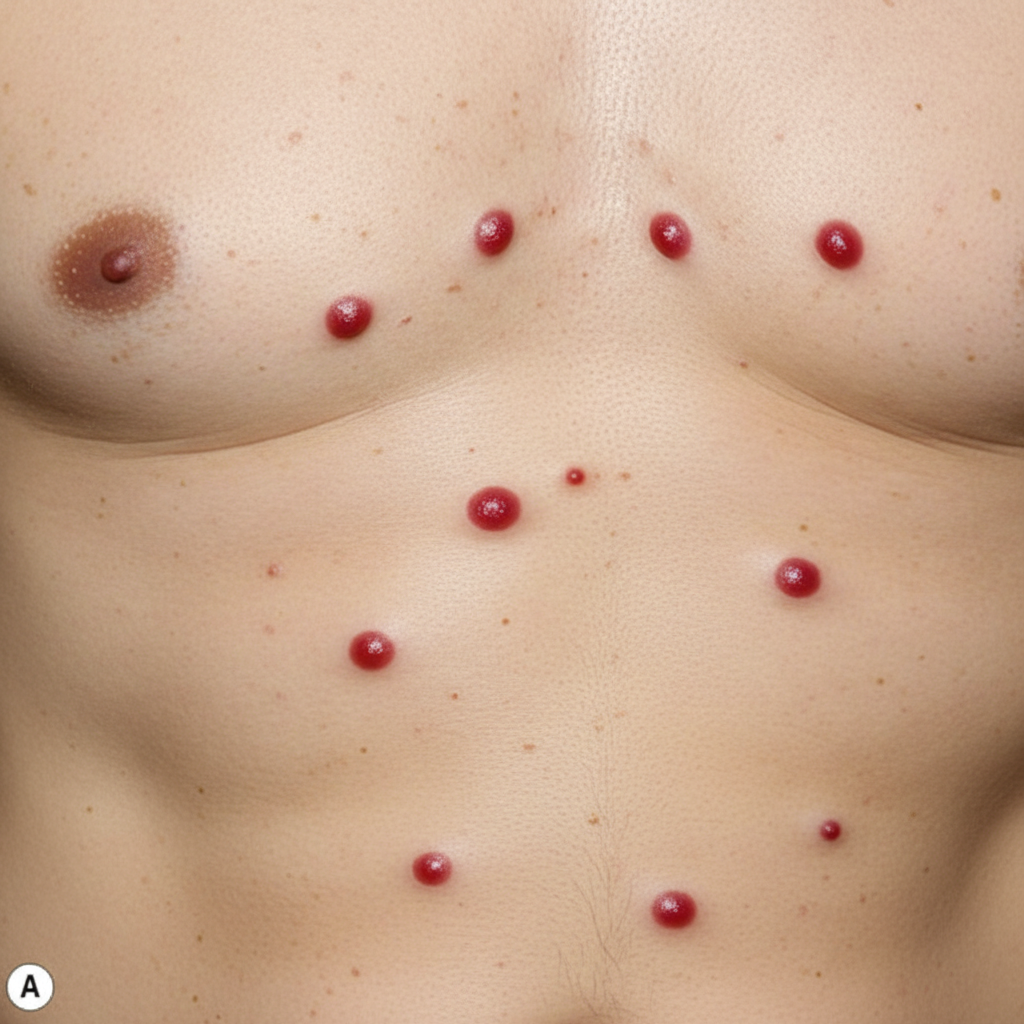
A 63-year-old man presents to the emergency room with severe upper abdominal pain. His symptoms started 2 days prior to presentation and have progressed rapidly. He has been seen in the emergency room 3 times in the past year for acute alcohol intoxication. His past medical history is notable for multiple deep venous thromboses, hypertension, diabetes mellitus, gout, and a transient ischemic attack one year prior. He takes warfarin, lisinopril, metformin, glyburide, and allopurinol. His temperature is 100.0°F (37.8°C), blood pressure is 100/55 mmHg, pulse is 130/min, and respirations are 26/min. On exam, he is in acute distress but is able to answer questions appropriately. Hepatomegaly, splenomegaly, and scleral icterus are noted. There is a positive fluid wave. Laboratory analysis reveals an INR of 1.3. An abdominal ultrasound is ordered, and the patient is started on the appropriate management. However, before the ultrasound can begin, he rapidly loses consciousness and becomes unresponsive. He expires despite appropriate management. An autopsy the following day determines the cause of death to be a massive cerebrovascular accident. A liver biopsy demonstrates darkly erythematous congested areas in the centrilobular regions. This patient’s presenting symptoms are most likely caused by obstructive blood flow in which of the following vessels?
Q42
A 14-year-old girl is brought to the physician because of a 1-week history of malaise and chest pain. Three weeks ago, she had a sore throat that resolved without treatment. Her temperature is 38.7°C (101.7°F). Examination shows several subcutaneous nodules on her elbows and wrist bilaterally and a new-onset early systolic murmur best heard at the apex in the left lateral position. An endomysial biopsy is most likely to show which of the following?
Q43
A 51-year-old African American man with a history of poorly controlled hypertension presents to the emergency room with blurry vision and dyspnea. He reports rapid-onset blurred vision and difficulty breathing 4 hours prior to presentation. He takes lisinopril, hydrochlorothiazide, and spironolactone but has a history of poor medication compliance. He has a 50 pack-year smoking history and drinks 4-6 shots of vodka per day. His temperature is 99.2°F (37.3°C), blood pressure is 195/115 mmHg, pulse is 85/min, and respirations are 20/min. On exam, he is ill-appearing and pale. He is intermittently responsive and oriented to person but not place or time. Fundoscopic examination reveals swelling of the optic disc with blurred margins. A biopsy of this patient’s kidney would most likely reveal which of the following?
Q44
A 16-year-old boy is brought to the emergency department 20 minutes after collapsing while playing basketball. There is no personal or family history of serious illness. On arrival, there is no palpable pulse and no respiratory effort is seen. He is declared dead. The family agrees to an autopsy. Which of the following is most likely to be found in this patient?
Q45
A 22-year-old male varsity athlete visits the on-campus health services for shortness of breath, fatigue, and lower limb edema with onset 1 week after mild upper respiratory tract infection. Upon physical examination, his blood pressure is 100/68 mm Hg, heart rate is 120/min, respiratory rate is 23/min, and temperature is 36.4°C (97.5°F). He is referred to the nearest hospital, where his systolic pressure drops below 90 mm Hg with an S3 gallop, and he needs inotropic support in the critical care unit. A chest radiograph shows an enlarged heart, clear lungs, and effacement of the right costodiaphragmatic angle. A subsequent esophageal echocardiogram reveals severe dilation of all heart cavities, an ejection fraction of 23%, and mitral regurgitation. His family and personal history are unremarkable; therefore, an endomyocardial biopsy (EMB) is ordered. Which of the following microscopic findings would you expect in this specimen?
Q46
A 47-year-old man presents as a new patient at an outpatient clinic. He has never seen a physician before, but was motivated by his 40-year-old brother's recent heart attack and seeks to optimize his health. In particular, he read that uncontrolled atherosclerosis can lead to a heart attack. Which molecule is downregulated in response to the advent of atherosclerosis?
Q47
A 20-year-old Caucasian male presents with recurrent nosebleeds. Complete history reveals his father died in his 40's after an intracranial hemorrhage and two of his father's five siblings have also had recurrent nosebleeds. Which of the following would you expect to find in this patient?
Q48
A 32-year-old man comes to the physician because of a 3-week history of recurrent thumb pain that worsens with exposure to cold temperatures. Examination shows a 6-mm, blue-red papule under the left thumbnail. The overlying area is extremely tender to palpation. The thumbnail is slightly pitted and cracked. This lesion most likely developed from which of the following types of cells?
Q49
A 61-year-old man with hypertension and hyperlipidemia comes to the physician for a 4-month history of recurrent episodes of retrosternal chest pain, shortness of breath, dizziness, and nausea. The episodes usually start after physical activity and subside within minutes of resting. He has smoked one pack of cigarettes daily for 40 years. He is 176 cm (5 ft 9 in) tall and weighs 95 kg (209 lb); BMI is 30 kg/m2. His blood pressure is 160/100 mm Hg. Coronary angiography shows an atherosclerotic lesion with stenosis of the left anterior descending artery. Compared to normal healthy coronary arteries, increased levels of platelet-derived growth factor (PDGF) are found in this lesion. Which of the following is the most likely effect of this factor?
Cardiovascular US Medical PG Practice Questions and MCQs
Question 41: A 63-year-old man presents to the emergency room with severe upper abdominal pain. His symptoms started 2 days prior to presentation and have progressed rapidly. He has been seen in the emergency room 3 times in the past year for acute alcohol intoxication. His past medical history is notable for multiple deep venous thromboses, hypertension, diabetes mellitus, gout, and a transient ischemic attack one year prior. He takes warfarin, lisinopril, metformin, glyburide, and allopurinol. His temperature is 100.0°F (37.8°C), blood pressure is 100/55 mmHg, pulse is 130/min, and respirations are 26/min. On exam, he is in acute distress but is able to answer questions appropriately. Hepatomegaly, splenomegaly, and scleral icterus are noted. There is a positive fluid wave. Laboratory analysis reveals an INR of 1.3. An abdominal ultrasound is ordered, and the patient is started on the appropriate management. However, before the ultrasound can begin, he rapidly loses consciousness and becomes unresponsive. He expires despite appropriate management. An autopsy the following day determines the cause of death to be a massive cerebrovascular accident. A liver biopsy demonstrates darkly erythematous congested areas in the centrilobular regions. This patient’s presenting symptoms are most likely caused by obstructive blood flow in which of the following vessels?
A. Common hepatic artery
B. Inferior vena cava
C. Splenic vein
D. Hepatic vein (Correct Answer)
E. Portal vein
Explanation: ***Hepatic vein***
- The constellation of severe abdominal pain, hepatomegaly, splenomegaly, ascites (positive fluid wave), and centrilobular congestion on liver biopsy in a patient with a history of **hypercoagulability** (multiple deep venous thromboses) strongly points to **Budd-Chiari syndrome**, caused by hepatic vein outflow obstruction.
- The patient's history of alcohol abuse further increases the risk of liver damage and potential for complications like **thrombosis**. His medications (warfarin) and INR of 1.3 suggest sub-therapeutic anticoagulation, which could precipitate a thrombotic event.
*Common hepatic artery*
- Obstruction of the common hepatic artery typically leads to **hepatic ischemia** and **infarction**, which would present with different liver pathology than centrilobular congestion.
- While possible, it's less likely to explain the widespread congestion and ascites seen in this case compared to venous outflow obstruction.
*Inferior vena cava*
- IVC obstruction, particularly above the hepatic veins, could cause similar symptoms to Budd-Chiari syndrome if it impacts hepatic venous drainage.
- However, direct hepatic vein thrombosis is a more specific and common cause of the described liver pathology (centrilobular congestion due to outflow obstruction).
*Splenic vein*
- Obstruction of the splenic vein primarily causes **splenomegaly** and **gastric varices** due to increased pressure in the short gastric veins.
- It would not explain the severe liver dysfunction, hepatomegaly, ascites, and centrilobular congestion observed in this patient.
*Portal vein*
- Portal vein obstruction typically leads to **portal hypertension**, characterized by **ascites**, **splenomegaly**, and **esophageal varices**.
- While it explains ascites and splenomegaly, it does not directly cause the observed **centrilobular congestion** in the liver, which is indicative of hepatic venous outflow impairment.
Question 42: A 14-year-old girl is brought to the physician because of a 1-week history of malaise and chest pain. Three weeks ago, she had a sore throat that resolved without treatment. Her temperature is 38.7°C (101.7°F). Examination shows several subcutaneous nodules on her elbows and wrist bilaterally and a new-onset early systolic murmur best heard at the apex in the left lateral position. An endomysial biopsy is most likely to show which of the following?
A. Fibrinoid necrosis with histiocytic infiltrate (Correct Answer)
B. Fibrosis with myofibrillar disarray
C. Coagulative necrosis with neutrophilic infiltrate
D. Myocardial infiltration with eosinophilic proteins
E. Deposits of misfolded protein aggregates
Explanation: ***Fibrinoid necrosis with histiocytic infiltrate***
- The clinical presentation suggests **rheumatic fever**, a sequela of untreated streptococcal pharyngitis, characterized by **subcutaneous nodules** and **carditis** (new-onset systolic murmur).
- The pathognomonic finding on endomyocardial biopsy is the **Aschoff body**: a granulomatous lesion with central **fibrinoid necrosis surrounded by activated macrophages (histiocytes)** and occasional multinucleated giant cells (Anitschkow cells).
- Subcutaneous nodules in rheumatic fever show similar histopathology with fibrinoid necrosis and histiocytic infiltrate.
*Fibrosis with myofibrillar disarray*
- This description is characteristic of **hypertrophic cardiomyopathy**, where there is an abnormal arrangement of cardiac muscle cells (myocyte disarray) and increased interstitial fibrous tissue.
- While chronic rheumatic heart disease can lead to fibrosis and scarring, the acute pathology of rheumatic fever is inflammatory, not characterized by myofibrillar disarray.
*Coagulative necrosis with neutrophilic infiltrate*
- This pattern is characteristic of **acute myocardial infarction**, where ischemic injury leads to coagulative necrosis of myocytes with an initial inflammatory response by neutrophils (within 1-3 days).
- It does not align with the immune-mediated inflammatory pathology of acute rheumatic fever.
*Myocardial infiltration with eosinophilic proteins*
- This description could suggest **eosinophilic myocarditis** (infiltration by eosinophils) or possibly **cardiac amyloidosis** (deposition of eosinophilic-staining amyloid protein on H&E stain).
- Eosinophilic myocarditis is associated with hypersensitivity reactions, parasitic infections, or hypereosinophilic syndrome—not post-streptococcal sequelae.
- These conditions are distinct from the granulomatous inflammation of acute rheumatic fever.
*Deposits of misfolded protein aggregates*
- This pathology is characteristic of **cardiac amyloidosis**, where misfolded proteins (immunoglobulin light chains, transthyretin, etc.) accumulate as extracellular **amyloid deposits** in the myocardium.
- Amyloid deposits appear as apple-green birefringence under polarized light with Congo red staining—very different from the inflammatory Aschoff bodies of acute rheumatic fever.
- Clinically, amyloidosis presents with restrictive cardiomyopathy, not the acute carditis following pharyngitis seen in this case.
Question 43: A 51-year-old African American man with a history of poorly controlled hypertension presents to the emergency room with blurry vision and dyspnea. He reports rapid-onset blurred vision and difficulty breathing 4 hours prior to presentation. He takes lisinopril, hydrochlorothiazide, and spironolactone but has a history of poor medication compliance. He has a 50 pack-year smoking history and drinks 4-6 shots of vodka per day. His temperature is 99.2°F (37.3°C), blood pressure is 195/115 mmHg, pulse is 85/min, and respirations are 20/min. On exam, he is ill-appearing and pale. He is intermittently responsive and oriented to person but not place or time. Fundoscopic examination reveals swelling of the optic disc with blurred margins. A biopsy of this patient’s kidney would most likely reveal which of the following?
A. Concentrically thickened arteriolar tunica media with abundant nuclei (Correct Answer)
B. Calcific deposits in the arterial media without luminal narrowing
C. Fibrous atheromatous plaques in the arterial intima
D. Anuclear arteriolar thickening
E. Endothelial proliferation and luminal narrowing with a chronic inflammatory infiltrate
Explanation: ***Concentrically thickened arteriolar tunica media with abundant nuclei***
- This describes **hyperplastic arteriolosclerosis**, a hallmark of **malignant hypertension**, characterized by severe, rapid-onset blood pressure elevation leading to acute organ damage.
- The patient's **blood pressure of 195/115 mmHg**, **blurry vision** (due to optic disc swelling), and **dyspnea** (suggesting pulmonary edema or cardiac involvement) are classic symptoms of malignant hypertension, which causes "onion-skinning" of arterioles.
*Calcific deposits in the arterial media without luminal narrowing*
- This describes **Mönckeberg arteriolosclerosis**, or medial calcific sclerosis, which involves calcification of the tunica media in muscular arteries.
- It typically occurs in older individuals and is usually **clinically silent** unless complicated by atherosclerosis, and does not cause malignant hypertension.
*Fibrous atheromatous plaques in the arteriolar intima*
- This describes **atherosclerosis**, which involves the formation of plaques in larger arteries, not typically in arterioles, and is a chronic process.
- While the patient has risk factors for atherosclerosis (smoking, hypertension), the acute severe presentation points to a microvascular pathology.
*Anuclear arteriolar thickening*
- This describes **hyaline arteriolosclerosis**, associated with benign (non-malignant) hypertension or diabetes, where plasma proteins leak into the vessel walls, causing uniform, acellular thickening.
- The patient's severe symptoms and optic disc swelling indicate a more aggressive and acute form of vascular damage, not benign hyaline changes.
*Endothelial proliferation and luminal narrowing with a chronic inflammatory infiltrate*
- This pattern is characteristic of **vasculitis** or conditions like **thrombotic microangiopathy**, which can cause luminal narrowing and kidney damage.
- While some features of vasculitis might overlap, the specific context of poorly controlled severe hypertension points more directly to malignant hypertension-induced changes.
Question 44: A 16-year-old boy is brought to the emergency department 20 minutes after collapsing while playing basketball. There is no personal or family history of serious illness. On arrival, there is no palpable pulse and no respiratory effort is seen. He is declared dead. The family agrees to an autopsy. Which of the following is most likely to be found in this patient?
A. Defect in the atrial septum
B. Interventricular septal hypertrophy (Correct Answer)
C. Pericardial fluid collection
D. Postductal narrowing of the aorta
E. Atheromatous plaque rupture
Explanation: ***Interventricular septal hypertrophy***
- This presentation is highly suggestive of **hypertrophic cardiomyopathy (HCM)**, which is characterized by **left ventricular hypertrophy**, especially of the interventricular septum, leading to outflow obstruction and sudden cardiac arrest, particularly in young athletes.
- **Sudden collapse during strenuous exercise** in a young, otherwise healthy individual with no prior history of illness is a classic presentation of HCM.
*Defect in the atrial septum*
- An **atrial septal defect (ASD)** typically presents with a **murmur** and may lead to heart failure or pulmonary hypertension later in life, but it is an unlikely cause of sudden death in an adolescent during exercise.
- While it can cause cardiac symptoms, sudden collapse without prior symptoms is uncommon, and the primary pathological finding would be a hole, not hypertrophy.
*Pericardial fluid collection*
- A significant pericardial fluid collection that causes sudden collapse would indicate **pericardial tamponade**, which is usually associated with clear signs of circulatory collapse (e.g., **Beck's triad** - muffled heart sounds, jugular venous distension, hypotension) and is often due to trauma, infection, or malignancy, which are not suggested here.
- The sudden, unheralded nature of collapse during exercise points away from conditions that typically have more gradual onset or preceding symptoms.
*Postductal narrowing of the aorta*
- **Coarctation of the aorta** can cause hypertension and may lead to heart failure or aortic rupture, but it typically presents with **blood pressure discrepancies** between the upper and lower extremities and a characteristic murmur, not sudden cardiac death during exercise without prior symptoms.
- While it can be severe, sudden death usually results from complications like aortic dissection or rupture after a period of untreated hypertension, not acute collapse in a seemingly healthy individual.
*Atheromatous plaque rupture*
- **Atherosclerosis** and plaque rupture are the underlying cause of most **myocardial infarctions** in adults, but they are extremely rare in a 16-year-old without significant risk factors or a history of lipid disorders.
- The patient's age and lack of predisposing factors make this an improbable finding for sudden cardiac death.
Question 45: A 22-year-old male varsity athlete visits the on-campus health services for shortness of breath, fatigue, and lower limb edema with onset 1 week after mild upper respiratory tract infection. Upon physical examination, his blood pressure is 100/68 mm Hg, heart rate is 120/min, respiratory rate is 23/min, and temperature is 36.4°C (97.5°F). He is referred to the nearest hospital, where his systolic pressure drops below 90 mm Hg with an S3 gallop, and he needs inotropic support in the critical care unit. A chest radiograph shows an enlarged heart, clear lungs, and effacement of the right costodiaphragmatic angle. A subsequent esophageal echocardiogram reveals severe dilation of all heart cavities, an ejection fraction of 23%, and mitral regurgitation. His family and personal history are unremarkable; therefore, an endomyocardial biopsy (EMB) is ordered. Which of the following microscopic findings would you expect in this specimen?
A. Infiltration with neutrophils
B. Infiltration with lymphocytes (Correct Answer)
C. Infiltration with granulomas
D. Infiltration with eosinophils
E. Infiltration with giant cells
Explanation: ***Infiltration with lymphocytes***
- The patient's presentation with **heart failure symptoms** following an **upper respiratory tract infection**, coupled with **dilated cardiomyopathy** and **reduced ejection fraction**, strongly suggests **viral myocarditis**.
- **Lymphocytic infiltration** of the myocardium is the hallmark microscopic finding in **viral myocarditis**, representing the immune response to viral infection of cardiac myocytes.
*Infiltration with neutrophils*
- **Neutrophilic infiltrates** are typically characteristic of **acute bacterial infections** or **ischemic injury** within the myocardium, rather than post-viral myocarditis.
- While neutrophils may be present early in severe inflammatory responses, they are not the predominant or defining feature of **viral myocarditis**.
*Infiltration with granulomas*
- The presence of **granulomas** in the myocardium is indicative of conditions such as **sarcoidosis**, **tuberculosis**, or **giant cell myocarditis**, none of which fit the patient's acute post-viral presentation.
- These conditions typically have a more insidious onset or different systemic manifestations.
*Infiltration with eosinophils*
- **Eosinophilic infiltration** of the myocardium is characteristic of **hypersensitivity myocarditis** (often drug-induced) or **parasitic infections** like trichinellosis, which are not suggested by the patient's history.
- **Eosinophilic myocarditis** can also occur in various systemic diseases but is not associated with routine viral infections.
*Infiltration with giant cells*
- **Giant cells** in the myocardium are the defining feature of **giant cell myocarditis**, a rare and aggressive form of myocarditis distinct from typical viral myocarditis.
- **Giant cell myocarditis** often has a fulminant course and is usually characterized by more widespread myocyte necrosis and a poorer prognosis, and while it could be considered in severe cases, lymphocytic infiltration is more common after a viral illness.
Question 46: A 47-year-old man presents as a new patient at an outpatient clinic. He has never seen a physician before, but was motivated by his 40-year-old brother's recent heart attack and seeks to optimize his health. In particular, he read that uncontrolled atherosclerosis can lead to a heart attack. Which molecule is downregulated in response to the advent of atherosclerosis?
A. Tumor necrosis factor
B. Serotonin
C. Nitric oxide (Correct Answer)
D. Interleukin 1
E. Thromboxane A2
Explanation: ***Nitric oxide***
- **Nitric oxide (NO)** is a potent **vasodilator** and **anti-inflammatory** molecule produced by endothelial cells. In atherosclerosis, endothelial dysfunction leads to reduced NO bioavailability.
- Decreased NO production contributes to vasoconstriction, increased platelet aggregation, and enhanced smooth muscle cell proliferation, all of which promote **atherosclerotic plaque formation** and progression.
*Tumor necrosis factor*
- **Tumor necrosis factor-alpha (TNF-α)** is a **pro-inflammatory cytokine** that plays a significant role in the pathogenesis of atherosclerosis.
- It is **upregulated** in response to atherosclerotic plaque formation, contributing to endothelial activation, leukocyte recruitment, and smooth muscle cell proliferation.
*Serotonin*
- **Serotonin (5-hydroxytryptamine)** is primarily known for its role as a neurotransmitter but also acts as a **vasoconstrictor** and promotes platelet aggregation.
- While it can be released from activated platelets in the context of vascular injury, it is not consistently **downregulated** in atherosclerosis; rather, its effects can contribute to disease progression.
*Interleukin 1*
- **Interleukin-1 (IL-1)**, particularly IL-1β, is a major **pro-inflammatory cytokine** critically involved in the immune response in atherosclerosis.
- It is **upregulated** in atherosclerotic plaques, contributing to systemic inflammation, endothelial dysfunction, and vascular smooth muscle cell activation.
*Thromboxane A2*
- **Thromboxane A2 (TXA2)** is a potent **vasoconstrictor** and **platelet aggregator** produced by activated platelets.
- Its levels are **increased** in atherosclerosis, contributing to hypercoagulability and increased risk of thrombotic events like myocardial infarction.
Question 47: A 20-year-old Caucasian male presents with recurrent nosebleeds. Complete history reveals his father died in his 40's after an intracranial hemorrhage and two of his father's five siblings have also had recurrent nosebleeds. Which of the following would you expect to find in this patient?
A. Retinal hemangioblastoma
B. Renal cell carcinoma
C. Mucosal arteriovenous malformations (Correct Answer)
D. Vestibular schwannoma
E. Cafe-au-lait spots
Explanation: ***Mucosal arteriovenous malformations***
- This constellation of **recurrent nosebleeds**, a family history of **intracranial hemorrhage**, and other family members with nosebleeds strongly suggests **hereditary hemorrhagic telangiectasia (HHT)**, also known as **Osler-Weber-Rendu disease**.
- **Mucosal arteriovenous malformations (AVMs)** are a hallmark of HHT, leading to fragile vessels that cause symptoms like nosebleeds and potential hemorrhages in various organs.
*Retinal hemangioblastoma*
- **Retinal hemangioblastomas** are characteristic of **von Hippel-Lindau (VHL) disease**, which also presents with a family history of various tumors but typically not recurrent nosebleeds as a primary symptom.
- VHL disease involves vascular tumors in the retina, brain, and spinal cord, as well as renal cysts and pheochromocytomas, which differ from the primary symptoms presented.
*Renal cell carcinoma*
- **Renal cell carcinoma** is associated with **von Hippel-Lindau (VHL) disease**, particularly the clear cell subtype.
- While VHL is a hereditary condition, it presents with a different spectrum of symptoms and family history compared to the profuse bleeding seen in this case.
*Vestibular schwannoma*
- **Vestibular schwannomas** (acoustic neuromas) are a key feature of **Neurofibromatosis type 2 (NF2)**, which is characterized by bilateral tumors of the vestibulocochlear nerve.
- NF2 does not typically present with recurrent nosebleeds or widespread vascular malformations.
*Cafe-au-lait spots*
- **Cafe-au-lait spots** are a pathognomonic feature of **Neurofibromatosis type 1 (NF1)**, which also includes neurofibromas, optic gliomas, and Lisch nodules.
- The clinical picture of recurrent nosebleeds and intracranial hemorrhage is not consistent with NF1.
Question 48: A 32-year-old man comes to the physician because of a 3-week history of recurrent thumb pain that worsens with exposure to cold temperatures. Examination shows a 6-mm, blue-red papule under the left thumbnail. The overlying area is extremely tender to palpation. The thumbnail is slightly pitted and cracked. This lesion most likely developed from which of the following types of cells?
A. Dysplastic melanocytes
B. Injured nerve cells
C. Modified smooth muscle cells (Correct Answer)
D. Basal epidermal cells
E. Hyperpigmented fibroblasts
Explanation: ***Modified smooth muscle cells***
- The symptoms of **recurrent thumb pain**, worsening with **cold exposure**, and a **tender, blue-red papule** under the nail are classic for a **glomus tumor**.
- **Glomus tumors** originate from the **glomus body**, which is a specialized **neuromyoarterial structure** composed of modified **smooth muscle cells** (glomus cells).
- The **glomus body** is a specialized arteriovenous anastomosis involved in thermoregulation, explaining the **cold sensitivity** and **extreme tenderness** characteristic of these lesions.
*Dysplastic melanocytes*
- **Dysplastic melanocytes** are associated with **dysplastic nevi** or **melanoma** development, which typically present as irregularly shaped pigmented lesions, not pain-sensitive masses.
- While melanoma can occur under the nail (subungual melanoma), it usually causes **melanonychia striata** (a dark streak under the nail) and typically doesn't exhibit the extreme **cold sensitivity** and **tenderness** described.
*Injured nerve cells*
- While nerve compression or injury can cause pain, a **discrete mass** with **cold sensitivity** under the nail is not characteristic of an injured nerve cell lesion.
- Neuromas, which are benign nerve tumors, usually result from trauma and are tender but often lack the **blue-red discoloration** and **cold sensitivity** seen in this case.
*Basal epidermal cells*
- Lesions originating from **basal epidermal cells** include **basal cell carcinoma**, which is a common skin cancer.
- Basal cell carcinomas typically appear as **pearly nodules** with **telangiectasias** and are usually not associated with **cold sensitivity** or the specific pain pattern described.
*Hyperpigmented fibroblasts*
- **Hyperpigmented fibroblasts** can be found in various benign skin lesions, such as **dermatofibromas**, which are firm, solitary nodules.
- However, they do not typically cause the **cold-sensitive pain** or appear as highly vascular, **blue-red papules** under the nail that are characteristic of this presentation.
Question 49: A 61-year-old man with hypertension and hyperlipidemia comes to the physician for a 4-month history of recurrent episodes of retrosternal chest pain, shortness of breath, dizziness, and nausea. The episodes usually start after physical activity and subside within minutes of resting. He has smoked one pack of cigarettes daily for 40 years. He is 176 cm (5 ft 9 in) tall and weighs 95 kg (209 lb); BMI is 30 kg/m2. His blood pressure is 160/100 mm Hg. Coronary angiography shows an atherosclerotic lesion with stenosis of the left anterior descending artery. Compared to normal healthy coronary arteries, increased levels of platelet-derived growth factor (PDGF) are found in this lesion. Which of the following is the most likely effect of this factor?
A. Calcification of the atherosclerotic plaque core
B. Invasion of T-cells through the disrupted endothelium
C. Increased expression of vascular cell-adhesion molecules
D. Ingestion of cholesterol by mature monocytes
E. Intimal migration of smooth muscle cells (Correct Answer)
Explanation: ***Intimal migration of smooth muscle cells***
- **PDGF** is a potent **mitogen** and **chemotactic factor** for smooth muscle cells, promoting their migration from the tunica media into the intima during atherogenesis.
- This migration is a crucial step in the formation of the **fibrous cap**, contributing to plaque growth and stability.
*Calcification of the atherosclerotic plaque core*
- While calcification does occur in advanced atherosclerotic plaques, it is primarily driven by mechanisms involving **osteoblast-like differentiation** of vascular cells and deposition of **calcium phosphate**, not directly by PDGF.
- PDGF's primary role is in **cellular proliferation** and **migration**, particularly of smooth muscle cells.
*Invasion of T-cells through the disrupted endothelium*
- **T-cell invasion** into the arterial wall is an important inflammatory process in atherosclerosis, but it is primarily mediated by **chemokines** like MCP-1 and adhesion molecules, not directly by PDGF.
- PDGF typically acts on mesenchymal cells (like smooth muscle cells and fibroblasts) rather than immune cells in this context.
*Increased expression of vascular cell-adhesion molecules*
- **Expression of adhesion molecules** (e.g., VCAM-1, ICAM-1) is crucial for the recruitment of inflammatory cells, but this process is mainly driven by **pro-inflammatory cytokines** like TNF-α and IL-1, not PDGF.
- While there might be indirect effects, PDGF's direct role is not primarily in promoting adhesion molecule expression.
*Ingestion of cholesterol by mature monocytes*
- **Ingestion of cholesterol** by **macrophages** (which mature from monocytes) leads to the formation of **foam cells**, a hallmark of early atherosclerosis.
- This process is largely driven by oxidized LDL uptake, often facilitated by scavenger receptors, rather than directly by PDGF.