A 32-year-old woman who recently emigrated to the USA from Japan comes to the physician because of a 3-month history of night sweats, malaise, and joint pain. During this time, she has also had a 6-kg (13-lb) weight loss. Physical examination shows weak brachial and radial pulses. There are tender subcutaneous nodules on both legs. Carotid bruits are heard on auscultation bilaterally. Laboratory studies show an erythrocyte sedimentation rate of 96 mm/h. A CT scan of the chest shows thickening and narrowing of the aortic arch. Microscopic examination of the aortic arch is most likely to show which of the following findings?
Q22
A 69-year-old man is brought to clinic by his daughter for poor memory. She states that over the past two years his memory has been slowly declining though he has been able to take care of himself, pay his own rent, and manage his finances. However, two months ago she noticed a sharp decline in his cognitive functioning as well as his gait. Then one month ago, she noticed a similar decline in his functioning again that came on suddenly. The patient has a past medical history of diabetes mellitus type II, hypertension, obesity, and dyslipidemia. Current medications include hydrochlorothiazide, lisinopril, metformin, and glipizide. His blood pressure is 165/95 mmHg, pulse is 82/minute, he is afebrile, and oxygen saturation is 98% on room air. Cardiac exam reveals a crescendo-decrescendo murmur heard in the left upper sternal border that radiates to the carotids. Abdominal exam is benign, and neurologic exam reveals an unsteady gait. Which of the following findings is associated with the most likely diagnosis?
Q23
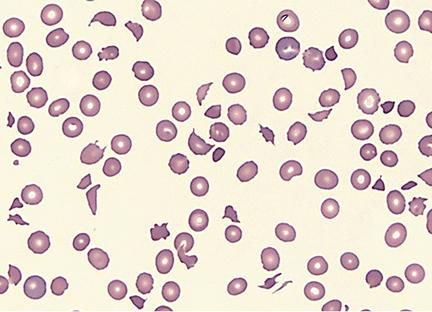
A 58-year old man comes to the emergency department because of progressively worsening shortness of breath and fatigue for 3 days. During the last month, he has also noticed dark colored urine. One month ago, he underwent mechanical aortic valve replacement for high-grade aortic stenosis. A photomicrograph of a peripheral blood smear from the patient is shown. Which of the following findings is most likely to be seen in this patient?
Q24
An investigator is studying genetic mutations of coagulation factors from patient samples. Genetic sequencing of one patient's coagulation factors shows a DNA point mutation that substitutes guanine for adenine. The corresponding mRNA codon forms a glutamine in place of arginine on position 506 at the polypeptide cleavage site. This patient's disorder is most likely to cause which of the following?
Q25
A 31-year-old woman comes to the physician for evaluation of worsening pain, swelling, and erythema in her left leg for the past 4 hours. She returned from a trip to Taiwan to celebrate her sister's wedding 2 days ago. She has no history of serious illness. She is sexually active with one male partner and uses a combined oral contraceptive pill (OCP). She does not smoke, drink, or use illicit drugs. Her only other medication is a multivitamin. Her temperature is 37.2°C (99°F), pulse is 67/min, respirations are 16/min, and blood pressure is 90/60 mm Hg. Examination shows swelling in her left calf and pain behind her left knee when she is asked to dorsiflex her left foot. Laboratory results show elevated D-dimers. Which of the following is the most likely cause of this patient's clinical presentation?
Q26
A 3-year-old boy is brought to the emergency department after losing consciousness. His parents report that he collapsed and then had repetitive, twitching movements of the right side of his body that lasted approximately one minute. He recently started to walk with support. He speaks in bisyllables and has a vocabulary of almost 50 words. Examination shows a large purple-colored patch over the left cheek. One week later, he dies. Which of the following is the most likely finding on autopsy of the brain?
Q27
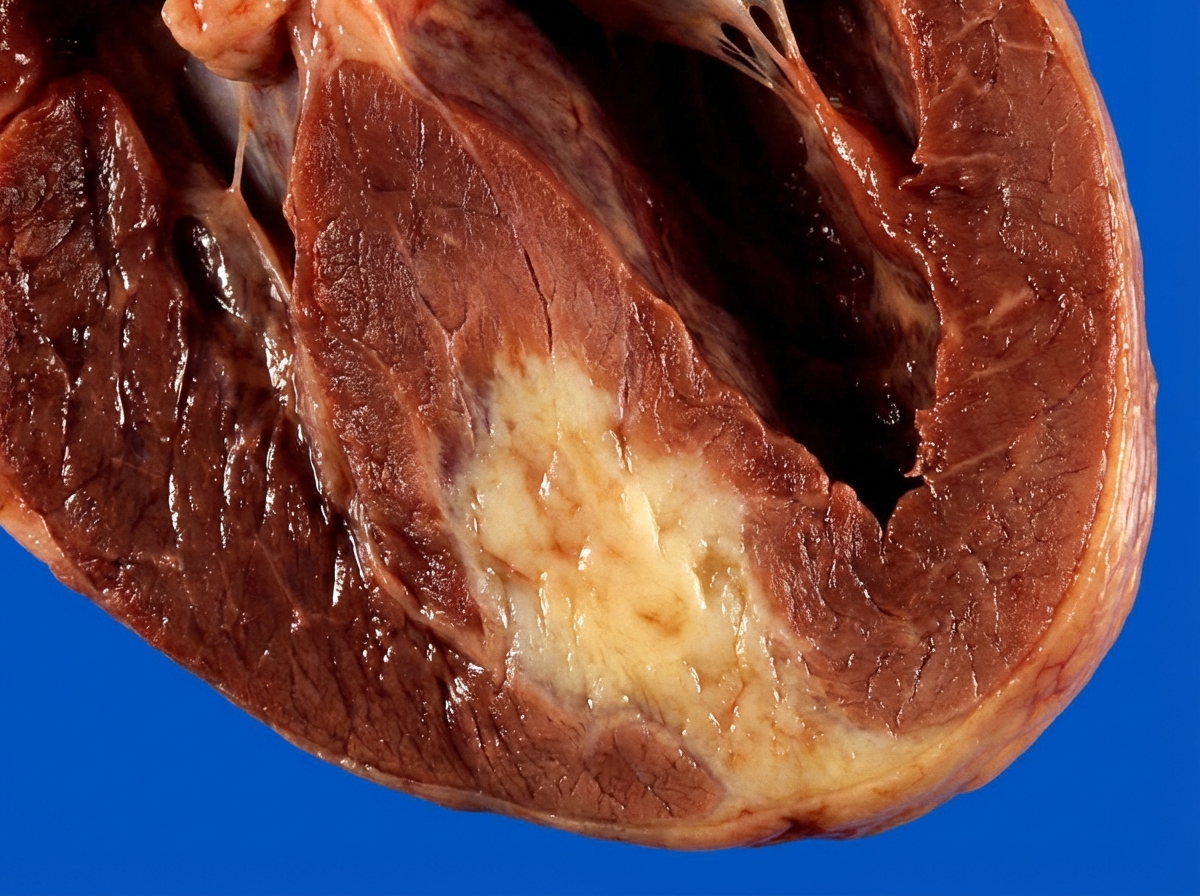
A 41-year-old man with a history of hypertension and hyperlipidemia is brought to the emergency department by his wife for difficulty breathing after choking on food at dinner. He is unconscious and pulseless on arrival. Despite appropriate life-saving measures, he dies. Examination of the heart shows a necrotic, pale yellow plaque in the left circumflex artery. Similar lesions are most likely to be found in which of the following locations?
Q28
A 55-year-old man visits his primary care physician for a follow-up visit. He was diagnosed with asthma during childhood, but it has always been well controlled with an albuterol inhaler. He is hypertensive and admits that he is not compliant with his antihypertensive medication. He expresses his concerns about frequent headaches and blurry vision over the past few months. He has been taking acetaminophen for his headaches, but it has not made any difference. The blood pressure is 160/100 mm Hg, pulse rate is 77/min, and respiratory rate is 14/min. The BMI is 36.2 kg/m2. Physical examination is unremarkable. A urinalysis is notable for proteinuria. Funduscopic examination is shown on the right. Which pathologic mechanism best explains the changes seen in this patient’s fundoscopic examination?
Q29
A 65-year-old woman presents with severe abdominal pain and bloody diarrhea. Past medical history is significant for a myocardial infarction 6 months ago. The patient reports a 25-pack-year smoking history and consumes 80 ounces of alcohol per week. Physical examination shows a diffusely tender abdomen with the absence of bowel sounds. Plain abdominal radiography is negative for free air under the diaphragm. Laboratory findings show a serum amylase of 115 U/L, serum lipase 95 U/L. Her clinical condition deteriorates rapidly, and she dies. Which of the following would most likely be the finding on autopsy in this patient?
Q30
A 68-year-old man of Mediterranean descent comes to the clinic with complaints of fatigue for the past month. He reports that it is increasingly difficult for him to complete his after-dinner walks as he would get breathless and tired around 10 minutes. He endorses dizziness and an upper respiratory infection last week for which he “took a lot of aspirin.” Past medical history is significant for malaria 10 years ago (for which he was adequately treated with anti-malarial medications) and aortic stenosis status post prosthetic valve replacement 5 months ago. When asked if he has had similar episodes before, he claims, “Never! I’ve been as healthy as a horse until my heart surgery.” Physical examination is significant for mild scleral icterus bilaterally and a faint systolic murmur. Which of the following images represents a potential peripheral smear in this patient?
Cardiovascular US Medical PG Practice Questions and MCQs
Question 21: A 32-year-old woman who recently emigrated to the USA from Japan comes to the physician because of a 3-month history of night sweats, malaise, and joint pain. During this time, she has also had a 6-kg (13-lb) weight loss. Physical examination shows weak brachial and radial pulses. There are tender subcutaneous nodules on both legs. Carotid bruits are heard on auscultation bilaterally. Laboratory studies show an erythrocyte sedimentation rate of 96 mm/h. A CT scan of the chest shows thickening and narrowing of the aortic arch. Microscopic examination of the aortic arch is most likely to show which of the following findings?
A. Fibrinoid necrosis of the intima and media
B. Calcification of the media
C. Granulomatous inflammation of the media (Correct Answer)
D. Subendothelial hyaline deposition
E. Subendothelial immune complex deposition
Explanation: ***Granulomatous inflammation of the media***
- The clinical presentation, including **night sweats, malaise, weight loss, weak brachial and radial pulses** (pulseless disease), and **thickening and narrowing of the aortic arch**, is highly suggestive of **Takayasu arteritis**.
- **Takayasu arteritis** is a **large-vessel vasculitis** characterized pathologically by **granulomatous inflammation** primarily affecting the **tunica media** of the aorta and its major branches.
*Fibrinoid necrosis of the intima and media*
- **Fibrinoid necrosis** is typically seen in **small-to-medium vessel vasculitides** (e.g., polyarteritis nodosa) or in severe **hypertensive vasculopathy**.
- It involves the deposition of **fibrin-like material** in the vessel wall, which is not the primary histological feature of Takayasu arteritis.
*Calcification of the media*
- **Medial calcification** (Mönckeberg arteriosclerosis) primarily affects **muscular arteries** and is typically seen in older individuals, often incidentally.
- It does not cause significant luminal narrowing, inflammation, or the systemic symptoms described in this patient.
*Subendothelial hyaline deposition*
- **Hyaline deposition** in the subendothelium is characteristic of **hyaline arteriolosclerosis**, commonly seen in **benign hypertension** or **diabetes mellitus**, affecting small arteries and arterioles.
- This finding is not consistent with the specific large-vessel inflammatory process seen in Takayasu arteritis.
*Subendothelial immune complex deposition*
- **Immune complex deposition** in the subendothelium is typical of **Type III hypersensitivity reactions**, such as those seen in **lupus nephritis** or **Type II cryoglobulinemia**, often affecting glomeruli or small vessels.
- While Takayasu arteritis is immune-mediated, its hallmark is **granulomatous inflammation**, not primary immune complex deposition in the vessel wall.
Question 22: A 69-year-old man is brought to clinic by his daughter for poor memory. She states that over the past two years his memory has been slowly declining though he has been able to take care of himself, pay his own rent, and manage his finances. However, two months ago she noticed a sharp decline in his cognitive functioning as well as his gait. Then one month ago, she noticed a similar decline in his functioning again that came on suddenly. The patient has a past medical history of diabetes mellitus type II, hypertension, obesity, and dyslipidemia. Current medications include hydrochlorothiazide, lisinopril, metformin, and glipizide. His blood pressure is 165/95 mmHg, pulse is 82/minute, he is afebrile, and oxygen saturation is 98% on room air. Cardiac exam reveals a crescendo-decrescendo murmur heard in the left upper sternal border that radiates to the carotids. Abdominal exam is benign, and neurologic exam reveals an unsteady gait. Which of the following findings is associated with the most likely diagnosis?
A. Neurofibrillary tangles and hyperphosphorylated tau
B. Fronto-temporal degeneration
C. Diffuse, subtle atrophy of the brain, subtle ventricular enlargement
D. Lewy bodies found on biopsy
E. Multiple lacunar infarcts (Correct Answer)
Explanation: ***Multiple lacunar infarcts***
- The patient's history of **stepwise decline** in cognitive function, vascular risk factors (hypertension, diabetes, obesity, dyslipidemia), and unsteadiness of gait are highly suggestive of **vascular dementia**. Multiple lacunar infarcts are the pathological hallmark of this condition.
- The **crescendo-decrescendo murmur** radiating to the carotids indicates **aortic stenosis**, which although not directly causing the dementia, is another sign of widespread vascular disease in an elderly patient.
*Neurofibrillary tangles and hyperphosphorylated tau*
- These are the characteristic pathological findings in **Alzheimer's disease**, which typically presents with a **gradual and progressive decline** rather than the stepwise deterioration described here.
- While Alzheimer's is common, the sudden, repeated declines strongly point away from its typical insidious progression.
*Fronto-temporal degeneration*
- This is the pathological basis for **frontotemporal dementia**, which usually presents with early and prominent changes in **personality, behavior, or language**, rather than memory being the primary initial symptom.
- The patient's primary symptom is memory decline, and the sudden, stepwise deterioration is not typical for frontotemporal dementia.
*Diffuse, subtle atrophy of the brain, subtle ventricular enlargement*
- While cortical atrophy and ventricular enlargement can be seen in various neurodegenerative conditions, they are **non-specific findings** and do not explain the distinct **stepwise decline** pattern.
- These findings might be present in many types of dementia, but they do not specifically point to the underlying cause as clearly as the stepwise decline points to vascular issues.
*Lewy bodies found on biopsy*
- This is characteristic of **Lewy body dementia**, which typically presents with a **fluctuating cognitive function**, **visual hallucinations**, and **parkinsonism**.
- While there is an unsteady gait, the history does not mention hallucinations or other motor features typical of Parkinsonism, and the predominant pattern is stepwise decline rather than fluctuation.
Question 23: A 58-year old man comes to the emergency department because of progressively worsening shortness of breath and fatigue for 3 days. During the last month, he has also noticed dark colored urine. One month ago, he underwent mechanical aortic valve replacement for high-grade aortic stenosis. A photomicrograph of a peripheral blood smear from the patient is shown. Which of the following findings is most likely to be seen in this patient?
A. Elevated lactate dehydrogenase (Correct Answer)
B. Low ferritin
C. Low platelets
D. Elevated haptoglobin
E. Low unconjugated bilirubin
Explanation: ***Elevated lactate dehydrogenase***
- The patient has **mechanical hemolysis** from his prosthetic aortic valve, evidenced by schistocytes on blood smear and dark urine (hemoglobinuria).
- **LDH is markedly elevated** in intravascular hemolysis due to release from lysed red blood cells.
- LDH is the **most direct and sensitive marker** of ongoing hemolysis, making it the best answer.
*Low ferritin*
- While ferritin **can be low** in chronic mechanical hemolysis due to urinary iron loss (hemosiderinuria), this develops over months to years.
- This patient's valve was placed only 1 month ago, making significant iron depletion unlikely.
- More importantly, **LDH elevation is more specific** for acute hemolysis than ferritin changes.
*Low platelets*
- Thrombocytopenia is not a typical feature of **mechanical hemolysis** alone.
- Low platelets would suggest microangiopathic processes like **TTP or HUS**, which present differently.
- Platelet counts are typically normal in isolated mechanical hemolysis.
*Elevated haptoglobin*
- **Haptoglobin is consumed** (decreased, not elevated) in hemolysis as it binds free hemoglobin released into circulation.
- **Low or undetectable haptoglobin** is characteristic of intravascular hemolysis.
- Elevated haptoglobin would contradict the diagnosis of hemolytic anemia.
*Low unconjugated bilirubin*
- Unconjugated bilirubin is **elevated** (not low) in hemolysis due to breakdown of heme from lysed red blood cells.
- The dark urine suggests hemoglobinuria, and there would also be elevated indirect bilirubin.
- Low unconjugated bilirubin is inconsistent with hemolytic anemia.
Question 24: An investigator is studying genetic mutations of coagulation factors from patient samples. Genetic sequencing of one patient's coagulation factors shows a DNA point mutation that substitutes guanine for adenine. The corresponding mRNA codon forms a glutamine in place of arginine on position 506 at the polypeptide cleavage site. This patient's disorder is most likely to cause which of the following?
A. Iron deficiency
B. Ischemic stroke
C. Cerebral vein thrombosis (Correct Answer)
D. Petechiae
E. Hemarthrosis
Explanation: ***Cerebral vein thrombosis***
- The description of a DNA point mutation leading to a **glutamine in place of arginine at position 506** in a coagulation factor is characteristic of **Factor V Leiden mutation**.
- **Factor V Leiden** causes resistance to inactivation by activated protein C, leading to a **hypercoagulable state** and an increased risk of venous thromboses, including **cerebral vein thrombosis**.
*Iron deficiency*
- This condition is typically caused by **chronic blood loss**, inadequate dietary iron intake, or **impaired iron absorption**, not by a coagulation factor mutation that promotes clotting.
- Iron deficiency is associated with **anemia** and unrelated to thrombotic disorders like Factor V Leiden.
*Ischemic stroke*
- While Factor V Leiden increases the risk of **venous thrombosis**, its association with arterial thrombosis (the most common cause of ischemic stroke) is **less direct** and less pronounced than its link to venous clots.
- Ischemic stroke is more commonly associated with conditions like **atherosclerosis**, atrial fibrillation, or vasculitis.
*Petechiae*
- **Petechiae** are small, pinpoint hemorrhages under the skin, usually indicative of **platelet dysfunction** (e.g., thrombocytopenia) or **capillary fragility**.
- A hypercoagulable state like Factor V Leiden leads to excessive clotting, not bleeding disorders.
*Hemarthrosis*
- **Hemarthrosis**, or bleeding into joints, is a classic symptom of **severe bleeding disorders**, such as classic **hemophilia (Factor VIII or IX deficiency)**.
- Factor V Leiden causes a predisposition to clotting, which is the opposite of conditions that cause hemarthrosis.
Question 25: A 31-year-old woman comes to the physician for evaluation of worsening pain, swelling, and erythema in her left leg for the past 4 hours. She returned from a trip to Taiwan to celebrate her sister's wedding 2 days ago. She has no history of serious illness. She is sexually active with one male partner and uses a combined oral contraceptive pill (OCP). She does not smoke, drink, or use illicit drugs. Her only other medication is a multivitamin. Her temperature is 37.2°C (99°F), pulse is 67/min, respirations are 16/min, and blood pressure is 90/60 mm Hg. Examination shows swelling in her left calf and pain behind her left knee when she is asked to dorsiflex her left foot. Laboratory results show elevated D-dimers. Which of the following is the most likely cause of this patient's clinical presentation?
A. Decreased fibrinogen
B. ADAMTS13 deficiency
C. Vitamin K supplementation
D. Increased protein C
E. Decreased protein S (Correct Answer)
Explanation: ***Decreased protein S***
- This patient presents with symptoms highly suggestive of a **deep vein thrombosis (DVT)**, including unilateral leg pain, swelling, erythema, a positive Homan's sign, and elevated D-dimers. Key risk factors are prolonged immobilization from a recent long-haul flight and the use of **combined oral contraceptive pills (OCPs)**.
- **Protein S deficiency** is a **heritable thrombophilia** that increases the risk of venous thromboembolism. Combined with OCP use, which also increases clotting risk, and recent long-distance travel, this makes protein S deficiency a likely underlying cause for this presentation.
*Decreased fibrinogen*
- **Hypofibrinogenemia** (decreased fibrinogen) would impair blood clotting, leading to increased bleeding tendencies, not thrombotic events.
- This patient's symptoms are indicative of a clot forming, which is opposite to what decreased fibrinogen would cause.
*ADAMTS13 deficiency*
- **ADAMTS13 deficiency** causes **thrombotic thrombocytopenic purpura (TTP)**, characterized by microangiopathic hemolytic anemia, thrombocytopenia, renal failure, neurological symptoms, and fever stemming from disseminated microvascular thrombi.
- While TTP involves clots, the clinical picture here is of a large venous thrombosis (DVT), not the systemic microvascular thrombosis of TTP. Also, there's no mention of anemia or thrombocytopenia.
*Vitamin K supplementation*
- **Vitamin K** is essential for the synthesis of several **pro-coagulant clotting factors** (II, VII, IX, X) and **anticoagulant proteins** (Protein C and Protein S).
- Supplementation with vitamin K would generally **promote clotting** or counteract anticoagulants like warfarin, but it would not directly cause a pro-thrombotic state like a DVT, in fact, deficiencies in Vitamin K dependent anticoagulant proteins could be masked by this. Over-supplementation is rarely a direct cause of DVT.
*Increased protein C*
- **Protein C** is a natural anticoagulant that inactivates coagulation factors V and VIII.
- An **increased level of protein C** would lead to a **decreased risk of thrombosis**, making clot formation less likely, which contradicts the patient's presentation.
Question 26: A 3-year-old boy is brought to the emergency department after losing consciousness. His parents report that he collapsed and then had repetitive, twitching movements of the right side of his body that lasted approximately one minute. He recently started to walk with support. He speaks in bisyllables and has a vocabulary of almost 50 words. Examination shows a large purple-colored patch over the left cheek. One week later, he dies. Which of the following is the most likely finding on autopsy of the brain?
A. Subependymal giant cell astrocytoma
B. Periventricular calcification
C. Brainstem glioma
D. Leptomeningeal vascular malformation (Correct Answer)
E. Intraparenchymal cyst
Explanation: ***Leptomeningeal vascular malformation***
- The constellation of **seizures** and a **large purple patch** on the face (**port-wine stain** or nevus flammeus) strongly suggests **Sturge-Weber syndrome**.
- **Leptomeningeal angioma** (vascular malformation) is the characteristic brain finding in Sturge-Weber syndrome, often leading to neurological deficits, seizures, and increased intracranial pressure.
*Subependymal giant cell astrocytoma*
- This tumor is pathognomonic for **tuberous sclerosis complex**, which is typically associated with **facial angiofibromas** (adenoma sebaceum) and other skin lesions like ash-leaf spots.
- While tuberous sclerosis can present with seizures, the facial lesion described in the patient (large purple patch, or port-wine stain) is not consistent with the typical skin findings of tuberous sclerosis.
*Periventricular calcification*
- **Periventricular calcifications** are a hallmark sign of **congenital cytomegalovirus (CMV)** infection.
- While CMV can cause neurological sequelae and developmental delay, the clinical presentation with a distinct facial lesion and recent onset seizures is more indicative of Sturge-Weber syndrome.
*Brainstem glioma*
- **Brainstem gliomas** typically present with **cranial nerve deficits**, **ataxia**, and long tract signs, rather than focal seizures and a port-wine stain.
- The sudden onset of seizures and collapse, along with the characteristic facial lesion, points away from a primary brainstem tumor.
*Intraparenchymal cyst*
- An **intraparenchymal cyst** is a non-specific finding that could result from various causes, such as infection, trauma, or developmental anomalies.
- It does not specifically account for the combination of seizures and the facial **port-wine stain** seen in this patient.
Question 27: A 41-year-old man with a history of hypertension and hyperlipidemia is brought to the emergency department by his wife for difficulty breathing after choking on food at dinner. He is unconscious and pulseless on arrival. Despite appropriate life-saving measures, he dies. Examination of the heart shows a necrotic, pale yellow plaque in the left circumflex artery. Similar lesions are most likely to be found in which of the following locations?
A. Thoracic aorta
B. Superficial temporal artery
C. Internal carotid artery (Correct Answer)
D. Abdominal aorta
E. Pulmonary artery
Explanation: ***Internal carotid artery***
- The description of a "necrotic, pale yellow plaque" in the **left circumflex artery** is characteristic of an **atherosclerotic plaque** that has likely led to a **myocardial infarction (MI)**.
- **Atherosclerosis** is a **systemic disease** that preferentially affects **medium-sized muscular arteries** at bifurcations and areas of turbulent flow.
- Given the patient's history of **hypertension** and **hyperlipidemia**, similar lesions are most likely to be found in the **internal carotid artery**, which is:
- A **medium-sized muscular artery** (like coronary arteries)
- A common site for **atherosclerotic plaque formation** leading to **thrombotic stroke**
- Subject to the same risk factors and pathophysiology as coronary arteries
- Prone to similar acute complications (plaque rupture, thrombosis, vessel occlusion)
*Thoracic aorta*
- While the **thoracic aorta** can develop **atherosclerotic plaques**, it is an **elastic artery** rather than a muscular artery.
- Atherosclerosis in the aorta is typically less obstructive and less prone to acute thrombotic events compared to medium-sized muscular arteries.
- The thoracic aorta is less frequently the site for clinically significant acute occlusive events like MI or stroke.
*Superficial temporal artery*
- The **superficial temporal artery** is typically involved in diseases like **giant cell arteritis**, an inflammatory vasculitis, rather than widespread **atherosclerosis**.
- It is a smaller, more distal artery and not a typical site for the type of clinically significant **atherosclerotic plaques** described in this case.
- Atherosclerotic disease causing acute events preferentially affects larger, proximal vessels.
*Abdominal aorta*
- The **abdominal aorta** is indeed a very common site for **atherosclerosis** and **aneurysm formation**.
- However, like the thoracic aorta, it is an **elastic artery** rather than a muscular artery, so the lesions may differ in character and clinical behavior.
- While atherosclerosis here is common, it is less directly linked to acute thrombotic occlusive events (like acute MI or stroke) compared to medium-sized muscular arteries supplying the heart and brain.
*Pulmonary artery*
- The **pulmonary artery** system is a **low-pressure system** and is generally spared from systemic **atherosclerosis**.
- **Atherosclerotic plaques** are exceedingly rare in the pulmonary arteries unless there is severe pre-existing **pulmonary hypertension**.
- This is not a typical site for systemic atherosclerotic disease.
Question 28: A 55-year-old man visits his primary care physician for a follow-up visit. He was diagnosed with asthma during childhood, but it has always been well controlled with an albuterol inhaler. He is hypertensive and admits that he is not compliant with his antihypertensive medication. He expresses his concerns about frequent headaches and blurry vision over the past few months. He has been taking acetaminophen for his headaches, but it has not made any difference. The blood pressure is 160/100 mm Hg, pulse rate is 77/min, and respiratory rate is 14/min. The BMI is 36.2 kg/m2. Physical examination is unremarkable. A urinalysis is notable for proteinuria. Funduscopic examination is shown on the right. Which pathologic mechanism best explains the changes seen in this patient’s fundoscopic examination?
A. Microaneurysm formation
B. Papilledema (Correct Answer)
C. Retinal hemorrhage
D. Optic nerve inflammation
E. Neovascularization
Explanation: ***Papilledema***
- This patient presents with **malignant hypertension** (BP 160/100 mm Hg with end-organ damage: proteinuria, optic disc swelling, headaches, vision changes).
- The fundoscopic examination shows **optic disc edema**, which in the context of severe hypertension represents Grade IV hypertensive retinopathy.
- The pathologic mechanism involves **severe arteriolar vasoconstriction and necrosis** leading to **ischemia and breakdown of the blood-retinal barrier**, resulting in disc swelling.
- Note: While often called "papilledema" in clinical practice when seen with hypertension, the mechanism differs from true papilledema (which is specifically due to increased intracranial pressure from intracranial causes).
- The severe hypertension causes **direct vascular endothelial damage** with fibrinoid necrosis of arterioles, leading to retinal ischemia and optic disc swelling.
*Microaneurysm formation*
- Microaneurysms are small **saccular dilations of capillaries** that appear as tiny red dots on fundoscopy.
- They are characteristic of **diabetic retinopathy** due to pericyte loss and basement membrane thickening, not the primary feature of hypertensive retinopathy.
- While this patient has risk factors for diabetes (obesity), the clinical picture points to acute hypertensive end-organ damage with disc edema.
*Retinal hemorrhage*
- Retinal hemorrhages (flame-shaped or dot-blot) **can occur** in hypertensive retinopathy and may accompany the disc swelling.
- However, hemorrhages represent bleeding into retinal layers, not the **optic disc swelling** that is the dominant finding in malignant hypertension.
- The question asks for the mechanism explaining the fundoscopic changes, which centers on disc edema rather than isolated hemorrhages.
*Optic nerve inflammation*
- **Optic neuritis** causes optic disc swelling due to inflammatory demyelination, typically presenting with **acute unilateral vision loss** and **pain with eye movements**.
- This patient's bilateral vision changes, headaches, and severe hypertension with proteinuria indicate **systemic hypertensive emergency**, not primary optic nerve inflammation.
- The mechanism is vascular (ischemia) rather than inflammatory.
*Neovascularization*
- **Neovascularization** involves growth of abnormal new blood vessels, seen in proliferative diabetic retinopathy or retinal vein occlusion.
- These fragile vessels form in response to chronic **retinal ischemia** as a compensatory mechanism (VEGF-driven).
- This is not the primary pathologic mechanism in acute hypertensive retinopathy, where disc swelling from vascular damage predominates.
Question 29: A 65-year-old woman presents with severe abdominal pain and bloody diarrhea. Past medical history is significant for a myocardial infarction 6 months ago. The patient reports a 25-pack-year smoking history and consumes 80 ounces of alcohol per week. Physical examination shows a diffusely tender abdomen with the absence of bowel sounds. Plain abdominal radiography is negative for free air under the diaphragm. Laboratory findings show a serum amylase of 115 U/L, serum lipase 95 U/L. Her clinical condition deteriorates rapidly, and she dies. Which of the following would most likely be the finding on autopsy in this patient?
A. Perforated appendicitis
B. Small bowel ischemia (Correct Answer)
C. Ulcerative colitis
D. Acute pancreatitis
E. Small bowel obstruction
Explanation: ***Small bowel ischemia***
- The patient's history of **myocardial infarction**, **smoking**, and **alcohol abuse** are significant risk factors for **atherosclerosis** and vascular compromise. The rapid deterioration with **severe abdominal pain** out of proportion to physical findings, bloody diarrhea, and absence of bowel sounds, is classic for **mesenteric ischemia**.
- On autopsy, this typically reveals **necrotic segments of the bowel** due to a lack of blood supply, often associated with an occluded mesenteric artery or watershed ischemia.
*Perforated appendicitis*
- While it causes **severe abdominal pain** and peritonitis, it typically presents with **localized pain** in the right lower quadrant, often with fever and leukocytosis, which are not mentioned.
- **Bloody diarrhea** is not a common symptom of perforated appendicitis.
*Ulcerative colitis*
- This is a **chronic inflammatory bowel disease** that causes bloody diarrhea, but the acute, severe presentation with rapid clinical deterioration and absence of bowel sounds is more consistent with an acute vascular event.
- It usually presents with a history of **recurrent symptoms**, and while severe cases can lead to toxic megacolon, the patient's risk factors point elsewhere.
*Acute pancreatitis*
- This condition is characterized by **severe epigastric pain** radiating to the back, often with elevated amylase and lipase. While the patient has alcohol abuse, her amylase and lipase are only mildly elevated (115 U/L and 95 U/L respectively), which are not indicative of severe pancreatitis.
- **Bloody diarrhea** is not a typical symptom of acute pancreatitis.
*Small bowel obstruction*
- Presents with colicky abdominal pain, **vomiting**, and **abdominal distention**, often with **high-pitched bowel sounds** initially, followed by absence.
- While it can lead to bowel ischemia in severe cases (strangulation), bloody diarrhea and rapid deterioration are more directly indicative of primary ischemia rather than an uncomplicated mechanical obstruction.
Question 30: A 68-year-old man of Mediterranean descent comes to the clinic with complaints of fatigue for the past month. He reports that it is increasingly difficult for him to complete his after-dinner walks as he would get breathless and tired around 10 minutes. He endorses dizziness and an upper respiratory infection last week for which he “took a lot of aspirin.” Past medical history is significant for malaria 10 years ago (for which he was adequately treated with anti-malarial medications) and aortic stenosis status post prosthetic valve replacement 5 months ago. When asked if he has had similar episodes before, he claims, “Never! I’ve been as healthy as a horse until my heart surgery.” Physical examination is significant for mild scleral icterus bilaterally and a faint systolic murmur. Which of the following images represents a potential peripheral smear in this patient?
A. B
B. E
C. C
D. D
E. A (Correct Answer)
Explanation: ***A***
- Image A depicts **bite cells** and **Heinz bodies**, which are characteristic findings in **hemolysis** caused by **G6PD deficiency**. This patient's Mediterranean descent, recent aspirin use (an oxidant drug), and symptoms of fatigue, dyspnea, dizziness, and scleral icterus are highly suggestive of an acute hemolytic crisis in G6PD deficiency patients.
- **G6PD deficiency** is an X-linked recessive disorder prevalent in Mediterranean populations, where certain medications (like aspirin, sulfonamides, antimalarials) or infections can trigger episodes of acute hemolytic anemia due to oxidative stress.
*B*
- Image B shows **sickle cells**, which are characteristic of **sickle cell anemia**. While individuals with sickle cell disease can experience fatigue and anemia, there are no specific clinical elements in the vignette that point to sickle cell disease (e.g., pain crises, vaso-occlusion, or chronic hemolytic anemia from birth).
- The patient's presentation with an acute episode triggered by aspirin is less typical for a first presentation of sickle cell anemia at this age, and his prior malaria exposure is not directly linked to sickle cell disease as the cause of this acute presentation.
*E*
- Image E illustrates **schistocytes** (fragmented red blood cells) and potentially an occasional spherocyte, which are hallmarks of **microangiopathic hemolytic anemia (MAHA)**, often seen in conditions like **thrombotic thrombocytopenic purpura (TTP)**, **hemolytic uremic syndrome (HUS)**, or **disseminated intravascular coagulation (DIC)**.
- While the patient has a prosthetic valve (which can cause hemolytic anemia through mechanical stress, leading to schistocytes), the primary trigger for this acute episode appears to be G6PD deficiency, given the history of aspirin use and Mediterranean descent.
*C*
- Image C displays **spherocytes**, which are small, dense red blood cells lacking central pallor, commonly seen in **hereditary spherocytosis** or **autoimmune hemolytic anemia (AIHA)**.
- Although the patient's symptoms suggest hemolysis, the trigger (aspirin) and his ethnic background make G6PD deficiency a more likely diagnosis than hereditary spherocytosis or AIHA, which would typically present differently or have other specific findings.
*D*
- Image D demonstrates **acanthocytes (spur cells)**, which are red blood cells with irregular, spiny projections, typically associated with severe **liver disease** (e.g., cirrhosis, alcoholic liver disease), **abetalipoproteinemia**, or **hypothyroidism**.
- There are no clinical features in the vignette to suggest any of these underlying conditions, and acanthocytes are not characteristic of the acute hemolytic anemia described.