
Fourth stage of labor — MCQs

A 29-year-old G2P2 female gives birth to a healthy baby boy at 39 weeks of gestation via vaginal delivery. Immediately after the delivery of the placenta, she experiences profuse vaginal hemorrhage. Her prior birthing history is notable for an emergency cesarean section during her first pregnancy. She did not receive any prenatal care during either pregnancy. Her past medical history is notable for obesity and diabetes mellitus, which is well controlled on metformin. Her temperature is 99.0°F (37.2°C), blood pressure is 95/50 mmHg, pulse is 125/min, and respirations are 22/min. On physical examination, the patient is in moderate distress. Her extremities are pale, cool, and clammy. Capillary refill is delayed. Which of the following is the most likely cause of this patient’s bleeding?
29-year-old G2P2002 presents with foul-smelling lochia and fever. She is post-partum day three status-post cesarean section due to eclampsia. Her temperature is 101 F, and heart rate is 103. She denies chills. On physical exam, lower abdominal and uterine tenderness is present. Leukocytosis with left shift is seen in labs. Which of the following is the next best step in management?
A 27-year-old woman, gravida 3, para 2, at 41 weeks' gestation is admitted to the hospital in active labor. Her pregnancy has been uncomplicated. Both of her prior children were delivered by vaginal birth. She has a history of asthma. Current medications include iron and vitamin supplements. After a prolonged labor, she undergoes vaginal delivery. Shortly afterwards, she begins to have heavy vaginal bleeding with clots. Her temperature is 37.2°C (98.9°F), pulse is 90/min, respirations are 17/min, and blood pressure is 130/72 mm Hg. Examination shows a soft, enlarged, and boggy uterus on palpation. Laboratory studies show: Hemoglobin 10.8 g/dL Hematocrit 32.3% Leukocyte Count 9,000/mm3 Platelet Count 140,000/mm3 Prothrombin time 14 seconds Partial thromboplastin time 38 seconds Her bleeding continues despite bimanual uterine massage and administration of oxytocin. Which of the following is the most appropriate next step in management?
Immediately following prolonged delivery of the placenta at 40 weeks gestation, a 32-year-old multiparous woman develops vaginal bleeding. Other than mild asthma, the patient’s pregnancy has been uncomplicated. She has attended many prenatal appointments and followed the physician's advice about screening for diseases, laboratory testing, diet, and exercise. Previous pregnancies were uncomplicated. She has no history of a serious illness. She is currently on intravenous infusion of oxytocin. Her temperature is 37.2°C (99.0°F), blood pressure is 108/60 mm Hg, pulse is 88/min, and respirations are 17/min. Uterine palpation reveals a soft enlarged fundus that extends above the umbilicus. Based on the assessment of the birth canal and placenta, which of the following options is the most appropriate initial step in patient management?
A 37-year-old woman, gravida 4, para 3, at 35 weeks' gestation is admitted to the hospital in active labor. Her three children were delivered by Cesarean section. One hour after vaginal delivery, the placenta is not delivered. Manual separation of the placenta leads to profuse vaginal bleeding. Her pulse is 122/min and blood pressure is 90/67 mm Hg. A firm, nontender uterine fundus is palpated at the level of the umbilicus. Hemoglobin is 8.3 g/dL and platelet count is 220,000/mm3. Activated partial thromboplastin time and prothrombin time are within normal limits. Which of the following is the most likely underlying mechanism of this patient's postpartum bleeding?
Five minutes after initiating a change of position and oxygen inhalation, the oxytocin infusion is discontinued. A repeat CTG that is done 10 minutes later shows recurrent variable decelerations and a total of 3 uterine contractions in 10 minutes. Which of the following is the most appropriate next step in management?
A 31-year-old G6P6 woman with a history of fibroids gives birth to twins via vaginal delivery. Her pregnancy was uneventful, and she reported having good prenatal care. Both placentas are delivered immediately after the birth. The patient continues to bleed significantly over the next 20 minutes. Her temperature is 97.0°F (36.1°C), blood pressure is 124/84 mmHg, pulse is 95/min, respirations are 16/min, and oxygen saturation is 98% on room air. Continued vaginal bleeding is noted. Which of the following is the most appropriate initial step in management?
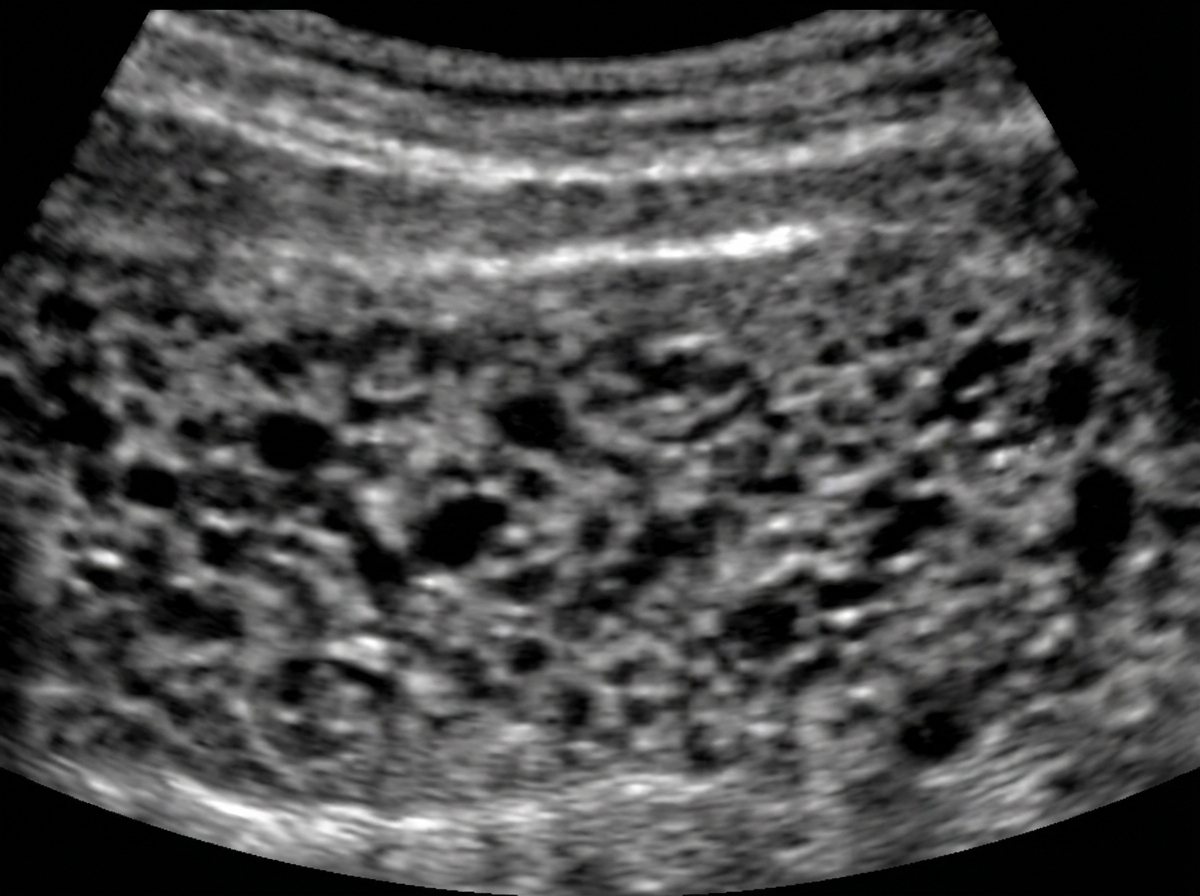
A 30-year-old woman comes to the primary care physician because she has felt nauseous and fatigued for 3 weeks. Menses occur at irregular 24- to 33-day intervals and last for 4–6 days. Her last menstrual period was 7 weeks ago. Her temperature is 37°C (98.6°F), pulse is 95/min, and blood pressure is 100/70 mm Hg. Pelvic examination shows an enlarged uterus. Her serum β-hCG concentration is 96,000 mIU/mL (N < 5). An abdominal ultrasound is shown. Which of the following is the most likely diagnosis?
A 44-year-old G2P2 African American woman presents to her gynecologist for dysmenorrhea. She reports that for the past few months, she has been having severe pain during her menses. She also endorses menstrual bleeding that has been heavier than usual. The patient reports that her cycles are regular and occur every 30 days, and she denies both dyspareunia and spotting between her periods. Her last menstrual period was two weeks ago. In terms of her obstetric history, the patient had two uncomplicated pregnancies, and she had no difficulty becoming pregnant. She has never had an abnormal pap smear. Her past medical history is otherwise significant for hyperlipidemia and asthma. On physical exam, the patient’s uterus is tender, soft, and enlarged to the size of a pregnant uterus at 10 weeks of gestation. She is non-tender during vaginal exam, without cervical motion tenderness or adnexal masses. Her BMI is 24 kg/m2. A urine pregnancy test is negative. Which of the following is the most likely diagnosis for this patient?
A 39-year-old woman, gravida 4, para 4, comes to the physician because of a 5-month history of painful, heavy menses. Menses previously occurred at regular 28-day intervals and lasted 3 days with normal flow. They now last 7–8 days and the flow is heavy with the passage of clots. Pelvic examination shows a tender, uniformly enlarged, flaccid uterus consistent in size with an 8-week gestation. A urine pregnancy test is negative. Which of the following is the most likely cause of this patient's findings?
Want unlimited practice?
Get full access to all questions, explanations, and performance tracking.
Scan to download app