A 32-year-old nulligravid woman comes to the physician because of 2 weeks of postcoital pain and blood-tinged vaginal discharge. She has been sexually active with one male partner for the past 3 months. They do not use condoms. Her only medication is a combined oral contraceptive that she has been taking for the past 2 years. She states that she takes the medication fairly consistently, but may forget a pill 2–3 days per month. One year ago, her Pap smear was normal. She has not received the HPV vaccine. The cervix is tender to motion on bimanual exam. There is bleeding when the cervix is touched with a cotton swab during speculum exam. Which of the following is the most likely diagnosis?
Q62
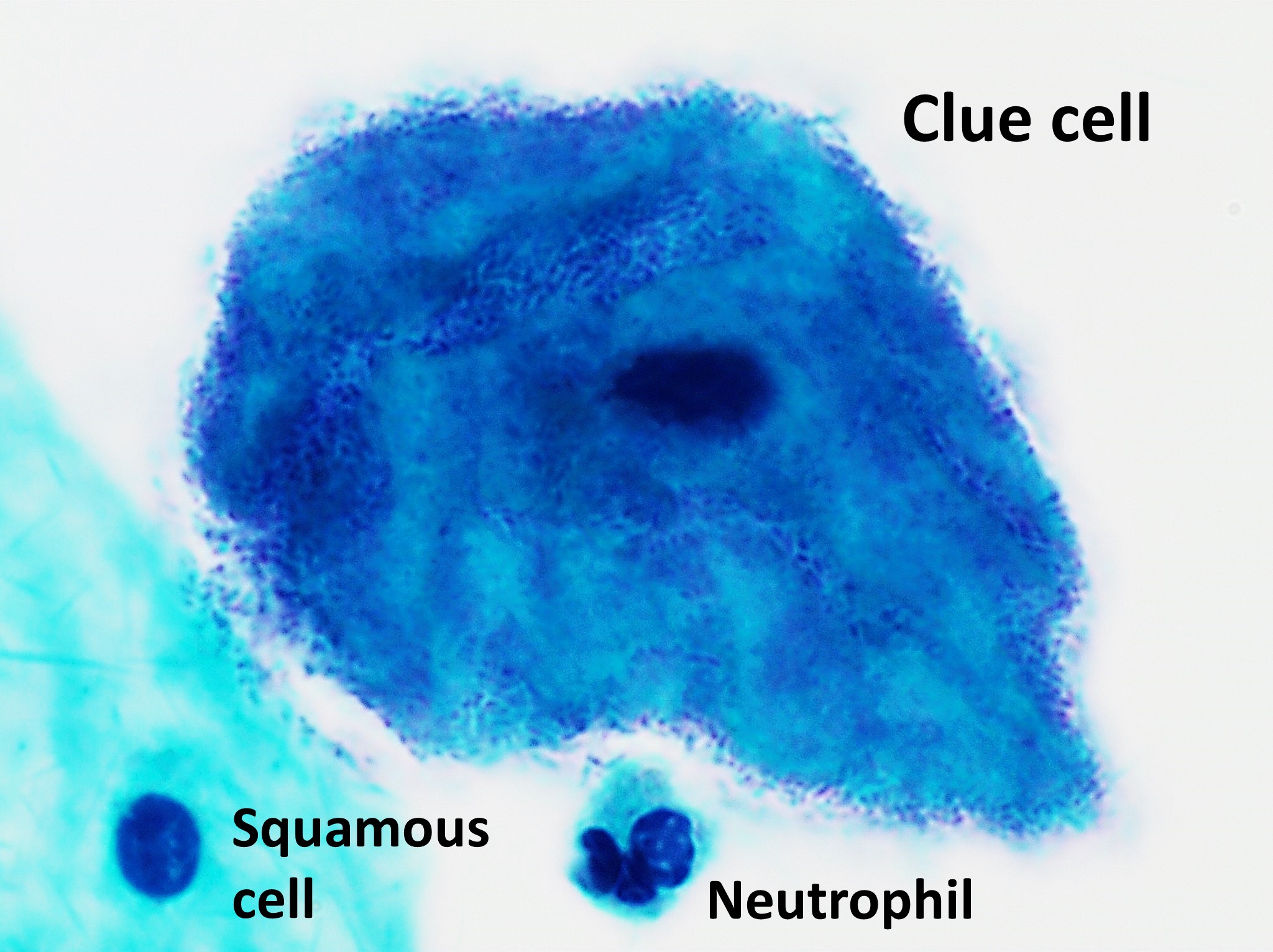
A 22-year-old woman presents to her physician with an increased vaginal discharge. She has no other complaints. She has recently changed her sexual partner, who claims to have no genitourinary symptoms. They do not use condoms. Her vital signs are as follows: blood pressure, 110/80 mm Hg; heart rate, 65/min; respiratory rate, 11/min; and temperature, 36.6℃ (97.9℉). Her physical examination is unremarkable. The gynecologic examination shows increased production of a white-yellow vaginal discharge. Wet mount microscopy shows the below picture. Which of the following treatments is indicated in this patient?
Q63
A 22-year-old woman presents to an outpatient clinic complaining of an increasing vaginal discharge over the last week. The discharge is foul-smelling. The menstrual cycles are regular and last 4–5 days. The patient denies postcoital or intermenstrual bleeding. The last menstrual period was 2 weeks ago. She mentions that she has been sexually active with 2 new partners for the past 2 months, but they use condoms inconsistently. The patient has no chronic conditions, no previous surgeries, and does not take any medications. She is afebrile. The blood pressure is 125/82 mm Hg, the pulse is 102/min, and the respiratory rate is 19/min. The physical examination reveals a thin, yellow-green discharge accompanied by a pink and edematous vagina and a red-tan cervix. Which of the following is the most likely diagnosis?
Q64
A 21-year-old woman comes to the physician because of multiple painful, purulent ulcers she noticed on her vulva 2 days ago. The patient has not had fever or burning with urination. She has no history of similar lesions. She had a chlamydial infection at 17 years of age that was treated with antibiotics. Her immunizations are up-to-date. She is sexually active with her boyfriend of 2 months and uses an oral contraceptive; they use condoms inconsistently. Her temperature is 37.2°C (99.0°F), pulse is 94/min, and blood pressure is 120/76 mm Hg. Examination shows tender inguinal lymphadenopathy. There are 4 tender, purulent 1.5-cm ulcers with a necrotic base along the labia majora. Which of the following is the most likely diagnosis?
Q65
A 37-year-old woman comes for a follow-up prenatal visit at 18 weeks' gestation. At 12 weeks' gestation, ultrasonography showed increased nuchal translucency and pregnancy-associated plasma protein A (PAPP-A) was decreased by 2 standard deviations. Chorionic villus sampling showed a 47, XX, +21 karyotype. During this visit, ultrasonography shows a hypoplastic nasal bone, shortened femur length, shortened middle phalanges of the fifth digits with clinodactyly. A quadruple marker test would most likely show which of the following sets of findings?
$$$ α-Fetoprotein (AFP) %%% Estriol %%% β-Human chorionic gonadotropin (HCG) %%% Inhibin A $$$
Q66
A 32-year-old woman, gravida 2, para 2, comes to the physician for the evaluation of a palpable mass in her right breast that she first noticed 1 week ago. She has no associated pain. She has never had a mammogram previously. She has type II diabetes mellitus treated with metformin. She has no family history of breast cancer. She has smoked half a pack of cigarettes daily for 15 years. Her temperature is 37°C (98.6°F), pulse is 78/min, respirations are 14/min, and blood pressure is 125/75 mm Hg. Examination shows a firm, nonpainful, nonmobile mass in the right upper quadrant of the breast. There is no nipple discharge. Examination of the skin and lymph nodes shows no abnormalities. No masses are palpated in the left breast. Which of the following is the most appropriate next step in the management of this patient?
Q67
A 24-year-old woman comes to the physician for a routine pelvic examination. She feels well. Menses occur at 30-day intervals and last 7 days. Her last menstrual period was 6 days ago. She has no history of abnormal Pap smears; her last Pap smear was 13 months ago. She is sexually active with three male partners and uses condoms consistently. She has never been tested for sexually transmitted infections. Her 54-year-old mother has breast cancer. She is up-to-date on her Tdap, MMR, and varicella vaccinations. Her temperature is 37.1°C (98.8°F), pulse is 68/min, and blood pressure is 108/68 mm Hg. Physical examination shows no abnormalities. In addition to HIV, gonorrhea, and chlamydia testing, which of the following is the most appropriate recommendation at this time?
Q68
A 28-year-old G2P1 female is concerned that she may give birth to another child with Down syndrome. She states that she may not be able to take care of another child with this disorder. Which of the following tests can confirm the diagnosis of Down syndrome in utero?
Q69
A 41-year-old woman comes to the physician because of bleeding from the nipple of her right breast for 3 months. There is no bleeding from the other breast. Menses occur at regular 30-day intervals and lasts for 5 days with moderate flow. Her last menstrual period was 1 week ago. Her mother died of breast cancer at the age of 53 years. She does not smoke or drink alcohol. She appears healthy. Her temperature is 37°C (98.7°F), pulse is 76/min, and blood pressure is 118/70 mm Hg. Cardiopulmonary examination shows no abnormalities. The abdomen is soft and nontender. Breast examination shows bleeding of the right breast on application of pressure with no palpable mass. The left breast shows no abnormalities. There is no palpable axillary lymphadenopathy. Pelvic examination shows a normal vagina and cervix. Ultrasonography shows a dilated duct enclosing a well-defined solitary mass. Which of the following is the most likely diagnosis?
Q70
A 57-year-old nulliparous woman comes to the physician 2 weeks after noticing a lump in her right breast. Her last mammogram was performed 4 years ago and showed no abnormalities. Menopause began 2 years ago, during which time the patient was prescribed hormone replacement therapy for severe hot flashes and vaginal dryness. Vital signs are within normal limits. Examination of the right breast shows a firm, nontender mass close to the nipple. There are no changes in the skin or nipple, and there is no palpable axillary adenopathy. The abdomen is soft and nontender; there is no organomegaly. Mammography shows a suspicious 2-cm mass adjacent to the nipple. Which of the following is the most appropriate next step in management?
Screening tests US Medical PG Practice Questions and MCQs
Question 61: A 32-year-old nulligravid woman comes to the physician because of 2 weeks of postcoital pain and blood-tinged vaginal discharge. She has been sexually active with one male partner for the past 3 months. They do not use condoms. Her only medication is a combined oral contraceptive that she has been taking for the past 2 years. She states that she takes the medication fairly consistently, but may forget a pill 2–3 days per month. One year ago, her Pap smear was normal. She has not received the HPV vaccine. The cervix is tender to motion on bimanual exam. There is bleeding when the cervix is touched with a cotton swab during speculum exam. Which of the following is the most likely diagnosis?
A. Uterine leiomyomas
B. Cervix trauma
C. Chlamydia infection (Correct Answer)
D. Early uterine pregnancy
E. Breakthrough bleeding
Explanation: ***Chlamydia infection***
- The presence of **postcoital pain, blood-tinged vaginal discharge, cervical motion tenderness, and friable cervix (bleeding on touch)** are classic signs of **cervicitis**, often caused by Chlamydia.
- Her new sexual partner, lack of condom use, and inconsistent oral contraceptive use increase her risk for **sexually transmitted infections (STIs)**.
*Uterine leiomyomas*
- These are benign uterine tumors that can cause **heavy menstrual bleeding**, **pelvic pressure**, and **infertility**, but typically not acute postcoital pain or blood-tinged discharge with cervical friability.
- **Submucosal fibroids** can cause abnormal bleeding, but it's usually not associated with cervical motion tenderness or friability.
*Cervix trauma*
- While trauma can cause bleeding, the description of **cervical motion tenderness** and **friability** points towards an underlying inflammatory process rather than simple trauma.
- Her symptoms have been present for **2 weeks**, suggesting an ongoing issue, not a one-time traumatic event.
*Early uterine pregnancy*
- Early pregnancy can cause some **spotting (implantation bleeding)**, but it typically does not present with significant **postcoital pain**, **cervical motion tenderness**, or profuse blood-tinged discharge.
- The use of **oral contraceptives**, even inconsistently, makes pregnancy less likely, although not impossible.
*Breakthrough bleeding*
- Breakthrough bleeding (BTB) is common with **oral contraceptive use**, especially with missed pills, but it usually presents as **irregular uterine bleeding** and not typically with **cervical motion tenderness** or a friable cervix.
- The presence of postcoital pain and cervical signs suggests an **infection** rather than just hormonal irregularities.
Question 62: A 22-year-old woman presents to her physician with an increased vaginal discharge. She has no other complaints. She has recently changed her sexual partner, who claims to have no genitourinary symptoms. They do not use condoms. Her vital signs are as follows: blood pressure, 110/80 mm Hg; heart rate, 65/min; respiratory rate, 11/min; and temperature, 36.6℃ (97.9℉). Her physical examination is unremarkable. The gynecologic examination shows increased production of a white-yellow vaginal discharge. Wet mount microscopy shows the below picture. Which of the following treatments is indicated in this patient?
A. Peroral metronidazole (Correct Answer)
B. Peroral cephalexin
C. Vaginal clindamycin gel
D. Vaginal probiotics
E. No treatment required in the patient with minor symptoms
Explanation: ***Peroral metronidazole***
- The wet mount microscopy showing **clue cells** (vaginal epithelial cells covered in bacteria) and the clinical presentation of increased vaginal discharge are highly suggestive of **bacterial vaginosis (BV)**.
- **Metronidazole** is the drug of choice for treating bacterial vaginosis, irrespective of symptom severity, to prevent complications and recurrence.
*Peroral cephalexin*
- **Cephalexin** is a cephalosporin antibiotic primarily used for bacterial infections like skin and soft tissue infections, urinary tract infections, and respiratory tract infections.
- It is **not effective** against the anaerobic bacteria responsible for bacterial vaginosis.
*Vaginal clindamycin gel*
- While **clindamycin** (topical or oral) is an alternative treatment option for bacterial vaginosis, **vaginal clindamycin gel** is primarily indicated when oral metronidazole is contraindicated or not tolerated.
- The use of vaginal gels ensures local delivery and is often preferred to oral treatment in patients with certain contraindications like nausea, vomiting, or metallic taste with oral metronidazole.
*Vaginal probiotics*
- **Vaginal probiotics** containing *Lactobacillus* species are used to restore the normal vaginal flora and may be helpful as an adjunct or for preventing recurrence.
- They are **not sufficient as a primary treatment** for an active bacterial infection causing symptomatic bacterial vaginosis.
*No treatment required in the patient with minor symptoms*
- Although the patient's only complaint is increased vaginal discharge, and she has no other symptoms of discomfort or pain, **bacterial vaginosis** should still be treated.
- Untreated BV can lead to complications such as **pelvic inflammatory disease**, increased risk of sexually transmitted infections, and adverse pregnancy outcomes.
Question 63: A 22-year-old woman presents to an outpatient clinic complaining of an increasing vaginal discharge over the last week. The discharge is foul-smelling. The menstrual cycles are regular and last 4–5 days. The patient denies postcoital or intermenstrual bleeding. The last menstrual period was 2 weeks ago. She mentions that she has been sexually active with 2 new partners for the past 2 months, but they use condoms inconsistently. The patient has no chronic conditions, no previous surgeries, and does not take any medications. She is afebrile. The blood pressure is 125/82 mm Hg, the pulse is 102/min, and the respiratory rate is 19/min. The physical examination reveals a thin, yellow-green discharge accompanied by a pink and edematous vagina and a red-tan cervix. Which of the following is the most likely diagnosis?
A. Trichomonas vaginalis infection (Correct Answer)
B. Bacterial vaginosis
C. Candida vaginitis
D. Latex allergy
E. Physiologic leukorrhea
Explanation: ***Trichomonas vaginalis infection***
- The presence of a **foul-smelling, thin, yellow-green discharge**, combined with a **pink, edematous vagina** and **red-tan cervix** ("strawberry cervix") in a sexually active patient, is highly characteristic of *Trichomonas vaginalis* infection.
- Inconsistent condom use with new partners increases the risk of acquiring sexually transmitted infections like trichomoniasis.
*Bacterial vaginosis*
- Typically presents with a **foul-smelling, thin, gray-white discharge** and a **fishy odor**, especially after intercourse, but does not usually cause the marked vaginal inflammation described.
- The vagina and cervix are usually not overtly inflamed or erythematous, distinguishing it from the findings presented here.
*Candida vaginitis*
- Characterized by thick, **white, "cottage cheese-like" discharge**, often accompanied by severe **itching** and vaginal soreness, which is not consistent with the described yellow-green, thin discharge.
- While redness can occur, the discharge characteristic is distinctly different.
*Latex allergy*
- Would likely present with **itching, irritation, and redness** primarily in areas of contact with latex (e.g., vulva), but usually does not produce a significant amount of **foul-smelling discharge**.
- Systemic symptoms or a specific type of discharge like that described are not typical for a localized allergic reaction.
*Physiologic leukorrhea*
- Refers to a **normal, clear or whitish, odorless vaginal discharge** that can vary in consistency throughout the menstrual cycle.
- It would not be foul-smelling or discolored (yellow-green), nor would it cause significant inflammation and edema of the vagina and cervix.
Question 64: A 21-year-old woman comes to the physician because of multiple painful, purulent ulcers she noticed on her vulva 2 days ago. The patient has not had fever or burning with urination. She has no history of similar lesions. She had a chlamydial infection at 17 years of age that was treated with antibiotics. Her immunizations are up-to-date. She is sexually active with her boyfriend of 2 months and uses an oral contraceptive; they use condoms inconsistently. Her temperature is 37.2°C (99.0°F), pulse is 94/min, and blood pressure is 120/76 mm Hg. Examination shows tender inguinal lymphadenopathy. There are 4 tender, purulent 1.5-cm ulcers with a necrotic base along the labia majora. Which of the following is the most likely diagnosis?
A. Chancroid (Correct Answer)
B. Genital herpes
C. Lymphogranuloma venereum
D. Chancre
E. Granuloma inguinale
Explanation: ***Chancroid***
- The presence of **multiple, painful, purulent ulcers with a necrotic base** on the vulva, accompanied by **tender inguinal lymphadenopathy**, is highly characteristic of chancroid, caused by *Haemophilus ducreyi*.
- The patient's history of inconsistent condom use and recent sexual activity further supports this diagnosis.
*Genital herpes*
- Herpes lesions are typically **multiple, painful vesicles** that progress to ulcers, but they are usually **shallow** and heal within weeks; purulent drainage and a necrotic base are less common.
- While often painful, the ulcers are not typically described as having a **necrotic base** or significant purulence and usually present with prodromal symptoms like itching or tingling.
*Lymphogranuloma venereum*
- This condition typically presents initially with a **transient, painless papule or ulcer (chancre)** that often goes unnoticed, followed by progression to painful, suppurative lymphadenopathy (**buboes**).
- The primary lesion is usually **small and quickly resolves**, unlike the prominent, painful, purulent ulcers seen in this patient.
*Chancre*
- A chancre, associated with **primary syphilis**, is typically a **single, painless ulcer** with a clean base and raised, firm borders.
- The patient's ulcers are described as **multiple, painful, and purulent with a necrotic base**, which is inconsistent with a syphilitic chancre.
*Granuloma inguinale*
- This condition is characterized by **painless, Beefy-red, friable ulcers** that slowly enlarge; they are typically not purulent or necrotic.
- Although it can cause extensive tissue destruction, the characteristic features of large, painful, purulent necrotic ulcers are not typical for granuloma inguinale.
Question 65: A 37-year-old woman comes for a follow-up prenatal visit at 18 weeks' gestation. At 12 weeks' gestation, ultrasonography showed increased nuchal translucency and pregnancy-associated plasma protein A (PAPP-A) was decreased by 2 standard deviations. Chorionic villus sampling showed a 47, XX, +21 karyotype. During this visit, ultrasonography shows a hypoplastic nasal bone, shortened femur length, shortened middle phalanges of the fifth digits with clinodactyly. A quadruple marker test would most likely show which of the following sets of findings?
$$$ α-Fetoprotein (AFP) %%% Estriol %%% β-Human chorionic gonadotropin (HCG) %%% Inhibin A $$$
A. ↓ ↓ ↓ ↓
B. ↑ normal normal normal
C. ↓ ↓ ↑ ↑ (Correct Answer)
D. Normal normal normal normal
E. ↓ ↓ ↓ normal
Explanation: ***↓ ↓ ↑ ↑***
- This pattern (low **AFP**, low **estriol**, high **hCG**, high **inhibin A**) is characteristic of **Down syndrome (Trisomy 21)** in a quadruple marker screen.
- The patient's history, including **increased nuchal translucency**, low **PAPP-A**, and a **47, XX, +21 karyotype**, strongly confirms the diagnosis of Down syndrome, making this a consistent finding.
*↓ ↓ ↓ ↓*
- This pattern of uniformly low markers is not typical for **Down syndrome** and would more commonly suggest other chromosomal abnormalities or a different fetal condition altogether.
- While some markers are low in Down syndrome, the elevation of **hCG** and **inhibin A** is a key differentiator.
*↑ normal normal normal*
- An isolated elevated **AFP** is commonly associated with neural tube defects or ventral wall defects, which are not suggested by the patient's presentation.
- Down syndrome invariably affects multiple markers in a specific pattern, not just one.
*Normal normal normal normal*
- Normal quadruple markers would indicate a low risk for **chromosomal aneuploidies**, which contradicts the patient's confirmed diagnosis of **Down syndrome (47, XX, +21)**.
- This option is inconsistent with the presented clinical and previous genetic findings.
*↓ ↓ ↓ normal*
- This pattern does not align with the typical profile for **Down syndrome**, which characteristically shows elevated **hCG** and **inhibin A**.
- While **AFP** and **estriol** are decreased in Down syndrome, the normal inhibin A makes this option incorrect.
Question 66: A 32-year-old woman, gravida 2, para 2, comes to the physician for the evaluation of a palpable mass in her right breast that she first noticed 1 week ago. She has no associated pain. She has never had a mammogram previously. She has type II diabetes mellitus treated with metformin. She has no family history of breast cancer. She has smoked half a pack of cigarettes daily for 15 years. Her temperature is 37°C (98.6°F), pulse is 78/min, respirations are 14/min, and blood pressure is 125/75 mm Hg. Examination shows a firm, nonpainful, nonmobile mass in the right upper quadrant of the breast. There is no nipple discharge. Examination of the skin and lymph nodes shows no abnormalities. No masses are palpated in the left breast. Which of the following is the most appropriate next step in the management of this patient?
A. MRI scan of the breast
B. Core needle biopsy
C. Monthly self-breast exams
D. Breast ultrasound (Correct Answer)
E. BRCA gene testing
Explanation: ***Breast ultrasound***
- In women under 40, **breast tissue is often dense**, making mammography less effective, hence ultrasound is the initial imaging modality of choice for characterising breast masses.
- Ultrasound can differentiate well between **solid and cystic masses**, providing crucial information for further management irrespective of the character of the mass.
*MRI scan of the breast*
- **MRI is typically reserved for high-risk screening** or for further evaluation after abnormal mammogram/ultrasound findings, not as a primary diagnostic tool for an initial palpable mass in a low-risk patient.
- It has a high sensitivity but can also have a **high false-positive rate**, leading to unnecessary biopsies.
*Core needle biopsy*
- A biopsy is the **definitive diagnostic step** for characterizing a solid mass, but imaging, like an ultrasound, is usually performed *first* to determine the nature of the mass (solid vs. cystic) and to guide the biopsy.
- Direct biopsy without prior imaging might be less accurate if the mass is cystic or not well-localized.
*Monthly self-breast exams*
- While **self-breast exams** are encouraged for breast awareness, they are **not a diagnostic tool** for evaluating a new, palpable, non-regressing mass.
- A new, palpable mass requires immediate medical evaluation and diagnostic imaging rather than simply monitoring.
*BRCA gene testing*
- **BRCA testing** is indicated for individuals with a **strong family history of breast or ovarian cancer**, early-onset cancers, or other specific genetic predispositions.
- This patient has no reported family history of breast cancer and no other high-risk features to warrant genetic testing at this initial stage.
Question 67: A 24-year-old woman comes to the physician for a routine pelvic examination. She feels well. Menses occur at 30-day intervals and last 7 days. Her last menstrual period was 6 days ago. She has no history of abnormal Pap smears; her last Pap smear was 13 months ago. She is sexually active with three male partners and uses condoms consistently. She has never been tested for sexually transmitted infections. Her 54-year-old mother has breast cancer. She is up-to-date on her Tdap, MMR, and varicella vaccinations. Her temperature is 37.1°C (98.8°F), pulse is 68/min, and blood pressure is 108/68 mm Hg. Physical examination shows no abnormalities. In addition to HIV, gonorrhea, and chlamydia testing, which of the following is the most appropriate recommendation at this time?
A. HPV vaccination (Correct Answer)
B. Mammography
C. HPV testing
D. Pregnancy test
E. Syphilis testing
Explanation: ***HPV vaccination***
- This patient is 24 years old, which is within the recommended age range for **HPV vaccination** (**up to age 26** for catch-up vaccination).
- Her multiple sexual partners and consistent condom use do not eliminate the risk of HPV infection, making vaccination a crucial preventive measure against **cervical cancer** and other HPV-related conditions.
*Mammography*
- **Mammography screening** is typically recommended starting at age 40 or 50, although earlier screening may be considered for high-risk individuals.
- While her mother has breast cancer, the patient's young age of 24 makes mammography generally **not indicated** at this time, as the risk-benefit profile does not favor early screening without other significant risk factors or symptoms.
*HPV testing*
- **HPV testing** is typically recommended as part of cervical cancer screening for women **aged 30 and older**, either alone or co-tested with a Pap smear.
- At age 24, a Pap smear alone is generally sufficient if recommended, and HPV testing is not routinely performed unless the Pap smear results are abnormal.
*Pregnancy test*
- The patient reports regular menses at 30-day intervals, with her last menstrual period occurring 6 days ago, indicating she is currently **menstruating or recently finished** her period.
- There are no symptoms suggestive of pregnancy, making a pregnancy test **unnecessary** at this routine visit.
*Syphilis testing*
- While the patient is sexually active with multiple partners, increasing her risk for STIs, **syphilis testing** was not explicitly mentioned as a recommended additional test in the question's premise.
- The question asks for the *most appropriate additional recommendation* beyond HIV, gonorrhea, and chlamydia testing, implying a focus on broad preventative health or screening not already covered.
Question 68: A 28-year-old G2P1 female is concerned that she may give birth to another child with Down syndrome. She states that she may not be able to take care of another child with this disorder. Which of the following tests can confirm the diagnosis of Down syndrome in utero?
A. Ultrasound
B. Triple marker test
C. Integrated test
D. Quadruple marker test
E. Amniocentesis (Correct Answer)
Explanation: ***Amniocentesis***
- **Amniocentesis** is a **diagnostic procedure** that involves collecting amniotic fluid to obtain fetal cells for **karyotyping**, which can definitively confirm the presence of an extra chromosome 21, the cause of Down syndrome.
- This test is typically performed between **15 and 20 weeks of gestation** and carries a small risk of complication but offers conclusive results.
*Ultrasound*
- **Ultrasound** is a **screening tool** that can detect anatomical features suggestive of Down syndrome, such as **nuchal translucency** or heart defects, but it cannot definitively diagnose the condition.
- It identifies **markers** that increase the suspicion of Down syndrome, prompting further diagnostic testing, but does not provide genetic confirmation.
*Triple marker test*
- The **triple marker test** is a **screening test** that measures levels of **alpha-fetoprotein (AFP)**, **unconjugated estriol (uE3)**, and **human chorionic gonadotropin (hCG)** in maternal blood.
- While it can estimate the risk of Down syndrome, it is not a diagnostic test and only provides a **risk assessment**, not a definitive diagnosis.
*Integrated test*
- The **integrated test** combines results from first-trimester screening (nuchal translucency and PAPP-A) and second-trimester screening (quadruple marker test) to provide a **single risk assessment**.
- Like other screening tests, it calculates a **risk probability** for Down syndrome but does not offer a definitive diagnosis.
*Quadruple marker test*
- The **quadruple marker test** measures AFP, uE3, hCG, and **inhibin A** in maternal blood during the second trimester.
- It is a **screening test** used to assess the risk of Down syndrome and open neural tube defects, but it is not a diagnostic tool.
Question 69: A 41-year-old woman comes to the physician because of bleeding from the nipple of her right breast for 3 months. There is no bleeding from the other breast. Menses occur at regular 30-day intervals and lasts for 5 days with moderate flow. Her last menstrual period was 1 week ago. Her mother died of breast cancer at the age of 53 years. She does not smoke or drink alcohol. She appears healthy. Her temperature is 37°C (98.7°F), pulse is 76/min, and blood pressure is 118/70 mm Hg. Cardiopulmonary examination shows no abnormalities. The abdomen is soft and nontender. Breast examination shows bleeding of the right breast on application of pressure with no palpable mass. The left breast shows no abnormalities. There is no palpable axillary lymphadenopathy. Pelvic examination shows a normal vagina and cervix. Ultrasonography shows a dilated duct enclosing a well-defined solitary mass. Which of the following is the most likely diagnosis?
A. Invasive ductal carcinoma
B. Intraductal papilloma (Correct Answer)
C. Papillary carcinoma
D. Paget disease of the breast
E. Phyllodes tumor
Explanation: ***Intraductal papilloma***
- The presentation of **unilateral, bloody nipple discharge** without a palpable mass is highly characteristic of an **intraductal papilloma**.
- Ultrasonography showing a **dilated duct enclosing a well-defined solitary mass** further supports this diagnosis, as these are benign proliferations within the mammary ducts.
*Invasive ductal carcinoma*
- While breast cancer can cause nipple discharge, it often presents with a **palpable mass**, skin changes, or axillary lymphadenopathy, none of which are noted here.
- Bloody nipple discharge in carcinoma is more likely to be associated with an **ill-defined or irregular mass** on imaging, rather than a solitary, well-defined mass within a dilated duct.
*Papillary carcinoma*
- This is a malignant tumor that can present with bloody nipple discharge and may appear as a mass within a dilated duct, similar to papilloma.
- However, papillary carcinoma is generally **less common** than benign intraductal papillomas and would typically be differentiated through biopsy, which is not yet performed.
*Paget disease of the breast*
- Characterized by **eczematous changes** of the nipple and areola, which are not described in this patient.
- It usually indicates an underlying **ductal carcinoma in situ (DCIS)** or invasive cancer, and the primary symptom is typically a rash.
*Phyllodes tumor*
- Typically presents as a **rapidly growing, palpable breast mass** that can be large, and it rarely causes nipple discharge.
- These tumors are stromal in origin and are usually felt as a distinct lump rather than a mass within a duct.
Question 70: A 57-year-old nulliparous woman comes to the physician 2 weeks after noticing a lump in her right breast. Her last mammogram was performed 4 years ago and showed no abnormalities. Menopause began 2 years ago, during which time the patient was prescribed hormone replacement therapy for severe hot flashes and vaginal dryness. Vital signs are within normal limits. Examination of the right breast shows a firm, nontender mass close to the nipple. There are no changes in the skin or nipple, and there is no palpable axillary adenopathy. The abdomen is soft and nontender; there is no organomegaly. Mammography shows a suspicious 2-cm mass adjacent to the nipple. Which of the following is the most appropriate next step in management?
A. Mastectomy
B. Measurement of serum CA 15–3
C. Core needle biopsy (Correct Answer)
D. Fine needle aspiration
E. Bone scan
Explanation: ***Core needle biopsy***
- A **core needle biopsy** is the most appropriate next step to obtain a definitive diagnosis for a suspicious breast mass identified on mammography and clinical exam.
- It provides **tissue for histopathological examination**, allowing for precise classification of the tumor (e.g., invasive ductal carcinoma, lobular carcinoma), grading, and receptor status analysis (estrogen, progesterone, HER2), which are crucial for treatment planning.
*Mastectomy*
- **Mastectomy** is a surgical procedure for breast cancer removal but should only be performed **after a definitive diagnosis** has been established through biopsy.
- Proceeding directly to mastectomy without a biopsy risks unnecessary surgery if the mass proves to be benign.
*Measurement of serum CA 15–3*
- **CA 15-3** is a tumor marker that may be elevated in some patients with **advanced breast cancer**, but it is generally *not* sensitive or specific enough for diagnosis or initial staging.
- Its utility is primarily in **monitoring treatment response** or recurrence in patients with known metastatic disease, not for initial evaluation of a suspicious mass.
*Fine needle aspiration*
- **Fine needle aspiration** (FNA) can differentiate between solid and cystic masses and *may* provide cytological diagnosis, but it often does not provide enough tissue to determine invasiveness or perform complete receptor status analysis.
- A **core needle biopsy** is preferred as it yields more tissue for comprehensive pathology, which is critical for treatment decisions.
*Bone scan*
- A **bone scan** is used to detect **bone metastases** in patients with established breast cancer, particularly those with higher stages or symptoms suggestive of bone involvement.
- It is **not indicated as an initial diagnostic step** for a suspicious breast mass before a definitive diagnosis of cancer has been made and staging initiated.