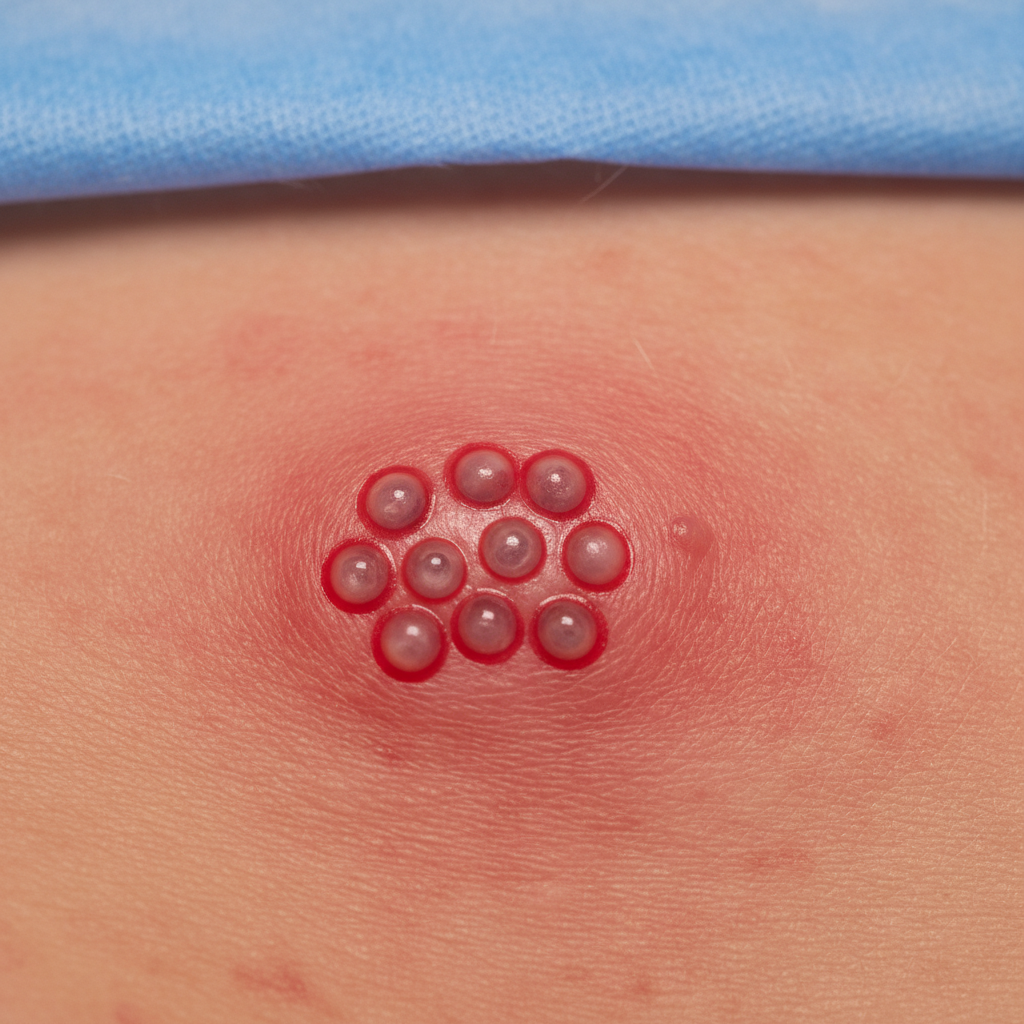
A 30-year-old woman presents to her primary care provider complaining of intermittent fever and loss of appetite for the past 2 weeks. She is also concerned about painful genital lesions. Past medical history is noncontributory. She takes oral contraceptives and a multivitamin daily. She has had two male sexual partners in her lifetime and uses condoms inconsistently. She admits to being sexually active with 2 partners in the last 3 months and only using condoms on occasion. Today, her vitals are normal. On pelvic exam, there are red-rimmed, fluid-filled blisters over the labia minora (as seen in the photograph below) with swollen and tender inguinal lymph nodes. Which of the following is the most likely diagnosis of this patient?
Q122
A previously healthy 19-year-old woman comes to the physician because of vaginal discharge for 3 days. She describes the discharge as yellow and mucopurulent with a foul odor. She has also noticed vaginal bleeding after sexual activity. She has not had any itching or irritation. Her last menstrual period was 2 weeks ago. She is sexually active with one male partner, and they use condoms inconsistently. A rapid urine hCG test is negative. Her temperature is 37.3°C (99.1°F), pulse is 88/min, and blood pressure is 108/62 mm Hg. Pelvic examination shows a friable cervix. Speculum examination is unremarkable. A wet mount shows no abnormalities. Which of the following is the most appropriate diagnostic test?
Q123
A 38-year-old woman makes an appointment with her family physician for a routine check-up after being away due to travel for 1 year. She recently had a screening Pap smear, which was negative for malignancy. Her past medical history is significant for a Pap smear 2 years ago that reported a low-grade squamous intraepithelial lesion (LSIL). A subsequent colposcopy diagnosed high-grade cervical intraepithelial neoplasia (CIN2). The patient is surprised by the differences in her diagnostic tests. You explain to her the basis for the difference and reassure her. With this in mind, which of the following HPV serotypes is most likely to be present in the patient?
Q124
A 38-year-old G2P2 presents to her gynecologist to discuss the results of her diagnostic tests. She has no current complaints or concurrent diseases. She underwent a tubal ligation after her last pregnancy. Her last Pap smear showed a high-grade squamous intraepithelial lesion and a reflex HPV test was positive. Colposcopic examination reveals areas of thin acetowhite epithelium with diffuse borders and fine punctation. The biopsy obtained from the suspicious areas shows CIN 1. Note the discordancy between the cytology (HSIL) and histology (CIN 1) results. Which of the following is an appropriate next step in the management of this patient?
Q125
A 19-year-old woman presents to her gynecologist for evaluation of amenorrhea and occasional dull right-sided lower abdominal pain that radiates to the rectum. She had menarche at 11 years of age and had regular 28-day cycles by 13 years of age. She developed menstrual cycle irregularity approximately 2 years ago and has not had a menses for 6 months. She is not sexually active. She does not take any medications. Her weight is 94 kg (207.2 lb) and her height is 166 cm (5.4 ft). Her vital signs are within normal limits. The physical examination shows a normal hair growth pattern. No hair loss or acne are noted. There is black discoloration of the skin in the axillae and posterior neck. Palpation of the abdomen reveals slight tenderness in the right lower quadrant, but no masses are appreciated. The gynecologic examination reveals no abnormalities. The hymen is intact. The rectal examination reveals a non-tender, mobile, right-sided adnexal mass. Which of the following management plans would be best for this patient?
Q126
A 24-year-old woman presents to her gynecologist complaining of mild pelvic discomfort and a frothy, yellowish discharge from her vagina for the past 2 weeks. She also complains of pain during sexual intercourse and sometimes after urination. Her past medical history is noncontributory. She takes oral contraceptives and a multivitamin daily. She has had two male sexual partners in her lifetime and uses condoms inconsistently. Today, her vitals are normal. On pelvic exam, she has vulvovaginal erythema and a 'strawberry cervix' that is tender to motion, with minimal green-yellow malodorous discharge. A swab of the vaginal wall is analyzed for pH at bedside. Vaginal pH is 5.8. Which of the following is the most likely diagnosis for this patient?
Q127
A 32-year-old woman, gravida 2, para 1, at 14-weeks' gestation comes to the physician for a prenatal visit. Routine first trimester screening shows increased nuchal translucency, decreased β-hCG concentration, and decreased levels of pregnancy-associated plasma protein A. Amniocentesis shows trisomy of chromosome 13. This fetus is at increased risk for which of the following?
Q128
A 42-year-old woman comes to the physician because of vaginal discharge for 3 days. She has no dysuria, dyspareunia, pruritus, or burning. The patient is sexually active with two male partners and uses condoms inconsistently. She often douches between sexual intercourse. Pelvic examination shows thin and off-white vaginal discharge. The pH of the discharge is 5.1. Wet mount exam shows a quarter of her vaginal epithelial cells are covered with small coccobacilli. Which of the following is the most appropriate next step in management?
Q129
A 32-year-old nulliparous woman with polycystic ovary syndrome comes to the physician for a pelvic examination and Pap smear. Last year she had a progestin-releasing intrauterine device placed. Menarche occurred at the age of 10 years. She became sexually active at the age of 14 years. Her mother had breast cancer at the age of 51 years. She is 165 cm (5 ft 5 in) tall and weighs 79 kg (174 lb); BMI is 29 kg/m2. Examination shows mild facial acne. A Pap smear shows high-grade cervical intraepithelial neoplasia. Which of the following is this patient's strongest predisposing factor for developing this condition?
Q130
A 34-year-old woman makes an appointment with her gynecologist because she has been having foul smelling vaginal discharge. She says that the symptoms started about a week ago, but she can't think of any particular trigger associated with the onset of symptoms. She says that otherwise she has not experienced any pain or discomfort associated with these discharges. She has never been pregnant and currently has multiple sexual partners with whom she uses protection consistently. She has no other medical history though she says that her family has a history of reproductive system malignancy. Physical exam reveals a normal appearing vulva, and a sample of the vaginal discharge reveals gray fluid. Which of the following characteristics is associated with the most likely cause of this patient's disorder?
Screening tests US Medical PG Practice Questions and MCQs
Question 121: A 30-year-old woman presents to her primary care provider complaining of intermittent fever and loss of appetite for the past 2 weeks. She is also concerned about painful genital lesions. Past medical history is noncontributory. She takes oral contraceptives and a multivitamin daily. She has had two male sexual partners in her lifetime and uses condoms inconsistently. She admits to being sexually active with 2 partners in the last 3 months and only using condoms on occasion. Today, her vitals are normal. On pelvic exam, there are red-rimmed, fluid-filled blisters over the labia minora (as seen in the photograph below) with swollen and tender inguinal lymph nodes. Which of the following is the most likely diagnosis of this patient?
A. Syphilis
B. Trichomoniasis
C. Condyloma acuminata
D. Genital herpes (Correct Answer)
E. Gonorrhea
Explanation: ***Genital herpes***
- The presence of **red-rimmed, fluid-filled blisters** on the labia minora, along with **intermittent fever** and **loss of appetite**, is highly characteristic of a primary **herpes simplex virus (HSV)** infection.
- The **swollen and tender inguinal lymph nodes** are also a common finding in the acute phase of genital herpes, reflecting the body's immune response to the viral infection.
*Syphilis*
- **Primary syphilis** typically presents as a single, painless ulcer called a **chancre**, which is firm and has raised borders, unlike the described painful blisters.
- While syphilis can cause lymphadenopathy, the initial lesion morphology described does not fit the common presentation of a chancre.
*Trichomoniasis*
- This is a parasitic infection that primarily causes **vaginitis**, leading to symptoms like frothy, yellow-green vaginal discharge, vaginal itching, and dyspareunia.
- It does not typically cause the formation of **genital blisters** or systemic symptoms like fever.
*Condyloma acuminata*
- These are **genital warts** caused by the **human papillomavirus (HPV)**, which typically present as soft, fleshy, cauliflower-like growths.
- They are not fluid-filled blisters and do not usually present with fever or widespread lymphadenopathy.
*Gonorrhea*
- Gonorrhea is a bacterial infection that often causes **urethritis** or cervicitis, leading to symptoms such as dysuria, vaginal discharge, or pelvic pain.
- It does not cause **vesicular lesions** on the labia and systemic symptoms like fever are less common in uncomplicated cases.
Question 122: A previously healthy 19-year-old woman comes to the physician because of vaginal discharge for 3 days. She describes the discharge as yellow and mucopurulent with a foul odor. She has also noticed vaginal bleeding after sexual activity. She has not had any itching or irritation. Her last menstrual period was 2 weeks ago. She is sexually active with one male partner, and they use condoms inconsistently. A rapid urine hCG test is negative. Her temperature is 37.3°C (99.1°F), pulse is 88/min, and blood pressure is 108/62 mm Hg. Pelvic examination shows a friable cervix. Speculum examination is unremarkable. A wet mount shows no abnormalities. Which of the following is the most appropriate diagnostic test?
A. Pap smear
B. Nucleic acid amplification test (Correct Answer)
C. Colposcopy
D. Tzanck smear
E. Gram stain of cervical swab
Explanation: **Nucleic acid amplification test (NAAT)**
- The patient's symptoms (mucopurulent discharge, postcoital bleeding, friable cervix) are highly suggestive of **cervicitis**, particularly due to **Chlamydia trachomatis** or **Neisseria gonorrhoeae**.
- **NAAT** is the most sensitive and specific diagnostic test for these infections, which are common causes of mucopurulent cervicitis, even when a wet mount is negative.
*Pap smear*
- A **Pap smear** screens for **cervical dysplasia** and **cervical cancer**, not infectious causes of cervicitis.
- While it might coincidentally show inflammatory changes, it is not the primary diagnostic tool for identifying the causative organism of her acute symptoms.
*Colposcopy*
- **Colposcopy** is used for the detailed examination of the cervix, vagina, and vulva when an abnormal Pap smear result suggests **cervical lesions** or cancer.
- It is not indicated for the initial diagnosis of cervicitis unless specific abnormalities that warrant biopsy are identified.
*Tzanck smear*
- A **Tzanck smear** is used to identify **multinucleated giant cells** and **intranuclear inclusions**, characteristic of **herpes simplex virus (HSV)** infection.
- The patient's symptoms (mucopurulent discharge, no itching, no vesicular lesions) are not typical for a primary HSV outbreak.
*Gram stain of cervical swab*
- While a **Gram stain** can identify some bacteria, it has poor sensitivity and specificity for diagnosing **gonococcal** or **chlamydial cervicitis** in women.
- NAATs have largely replaced Gram stain for this purpose due to superior accuracy.
Question 123: A 38-year-old woman makes an appointment with her family physician for a routine check-up after being away due to travel for 1 year. She recently had a screening Pap smear, which was negative for malignancy. Her past medical history is significant for a Pap smear 2 years ago that reported a low-grade squamous intraepithelial lesion (LSIL). A subsequent colposcopy diagnosed high-grade cervical intraepithelial neoplasia (CIN2). The patient is surprised by the differences in her diagnostic tests. You explain to her the basis for the difference and reassure her. With this in mind, which of the following HPV serotypes is most likely to be present in the patient?
A. HPV 33
B. HPV 16 (Correct Answer)
C. HPV 6
D. HPV 31
E. HPV 18
Explanation: ***HPV 16***
- HPV 16 is the most common **high-risk HPV serotype**, responsible for approximately 50-60% of all **cervical cancers** and a high percentage of **high-grade cervical intraepithelial neoplasia (CIN2/3)**. The progression from LSIL to CIN2 in this patient suggests infection with a high-risk type, making HPV 16 the most likely candidate.
- Given the patient's history of CIN2, a lesion of high-grade dysplasia, it is highly probable that she is infected with one of the most oncogenic HPV types, of which HPV 16 is paramount in prevalence.
*HPV 33*
- HPV 33 is a **high-risk HPV type** but is less prevalent than HPV 16 and 18 in causing cervical lesions. While it can cause CIN2, it is not the *most likely* serotype.
- It accounts for a smaller proportion of cervical cancers and high-grade dysplasias compared to HPV 16.
*HPV 6*
- HPV 6 is a **low-risk HPV type** primarily associated with **genital warts (condyloma acuminata)** and **low-grade squamous intraepithelial lesions (LSIL)** that typically do not progress to CIN2 or cervical cancer.
- Its presence would be inconsistent with the development of CIN2, as low-risk types are rarely implicated in high-grade dysplasia or malignancy.
*HPV 31*
- HPV 31 is another **high-risk HPV type** capable of causing **CIN2** and cervical cancer. However, it is less common than HPV 16.
- While plausible, HPV 16 remains statistically the most probable cause of CIN2.
*HPV 18*
- HPV 18 is a **high-risk HPV type** and is the second most common cause of **cervical cancer**, particularly **adenocarcinoma**. It is also associated with high-grade squamous lesions.
- While HPV 18 is a strong contender for high-grade lesions like CIN2, HPV 16 is still more frequently implicated in squamous cell carcinoma precursors.
Question 124: A 38-year-old G2P2 presents to her gynecologist to discuss the results of her diagnostic tests. She has no current complaints or concurrent diseases. She underwent a tubal ligation after her last pregnancy. Her last Pap smear showed a high-grade squamous intraepithelial lesion and a reflex HPV test was positive. Colposcopic examination reveals areas of thin acetowhite epithelium with diffuse borders and fine punctation. The biopsy obtained from the suspicious areas shows CIN 1. Note the discordancy between the cytology (HSIL) and histology (CIN 1) results. Which of the following is an appropriate next step in the management of this patient?
A. Test for type 16 and 18 HPV
B. Cryoablation
C. Cold-knife conization
D. Loop electrosurgical excision procedure
E. Repeat cytology and HPV co-testing in 6 months (Correct Answer)
Explanation: ***Repeat cytology and HPV co-testing in 6 months***
- In cases of **discordant results** where cytology shows **HSIL** but histology only shows **CIN 1**, repeat co-testing in 6 months is an appropriate management strategy, especially if the **colposcopy was satisfactory** (entire squamocolumnar junction visualized). This approach allows for monitoring while avoiding overtreatment, as many low-grade lesions spontaneously regress.
- Given the patient's history (G2P2, tubal ligation), future fertility is not a concern, making conservative management suitable when there's uncertainty about the severity of the lesion.
*Test for type 16 and 18 HPV*
- The patient already has a **positive reflex HPV test**, indicating the presence of high-risk HPV. Knowing the specific types (16 or 18) would assist in risk stratification, but it would not change the immediate management given the existing discordance between HSIL cytology and CIN 1 histology.
- While **HPV 16 and 18** are associated with a higher risk of progression to cancer, current guidelines for discordant HSIL/CIN 1 emphasize observation or excisional procedures based on other factors, not just specific HPV typing if HPV is already confirmed as positive.
*Cryoablation*
- **Cryoablation** is an ablative treatment that destroys abnormal cervical tissue. It is typically reserved for confirmed **CIN 2 or CIN 3** with a satisfactory colposcopy, when there is no suspicion of invasive cancer.
- Applying an ablative treatment like cryoablation based on discordant results (HSIL with CIN 1) without further clarification could lead to overtreatment, and it may not fully address the possibility of a missed higher-grade lesion elsewhere.
*Cold-knife conization*
- **Cold-knife conization** is an excisional procedure used to remove a cone-shaped piece of cervical tissue, typically for confirmed **CIN 2 or CIN 3**, or when **colposcopy is unsatisfactory**, or there's a suspicion of invasive disease, or glandular lesions.
- Performing a conization based on HSIL cytology but only CIN 1 histology, without further investigation or follow-up, is premature and unnecessarily aggressive given the potential for an overestimation of disease severity by cytology alone.
*Loop electrosurgical excision procedure*
- **LEEP** is an excisional procedure commonly used for the management of **high-grade cervical intraepithelial neoplasia (CIN 2 or CIN 3)** or when there is a significant discrepancy between cytology and histology that suggests a higher-grade lesion.
- While LEEP is an excisional procedure, it is typically performed when there is a confirmed CIN 2/3, not when histology shows CIN 1, especially given the potential for spontaneous regression and the less invasive options for managing discordant results.
Question 125: A 19-year-old woman presents to her gynecologist for evaluation of amenorrhea and occasional dull right-sided lower abdominal pain that radiates to the rectum. She had menarche at 11 years of age and had regular 28-day cycles by 13 years of age. She developed menstrual cycle irregularity approximately 2 years ago and has not had a menses for 6 months. She is not sexually active. She does not take any medications. Her weight is 94 kg (207.2 lb) and her height is 166 cm (5.4 ft). Her vital signs are within normal limits. The physical examination shows a normal hair growth pattern. No hair loss or acne are noted. There is black discoloration of the skin in the axillae and posterior neck. Palpation of the abdomen reveals slight tenderness in the right lower quadrant, but no masses are appreciated. The gynecologic examination reveals no abnormalities. The hymen is intact. The rectal examination reveals a non-tender, mobile, right-sided adnexal mass. Which of the following management plans would be best for this patient?
A. Pelvic MRI should be the first-line imaging since both transvaginal and transabdominal ultrasound are inappropriate for this virginal, obese patient
B. Clinical examination is sufficient for diagnosis since the adnexal mass was clearly palpable on rectal examination, making imaging unnecessary
C. Transabdominal ultrasound is the appropriate first-line imaging for this virginal patient, despite reduced sensitivity due to her obesity, as transvaginal ultrasound would be inappropriate given her intact hymen
D. The patient's obesity will not significantly affect transabdominal ultrasound quality, so transvaginal ultrasound is unnecessary even though she is virginal
E. Transvaginal ultrasound should be performed first as it provides superior resolution for adnexal masses, regardless of the patient's sexual history or hymenal status (Correct Answer)
Explanation: ***Transvaginal ultrasound should be performed first as it provides superior resolution for adnexal masses, regardless of the patient's sexual history or hymenal status***
- **Transvaginal ultrasound (TVUS)** offers superior resolution for evaluating adnexal masses compared to transabdominal ultrasound due to its proximity to pelvic organs.
- While patient comfort and sexual history are important, an intact hymen is **not an absolute contraindication** to TVUS; it can often be performed carefully with a smaller probe or with patient cooperation.
*Pelvic MRI should be the first-line imaging since both transvaginal and transabdominal ultrasound are inappropriate for this virginal, obese patient*
- **Pelvic MRI** is a valuable diagnostic tool but is typically reserved as a **second-line imaging modality** when ultrasound findings are inconclusive or more detailed tissue characterization is needed.
- While obesity can reduce the quality of transabdominal ultrasound, and the patient is virginal, TVUS remains the **preferred initial imaging** due to its accessibility and high resolution.
*Transabdominal ultrasound is the appropriate first-line imaging for this virginal patient, despite reduced sensitivity due to her obesity, as transvaginal ultrasound would be inappropriate given her intact hymen*
- **Transabdominal ultrasound (TAUS)** would be challenging due to the patient's **obesity**, significantly limiting its sensitivity and resolution for adnexal structures.
- While TVUS may seem challenging with an intact hymen, it is **not strictly contraindicated** and offers far better diagnostic yield than a suboptimal TAUS in this scenario.
*Clinical examination is sufficient for diagnosis since the adnexal mass was clearly palpable on rectal examination, making imaging unnecessary*
- A palpable **adnexal mass** on clinical examination, while an important finding, is **not sufficient for diagnosis** without imaging.
- Imaging is essential to characterize the mass (e.g., solid, cystic, complex), size, location, and relationship to surrounding structures to guide appropriate management.
*The patient's obesity will not significantly affect transabdominal ultrasound quality, so transvaginal ultrasound is unnecessary even though she is virginal*
- **Obesity significantly impairs** the quality and penetration of transabdominal ultrasound, making it difficult to visualize pelvic organs and adnexal masses clearly.
- Therefore, transabdominal ultrasound is unlikely to provide sufficient diagnostic information in this obese patient, making the higher resolution of TVUS (even with an intact hymen) clinically advantageous.
Question 126: A 24-year-old woman presents to her gynecologist complaining of mild pelvic discomfort and a frothy, yellowish discharge from her vagina for the past 2 weeks. She also complains of pain during sexual intercourse and sometimes after urination. Her past medical history is noncontributory. She takes oral contraceptives and a multivitamin daily. She has had two male sexual partners in her lifetime and uses condoms inconsistently. Today, her vitals are normal. On pelvic exam, she has vulvovaginal erythema and a 'strawberry cervix' that is tender to motion, with minimal green-yellow malodorous discharge. A swab of the vaginal wall is analyzed for pH at bedside. Vaginal pH is 5.8. Which of the following is the most likely diagnosis for this patient?
A. Chlamydia
B. Trichomoniasis (Correct Answer)
C. Atrophic vaginitis
D. Vulvovaginal candidiasis
E. Bacterial vaginosis
Explanation: ***Trichomoniasis***
- The patient's symptoms, including **frothy, yellowish discharge**, **pelvic discomfort**, **dyspareunia**, **dysuria**, **vulvovaginal erythema**, a **'strawberry cervix'**, and an **elevated vaginal pH (5.8)**, are classic for *Trichomonas vaginalis* infection.
- The clinical presentation, including the characteristic discharge and cervical findings, strongly points towards trichomoniasis.
*Chlamydia*
- While *Chlamydia trachomatis* can cause **pelvic discomfort** and **dyspareunia**, it typically presents with **mucopurulent discharge** and often lacks the frothy nature or the characteristic 'strawberry cervix' seen in this case.
- Chlamydia often presents with **cervicitis** and **urethritis**, but the specific combination of symptoms and signs provided here is less consistent with chlamydial infection.
*Atrophic vaginitis*
- This condition primarily affects **postmenopausal women** due to estrogen deficiency, leading to vaginal dryness, pruritus, and dyspareunia.
- The patient's age (24 years old) and the presence of a frothy discharge and cervical inflammation make atrophic vaginitis highly unlikely.
*Vulvovaginal candidiasis*
- This typically presents with a **thick, white, 'cottage cheese-like' discharge**, severe **pruritus**, and vulvovaginal inflammation, with a **normal vaginal pH (<4.5)**.
- The frothy, yellowish discharge, elevated pH, and 'strawberry cervix' are inconsistent with candidiasis.
*Bacterial vaginosis*
- Characterized by a **thin, grayish-white, 'fishy-smelling' discharge**, and an **elevated vaginal pH (>4.5)**.
- While the pH is elevated, the discharge in this case is described as frothy and yellowish, and the presence of a 'strawberry cervix' is not typical for bacterial vaginosis.
Question 127: A 32-year-old woman, gravida 2, para 1, at 14-weeks' gestation comes to the physician for a prenatal visit. Routine first trimester screening shows increased nuchal translucency, decreased β-hCG concentration, and decreased levels of pregnancy-associated plasma protein A. Amniocentesis shows trisomy of chromosome 13. This fetus is at increased risk for which of the following?
A. Duodenal atresia
B. Cutis aplasia (Correct Answer)
C. Cystic hygroma
D. Optic glioma
E. Prominent occiput
Explanation: ***Cutis aplasia***
- **Trisomy 13 (Patau syndrome)** is characterized by **cutis aplasia**, which is a congenital absence of skin, typically on the scalp.
- Other common features of Trisomy 13 include **midline defects**, microphthalmia, cleft lip/palate, polydactyly, and severe intellectual disability.
*Duodenal atresia*
- **Duodenal atresia** is strongly associated with **Trisomy 21 (Down syndrome)**, not Trisomy 13.
- It presents with a "double bubble" sign on imaging due to dilation of the stomach and proximal duodenum.
*Cystic hygroma*
- **Cystic hygromas**, which are lymphatic malformations, are a common finding in **Turner syndrome (XO)** and **Trisomy 18 (Edwards syndrome)**.
- While increased nuchal translucency is noted, a cystic hygroma itself is not a specific finding for Trisomy 13.
*Optic glioma*
- **Optic gliomas** are tumors of the optic nerve most frequently associated with **neurofibromatosis type 1**, an autosomal dominant disorder.
- They are not a characteristic finding of Trisomy 13.
*Prominent occiput*
- A **prominent occiput** is a classic feature of **Trisomy 18 (Edwards syndrome)**.
- This condition is also associated with rocker-bottom feet, micrognathia, and clenched hands with overlapping fingers.
Question 128: A 42-year-old woman comes to the physician because of vaginal discharge for 3 days. She has no dysuria, dyspareunia, pruritus, or burning. The patient is sexually active with two male partners and uses condoms inconsistently. She often douches between sexual intercourse. Pelvic examination shows thin and off-white vaginal discharge. The pH of the discharge is 5.1. Wet mount exam shows a quarter of her vaginal epithelial cells are covered with small coccobacilli. Which of the following is the most appropriate next step in management?
A. Treat the patient with metronidazole (Correct Answer)
B. Treat the patient with ceftriaxone and azithromycin
C. Treat the patient and partners with metronidazole
D. Reassurance and follow-up in one week
E. Treat patient and partners with topical ketoconazole
Explanation: ***Treat the patient with metronidazole***
- The clinical presentation, including **thin, off-white discharge**, vaginal pH of **5.1 (elevated)**, and **clue cells** (vaginal epithelial cells covered with coccobacilli) on wet mount, is highly suggestive of **bacterial vaginosis (BV)**.
- **Metronidazole** is the drug of choice for treating bacterial vaginosis.
*Treat the patient with ceftriaxone and azithromycin*
- This regimen is used to treat **gonorrhea (ceftriaxone)** and **chlamydia (azithromycin)**.
- The patient's symptoms (no dysuria, dyspareunia, pruritus, or burning) and examination findings are not consistent with these STIs.
*Treat the patient and partners with metronidazole*
- While metronidazole is appropriate for the patient, **treatment of male partners is not recommended** for bacterial vaginosis because it does not improve outcomes for the woman and BV is not considered a sexually transmitted infection in the traditional sense for men.
- Recurrence of BV is common, but partner treatment has not been shown to prevent it.
*Reassurance and follow-up in one week*
- The patient has an active infection (bacterial vaginosis) that requires treatment to alleviate symptoms and reduce the risk of complications.
- Untreated BV can increase the risk of acquiring other STIs, PID, and complications in pregnancy.
*Treat patient and partners with topical ketoconazole*
- **Ketoconazole** is an antifungal agent used to treat **candidiasis (yeast infections)**.
- The patient's symptoms and diagnostic findings (elevated pH, clue cells, absence of pruritus) are not consistent with a yeast infection.
Question 129: A 32-year-old nulliparous woman with polycystic ovary syndrome comes to the physician for a pelvic examination and Pap smear. Last year she had a progestin-releasing intrauterine device placed. Menarche occurred at the age of 10 years. She became sexually active at the age of 14 years. Her mother had breast cancer at the age of 51 years. She is 165 cm (5 ft 5 in) tall and weighs 79 kg (174 lb); BMI is 29 kg/m2. Examination shows mild facial acne. A Pap smear shows high-grade cervical intraepithelial neoplasia. Which of the following is this patient's strongest predisposing factor for developing this condition?
A. Polycystic ovary syndrome
B. Obesity
C. Family history of cancer
D. Early menarche
E. Early onset of sexual activity (Correct Answer)
Explanation: ***Early onset of sexual activity***
- **Early onset of sexual activity** increases the risk of exposure to **human papillomavirus (HPV)**, the primary cause of cervical intraepithelial neoplasia (CIN).
- The developing **cervical transformation zone** in adolescents is more vulnerable to HPV infection and subsequent neoplastic changes.
*Polycystic ovary syndrome*
- PCOS is associated with **hormonal imbalances** (e.g., hyperandrogenism, insulin resistance) that typically increase the risk of endometrial hyperplasia and cancer, not directly cervical neoplasia.
- While it may be associated with obesity, PCOS itself is not a direct predisposing factor for **high-grade cervical intraepithelial neoplasia**.
*Obesity*
- **Obesity** is an independent risk factor for various cancers, including endometrial, breast, and colorectal cancer, often due to altered hormone metabolism (e.g., increased estrogen).
- However, its direct link to **cervical intraepithelial neoplasia** is not as strong or direct as HPV infection.
*Family history of cancer*
- A family history of **breast cancer** (mother at 51 years) indicates a genetic predisposition to breast cancer, but not necessarily cervical cancer.
- Cervical cancer is predominantly linked to **HPV infection**, with genetic factors playing a lesser, indirect role.
*Early menarche*
- **Early menarche** is associated with a longer lifetime exposure to estrogen, which increases the risk for hormone-sensitive cancers like **breast** and **endometrial cancer**.
- It does not directly predispose an individual to **cervical intraepithelial neoplasia**, which is mainly caused by HPV.
Question 130: A 34-year-old woman makes an appointment with her gynecologist because she has been having foul smelling vaginal discharge. She says that the symptoms started about a week ago, but she can't think of any particular trigger associated with the onset of symptoms. She says that otherwise she has not experienced any pain or discomfort associated with these discharges. She has never been pregnant and currently has multiple sexual partners with whom she uses protection consistently. She has no other medical history though she says that her family has a history of reproductive system malignancy. Physical exam reveals a normal appearing vulva, and a sample of the vaginal discharge reveals gray fluid. Which of the following characteristics is associated with the most likely cause of this patient's disorder?
A. Flagellated, pear-like-shaped trophozoites
B. Overgrowth of abnormal cervical cells
C. Oxidase-negative, facultative anaerobe (Correct Answer)
D. Cervicovaginal friability
E. Dimorphic fungus
Explanation: ***Oxidase-negative, facultative anaerobe***
- The patient's symptoms of **foul-smelling vaginal discharge** without pain or discomfort, along with a **gray discharge**, are classic for **bacterial vaginosis (BV)**. BV is caused by an overgrowth of anaerobic bacteria, particularly *Gardnerella vaginalis*, which is an **oxidase-negative, facultative anaerobe**.
- This characteristic describes the microbiology of the primary pathogen in bacterial vaginosis.
*Flagellated, pear-like-shaped trophozoites*
- This describes *Trichomonas vaginalis*, the causative agent of **trichomoniasis**. While trichomoniasis can cause foul-smelling discharge, it is typically described as **frothy, yellow-green**, and often associated with **vaginal itching, burning, and dyspareunia**, which are absent here.
*Overgrowth of abnormal cervical cells*
- This describes **cervical dysplasia** or cervical cancer, which would not typically present with a sudden onset of foul-smelling vaginal discharge.
- Abnormal cervical cells are usually detected via **Pap smear** and often present with **post-coital bleeding** or are asymptomatic until later stages.
*Cervicovaginal friability*
- **Cervicovaginal friability** (easy bleeding upon touch) is characteristic of **cervicitis**, often caused by infections like **Chlamydia** or **Gonorrhea**.
- While these can cause discharge, the discharge is typically mucopurulent, and the key feature of friability is not described for this patient.
*Dimorphic fungus*
- This describes fungi like *Candida albicans*, the cause of **vulvovaginal candidiasis (yeast infection)**.
- Yeast infections typically present with **thick, white, "cottage cheese-like" discharge**, intense **itching**, and **erythema**, which are not present in this patient's symptoms.