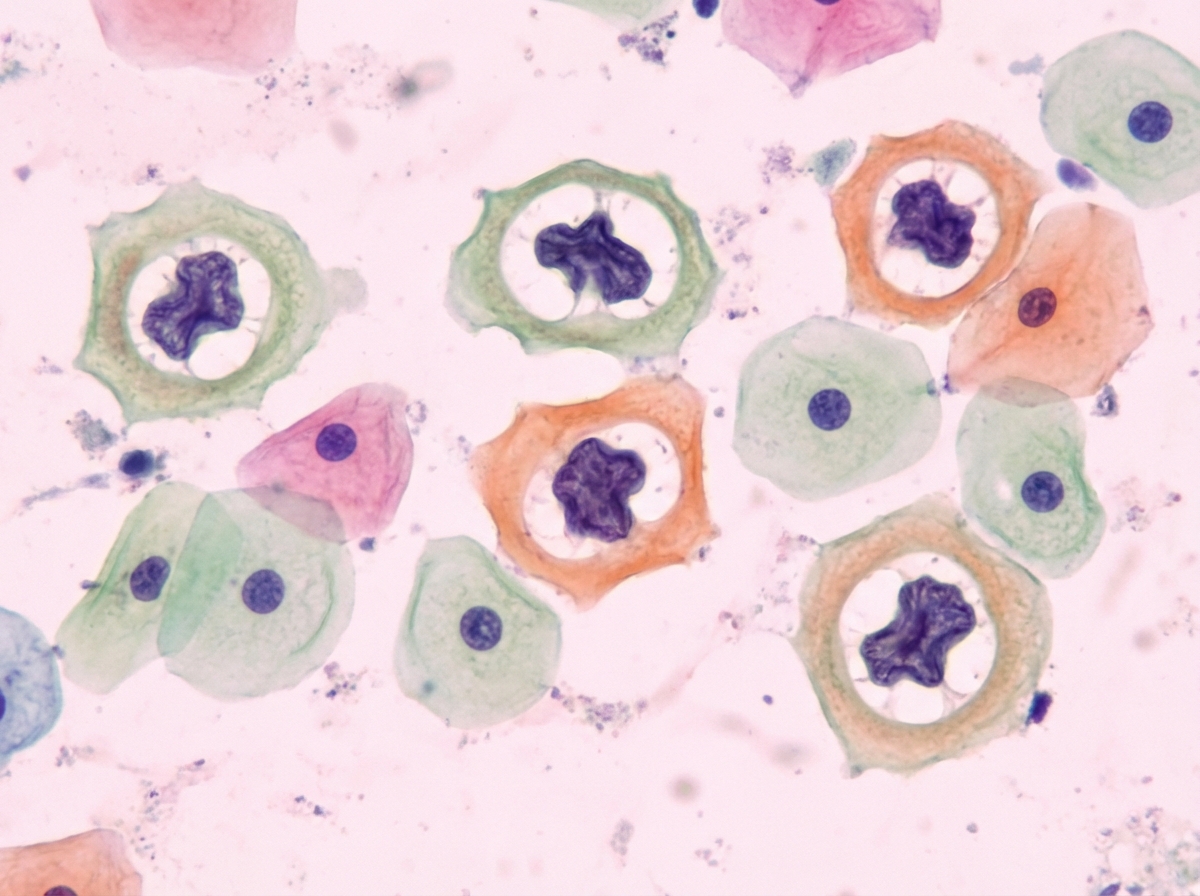
A 31-year-old woman presents to her gynecologist for a routine well-visit. She is sexually active with multiple male partners and uses an intrauterine device for contraception. Her last menstrual period was two weeks ago. She denies abnormal vaginal discharge or sensations of burning or itching. Pelvic exam is normal. Routine Pap smear shows the following (see Image A). Which organism is most likely responsible for her abnormal Pap smear?
Q102
A 27-year-old primigravida presents at 16 weeks gestation for a check-up. She has no co-existing diseases. Currently, she has no subjective complaints, but she worries about the results of her triple screen. She takes 400 mg of folic acid and 30 mg of iron daily. The results of the triple screen are shown below.
Measured values Reference values
Maternal serum alpha-fetoprotein 2.9 MoM 0.85-2.5 MoM
Beta-hCG 1.1 MoM 0.5-1 MoM
Unconjugated estriol 1 MoM 0.5-3 MoM
What would be the most proper next step in the management of this patient?
Q103
A 24-year-old sexually active man complains of painless growths on his penis. He is worried that he might have transmitted them to his girlfriend. Biopsy shows squamous cells with perinuclear cytoplasmic vacuolization, nuclear enlargement, and koilocytes. The doctor treats the patient by treating the warts with cryoablation. The patient encourages his girlfriend to get tested too, as he is worried she is at increased risk of developing a malignancy. Which cancer is the patient worried about?
Q104
A 24-year-old woman presents to the emergency department with severe abdominal and lower back pain. She describes it as intense cramping and states that she experienced severe pain roughly 1 month ago that was similar. The patient's past medical history is non-contributory, and she states that her menses cause her to soak through 1 pad in a day. She is currently sexually active and does not use any contraception. Her vitals are within normal limits. The patient's abdominal exam is non-focal, and her pelvic exam reveals no adnexal masses or tenderness and no cervical motion tenderness. Which of the following is the most likely diagnosis?
Q105
A 28-year-old woman presents to discuss the results of her Pap smear. Her previous Pap smear 1 year ago showed atypical squamous cells of undetermined significance. This year the Pap smear was negative. She had a single pregnancy with a cesarean delivery. Currently, she and her partner do not use contraception because they are planning another pregnancy. She does not have any concurrent diseases and her family history is unremarkable. The patient is concerned about her previous Pap smear finding. She heard from her friend about a vaccine which can protect her against cervical cancer. She has never had such a vaccine and would like to be vaccinated. Which of the following answers regarding the vaccination in this patient is correct?
Q106
A 25-year-old nulliparous woman at 8 weeks' gestation comes to her physician accompanied by her husband for her first prenatal visit. She has no personal or family history of serious illness. Her vaccinations are up-to-date and she takes no medications. She has no history of recreational drug use and does not drink alcohol. Her vital signs are within normal limits. She is 167 cm (5 ft 6 in) tall and weighs 68 kg (150 lb); BMI is 24.3 kg/m2. She tested negative for HIV, Chlamydia trachomatis, and Neisseria gonorrhoeae 4 years ago. Which of the following tests should be done at this visit?
Q107
A 24-year-old woman at 6 weeks gestation seeks evaluation at a local walk-in clinic because she has noticed a clear, sticky discharge from her right nipple for the past 1 week. The discharge leaves a pink stain on her bra. She does not have pain in her breasts and denies changes in skin color or nipple shape. The past medical history is significant for a major depressive disorder, for which she takes fluoxetine. The family history is negative for breast, endometrial, and ovarian cancers. The physical examination is unremarkable. There are no palpable masses or tenderness on breast exam and no skin discoloration or ulcers. The breasts are symmetric. The nipple discharge on the right side is a pink secretion that is sticky. There are no secretions on the left. The axillary lymph nodes are normal. Which of the following is the most likely diagnosis?
Q108
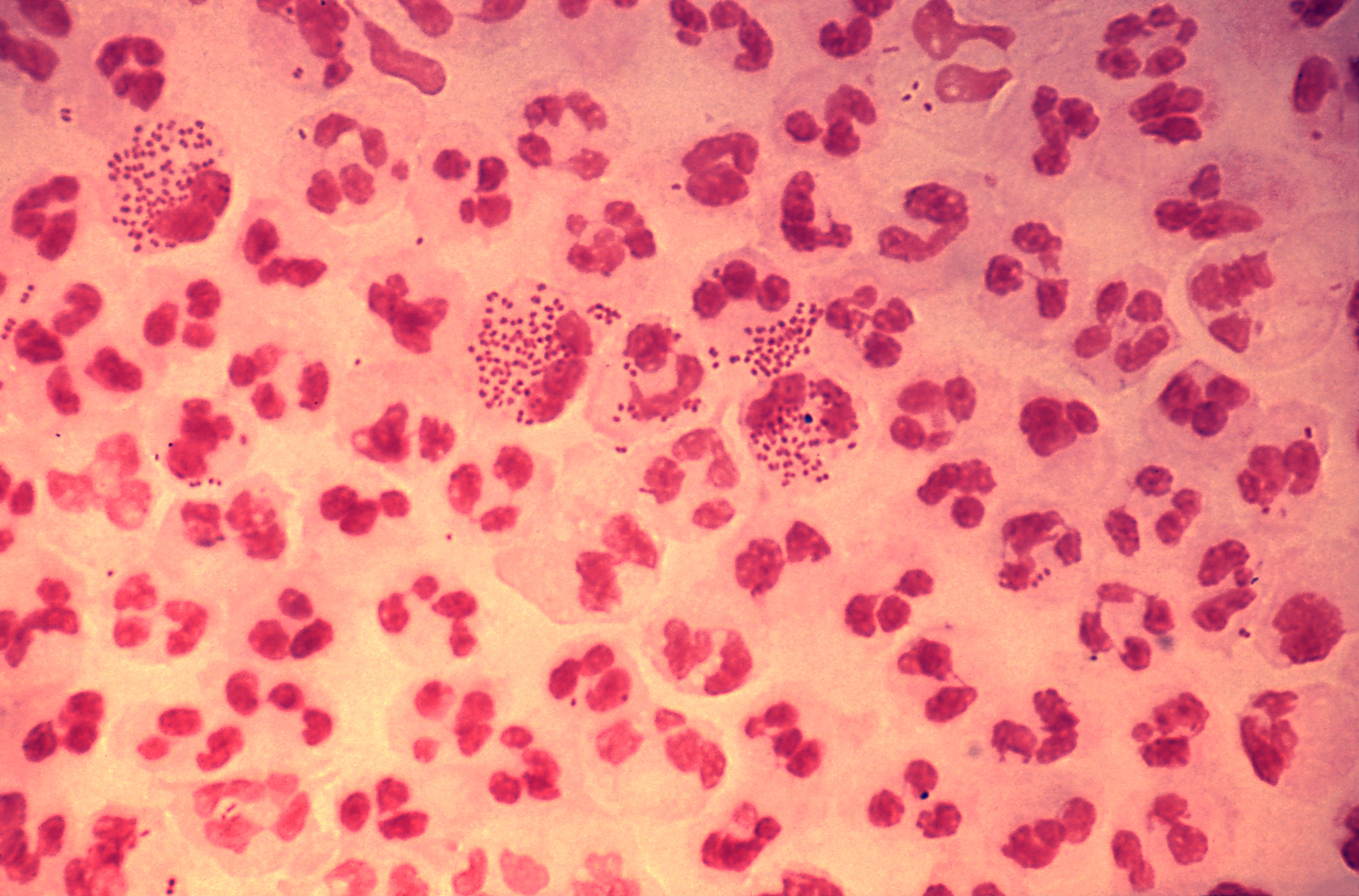
A 23-year-old woman comes to the physician because of vaginal discharge for 4 days. Her last menstrual period was 3 weeks ago. Twelve months ago, she was diagnosed with trichomoniasis, for which she and her partner were treated with a course of an antimicrobial. She is sexually active with one male partner, and they use condoms inconsistently. Her only medication is a combined oral contraceptive that she has been taking for the past 4 years. A Gram stain of her vaginal fluid is shown. Which of the following is the most likely causal organism?
Q109
A 35-year-old G2P0 presents to her physician to discuss the results of her 16-week obstetric screening tests. She has no complaints. Her previous pregnancy at 28 years of age was a spontaneous abortion in the first trimester. She has no history of gynecologic diseases. Her quadruple test shows the following findings:
Alpha-fetoprotein
Low
Beta-hCG
High
Unconjugated estriol
Low
Inhibin A
High
Which of the following statements regarding the presented results is correct?
Q110
A 34-year-old woman, gravida 1, para 0, at 16 weeks' gestation comes to the physician for a routine prenatal visit. She feels well. She has no history of serious illness. She has smoked one pack of cigarettes daily for 10 years but quit when she learned she was pregnant. She does not drink alcohol or use illicit drugs. Her mother has type 1 diabetes mellitus, and her father has asthma. Current medications include a prenatal multivitamin. She appears well. Her vital signs are within normal limits. Physical examination shows no abnormalities. Serum studies show:
Alpha-fetoprotein decreased
Unconjugated estriol decreased
Human chorionic gonadotropin increased
Inhibin A increased
During counseling regarding the potential for fetal abnormalities, the patient says that she would like a definitive diagnosis as quickly as possible. Which of the following is the most appropriate next step in management?
Screening tests US Medical PG Practice Questions and MCQs
Question 101: A 31-year-old woman presents to her gynecologist for a routine well-visit. She is sexually active with multiple male partners and uses an intrauterine device for contraception. Her last menstrual period was two weeks ago. She denies abnormal vaginal discharge or sensations of burning or itching. Pelvic exam is normal. Routine Pap smear shows the following (see Image A). Which organism is most likely responsible for her abnormal Pap smear?
A. Trichomonas vaginalis
B. Human papillomavirus (Correct Answer)
C. Herpes simplex virus 1
D. Treponema pallidum
E. Chlamydia trachomatis
Explanation: **Human papillomavirus**
- The image illustrates **koilocytes**, which are squamous epithelial cells with perinuclear halos and enlarged, hyperchromatic, and often irregular nuclei. These are pathognomonic for **human papillomavirus (HPV) infection**.
- HPV is a sexually transmitted infection, and the patient's history of being **sexually active with multiple partners** increases her risk of exposure to HPV.
*Trichomonas vaginalis*
- *Trichomonas vaginalis* typically causes a **foamy, green-yellow vaginal discharge** and can lead to a "strawberry cervix" on speculum exam, neither of which are mentioned or depicted.
- Pap smears infected with *Trichomonas* often show flagellated organisms and an inflammatory response, but not the characteristic koilocytes.
*Herpes simplex virus 1*
- Herpes simplex virus (HSV) infection on a Pap smear would typically show **multinucleated giant cells** with nuclear molding and intranuclear inclusions, not koilocytes.
- Patients often present with painful genital lesions, which are absent in this case.
*Treponema pallidum*
- *Treponema pallidum* (syphilis) is a bacterial infection that would not be diagnosed via Pap smear cytology and does not cause koilocytes.
- Primary syphilis presents as a **painless chancre**, while secondary syphilis involves a rash and systemic symptoms.
*Chlamydia trachomatis*
- *Chlamydia trachomatis* is a bacterial infection that can cause cervicitis, but it does not lead to koilocytic changes on a Pap smear.
- Diagnosis relies on **nucleic acid amplification tests (NAATs)**, and symptoms, if present, might include abnormal discharge or post-coital bleeding.
Question 102: A 27-year-old primigravida presents at 16 weeks gestation for a check-up. She has no co-existing diseases. Currently, she has no subjective complaints, but she worries about the results of her triple screen. She takes 400 mg of folic acid and 30 mg of iron daily. The results of the triple screen are shown below.
Measured values Reference values
Maternal serum alpha-fetoprotein 2.9 MoM 0.85-2.5 MoM
Beta-hCG 1.1 MoM 0.5-1 MoM
Unconjugated estriol 1 MoM 0.5-3 MoM
What would be the most proper next step in the management of this patient?
A. Perform amniocentesis
B. Arrange a chorionic villus sampling procedure
C. Recommend additional inhibit A test
D. Perform ultrasound examination (Correct Answer)
E. Test for CMV infection, rubella, and toxoplasmosis
Explanation: **Perform ultrasound examination**
- An elevated maternal serum alpha-fetoprotein (**MSAFP**) can indicate **neural tube defects** (NTDs), which an ultrasound can reliably detect or rule out.
- Before considering invasive procedures like amniocentesis, a **detailed ultrasound** is crucial to assess fetal anatomy, confirm gestational age, and exclude identifiable causes of elevated MSAFP.
*Perform amniocentesis*
- While amniocentesis can diagnose NTDs by measuring **amniotic fluid AFP levels**, it is an **invasive procedure** with a risk of miscarriage.
- It should typically be performed *after* an initial ultrasound has confirmed a potential anomaly or if a high-risk NTD is strongly suspected and unable to be confirmed by imaging.
*Arrange a chorionic villus sampling procedure*
- **Chorionic villus sampling (CVS)** is primarily used for **chromosomal analysis** and genetic disorders, typically performed earlier in pregnancy (10-13 weeks).
- It is **not the primary diagnostic tool for neural tube defects** and has a higher risk of complications compared to ultrasound for initial evaluation.
*Recommend additional inhibin A test*
- **Inhibin A** is part of the **quad screen** (which includes AFP, hCG, and unconjugated estriol) and is used to screen for **Down syndrome** and **trisomy 18**.
- Adding an inhibin A test would be more relevant if there was a concern for aneuploidy, but the main deviation here is the **isolated elevated MSAFP**, pointing towards neural tube defects.
*Test for CMV infection, rubella, and toxoplasmosis*
- Infections like **CMV, rubella, and toxoplasmosis** can cause various fetal anomalies, but they are not the primary cause of an isolated elevated MSAFP.
- The symptoms and typical presentation of these infections are not described, and screening for them would be a **less direct initial response** to the specific triple screen results.
Question 103: A 24-year-old sexually active man complains of painless growths on his penis. He is worried that he might have transmitted them to his girlfriend. Biopsy shows squamous cells with perinuclear cytoplasmic vacuolization, nuclear enlargement, and koilocytes. The doctor treats the patient by treating the warts with cryoablation. The patient encourages his girlfriend to get tested too, as he is worried she is at increased risk of developing a malignancy. Which cancer is the patient worried about?
A. Burkitt lymphoma
B. Hairy cell leukemia
C. Kaposi sarcoma
D. Hepatocellular carcinoma
E. Cervical carcinoma (Correct Answer)
Explanation: ***Cervical carcinoma***
- The patient has **genital warts**, which are caused by **Human Papillomavirus (HPV)**. High-risk HPV types (e.g., HPV-16 and HPV-18) are the primary cause of cervical cancer.
- The biopsy findings of **koilocytes** (squamous cells with perinuclear cytoplasmic vacuolization and nuclear enlargement) are characteristic of HPV infection, which significantly increases the risk of cervical dysplasia and carcinoma in women.
*Burkitt lymphoma*
- This is a highly aggressive B-cell lymphoma often associated with the **Epstein-Barr virus (EBV)**.
- It presents with rapidly growing tumors, especially in the jaw or abdomen, and is not linked to HPV infection or genital warts.
*Hairy cell leukemia*
- This is a rare, slow-growing **B-cell lymphoma** characterized by abnormal B lymphocytes with "hairy" projections.
- It is not associated with viral infections like HPV or presentations involving skin lesions or genital warts.
*Kaposi sarcoma*
- This is a vascular tumor primarily associated with **Human Herpesvirus 8 (HHV-8)**, especially in immunosuppressed individuals (e.g., HIV/AIDS patients).
- It presents as reddish-purple skin lesions and visceral involvement, and is unrelated to HPV or genital warts.
*Hepatocellular carcinoma*
- This primary liver cancer is strongly associated with **chronic hepatitis B (HBV)** and **hepatitis C (HCV)** infections, as well as **cirrhosis** from other causes.
- It has no known connection to HPV infection or genital warts.
Question 104: A 24-year-old woman presents to the emergency department with severe abdominal and lower back pain. She describes it as intense cramping and states that she experienced severe pain roughly 1 month ago that was similar. The patient's past medical history is non-contributory, and she states that her menses cause her to soak through 1 pad in a day. She is currently sexually active and does not use any contraception. Her vitals are within normal limits. The patient's abdominal exam is non-focal, and her pelvic exam reveals no adnexal masses or tenderness and no cervical motion tenderness. Which of the following is the most likely diagnosis?
A. Ectopic pregnancy
B. Leiomyoma
C. Primary dysmenorrhea (Correct Answer)
D. Adenomyosis
E. Appendicitis
Explanation: ***Primary dysmenorrhea***
- This patient's symptoms of **severe cramping abdominal and lower back pain** recurring cyclically aligns with the clinical picture of primary dysmenorrhea.
- The absence of significant findings on physical exam (**non-focal abdominal exam, no adnexal masses/tenderness, no cervical motion tenderness**) further supports a diagnosis of primary dysmenorrhea, as it is a diagnosis of exclusion.
*Ectopic pregnancy*
- While this patient is sexually active and not using contraception, the absence of **adnexal tenderness, cervical motion tenderness**, or a palpable mass makes ectopic pregnancy less likely.
- Her current presentation is a recurrence of pain experienced a month ago, which is unusual for an ectopic pregnancy, typically presenting as an acute and singular event.
*Leiomyoma*
- **Leiomyomas** (fibroids) typically present with **heavy menstrual bleeding**, pelvic pressure, or bulk symptoms.
- However, they would usually be palpable as an **enlarged, irregular uterus** or contribute to adnexal masses, which were not found on this patient's pelvic exam.
*Adenomyosis*
- **Adenomyosis** is characterized by **dysmenorrhea** and **heavy menstrual bleeding**, similar to the patient's symptoms.
- However, it typically presents with a **globular and tender uterus** on bimanual examination, which was not described in this case.
*Appendicitis*
- **Appendicitis** typically presents with **acute, progressively worsening right lower quadrant pain**, often associated with fever, nausea, vomiting, and characteristic abdominal tenderness.
- The patient's pain is described as cramping, recurrent over a month, and localized to the lower back and abdomen generally, not specifically the right lower quadrant, making appendicitis less likely.
Question 105: A 28-year-old woman presents to discuss the results of her Pap smear. Her previous Pap smear 1 year ago showed atypical squamous cells of undetermined significance. This year the Pap smear was negative. She had a single pregnancy with a cesarean delivery. Currently, she and her partner do not use contraception because they are planning another pregnancy. She does not have any concurrent diseases and her family history is unremarkable. The patient is concerned about her previous Pap smear finding. She heard from her friend about a vaccine which can protect her against cervical cancer. She has never had such a vaccine and would like to be vaccinated. Which of the following answers regarding the vaccination in this patient is correct?
A. The patient can receive the vaccine after the pregnancy test is negative.
B. This vaccination does not produce proper immunity in people who had at least 1 abnormal cytology report, so is unreasonable in this patient.
C. HPV vaccination is not recommended for women older than 26 years of age.
D. The patient should receive this vaccination as soon as possible.
E. The patient should undergo HPV DNA testing; vaccination is indicated if the DNA testing is negative. (Correct Answer)
Explanation: ***The patient should undergo HPV DNA testing; vaccination is indicated if the DNA testing is negative.***
- This patient had an **abnormal Pap smear** in the past, suggesting possible prior HPV exposure or infection. According to CDC guidelines, patients with a history of abnormal Pap smears should undergo **HPV DNA testing** to evaluate for active HPV infection.
- If the HPV DNA test is negative, suggesting no current HPV infection, then **HPV vaccination** can be considered to protect against future infections with other HPV types she may not have been exposed to.
*The patient can receive the vaccine after the pregnancy test is negative.*
- While HPV vaccination is **contraindicated in pregnancy**, the primary concern in this patient is past abnormal cytology, which warrants further investigation regardless of pregnancy status.
- Simply ensuring she is not pregnant before vaccination would overlook the need to assess her previous HPV exposure and potential **ongoing HPV infection**.
*This vaccination does not produce proper immunity in people who had at least 1 abnormal cytology report, so is unreasonable in this patient.*
- This statement is incorrect. While the vaccine is most effective before HPV exposure, it can still provide protection against other **HPV types** not yet encountered, even in individuals with a history of abnormal cytology.
- The vaccine offers **type-specific immunity**, so even if she was infected with one HPV type, she could still benefit from protection against others.
*HPV vaccination is not recommended for women older than 26 years of age.*
- The **HPV vaccine** is FDA-approved for individuals up to **45 years of age**, though routine vaccination is typically recommended through age 26.
- For individuals aged 27-45 who were not previously vaccinated, shared clinical decision-making with their provider can determine if vaccination is beneficial, especially if they have risk factors for new HPV exposures.
*The patient should receive this vaccination as soon as possible.*
- Administering the vaccine "as soon as possible" without an HPV DNA test in a patient with a history of abnormal Pap smears is not the most appropriate first step.
- This approach would not address the potential for **ongoing HPV infection**, which could make the immediate vaccination less effective for her specific situation and could skip important diagnostic steps.
Question 106: A 25-year-old nulliparous woman at 8 weeks' gestation comes to her physician accompanied by her husband for her first prenatal visit. She has no personal or family history of serious illness. Her vaccinations are up-to-date and she takes no medications. She has no history of recreational drug use and does not drink alcohol. Her vital signs are within normal limits. She is 167 cm (5 ft 6 in) tall and weighs 68 kg (150 lb); BMI is 24.3 kg/m2. She tested negative for HIV, Chlamydia trachomatis, and Neisseria gonorrhoeae 4 years ago. Which of the following tests should be done at this visit?
A. VDRL, Western blot for HIV, and serum HBsAg
B. PCR for HSV-2, culture for group B streptococci, and Western blot for HIV
C. Culture for group B streptococci, hepatitis C serology, and PPD skin test
D. Serum TSH, CMV serology, and PCR for HSV-2
E. ELISA for HIV, rapid plasma reagin test, and serum HBsAg (Correct Answer)
Explanation: **ELISA for HIV, rapid plasma reagin test, and serum HBsAg**
- **First prenatal visits** routinely include screening for HIV, syphilis, and hepatitis B due to the potential for vertical transmission and significant neonatal morbidity.
- **ELISA for HIV**, **rapid plasma reagin (RPR)** for syphilis, and **HBsAg** for hepatitis B are standard screening tests recommended during early pregnancy.
*VDRL, Western blot for HIV, and serum HBsAg*
- While **VDRL** and **HBsAg** are appropriate initial screening tests for syphilis and hepatitis B, **Western blot for HIV** is used as a confirmatory test, not for initial screening.
- The initial screening for HIV should be with an **ELISA** (or fourth-generation antigen/antibody combination assay).
*PCR for HSV-2, culture for group B streptococci, and Western blot for HIV*
- **PCR for HSV-2** is typically reserved for symptomatic individuals or specific risk factors, and not a universal first-trimester screening.
- **Group B streptococci (GBS) culture** is performed later in pregnancy (typically 35-37 weeks), not at the first prenatal visit.
*Culture for group B streptococci, hepatitis C serology, and PPD skin test*
- As mentioned, **GBS culture** is performed in late third trimester.
- While **hepatitis C serology** is recommended based on risk factors, it is not a universal screening test for all pregnant women. **PPD skin test** for TB is also only indicated if risk factors are present.
*Serum TSH, CMV serology, and PCR for HSV-2*
- **Serum TSH** is recommended if there are signs or symptoms of thyroid dysfunction or a history of thyroid disease, not for routine universal screening.
- **CMV serology** and **PCR for HSV-2** are not routine first-trimester screening tests for all pregnant women.
Question 107: A 24-year-old woman at 6 weeks gestation seeks evaluation at a local walk-in clinic because she has noticed a clear, sticky discharge from her right nipple for the past 1 week. The discharge leaves a pink stain on her bra. She does not have pain in her breasts and denies changes in skin color or nipple shape. The past medical history is significant for a major depressive disorder, for which she takes fluoxetine. The family history is negative for breast, endometrial, and ovarian cancers. The physical examination is unremarkable. There are no palpable masses or tenderness on breast exam and no skin discoloration or ulcers. The breasts are symmetric. The nipple discharge on the right side is a pink secretion that is sticky. There are no secretions on the left. The axillary lymph nodes are normal. Which of the following is the most likely diagnosis?
A. Papilloma (Correct Answer)
B. Breast cancer
C. Drug-induced
D. Mastitis
E. Lactation
Explanation: **Papilloma**
- The presence of **unilateral, bloody or pink-stained nipple discharge** is highly suggestive of an intraductal papilloma.
- Papillomas are **benign growths** within the milk ducts, often presenting as a sticky discharge due to the presence of blood.
*Breast cancer*
- While breast cancer can cause nipple discharge, it typically presents with other suspicious signs such as a **palpable mass, skin changes, or nipple retraction**, which are absent here.
- The discharge is more commonly **spontaneous, persistent, and may be bloody**, but the isolated nature and lack of other findings make cancer less likely in this scenario.
*Drug-induced*
- **Drug-induced galactorrhea** is usually bilateral and characterized by milky or watery discharge, not typically pink-stained or bloody.
- Fluoxetine can cause elevated prolactin, but the unilateral, pink, sticky discharge is not consistent with typical drug-induced galactorrhea.
*Mastitis*
- **Mastitis** is an inflammation of the breast, usually associated with pain, redness, swelling, and fever, often during lactation.
- The patient denies pain and inflammatory signs, and the discharge is not purulent, making mastitis an unlikely diagnosis.
*Lactation*
- **Lactation** typically produces a milky, bilateral discharge, and while the patient is pregnant, the discharge described is pink and unilateral, which is not characteristic of normal pregnancy-induced lactation.
- Given the **pink color**, it suggests blood is present, which is not typical for physiological lactation.
Question 108: A 23-year-old woman comes to the physician because of vaginal discharge for 4 days. Her last menstrual period was 3 weeks ago. Twelve months ago, she was diagnosed with trichomoniasis, for which she and her partner were treated with a course of an antimicrobial. She is sexually active with one male partner, and they use condoms inconsistently. Her only medication is a combined oral contraceptive that she has been taking for the past 4 years. A Gram stain of her vaginal fluid is shown. Which of the following is the most likely causal organism?
A. Klebsiella granulomatis
B. Haemophilus ducreyi
C. Gardnerella vaginalis
D. Neisseria gonorrhoeae (Correct Answer)
E. Treponema pallidum
Explanation: ***Neisseria gonorrhoeae***
- The image provided (though not visible here) would likely show **intracellular Gram-negative diplococci** within neutrophils, which is characteristic of *Neisseria gonorrhoeae*.
- This presentation, combined with **vaginal discharge** and **inconsistent condom use**, strongly suggests **gonorrhea**.
*Klebsiella granulomatis*
- This bacterium causes **donovanosis (granuloma inguinale)**, characterized by progressive, painless ulcerative lesions, not typically vaginal discharge.
- Identification involves finding **Donovan bodies** (intracellular bacilli within macrophages) on tissue biopsy, not Gram stain of vaginal fluid.
*Haemophilus ducreyi*
- This organism causes **chancroid**, presenting as painful genital ulcers with ragged borders and often associated with inguinal lymphadenopathy.
- It does not primarily cause vaginal discharge and is characterized by a "school of fish" appearance on Gram stain from ulcer exudate.
*Gardnerella vaginalis*
- This is a common cause of **bacterial vaginosis**, which presents with a foul-smelling, thin, gray-white discharge.
- Gram stain would show **clue cells** (vaginal epithelial cells covered in bacteria) and an absence of lactobacilli, not intracellular diplococci.
*Treponema pallidum*
- This spirochete causes **syphilis**, which primarily presents as a painless chancre in primary syphilis or a rash in secondary syphilis.
- It cannot be visualized by Gram stain and requires **darkfield microscopy** or serological tests for diagnosis.
Question 109: A 35-year-old G2P0 presents to her physician to discuss the results of her 16-week obstetric screening tests. She has no complaints. Her previous pregnancy at 28 years of age was a spontaneous abortion in the first trimester. She has no history of gynecologic diseases. Her quadruple test shows the following findings:
Alpha-fetoprotein
Low
Beta-hCG
High
Unconjugated estriol
Low
Inhibin A
High
Which of the following statements regarding the presented results is correct?
A. The obtained results can be normal for women aged 35 and older.
B. The results show increased chances of aneuploidies associated with the sex chromosomes.
C. Such results are associated with a 100% lethal fetal condition.
D. Such results are a strong indicator of a monogenic disease.
E. Maternal age is a significant risk factor for the condition of the patient, the increased risk of which is indicated by the results of the study. (Correct Answer)
Explanation: ***Maternal age is a significant risk factor for the condition of the patient, the increased risk of which is indicated by the results of the study.***
- The quadruple test results (low AFP, high β-hCG, low unconjugated estriol, high inhibin A) are characteristic of **Down syndrome (Trisomy 21)**.
- Advanced **maternal age**, particularly 35 years and older, is a well-established risk factor for fetal aneuploidies like Trisomy 21 due to increased incidence of **nondisjunction** during meiosis.
*The obtained results can be normal for women aged 35 and older.*
- The given quadruple test results are **abnormal** and indicate an increased risk for specific aneuploidies, not a normal pattern, regardless of maternal age.
- While age increases risk, it does not normalize these specific biomarker deviations; rather, it highlights the **concern for aneuploidy**.
*The results show increased chances of aneuploidies associated with the sex chromosomes.*
- The characteristic pattern of the quadruple screen (low AFP, high β-hCG, low uE3, high inhibin A) is most strongly associated with **Trisomy 21 (Down syndrome)**.
- Aneuploidies of the sex chromosomes (e.g., Klinefelter syndrome, Turner syndrome) typically do **not** produce this specific pattern on the quadruple screen, although some may have subtle changes.
*Such results are associated with a 100% lethal fetal condition.*
- The presented quadruple screen pattern is indicative of **Trisomy 21**, which is not a 100% lethal condition; many individuals with Down syndrome survive to adulthood.
- Conditions like **Trisomy 18 (Edwards syndrome)** or **Trisomy 13 (Patau syndrome)** are often associated with much higher fetal mortality, but their quadruple screen patterns are different (e.g., Trisomy 18 typically shows low AFP, low β-hCG, and low uE3).
*Such results are a strong indicator of a monogenic disease.*
- The quadruple screen primarily screens for **chromosomal abnormalities (aneuploidies)**, specifically Trisomy 21, Trisomy 18, and open neural tube defects.
- It does **not** screen for or indicate **monogenic diseases** (diseases caused by a mutation in a single gene), which require different diagnostic methods like genetic sequencing.
Question 110: A 34-year-old woman, gravida 1, para 0, at 16 weeks' gestation comes to the physician for a routine prenatal visit. She feels well. She has no history of serious illness. She has smoked one pack of cigarettes daily for 10 years but quit when she learned she was pregnant. She does not drink alcohol or use illicit drugs. Her mother has type 1 diabetes mellitus, and her father has asthma. Current medications include a prenatal multivitamin. She appears well. Her vital signs are within normal limits. Physical examination shows no abnormalities. Serum studies show:
Alpha-fetoprotein decreased
Unconjugated estriol decreased
Human chorionic gonadotropin increased
Inhibin A increased
During counseling regarding the potential for fetal abnormalities, the patient says that she would like a definitive diagnosis as quickly as possible. Which of the following is the most appropriate next step in management?
A. Reassurance
B. Amniocentesis (Correct Answer)
C. Pelvic ultrasound
D. Chorionic villus sampling
E. Cell-free fetal DNA testing
Explanation: ***Amniocentesis***
- This patient's **quad screen results** (decreased AFP and unconjugated estriol, increased hCG and inhibin A) are highly suggestive of **Down syndrome (Trisomy 21)**.
- As the patient desires a **definitive diagnosis as quickly as possible**, amniocentesis (typically performed between 15-20 weeks) provides a chromosomal analysis with high accuracy within a short timeframe.
*Reassurance*
- This is inappropriate given the **abnormal quad screen results**, which indicate a significant risk for a chromosomal abnormality.
- Reassurance would delay necessary diagnostic procedures and not address the patient's concern for a definitive diagnosis.
*Pelvic ultrasound*
- While a **pelvic ultrasound** (often called an anatomy scan) is a routine part of prenatal care, it is a **screening tool** and cannot provide a definitive chromosomal diagnosis.
- It might identify **soft markers for aneuploidy**, but these are not diagnostic and would still require further invasive testing for confirmation.
*Chorionic villus sampling*
- **Chorionic villus sampling (CVS)** is typically performed earlier in pregnancy, between 10 and 13 weeks' gestation, and carries a slightly higher risk of complications.
- At 16 weeks gestation, **amniocentesis** is the more appropriate and safer invasive diagnostic option for this patient.
*Cell-free fetal DNA testing*
- **Cell-free fetal DNA (cfDNA) testing** is a highly sensitive **screening test** for aneuploidy, but it is not considered diagnostic.
- While it can provide a strong indication of risk, **invasive testing** like amniocentesis is still required for a definitive diagnosis, which the patient explicitly requested.