A 17-year-old woman presents to the emergency department with dysuria. She denies any hematuria or dyspareunia. Her last menstrual period was 3 weeks ago, and she denies any recent sexual activity. Her temperature is 99.7°F (37.6°C), blood pressure is 127/67 mmHg, pulse is 90/min, and respirations are 17/min. An unusual odor is detected on inspection of the vagina and some gray discharge is noted. Speculum exam reveals a normal cervix and a bimanual exam is unremarkable for adnexal masses or tenderness. What is the next best step in management?
Q92
A 17-year-old girl comes to the physician because of left lower abdominal pain for 1 day. She describes the pain as 6 out of 10 in intensity. Over the past 5 months, she has had similar episodes of pain that occur once a month and last 1 to 2 days. Menses occur at regular 28-day intervals and last 5 to 6 days. Menarche was at the age of 13 years, and her last menstrual period was 2 weeks ago. She has been sexually active with 1 male partner in the past and has used condoms inconsistently. She tested negative for sexually transmitted infections on her last visit 6 months ago. Abdominal and pelvic examination shows no abnormalities. A urine pregnancy test is negative. Which of the following is the most appropriate next step in the management of this patient's symptoms?
Q93
A 17-year-old woman presents to the emergency department with abdominal and pelvic pain. She states it started 3 days ago and it has been getting gradually worse. She states it is diffuse and is located over her abdomen, pelvis, and inside her vagina. She also endorses vaginal pruritus and a discharge from her vagina. The patient works in an ice cream parlor and is sexually active with multiple different partners. Her temperature is 98.0°F (36.7°C), blood pressure is 122/80 mmHg, pulse is 82/min, respirations are 15/min, and oxygen saturation is 98% on room air. Physical exam is notable for a foul smelling vagina with a thin, white discharge. Her abdomen is diffusely tender. The patient is noted to be itching her vagina during the exam. Which of the following is the most appropriate initial step in management?
Q94
A 29-year-old nulligravid woman comes to the physician because of a 10-day history of small quantities of intermittent, blood-tinged discharge from her left nipple. There is no personal or family history of serious illness. She has smoked 1 pack of cigarettes daily for 5 years. Her last menstrual period was 12 days ago. She is sexually active and uses condoms inconsistently. Physical examination shows scant serosanguinous fluid expressible from the left nipple. There is no palpable breast mass or axillary lymphadenopathy. Examination shows no other abnormalities. Which of the following is the most appropriate next step in management?
Q95
A 30-year-old woman presents to the office with complaints of pain in her right breast for 5 days. The pain is moderate-to-intense and is localized to the upper quadrant of the right breast, and mainly to the areola for the past 48 hours. She adds that there is some nipple discharge on the same side and that the right breast is red. She was diagnosed with type 1 diabetes at the age of 10 years of age, for which she takes insulin. The family history is negative for breast and ovarian cancers, and endometrial disorders. She smokes one-half pack of cigarettes every day and binge drinks alcohol on the weekends. Two weeks ago she was hit by a volleyball while playing at the beach. There is no history of fractures or surgical procedures. The physical examination reveals a swollen, erythematous, and warm right breast with periareolar tenderness and nipple discharge. There are no palpable masses or lymphadenopathy. Which of the following is the most important risk factor for the development of this patient’s condition?
Q96
A 36-year-old G3P2002 presents to her obstetrician’s office for her first prenatal visit at ten weeks and two days gestation. She notes that she has felt nauseous the last several mornings and has been especially tired for a few weeks. Otherwise, she feels well. The patient has had two uncomplicated spontaneous vaginal deliveries at full term with her last child born six years ago. She is concerned about the risk of Down syndrome in this fetus, as her sister gave birth to an affected child at age 43. The patient has a history of generalized anxiety disorder, atopic dermatitis, and she is currently on escitalopram. At this visit, this patient’s temperature is 98.6°F (37.0°C), pulse is 70/min, blood pressure is 121/67 mmHg, and respirations are 13/min. The patient appears anxious, but overall comfortable, and cardiopulmonary and abdominal exams are unremarkable. Pelvic exam reveals normal female external genitalia, a closed and slightly soft cervix, a ten-week-sized uterus, and no adnexal masses. Which of the following is the best next step for definitively determining whether this patient’s fetus has Down syndrome?
Q97
A 29-year-old man presents to his primary care provider after complaining of a rash on his penis. He describes it as small painless growths that have developed over the past several months. They have slowly increased in size over time. His medical history is unremarkable. He has had several sexual partners and uses condoms inconsistently. He describes himself as having generally good health and takes no medication. On physical exam, his vital signs are normal. There are multiple cauliflower-like papular eruptions just under the glans penis. They are tan-pink and raised. Examination of the scrotum, perineum, and anus shows no abnormalities. There is no inguinal lymphadenopathy. The remainder of the physical exam shows no abnormalities. Which of the following is the most appropriate initial management?
Q98
A 27-year-old woman presents for her routine annual examination. She has no complaints. She has a 3-year-old child who was born via normal vaginal delivery with no complications. She had a Pap smear during her last pregnancy and the findings were normal. Her remaining past medical history is not significant, and her family history is also not significant. Recently, one of her close friends was diagnosed with breast cancer at the age of 36, and, after reading some online research, she wants to be checked for all types of cancer. Which of the following statements would be the best advice regarding the most appropriate screening tests for this patient?
Q99
A previously healthy 23-year-old woman comes to the physician because of a 1-week history of vaginal discharge. She has no pain or pruritus. She is sexually active with one male partner and uses condoms inconsistently. Pelvic examination shows a malodorous gray vaginal discharge. Microscopic examination of the vaginal discharge is shown. Which of the following is the most likely diagnosis?
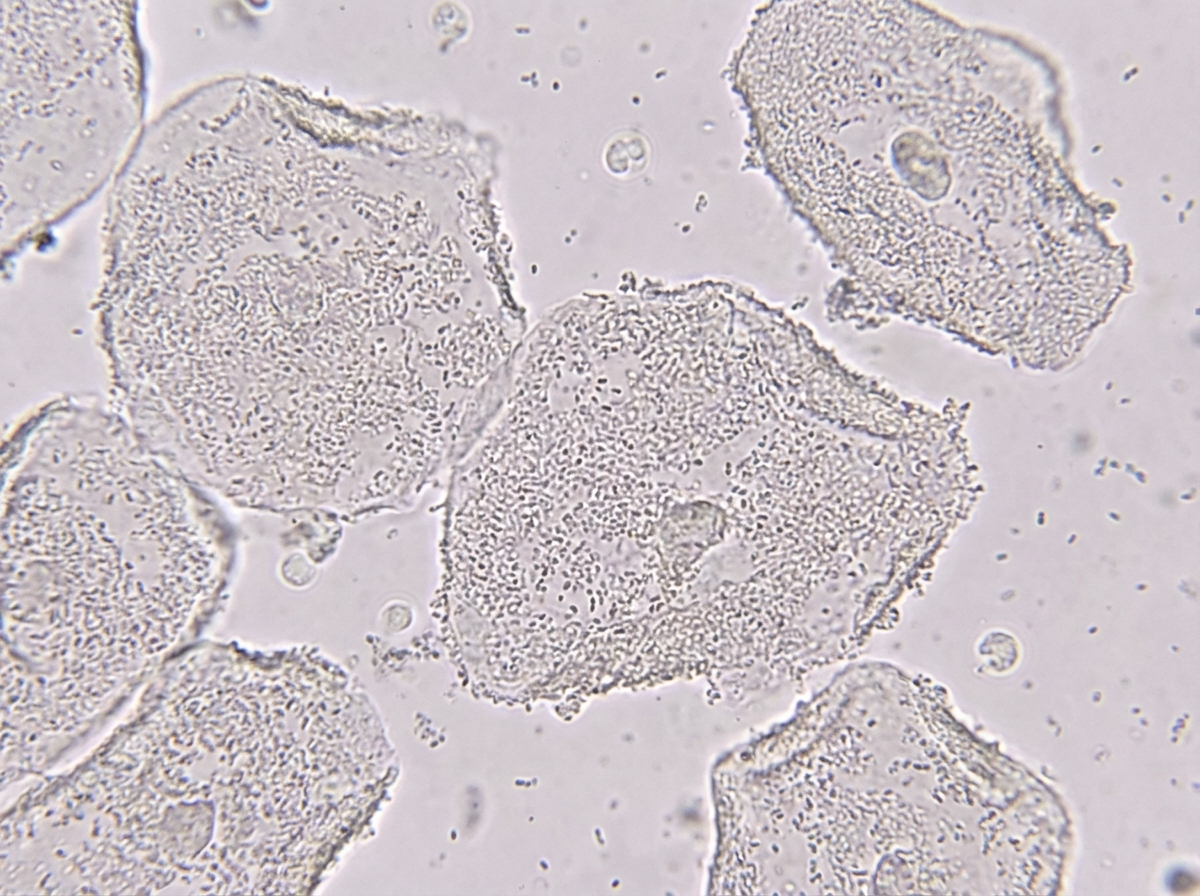
Q100
A 17-year-old high school student presents to the physician’s office for a health maintenance examination. He is a recent immigrant from Venezuela and has no complaints at this time. Past medical history is significant for appendicitis at age 10, treated with an appendectomy. He denies the use of alcohol and cigarettes. He admits to occasionally smoking marijuana with his friends. He is sexually active with 1 woman partner and uses condoms inconsistently. The vital signs are within normal limits. Physical examination is unremarkable except for a laparoscopic surgical scar on the right iliac region. Routine blood tests are pending. What is the most appropriate next step in management?
Screening tests US Medical PG Practice Questions and MCQs
Question 91: A 17-year-old woman presents to the emergency department with dysuria. She denies any hematuria or dyspareunia. Her last menstrual period was 3 weeks ago, and she denies any recent sexual activity. Her temperature is 99.7°F (37.6°C), blood pressure is 127/67 mmHg, pulse is 90/min, and respirations are 17/min. An unusual odor is detected on inspection of the vagina and some gray discharge is noted. Speculum exam reveals a normal cervix and a bimanual exam is unremarkable for adnexal masses or tenderness. What is the next best step in management?
A. Urinalysis and Pap smear
B. Urinalysis, urine culture, KOH prep, and urine pregnancy test (Correct Answer)
C. Urinalysis, KOH prep, and nucleic acid amplification tests for N. gonorrhea and C. trachomatis
D. Urinalysis, urine culture, and potassium hydroxide prep (KOH)
E. Complete blood count (CBC)
Explanation: ***Urinalysis, urine culture, KOH prep, and urine pregnancy test***
- The patient's primary complaint of **dysuria** warrants a **urinalysis** and **urine culture** to rule out **urinary tract infection (UTI)**. The presence of unusual odor and gray discharge suggests a vaginal infection, making a **KOH prep** essential to check for **bacterial vaginosis** or **Candida**.
- Although she denies recent sexual activity, her age and symptoms make an **excluded pregnancy** important, especially before prescribing certain medications.
*Urinalysis and Pap smear*
- While a **urinalysis** is appropriate for dysuria, a **Pap smear** is a screening tool for cervical cancer and is not indicated for the acute management of these symptoms.
- A Pap smear would not help diagnose the immediate cause of the odorous gray discharge.
*Urinalysis, KOH prep, and nucleic acid amplification tests for N. gonorrhea and C. trachomatis*
- **NAAT testing** for STIs (gonorrhea and chlamydia) would be considered if there were risk factors or other symptoms, however the presence of **dysuria** necessitates a **urine culture** for infection.
- The patient denies recent sexual activity and initial presentation is more consistent with a UTI or more common vaginal infection.
*Urinalysis, urine culture, and potassium hydroxide prep (KOH)*
- This option correctly includes tests for **UTI** and **vaginal infection**.
- However, it **omits a pregnancy test**, which is a crucial step for a female of reproductive age, especially when considering treatment options for potential infections.
*Complete blood count (CBC)*
- A **CBC** would generally be ordered if there were signs of **systemic infection** or other more serious underlying conditions, which are not suggested by the patient's current symptoms and vital signs.
- While it may provide some information, it is not the most direct or immediate diagnostic test for dysuria or vaginal discharge.
Question 92: A 17-year-old girl comes to the physician because of left lower abdominal pain for 1 day. She describes the pain as 6 out of 10 in intensity. Over the past 5 months, she has had similar episodes of pain that occur once a month and last 1 to 2 days. Menses occur at regular 28-day intervals and last 5 to 6 days. Menarche was at the age of 13 years, and her last menstrual period was 2 weeks ago. She has been sexually active with 1 male partner in the past and has used condoms inconsistently. She tested negative for sexually transmitted infections on her last visit 6 months ago. Abdominal and pelvic examination shows no abnormalities. A urine pregnancy test is negative. Which of the following is the most appropriate next step in the management of this patient's symptoms?
A. Diagnostic laparoscopy
B. Combined oral contraceptive pill
C. Pelvic ultrasonography (Correct Answer)
D. CT scan of the pelvis
E. Reassurance
Explanation: ***Pelvic ultrasonography***
- This patient presents with recurrent, cyclic lower abdominal pain, suggestive of a gynecologic etiology such as **endometriosis** or **ovarian cysts**.
- **Pelvic ultrasonography** is a non-invasive, widely available, and good initial imaging modality to evaluate the uterus, ovaries, and adnexa for structural abnormalities.
*Diagnostic laparoscopy*
- **Diagnostic laparoscopy** is an invasive surgical procedure typically reserved for cases where non-invasive imaging has not yielded a diagnosis and symptoms persist or worsen.
- While it can diagnose conditions like endometriosis, it is not the **first-line diagnostic step** given the patient's stable condition.
*Combined oral contraceptive pill*
- While **combined oral contraceptive pills (COCs)** can manage symptoms of endometriosis or dysmenorrhea, they are a treatment option, not a diagnostic step.
- Instituting COCs without a diagnosis might mask an underlying condition that requires specific treatment.
*CT scan of the pelvis*
- A **CT scan of the pelvis** provides good detailed imaging but exposes the patient to radiation and is generally less effective than ultrasound for evaluating gynecologic pathology in younger patients.
- It is typically reserved for suspected acute emergencies or when ultrasound is inconclusive.
*Reassurance*
- Given the patient's recurrent, localized pain episodes that affect her quality of life (6/10 intensity), simple **reassurance** without further investigation is inappropriate.
- It could lead to delayed diagnosis and treatment of a potentially treatable condition.
Question 93: A 17-year-old woman presents to the emergency department with abdominal and pelvic pain. She states it started 3 days ago and it has been getting gradually worse. She states it is diffuse and is located over her abdomen, pelvis, and inside her vagina. She also endorses vaginal pruritus and a discharge from her vagina. The patient works in an ice cream parlor and is sexually active with multiple different partners. Her temperature is 98.0°F (36.7°C), blood pressure is 122/80 mmHg, pulse is 82/min, respirations are 15/min, and oxygen saturation is 98% on room air. Physical exam is notable for a foul smelling vagina with a thin, white discharge. Her abdomen is diffusely tender. The patient is noted to be itching her vagina during the exam. Which of the following is the most appropriate initial step in management?
A. Wet mount (Correct Answer)
B. KOH prep
C. Urine hCG
D. CT abdomen/pelvis
E. Cervical swab and culture
Explanation: **Wet mount**
- A **wet mount** is crucial in this case as the patient presents with symptoms suggestive of a vaginal infection, including **vaginal pruritus**, foul-smelling discharge, and diffuse abdominal/pelvic pain.
- This test can rapidly identify common causes of vaginitis such as **Trichomonas vaginalis** (motile trichomonads), **bacterial vaginosis** (clue cells), and **candidiasis** (yeast buds/hyphae), helping guide initial treatment.
*KOH prep*
- A **KOH prep** is specifically used to diagnose **candidiasis** by dissolving epithelial cells and highlighting fungal elements (hyphae and spores).
- While useful for yeast infections, it would not identify other potential causes of the patient's symptoms such as bacterial vaginosis or trichomoniasis, making a wet mount a more comprehensive initial diagnostic step.
*Urine hCG*
- A **urine hCG** test is used to detect pregnancy and is a standard part of evaluating women of reproductive age with acute abdominal/pelvic pain.
- While important to rule out ectopic pregnancy or other pregnancy-related complications, it does not directly address the likely infectious cause suggested by the vaginal discharge and pruritus.
*CT abdomen/pelvis*
- A **CT scan of the abdomen/pelvis** is an advanced imaging study typically reserved for cases where serious intra-abdominal or pelvic pathology (e.g., appendicitis, ovarian torsion, abscess) is suspected and cannot be ruled out by less invasive means.
- Given the strong indicators of a vaginal infection, less invasive and more targeted diagnostics are appropriate first.
*Cervical swab and culture*
- A **cervical swab and culture** is primarily used to detect sexually transmitted infections (STIs) such as **Chlamydia trachomatis** and **Neisseria gonorrhoeae**, which can cause cervicitis and pelvic inflammatory disease (PID).
- While STIs are a concern in a sexually active patient with pelvic pain, a wet mount provides a more immediate diagnosis for common vaginitis causes and helps prioritize treatment.
Question 94: A 29-year-old nulligravid woman comes to the physician because of a 10-day history of small quantities of intermittent, blood-tinged discharge from her left nipple. There is no personal or family history of serious illness. She has smoked 1 pack of cigarettes daily for 5 years. Her last menstrual period was 12 days ago. She is sexually active and uses condoms inconsistently. Physical examination shows scant serosanguinous fluid expressible from the left nipple. There is no palpable breast mass or axillary lymphadenopathy. Examination shows no other abnormalities. Which of the following is the most appropriate next step in management?
A. Image-guided core biopsy of the affected duct
B. Subareolar ultrasound (Correct Answer)
C. Nipple discharge cytology
D. Reassurance
E. Breast MRI
Explanation: ***Subareolar ultrasound***
- This patient presents with **unilateral**, **spontaneous**, **single-duct bloody nipple discharge**, which is characteristic of an **intraductal papilloma** or early malignancy.
- A **subareolar ultrasound** is the most appropriate initial imaging step to evaluate the ductal system for a mass or obstruction, especially in a young woman with dense breasts where mammography may be less sensitive.
*Image-guided core biopsy of the affected duct*
- A biopsy would be considered if imaging (like ultrasound) reveals a suspicious lesion, but it is not the **initial diagnostic step**.
- **Image guidance** is necessary for biopsy of non-palpable lesions, but first, the lesion needs to be identified and characterized by imaging.
*Nipple discharge cytology*
- **Cytology of nipple discharge** has a **low sensitivity** for identifying malignancy and is generally not recommended as a primary diagnostic tool.
- It can be helpful in some cases, but imaging is usually preferred for initial evaluation of suspicious discharge.
*Reassurance*
- **Bloody nipple discharge**, even in small quantities, is a **concerning symptom** that requires further investigation to rule out malignancy and cannot simply be dismissed.
- While many cases are benign (e.g., intraductal papilloma), serious pathology must be excluded.
*Breast MRI*
- **Breast MRI** is a highly sensitive imaging modality but is typically reserved for **further evaluation** after initial mammography and ultrasound, especially in high-risk patients or for assessing the extent of known disease.
- It is **not the first-line imaging** for isolated bloody nipple discharge without other suspicious findings on initial assessment.
Question 95: A 30-year-old woman presents to the office with complaints of pain in her right breast for 5 days. The pain is moderate-to-intense and is localized to the upper quadrant of the right breast, and mainly to the areola for the past 48 hours. She adds that there is some nipple discharge on the same side and that the right breast is red. She was diagnosed with type 1 diabetes at the age of 10 years of age, for which she takes insulin. The family history is negative for breast and ovarian cancers, and endometrial disorders. She smokes one-half pack of cigarettes every day and binge drinks alcohol on the weekends. Two weeks ago she was hit by a volleyball while playing at the beach. There is no history of fractures or surgical procedures. The physical examination reveals a swollen, erythematous, and warm right breast with periareolar tenderness and nipple discharge. There are no palpable masses or lymphadenopathy. Which of the following is the most important risk factor for the development of this patient’s condition?
A. Age
B. Trauma
C. Diabetes
D. Smoking (Correct Answer)
E. Parity
Explanation: ***Smoking***
- This patient presents with symptoms highly suggestive of **periductal mastitis**, including breast pain, erythema, tenderness, and nipple discharge, particularly around the periareolar region. **Smoking** is a significant and dose-dependent risk factor for periductal mastitis.
- The chemicals in cigarette smoke are thought to have a **toxic effect on the lactiferous ducts**, leading to inflammation and obstruction.
*Age*
- While age can influence breast conditions, periductal mastitis typically affects **younger and premenopausal women**, corresponding to this patient's age.
- Being 30 years old is not an independent risk factor for the development of periductal mastitis in the same way that smoking is; rather, it falls within the typical age range for the condition.
*Trauma*
- Although the patient sustained a volleyball injury, **trauma** to the breast itself is not a direct or significant risk factor for infectious or inflammatory conditions like periductal mastitis.
- Trauma is more likely to cause hematoma or fat necrosis, which would present differently from the described symptoms.
*Diabetes*
- **Diabetes** can increase the risk of infections in general due to impaired immune function, but it is not a specific or primary risk factor for periductal mastitis as defined by the inflammatory changes in the ducts.
- While diabetic patients may be prone to complications, there is no direct mechanistic link between diabetes and the development of this specific lobular mastitis.
*Parity*
- **Parity** (the number of times a woman has given birth) is largely irrelevant to the development of periductal mastitis in non-lactating women.
- Conditions related to parity often involve mastitis during lactation, which is not the case here, as this type of mastitis is an inflammatory condition of the ducts unrelated to breastfeeding.
Question 96: A 36-year-old G3P2002 presents to her obstetrician’s office for her first prenatal visit at ten weeks and two days gestation. She notes that she has felt nauseous the last several mornings and has been especially tired for a few weeks. Otherwise, she feels well. The patient has had two uncomplicated spontaneous vaginal deliveries at full term with her last child born six years ago. She is concerned about the risk of Down syndrome in this fetus, as her sister gave birth to an affected child at age 43. The patient has a history of generalized anxiety disorder, atopic dermatitis, and she is currently on escitalopram. At this visit, this patient’s temperature is 98.6°F (37.0°C), pulse is 70/min, blood pressure is 121/67 mmHg, and respirations are 13/min. The patient appears anxious, but overall comfortable, and cardiopulmonary and abdominal exams are unremarkable. Pelvic exam reveals normal female external genitalia, a closed and slightly soft cervix, a ten-week-sized uterus, and no adnexal masses. Which of the following is the best next step for definitively determining whether this patient’s fetus has Down syndrome?
A. Anatomy ultrasound
B. Genetic testing of patient’s sister
C. Chorionic villus sampling (Correct Answer)
D. Nuchal translucency test
E. Amniocentesis
Explanation: ***Chorionic villus sampling***
- **Chorionic villus sampling (CVS)** is a diagnostic procedure performed between 10 and 13 weeks of gestation that involves taking a sample of placental tissue for genetic analysis. It provides a definitive diagnosis for chromosomal abnormalities like **Down syndrome** earlier in pregnancy than amniocentesis.
- Given the patient's anxiety and desire for definitive diagnosis due to family history, CVS is the most appropriate next step for an early and conclusive result.
*Anatomy ultrasound*
- An **anatomy ultrasound** (typically performed at 18-20 weeks) is a screening, not diagnostic, tool for fetal anomalies. While it can detect **structural abnormalities** associated with Down syndrome, it cannot definitively diagnose the condition.
- It would be too late to provide the early definitive diagnosis the patient is seeking regarding **Down syndrome**.
*Genetic testing of patient’s sister*
- The sister's genetic testing would confirm her child's diagnosis or carrier status for **chromosomal translocations**, but it does not provide information about the current patient's fetus.
- A definitive diagnosis for the current pregnancy must come from **fetal genetic material**.
*Nuchal translucency test*
- The **nuchal translucency test** is a **screening test** performed between 11 and 14 weeks that measures the fluid at the back of the fetal neck and is used in conjunction with biochemical markers (first-trimester screening) to assess the risk of Down syndrome. It is not diagnostic.
- An abnormal result would indicate an increased risk but would still require a **diagnostic test** like CVS or amniocentesis for confirmation.
*Amniocentesis*
- **Amniocentesis** is a diagnostic procedure that samples amniotic fluid for genetic analysis, typically performed between 15 and 20 weeks of gestation.
- While it provides a definitive diagnosis for **chromosomal abnormalities**, it is usually performed later in pregnancy than CVS. The patient is at 10 weeks and two days, making CVS a timelier option for early diagnosis.
Question 97: A 29-year-old man presents to his primary care provider after complaining of a rash on his penis. He describes it as small painless growths that have developed over the past several months. They have slowly increased in size over time. His medical history is unremarkable. He has had several sexual partners and uses condoms inconsistently. He describes himself as having generally good health and takes no medication. On physical exam, his vital signs are normal. There are multiple cauliflower-like papular eruptions just under the glans penis. They are tan-pink and raised. Examination of the scrotum, perineum, and anus shows no abnormalities. There is no inguinal lymphadenopathy. The remainder of the physical exam shows no abnormalities. Which of the following is the most appropriate initial management?
A. Interferon ɑ
B. Topical imiquimod
C. Laser therapy
D. Cryotherapy (Correct Answer)
E. Quadrivalent vaccine
Explanation: ***Cryotherapy***
- Cryotherapy is an effective and commonly used initial treatment for external genital **warts (condyloma acuminata)**, which are consistent with the patient's presentation of painless, cauliflower-like papular eruptions.
- It involves freezing the warts with liquid nitrogen, leading to blister formation and subsequent shedding of the lesions.
*Interferon ɑ*
- Interferon ɑ can be used as an intralesional injection for warts, but it is typically reserved for **difficult-to-treat or recalcitrant cases** due to potential systemic side effects and higher costs.
- It is not considered a first-line or most appropriate initial management for typical genital warts.
*Topical imiquimod*
- Topical imiquimod is an **immune response modifier** that stimulates the body's immune system to clear warts. It is a viable self-applied treatment option.
- While effective, cryotherapy is often preferred for initial management due to its immediate effect and high success rates, especially for small to moderate lesions.
*Laser therapy*
- Laser therapy is an effective treatment for genital warts, often used for **large, extensive, or recalcitrant lesions** or those in difficult-to-reach areas.
- It is generally more invasive and expensive than cryotherapy and is not typically the first-line initial management.
*Quadrivalent vaccine*
- The quadrivalent HPV vaccine is a **preventive measure** against certain types of HPV, including those that cause genital warts, and is recommended before exposure to HPV.
- It is not a treatment for existing warts, and administration after diagnosis of warts is for future prevention, not for immediate management of current lesions.
Question 98: A 27-year-old woman presents for her routine annual examination. She has no complaints. She has a 3-year-old child who was born via normal vaginal delivery with no complications. She had a Pap smear during her last pregnancy and the findings were normal. Her remaining past medical history is not significant, and her family history is also not significant. Recently, one of her close friends was diagnosed with breast cancer at the age of 36, and, after reading some online research, she wants to be checked for all types of cancer. Which of the following statements would be the best advice regarding the most appropriate screening tests for this patient?
A. “Your last Pap smear 3 years ago was normal. We can repeat it after 2 more years.”
B. “Remember that information on the internet is vague and unreliable. You don't need any screening tests at this time.”
C. “Yes, you are right to be concerned. Let us do a mammogram and a blood test for CA-125.”
D. “You need HPV (human papillomavirus) co-testing only.”
E. “We should do a Pap smear now. Blood tests are not recommended for screening purposes.” (Correct Answer)
Explanation: ***We should do a Pap smear now. Blood tests are not recommended for screening purposes.***
- The current guidelines recommend Pap smears every 3 years for women aged 21-29. Although her last Pap smear was 3 years ago, it was done during pregnancy, and a **repeat Pap smear is indicated now** as she is at the end of the 3-year interval.
- **Blood tests like CA-125 are not recommended for routine cancer screening** in asymptomatic women due to their low specificity and sensitivity, which can lead to false positives and unnecessary invasive procedures.
*“Your last Pap smear 3 years ago was normal. We can repeat it after 2 more years.”*
- While a 3-year interval is generally appropriate, her last Pap smear was done 3 years ago and was performed during pregnancy, making a **repeat Pap smear indicated now** to remain within current screening guidelines.
- Delaying the Pap smear for another two years would exceed the recommended 3-year interval for cervical cancer screening in her age group.
*“Remember that information on the internet is vague and unreliable. You don't need any screening tests at this time.”*
- While caution about internet information is valid, it is **inaccurate to suggest no screening tests are needed** as the patient is due for a Pap smear based on her age and last screening date.
- Dismissing a patient's concerns outright without acknowledging valid screening needs can harm patient-doctor trust and lead to missed opportunities for preventive care.
*“Yes, you are right to be concerned. Let us do a mammogram and a blood test for CA-125.”*
- **Routine mammograms are not recommended for women under 40** without specific risk factors (e.g., strong family history, genetic mutations), which are not present here.
- **CA-125 is primarily used for monitoring ovarian cancer treatment** or evaluating women with symptoms, not for general population screening due to its low specificity.
*“You need HPV (human papillomavirus) co-testing only.”*
- **HPV co-testing (HPV test + Pap smear) is recommended for women aged 30 and older**, or as a follow-up to abnormal Pap smear results.
- For women aged 21-29, **primary Pap smear screening alone is recommended** every 3 years.
Question 99: A previously healthy 23-year-old woman comes to the physician because of a 1-week history of vaginal discharge. She has no pain or pruritus. She is sexually active with one male partner and uses condoms inconsistently. Pelvic examination shows a malodorous gray vaginal discharge. Microscopic examination of the vaginal discharge is shown. Which of the following is the most likely diagnosis?
A. Gonorrhea
B. Bacterial vaginosis (Correct Answer)
C. Vaginal candidiasis
D. Chlamydia
E. Syphilis
Explanation: ***Bacterial vaginosis***
- The presence of a **malodorous gray vaginal discharge** without pain or pruritus is highly characteristic of bacterial vaginosis.
- Microscopic examination would likely show **clue cells** (vaginal epithelial cells covered in bacteria) and an absence of inflammatory cells, supporting this diagnosis.
*Gonorrhea*
- Often presents with a **purulent discharge**, dysuria, or pelvic pain, which are not described in this patient.
- Microscopic examination might show intracellular **Gram-negative diplococci** but not clue cells.
*Vaginal candidiasis*
- Typically causes a **thick, white, 'cottage cheese-like' discharge**, accompanied by significant **pruritus** and burning.
- Microscopic examination would reveal **yeast and pseudohyphae**, not clue cells.
*Chlamydia*
- Frequently **asymptomatic**, but can cause cervicitis, watery discharge, or pelvic pain.
- Would not typically present with a malodorous gray discharge and is not diagnosed by microscopic examination demonstrating clue cells.
*Syphilis*
- Primarily causes a **painless chancre** in its primary stage, followed by secondary symptoms like rash.
- It does not typically present with vaginal discharge as the primary symptom, nor is it diagnosed by the microscopic findings described.
Question 100: A 17-year-old high school student presents to the physician’s office for a health maintenance examination. He is a recent immigrant from Venezuela and has no complaints at this time. Past medical history is significant for appendicitis at age 10, treated with an appendectomy. He denies the use of alcohol and cigarettes. He admits to occasionally smoking marijuana with his friends. He is sexually active with 1 woman partner and uses condoms inconsistently. The vital signs are within normal limits. Physical examination is unremarkable except for a laparoscopic surgical scar on the right iliac region. Routine blood tests are pending. What is the most appropriate next step in management?
A. HPV vaccine (Correct Answer)
B. Urine toxicology
C. HPV vaccine as a legal adult at age 18
D. Ceftriaxone and azithromycin as prophylaxis
E. Azithromycin as prophylaxis only
Explanation: ***HPV vaccine***
- The **Human Papillomavirus (HPV) vaccine** is recommended for all adolescents, regardless of sexual activity status, to provide protection against HPV-related cancers and genital warts.
- Given the patient's age and inconsistent use of condoms, vaccination is a **primary prevention strategy** against future HPV infection.
*Urine toxicology*
- While the patient admits to **occasional marijuana use**, a urine toxicology screen is not the most immediate or appropriate next step in management during a routine health maintenance exam, as it does not address a pressing health concern or immediate risk.
- Counseling on substance use and its risks would be more beneficial than a drug screen in this context.
*HPV vaccine as a legal adult at age 18*
- The **recommended age for HPV vaccination** is between 11 and 12 years, but it can be initiated as early as 9 years and given up to age 26 for those not adequately vaccinated.
- Delaying vaccination until age 18 would mean missing an opportunity for early protection and is not medically advisable given current guidelines.
*Ceftriaxone and azithromycin as prophylaxis*
- This combination is appropriate for the **treatment of gonorrhea and chlamydia infections**, respectively, but there is no indication for prophylactic antibiotic treatment in this patient.
- There are no symptoms of sexually transmitted infections (STIs), and a full workup for STIs should be conducted first if indicated based on risk factors, not prophylactic treatment.
*Azithromycin as prophylaxis only*
- **Azithromycin is used to treat chlamydia infections**, but like the combination therapy, there is no indication for prophylactic use in this patient.
- Prophylactic treatment with antibiotics is not a standard approach for preventing STIs without a confirmed exposure or infection.