A 34-year-old primigravid woman comes to the physician for a prenatal visit at 37-weeks' gestation because of worsening back pain for 3 weeks. The pain is worse with extended periods of walking, standing, and sitting. She has not had any changes in bowel movements or urination. Her mother has rheumatoid arthritis. Examination of the back shows bilateral pain along the sacroiliac joint area as a posterior force is applied through the femurs while the knees are flexed. She has difficulty actively raising either leg while the knee is extended. Motor and sensory function are normal bilaterally. Deep tendon reflexes are 2+. Babinski sign is absent. Pelvic examination shows a uterus consistent in size with a 37-weeks' gestation. There is no tenderness during abdominal palpation. Which of the following is the most likely explanation for this patient's symptoms?
Q102
A 26-year-old gravida 2 para 1 presents to her physician at 12 weeks gestation. She has no complaints. Her previous pregnancy 5 years ago had an uncomplicated course with vaginal delivery of a healthy boy at 39 + 1 weeks gestation. Her weight is 75 kg (165 lb) and the height is 168 cm (5 ft 6 in). On presentation, the blood pressure is 110/70 mm Hg, the heart rate is 83/min, the respiratory rate is 14/min, and the temperature is 36.6℃ (97.9℉). The physical examination is within normal limits. The gynecologic examination demonstrates a fetal heart rate of 180/min. The uterus cannot be palpated and the ultrasound exam is benign. Blood testing showed the following:
RBC count 3.9 million/mm3
Leukocyte count 11,100/mm3
Hb 11.6 g/dL
Hct 32%
MCV 87 fl
Reticulocyte count 0.4%
The patient’s blood type is A neg. Which testing is indicated in this patient?
Q103
A 24-year-old woman with a missed menstrual cycle has a positive pregnancy test. The estimated gestational age is 4 weeks. The patient questions the pregnancy test results and mentions that a urinary pregnancy test she took 3 weeks ago was negative. What is the explanation for the patient’s first negative pregnancy test result?
Q104
Hormone balance is essential for maintaining a normal pregnancy. Early on, elevated progesterone levels are needed to maintain pregnancy and progesterone is produced in excess by the corpus luteum. In the normal menstrual cycle the corpus luteum involutes, but this process is impeded during pregnancy because of the presence of which hormone?
Q105
A 25-year-old G1P0000 presents to her obstetrician’s office for a routine prenatal visit at 32 weeks gestation. At this visit, she feels well and has no complaints. Her pregnancy has been uncomplicated, aside from her Rh negative status, for which she received Rhogam at 28 weeks gestation. The patient has a past medical history of mild intermittent asthma and migraine headaches. She currently uses her albuterol inhaler once a week and takes a prenatal vitamin. Her temperature is 98.6°F (37.0°C), pulse is 70/min, blood pressure is 117/68 mmHg, and respirations are 13/min. Cardiopulmonary exam is unremarkable, and abdominal exam reveals a gravid uterus with fundal height at 30 centimeters. Bedside ultrasound reveals that the fetus is in transverse lie. The patient states that she prefers to have a vaginal delivery. Which of the following is the best next step in management?
Q106
A 29-year-old G1P0 woman, at 12 weeks estimated gestational age, presents for her first prenatal visit. Past medical history reveals the patient has type O+ blood and that her husband has type A+ blood. The patient is worried about the risk of her baby having hemolytic disease. Which of the following is correct regarding fetomaternal incompatibility in this patient?
Q107
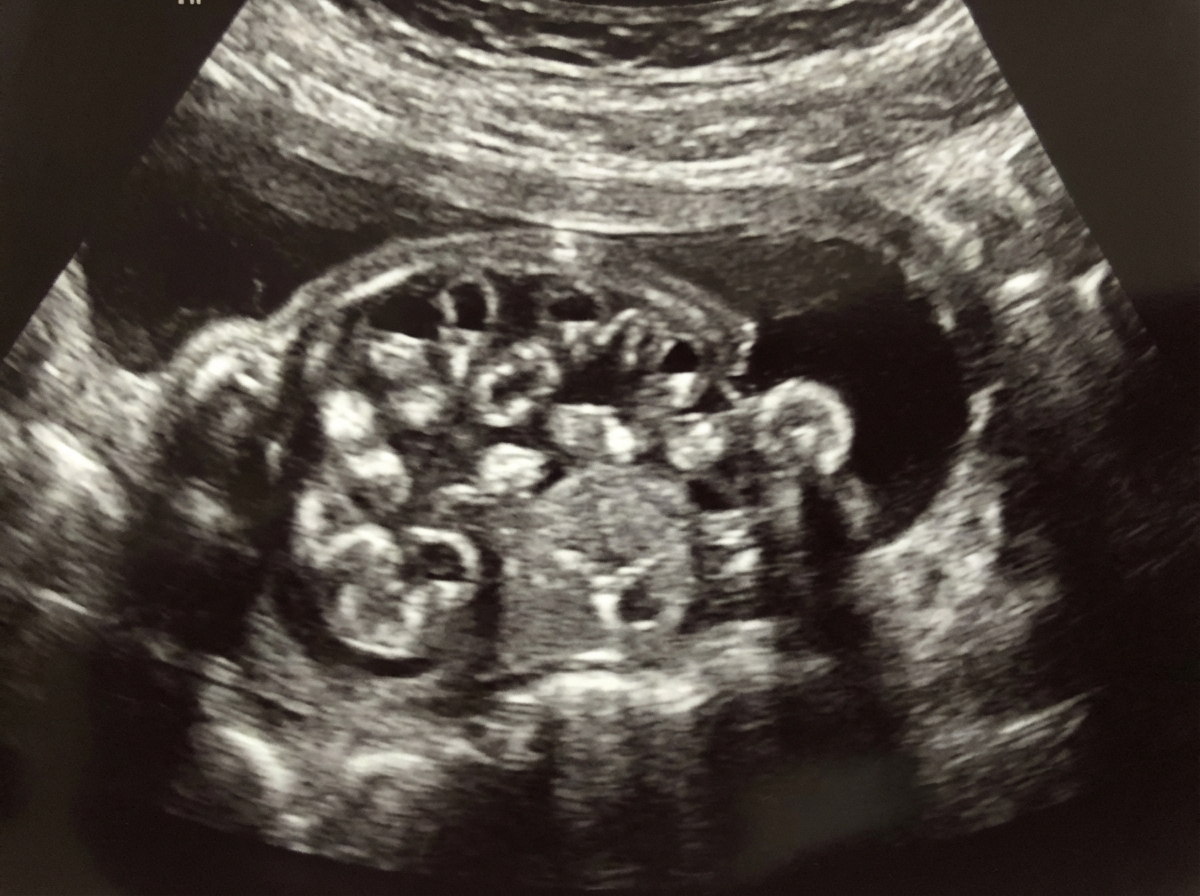
A 19-year-old woman, gravida 1, para 0, at 21 weeks’ gestation comes to the physician for a follow-up prenatal visit. At her previous appointment, her serum α-fetoprotein concentration was elevated. She had smoked 1 pack of cigarettes daily for 3 years but quit at 6 weeks' gestation. Examination shows a uterus consistent in size with a 21-week gestation. Ultrasonography shows fetal viscera suspended freely into the amniotic cavity. Which of the following is the most likely diagnosis?
Q108
Three weeks after delivering a healthy boy, a 28-year-old woman, gravida 1, para 1, comes to the physician for a postpartum check-up. Labor and delivery were uncomplicated. Two days after delivery she was diagnosed with postpartum endometritis and received intravenous clindamycin plus gentamicin for 2 days. She had painful swelling of the breasts at the beginning of lactation, but frequent breastfeeding and warm compresses prior to breastfeeding improved her symptoms. Physical examination shows no abnormalities. The patient asks about a reliable contraceptive method. Which of the following is the most appropriate recommendation?
Q109
A 28-year-old woman, gravida 1, para 0, at 10 weeks gestation comes to the physician for her first prenatal visit. Today, she feels well. She has no history of serious illness. Her pulse is 75/min and blood pressure is 110/74 mm Hg. Examination shows no abnormalities. Ultrasonography shows a pregnancy consistent in size with a 10-week gestation. Serum studies in this patient are most likely to show which of the following sets of laboratory values?
$$$ Thyroid-binding globulin %%% Free Triiodothyronine (T3) %%% Free Thyroxine (T4) %%% Total T3+T4 $$$
Q110
A 17-year-old girl presents with significant weight loss over the last few months. There is a positive family history of Hodgkin lymphoma and hyperthyroidism. Her blood pressure is 100/65 mm Hg, pulse rate is 60/min, and respiratory rate is 17/min. Her weight is 41 kg and height is 165 cm. On physical examination, the patient is ill-appearing. Her skin is dry, and there are several patches of thin hair on her arm. No parotid gland enlargement is noted and her knuckles show no signs of trauma. Laboratory findings are significant for the following:
Hemoglobin 10.1 g/dL
Hematocrit 37.7%
Leukocyte count 5,500/mm³
Neutrophils 65%
Lymphocytes 30%
Monocytes 5%
Mean corpuscular volume 65.2 µm³
Platelet count 190,000/mm³
Erythrocyte sedimentation rate 10 mm/h
Which of the following findings is associated with this patient’s most likely condition?
Prenatal Care US Medical PG Practice Questions and MCQs
Question 101: A 34-year-old primigravid woman comes to the physician for a prenatal visit at 37-weeks' gestation because of worsening back pain for 3 weeks. The pain is worse with extended periods of walking, standing, and sitting. She has not had any changes in bowel movements or urination. Her mother has rheumatoid arthritis. Examination of the back shows bilateral pain along the sacroiliac joint area as a posterior force is applied through the femurs while the knees are flexed. She has difficulty actively raising either leg while the knee is extended. Motor and sensory function are normal bilaterally. Deep tendon reflexes are 2+. Babinski sign is absent. Pelvic examination shows a uterus consistent in size with a 37-weeks' gestation. There is no tenderness during abdominal palpation. Which of the following is the most likely explanation for this patient's symptoms?
A. Spinal cord compression
B. Relaxation of the pelvic girdle ligaments (Correct Answer)
C. Vertebral bone compression fracture
D. Placental abruption
E. Rheumatoid arthritis
Explanation: ***Relaxation of the pelvic girdle ligaments***
- During pregnancy, **hormonal changes** (especially relaxin) lead to the relaxation of **ligaments** in the **pelvic girdle**, including those around the sacroiliac joint. This can cause instability and pain, particularly with prolonged activity and in the third trimester.
- The exam findings of **bilateral pain along the sacroiliac joint** with posterior force and **difficulty raising extended legs** (suggesting weakness related to pelvic instability) are consistent with increased ligamentous laxity.
*Spinal cord compression*
- This would typically present with **neurological deficits** such as significant motor weakness, sensory changes, or bowel/bladder dysfunction, which are absent in this patient.
- The patient's **normal motor and sensory function** and **intact deep tendon reflexes** do not support spinal cord compression.
*Vertebral bone compression fracture*
- A compression fracture would likely result in **acute, severe, localized pain** often exacerbated by movement, and it is uncommon in healthy pregnant women without significant trauma or underlying bone pathology.
- The patient's symptoms are chronic (3 weeks), bilateral, and related to activity, which is not characteristic of an acute compression fracture.
*Placental abruption*
- This is characterized by **acute, severe abdominal pain**, **vaginal bleeding**, and signs of **fetal distress**, none of which are present in this patient.
- The pain is described as back pain, and the abdominal examination is normal, ruling out placental abruption.
*Rheumatoid arthritis*
- Although the patient's mother has rheumatoid arthritis, this condition primarily affects **small, peripheral joints** symmetrically and would not typically present with isolated sacroiliac pain in late pregnancy.
- Rheumatoid arthritis usually involves morning stiffness that improves with activity and is associated with systemic inflammatory symptoms, which are not described.
Question 102: A 26-year-old gravida 2 para 1 presents to her physician at 12 weeks gestation. She has no complaints. Her previous pregnancy 5 years ago had an uncomplicated course with vaginal delivery of a healthy boy at 39 + 1 weeks gestation. Her weight is 75 kg (165 lb) and the height is 168 cm (5 ft 6 in). On presentation, the blood pressure is 110/70 mm Hg, the heart rate is 83/min, the respiratory rate is 14/min, and the temperature is 36.6℃ (97.9℉). The physical examination is within normal limits. The gynecologic examination demonstrates a fetal heart rate of 180/min. The uterus cannot be palpated and the ultrasound exam is benign. Blood testing showed the following:
RBC count 3.9 million/mm3
Leukocyte count 11,100/mm3
Hb 11.6 g/dL
Hct 32%
MCV 87 fl
Reticulocyte count 0.4%
The patient’s blood type is A neg. Which testing is indicated in this patient?
A. White blood cell differential
B. Measurement of serum vitamin B12
C. Measurement of serum iron
D. Indirect Coombs test (Correct Answer)
E. Direct Coombs test
Explanation: ***Indirect Coombs test***
- This patient is **Rh-negative** (blood type A neg), and an indirect Coombs test is crucial to assess for the presence of **Rh antibodies** which could put her fetus at risk for **hemolytic disease of the newborn** if the fetus is Rh-positive.
- Identification of these antibodies during pregnancy guides the need for **RhoGAM administration** to prevent alloimmunization.
*White blood cell differential*
- While a leukocyte count of 11,100/mm3 is slightly elevated, it is within the normal physiological range for pregnancy, particularly in the **first trimester**.
- Without any signs of infection or other specific concerns, a **differential count** is not the most immediate or crucial test indicated.
*Measurement of serum vitamin B12*
- The patient's **MCV of 87 fl** is within the normal range, indicating a **normocytic anemia**, not a macrocytic anemia typically associated with vitamin B12 deficiency.
- A low reticulocyte count (0.4%) suggests hypoproliferative anemia, but without macrocytosis, B12 deficiency is less likely to be the primary cause.
*Measurement of serum iron*
- The patient's **Hb (11.6 g/dL)** and **Hct (32%)** suggest a mild anemia, but the **MCV of 87 fl** is not microcytic, which would be expected in iron deficiency anemia.
- While iron deficiency is common in pregnancy, further investigation for iron studies would typically be prompted by an MCV below 80 fl or other clinical signs.
*Direct Coombs test*
- A direct Coombs test detects antibodies **already bound to the surface of red blood cells**, typically used to diagnose **autoimmune hemolytic anemia** in the patient or hemolytic disease in a newborn.
- It would not be used to screen an Rh-negative mother for circulating antibodies against fetal red blood cells; that is the role of the indirect Coombs test.
Question 103: A 24-year-old woman with a missed menstrual cycle has a positive pregnancy test. The estimated gestational age is 4 weeks. The patient questions the pregnancy test results and mentions that a urinary pregnancy test she took 3 weeks ago was negative. What is the explanation for the patient’s first negative pregnancy test result?
A. Pregnancy test becomes positive during organogenesis so should be expected positive no earlier than at week 4.
B. The syncytiotrophoblast had not yet developed to produce human chorionic gonadotropin at that term. (Correct Answer)
C. Human chorionic gonadotropin can only be found in the urine after its placental production is started.
D. Human chorionic gonadotropin starts to be produced by the uterus only after the embryonic implantation which has not yet occurred.
E. The embryonic liver has not yet developed to produce human chorionic gonadotropin at that term.
Explanation: ***The syncytiotrophoblast had not yet developed to produce human chorionic gonadotropin at that term.***
- Urinary pregnancy tests detect **human chorionic gonadotropin (hCG)**, a hormone produced by the **syncytiotrophoblast** layer of the early embryo.
- At an estimated gestational age of 4 weeks, the pregnancy test is positive, indicating that the syncytiotrophoblast has developed sufficiently to produce detectable levels of hCG; 3 weeks prior, it was likely not yet formed or producing enough hCG for detection.
*Pregnancy test becomes positive during organogenesis so should be expected positive no earlier than at week 4.*
- Pregnancy tests can become positive as early as 1 week after conception, often before the 4-week mark, as soon as the **syncytiotrophoblast** begins to produce detectable hCG.
- **Organogenesis** primarily occurs from week 3 to week 8 of gestation, and while hCG levels are rising during this period, its detectability is not solely tied to the start of organogenesis but rather to implantation and trophoblast development.
*Human chorionic gonadotropin can only be found in the urine after its placental production is started.*
- While hCG is produced by the early placenta (specifically the **syncytiotrophoblast**), it appears in the urine shortly after implantation, well before the placenta is fully formed and established as an organ.
- Urine tests are commonly used due to this early detection and convenience, not waiting for complete placental maturity.
*Human chorionic gonadotropin starts to be produced by the uterus only after the embryonic implantation which has not yet occurred.*
- **hCG is produced by the syncytiotrophoblast** of the developing embryo, not the uterus itself, starting shortly after implantation.
- The uterus is the site of implantation, but it does not produce hCG.
*The embryonic liver has not yet developed to produce human chorionic gonadotropin at that term.*
- The **embryonic liver is not the source of human chorionic gonadotropin (hCG)**; hCG is produced by the **syncytiotrophoblast** of the developing embryo.
- The liver has distinct functions, primarily metabolic and detoxification, and begins to develop later in embryonic life.
Question 104: Hormone balance is essential for maintaining a normal pregnancy. Early on, elevated progesterone levels are needed to maintain pregnancy and progesterone is produced in excess by the corpus luteum. In the normal menstrual cycle the corpus luteum involutes, but this process is impeded during pregnancy because of the presence of which hormone?
A. Human chorionic gonadotropin (Correct Answer)
B. Cortisol
C. Progesterone
D. Inhibin A
E. Estrogen
Explanation: **Human chorionic gonadotropin**
- **Human chorionic gonadotropin (hCG)** is produced by **trophoblast cells** after implantation and acts to maintain the corpus luteum.
- hCG has a similar structure to **luteinizing hormone (LH)** and binds to LH receptors on the corpus luteum, preventing its degradation and ensuring continued progesterone production.
*Cortisol*
- **Cortisol** is a **glucocorticoid** primarily involved in stress response, metabolism, and immune regulation.
- While crucial for fetal development and parturition at later stages, it does not directly prevent the **involution of the corpus luteum** early in pregnancy.
*Progesterone*
- **Progesterone** is the hormone produced by the **corpus luteum** that maintains the uterine lining and prevents contractions.
- It is the hormone whose production is sustained, not the hormone that prevents the corpus luteum's involution.
*Inhibin A*
- **Inhibin A** is produced by the **granulosa cells** and **corpus luteum**, and its primary role is to inhibit the secretion of **follicle-stimulating hormone (FSH)**.
- It is involved in feedback regulation of the hypothalamic-pituitary-gonadal axis but does not prevent the **involution of the corpus luteum**.
*Estrogen*
- **Estrogen** levels rise significantly during pregnancy, supporting uterine growth and fetal development, but it does not directly maintain the corpus luteum.
- **Estradiol**, the primary estrogen during pregnancy, is largely produced by the **placenta** after the first trimester, and its role in early pregnancy is more complex than directly preventing corpus luteum involution.
Question 105: A 25-year-old G1P0000 presents to her obstetrician’s office for a routine prenatal visit at 32 weeks gestation. At this visit, she feels well and has no complaints. Her pregnancy has been uncomplicated, aside from her Rh negative status, for which she received Rhogam at 28 weeks gestation. The patient has a past medical history of mild intermittent asthma and migraine headaches. She currently uses her albuterol inhaler once a week and takes a prenatal vitamin. Her temperature is 98.6°F (37.0°C), pulse is 70/min, blood pressure is 117/68 mmHg, and respirations are 13/min. Cardiopulmonary exam is unremarkable, and abdominal exam reveals a gravid uterus with fundal height at 30 centimeters. Bedside ultrasound reveals that the fetus is in transverse lie. The patient states that she prefers to have a vaginal delivery. Which of the following is the best next step in management?
A. Expectant management (Correct Answer)
B. Caesarean section at 38 weeks
C. Weekly ultrasound
D. Immediate external cephalic version
E. External cephalic version
Explanation: ***Expectant management***
- Many fetuses in **transverse lie** at **32 weeks gestation** will spontaneously convert to a **cephalic presentation** by term.
- Interventions like external cephalic version are generally postponed until closer to term (e.g., 36-37 weeks) to allow for spontaneous version and optimize success rates.
*Caesarean section at 38 weeks*
- This is a definitive intervention for an uncorrected transverse lie, but it is **premature** considering the possibility of spontaneous version.
- A C-section should only be scheduled if the transverse lie persists closer to term and external cephalic version is unsuccessful or contraindicated.
*Weekly ultrasound*
- While monitoring fetal position is important, **weekly ultrasounds** are not typically necessary at this stage for an uncomplicated transverse lie.
- Less frequent monitoring is usually sufficient, as spontaneous version is common.
*Immediate external cephalic version*
- Performing an **external cephalic version (ECV)** at **32 weeks is generally discouraged** because of the high likelihood of spontaneous version and a lower success rate compared to performing it closer to term.
- ECV carries risks, and delaying it minimizes interventions when they may not be needed.
*External cephalic version*
- While ECV is a viable option for **transverse lie**, it is typically considered around **36-37 weeks gestation**, not at 32 weeks.
- The rationale for delaying is to maximize the chances of **spontaneous resolution** and improve the success rate of the procedure when performed.
Question 106: A 29-year-old G1P0 woman, at 12 weeks estimated gestational age, presents for her first prenatal visit. Past medical history reveals the patient has type O+ blood and that her husband has type A+ blood. The patient is worried about the risk of her baby having hemolytic disease. Which of the following is correct regarding fetomaternal incompatibility in this patient?
A. It generally causes more severe disease than Rh incompatibility
B. It is the most common cause of hemolytic disease of the newborn
C. It cannot occur in first pregnancies due to lack of prior sensitization
D. The direct Coombs test is typically strongly positive
E. It typically presents with severe fetal anemia requiring intrauterine transfusion (Correct Answer)
Explanation: ***It typically presents with severe fetal anemia requiring intrauterine transfusion***
- While ABO incompatibility can cause hemolytic disease, it rarely leads to severe fetal anemia requiring interventions like **intrauterine transfusion**, as the **antibodies are usually IgM** and do not cross the placenta efficiently.
- The disease is generally **milder than Rh incompatibility** and often requires only phototherapy postnatally.
*It generally causes more severe disease than Rh incompatibility*
- **Rh incompatibility** typically causes more severe hemolytic disease, often leading to **hydrops fetalis** and severe anemia due to IgG antibodies crossing the placenta.
- In comparison, **ABO incompatibility** usually results in a milder, postnatal presentation of jaundice.
*It is the most common cause of hemolytic disease of the newborn*
- **ABO incompatibility** is the most common cause of *mild* hemolytic disease of the newborn, but Rh incompatibility is historically known for causing more severe forms of the disease prior to the advent of Rhogam.
- The scenario in the question describes a Type O mother and a Type A father, which is the most common scenario for **ABO incompatibility**.
*It cannot occur in first pregnancies due to lack of prior sensitization*
- **ABO incompatibility** can occur in the *first pregnancy* because mothers can be naturally sensitized to A or B antigens through exposure to environmental antigens (e.g., bacteria, food) that are structurally similar to blood group antigens.
- This is a key difference from **Rh incompatibility**, which generally requires prior exposure to Rh-positive blood for sensitization to occur.
*The direct Coombs test is typically strongly positive*
- In **ABO incompatibility**, the direct Coombs test on the infant's red blood cells is often **weakly positive or negative**, even when hemolytic disease is present.
- This is because fewer antibodies are usually bound to the red blood cells, and the antibodies involved are often IgM, which are less efficient at sensitizing red blood cells for Coombs testing.
Question 107: A 19-year-old woman, gravida 1, para 0, at 21 weeks’ gestation comes to the physician for a follow-up prenatal visit. At her previous appointment, her serum α-fetoprotein concentration was elevated. She had smoked 1 pack of cigarettes daily for 3 years but quit at 6 weeks' gestation. Examination shows a uterus consistent in size with a 21-week gestation. Ultrasonography shows fetal viscera suspended freely into the amniotic cavity. Which of the following is the most likely diagnosis?
A. Omphalocele
B. Vesicourachal diverticulum
C. Umbilical hernia
D. Gastroschisis (Correct Answer)
E. Diaphragmatic hernia
Explanation: ***Gastroschisis***
- This condition is characterized by **fetal viscera suspended freely into the amniotic cavity**, indicating an abdominal wall defect where organs are exposed directly.
- **Elevated maternal serum α-fetoprotein (MSAFP)** is a classic finding in gastroschisis due to the direct exposure of fetal blood to the amniotic fluid.
*Omphalocele*
- In an omphalocele, the abdominal organs are covered by a **peritoneal sac**, which would not result in viscera "freely suspended" in the amniotic cavity.
- Omphaloceles are often associated with **chromosomal abnormalities** and other congenital anomalies, which are not suggested here.
*Vesicourachal diverticulum*
- This is a rare anomaly of the **urachus**, an embryonic remnant connecting the bladder to the umbilicus.
- It involves a diverticulum of the bladder and would **not cause exposed abdominal organs** or elevated MSAFP.
*Umbilical hernia*
- An umbilical hernia involves a protrusion of abdominal contents through the umbilical ring but is typically **covered by skin** and does not involve free exposure of viscera.
- It usually presents as a **reducible bulge** and is not associated with elevated MSAFP in utero.
*Diaphragmatic hernia*
- This involves a defect in the diaphragm leading to abdominal organs migrating into the **thoracic cavity**, affecting lung development.
- While it can cause some elevation of MSAFP, the ultrasound finding of **viscera freely suspended in the amniotic cavity** is not consistent with a diaphragmatic hernia.
Question 108: Three weeks after delivering a healthy boy, a 28-year-old woman, gravida 1, para 1, comes to the physician for a postpartum check-up. Labor and delivery were uncomplicated. Two days after delivery she was diagnosed with postpartum endometritis and received intravenous clindamycin plus gentamicin for 2 days. She had painful swelling of the breasts at the beginning of lactation, but frequent breastfeeding and warm compresses prior to breastfeeding improved her symptoms. Physical examination shows no abnormalities. The patient asks about a reliable contraceptive method. Which of the following is the most appropriate recommendation?
A. No contraception needed while lactating
B. Combined oral contraceptives
C. Spermicide
D. Basal body temperature method
E. Progestin-only contraceptive pills (Correct Answer)
Explanation: ***Progestin-only contraceptive pills***
- **Progestin-only pills** are safe and effective for breastfeeding mothers as they do not affect **milk production or composition**.
- They provide reliable contraception by thickening cervical mucus, inhibiting ovulation, and thinning the endometrial lining.
*No contraception needed while lactating*
- While **lactational amenorrhea method (LAM)** can provide contraception, it's highly dependent on **exclusive breastfeeding** at specific intervals and absence of menses.
- Its effectiveness decreases over time as breastfeeding patterns change, making it unreliable for long-term or highly effective contraception.
*Combined oral contraceptives*
- **Combined oral contraceptives (COCs)** contain **estrogen**, which can decrease **milk supply** and alter milk composition.
- They are generally contraindicated in the immediate postpartum period, especially for breastfeeding mothers, due to the risk of **thrombosis**.
*Spermicide*
- **Spermicides** are a less effective form of contraception when used alone, with typical failure rates ranging from 15-28%.
- They can cause **vaginal irritation** or allergic reactions, which may deter consistent use and effectiveness.
*Basal body temperature method*
- The **basal body temperature (BBT) method** requires daily tracking of body temperature variations to identify ovulation.
- This method is often **unreliable postpartum** due to fluctuating hormones and disturbed sleep patterns, making accurate temperature tracking difficult.
Question 109: A 28-year-old woman, gravida 1, para 0, at 10 weeks gestation comes to the physician for her first prenatal visit. Today, she feels well. She has no history of serious illness. Her pulse is 75/min and blood pressure is 110/74 mm Hg. Examination shows no abnormalities. Ultrasonography shows a pregnancy consistent in size with a 10-week gestation. Serum studies in this patient are most likely to show which of the following sets of laboratory values?
$$$ Thyroid-binding globulin %%% Free Triiodothyronine (T3) %%% Free Thyroxine (T4) %%% Total T3+T4 $$$
A. Normal ↑ ↑ ↑
B. ↑ normal normal ↑ (Correct Answer)
C. Normal normal normal normal
D. ↓ normal normal ↓
E. ↓ ↓ normal ↓
Explanation: ***↑ normal normal ↑***
- This option correctly reflects the typical changes in thyroid economy during pregnancy: **increased thyroid-binding globulin (TBG)** due to estrogen, leading to **increased total T3 and T4**, while **free T3 and free T4 remain normal** as the thyroid gland compensates.
- The elevated TBG binds more thyroid hormones, initially decreasing free hormone levels slightly, but the thyroid gland responds by producing more T3 and T4 to maintain **euthyroid** state with normal free hormone levels.
*Normal ↑ ↑ ↑*
- This option incorrectly suggests that **free T3 and free T4 would be elevated** along with total T3 and T4, which is not typical in a healthy pregnant woman.
- While total T3 and T4 increase, the body maintains **euthyroidism** by keeping free thyroid hormone levels within the normal range.
*Normal normal normal normal*
- This option incorrectly suggests that all thyroid parameters remain normal, which is not true for **TBG, total T3, and total T4** in pregnancy.
- The significant physiological changes during pregnancy, particularly the increase in **estrogen**, directly impact TBG levels and subsequently total thyroid hormone levels.
*↓ normal normal ↓*
- This option is incorrect as **TBG and total T3+T4 generally increase** during pregnancy, not decrease.
- A decrease in these values, especially with normal free hormones, is not consistent with the typical **euthyroid state** of a healthy pregnant woman.
*↓ ↓ normal ↓*
- This option incorrectly suggests a decrease in **TBG, free T3, and total T3+T4**, which would indicate a hypothyroid state, inconsistent with the patient's well-being and normal examination findings.
- A healthy pregnant woman maintains **euthyroidism** with normal free thyroid hormone levels.
Question 110: A 17-year-old girl presents with significant weight loss over the last few months. There is a positive family history of Hodgkin lymphoma and hyperthyroidism. Her blood pressure is 100/65 mm Hg, pulse rate is 60/min, and respiratory rate is 17/min. Her weight is 41 kg and height is 165 cm. On physical examination, the patient is ill-appearing. Her skin is dry, and there are several patches of thin hair on her arm. No parotid gland enlargement is noted and her knuckles show no signs of trauma. Laboratory findings are significant for the following:
Hemoglobin 10.1 g/dL
Hematocrit 37.7%
Leukocyte count 5,500/mm³
Neutrophils 65%
Lymphocytes 30%
Monocytes 5%
Mean corpuscular volume 65.2 µm³
Platelet count 190,000/mm³
Erythrocyte sedimentation rate 10 mm/h
Which of the following findings is associated with this patient’s most likely condition?
A. Abdominal striae
B. Dental caries
C. Parotid gland enlargement
D. Diarrhea
E. Amenorrhea (Correct Answer)
Explanation: **Amenorrhea**
- The patient's presentation with significant **weight loss**, low BMI (165 cm, 41 kg), `dry skin`, `thin hair`, `bradycardia`, and `hypotension` strongly suggests **anorexia nervosa**.
- **Amenorrhea**, defined as the absence of menstruation, is a classic endocrine complication of anorexia nervosa due to **hypothalamic-pituitary-gonadal axis dysfunction** caused by severe caloric restriction and low body fat.
*Abdominal striae*
- **Abdominal striae** (stretch marks) are commonly associated with rapid weight gain, obesity, pregnancy, or **Cushing's syndrome** due to excessive cortisol, which is not indicated by this patient's presentation.
- While the patient is young, her significant **weight loss** makes these findings unlikely as they are typically associated with skin stretching from weight gain.
*Dental caries*
- **Dental caries** can occur with poor hygiene or extreme sugar intake and are not specifically linked to anorexia nervosa.
- They are also often seen in **bulimia nervosa** due to recurrent vomiting and acid exposure, but the current presentation lacks signs of purging behaviors like eroded tooth enamel or trauma to knuckles.
*Parotid gland enlargement*
- **Parotid gland enlargement** (sialadenosis) is a common finding in **bulimia nervosa** as a result of recurrent vomiting and salivary gland stimulation, which is explicitly noted as absent in this patient.
- The patient's physical examination specifically states that **no parotid gland enlargement is noted**, ruling out this option.
*Diarrhea*
- While gastrointestinal issues can occur with disordered eating, **constipation** is a more common symptom in anorexia nervosa due to slowed gastrointestinal motility from starvation.
- **Diarrhea** is not a typical direct association but can be present due to laxative abuse (if bulimia nervosa) or refeeding syndrome, neither of which is indicated here.