
Genital tract trauma repair — MCQs

A 1-month-old male infant is brought to the physician because of inconsolable crying for the past 3 hours. For the past 3 weeks, he has had multiple episodes of high-pitched unprovoked crying every day that last up to 4 hours and resolve spontaneously. He was born at term and weighed 2966 g (6 lb 9 oz); he now weighs 3800 g (8 lb 6 oz). He is exclusively breast fed. His temperature is 36.9°C (98.4°F) and pulse is 140/min. Examination shows a soft and nontender abdomen. The remainder of the examination shows no abnormalities. Which of the following is the most appropriate next step in management?
A 27-year-old man presents to the emergency department after being stabbed. The patient was robbed at a local pizza parlor and was stabbed over 10 times with a large kitchen knife with an estimated 7 inch blade in the ventral abdomen. His temperature is 97.6°F (36.4°C), blood pressure is 74/54 mmHg, pulse is 180/min, respirations are 19/min, and oxygen saturation is 98% on room air. The patient is intubated and given blood products and vasopressors. Physical exam is notable for multiple stab wounds over the patient's abdomen inferior to the nipple line. Which of the following is the best next step in management?
A 36-year-old woman, gravida 3, para 2, at 37 weeks' gestation comes to the emergency department because of sparse vaginal bleeding for 3 hours. She also noticed the bleeding 3 days ago. She has had no prenatal care. Both of her previous children were delivered by lower segment transverse cesarean section. Her temperature is 37.1°C (98.8°F), pulse is 90/min, respirations are 16/min, and blood pressure is 110/80 mm Hg. The abdomen is nontender, and no contractions are felt. Examination shows that the fetus is in a vertex presentation. The fetal heart rate is 160/min and shows no abnormalities. Which of the following is the most appropriate next step in management?
A 45-year-old man undergoes elective vasectomy for permanent contraception. The procedure is performed under local anesthesia. There are no intra-operative complications and he is discharged home with ibuprofen for post-operative pain. This patient is at increased risk for which of the following complications?
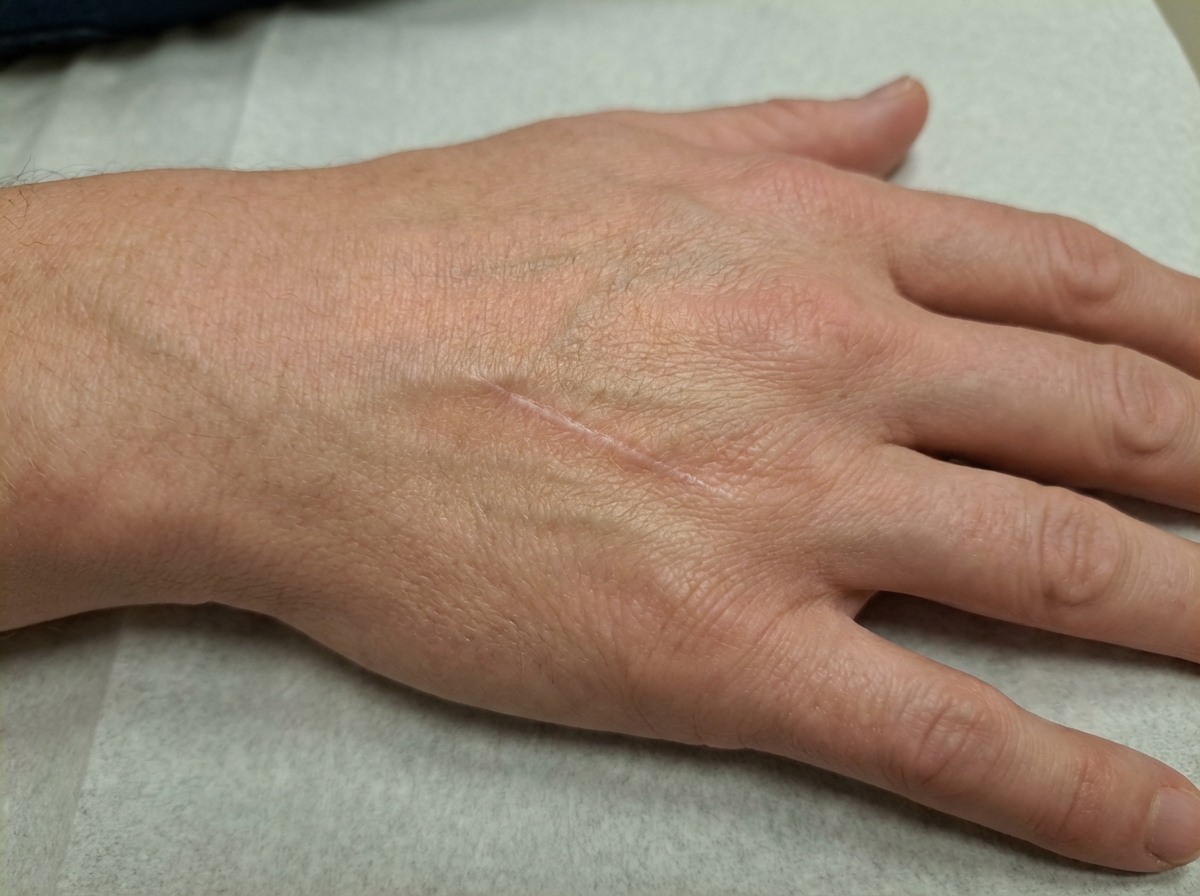
A 16-year-old boy presents to the emergency department after a skateboarding accident. He fell on a broken bottle and received a 4 cm wound on the dorsal aspect of his left hand. His vitals are stable and he was evaluated by the surgeon on call who determined that suturing was not required. After several weeks the wound has almost completely healed (see image). Which of the following is the correct description of this patient's wound before healing?
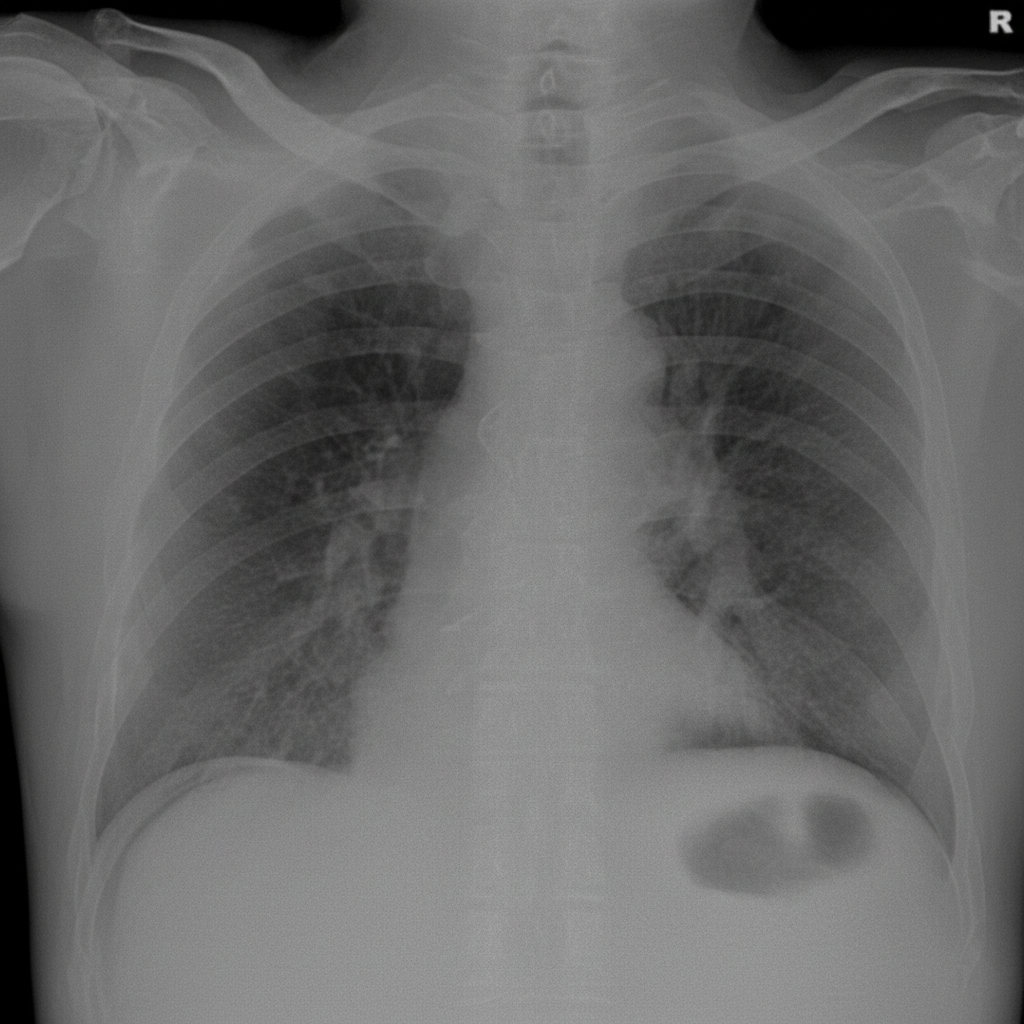
A 56-year-old man is brought to the emergency department after 4 hours of severe abdominal pain with an increase in its intensity over the last hour. His personal history is relevant for peptic ulcer disease and H. pylori infection that is being treated with clarithromycin triple therapy. Upon admission his vital signs are as follows: pulse of 120/min, a respiratory rate of 20/min, body temperature of 39°C (102.2°F), and blood pressure of 90/50 mm Hg. Physical examination reveals significant tenderness over the abdomen. A chest radiograph taken when the patient was standing erect is shown. Which of the following is the next best step in the management of this patient?
A 40-year-old woman comes to the physician because of a 2-week history of anal pain that occurs during defecation and lasts for several hours. She reports that she often strains during defecation and sees bright red blood on toilet paper after wiping. She typically has 3 bowel movements per week. Physical examination shows a longitudinal, perianal tear. This patient's symptoms are most likely caused by tissue injury in which of the following locations?
A 17-year-old girl presents to the gynecologist's office due to lack of menarche. She has been sexually active with 1 male lifetime partner and always uses a condom. Her mother believes that breast development started at 11 years old. On exam, she is a well-appearing, non-hirsute teenager with Tanner V breast and pubic hair development. Her pelvic exam reveals normal external genitalia, a shortened vagina, and the cervix is unable to be visualized. Initial laboratory testing for hormone levels and karyotype is normal, and imaging confirms what you suspect on exam. What is the most likely cause of her lack of menstruation?
29-year-old G2P2002 presents with foul-smelling lochia and fever. She is post-partum day three status-post cesarean section due to eclampsia. Her temperature is 101 F, and heart rate is 103. She denies chills. On physical exam, lower abdominal and uterine tenderness is present. Leukocytosis with left shift is seen in labs. Which of the following is the next best step in management?
A 34-year-old woman, G2P1, at 32 weeks of gestation presents with sudden-onset painless bright red vaginal bleeding. She soaked two pads in the past hour. She denies contractions or trauma. Her prior delivery was by cesarean section for breech presentation. Vital signs: BP 110/70 mmHg, HR 96 bpm, temperature 36.8°C. Fetal heart rate tracing shows a baseline of 150 bpm with moderate variability and no decelerations. Transabdominal ultrasound demonstrates an anterior placenta completely overlying the internal cervical os. Based on the imaging findings and clinical context, which of the following is the most appropriate immediate management?
Want unlimited practice?
Get full access to all questions, explanations, and performance tracking.
Scan to download app